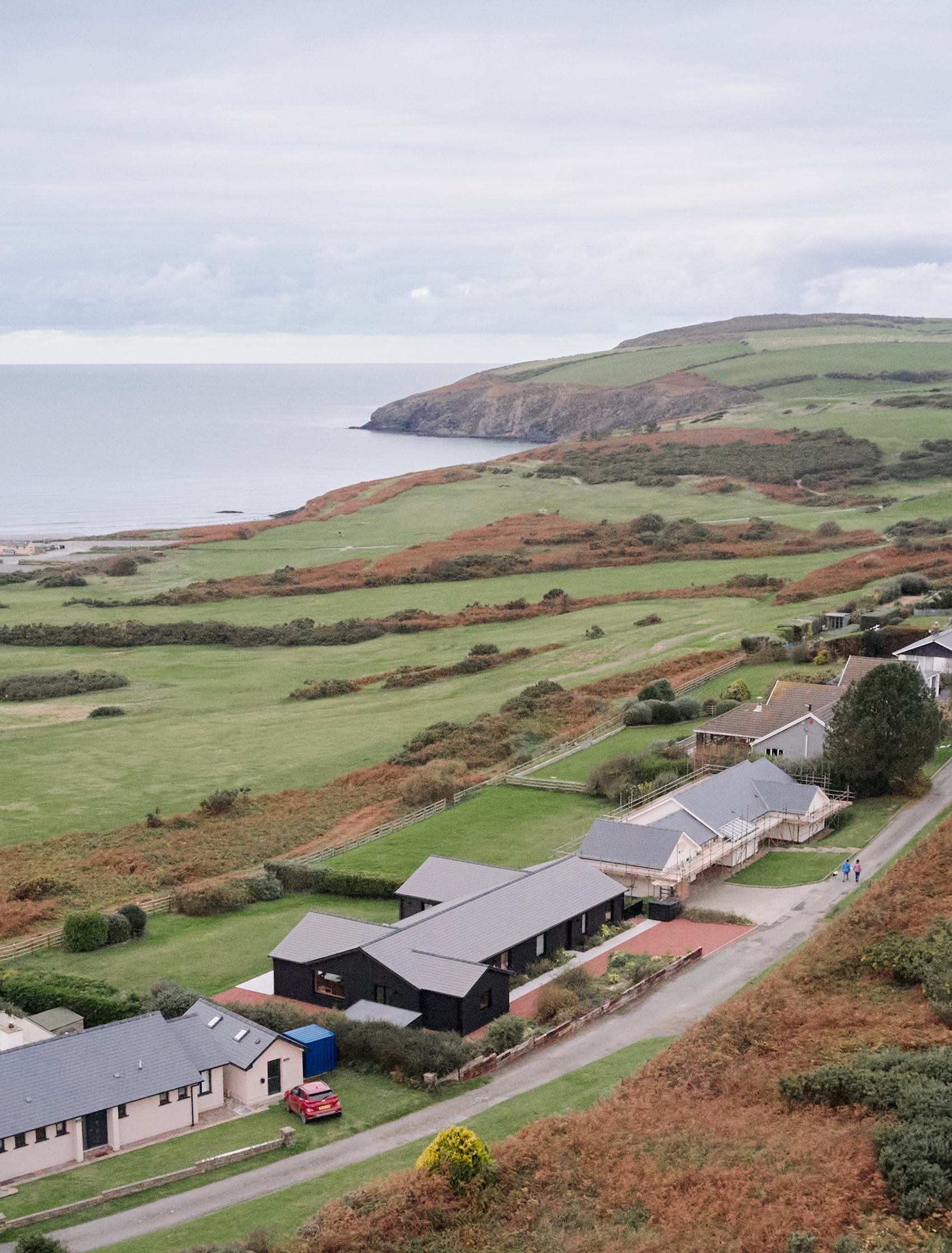
Unknown Works has retrofitted a modest coastal bungalow in Pembrokeshire, transforming it into a low-energy family home that responds sensitively to its National Park setting.
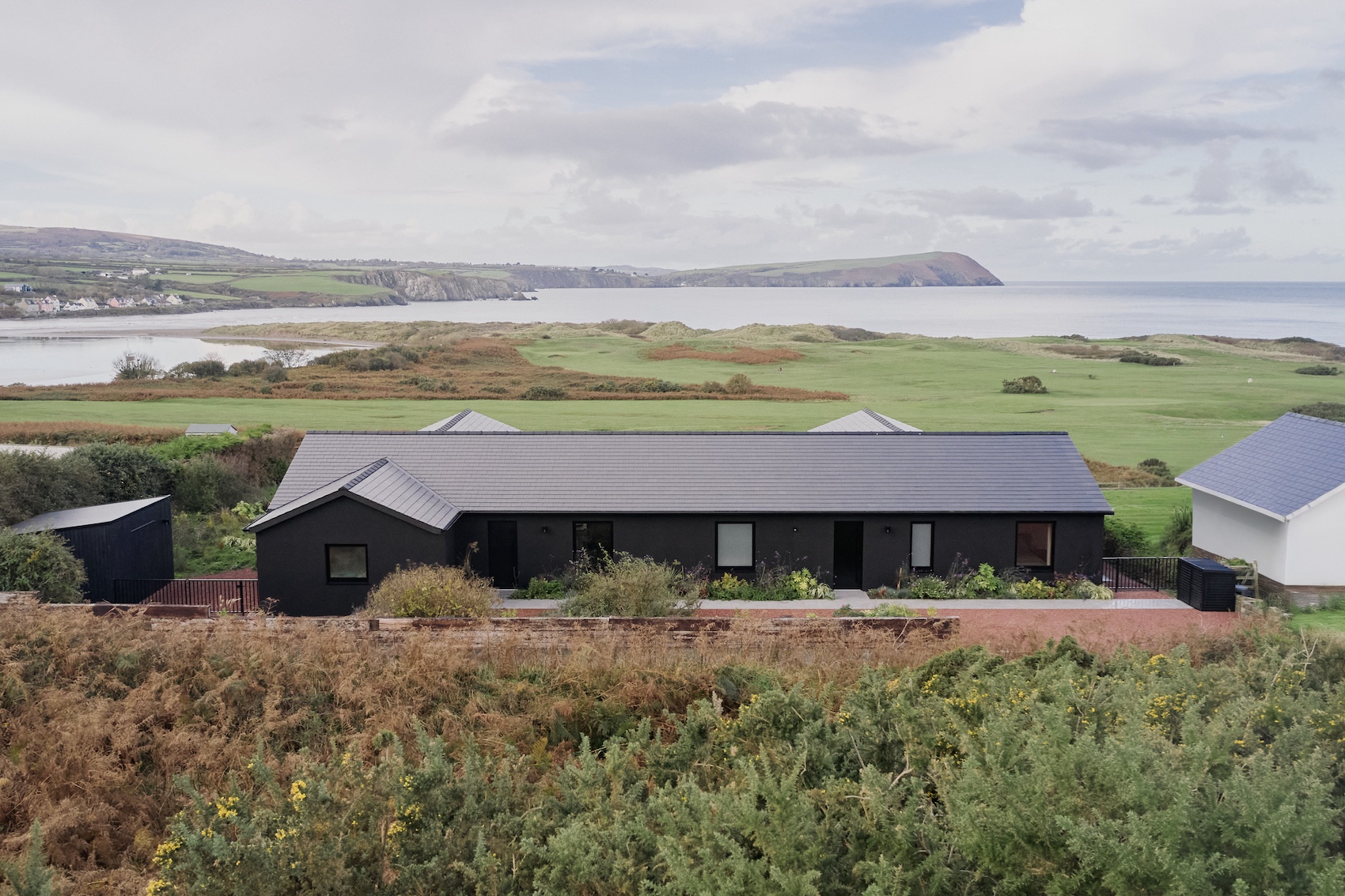
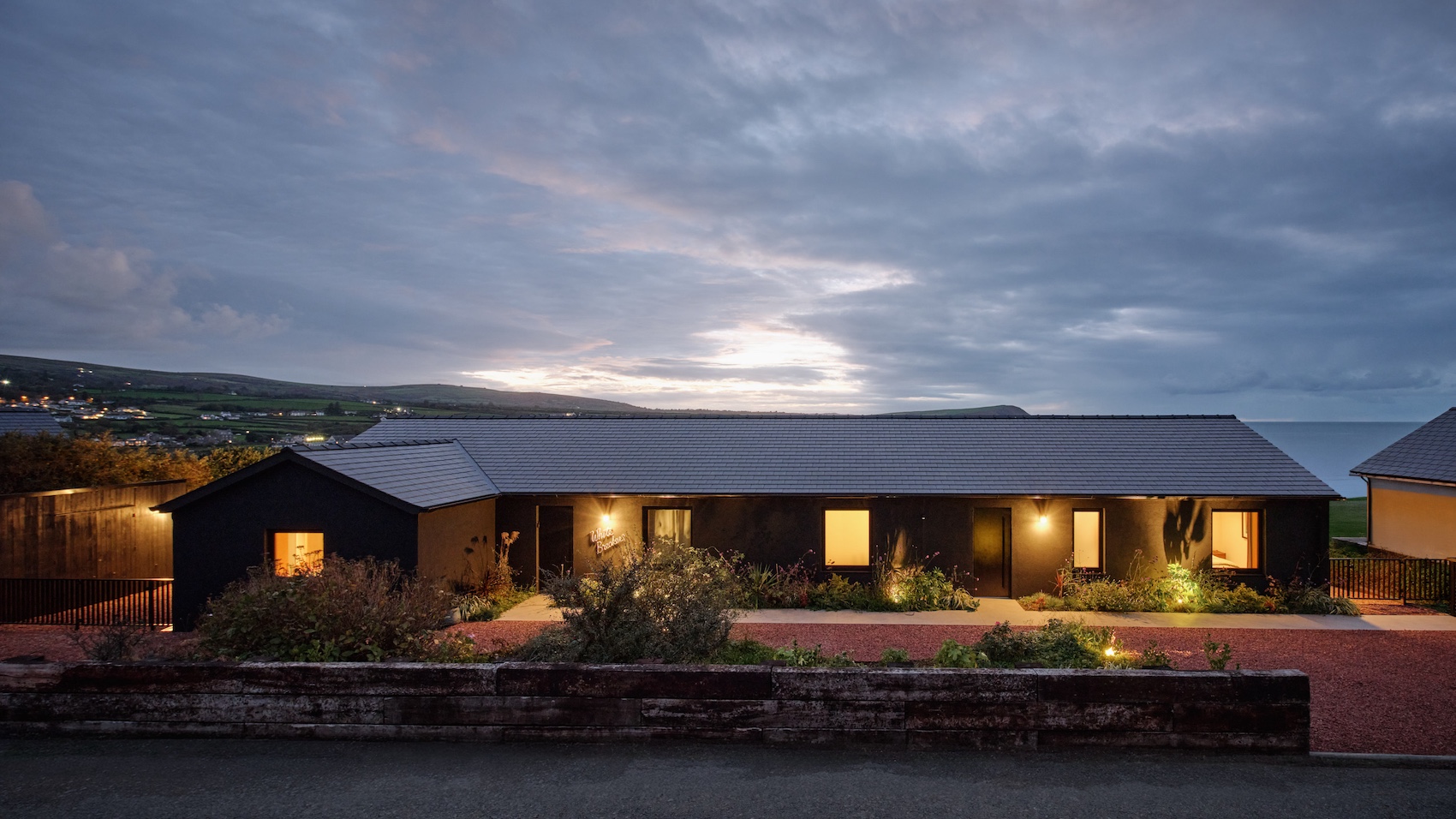
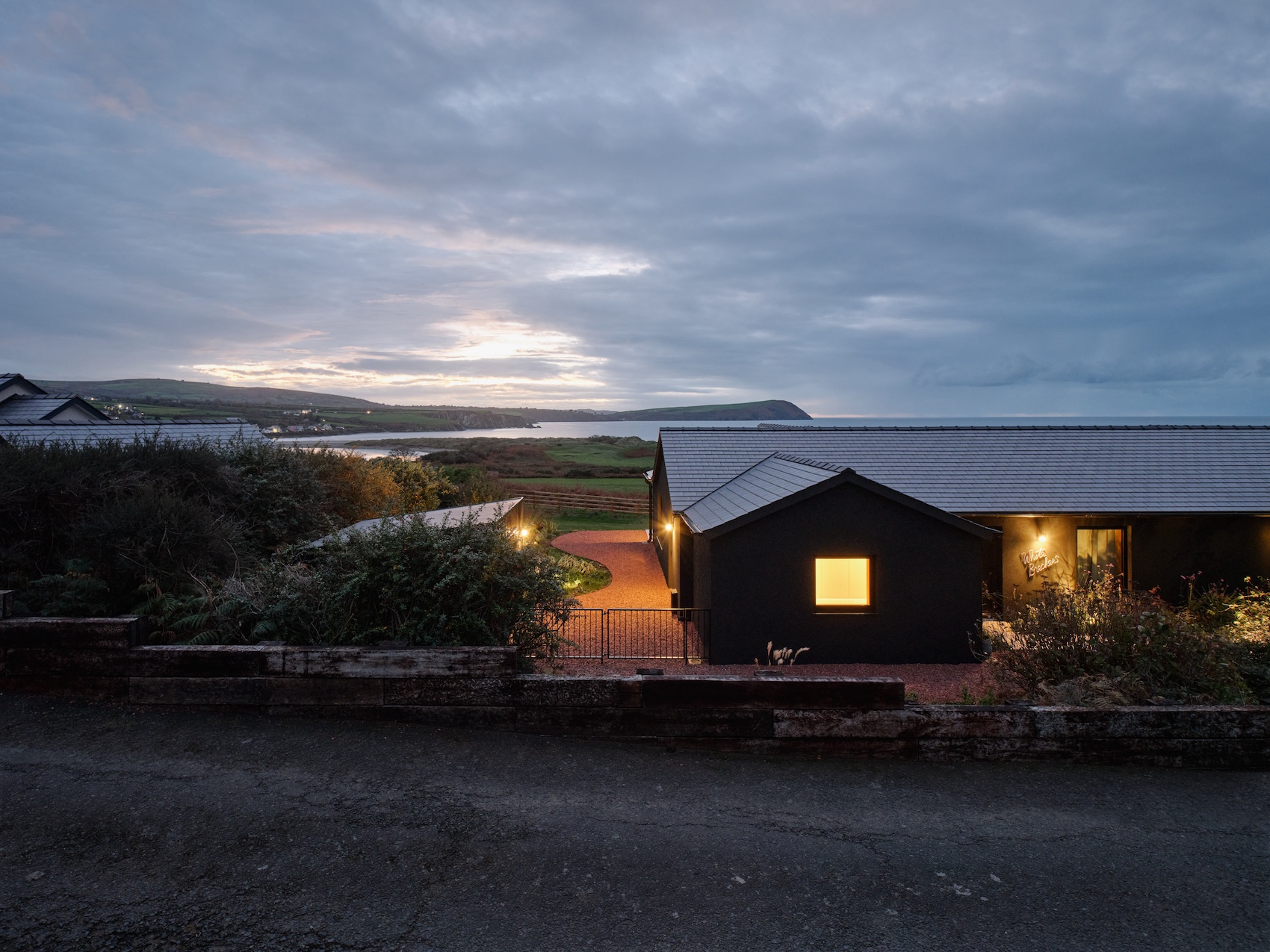
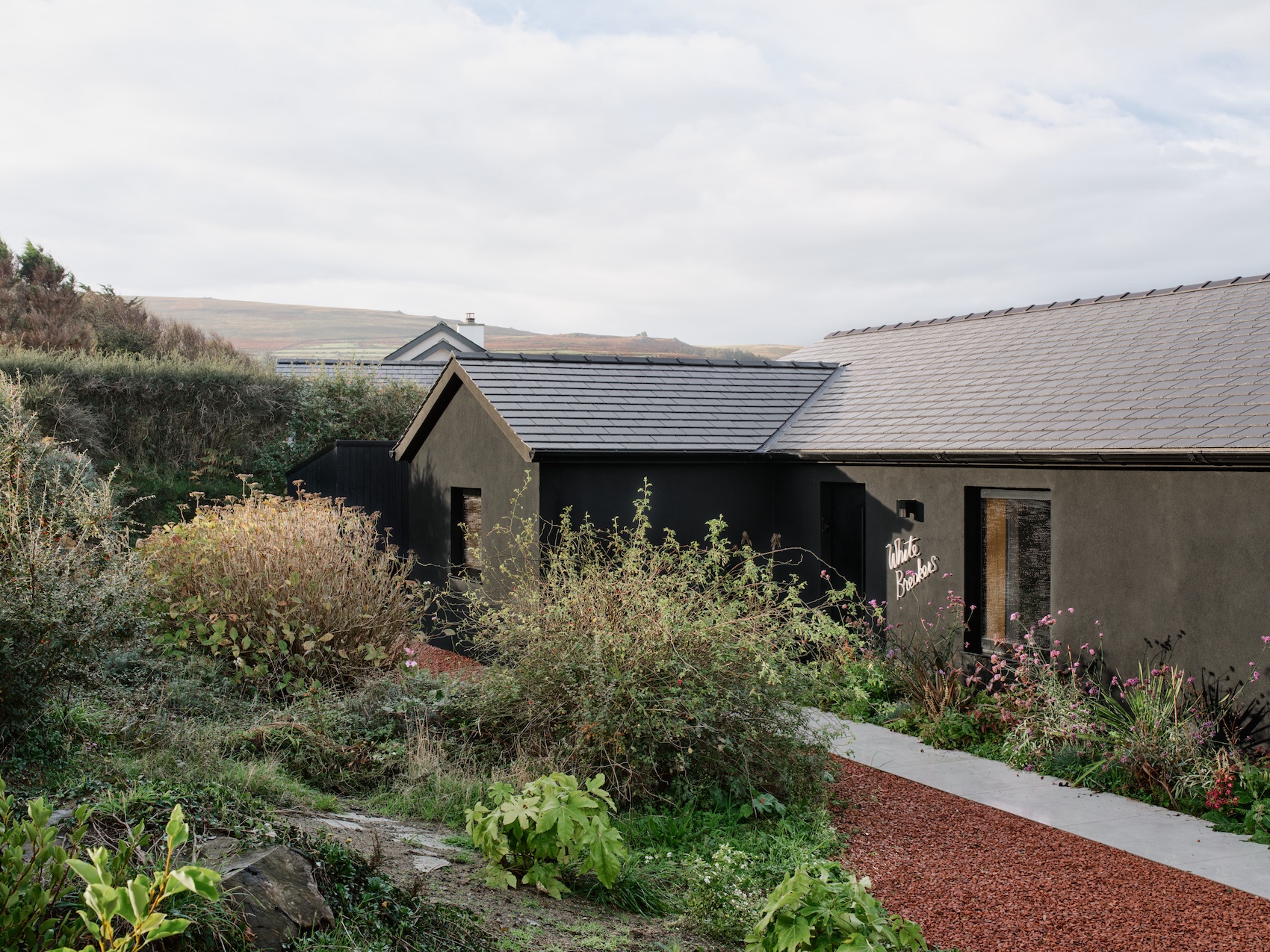
Unknown Works has sensitively reworked a dated bungalow located within in the Pembrokeshire Coast National Park. The retrofit strategy centred on retaining as much of the existing structure as possible, as well as significantly upgrading thermal performance through the use of external insulation. A black silicone-render façade improves airtightness and eliminates thermal bridges, while a new composite slate roof enhances durability in the tough coastal environment.
“The existing property was ‘a bit of a Frankenstein building’”, says Unknown Works Director Kaowen Ho. “It was typically energy inefficient, like so many properties of its era, built with ad hoc extensions and very little thought given to the lifecycle of the building or how it might be used in the future, let alone sustainability or biodiversity. The house also showed signs of water ingress, thermal bridging and damp, amongst other critical construction flaws, and the interior was a warren of small spaces with no sensible layout or flow.”
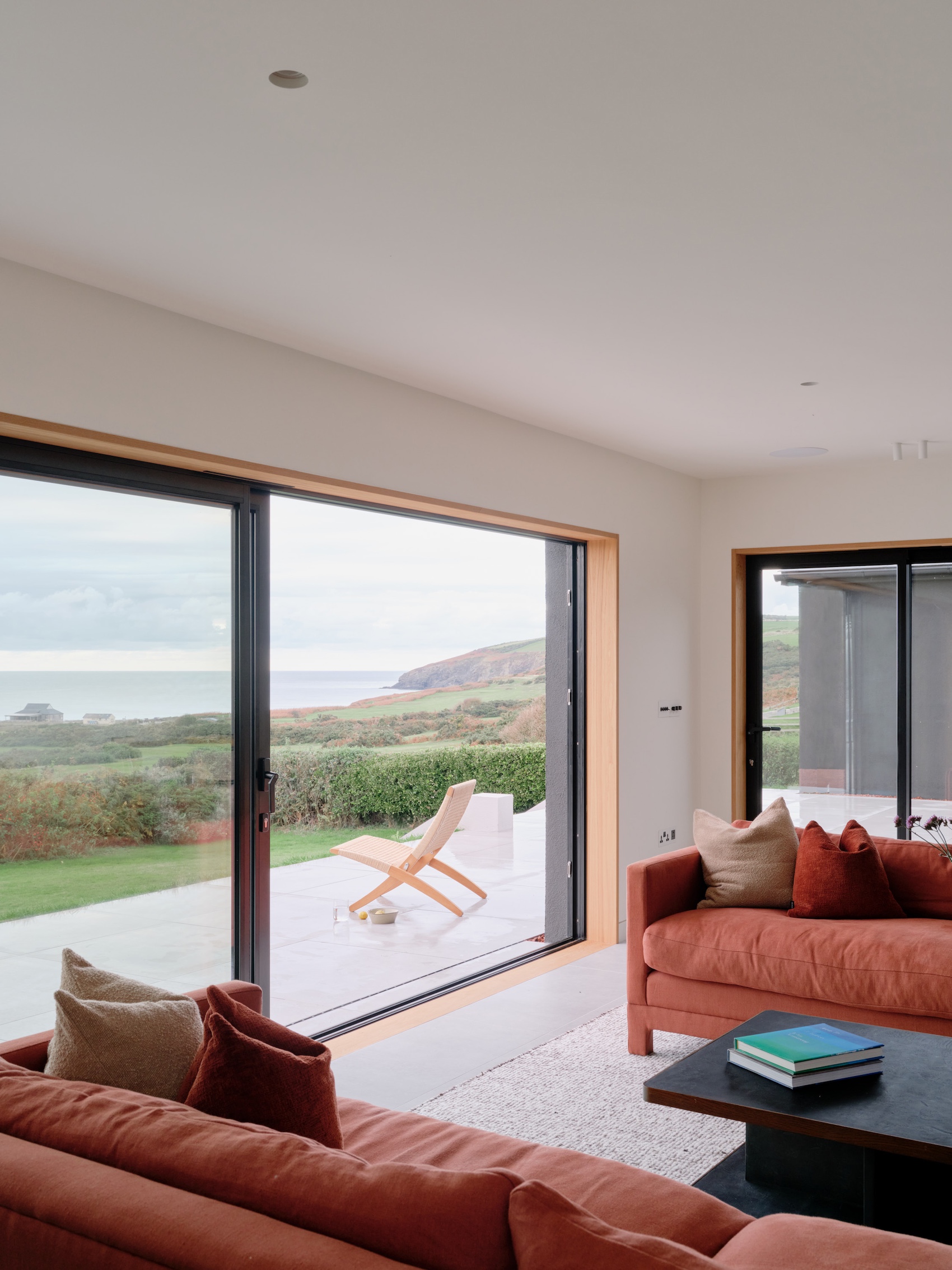
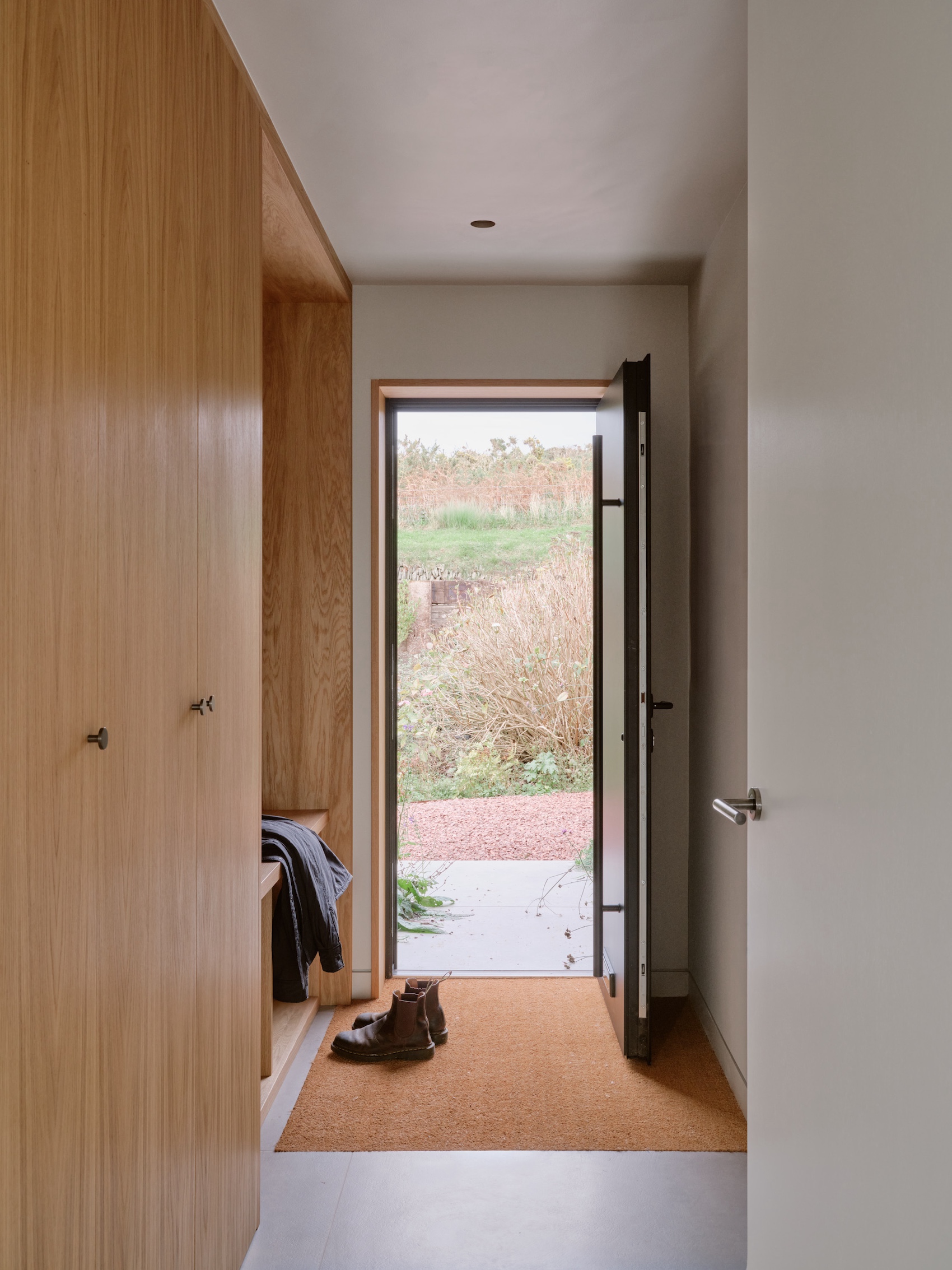
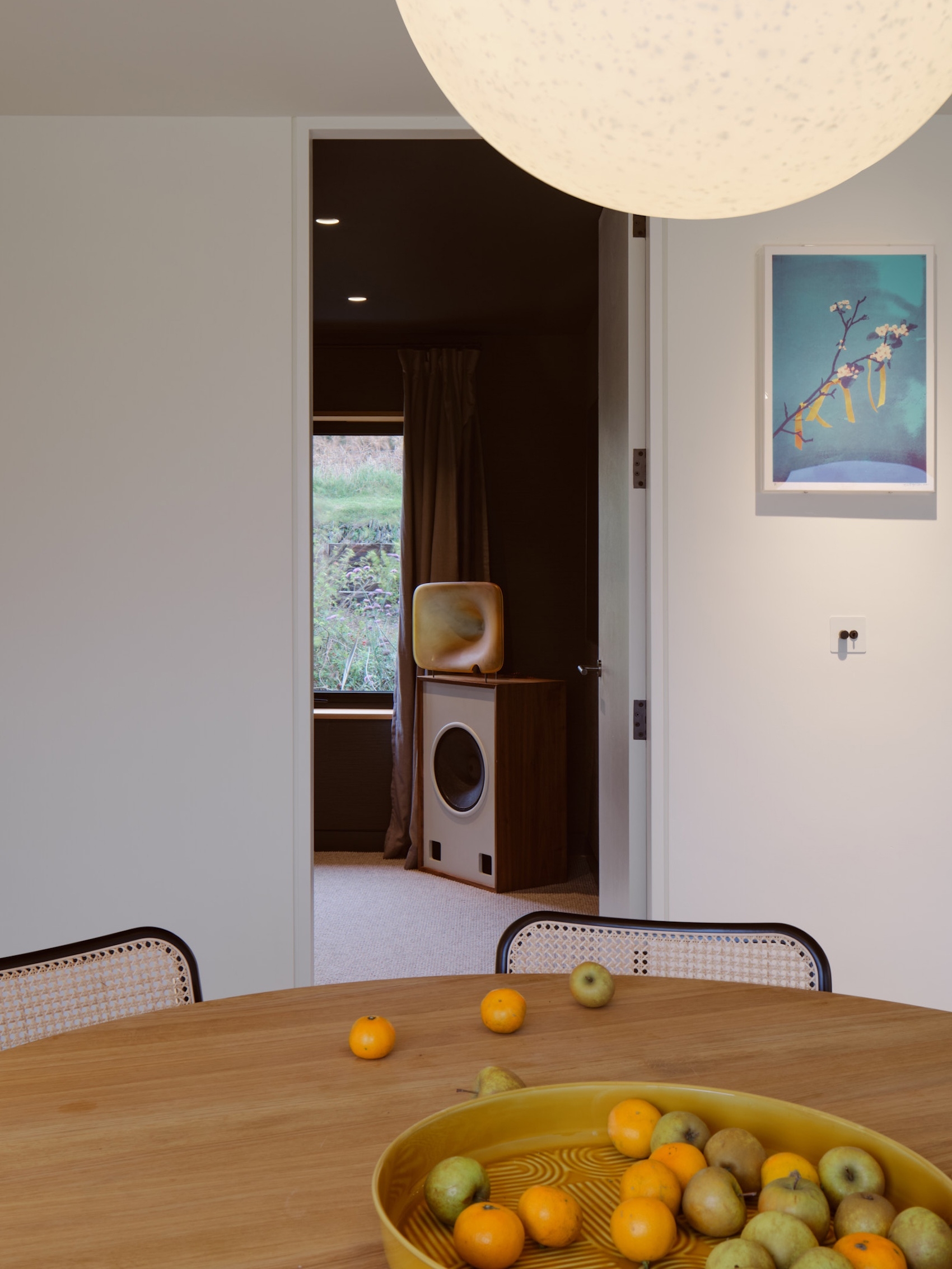
Designed to support the rhythms of coastal living, the plan includes a dedicated utility entrance, which provides space for wetsuits, surfboards and sandy equipment, before entering the main living area. White walls, natural materials and expansive timber-framed sliding glazing maximise daylighting and establish a strong visual connection with the sea. Large openings extend the principal living spaces onto the existing rear terrace, allowing daily life to unfold against the changing backdrop of the coastline.
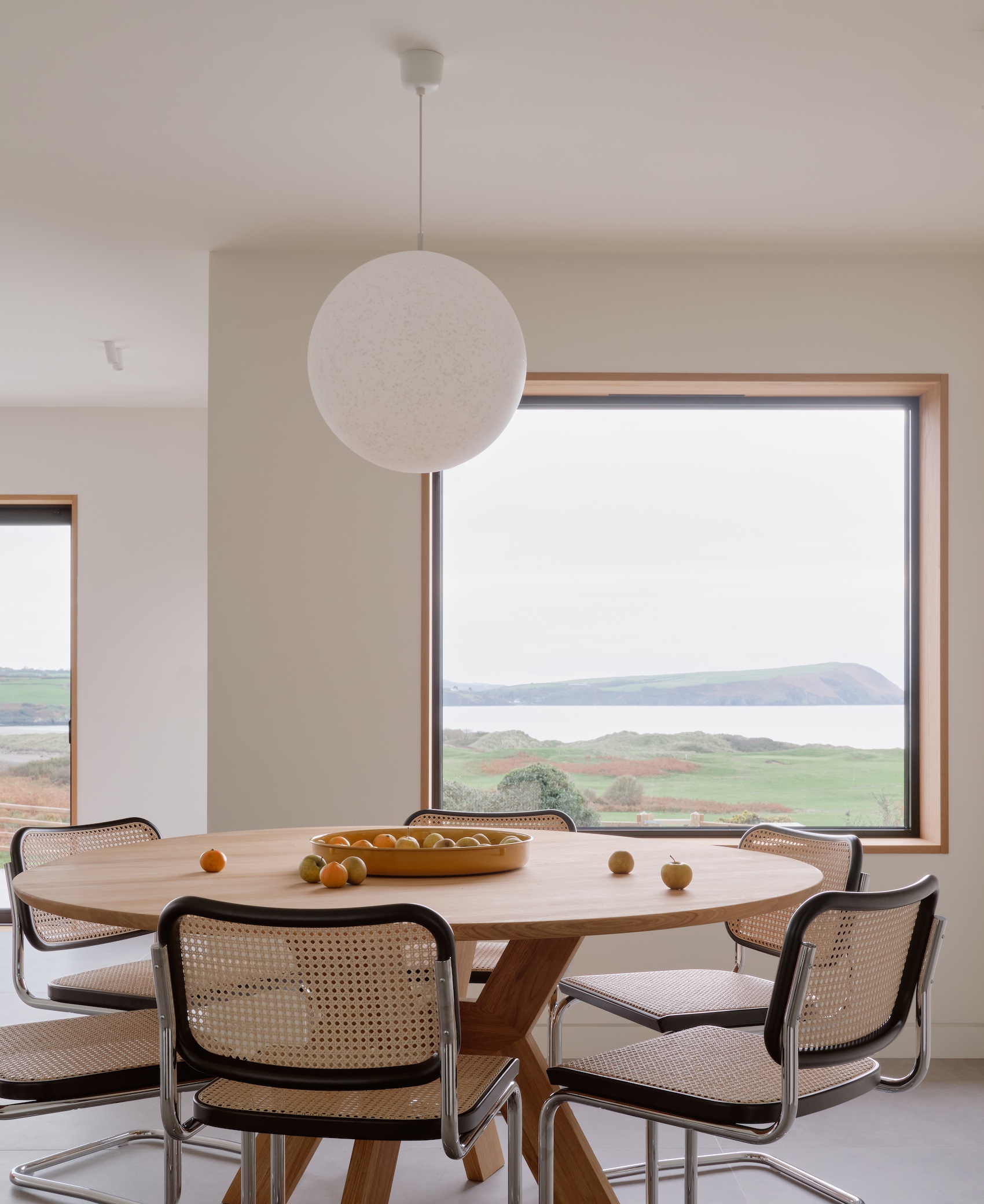
The material palette introduces visual warmth through terracotta tones, natural stone, fluted glass and crown-cut timber joinery. Outside, red-pink gravel pathways provide a playful counterpoint to the black exterior, and establish continuity with the colours used internally. Planting softens the building’s edges, while reclaimed railway sleepers form low retaining walls along the quiet access road. Ecological measures include dedicated bat and swift boxes that encourage local wildlife to inhabit the building alongside its owners.
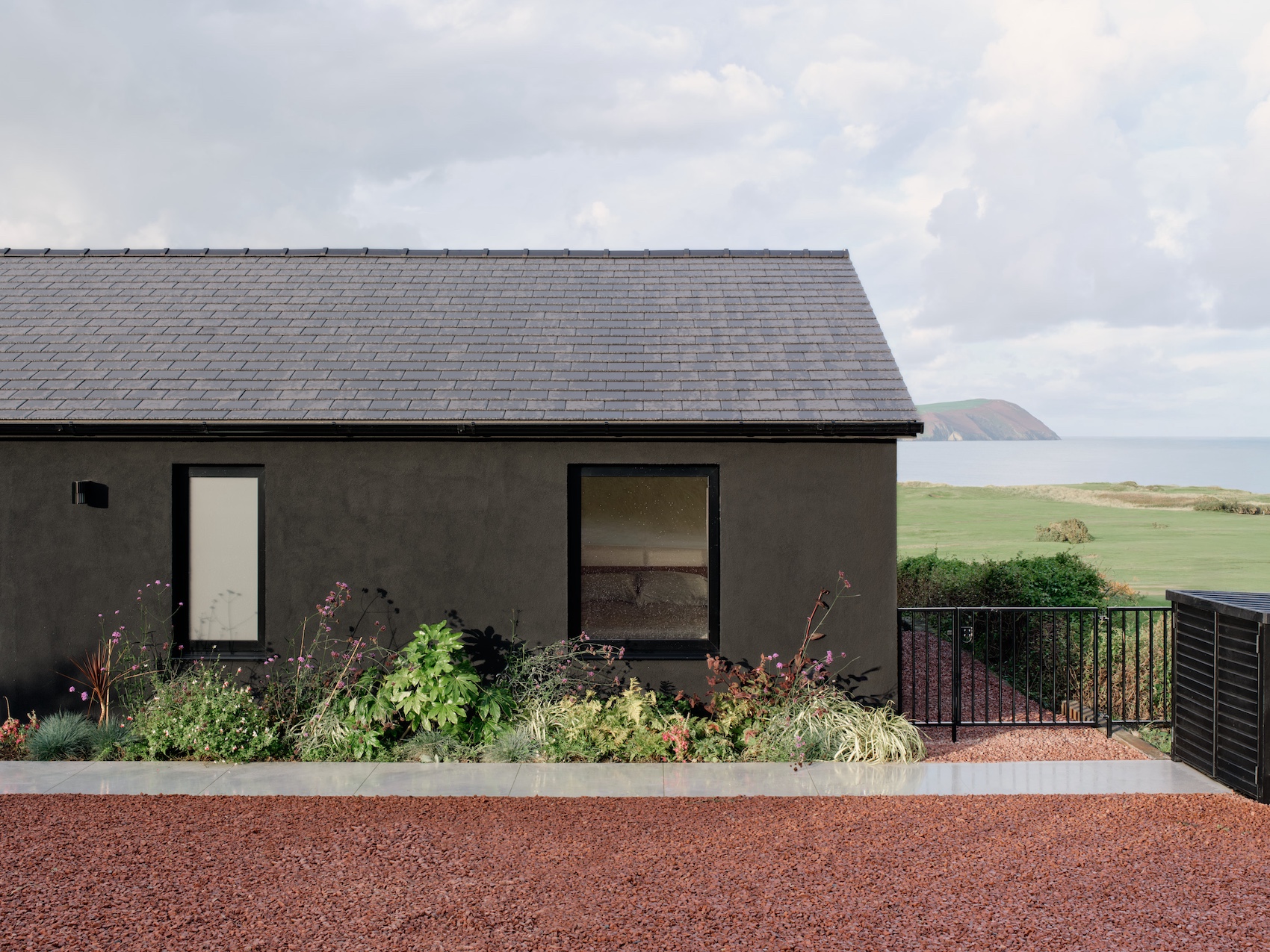
“Overall, this is a stealthy, subtle and restrained design,” reflects Ho. “The low-slung black, even brutal, exterior gives way to a very soft and bright interior, offering the warmth and welcome of a proper family home.”
Credits
Architect
Unknown Works
Structural engineer
Float Structures
Main contractor
D&O Construction
More pictures