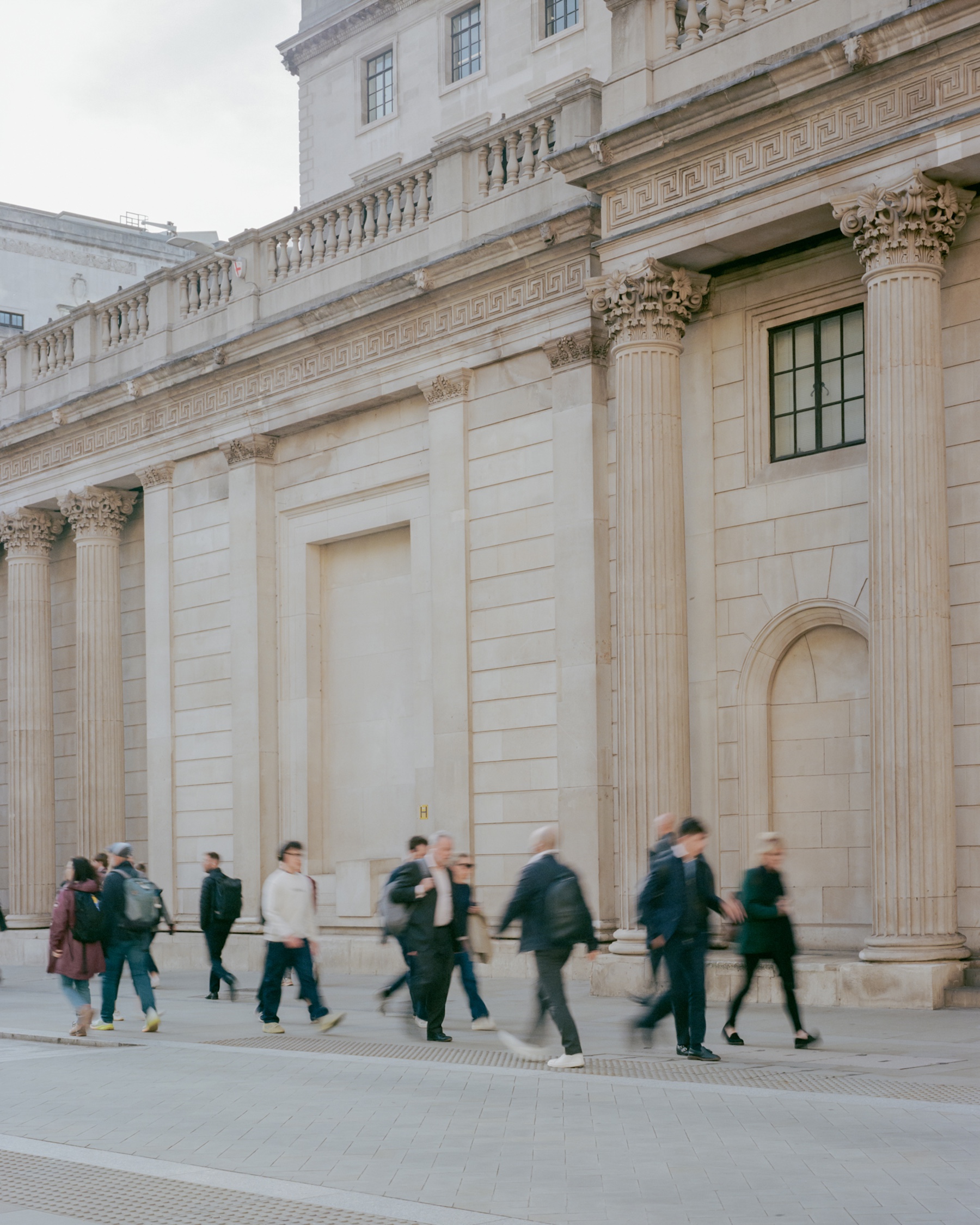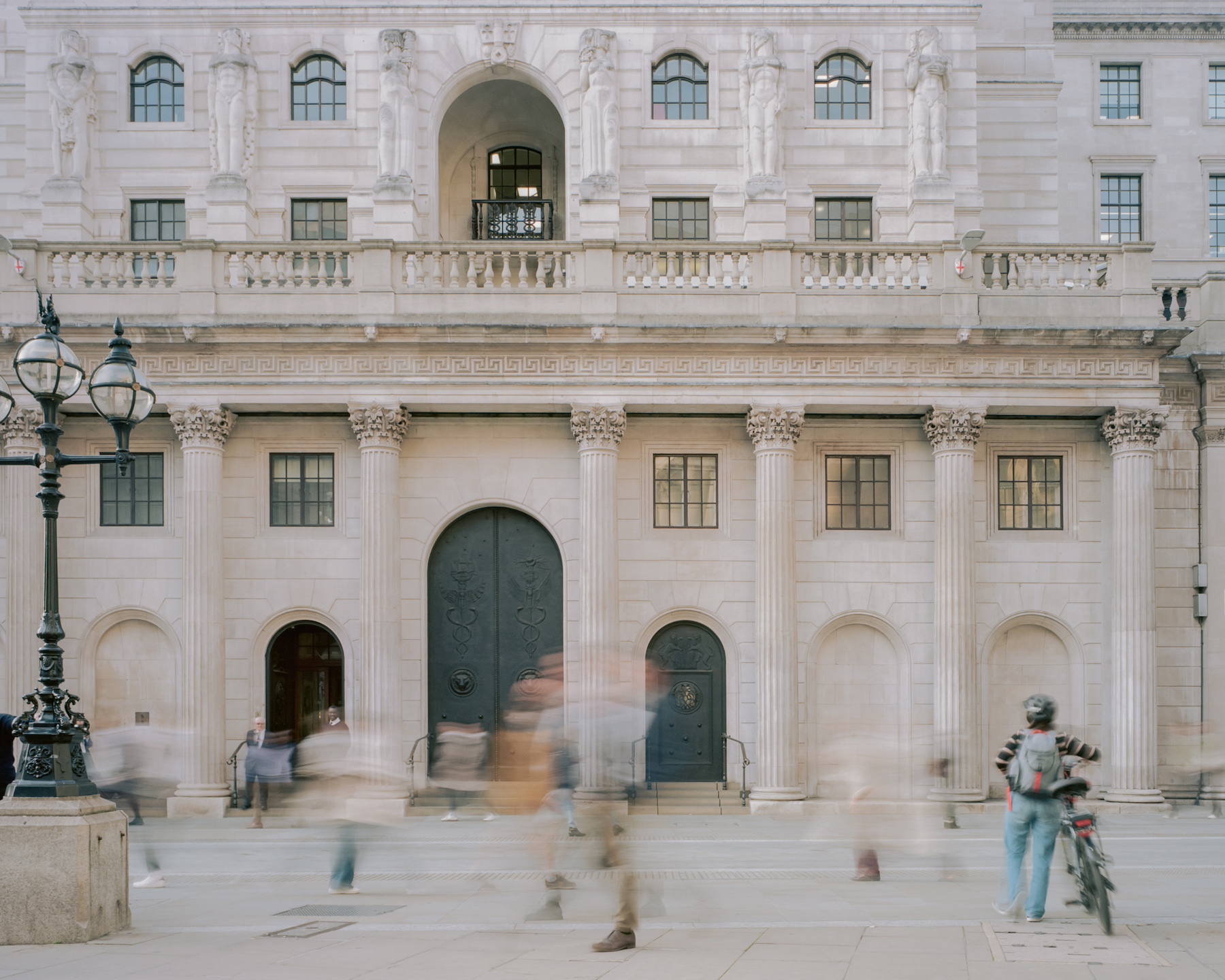
Studio Weave’s transformation of one of the City of London’s oldest and busiest interchanges creates a more generous pedestrian environment while enhancing the setting of the Bank of England, Mansion House and Royal Exchange.
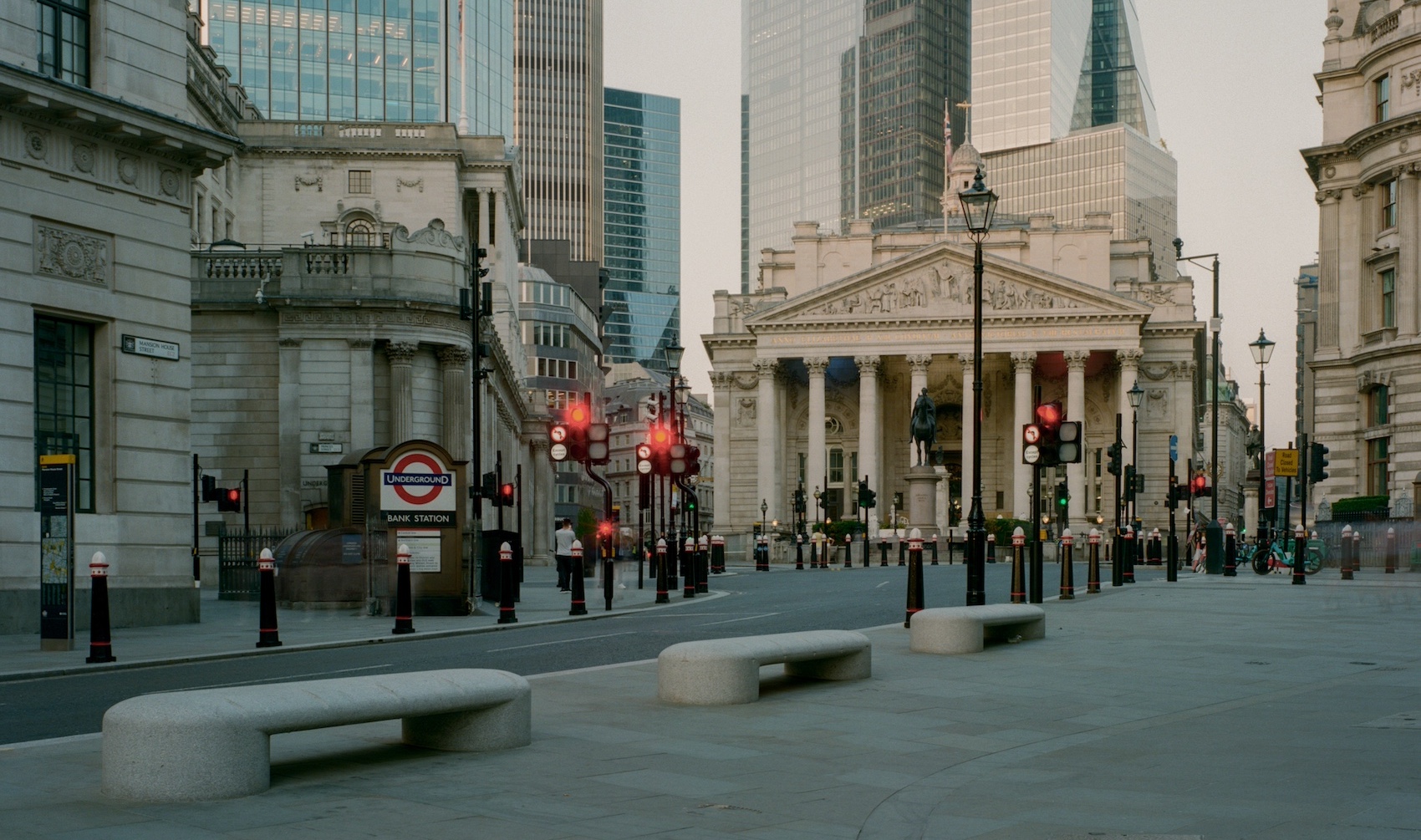
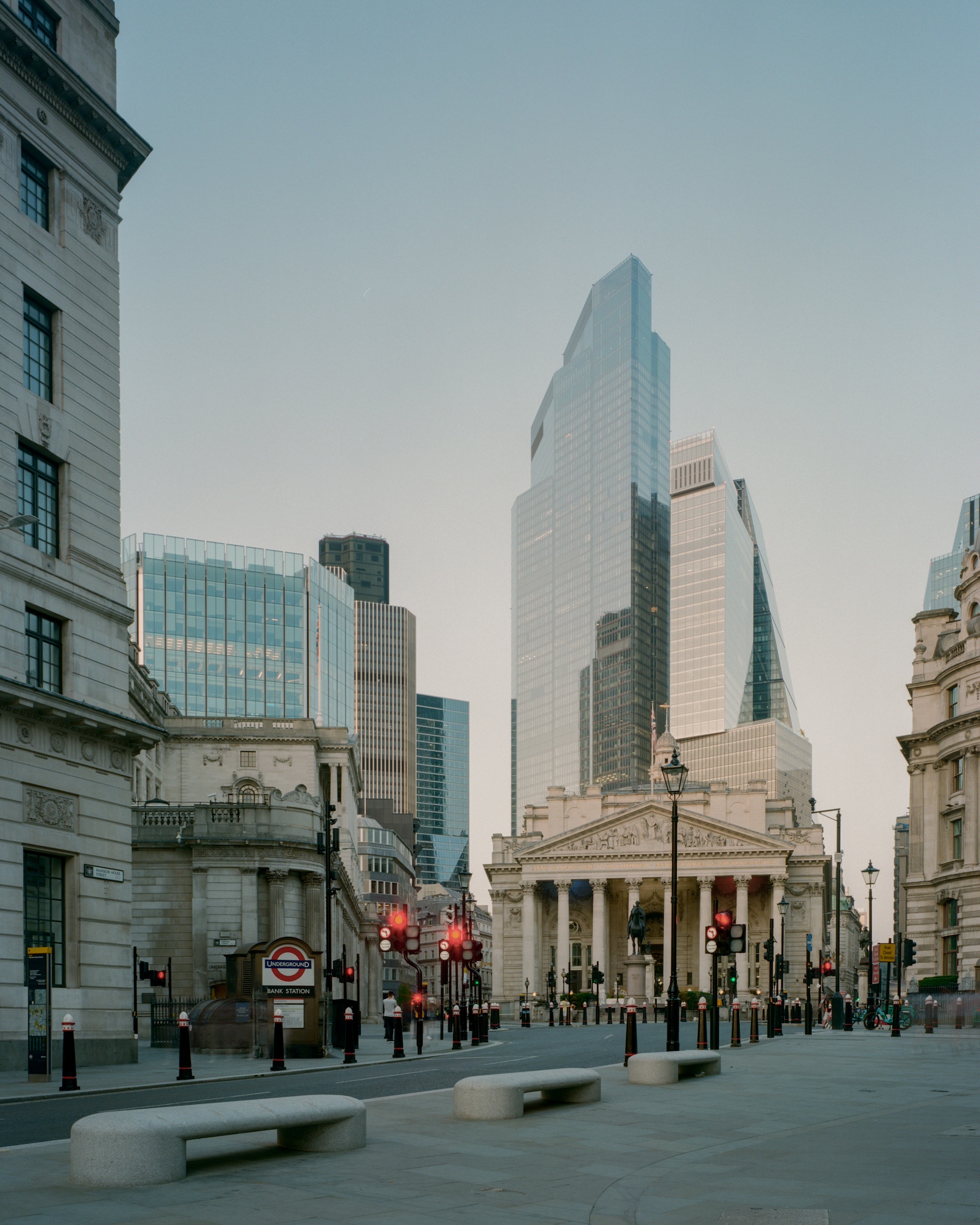
Studio Weave has completed a major public realm improvement at Bank Junction in the City of London. Developed with the City of London Corporation, the project reworks the streets and spaces connecting the Bank of England, Mansion House and Royal Exchange. Highway realignment and pedestrianisation are combined with new seating, planting, signage and public art to create a calmer and more accessible civic setting.
The junction occupies a site that has played a central role in the movement of people through London since the Roman period. Today, it is defined by one of the City’s densest concentrations of listed buildings and monuments, including a series of prominent 18th-century Neoclassical façades. The design draws on the principles of the City of London Technical Manual, introducing bespoke details and furniture conceived as a contemporary complement to the historic architecture.
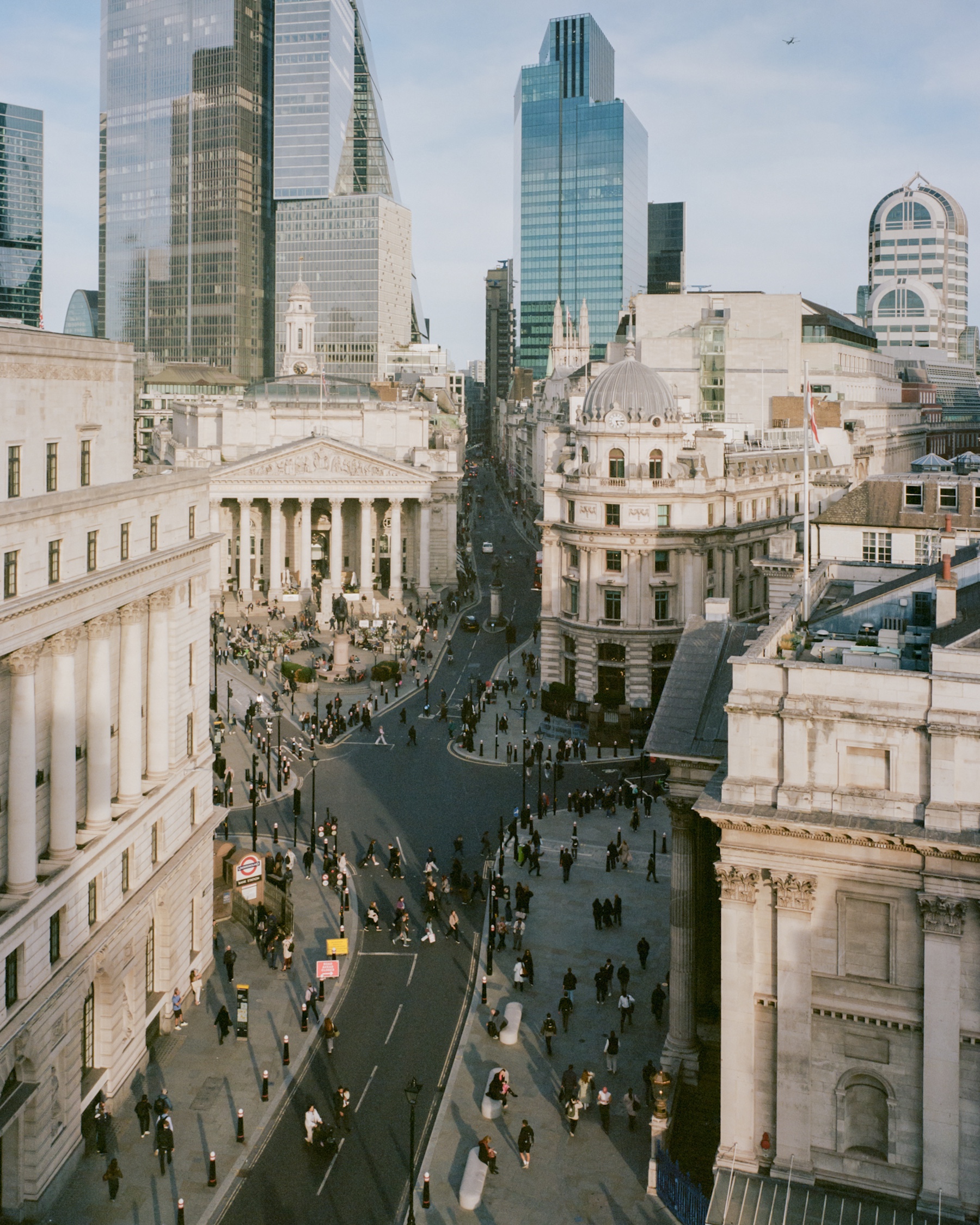
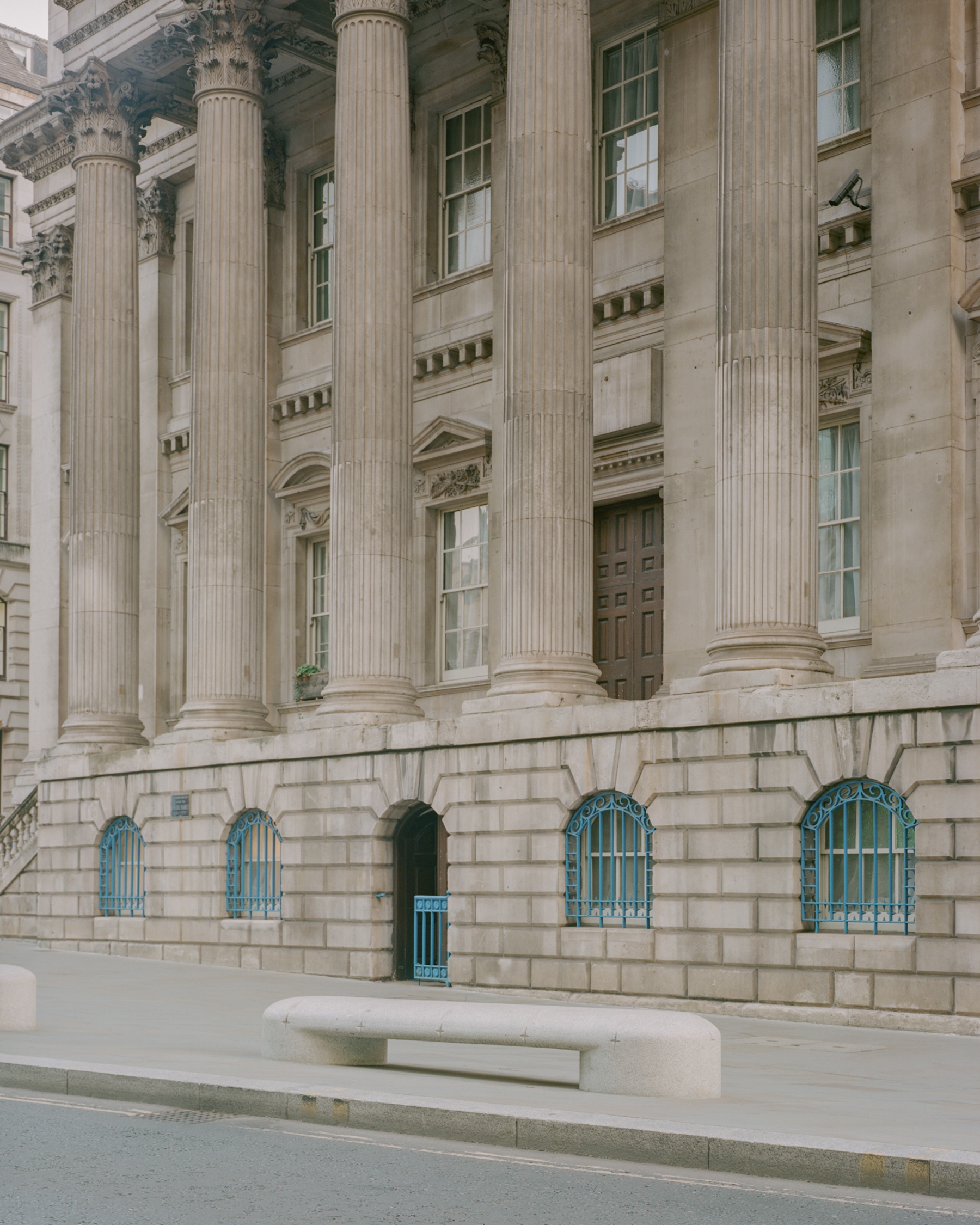
At the centre of the scheme, axial arrangements of benches carved from British granite establish new public spaces outside the Bank of England and Mansion House. Their scale and positioning respond to the surrounding buildings while also removing the need for separate hostile vehicle mitigation measures. A restrained palette and simplified ground plane allow the architecture enclosing the junction to become more legible.
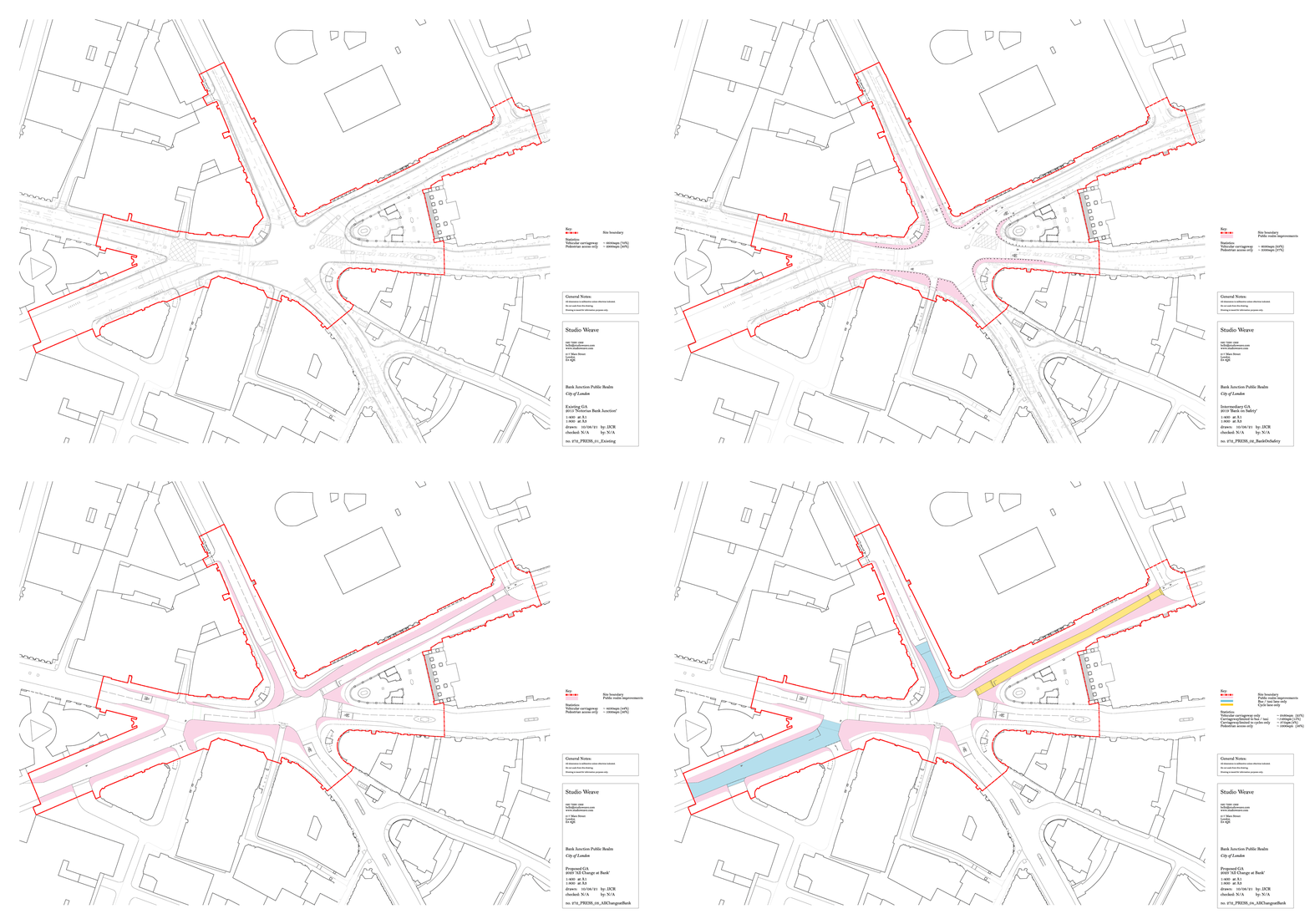
The project responds to the growing number of people walking and cycling in the Square Mile by redistributing space previously dominated by vehicles. Kerb lines have been rationalised, changes in paving reduced and redundant street furniture removed. Within the resulting layout, sheltered pockets described by the architects as ‘urban eddies’ provide places for pedestrians to pause away from the principal flows of movement.
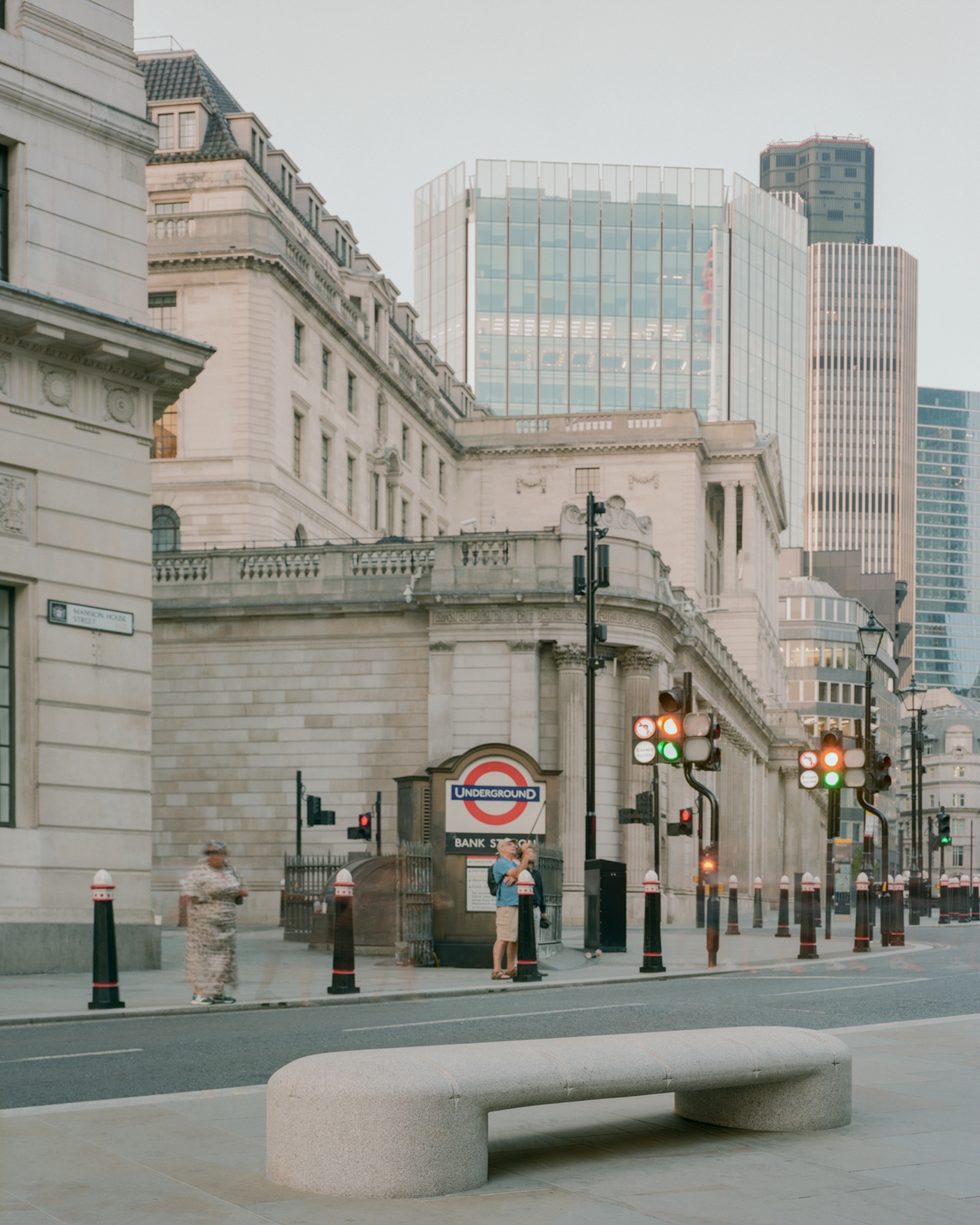
The scheme is designed to accommodate walking, cycling, public transport and essential vehicle access while improving comfort at street level. New planting softens the hard landscape, and the careful placement of benches helps define distinct areas without obstructing movement through the junction. Together, these interventions transform what was primarily an interchange into a sequence of civic spaces.
“The key urban move is calming the ground plane,” explains J. J. Cliff, director at Studio Weave. “Delivering a project of this complexity has meant coordinating hundreds of small decisions to achieve a shared civic vision. From simplifying kerb layouts and reducing the number of material changes to careful placement of stone furnitures and new planting; every move has been about allowing the historic setting breathe and providing a more generous space for the contemporary life of the city.”
The project continues Studio Weave’s work with the City of London Corporation on public realm and civic projects across the Square Mile. These include Finsbury Circus Gardens and its associated Parks Office, as well as Jubilee Gardens, a biodiverse landscape created above an existing power station. At Bank Junction, this ongoing collaboration has produced a public realm that responds to changing patterns of movement while reinforcing the character of one of London’s most recognisable historic settings.
Credits
Client
City of London Corporation
Architect
Studio Weave
More pictures