Tate + Co and HTA Design have completed a timber-framed visitor centre for London’s Crystal Palace Park, combining adaptable community and exhibition spaces with the reuse of the previous building’s foundations.
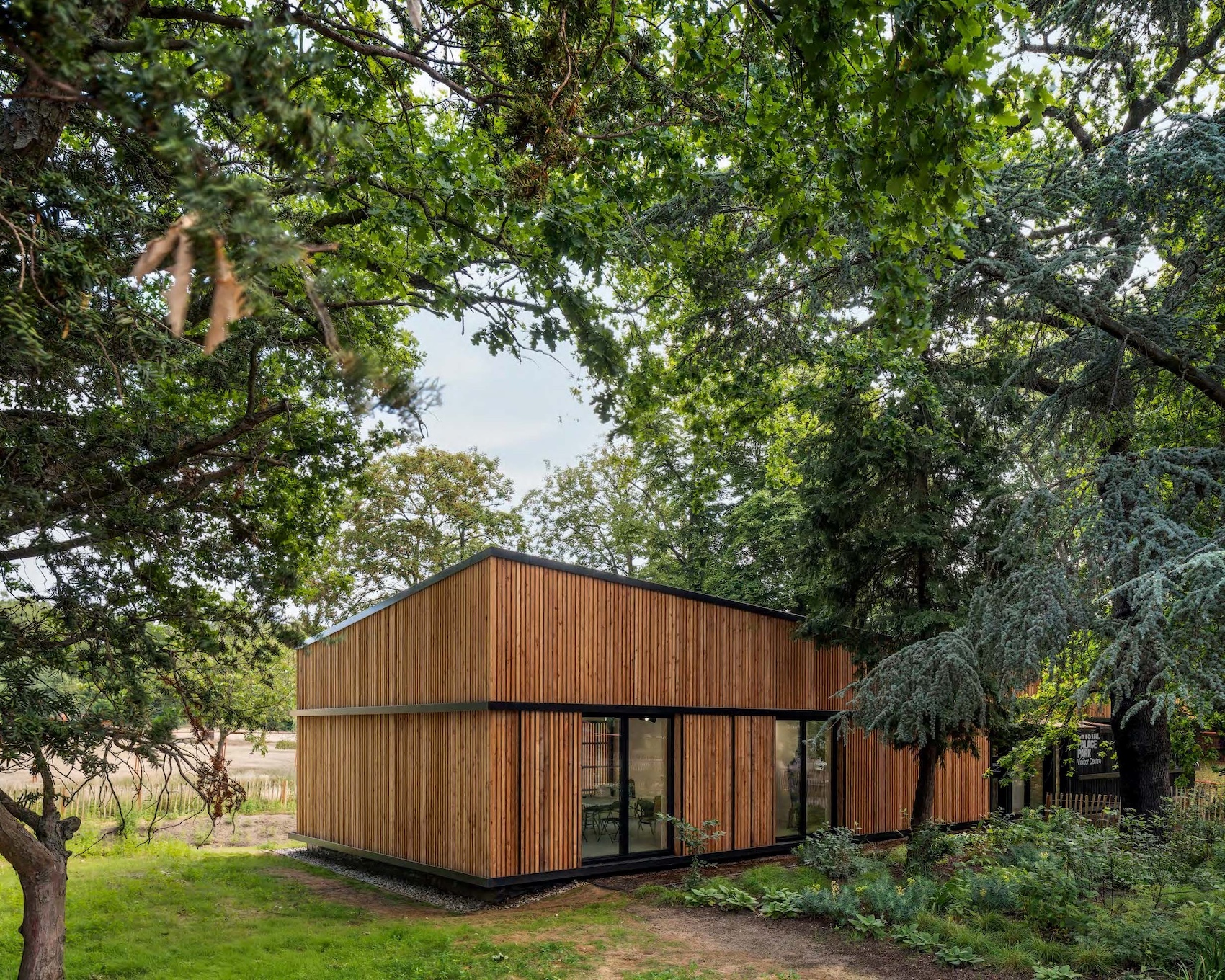
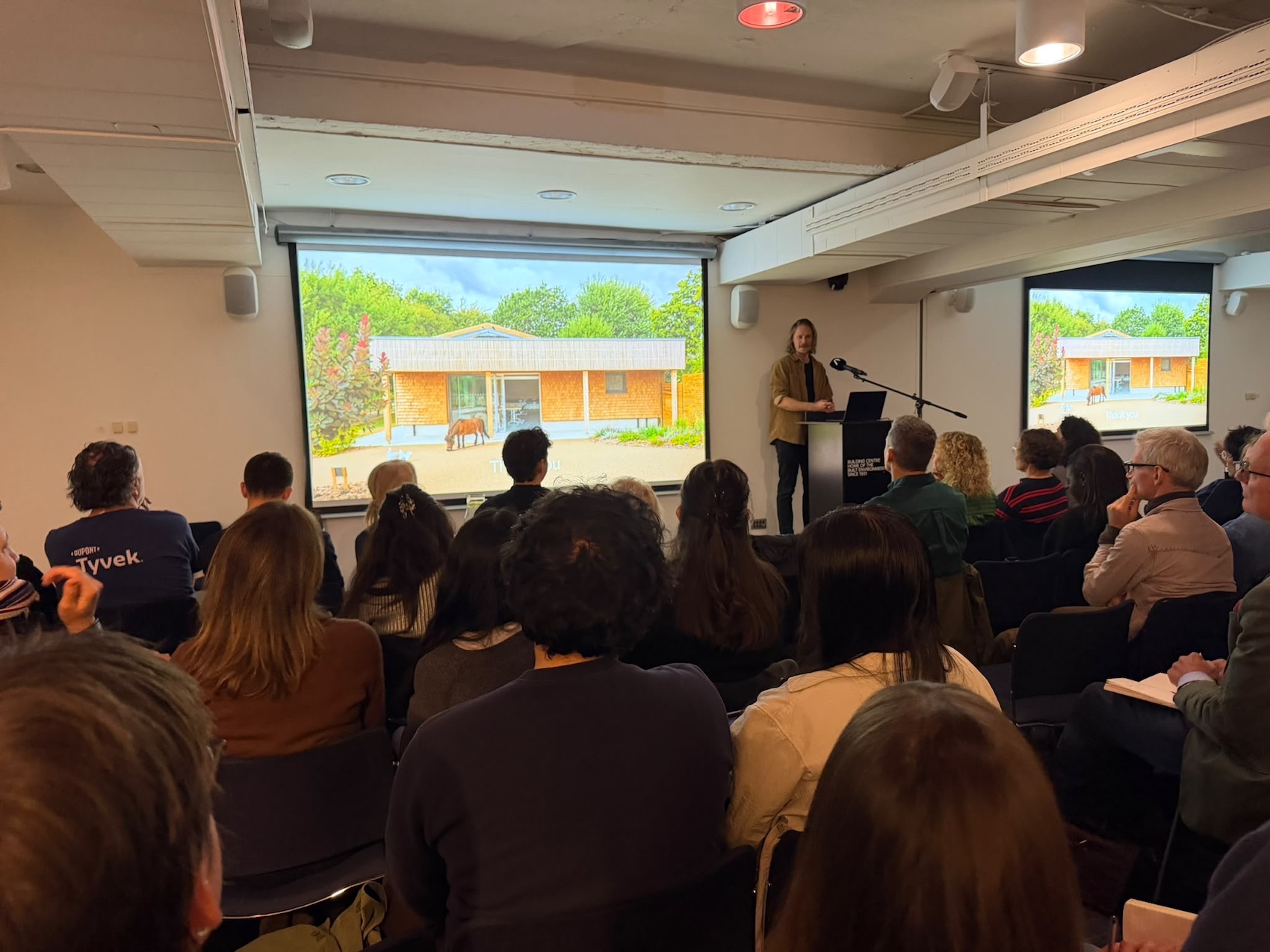
Tate + Co, working in collaboration with HTA Design, has completed a visitor centre at Crystal Palace Park in south London. The 195-square-metre building forms part of a wider regeneration programme led by Bromley Council and Crystal Palace Park Trust, which includes the restoration of the Grade II-listed Italian Terraces and dinosaur sculptures, alongside work to create a more biodiverse and climate-resilient resource.
Occupying the site of the park’s former visitor centre, the new building provides a flexible space for community events, meetings and private functions, alongside a permanent exhibition exploring the park’s layered history, including the Crystal Palace, Great Exhibition and its famous dinosaur sculptures.
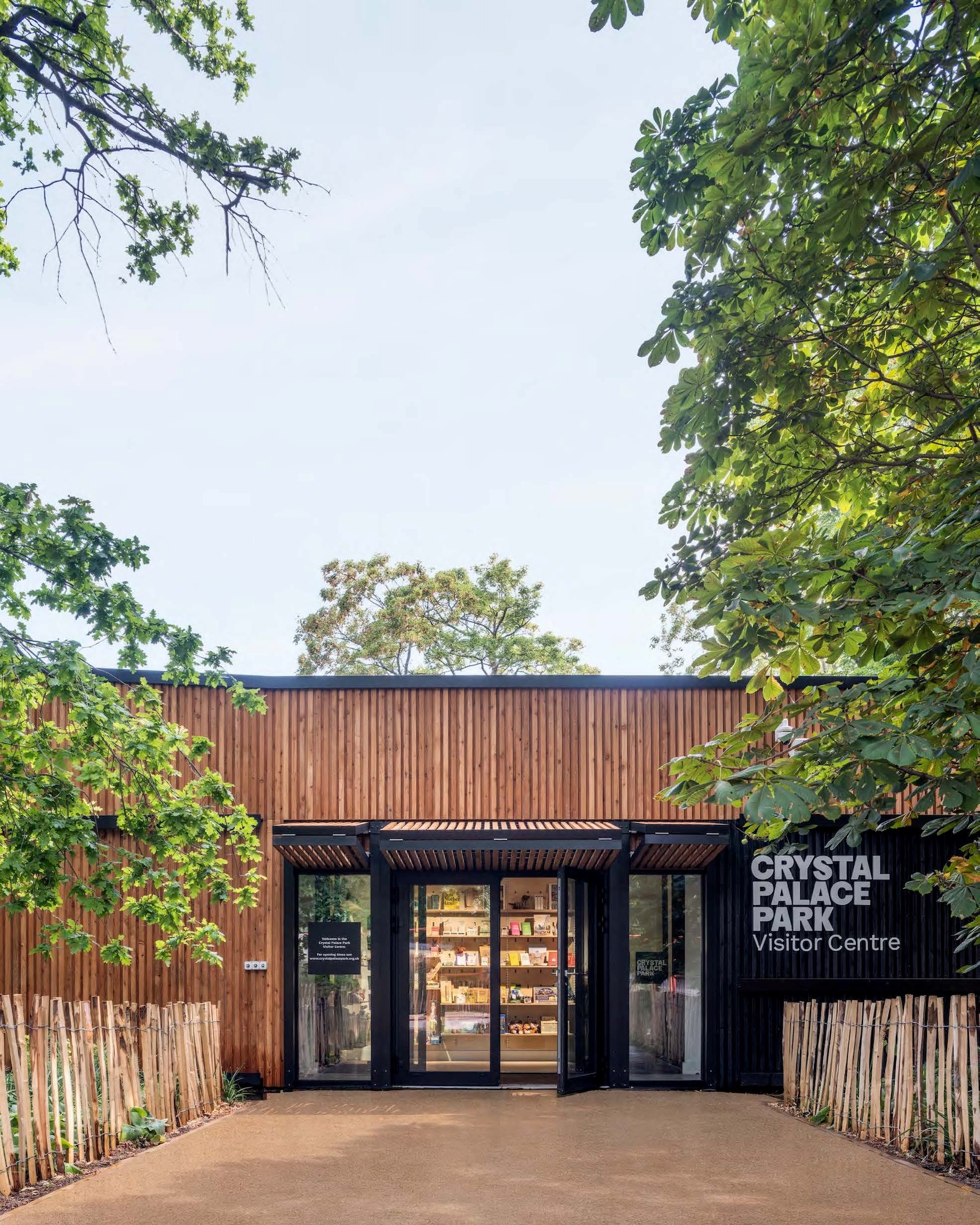
The project retains the previous building’s concrete foundations and floor slab, avoiding the need for their demolition and replacement, and saving approximately 20 tonnes of embodied carbon. Reusing the existing substructure also reduced construction work around the mature trees surrounding the site. Above, a lightweight timber structure has been designed with its loadbearing frame positioned externally, leaving the interior largely unobstructed and allowing the building to be reconfigured as its uses change. A two-tone elevation provides a visual distinction between public and private areas.
A system of movable timber shutters alters the character of the building according to whether it is in use. When the Visitor Centre opens, the shutters lift and slide away to reveal the glazing and establish a more direct relationship between the interior and the park. When closed, they settle back across the façade to form a quieter, more enclosed presence in the landscape.
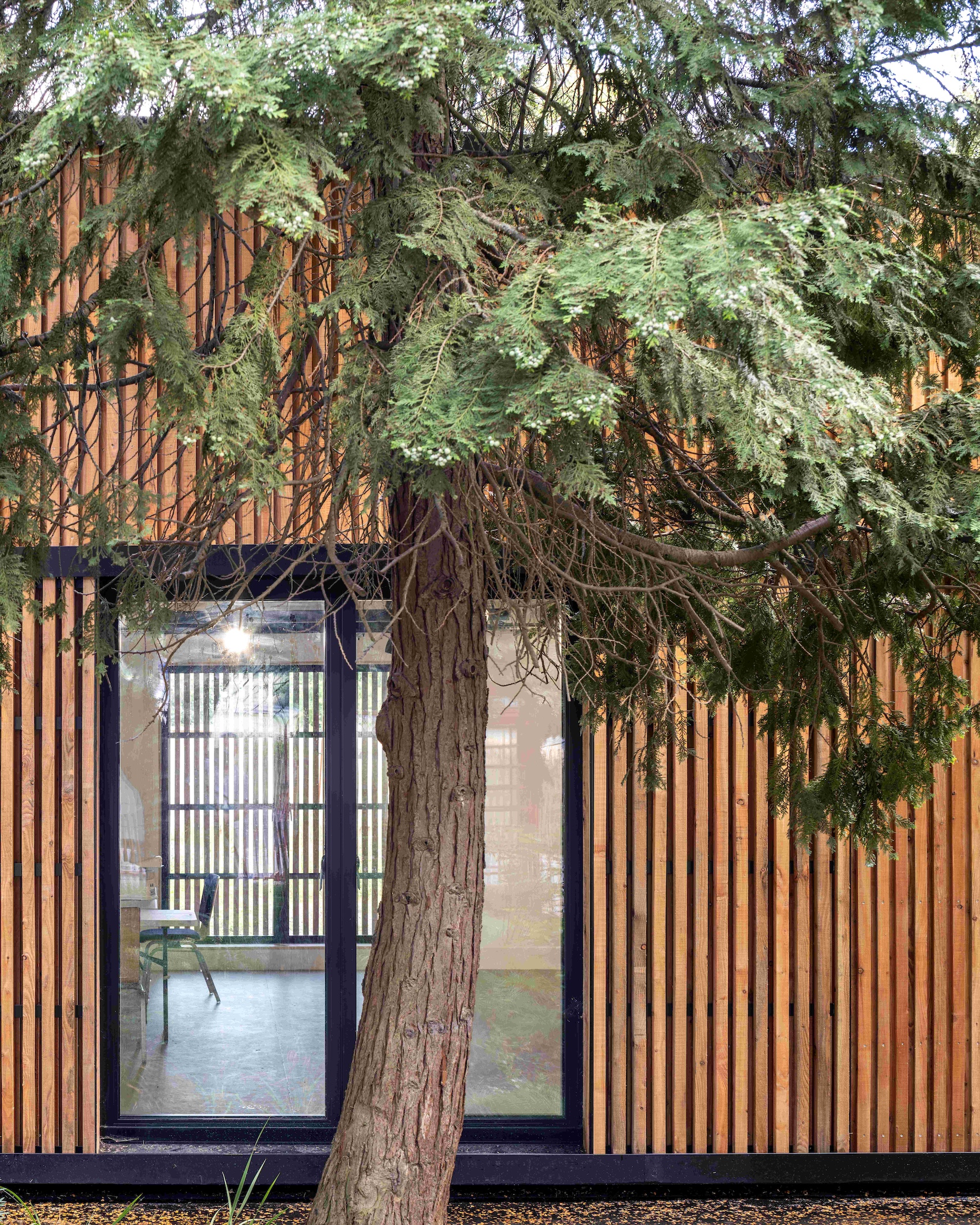
Natural materials, including vertically-laid timber cladding, are used throughout the exterior and have been selected to weather and mellow over time, allowing the building to develop a closer visual relationship with its landscaped setting and neighbouring structures.
Nikita Schweizer, lead architectural designer at Tate + Co, said, “For us, the Visitor Centre needed to feel like it belonged; useful, welcoming and quietly playful so it was designed to be simple, robust and adaptable. The result is a lively and animated building that supports a historic park, its visitors and its future.”