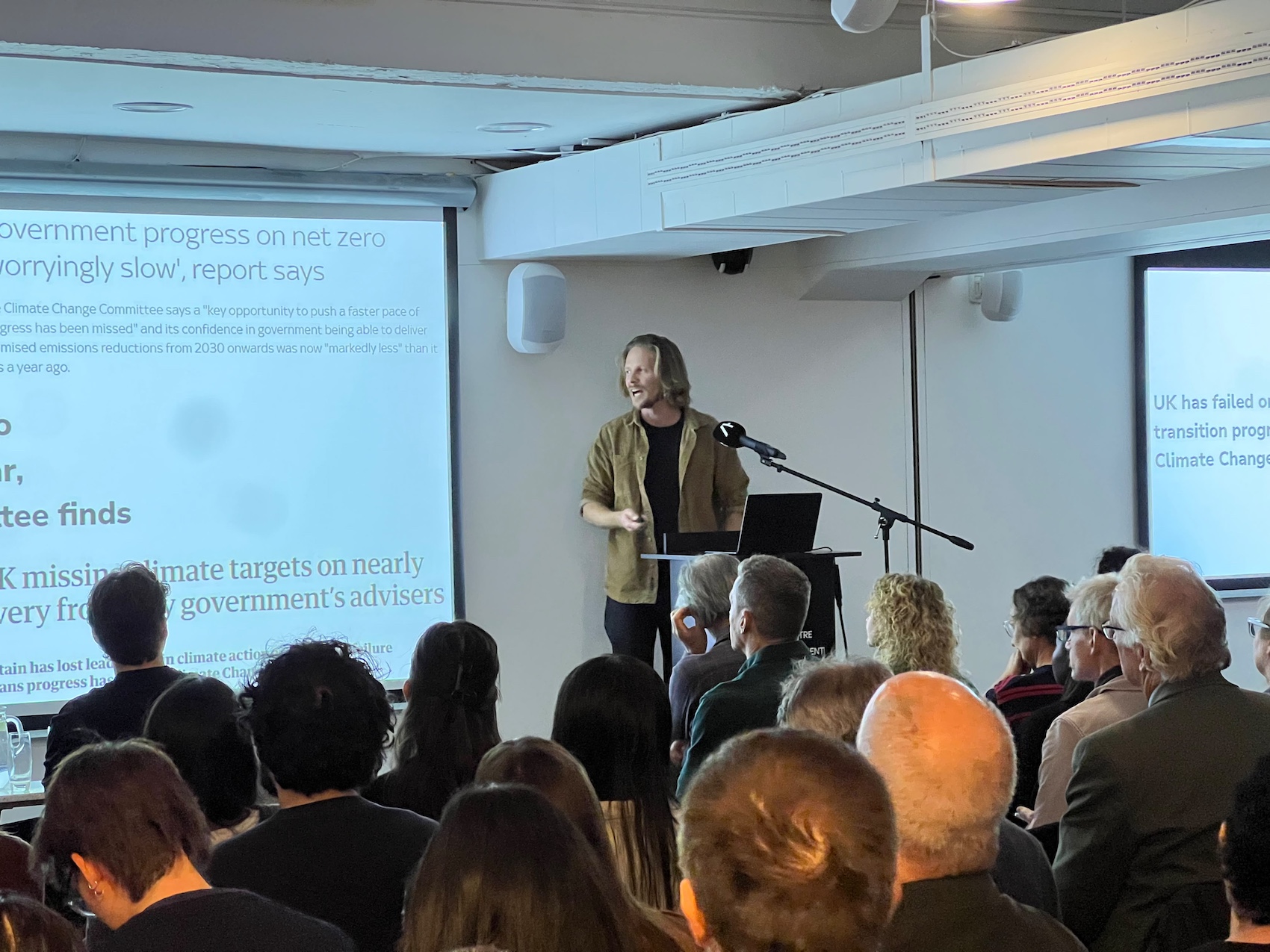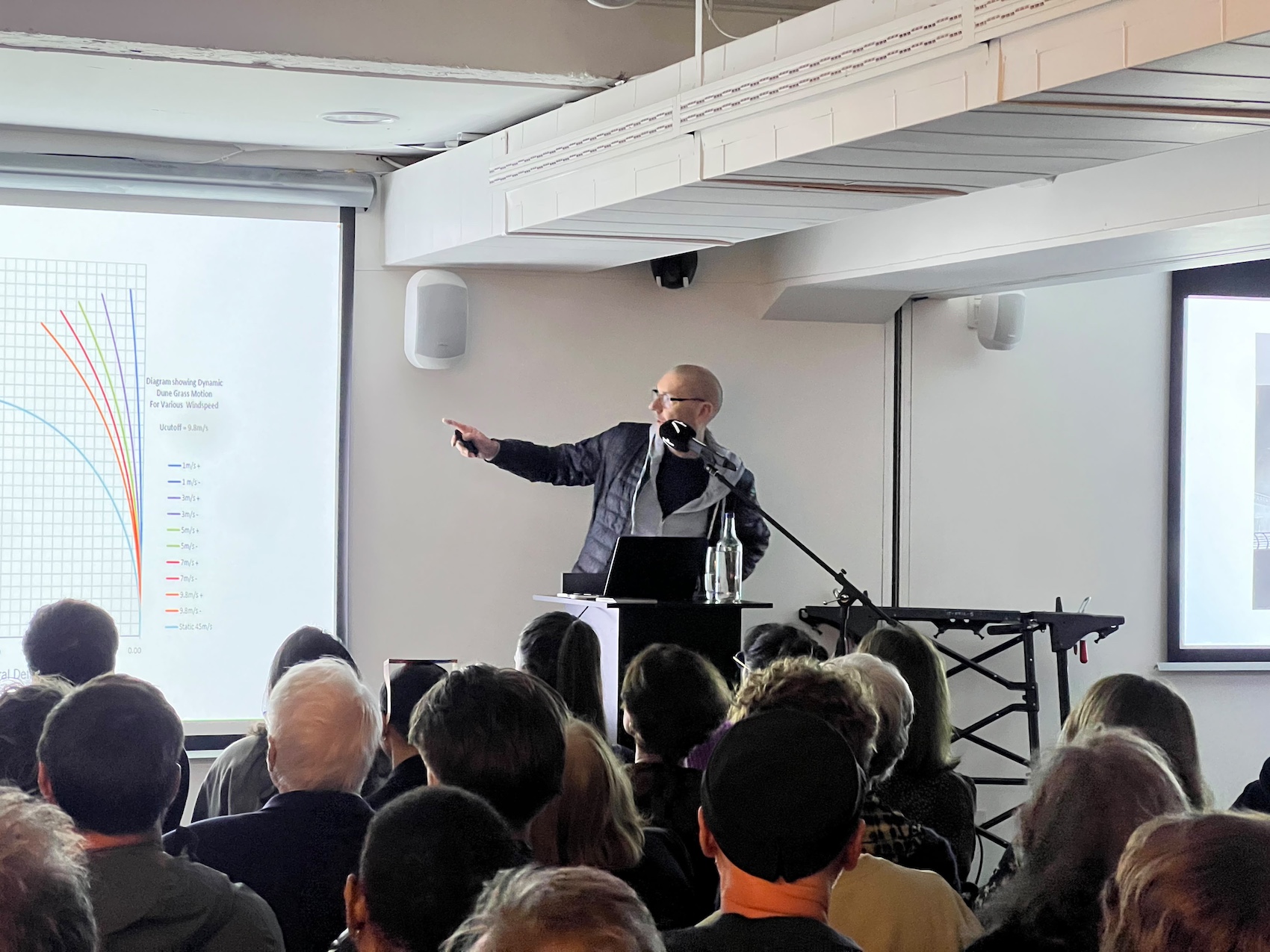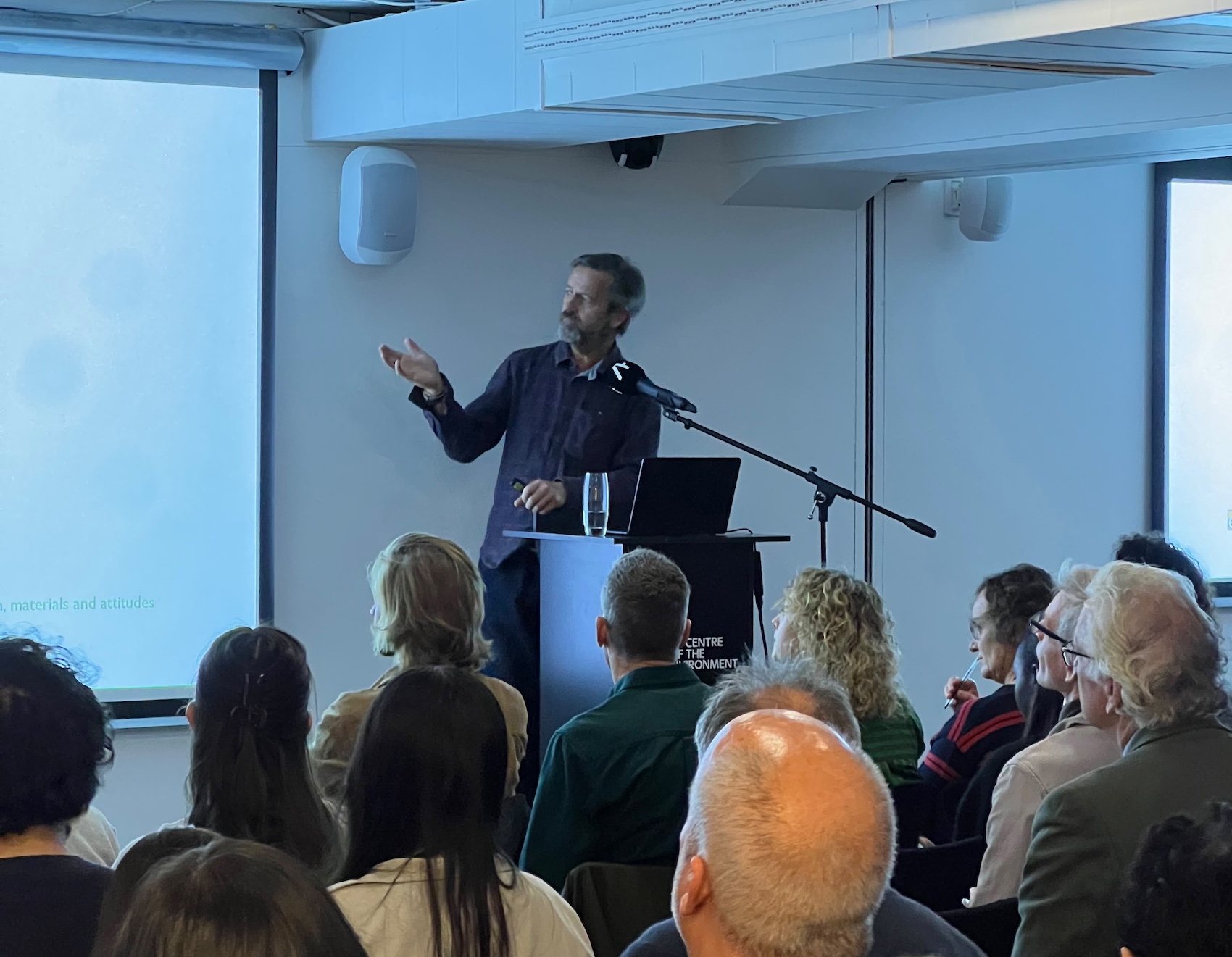
Duncan Baker-Brown, Founder and Director of Baker-Brown Studio, focussed on extraction and the use of manufactured products and natural building materials, arguing that mass extraction for bio-based materials can be just as harmful to the planet. There is another approach.
Reuse before extraction
Duncan Baker-Brown, Founder and Director of BakerBrown Studio, focused on the scale of construction’s demand for resources. “The construction sector consumes 50% of all extracted materials that we harvest every year, and it’s the extraction of those materials that is causing the mass extinction of species at the moment.”
His response is a hierarchy that starts with what already exists. “Hold on to what you already have and reuse it. Think twice about manufacturing new stuff.”
That applies not only to buildings and manufactured products but also to materials drawn from biological systems. Baker-Brown warned against assuming that a natural material is automatically regenerative. “You can clear fell a slope of timber, and you’ve just created a desert,” he said, adding that carbon is only one measure of the damage caused by extraction.
By contrast, he pointed to managed sweet chestnut woodland as an example of a productive landscape in which human intervention can increase biodiversity. “If you work these woodlands on the 25-30 year cycle, you get a greater level of biodiversity than if you leave them alone. That is regenerative design. I don’t know what else is. That is regenerative design.”

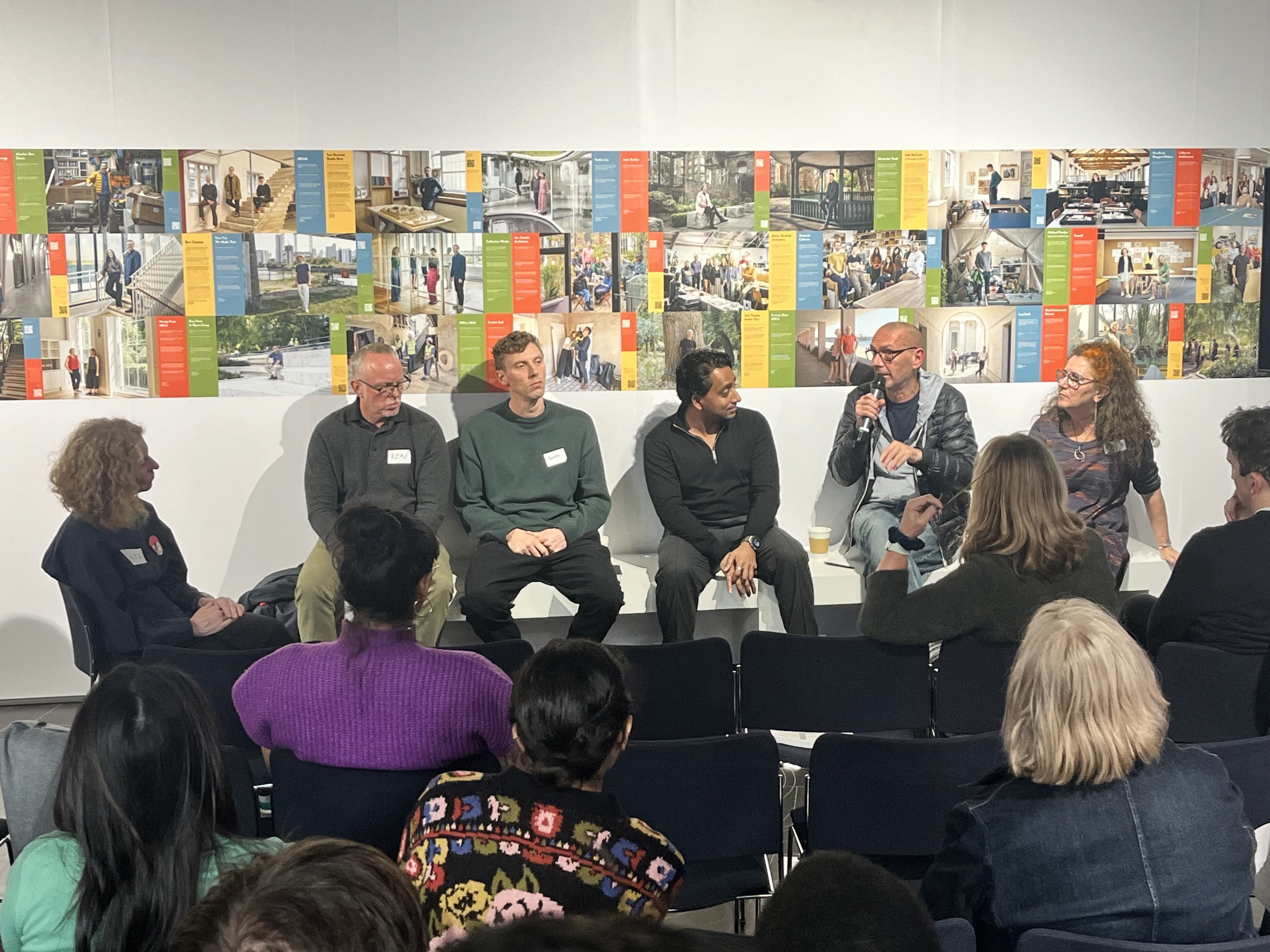
Launched by Architecture Today, Regenerative Design 2026 is a month-long programme of exhibitions and events that takes place at the Building Centre throughout October 2026.
Paradigm shift: A new mindset for a regenerative world was delivered in partnership with Heidelberg Materials UK.