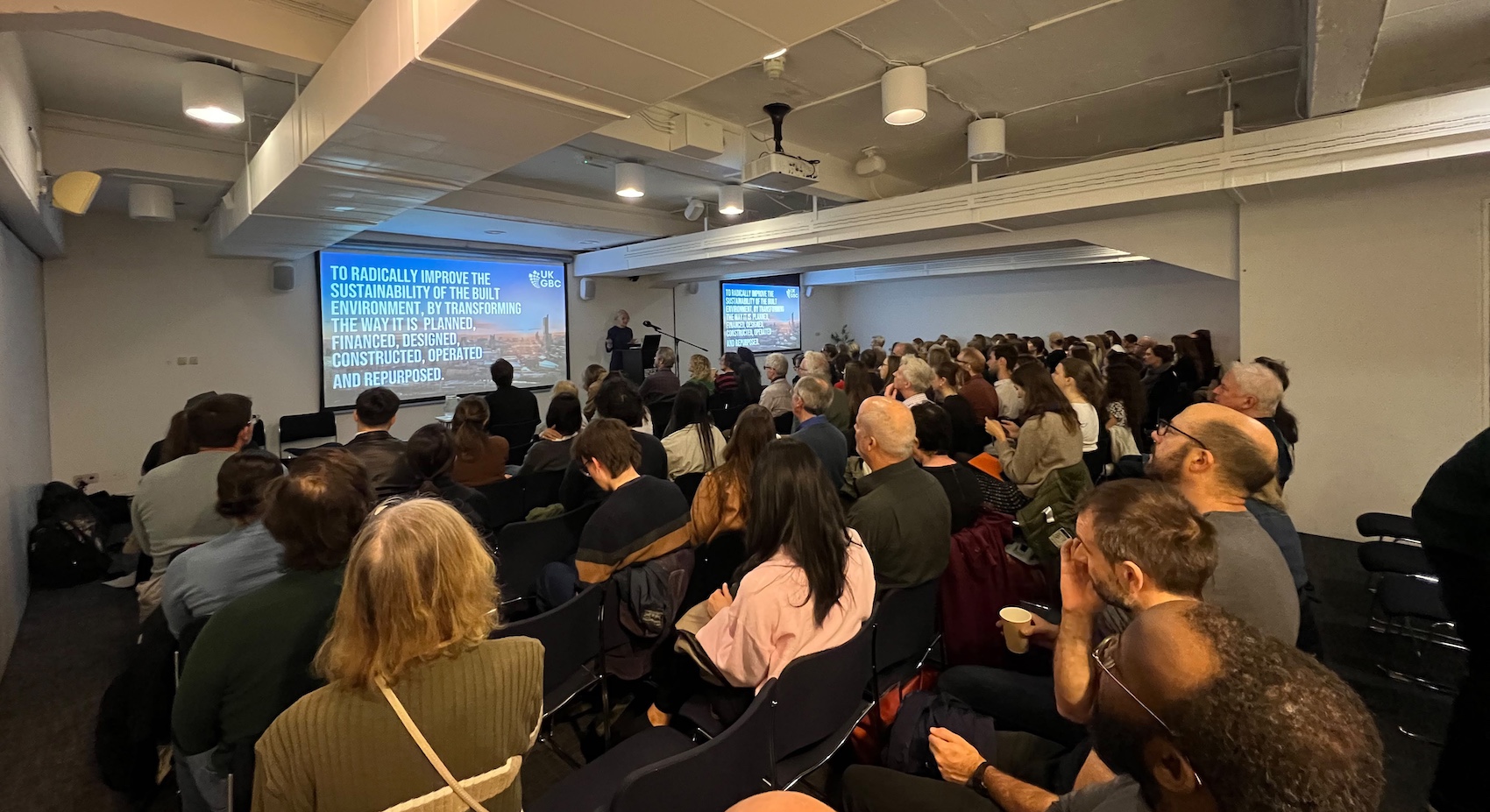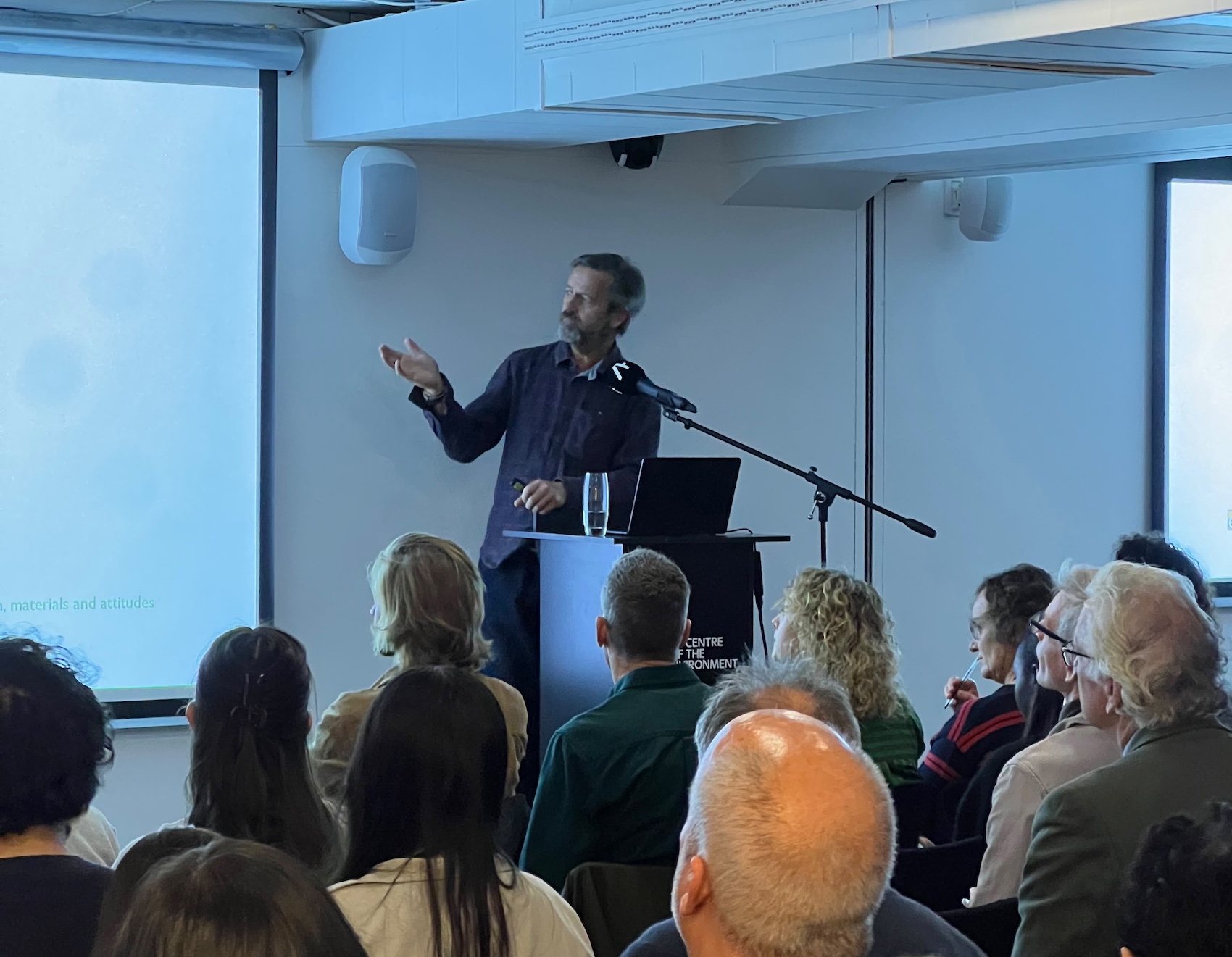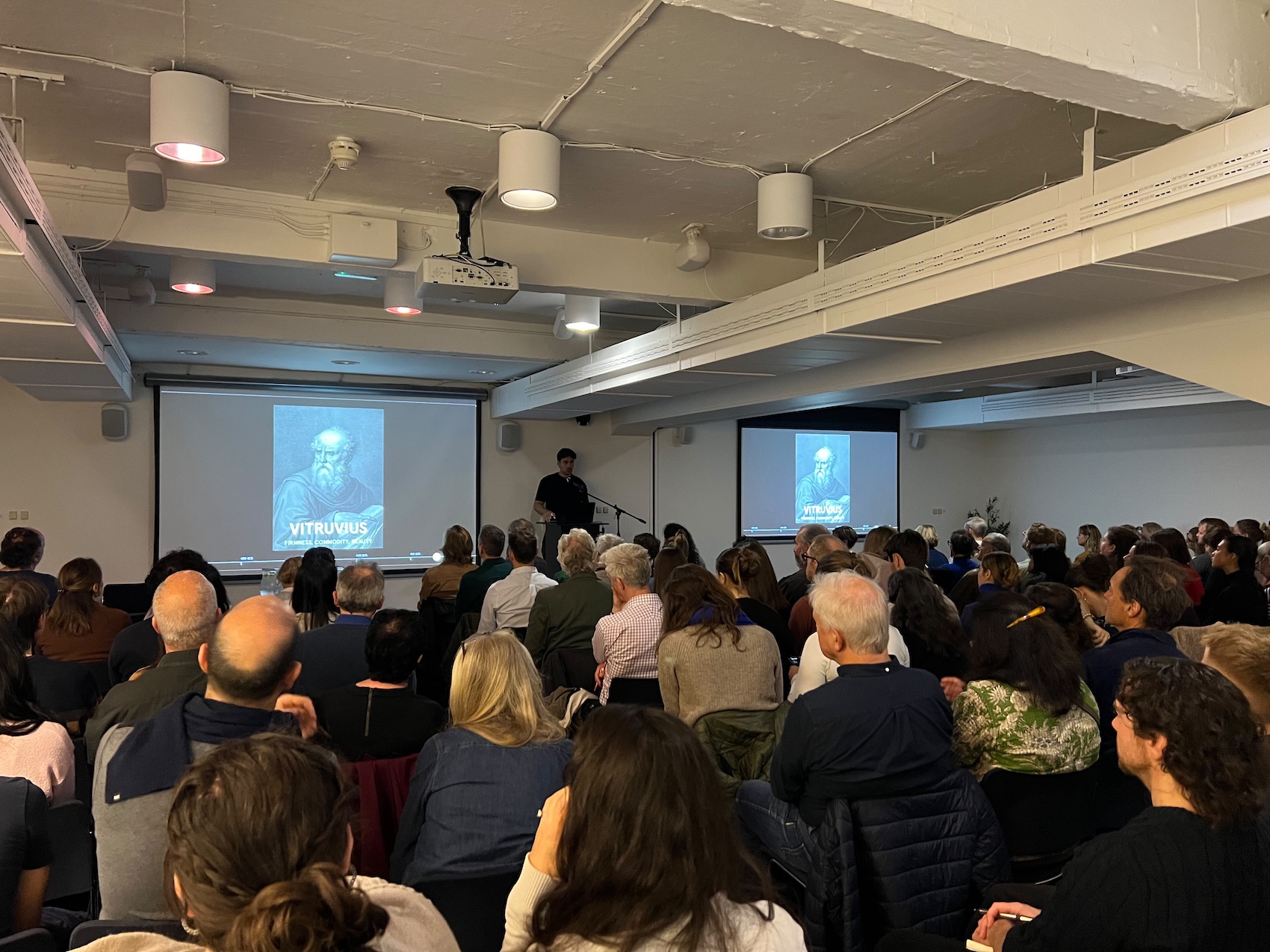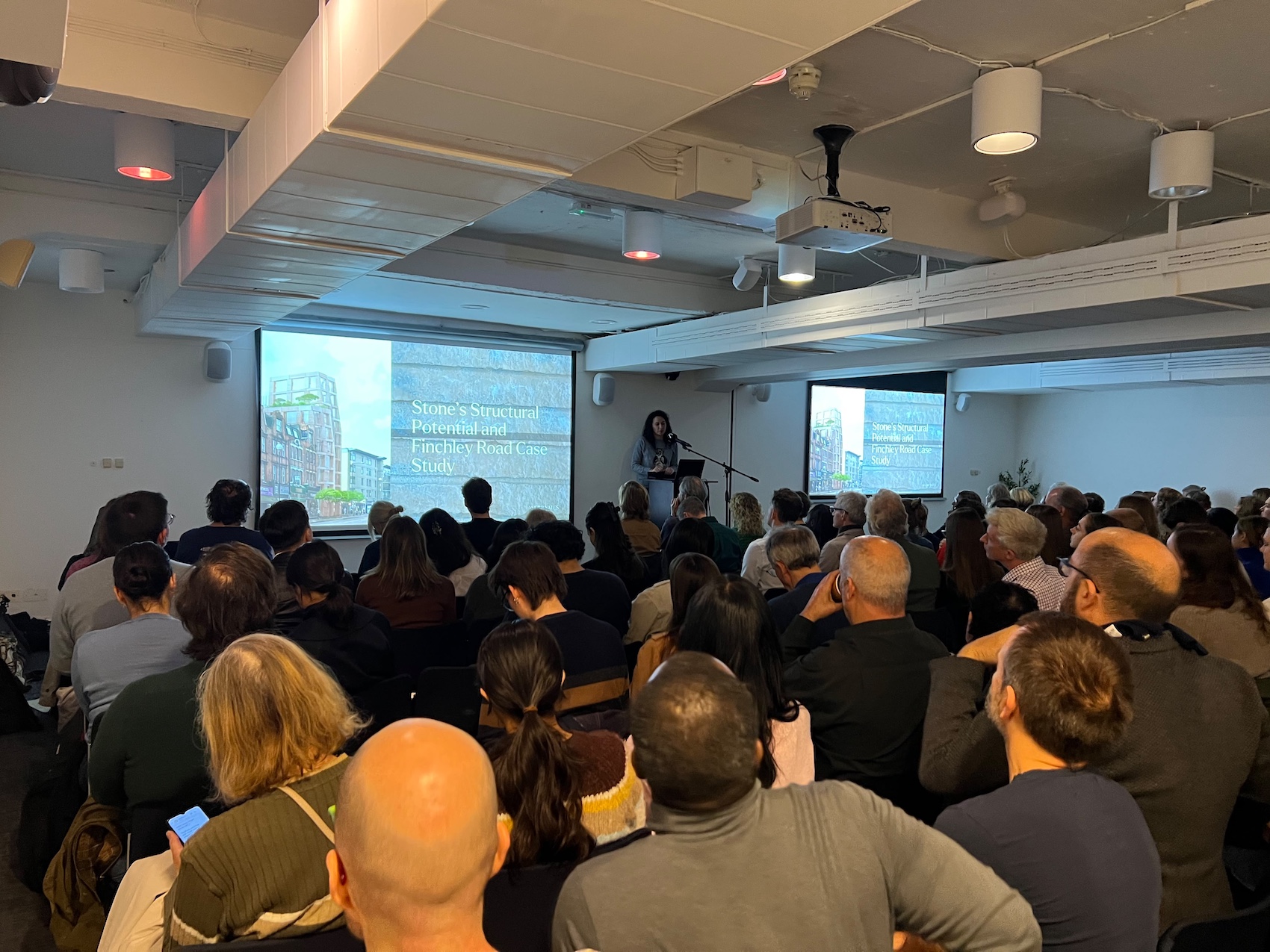
At Regenerative Design 2026, Atelier One founder Neil Thomas explored how trees, bamboo and the natural world can transform our approach to structural engineering, materials and design, with contributions from artist Barnaby Steel, pianist Sarah Nicolls and Atelier One’s Ralph Saade.
How much can we learn from nature about the way we design and build? For Neil Thomas, founder of structural engineering practice Atelier One, the answer is a great deal. In his two-hour epic “Tree Stories (and some grass) at the Building Centre for Regenerative Design 2026, Thomas meandered through the structural intelligence of the natural world, drawing on projects spanning wind-responsive sculptures, bamboo buildings, concert stages, animal enclosures and a radically reimagined piano.
He began by questioning the conventional definition of nature as something separate from human beings and their creations. “Nature’s been doing it [engineering] for four hundred million years, so it’s pretty good at it,” he said, arguing that engineers have much to gain by understanding natural processes.
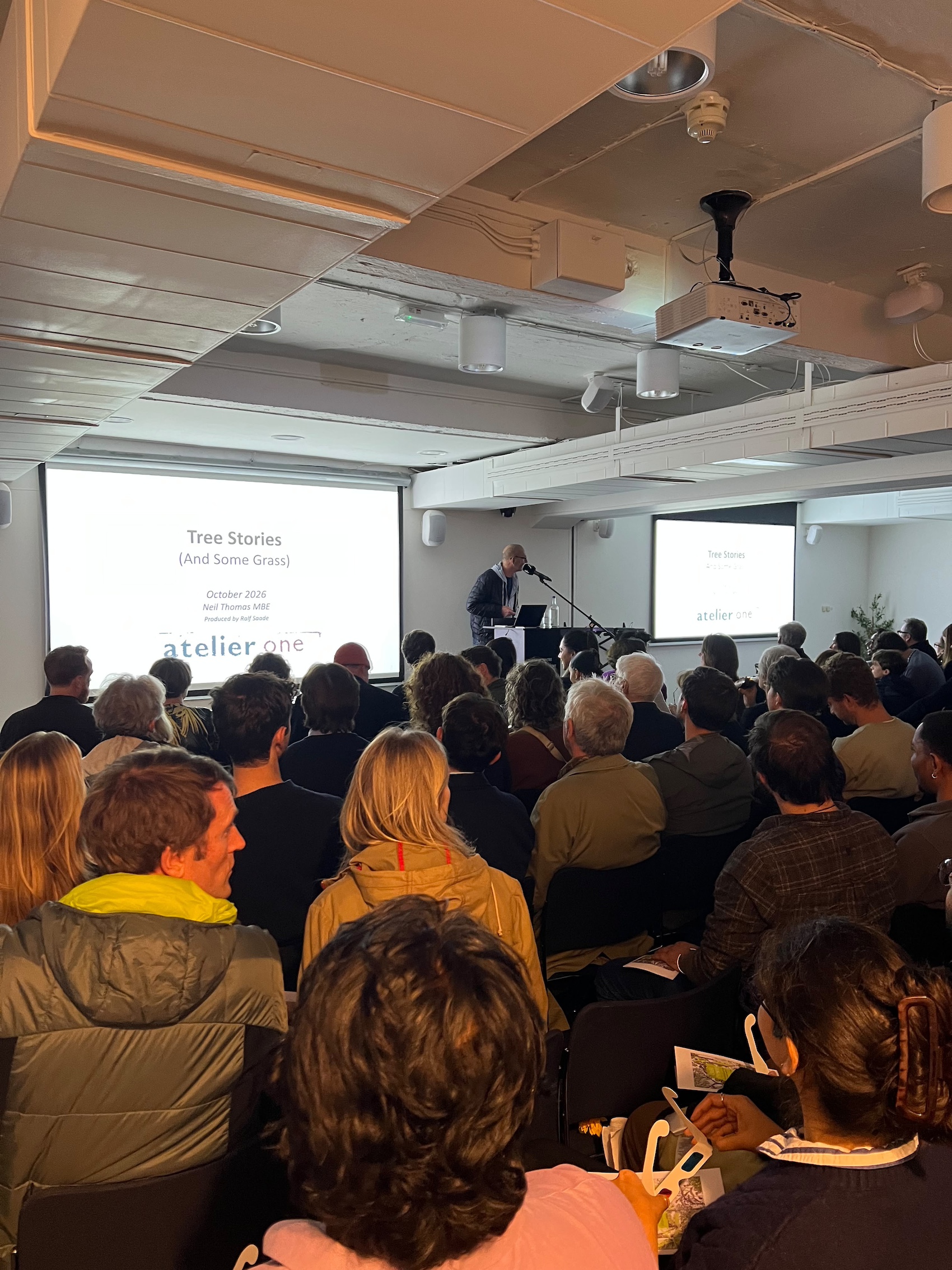
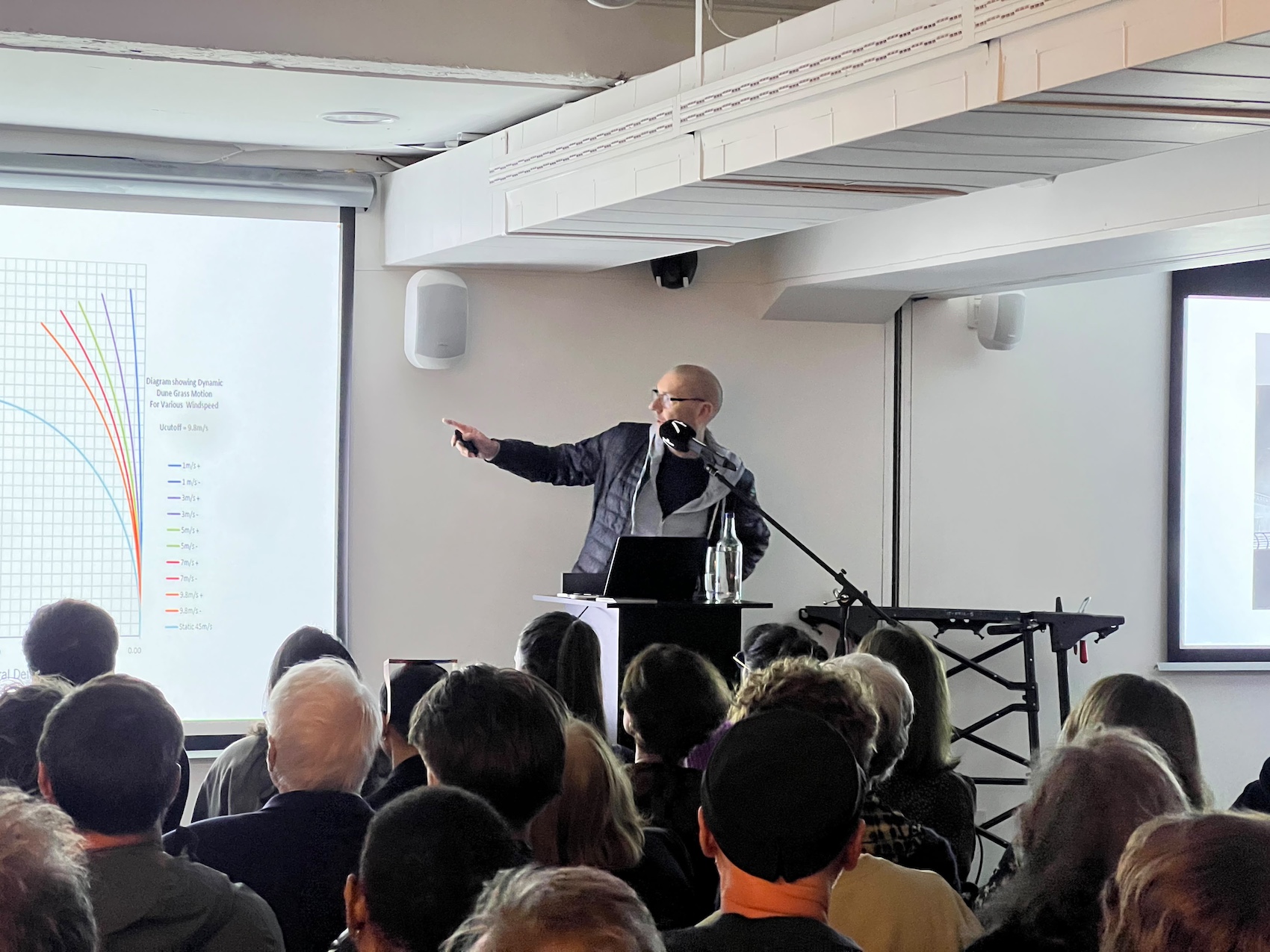
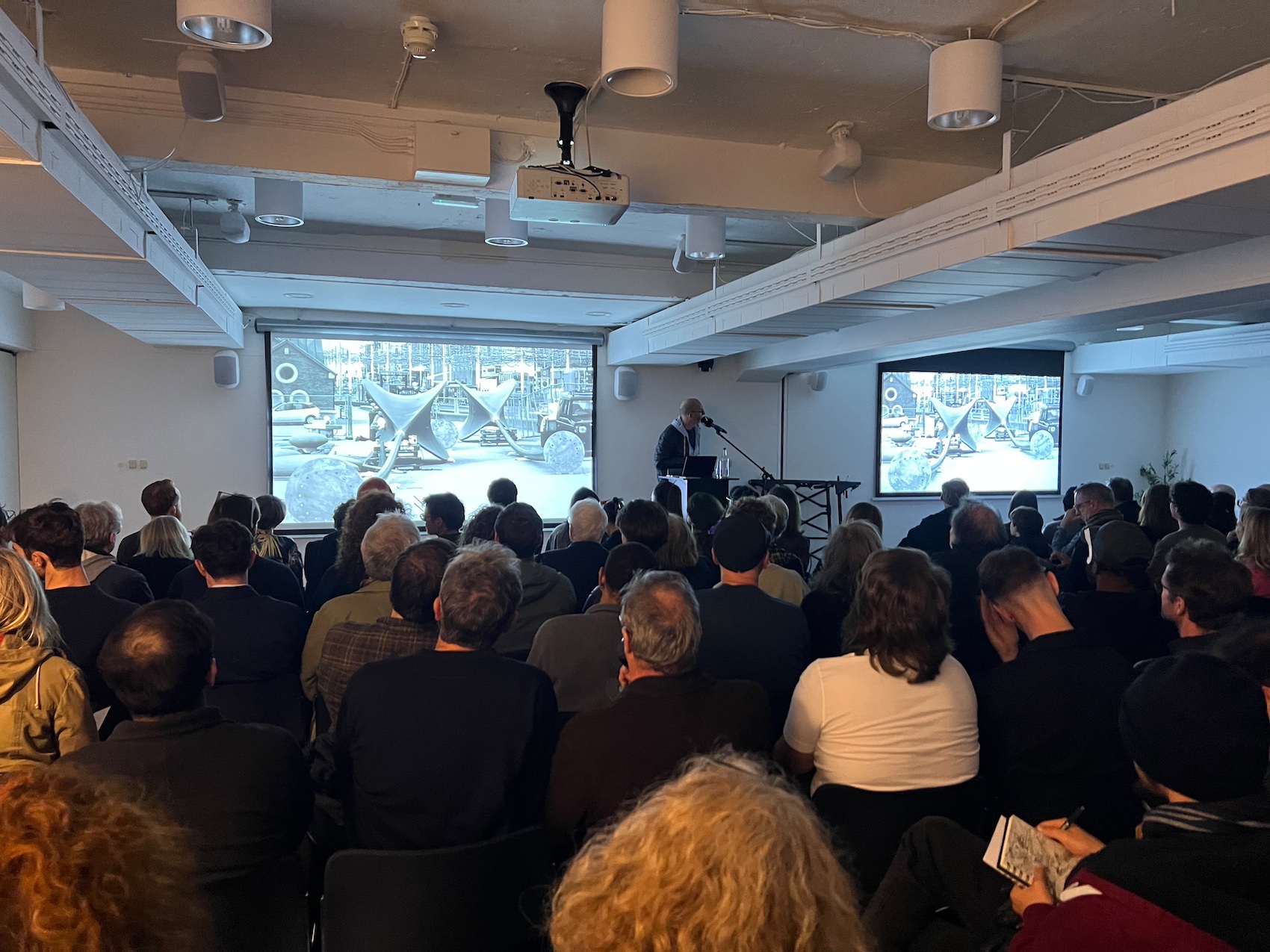
One of his favourite Atelier One projects, Dune Grass, provided an early illustration. Designed for Blackpool’s seafront, the installation comprises slender structures that sway in light winds but become stable in stronger conditions, exploiting aerodynamic behaviour rather than mechanical movement projects demonstrated the potential to rethink materials and resources, from lightweight concert structures and Singapore’s Gardens by the Bay to the transformation of a disused offshore platform into the See Monster installation in Weston-super-Mare.
The Wildheart Animal Sanctuary on the Isle of Wight may well be one of Atelier One’s smallest projects, but provided the perfect case study for Thomas and the practices work. Walking us through the site, Thomas pointed out scrap materials cast aside: from a shipping container, steel beams, windows and glass, Atelier One created a viewing platform overlooking the enclosure of rescued bears Benji and Balu.
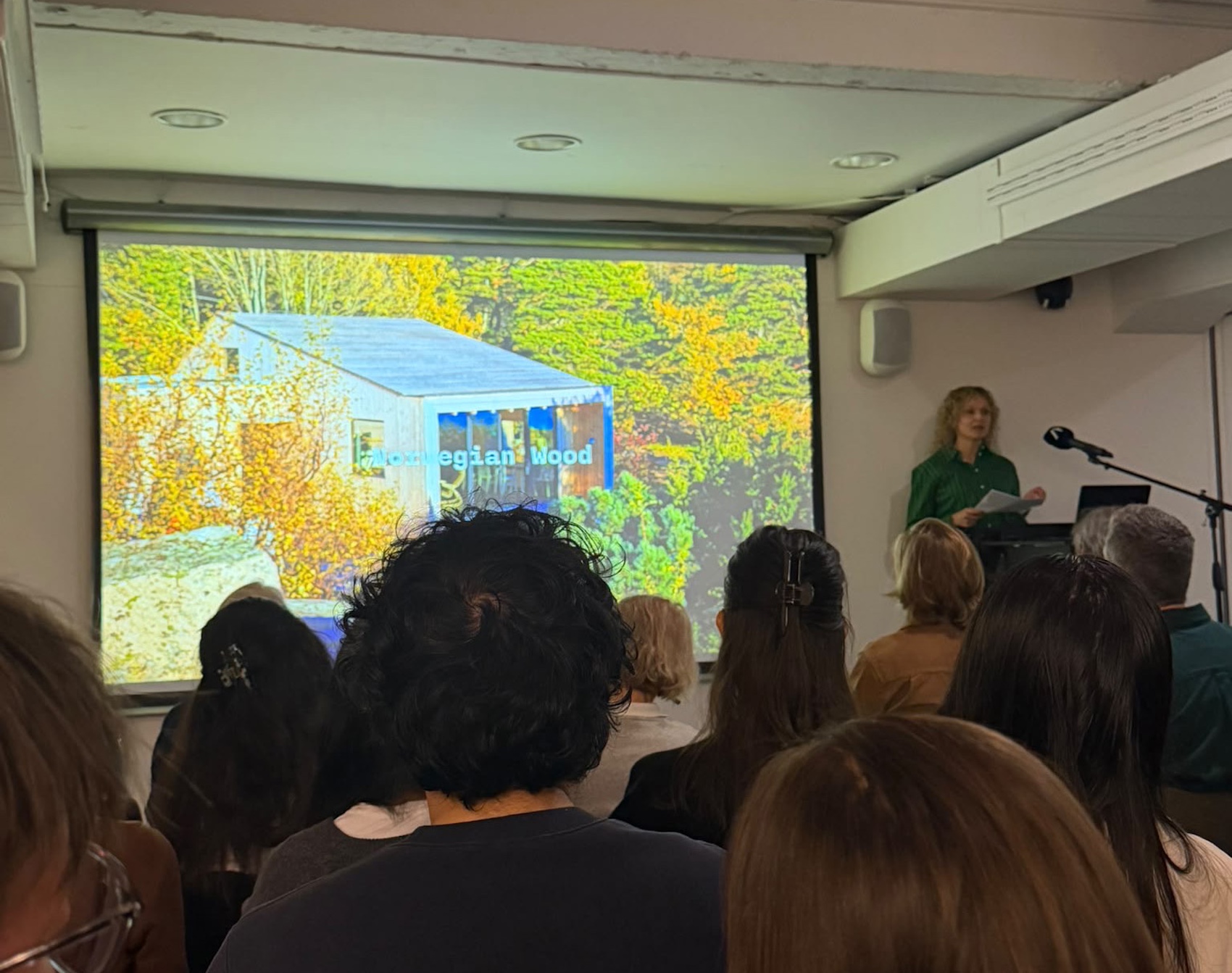
The relationship between people and nature was explored further by Ralph Saade, a creative systems designer at Atelier One, who discussed how design could respond to emotional experience and wellbeing. Using examples ranging from coral reef soundscapes to installations by Olafur Eliasson, Saade argued that the sensory qualities of environments influence how people feel and connect, “because we can’t talk about regeneration. Without talking about healing.”
He concluded with three questions for designers: “What feeling must this place evoke in people who use it?”, “What must it heal in people and in place?” and “Who does it bring together, and for what future?”
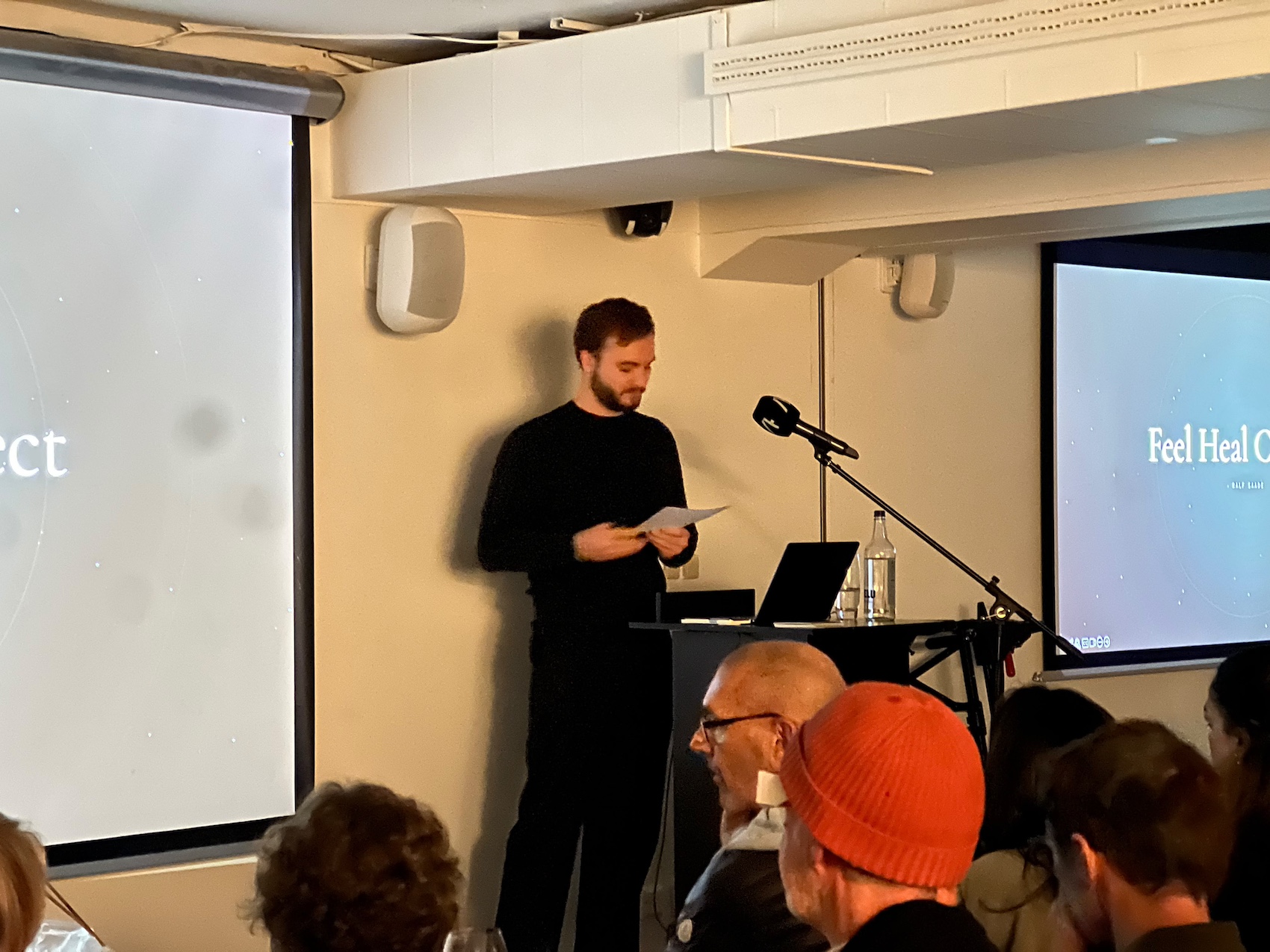
Ralph Saade, creative systems designer at Atelier One on designing to heal, feel and connect.
Artist Barnaby Steel, co-founder of Marshmallow Laser Feast, explained how immersive technologies can reveal relationships between living organisms that are otherwise invisible. His collective’s work combines scientific research with virtual reality and sensory experiences, including installations that explore how different species perceive their surroundings. One project, developed for Kew Gardens, uses digital visualisation to reveal the internal workings of an oak tree, tracing the movement of water and nutrients beneath its bark. “In some ways, the bark creates this illusion that a tree can be contained, but it’s much more like a river,” Steel explained.
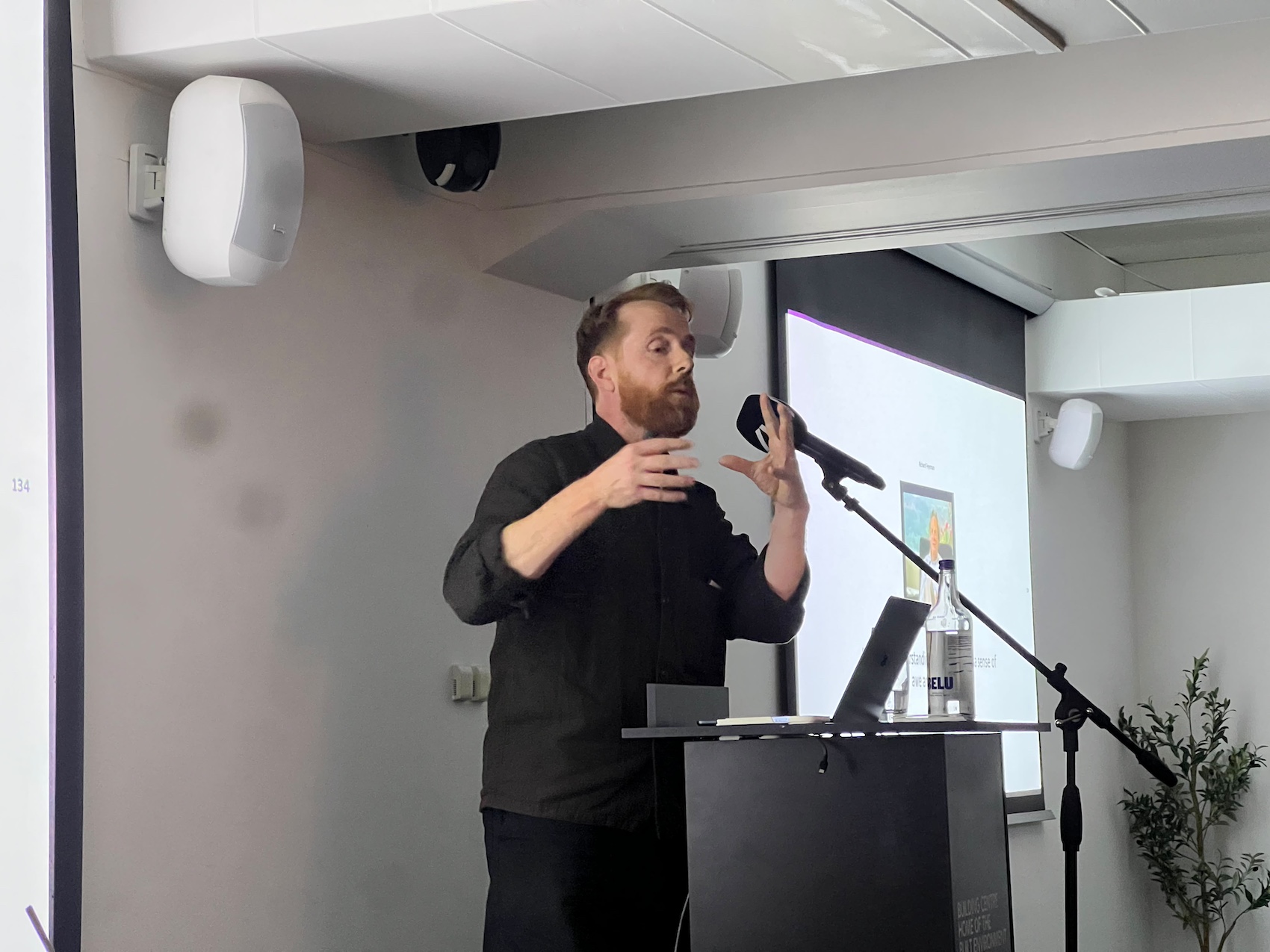
Barnaby Steel from Marshmellow Laser Feast on making the invisible visible.
Returning to engineering, Thomas described how a visit to Bali introduced him to John Hardy and the Green School, beginning a fascination with bamboo. “Bamboo has changed my life entirely,” he said. “It is the most amazing material, and the thing about it is it was there in front of me but I just didn’t see it.”
He highlighted Atelier One’s work on the Green School Gymnasium in Bali, which won the Institution of Structural Engineers’ Supreme Award and Award for Sustainability in 2022, alongside experiments with heat-bending bamboo to create complex forms.
Thomas demonstrated how natural structures, from leaves and branches to flowers, achieve strength through geometry rather than additional material. “Nature doesn’t waste materials,” he explained. “Nature uses the minimum amount of materials, but it uses them really carefully.” These principles informed projects including the Pangolin Pavilion, developed with Studio Saar, and modular bamboo housing in Mexico, designed to be lightweight, adaptable and straightforward to assemble.
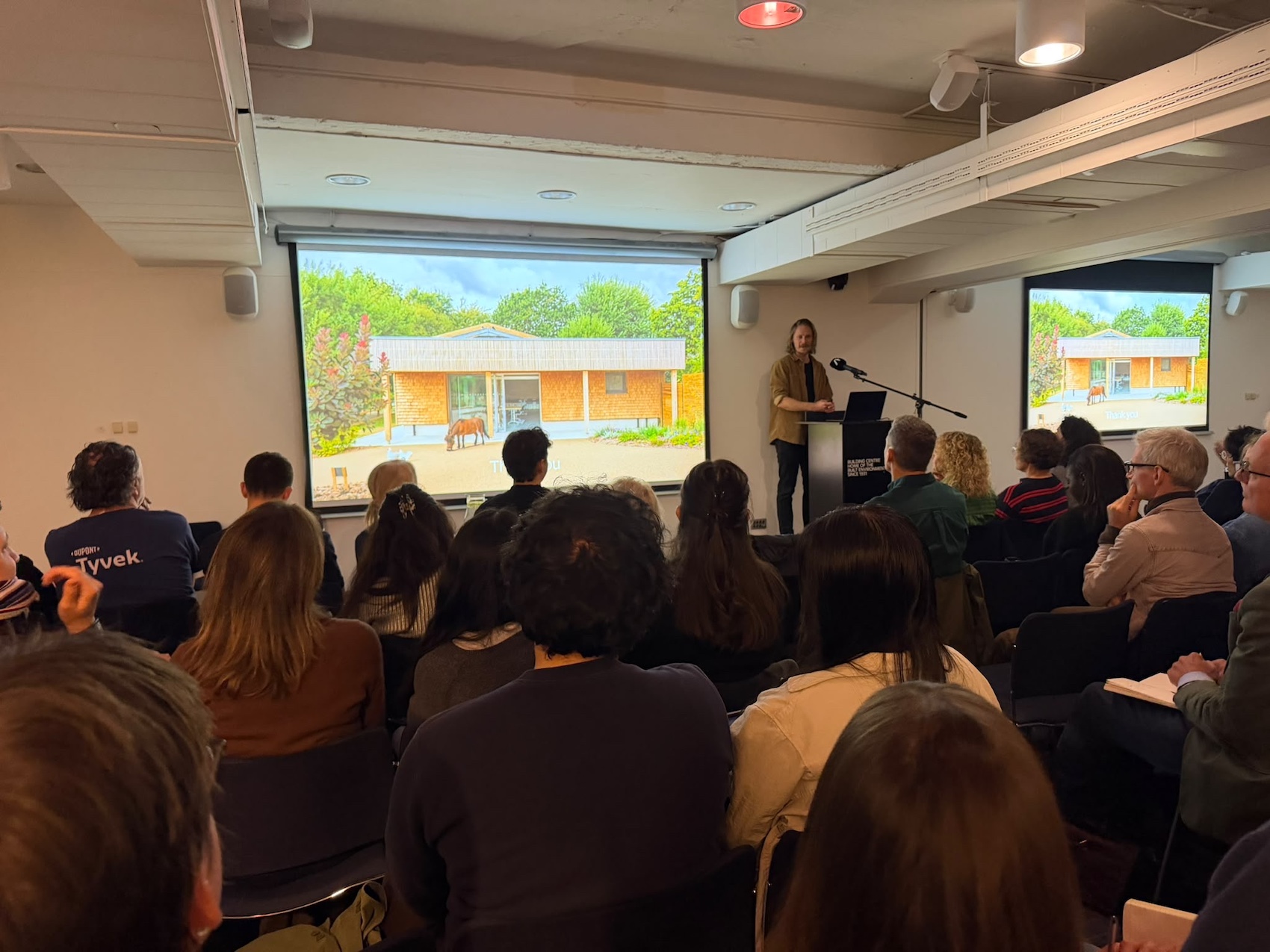
Last but not least, pianist and inventor Dr Sarah Nicolls joined Thomas to discuss their collaboration on a lightweight piano using a carbon-fibre frame in place of conventional cast iron. “Everything else changes. Buildings change. Structures change. Cars change. Why isn’t the piano changing?” she asked.
Their prototype reduces the instrument body’s weight from approximately 200 kilograms in an earlier version to 60 kilograms, while repositioning the strings to make them accessible to the performer. The project prompted investigations into alternative soundboard materials, including composites combining fast-growing paulownia timber and bamboo, in response to concerns about the availability of traditional spruce.
For Nicolls, the collaboration highlighted the importance of crossing disciplinary boundaries. “Trees are ecosystems. They don’t have false borders. They’re not in boxes. Humans seem to want to put things into boxes,” she observed.
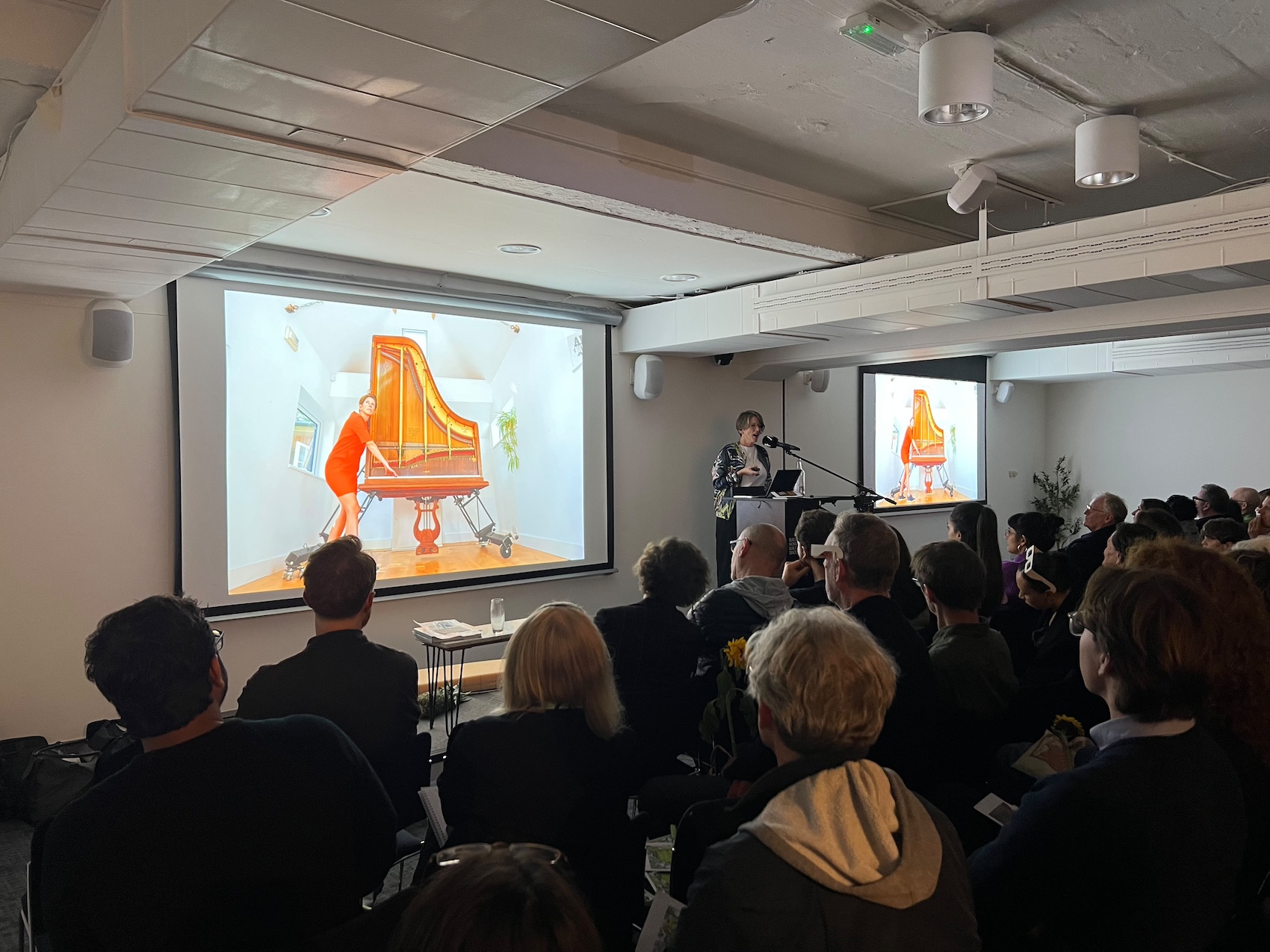
Sarah Nicolls on reinventing the piano.
Thomas concluded by returning to a question inspired by his daily woodland walks: how do trees withstand wind?
Examining how branches move at different moments, he described the potential to apply similar principles of stiffness, movement and damping to tall buildings, reducing the forces and deflections experienced by their structures.
“What if you could do that with a building?” he asked.
Reflecting on how his own relationship with trees had developed during a period of personal recovery, Thomas argued that understanding nature requires recognising our place within it. “We are part of nature. We are nature, just as everything else living is, and even things that aren’t living,” he said. Ultimately, Thomas’s talk was a call to rethink not only how we design and build, but how we understand our relationship with the natural world. From the structural efficiency of a leaf to the interconnectedness of a forest, nature offers more than inspiration: it challenges us to work with its systems rather than impose our own upon them. For architects and engineers, the opportunity lies in translating that understanding into lighter, more resourceful and regenerative forms of design.
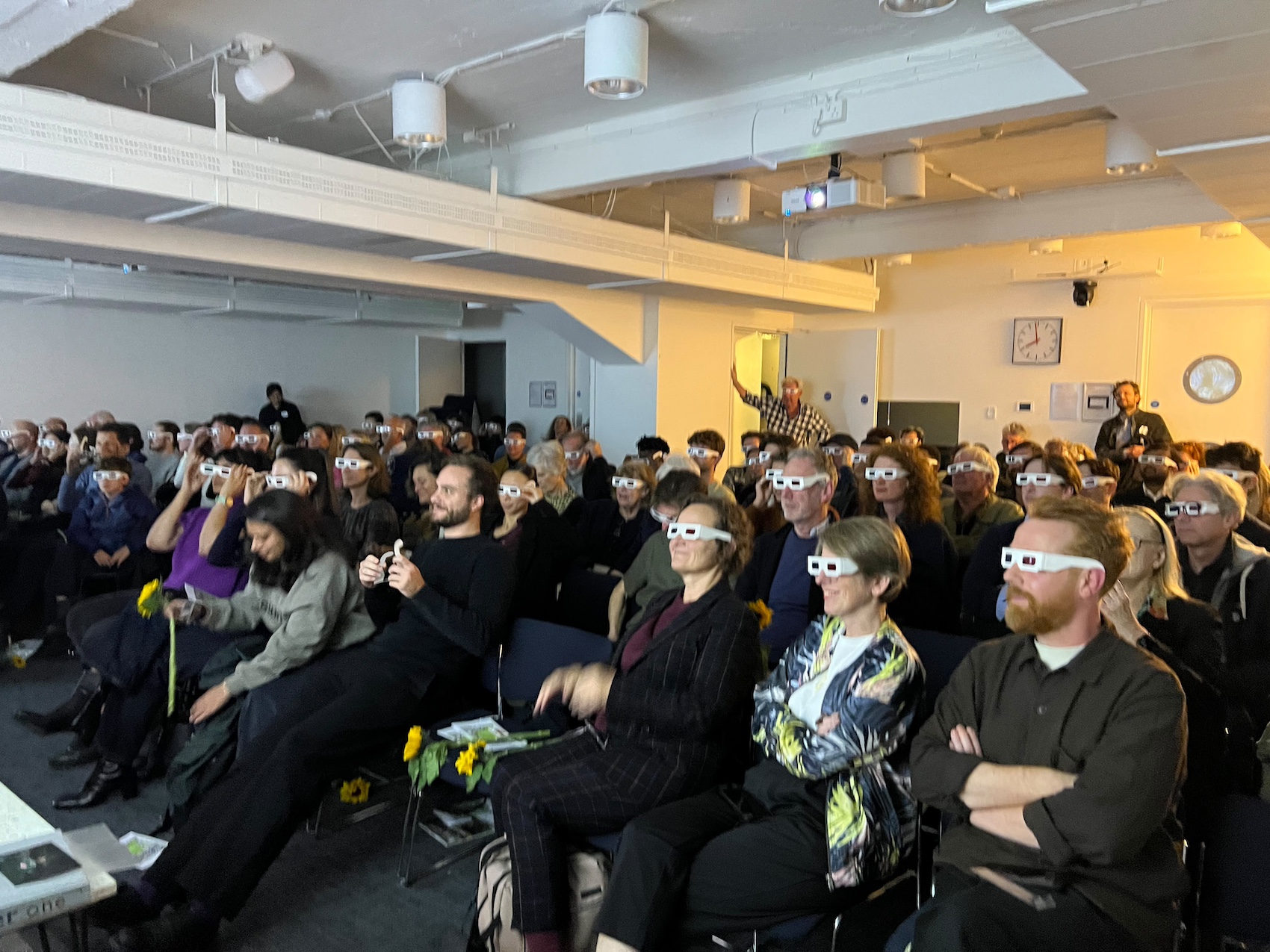
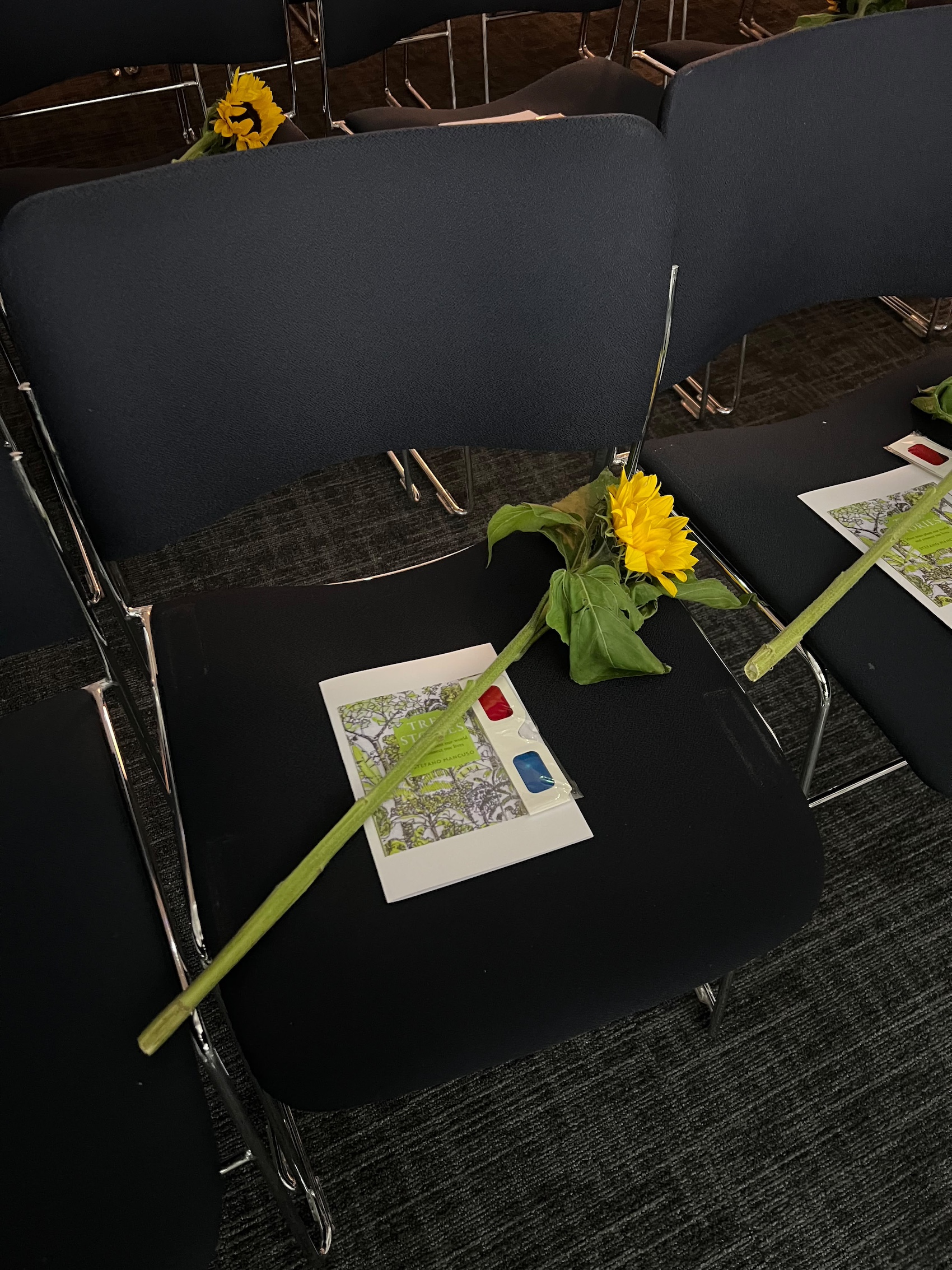
The audience in 3D glasses!

Launched by Architecture Today, Regenerative Design 2026 is a month-long programme of exhibitions and events that takes place at the Building Centre throughout October 2026.
Specifying natural and sustainable materials was delivered in partnership with HG Matthews.