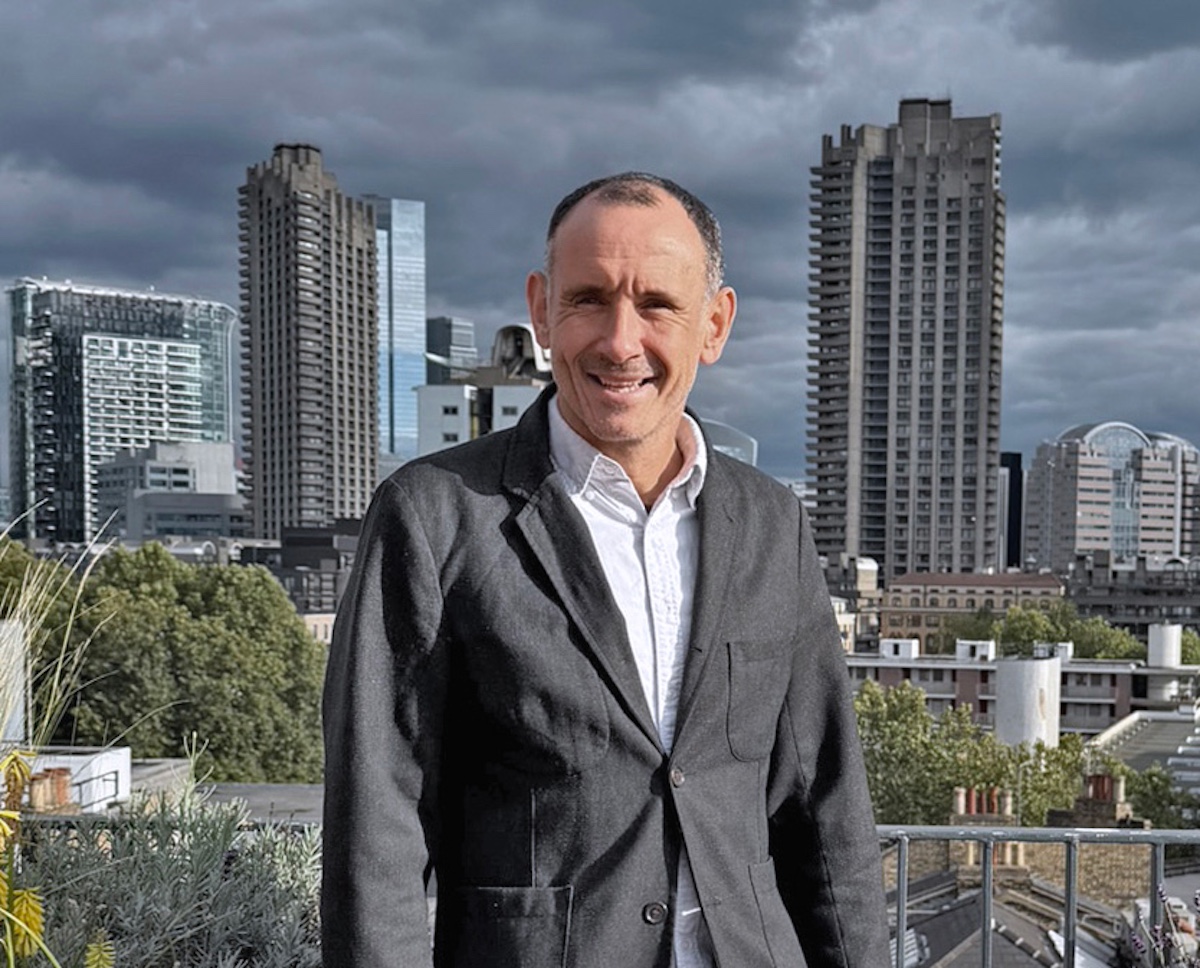
Anna Pamphilon from Within Planetary Boundaries asks how designers can work with clients to factor long-term social and environmental implications into investment decisions and business plans.
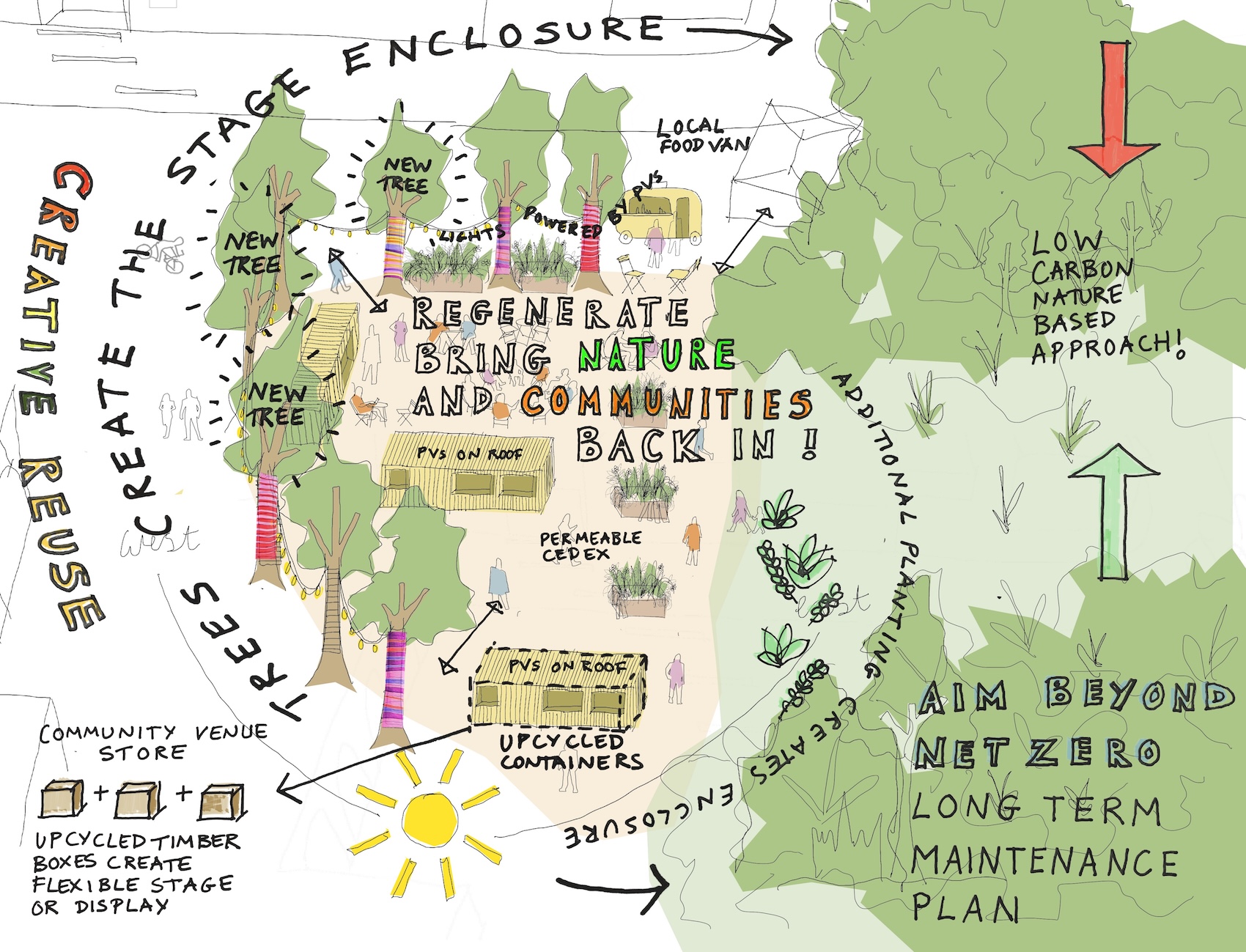
Sketch diagram by Within Planetary Boundaries suggesting a framework for viewing projects through the lens of long-term impacts and value.
The built environment is undergoing a profound shift. Where sustainability once aimed to “do less harm”, regenerative design now asks a far more ambitious question: how can development “make things better” – or, in other words, actively restore ecological and social systems?
Increasingly, the answer hinges not only on architects, engineers, or planners, but on the client. The client is not simply a stakeholder in regenerative design – they are its primary enabler or constraint.
Regenerative outcomes are largely determined in the earliest project stages, where systems thinking can significantly increase positive impact; understanding and actively seeking positive relationships between ecology, economy, community, and infrastructure. Clients are uniquely positioned to operate at this level, aligning multiple projects or assets into a coherent strategy and leveraging community networks to amplify outcomes.
Reframing value: from cost to shared co-benefits
One of the most persistent barriers to regenerative design is cost. Yet this is often a failure of valuation, not viability. Conventional development models prioritise short-term financial returns while often overlooking environmental and social costs that sit outside the immediate project boundary. From a client’s perspective, these may not appear as their responsibility – they are not always captured within land value, tenure, or delivery scope. However, this narrow framing is precisely what limits long-term value creation across the wider system. Importantly, even within conventional valuation models, regenerative approaches are not always more expensive, the opposite can be true, and, once whole-life costs and avoided future risks are properly accounted for, the financial argument becomes significantly more attractive.
Regenerative design is not an additional upfront cost… but instead is a long-term investment in resilience and a more complete form of risk management.”
Designers can help clients take the lead by supporting a reframing of the cost plan through multiple lenses of value, making visible the wider social, environmental, and long-term implications of investment decisions. Within this broader framing, regenerative approaches expand the definition of value beyond the site and beyond the project lifecycle. They generate co-benefits; improvements in health, biodiversity, resilience, social value, and local economies; that are rarely captured in traditional appraisals when viewed through a single financial lens. Importantly, many of these benefits return value indirectly to developers over time through reduced risk, enhanced asset performance, planning resilience, and long-term market desirability.
Regenerative design should therefore be assessed holistically, in terms of immediate benefits as well as long-term legacy. This shifts the question from “why should I pay for external costs?” to “how do I participate in a system where value and risk are distributed over time?” From this perspective, regenerative design is not an additional upfront cost, and when viewed over the full lifecycle may not cost more overall, but instead is a long-term investment in resilience and a more complete form of risk management.
Where there is limited risk appetite, start small
Clients are often open to doing things differently, but understandably have a low appetite for risk, particularly where financial stakes are high and approaches are relatively untested.
Designers can support clients by proposing smaller test beds within larger developments. For example, a row of homes within a scheme could be designed to operate off-grid, or constructed entirely from natural or low-impact materials. These controlled experiments reduce perceived risk across the wider project and help break the cycle in which a lack of precedent is used to justify caution.
Importantly, these test beds are not only beneficial for clients. They also provide design teams with opportunities to build technical knowledge and confidence in new approaches within a relatively low-risk environment. This makes innovation more iterative, grounded, and transferable across future projects. It can also help shift the behaviour of residents and tenants, as they experience more sustainable modes of living first-hand and begin to see them as the norm rather than the exception, and in some cases even as desirable or enviable, driving demand.
To be effective, however, these interventions must be properly structured as learning systems, with clear feedback loops and mechanisms for capturing and sharing lessons learned. Without this, the opportunity for wider systemic change is significantly reduced.
From brief to legacy: maintaining the Golden Thread of regenerative intent
Clients are pivotal in ensuring regenerative ambition remains intact throughout a project. Even when strong regenerative ideas emerge early, they are often eroded through value engineering, risk aversion, and late-stage compromises. Without the client and key decision-makers – those best placed to understand the wider system – cautious default approaches tend to take over and dilute ambition.
To counter this, key meetings with key decision-makers should be planned months in advance and embedded throughout the full lifecycle of the project from the outset, recognising that these individuals often have constrained and heavily committed diaries. Establishing a regular, pre-agreed cadence of meetings also allows flexibility to respond if the project stalls or accelerates. This ensures the right people can come together at critical moments to maintain alignment and resolve emerging barriers before they become constraints. In doing so, a “golden thread” of intent can be maintained from inception through design and delivery.
Conclusion: shared understanding as a catalyst
The transition to regenerative design will not be achieved through technical innovation alone. Clients define briefs, control resources, and set priorities, making them central to either enabling or constraining outcomes.
This is not to let designers off the hook. Progress depends on mutual understanding. Designers must take time to understand what drives individual stakeholders and have the knowledge and tools to promote a regenerative approach, as this reveals the underlying factors shaping decisions. Using a shared language reframes the benefits of regenerative design, creating clearer leverage points for wider adoption.
This can be supported through practical tools such as workshops that help clients articulate the long-term legacy of a scheme; for example, exercises like human layers from the Long Time Project, which is a guided reflective activity that steps participants forwards and backwards through time and across generations to help them understand how past decisions shape the present and how today’s choices will be experienced by future people; or through early site-based meetings that bring the whole team together to understand the site and its needs before desktop assumptions take hold.
These approaches enable discussions to meet stakeholders where they are, communicating in terms that resonate with their priorities while still advancing regenerative intent. Only through this shared understanding, and improved communication between clients and designers, can projects move beyond isolated exemplars toward systemic change.