Forming part of Regenerative Design 2026, Architecture Today and HKS hosted a round table discussion exploring how sociophilic design can strengthen social connections, tackle loneliness and create more inclusive places.
In association with
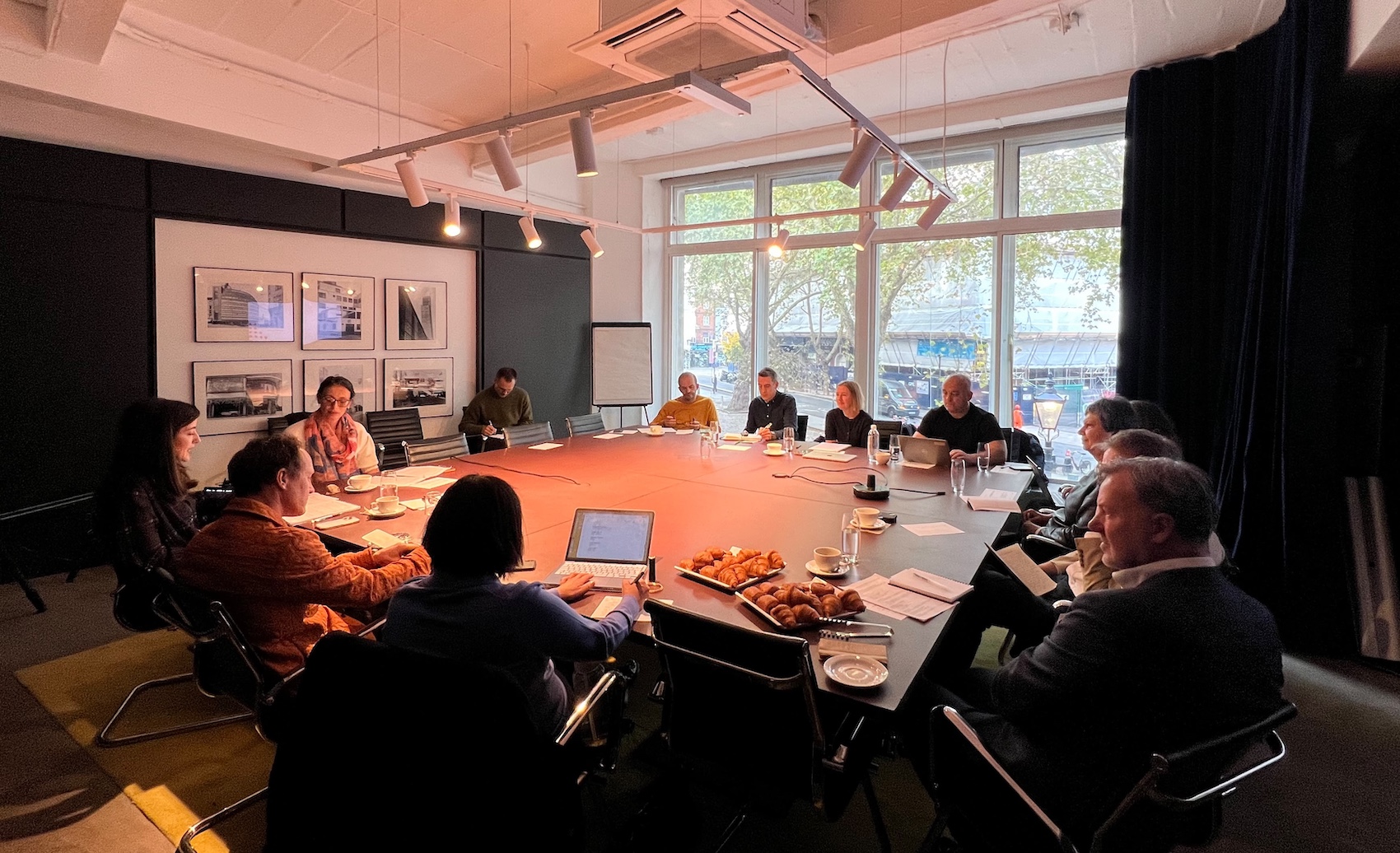
Round table participants
Nathmya Saffarini
Studio Design Leader, Hospitality, HKS (co-chair)
Daphne Yuanidis
Senior Consultant, Market Intelligence, HKS (co-chair)
Ben Tilston
Design Director, UK&I, IHG Hotels & Resorts
Alan McVitty
Studio Practice Leader, Vice President London, ROAM Interior Design
Cannon Ivers
Director, LDA Design
Rokhsana Fiaz
Rokhsana Fiaz OBE, Mayor of Newham 2018–2026
Yasmin Shariff
Director, Dennis Sharp Architects
Debbie Whitfield
Director, Regeneration & Impact, Fabrix
Andy Robinson
Director of Placemaking, Futurecity
Carl Walker
Head of Societal Insights, Hoare Lea
Jo Wheeler
Co-Director of Policy and Industry,UK Green Building Council
Biophilic design has transformed the way architects think about connecting people with nature. But what about the connections between people themselves? With loneliness and social isolation increasingly recognised as significant challenges to health and wellbeing, there is a growing argument for making social connection an explicit consideration in the design and management of buildings and public spaces.
Sociophilic design proposes a response. Rather than simply providing spaces in which people can gather, it seeks to create environments that encourage meaningful interaction, strengthen communities and foster a sense of belonging, while allowing individuals to choose how and when they engage. But how can these ambitions be translated into design? Can social connection be measured in the same way as environmental performance? And who should take responsibility for ensuring that buildings and public spaces continue to support community life long after completion?
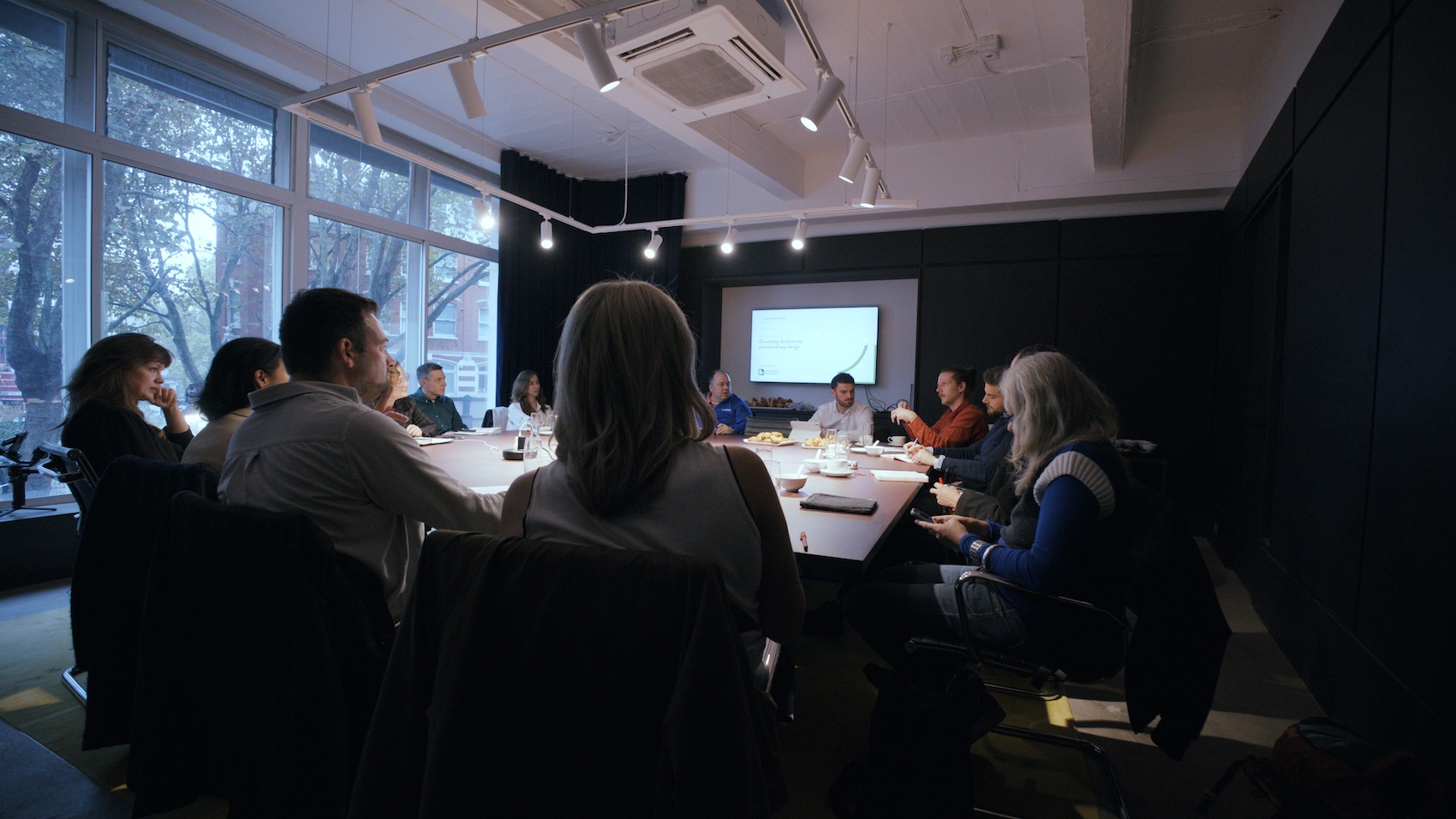
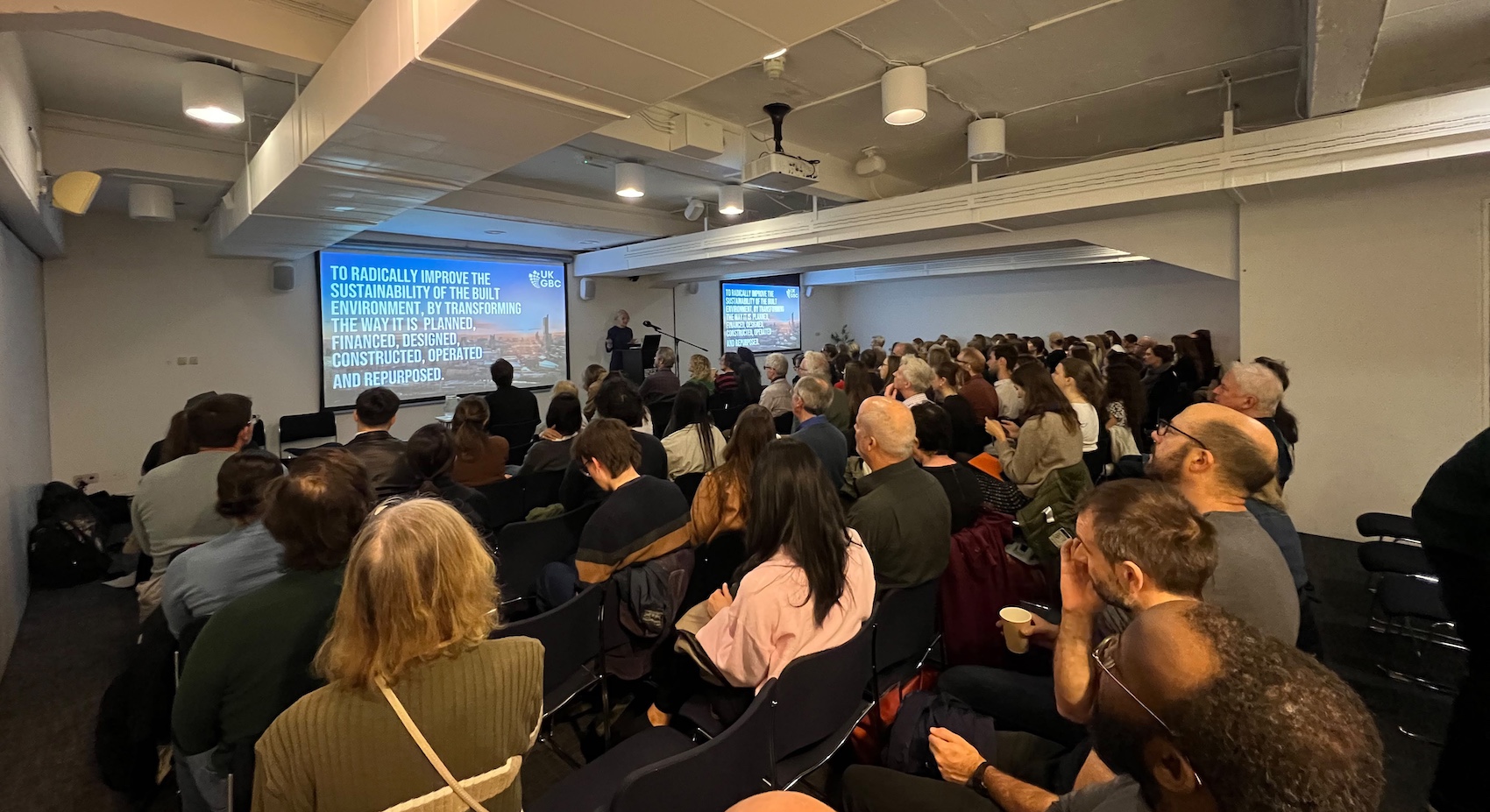
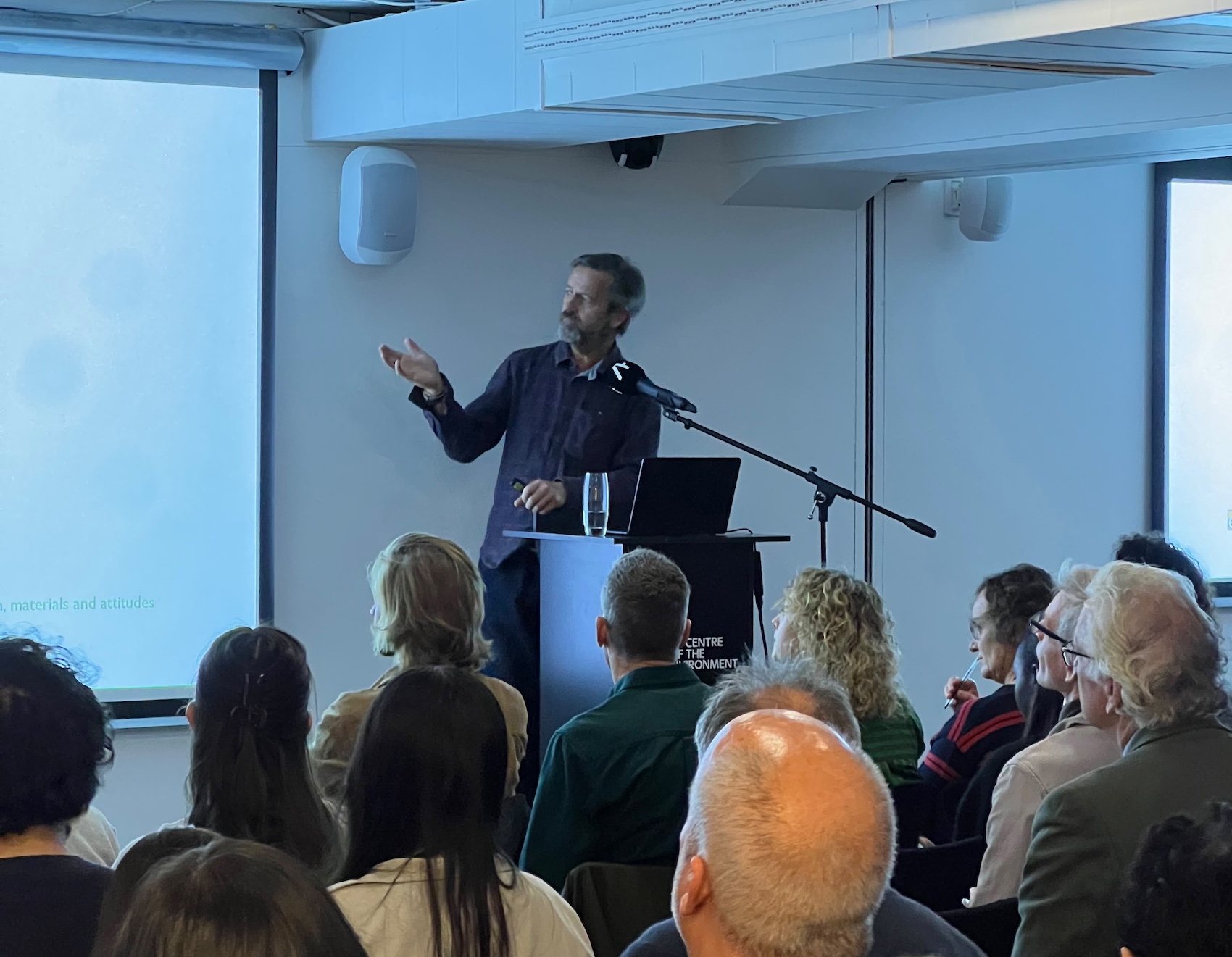
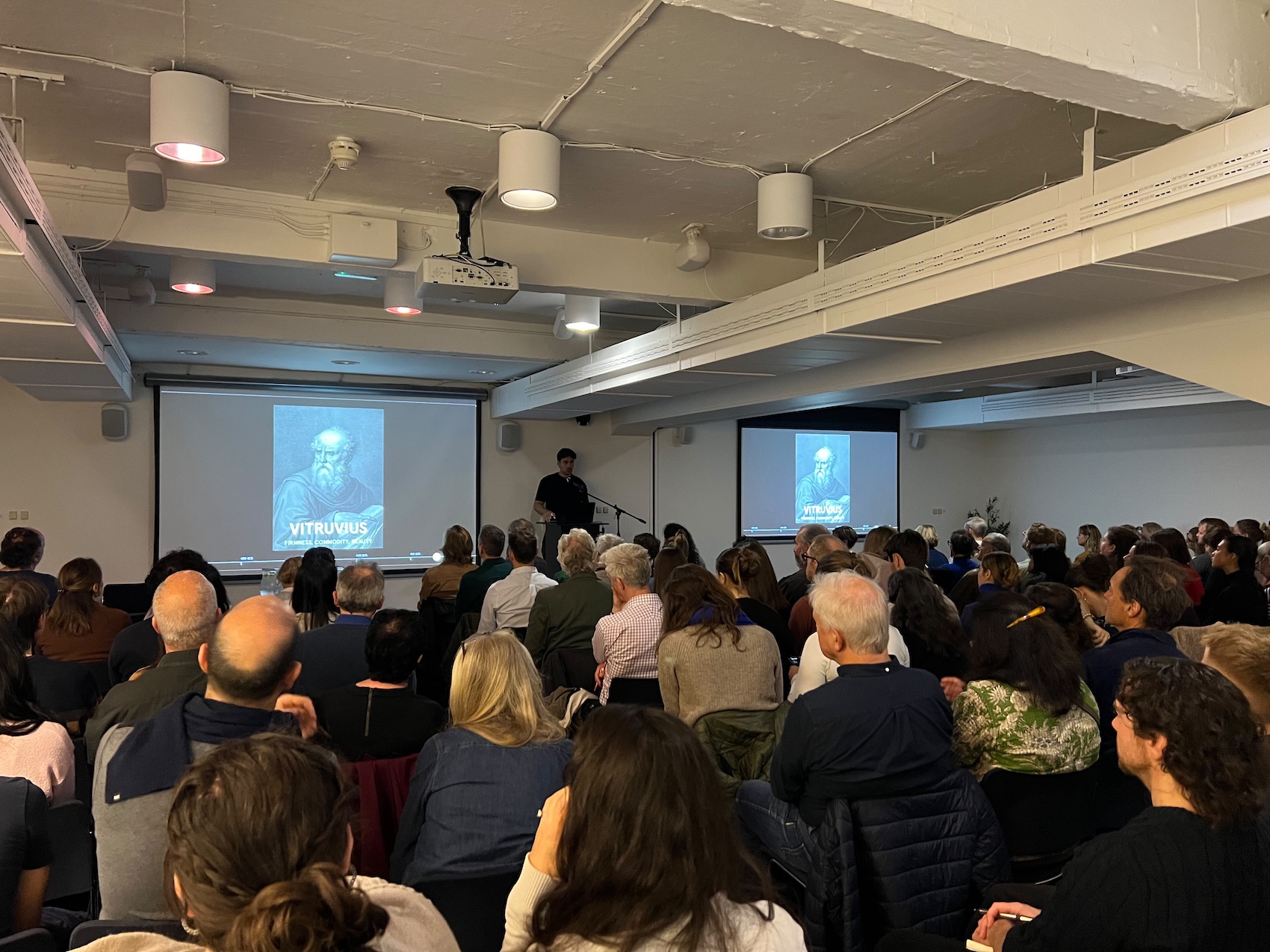
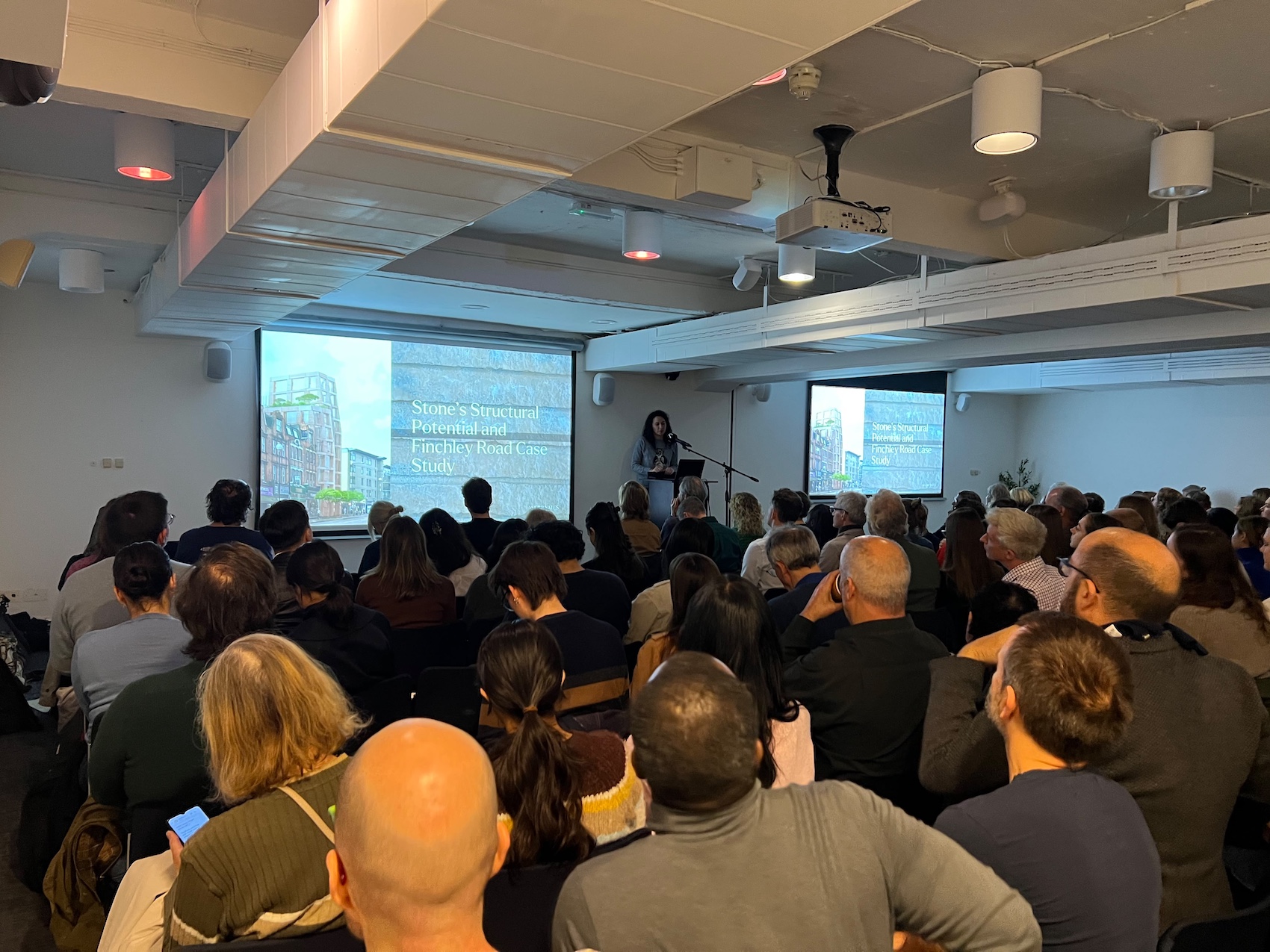
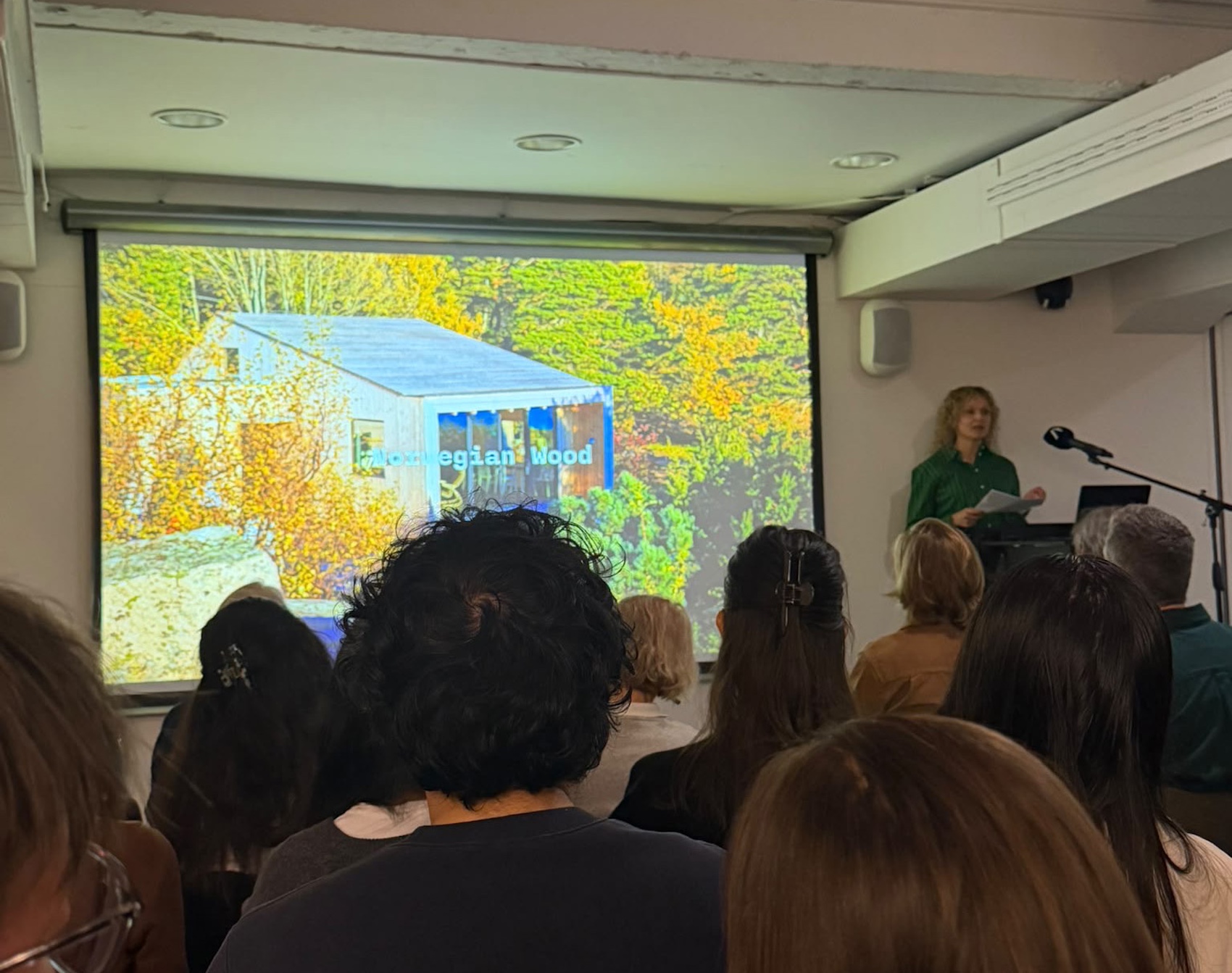
These questions were explored at a breakfast round table discussion at The Building Centre in London, hosted by Architecture Today in partnership with HKS, as part of Regenerative Design 2026. Co-chaired by Nathmya Saffarini and Daphne Yuanidis of HKS, the discussion brought together architects, designers, developers, policymakers and specialists in placemaking and social wellbeing to consider how the built environment can help people connect.
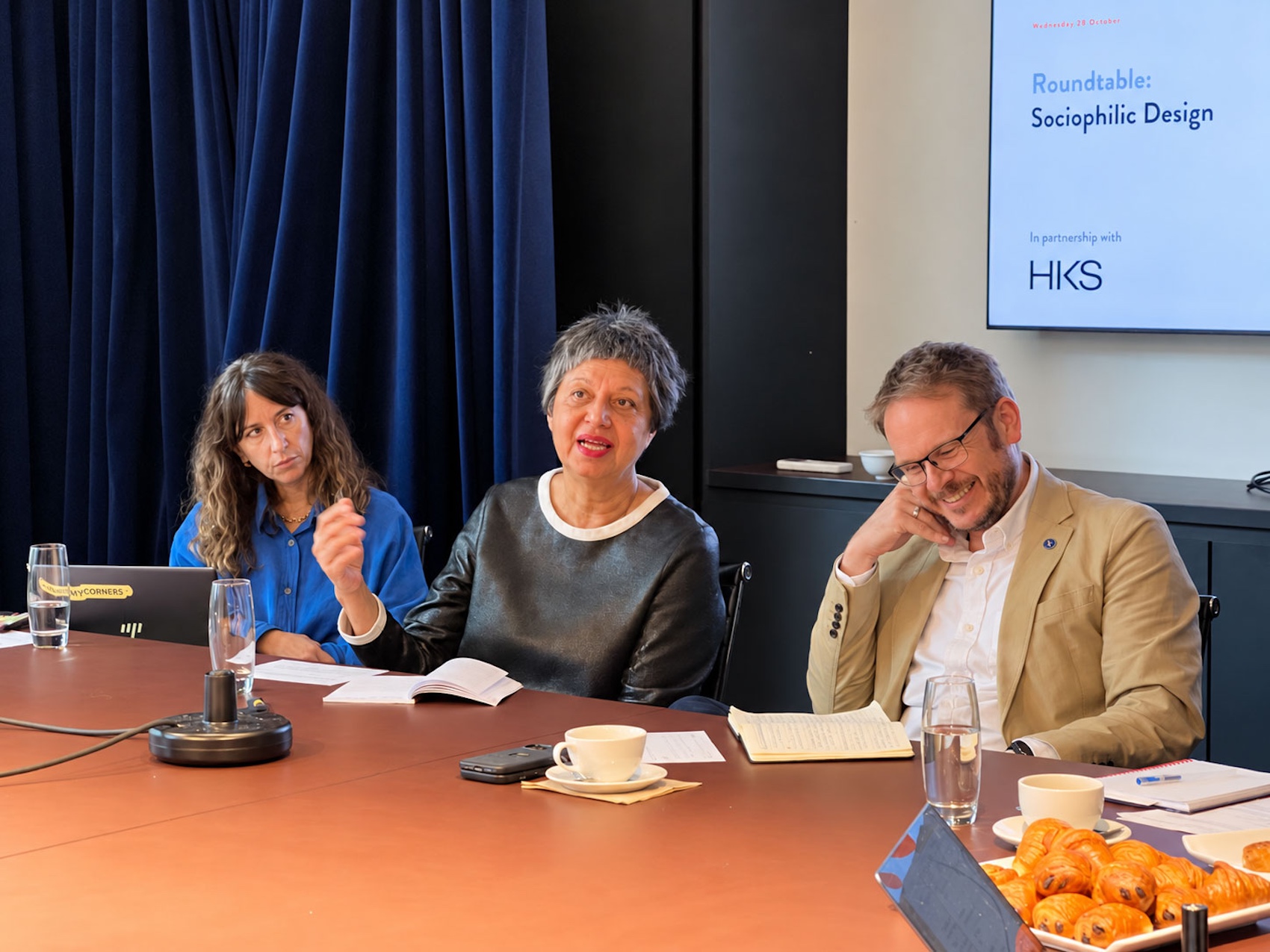
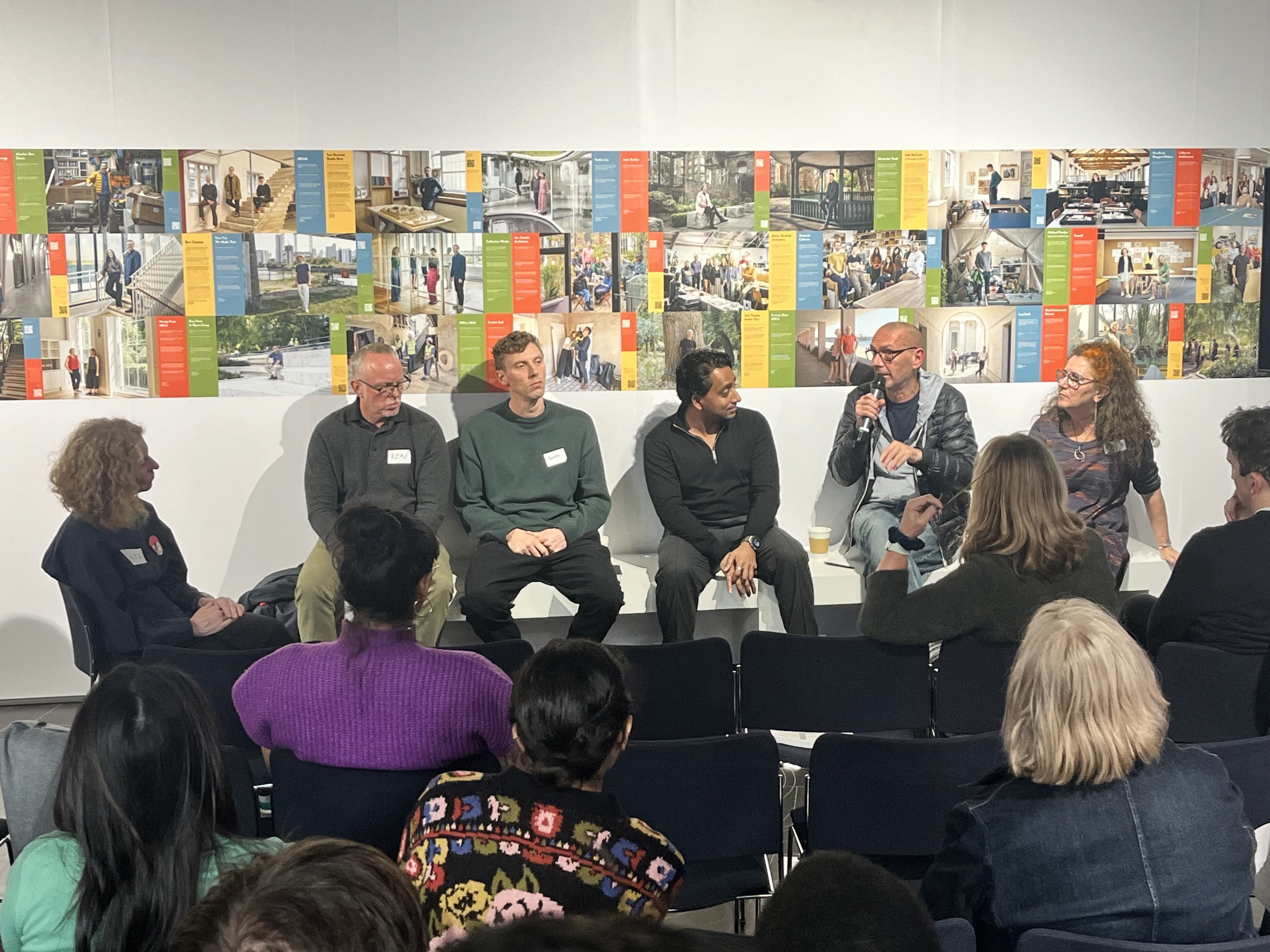
Debbie Whitfield, Yasmin Shariff and Ben Tilston.
Designing for human connection
The discussion began with an exercise in which participants were invited to recall a recent chance encounter with a stranger. The resulting stories ranged from conversations on public transport and in hotel bars to fleeting exchanges at pedestrian crossings, fountains and bus stops. For Daphne Yuanidis, the exercise demonstrated how even the smallest interactions can generate feelings of joy, recognition and belonging. It also revealed the importance of seemingly incidental aspects of the built environment in creating opportunities for connection.
Cannon Ivers recalled a conversation prompted by the colourful chairs installed as part of the Strand Aldwych public realm project. A passer-by had chosen a chair that matched his clothing, providing an unexpected opportunity to strike up a conversation. Ivers related the experience to the concept of triangulation, explored by urbanist William H. Whyte, in which a shared object, event or feature encourages strangers to interact. Such moments can be deliberately supported through the design of public spaces, without prescribing how people should behave.
Nathmya Saffarini explained that the idea of sociophilic design emerged from observing how contemporary life, particularly the increasing influence of screens and digital technology, is changing the way people interact. Just as biophilic design seeks to improve wellbeing through a connection with nature, sociophilic design aims to improve wellbeing by strengthening connections between people. However, Saffarini emphasised that connection should not be confused with constant interaction. She described a spectrum of social engagement, ranging from retreat and observation through encounter and connection to participation, belonging and celebration.
Different people, and the same people at different times, will seek different experiences. Successful sociophilic design must therefore provide opportunities for both participation and withdrawal. The aim is not to force interaction, but to create environments in which people feel comfortable choosing how closely they engage with others.
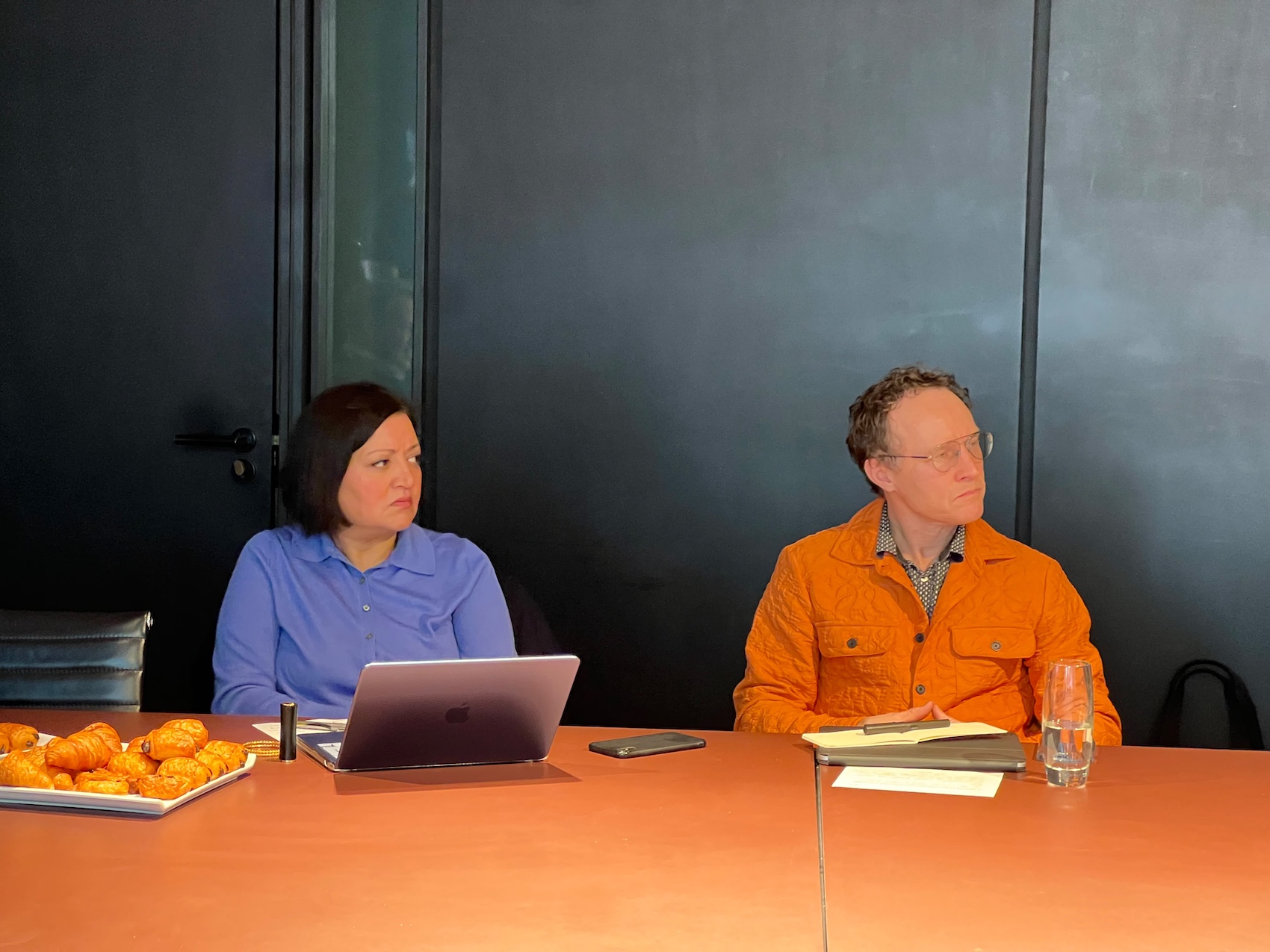
Rokhsana Fiaz and Cannon Ivers.
The architecture of belonging
How much responsibility should architects take for encouraging social interaction was the next topic up for discussion. Yasmin Shariff argued that designers have considerable influence over the way people encounter one another. The position of entrances, the arrangement of circulation routes and the provision of shared facilities can all determine whether opportunities for interaction emerge. Atriums, communal kitchens, informal meeting areas and other ancillary spaces can bring people from different departments or backgrounds together. Yet these are often precisely the elements removed when budgets come under pressure. Shariff suggested that eliminating such spaces can undermine a building’s ability to function socially, even when its primary accommodation remains intact.
Alan McVitty agreed that architecture can encourage interaction, but stressed that management is equally important. Designers may establish the physical conditions for connection, but building operators ultimately influence who is welcomed, how spaces are used and whether people feel comfortable occupying them.
The discussion also exposed differing views about the relationship between buildings and the public realm. McVitty questioned whether increasingly sealed and highly controlled building envelopes, together with development pressures, have contributed to a sharper division between inside and outside. Shariff challenged the suggestion that technical requirements were principally responsible. In her view, the distinction is more closely associated with investment priorities and the intended users of buildings. Where a genuine social ambition exists, designers can find ways to create more welcoming and permeable environments.
For Rokhsana Fiaz, the debate highlighted the importance of planning policy and the social objectives underpinning development. Drawing on her experience as Mayor of Newham, she argued that placemaking must be understood as a means of improving people’s lives, rather than simply delivering attractive physical environments. She described the challenges associated with neighbourhoods around the Queen Elizabeth Olympic Park in London, where investment in buildings and infrastructure had not always been matched by the provision of facilities that residents needed. The subsequent development of cultural and social infrastructure had improved the area, but Fiaz emphasised that physical investment alone cannot resolve differences in opportunity, experience and expectations between communities.
Shariff argued that the quality of some social housing developments remained disappointing, particularly where communal spaces appeared to have been included to satisfy requirements rather than to support meaningful social activity. Fiaz challenged the attribution of responsibility to local authorities, noting the different planning arrangements governing parts of the Olympic Park and the competing pressures facing councils. The exchange underlined a central theme: successful sociophilic design depends on more than architectural intention. It requires alignment between investment, planning, governance and the lived experiences of the people who use a place.
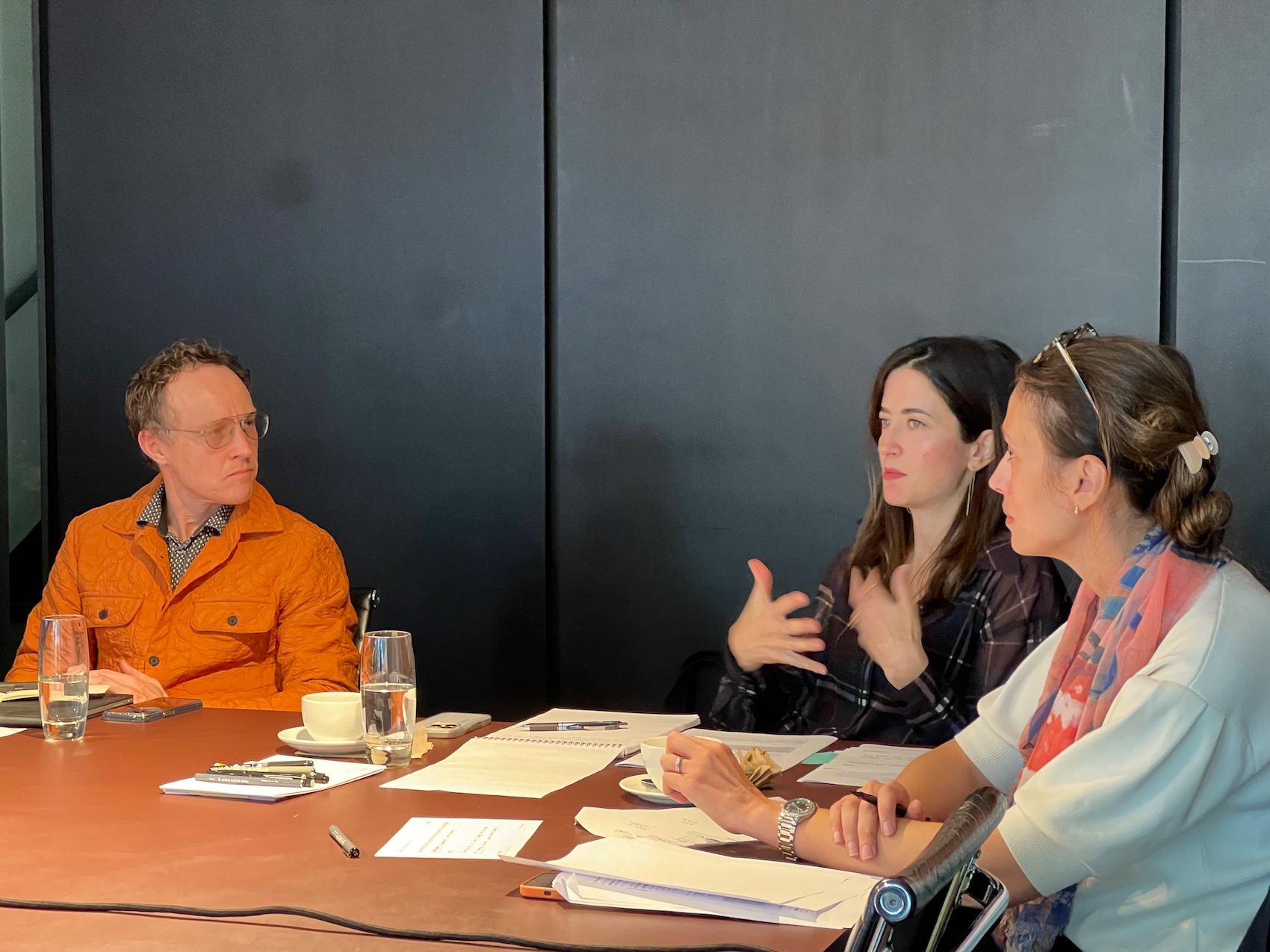
Cannon Ivers, Daphne Yuanidis and Nathmya Saffarini.
Designing for different generations
Social isolation is not confined to older people. The discussion considered the growing challenges faced by younger generations, particularly as digital technology changes how they socialise. Jo Wheeler contrasted the experience of public space in Britain with that of towns and cities in Spain, where squares and cafés often accommodate several generations simultaneously. Children, teenagers, parents and grandparents can occupy the same places throughout the day and evening, creating opportunities for informal interaction across age groups.
Wheeler also reflected on how quickly children’s behaviour has changed. Research undertaken by the UK Green Building Council a decade earlier had described children spending considerably more time outdoors than adults. She questioned whether the same assumption would hold today, given the increasing amount of time young people spend indoors using screens.
Ben Tilston suggested that digitalisation is removing everyday human interaction from commercial environments. Self-service checkouts, automated hotel check-ins and online services can offer convenience, but they also eliminate opportunities for small exchanges that contribute to people’s sense of connection. For Tilston, the important principle is choice. Regular hotel guests may welcome the efficiency of digital check-in, while others value the reassurance and personal contact provided by a receptionist. He pointed to shared restaurant tables as an example of environments that encourage proximity without requiring strangers to interact.
Carl Walker questioned whether the discussion risked reflecting the experiences of people with relatively high levels of social and economic capital. Through his work with young people from disadvantaged communities, he had encountered very different attitudes towards public space, technology and social interaction. He argued that designers must engage directly with those whose experiences differ from their own, rather than assuming that one definition of sociophilic design will work for everyone.
Ivers proposed thinking about streets and public spaces as urban habitats, offering different conditions for different users. Analogous to how more-than-human species occupy the city and find particular habitat niches. Accessibility, seating arrangements, shade, sunlight and opportunities for observation all influence whether people feel able to occupy a space. He emphasised that the decisions we make at the scale of an individual bench have a profound impact at the scale of the city. When people feel comfortable lingering, their presence can attract others and help establish a more vibrant and socially connected public realm.
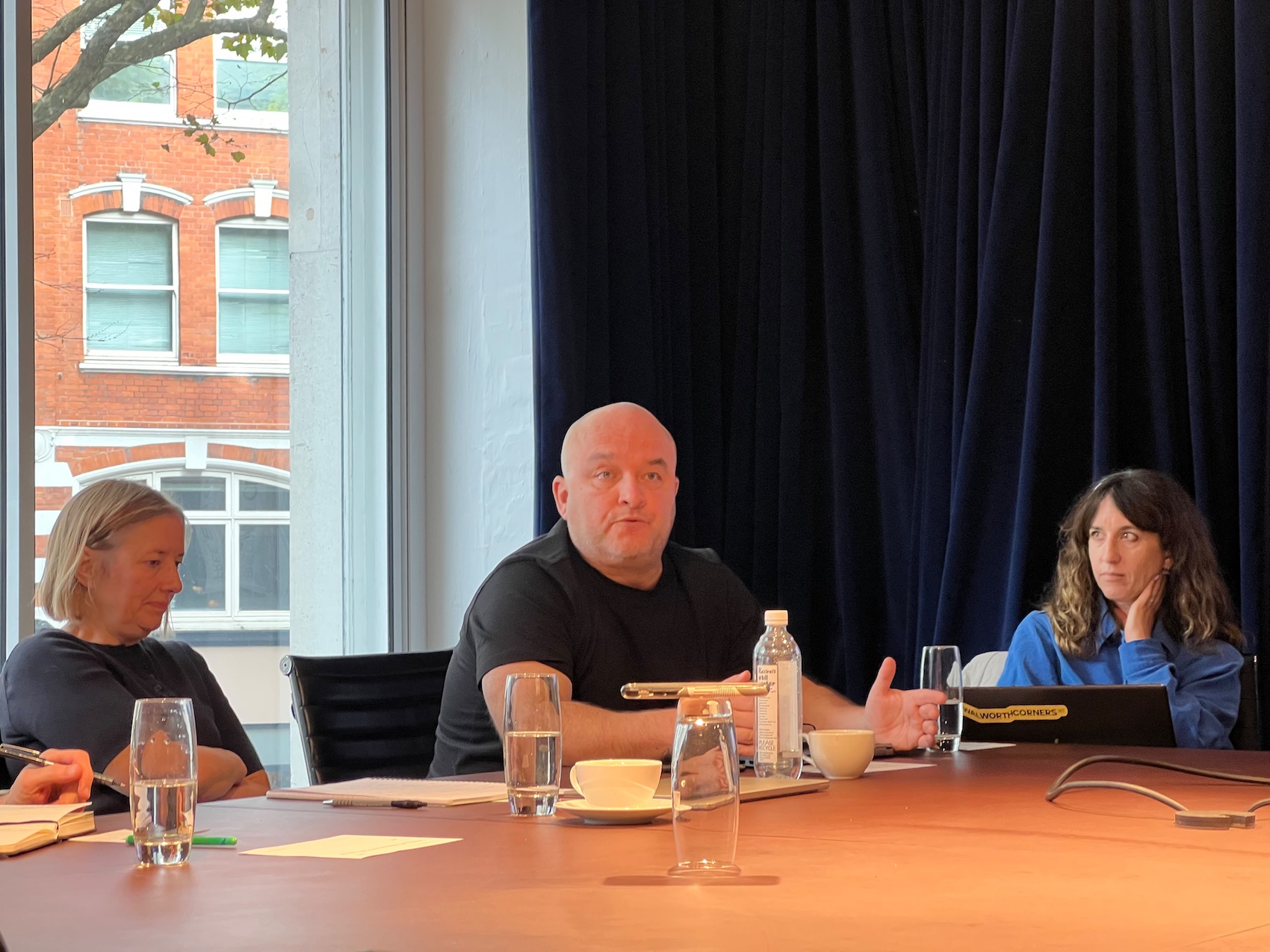
Jo Wheeler, Carl Walker and Debbie Whitfield.
Safety, inclusion and the right to participate
The conversation then turned towards the relationship between social connection, safety and the governance of public space. Andy Robinson argued that designing a place is only the beginning. Its long-term success depends on who controls it, how activities are managed and whether different groups are genuinely permitted to participate. He suggested that co-design should continue beyond the design process into the operation and governance of spaces Drawing on work in Basildon, Robinson described how the gradual loss of social infrastructure had contributed to the deterioration of community life. The problem was not simply that the original architecture had become unsuitable, but that the facilities and activities supporting social relationships had been progressively removed.
Walker provided a particularly revealing example from his work with teenage girls. When asked about their experiences of public space, the young women described harassment, intimidation and locations where they felt unsafe at particular times of day. Rather than proposing conventional security measures, they developed a network of informal safe havens involving local shops and businesses. Participating shopkeepers and other operators received basic training to help young people seeking assistance. The resulting network provided reassurance without relying on highly visible security personnel. The example demonstrated the importance of understanding safety from the perspective of those experiencing vulnerability. It also challenged assumptions about what constitutes a successful public space. An environment that feels welcoming to one group may be intimidating or inaccessible to another.
Fiaz reinforced this point through her experience in Newham, where tensions around young people’s use of shared spaces sometimes reflected wider inequalities and prejudices. She described efforts to improve safety around Stratford and Westfield, including collaboration with businesses and youth services to support young people who were vulnerable to exploitation. For Fiaz, authentic engagement requires institutions to recognise these realities and involve communities in determining the solutions.
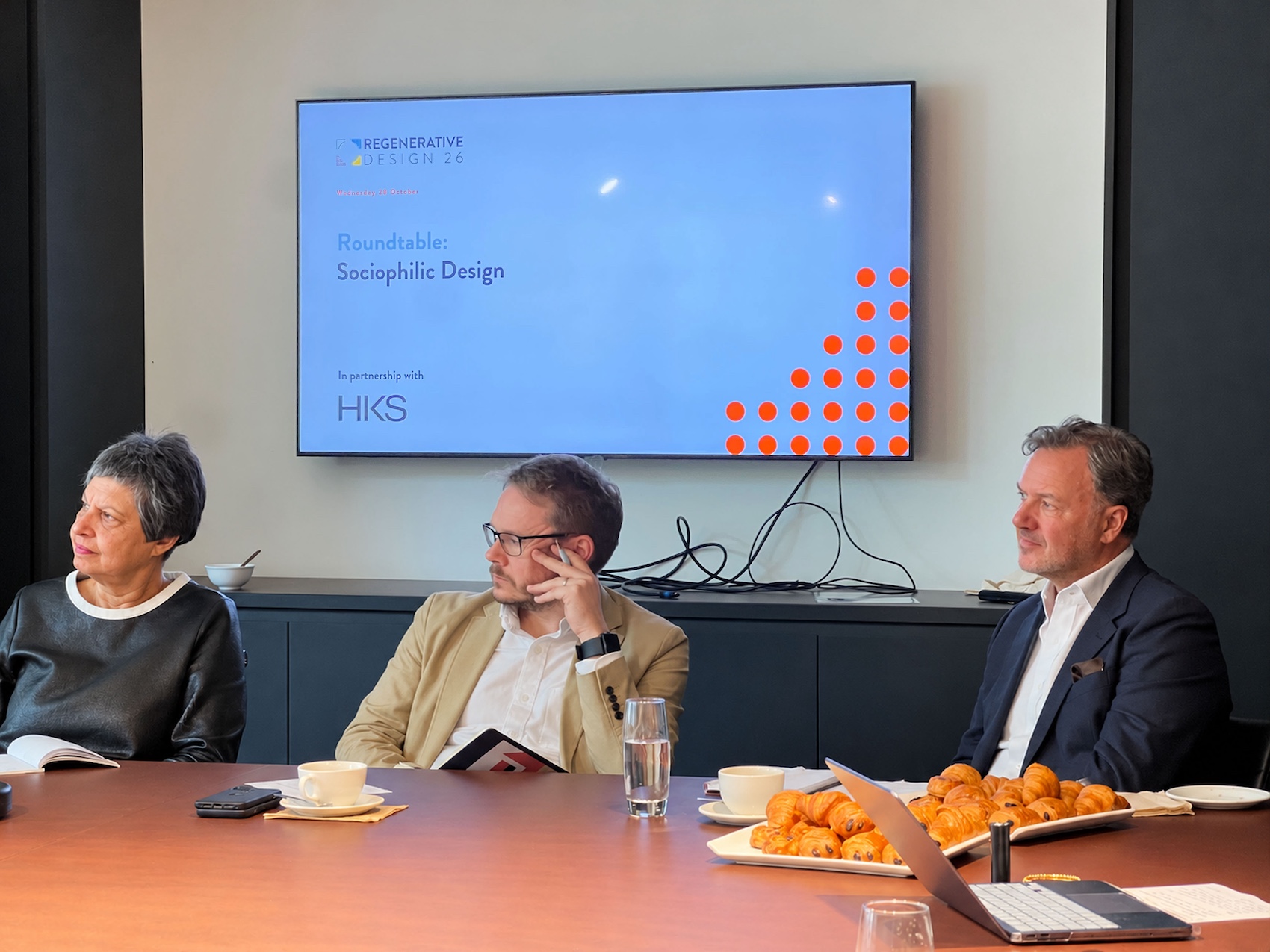
Debbie Whitfield, Yasmin Shariff and Alan McVitty.
Beyond design: the importance of management
After establishing that social connection depends on how places are used, the next point raised was who should take responsibility for sustaining it? Robinson argued that community facilities frequently fail because their intended operators are not involved early enough. Developers may provide ground-floor community spaces as part of planning agreements, only for them to remain empty because nobody has established a viable programme or operating model.
Debbie Whitfield described a different approach being pursued by Fabrix on a mixed-use development in Southwark. The developer sought to secure a community operator before planning approval, ensuring that the proposed space could be designed around an actual programme of activities. The scheme combines student accommodation and affordable housing with a public courtyard garden and a new community kitchen developed in partnership with Pembroke House, a long-established local charity. The kitchen is intended to bring people together through food, creating opportunities for relationships between students, residents and the wider neighbourhood.
Whitfield emphasised that these outcomes depend on relationships established and maintained over time, rather than consultation undertaken solely to secure planning consent. The example also illustrated the importance of designing for an organisation’s operational requirements, rather than expecting a community group to adapt to whatever space is eventually provided. For Robinson, the lesson is that social infrastructure must be treated as an ongoing service, not simply a physical asset. Buildings and public spaces can provide the setting for connection, but management, programming and community participation are what allow those connections to develop.
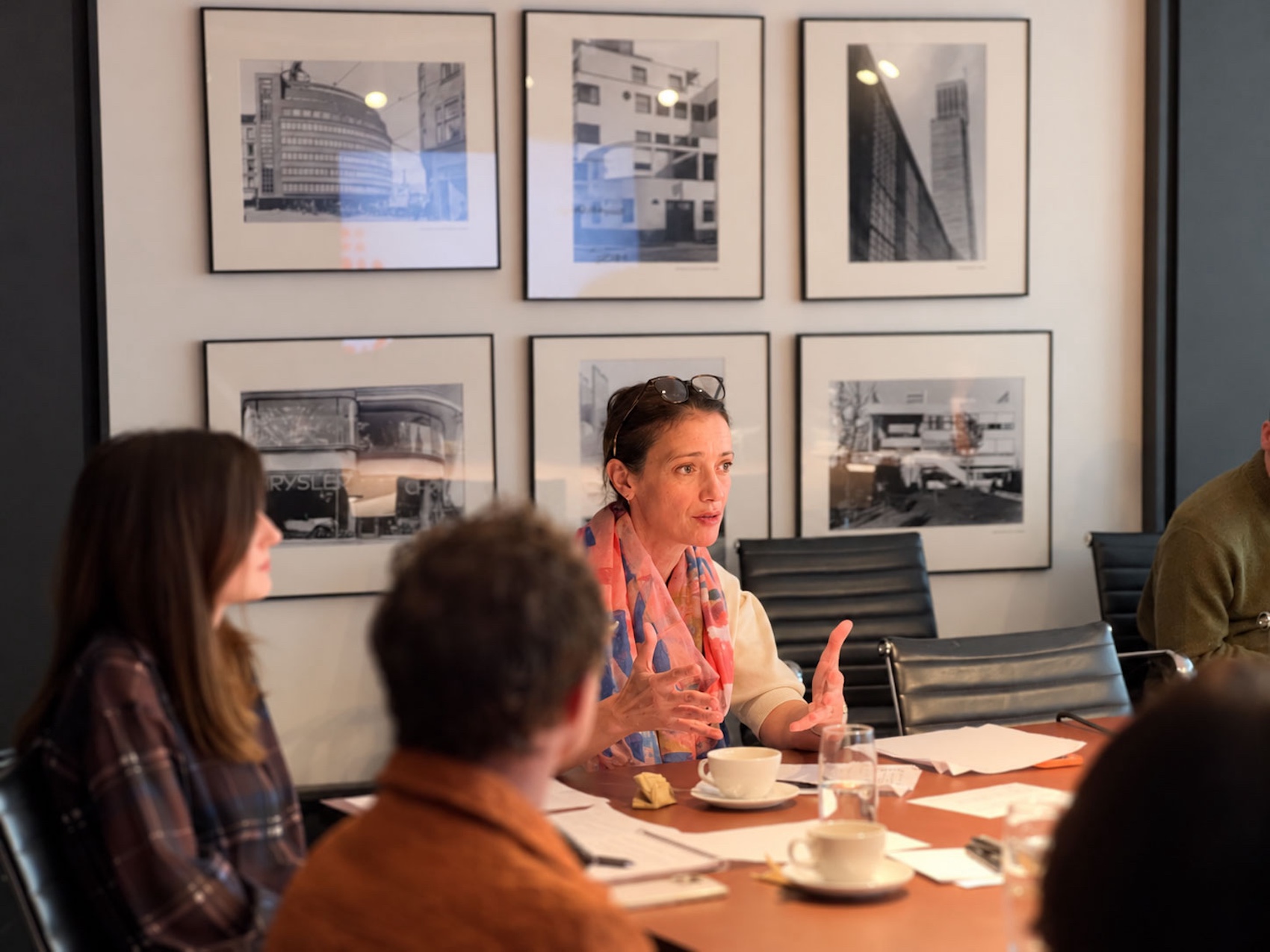
Nathmya Saffarini.
Making the commercial case
The question of funding prompted a discussion about how the value of social connection can be demonstrated to developers and investors. Whitfield described Fabrix’s partnership with investment manager PATRIZIA, which seeks to deliver sustainable communities while addressing housing affordability, social isolation and exclusion. The fund directly links financial incentives to social and environmental performance, requiring development partners to demonstrate outcomes beyond conventional financial returns. Whitfield welcomed this approach but acknowledged that measuring the impact of community infrastructure initiatives remains difficult. Providing a particular quantity of social infrastructure does not necessarily demonstrate that it is being used successfully or contributing to stronger relationships.
Tilston offered an example from the hospitality sector, where investment in shared spaces can be evaluated through both commercial performance and customer satisfaction. He described improvements to public areas across IHG’s European Holiday Inn estate, intended to encourage guests to spend more time outside their bedrooms. The investment generated additional spending in public areas, but also improved guest satisfaction, including perceptions of accommodation that had not itself been refurbished. For Tilston, this demonstrated that well-designed social spaces can enhance the experience of an entire building. However, he questioned whether similar outcomes could readily be translated into mandatory performance measures for public spaces, where financial transactions and conventional customer feedback may be absent.
The discussion raised concerns about relying on intrusive technologies to monitor how people use public environments. Counting visitors may provide useful information, but it reveals little about the quality of their experiences or whether meaningful relationships are being formed. The challenge is to develop measures that capture social value without reducing human interaction to a narrow set of numerical indicators.
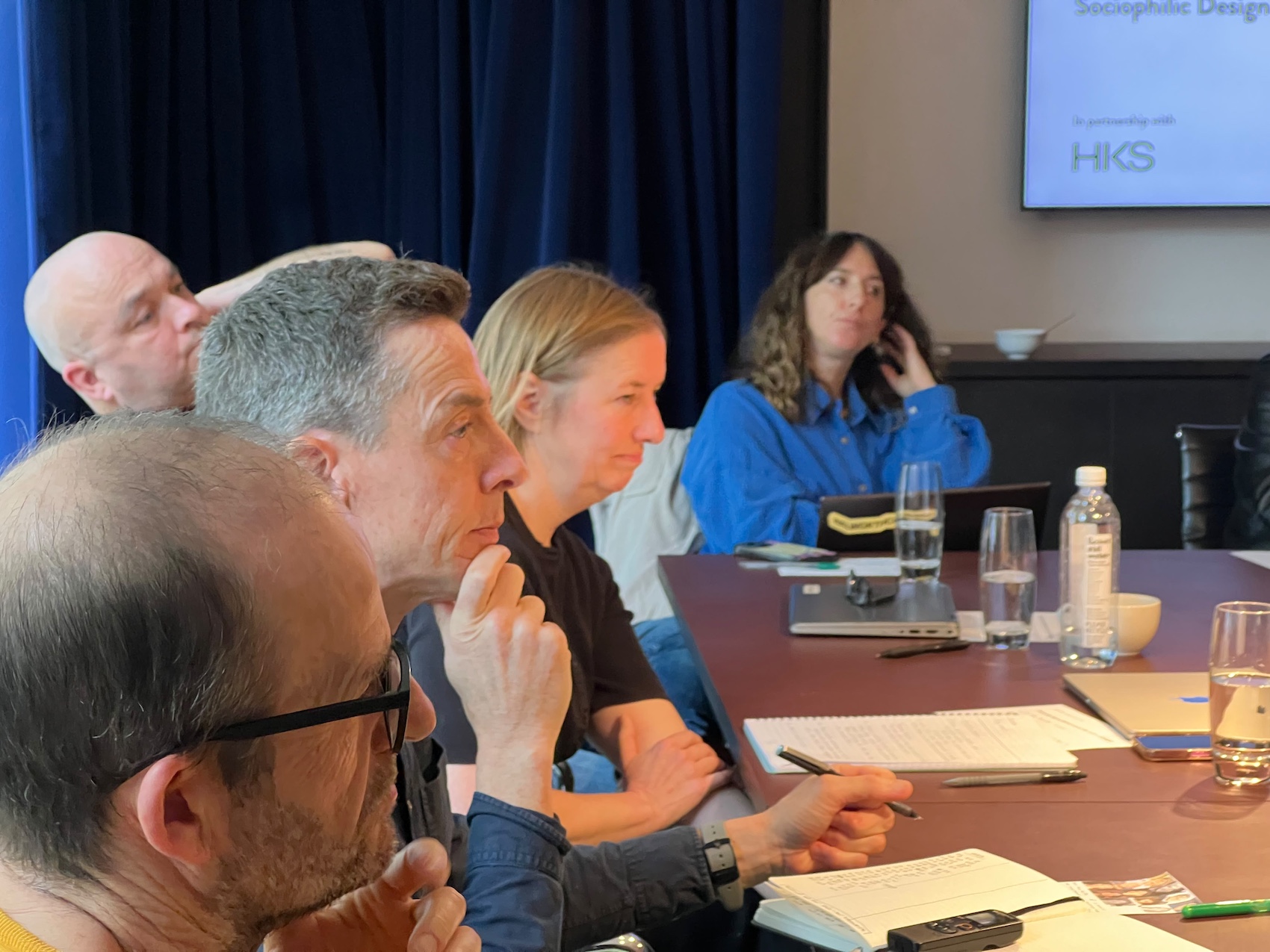
Andy Robinson, John Ramshaw (AT Technical Editor reporting), Jo Wheeler, Carl Walker and Debbie Whitfield.
Recognising the wider value of connection
Wheeler argued that the industry’s understanding of value needs to shift. Drawing on UKGBC’s work on regenerative places and housing, she highlighted the importance of recognising communities as experts in their own environments. Local people often understand which interventions would make the greatest difference, and these are not necessarily expensive new buildings or major infrastructure projects. Small improvements to existing spaces can make them safer, more welcoming and more useful.
Wheeler also challenged the tendency to treat community facilities as optional amenities vulnerable to value engineering. Their benefits extend beyond the immediate development, contributing to health, wellbeing, economic activity and social resilience. Recognising these outcomes requires a broader understanding of value that encompasses human, social and natural capital alongside financial returns.
Fiaz similarly emphasised the importance of honest engagement with communities. Reflecting on regeneration projects in Newham, she described the need to explain financial and practical constraints transparently, particularly where residents had experienced years of uncertainty and unfulfilled promises. Authentic co-design, she argued, cannot mean promising everything people want. It requires an honest discussion about competing priorities and the trade-offs necessary to deliver change.
The importance of art and culture also emerged towards the end of the discussion. Shariff argued that cultural infrastructure had played a major role in transforming the Queen Elizabeth Olympic Park from a relatively unwelcoming environment into a more active destination. Robinson suggested that buildings and public spaces capable of generating affection and shared cultural identity can make an important contribution to social connection. Such places offer common reference points, creating opportunities for people to engage with one another across differences in background and experience.
Creating the conditions for belonging
The discussion concluded with participants offering their own definitions of a sociophilic place. Their responses ranged from environments where people feel safe and welcome regardless of age or background to places where different generations choose to linger, neighbours know one another, and people feel comfortable simply spending time. Several emphasised that successful sociophilic design is less about particular architectural features than about the experiences those features enable.
The wider message was that social connection cannot be delivered through design alone. It depends on the interaction of architecture, public realm, management, culture, investment and community participation. Nor should sociophilic design be understood as encouraging constant sociability. Its purpose is to create environments that offer choice, accommodate different needs and allow relationships to develop naturally. If regenerative design is concerned with leaving places better than we found them, strengthening the social connections that sustain communities must be part of that ambition. The challenge is to make those connections an explicit consideration throughout the design, delivery and long-term stewardship of the built environment.