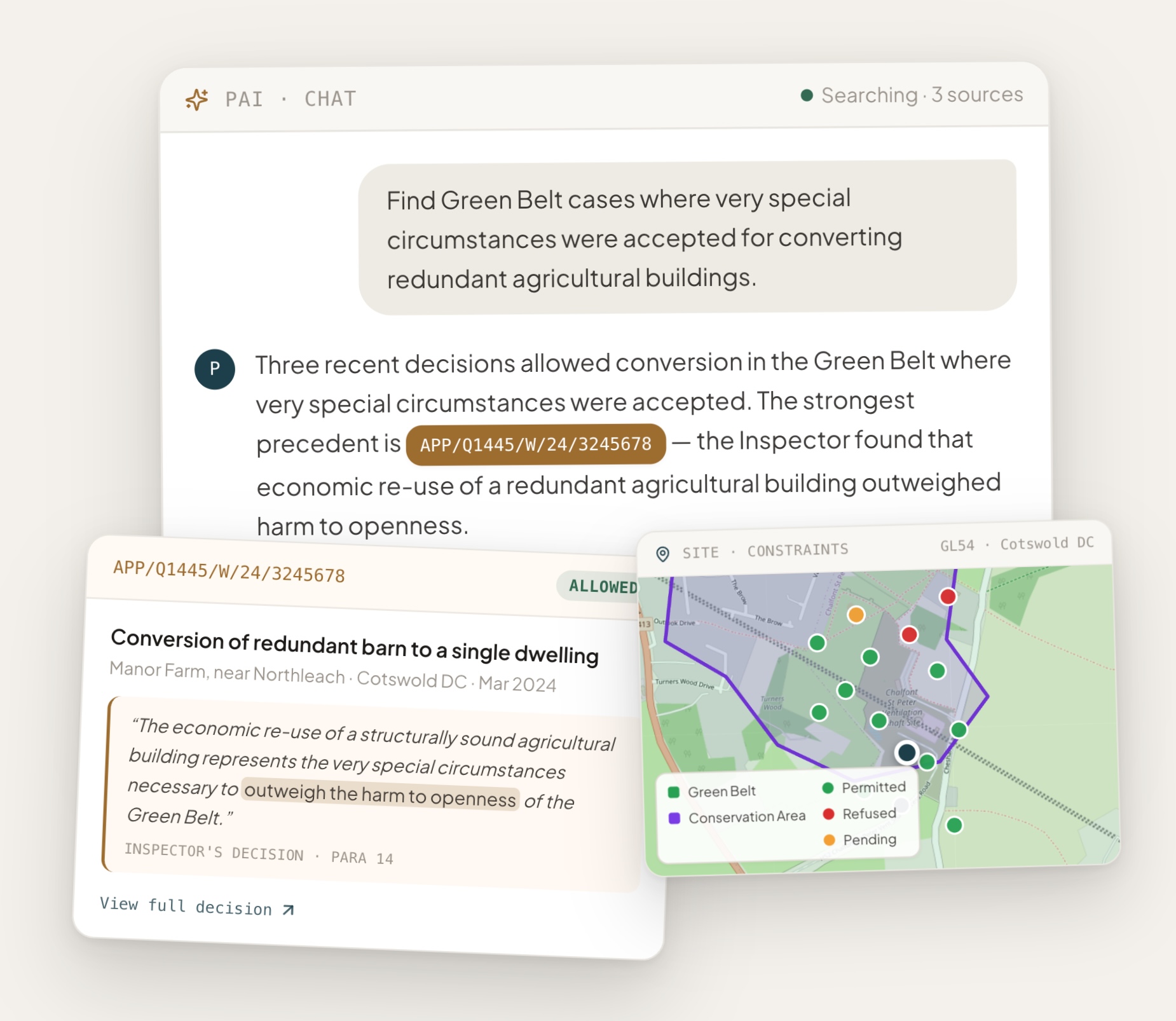
Studio Bark and tech consultant David Sinclair have developed ‘PAI’ (Planning Appeal Intelligence), an AI-powered planning research tool designed to help architects and planning professionals navigate the planning system more efficiently. Rather than searching planning precedents using keywords, it uses semantic search to identify relevant planning appeal decisions based on the specific constraints and characteristics of a project.
How did you two first meet, and what led to you working together on PAI?
Wilf Meynell We studied architecture together at Brighton University. We started in 2004 and did our undergraduate degrees together. We had a good time in Brighton, although neither of us was especially serious about architecture at that stage. I went on to pursue architecture, while David went in a different direction.
David Sinclair I worked in an architectural practice for a few months, but then the recession hit and the industry wasn’t in a great place. I wasn’t completely sure architecture was right for me, so I ended up moving through a few different industries before eventually finding my way into tech.
What sparked the idea for PAI?
David Sinclair Wilf and I were talking about AI and its applications. At the time, Wilf was dealing with a project that required a lot of planning appeal research. It’s quite a niche task, but we realised it would be much easier if there was a dedicated tool rather than copying and pasting information into a chatbot. That conversation, probably over a year ago, sparked the initial idea.
Wilf Meynell It was probably closer to two years ago. The problem is that if you try to use general AI models for planning research, they’re a nightmare because there’s so much noise online. They produce answers that sound convincing, but are often wrong. We felt the only way to remove that noise was to go directly to planning appeals.
It’s also worth noting that the first version wasn’t very good. It didn’t really work. It was only about eight or nine months ago, when the models improved significantly, that things really started to click.

Wilf Meynell, co-foudner, Studio Bark. (Credit: Tom Joy)
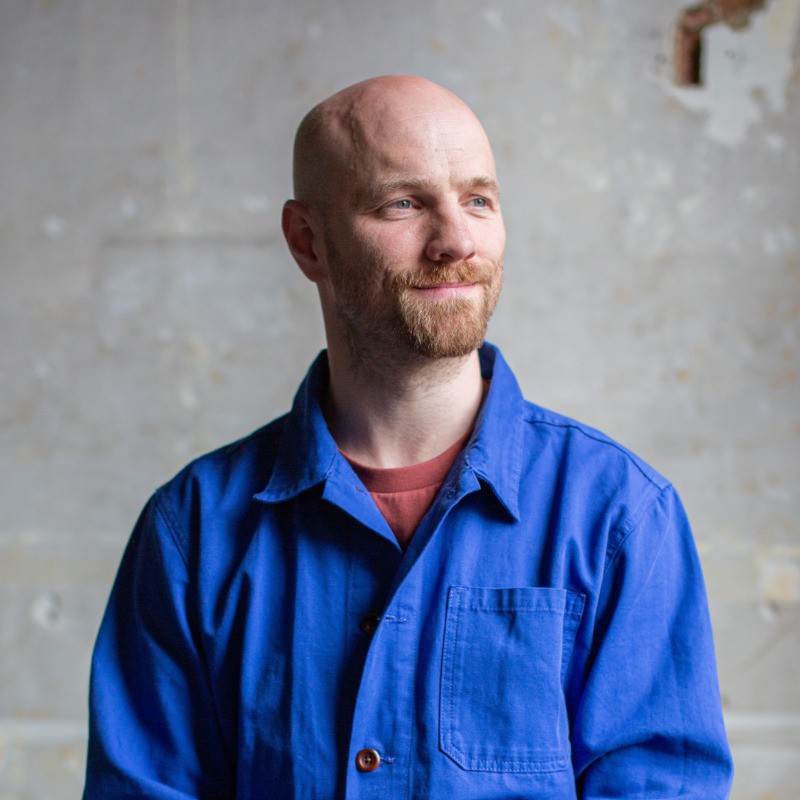
David Sinclair, founder of Techzoom. (Credit: Antler)
What changed technically to make the tool work better?
David Sinclair The first version was effectively a search engine bolted onto a chatbot. You would get results, select which ones you wanted to investigate, and still do a lot of the legwork yourself.
As the models improved, we gave them tools. The model could decide what to search for, when to read an entire document, when to focus on sections of a document, and make those decisions independently. The improvements over the last year made a huge difference. The quality of the outputs became dramatically better.
When did you reach a version you were happy with?
David Sinclair Probably about six months ago. We were running trials at that stage, although we weren’t devoting huge amounts of time to it. Anthropic released a new version of Claude with tool-calling capabilities, and we noticed a significant improvement immediately.
Was there a particular project or appeal that acted as a catalyst?
Wilf Meynell Not a single project, but there were already tools like Appeal Finder, which does what it says on the tin. The problem is that you’re searching through more than 80,000 appeals and it doesn’t understand what you’re actually trying to achieve.
If you know an appeal number, it’s great. But in practice, you want to say these are the constraints of my project. Perhaps it’s close to a listed building or has difficult highway access. Can you find comparable cases?
Once the new models could understand that context and search semantically, suddenly the appeals being returned were genuinely relevant.
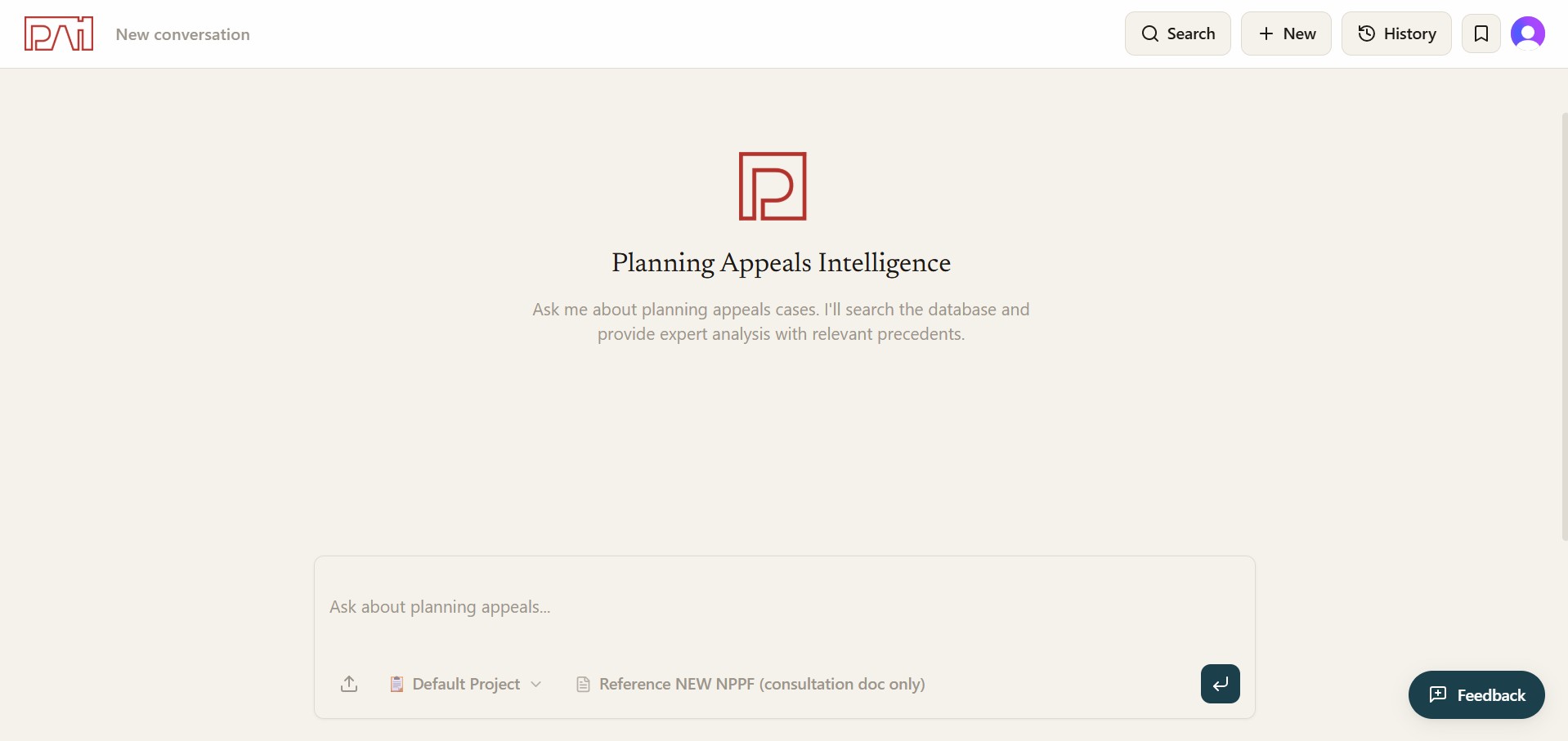
The landing page for PAI, where you can begin your search and enter queries.
How much time do architects currently spend researching planning precedents, and how much time could PAI save?
Wilf Meynell Appeal research wasn’t a huge part of our workload because we’re architects first and foremost. What became really interesting was when the tool started offering to draft planning statements, planning appraisals and rebuttals.
It wasn’t just finding cases. It was referencing them, quoting them correctly and including appeal reference numbers. Suddenly it was producing planning statements in minutes that were better than the ones we were writing ourselves.
You still need to review and stress-test the outputs. Like any AI tool, you can’t just accept everything blindly. But we can now produce a convincing planning statement in a matter of hours, knowing that the information is grounded in real source material.
Is PAI built on Claude?
David Sinclair Yes, Claude sits behind the scenes, but users don’t need a Claude subscription. We’ve tested Gemini and OpenAI as well, but Claude has consistently performed best for this particular use case. That may change in future, but for now it’s our preferred model.
How often is the planning data updated?
David Sinclair Daily. New appeal cases are pulled in automatically. There’s an ingestion process that takes a few hours to complete, but the database is constantly being refreshed. That’s one of the major advantages of the system.
How does PAI deal with inconsistent terminology between planning authorities?
Wilf Meynell That’s really one of the advantages of focusing on appeals. If there are 80,000 appeals, there are probably millions of planning applications. Applications can be determined in all sorts of strange ways.
Appeals provide a much more reliable dataset because they represent decisions that have been tested and examined in detail.
PAI being demonstrated.
How do you deal with AI hallucinations?
David Sinclair The language model can still make mistakes. That’s true of any large language model. What makes PAI different is that everything is cited. If the system references a planning appeal, you can click directly through to that appeal. It takes you to the relevant section of the document and highlights the passage being referenced. That makes verification extremely quick and straightforward.
Have you tested PAI with planning consultants or other industry professionals?
Wilf Meynell Yes. We’ve worked closely with a planning consultant we know well. She was actually quite critical of the early versions because the search wasn’t producing great results. That’s changed significantly. She’s now using it herself, which has been very encouraging.
There is always a tension because we don’t want to build something that replaces people’s jobs. We see it as a tool that becomes much more powerful when it’s used by someone who already understands planning.
How are you currently using PAI within Studio Bark?
Wilf Meynell It’s become part of our day-to-day workflow, particularly among the more senior team members. We use it for high-level planning appraisals when clients come to us with a site. We use it when clients are considering purchasing a site and want to understand planning risk. We use it for planning rebuttals when planning officers raise concerns, and we use it for drafting planning statements.
It’s also useful strategically. We can ask whether a particular policy argument is worth pursuing or whether we should take a different approach.
Who are you hoping will take part in the beta testing?
Wilf Meynell We are particularly interested in SMEs. There are already lots of enterprise tools available, but they’re often expensive. Our motivation as architects is that we’d rather see SME practices equipped with better tools than simply handing everything to large developers. If more architects can take control of planning work, then hopefully we improve the overall quality of development in the UK.
Architects also tend to be stronger advocates for low-carbon design than much of the wider industry, so we see this as a potentially positive intervention.
David Sinclair There’s also a feeling that many smaller practices haven’t really embraced AI yet because they don’t know where to begin. One of our ambitions is to create something that helps them get started. The onboarding process will become increasingly guided so users can quickly understand what the system is capable of and how it might fit into their workflows.
Could the same approach be applied to areas like Gateway Two and fire safety compliance?
Wilf Meynell Fire safety and planning are probably the two biggest sources of friction in the industry at the moment. PAI is fundamentally built around structured information and evidence. Building regulations and fire regulations are also based on large bodies of structured information. So, in principle, there’s no reason why similar approaches couldn’t eventually be applied to those areas as well.
David Sinclair The underlying technology is very similar. It’s about helping people navigate large frameworks of rules and surfacing the information that’s most relevant. The important thing is ensuring people still apply professional judgement and don’t rely on the technology blindly.
For an architect reading this, how do they know whether PAI is relevant to them?
Wilf Meynell If you’re an architect working in an SME and you deal with planning applications, then it’s probably relevant.
Would you like help drafting planning statements, design and access statements or pre-application submissions? Most architects studied architecture because they wanted to design buildings, not spend their time writing bureaucratic documents.
For us, that’s one of the most exciting aspects. It frees up time to focus on design rather than administration.
How can architects get involved?
Wilf Meynell We’re currently offering access through a short registration form. The trial is free, but the models are expensive to run, so in return we’re asking users to provide feedback. The form takes less than five minutes to complete.
How long will the beta period run for?
David Sinclair Initially for the next month, assuming usage remains manageable. Anyone interested can request early access here.
What happens after the beta period?
David Sinclair The immediate priority is speaking to users and understanding how they’re using the product. We want to identify where it falls short, what workflows are consuming the most time, and which tasks people would most like automated. Once we understand that, we can refine the product and become much clearer about who it’s for and how it should be priced. Our aim is to make frontier AI models genuinely accessible to smaller practices.