Peter Smith, Architect at Collective Architecture, considers how architects and planners can create cities that give children greater freedom to explore, play and make use of the spaces around them.
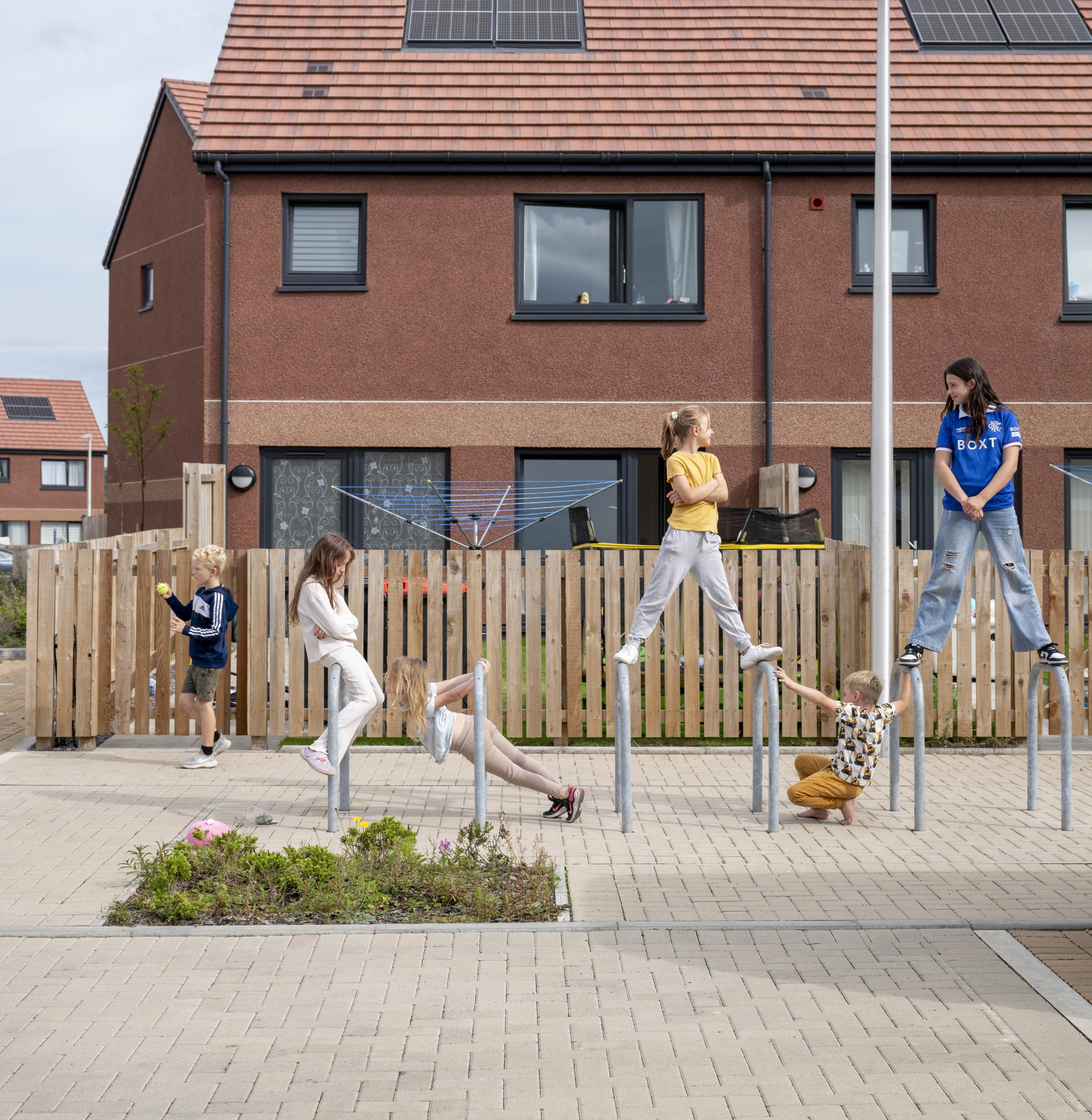
Curries Yard housing, Locharbriggs, by Collective Architecture for the Wheatley Group.
Credit: Kirsty Anderson
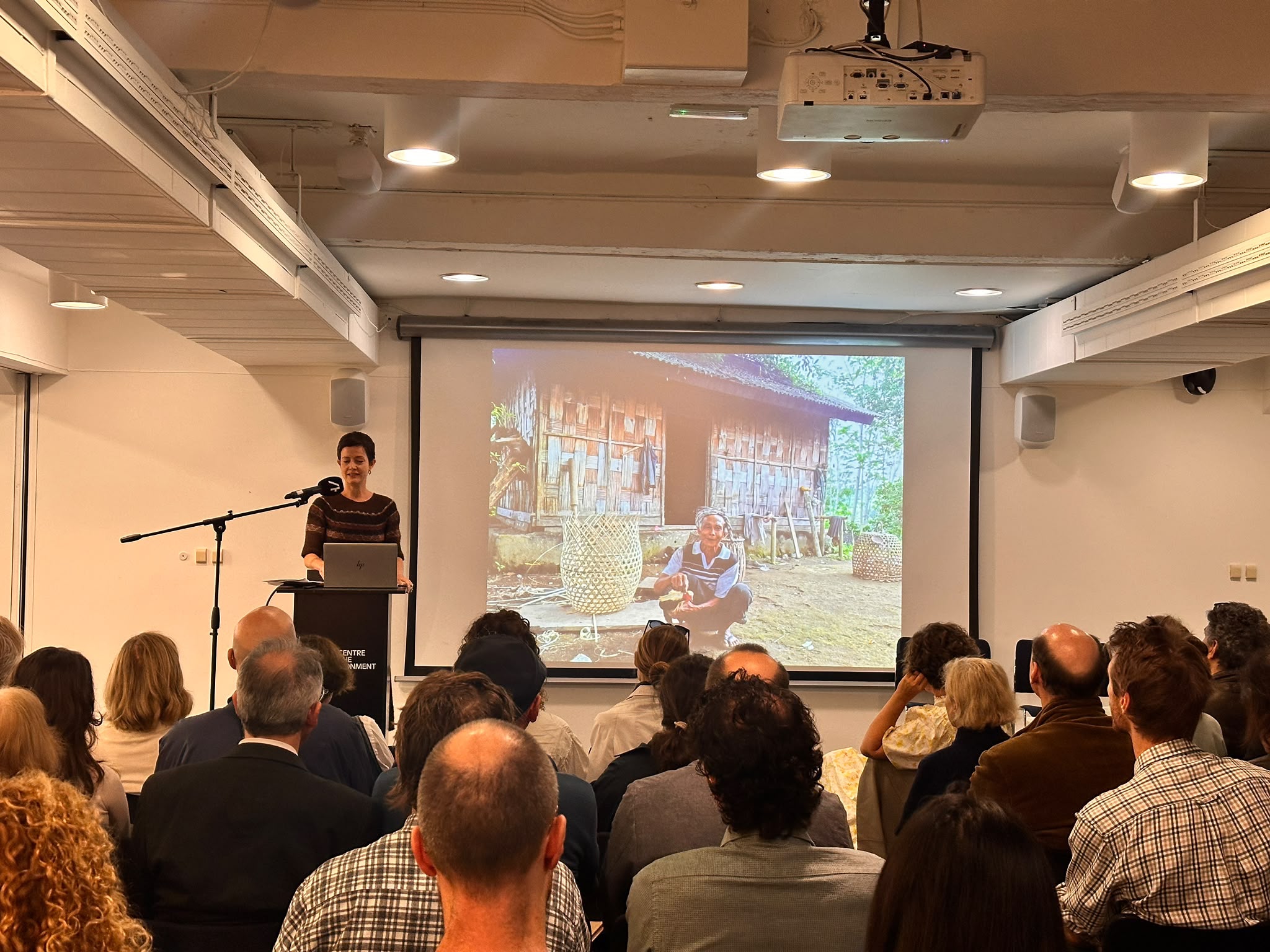
Dinah Bornat’s talk at the 2025 Festival of Place was an eye opener, not in highlighting the value of play and an active childhood, but for the rigorous analysis her practice has undertaken into child-friendly space delivered in contemporary development. Gradually, under cover of legislation and convenience, we have allowed our children’s autonomous world to shrink, from the neighbourhood, to the street, to the ‘safety’ of gardens and purpose-designed parks, which are often excellent, but can begin to feel a little like the sterile zoned planning that contemporary policy has sought to unravel: this bit is for adults; that bit is for children.
Energised by Bornat’s writing, I was prompted to pick up my copy of Colin Ward’s 1978 book, The Child in the City, given to me by a former colleague and mentor (who clearly understood me better than I did). Ward’s thesis that an integrated city is an ideal city, where there is no conflict or enforced segregation between adults and children; where play parks exist, but only as an accent to legitimate adventures available on our doorstep.
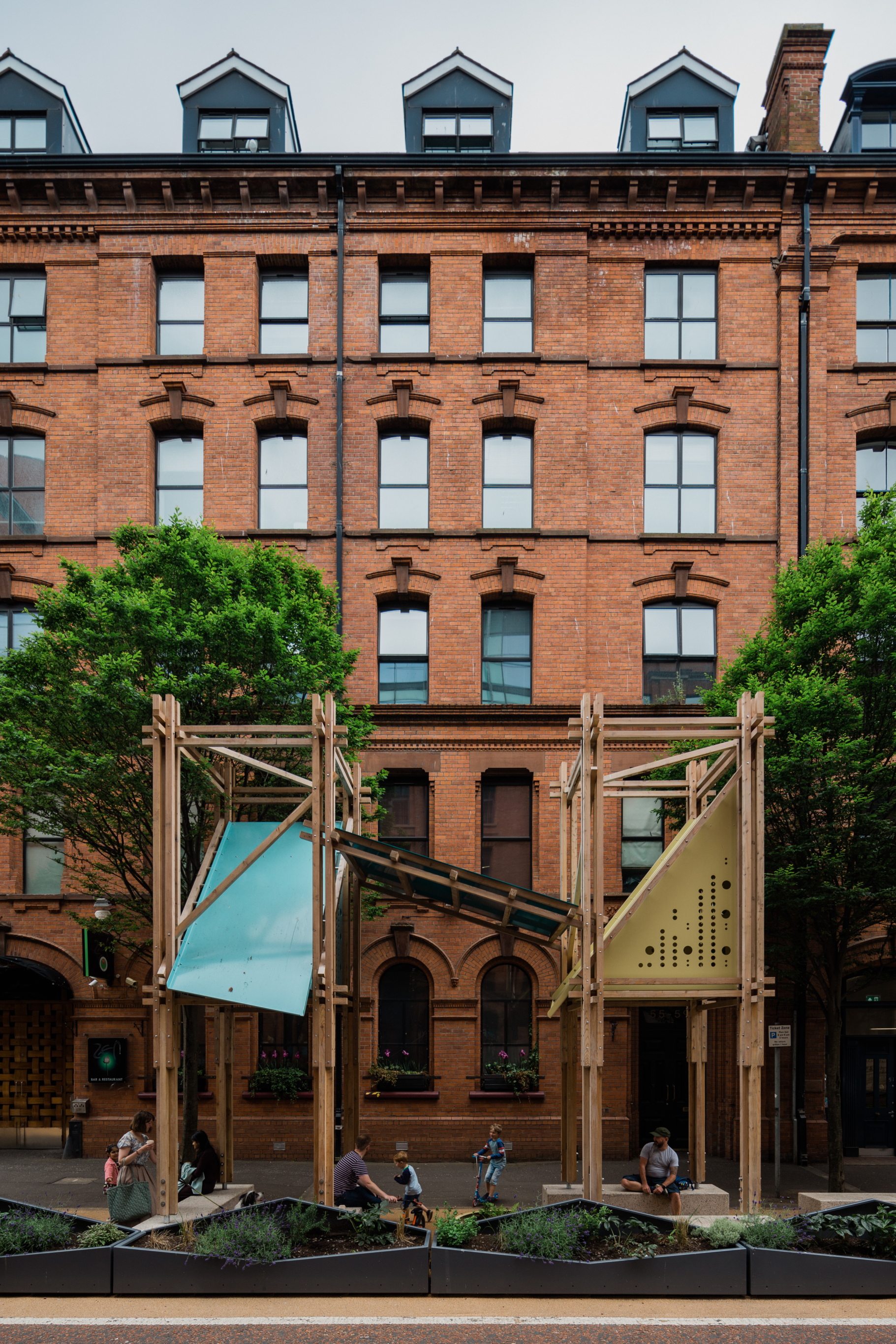
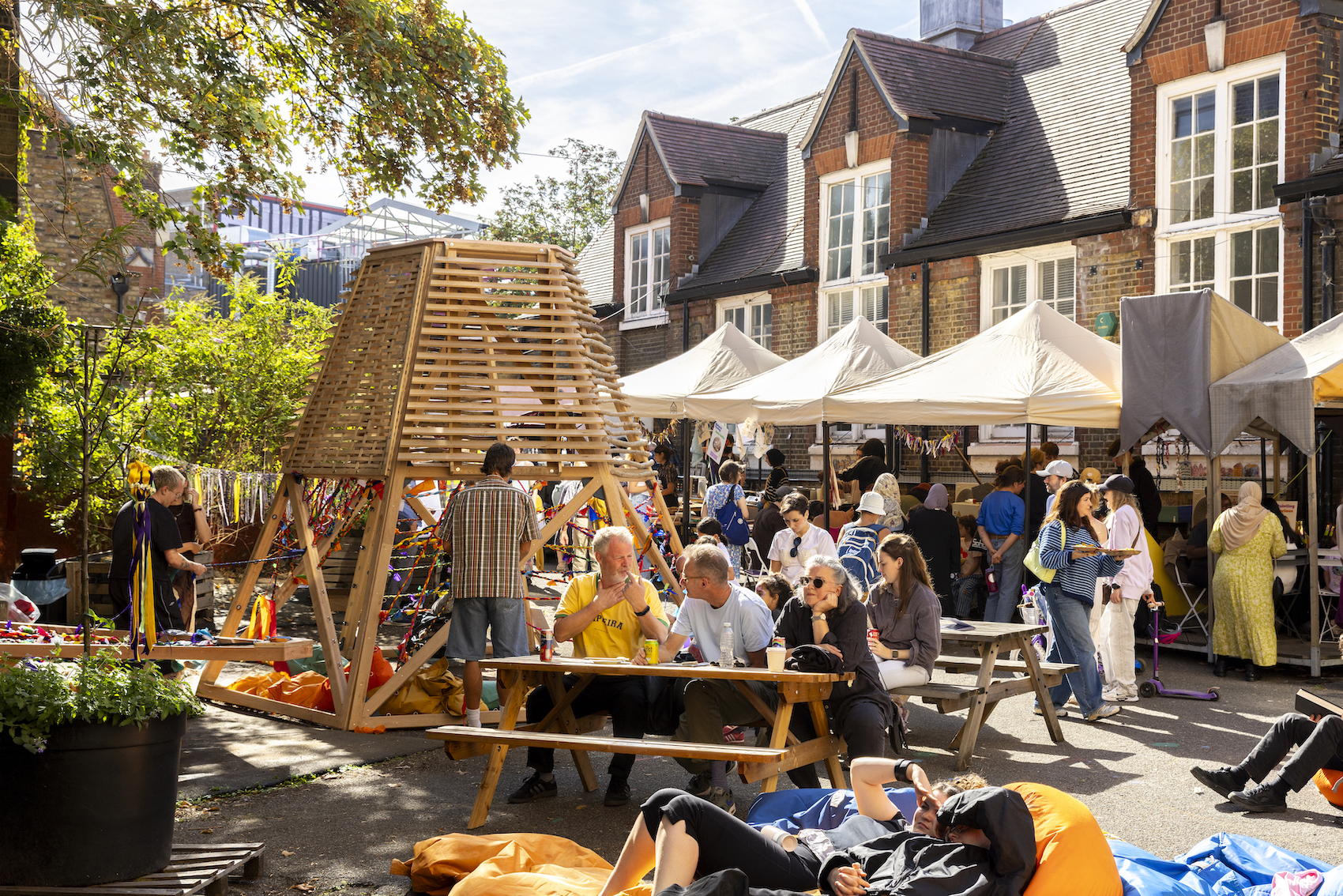
Adelaide Street temporary park, by OGU for Belfast City Council and the Department for Infrastructure. Credit: Joe Laverty
A city that is really concerned with the needs of its young will make the whole environment accessible to them, because, whether invited to or not, they are going to use the whole environment.”
– Colin Ward
I am reminded of a photo in Richard Rogers’ Cities for a Small Planet, where a street in Leeds is closed off and overlaid with turf in an experiment to test the impact of traffic on civic life. An abstraction, for sure, but the image of neighbours sitting out and children playing where there would otherwise be cars is a powerful one that has stayed with me since I was a student, echoing through contemporary examples like Belfast’s Adelaide Street that effectively reclaims public space.
Neave Brown, Gordon Benson, Alan Forsyth, Peter Tabori and many others of their generation made significant inroads in designing distinctive residential places where the car is subservient to the street (such as the White Flats, described beautifully in a film by Jo McCafferty and Rachel Stevenson), rich with informal spaces that can be readily appropriated by children for autonomous play. Their work remains a touchstone for practicing architects today, looking for ways to develop those ideas within a National Planning Framework that promises much but is out of step with the more prosaic requirements of local councils and statutory undertakers. Or is it the other way around?
Regardless, we’d all do well to consider the life of our cities from a more playful perspective.