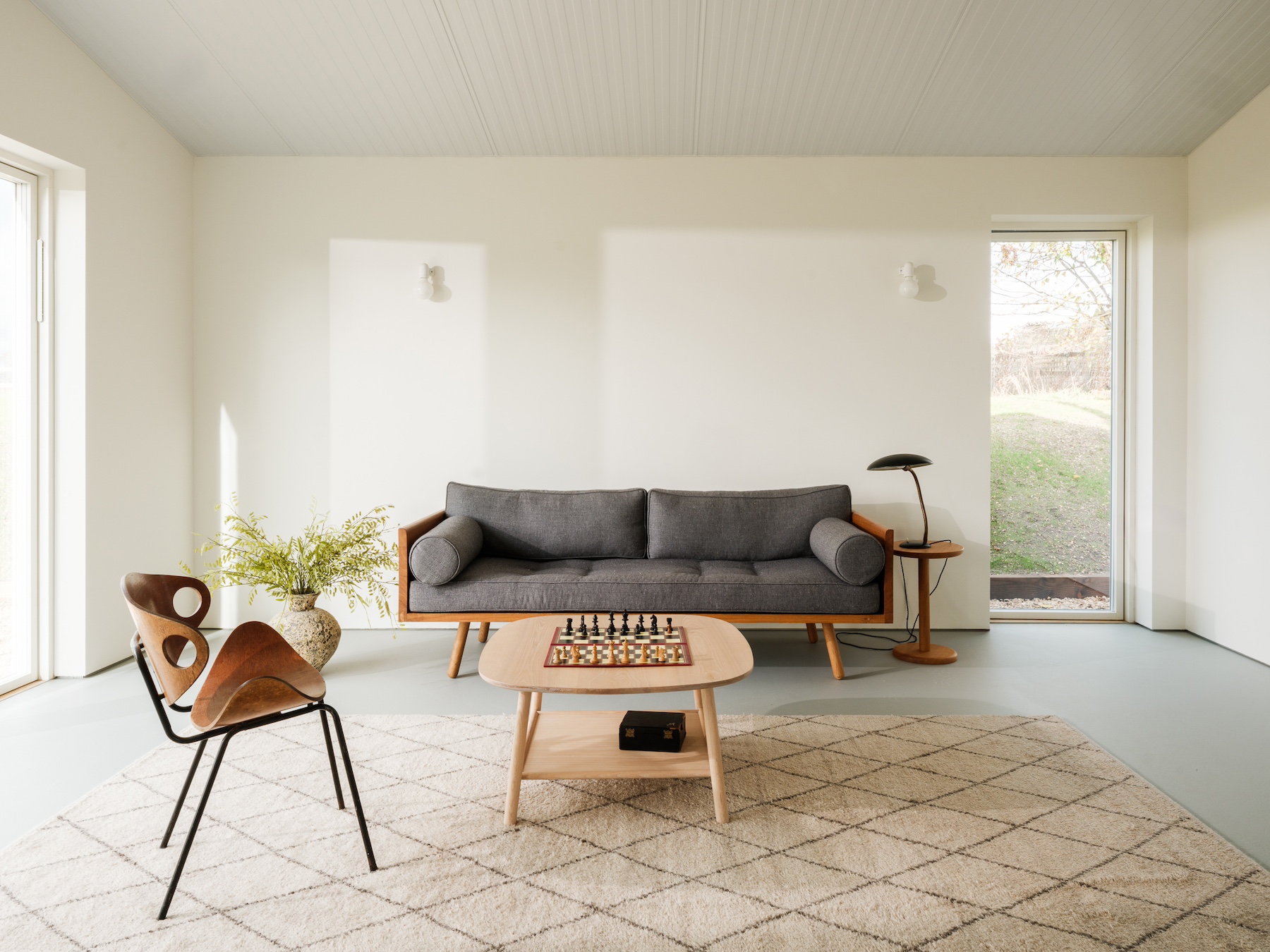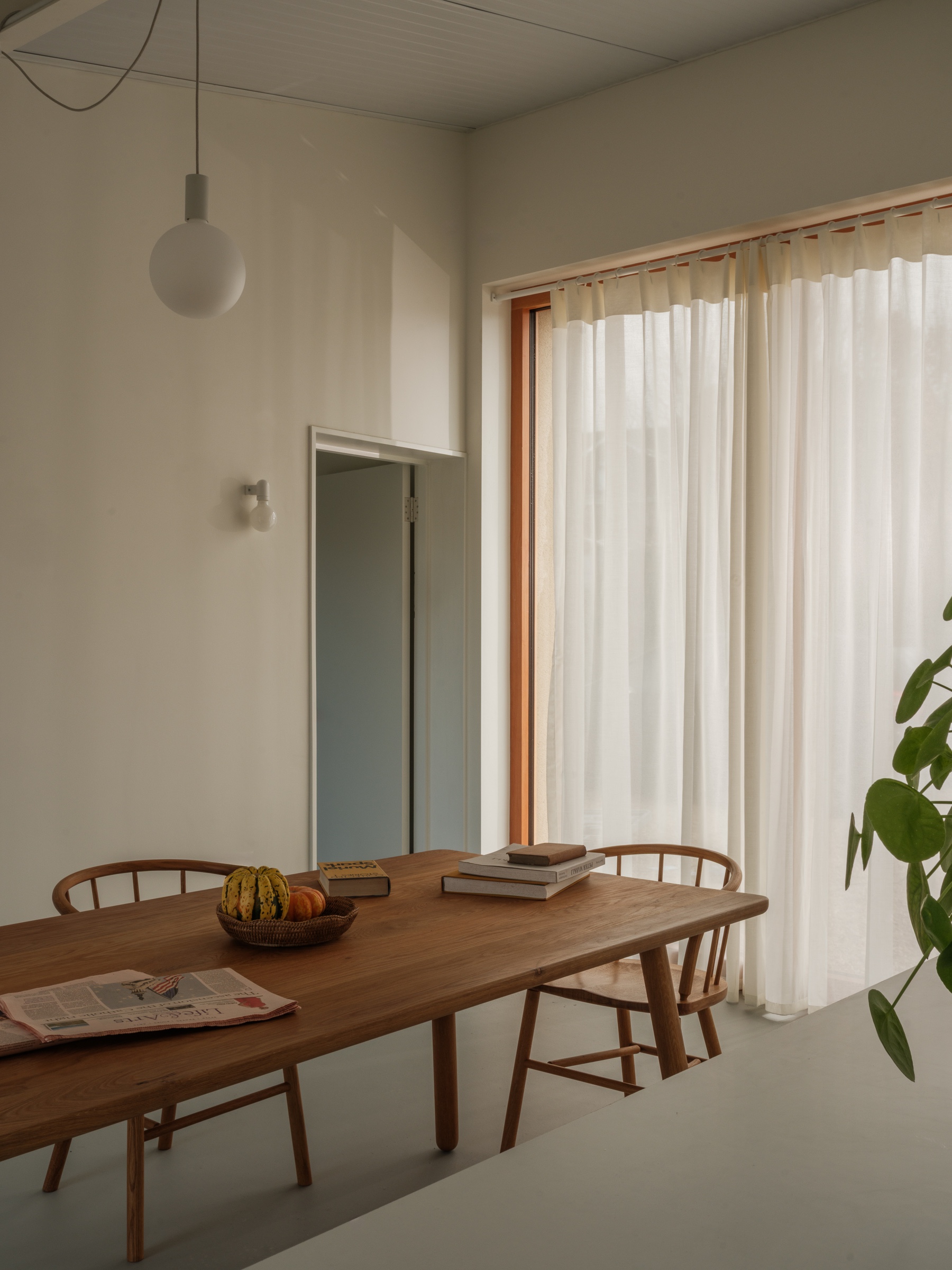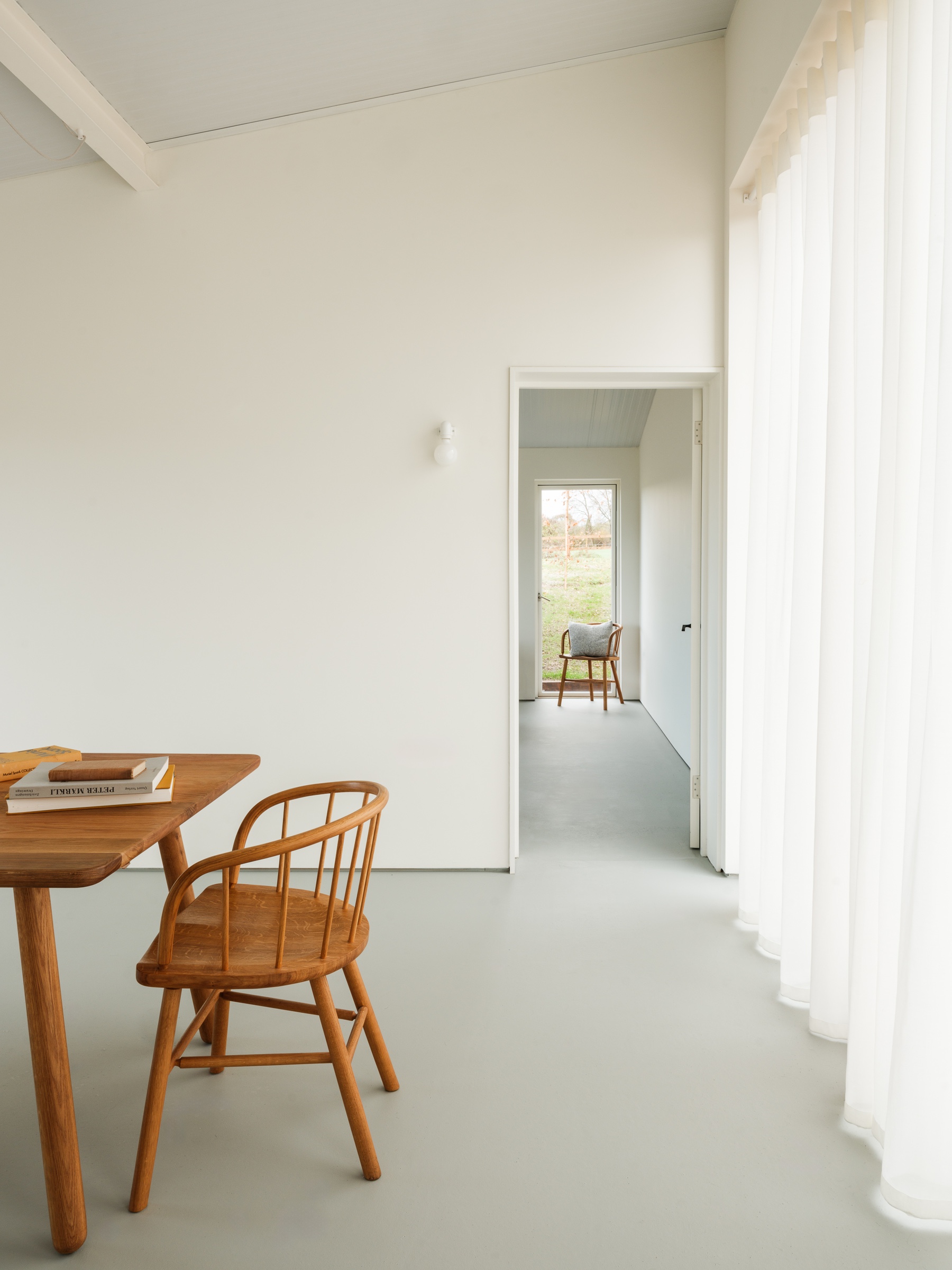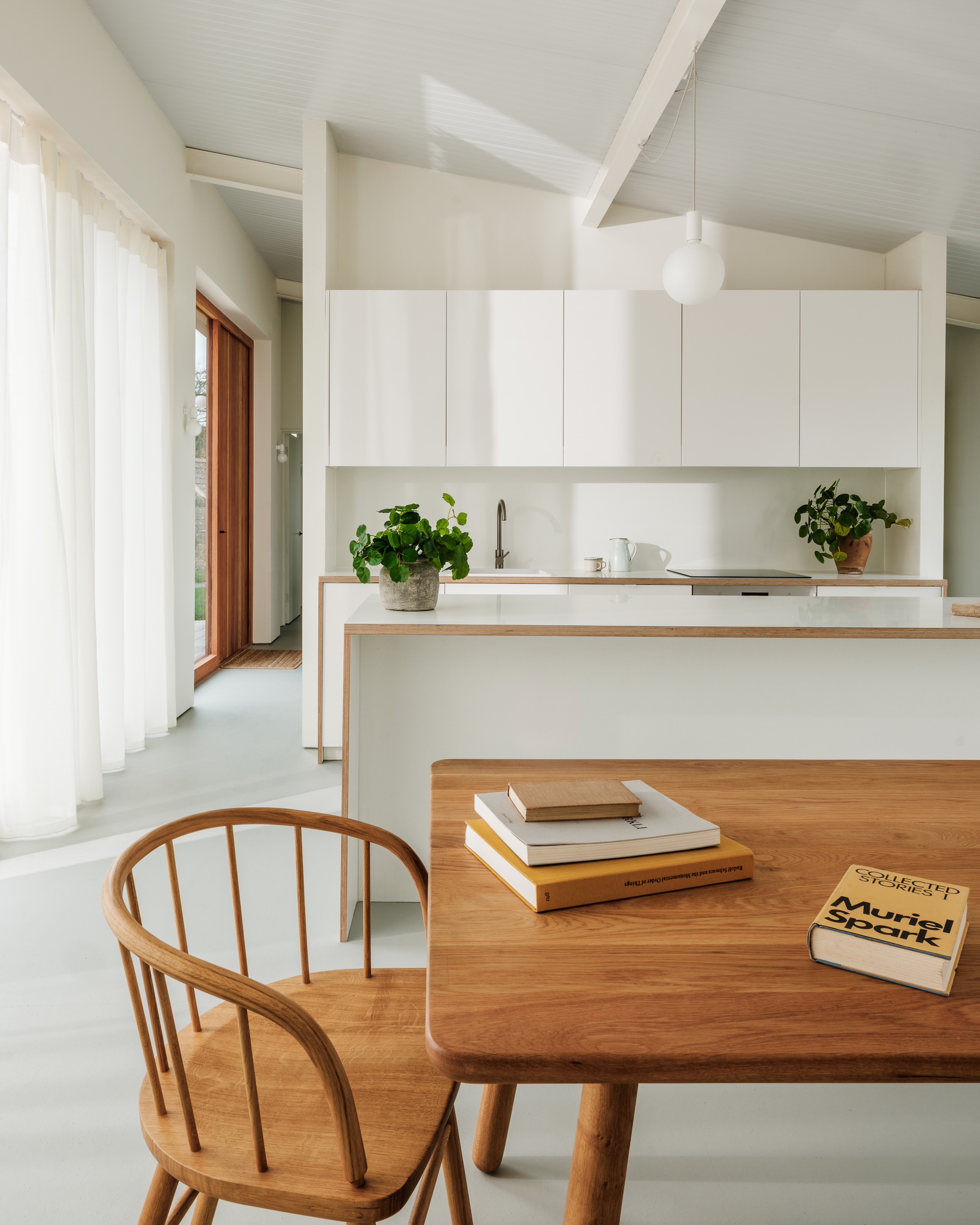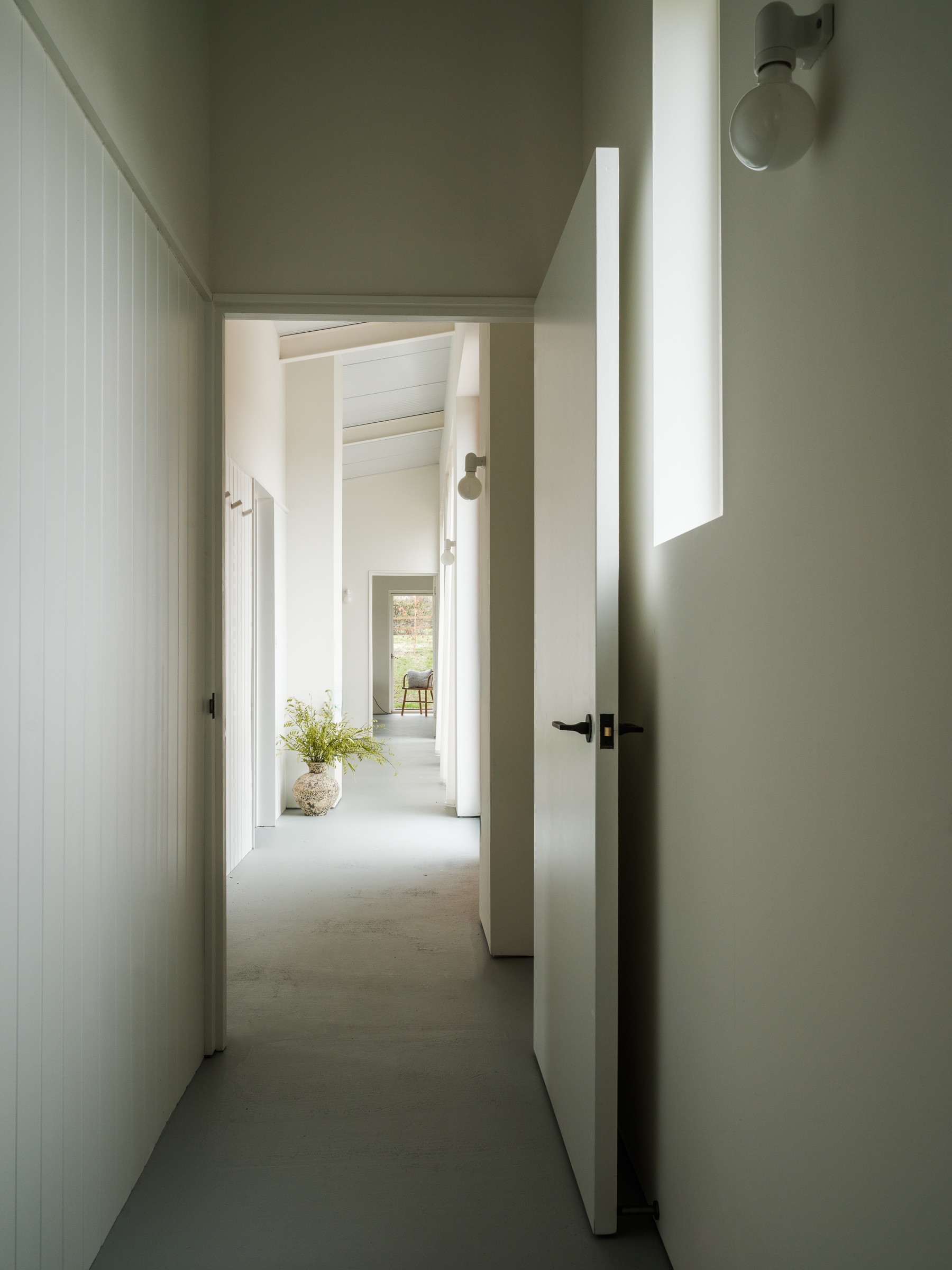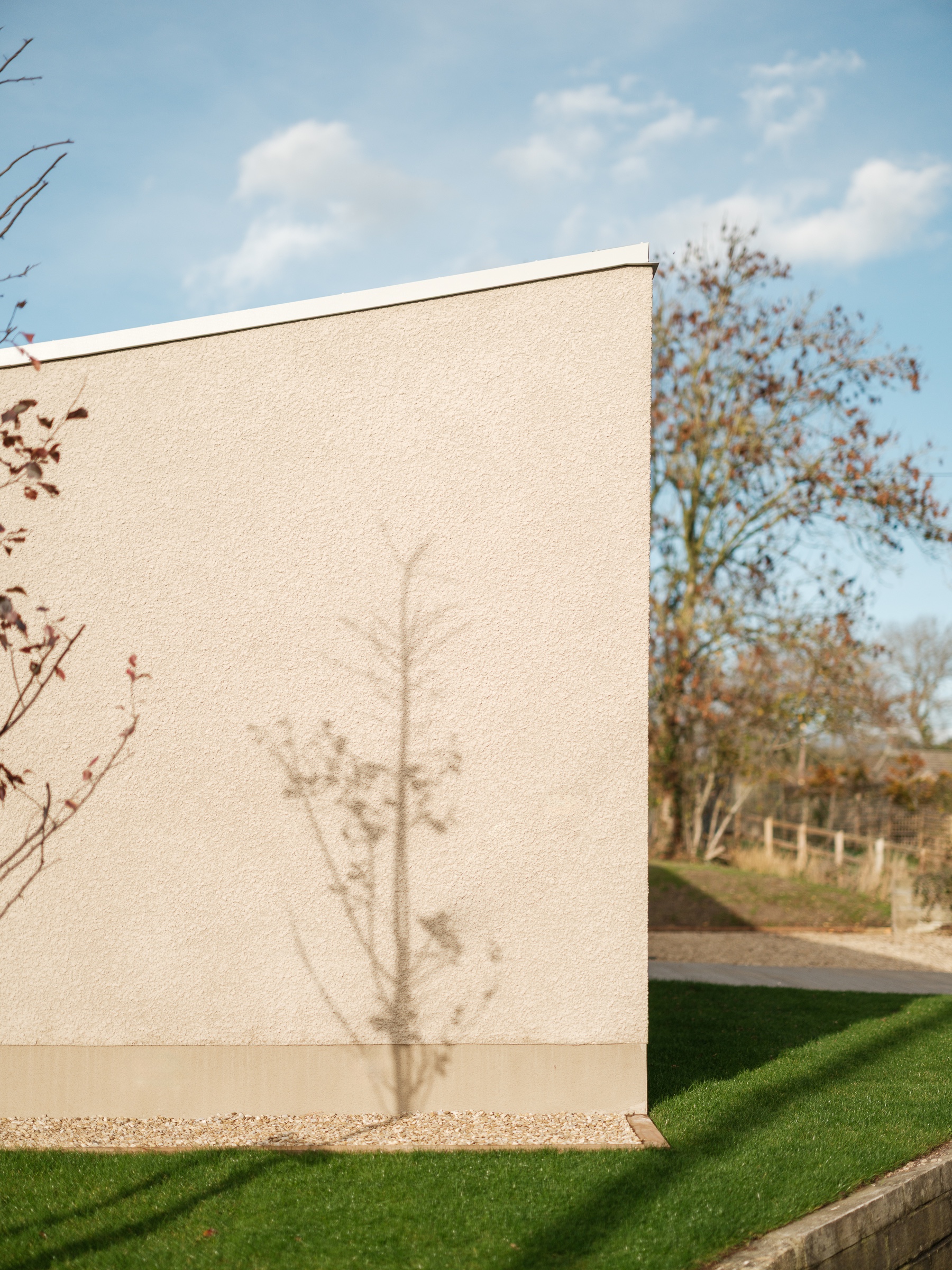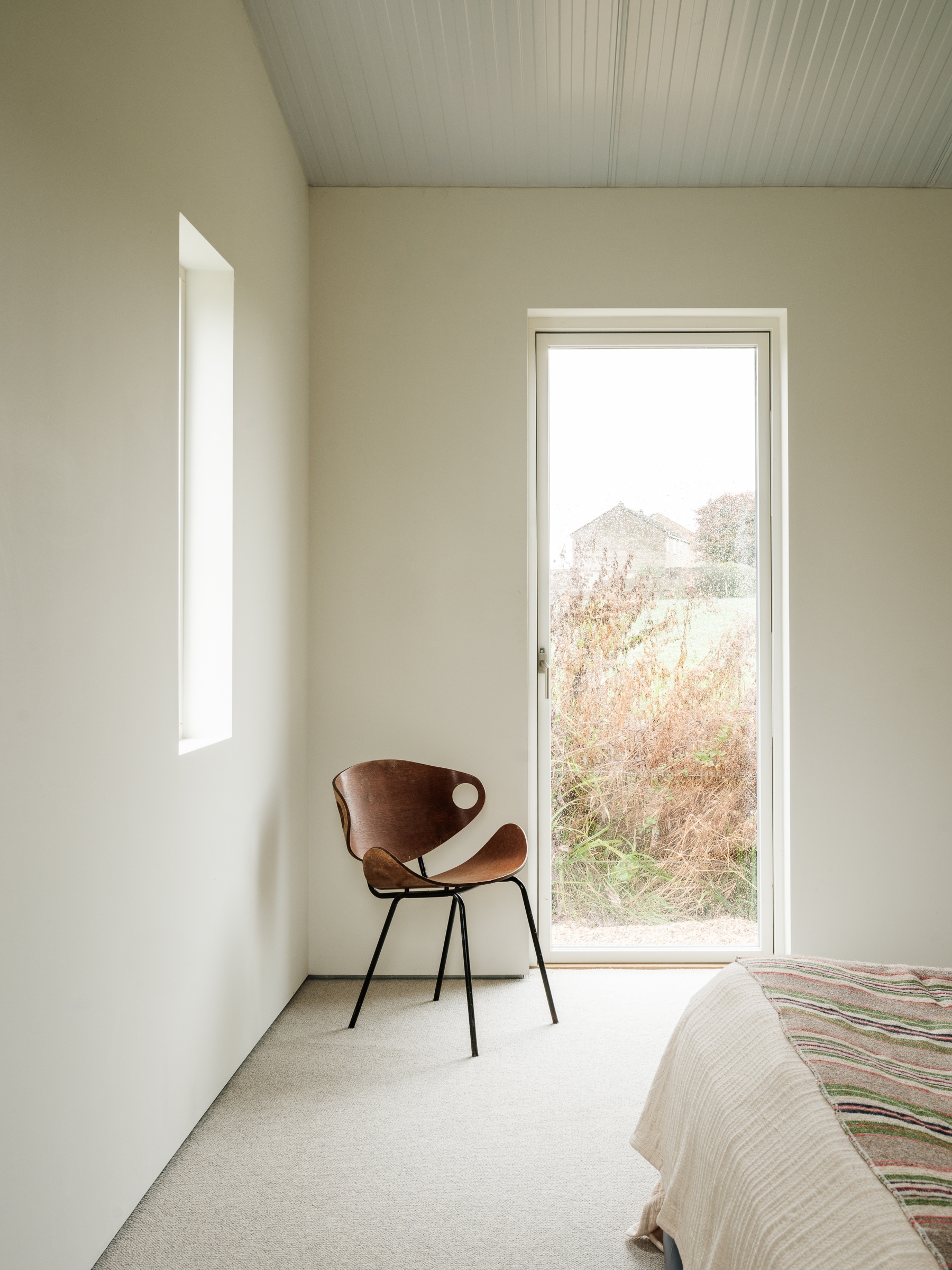
Bindloss Dawes Architects has transformed a modest agricultural structure on the edge of Nether Compton, Dorset, into a zero-carbon home, drawing on the pragmatism of rural construction to deliver a warm, precise and light interior.
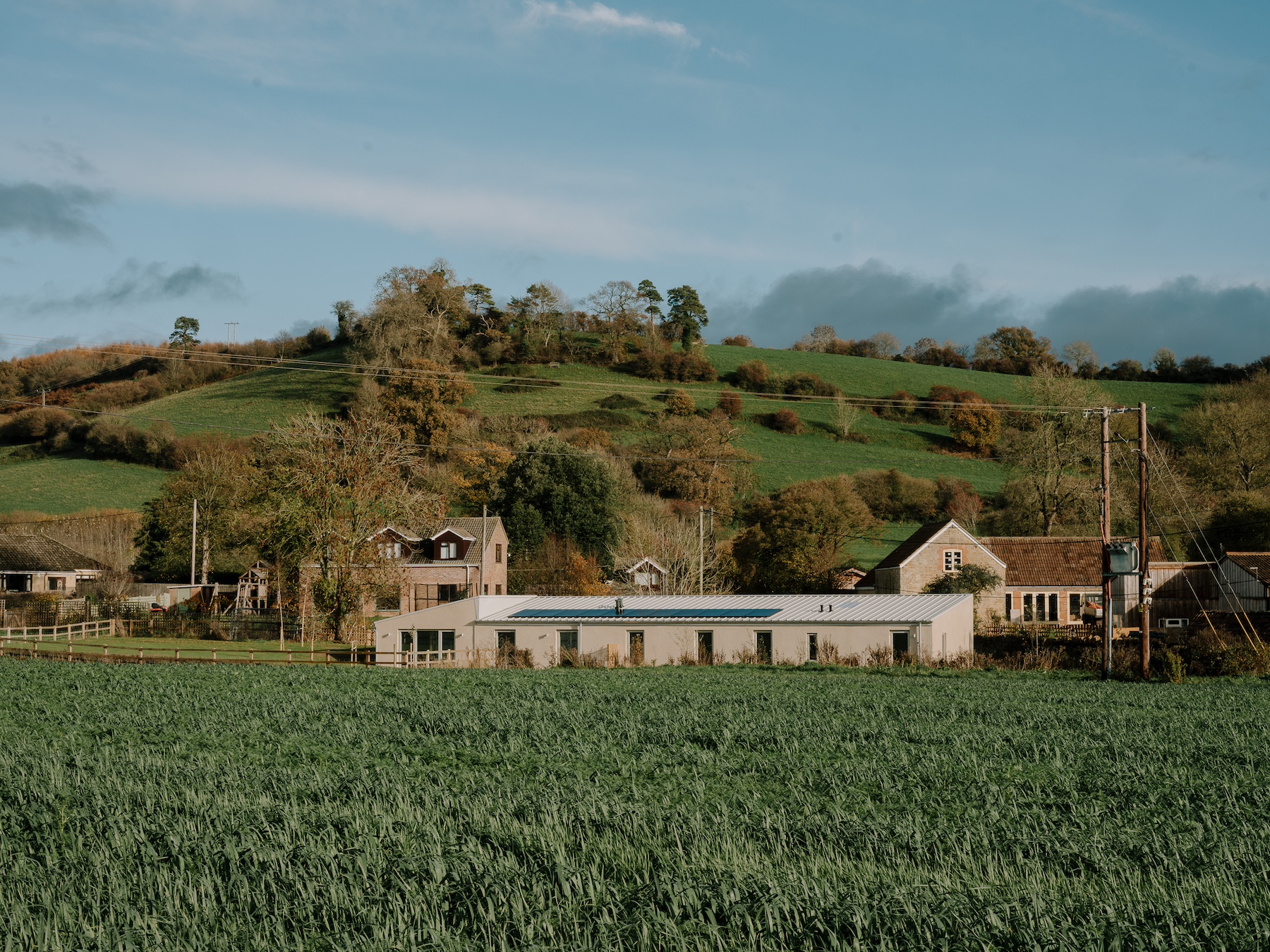
Bindloss Dawes Architects has completed the adaptive reuse of a former tractor shed in the village of Nether Compton, Dorset. The long mono-pitched building sits on the footprint of the original 1960s agricultural structure, whose handmade blockwork foundations and walls have been retained to minimise waste and reduce construction cost as well as the need for new materials.
Set within a quiet garden plot, the new home preserves the distinctive volume of the original shed, now expressed as a single, elongated interior lined with a highly insulated prefabricated metal roof system. Typically used on commercial buildings, the roof removes the need for secondary structure and was adopted following lessons learned from the studio’s own converted warehouse office in Somerset (completed in 2022). The decision also reflects a broader design ethos: to work with durable, economic systems that can be delivered efficiently without compromising quality.
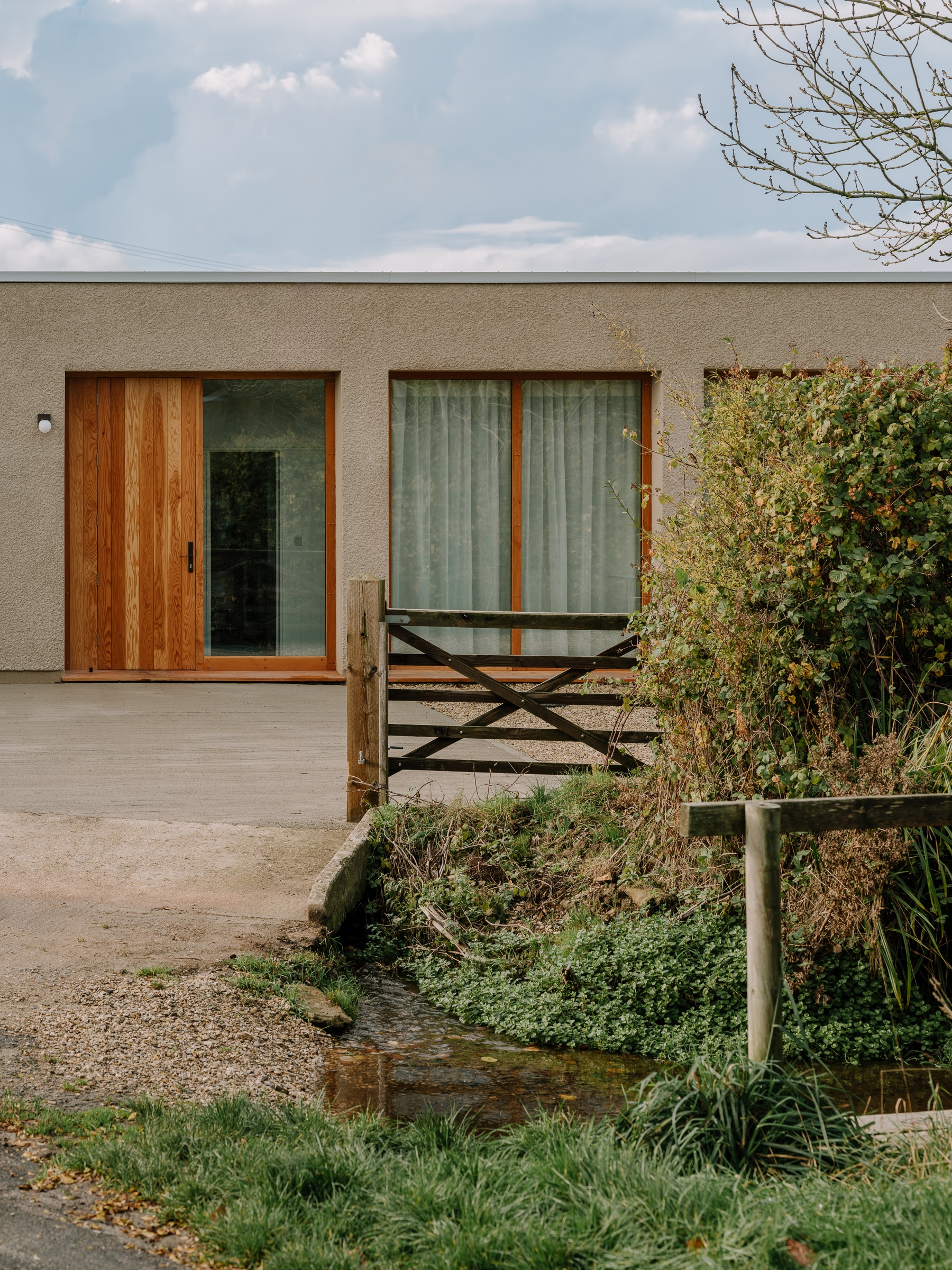
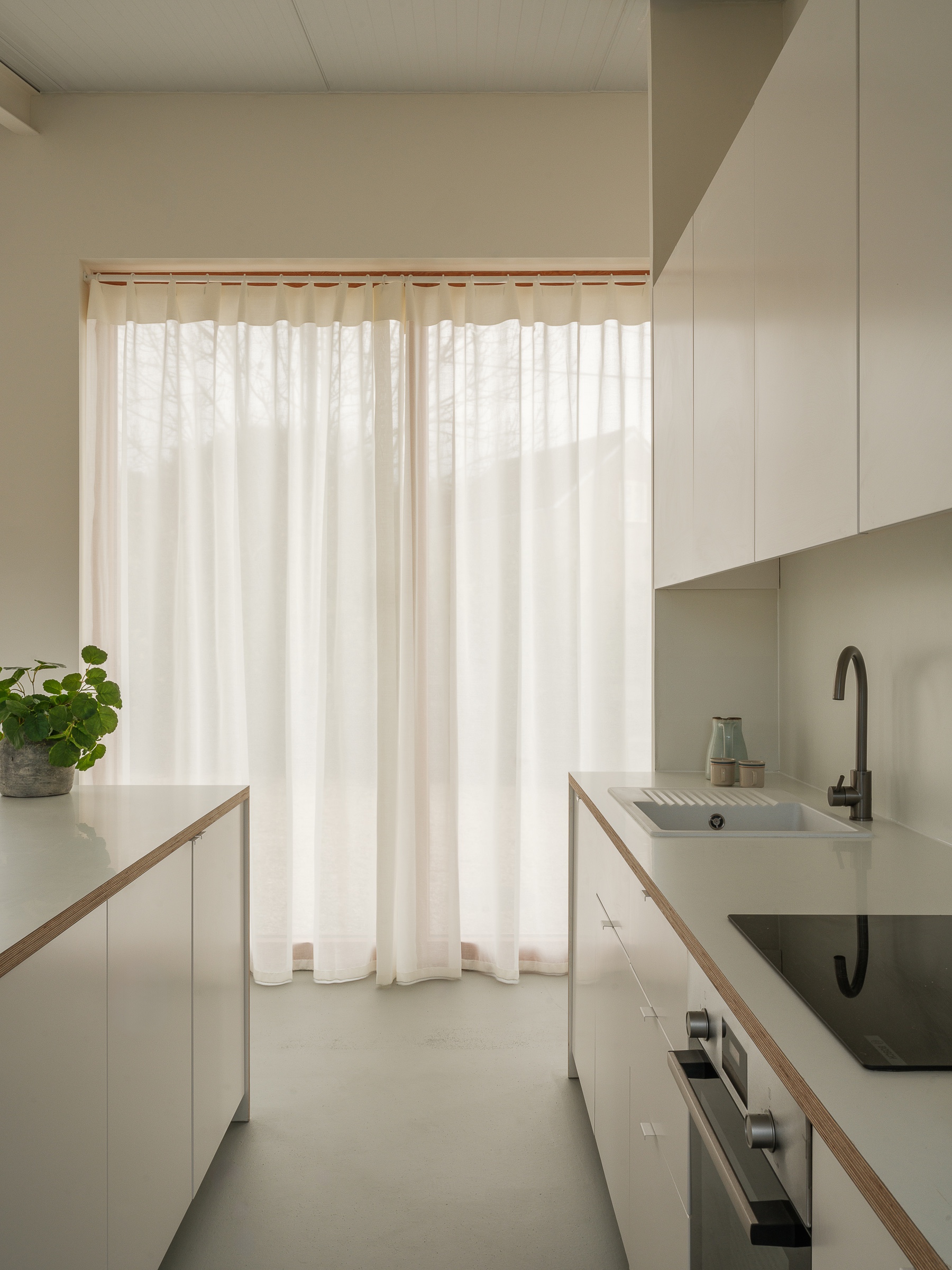
“In general, the aim was to keep as much as possible of the original structure as possible,” George Dawes, director and co-founder of Bindloss Dawes, who designed and delivered the project as a one-off development, told Architecture Today. “Initially we wanted to express this internally (including some nice big Tractor scraps) although in the end the practical concerns of insulating, damp proofing and finishing made this too difficult to execute.”
Within this simple envelope, Dawes has organised the plan as a sequence moving from north-facing living spaces to south-facing bedrooms. The arrangement emerged from the shed’s inherited orientation, which proved unexpectedly advantageous, allowing east and west light to enter along both long elevations.
“In the morning sunlight comes from one side and in the afternoon it comes from the other, making it feel incredibly animated throughout the course of the day,” explained Dawes. “Solar gain is also minimised in this orientation, with the south catching only one short wall, and windows on east and west side allowing the building to be passively cooled in the summer.
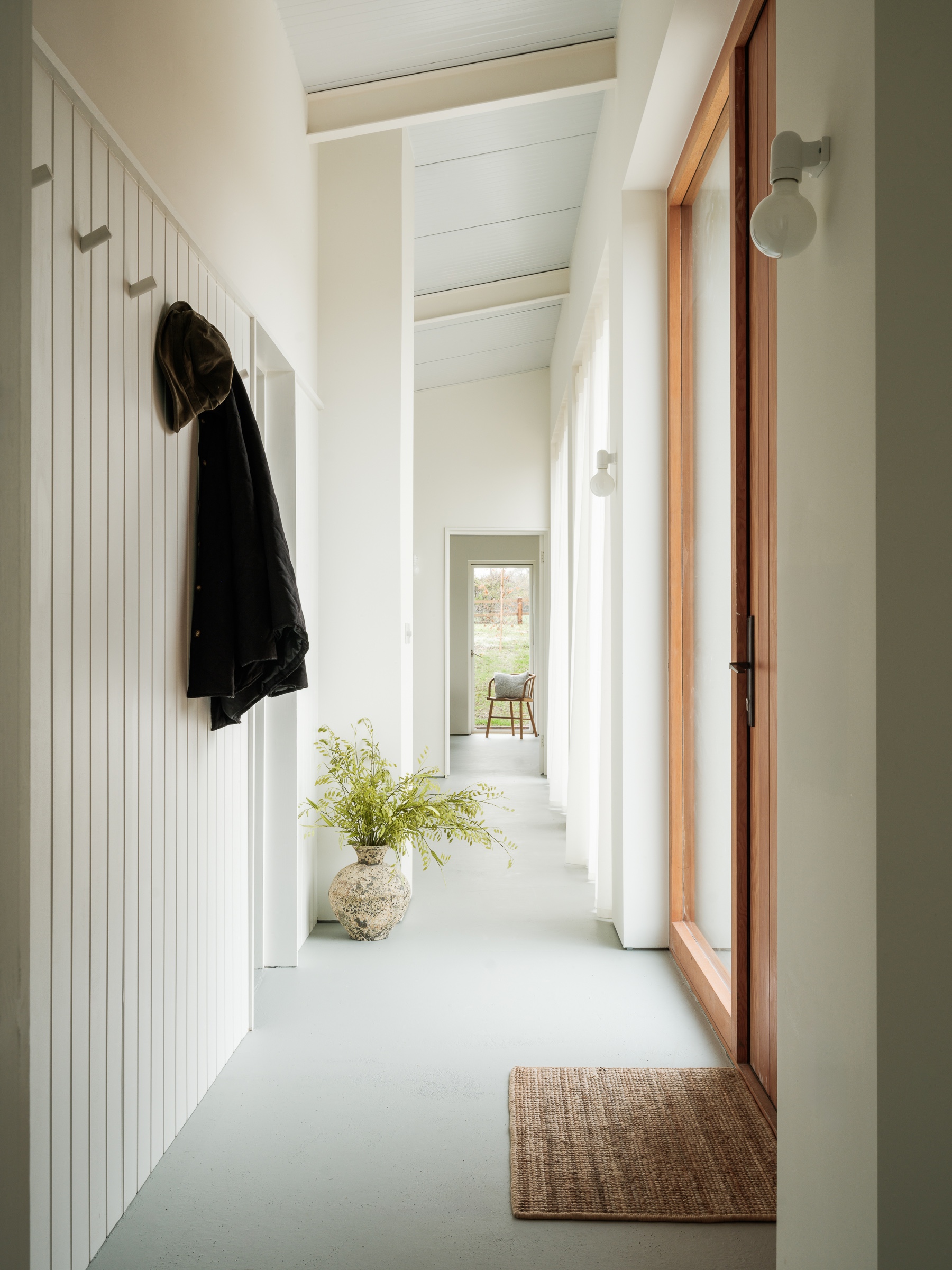
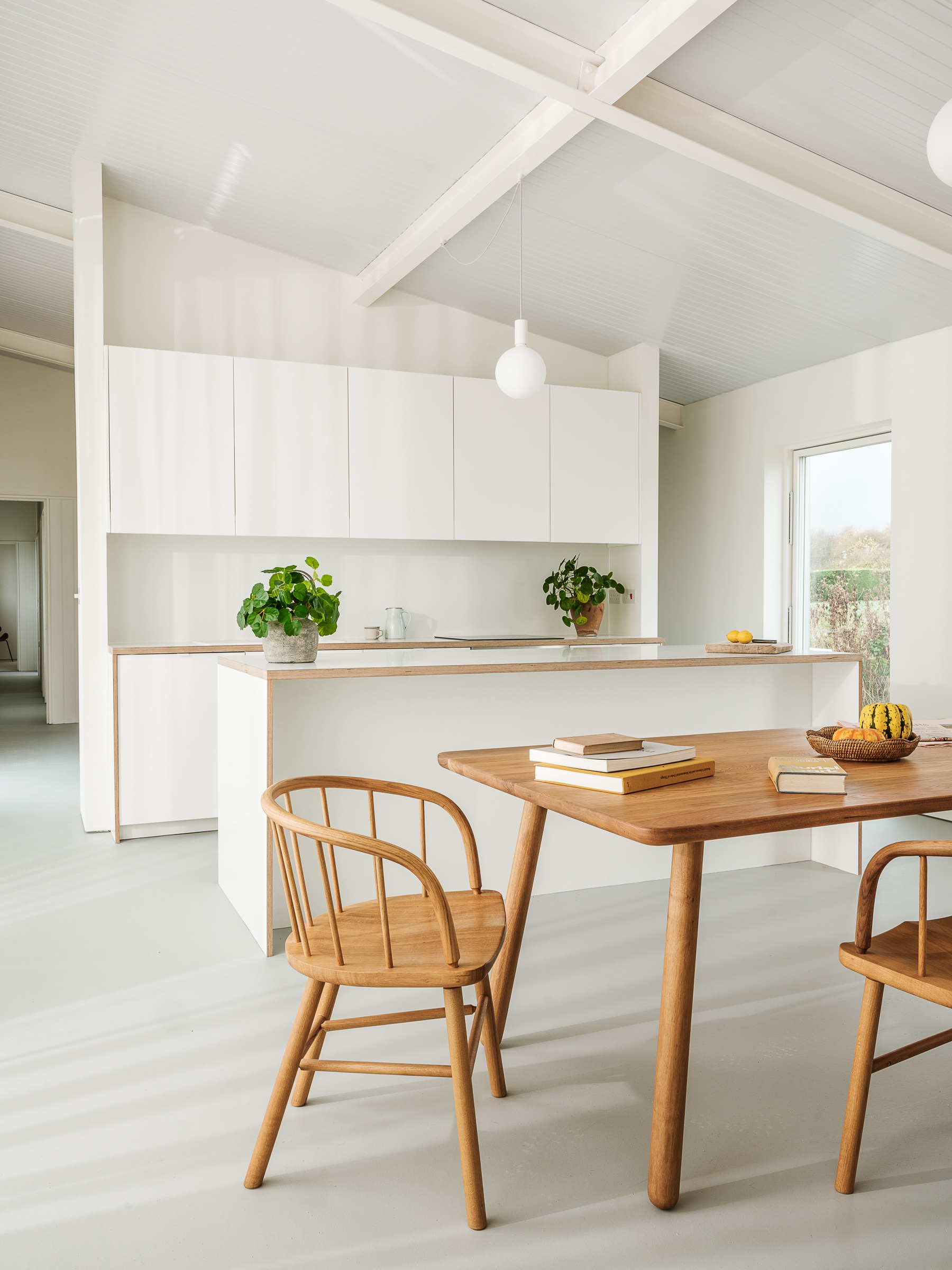
Locating the kitchen, dining and living spaces to the north also allowed these rooms to spill directly into the adjoining garden, creating a generous indoor–outdoor relationship at centre of the home.
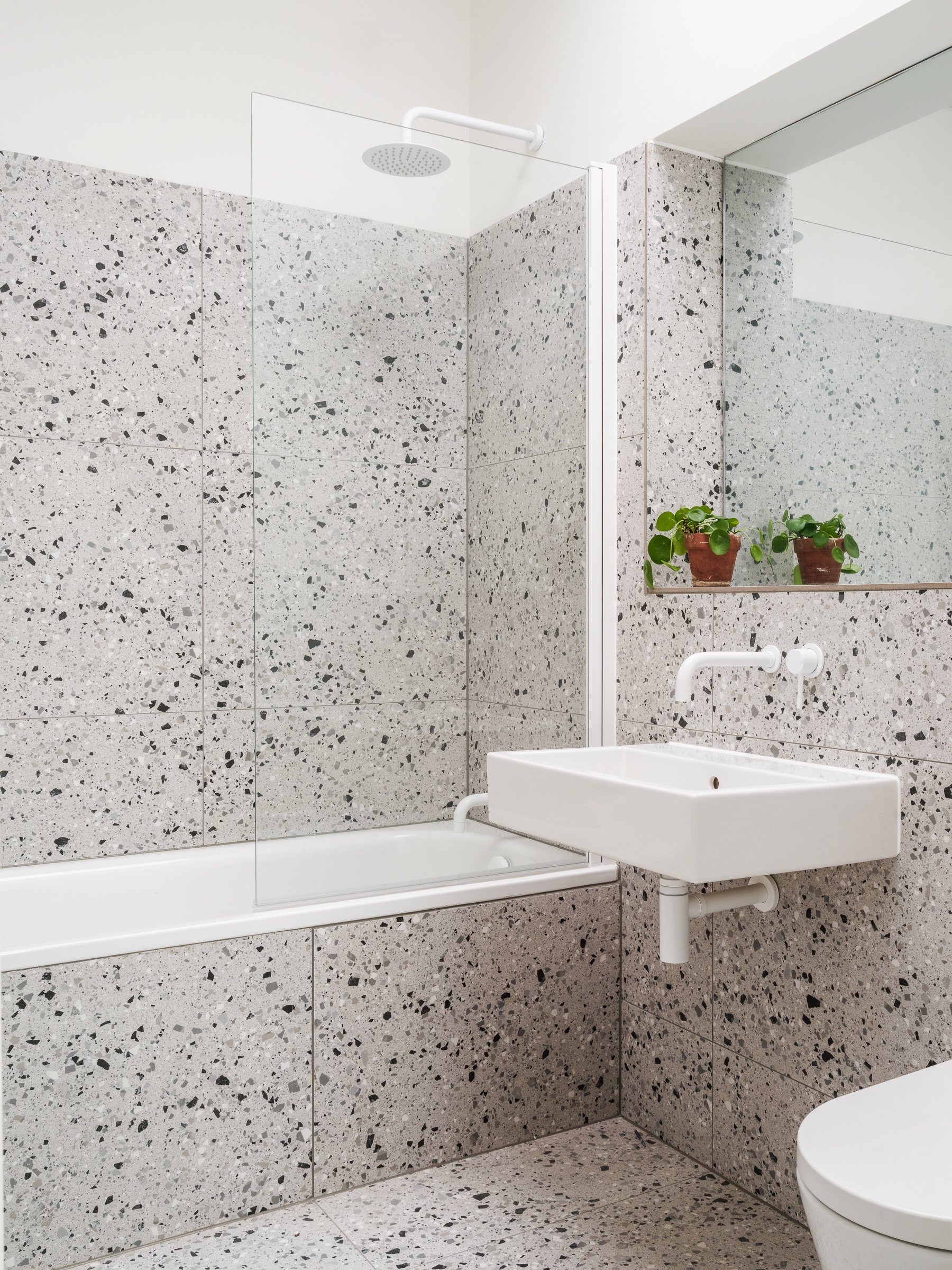
As a result, the house unfolds as a linear progression: a bright living room and open-plan kitchen and dining area occupy the north end; a flexible central room serves as a snug, home office or fourth bedroom; and the southern portion contains bedrooms and bathrooms arranged along a long hallway. Large openings connect principal rooms with the garden, reinforcing the clarity of the plan and underscoring the studio’s interest in creating spaces that are both spacious and intimate.
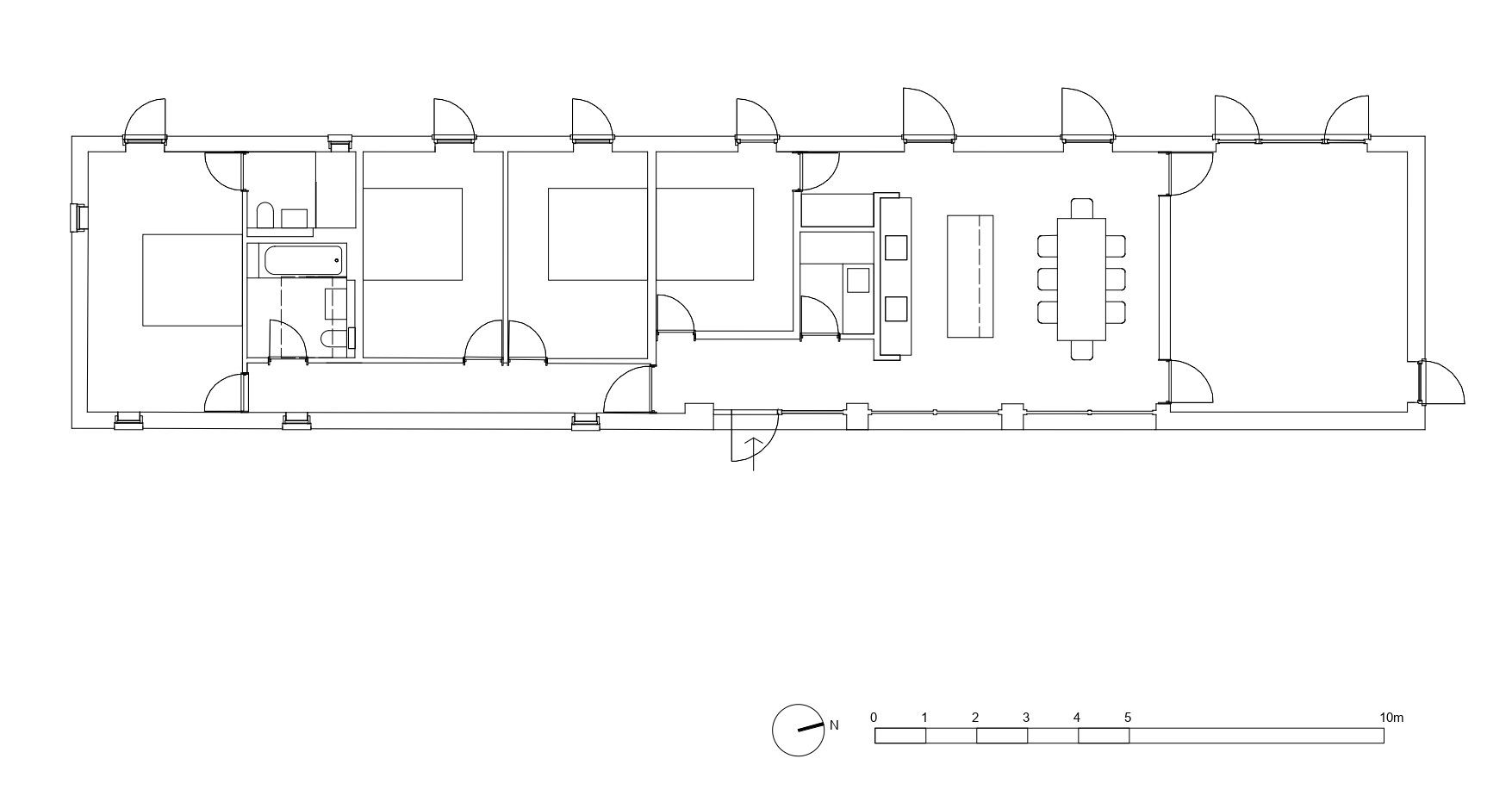
Floor plan of the home.
Inside, exposed steel beams and the metal composite roof structure are balanced by a muted palette of finishes, resulting in an environment that feels calm yet robust. Accents of Douglas fir have been employed to introduce warmth, most notably at the main entrance door and front windows, which were crafted by local joiner TR Joinery, adding definition and durability at key touchpoints.
“The use of a strong-grained timber was important in this location, to give accent to the entrance and bring highlights of colour to the external and internal material palette,” added Dawes. “The design was developed and adapted to create slim yet durable sections that would be handled and constructed by hand.
With energy performance a priority for the development, high levels of insulation have been paired with triple-glazed windows and doors, while an air-source heat pump provides heating and hot water. Electricity is generated on site by roof-mounted photovoltaic panels, together enabling the home to operate as zero-carbon in use.
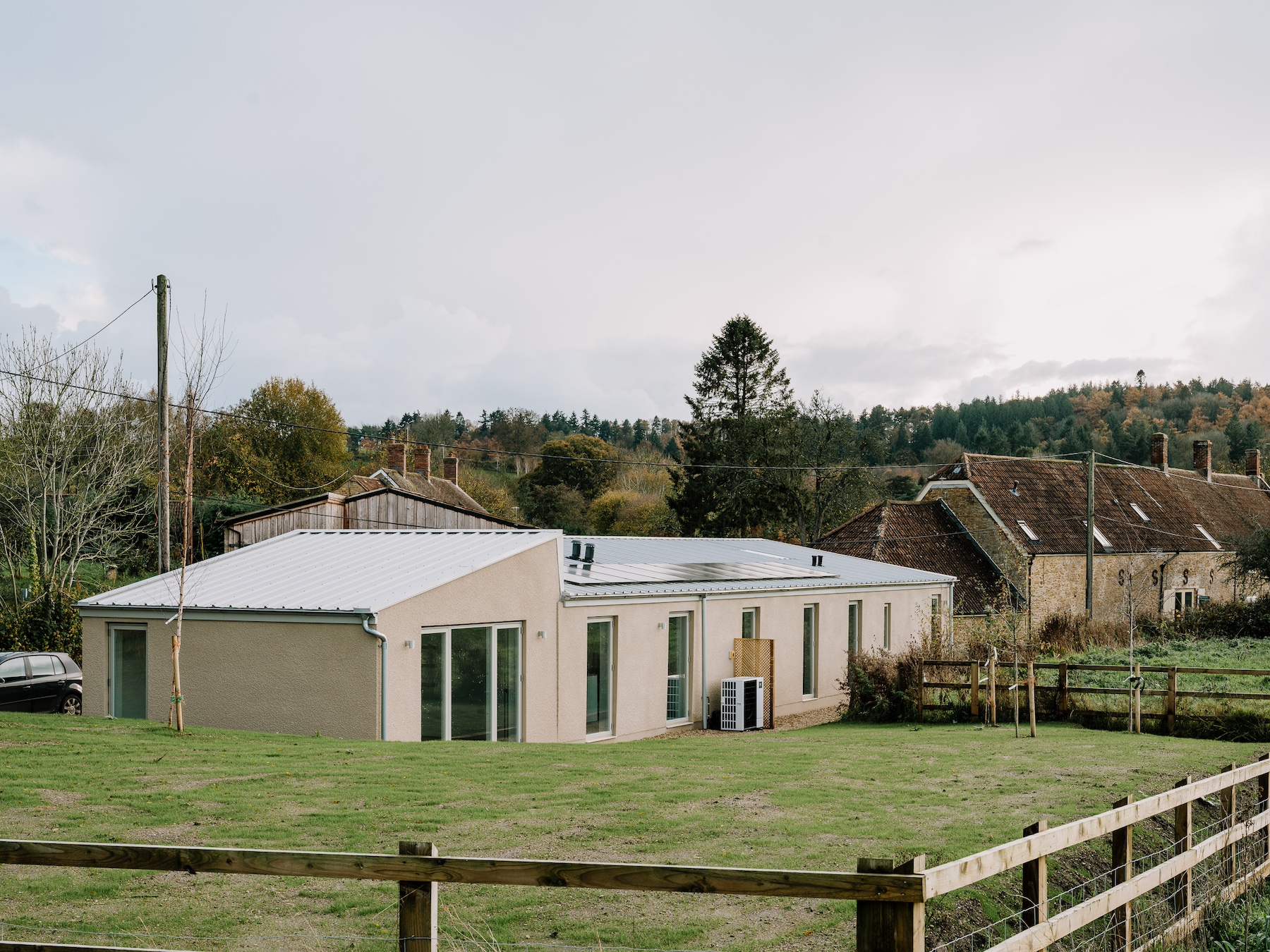
“The practical requirements of the ASHP and PVs make them very difficult to hide, but given the ambition of creating a carbon-positive house, we wanted them on show, albeit tidily and carefully installed,” said Dawes. “The ASHP is located on the rear elevation and in the centre of the plan, directly adjacent to the plant room, which is the most practical position for both bringing heat into the building and spreading it over the floor plan. The PVs are located on the main roof, but close to the eaves, creating a long, extruded run that complements the proportions of the roof.”
“This project has been a rare opportunity to bring together many of the ideas of our architecture studio: to create a high-quality, sustainable home on a manageable budget,” Dawes continued. “It demonstrates how an unassuming agricultural structure can be elevated into something that feels crafted and generous, combining the practical and the poetic.”
Credits
Client
Bindloss Dawes
Architect
Bindloss Dawes
Structural engineer
Splinter Structures
Contractor
SBConstruction
Additional images