NIKJOO’s timber-framed house for developer Flawk transforms a tight, curved corner plot in Gospel Oak into a sculptural, low-carbon home shaped by craft, material care and the site’s industrial past.
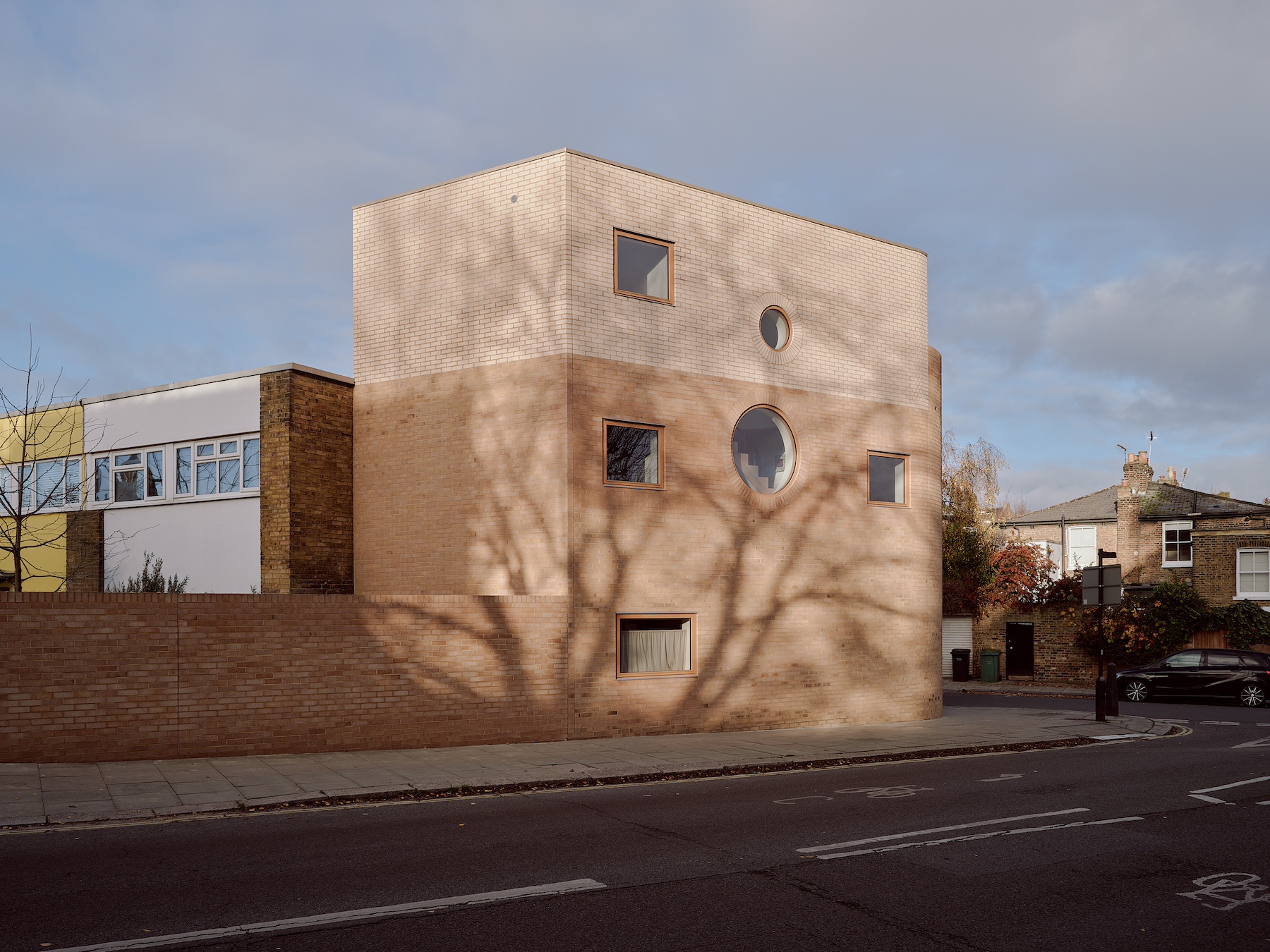
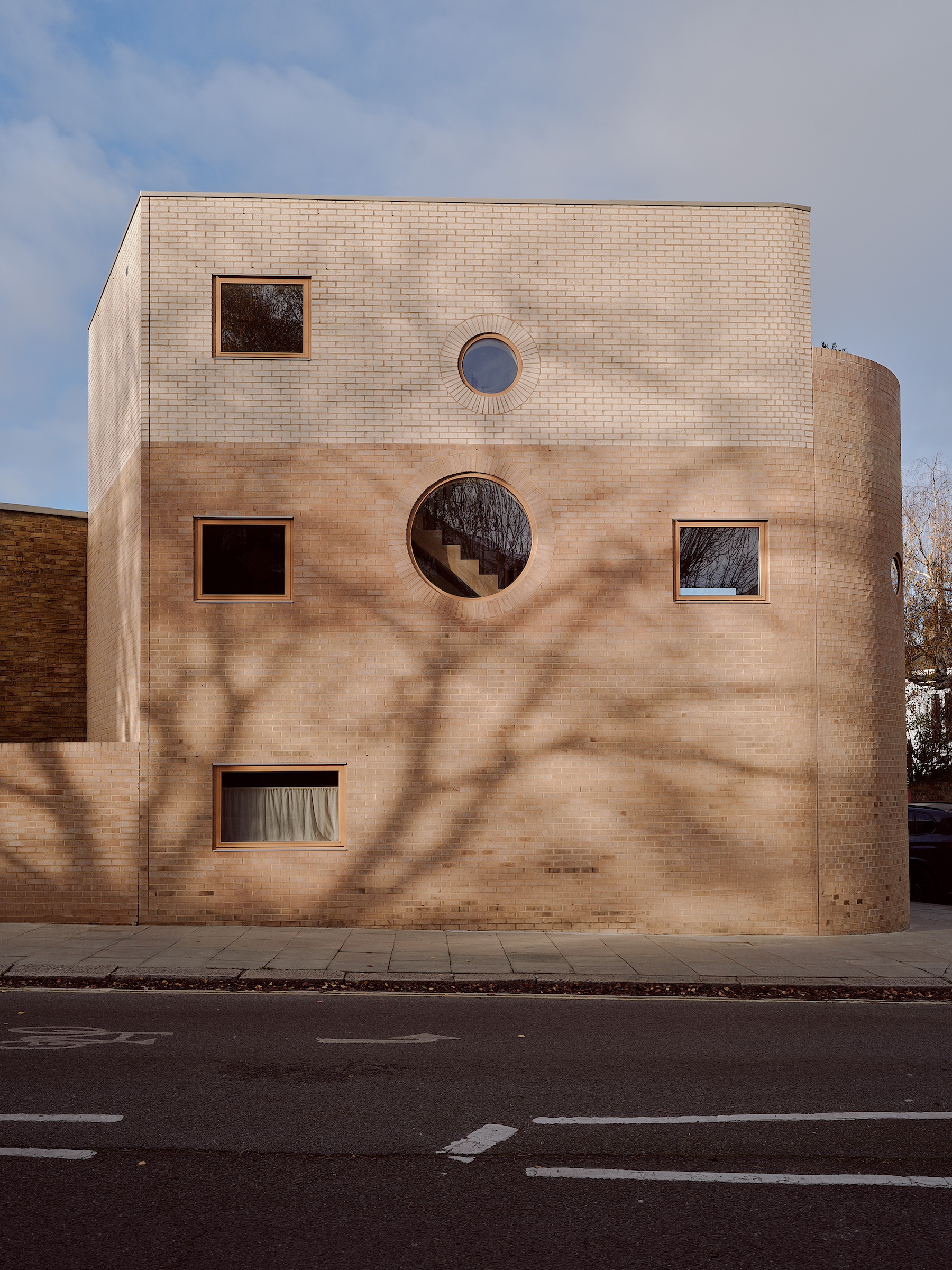
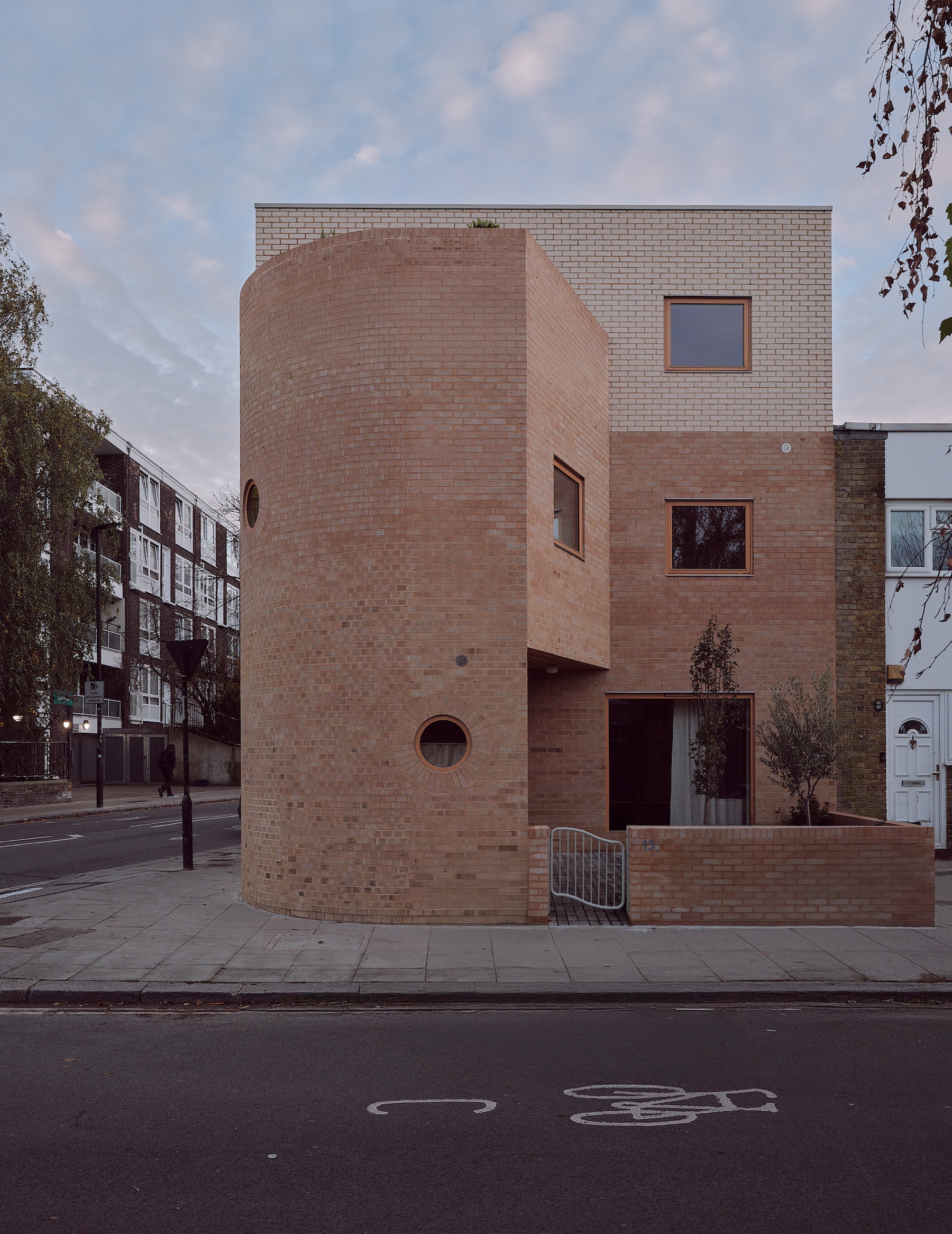
NIKJOO has completed Runda, a three-storey, three-bedroom house on a former brick-firing plot on Lamble Street in Gospel Oak, north London. Developed by Flawk, the project occupies a long-overlooked corner site within the Lamble Street Estate, adjoining a 1960s Powell & Moya terrace. When first identified, the plot was overgrown, fenced off and defined by a distinctive curved boundary, with this geometry becoming the organising principle for both the building’s footprint and its architectural language.
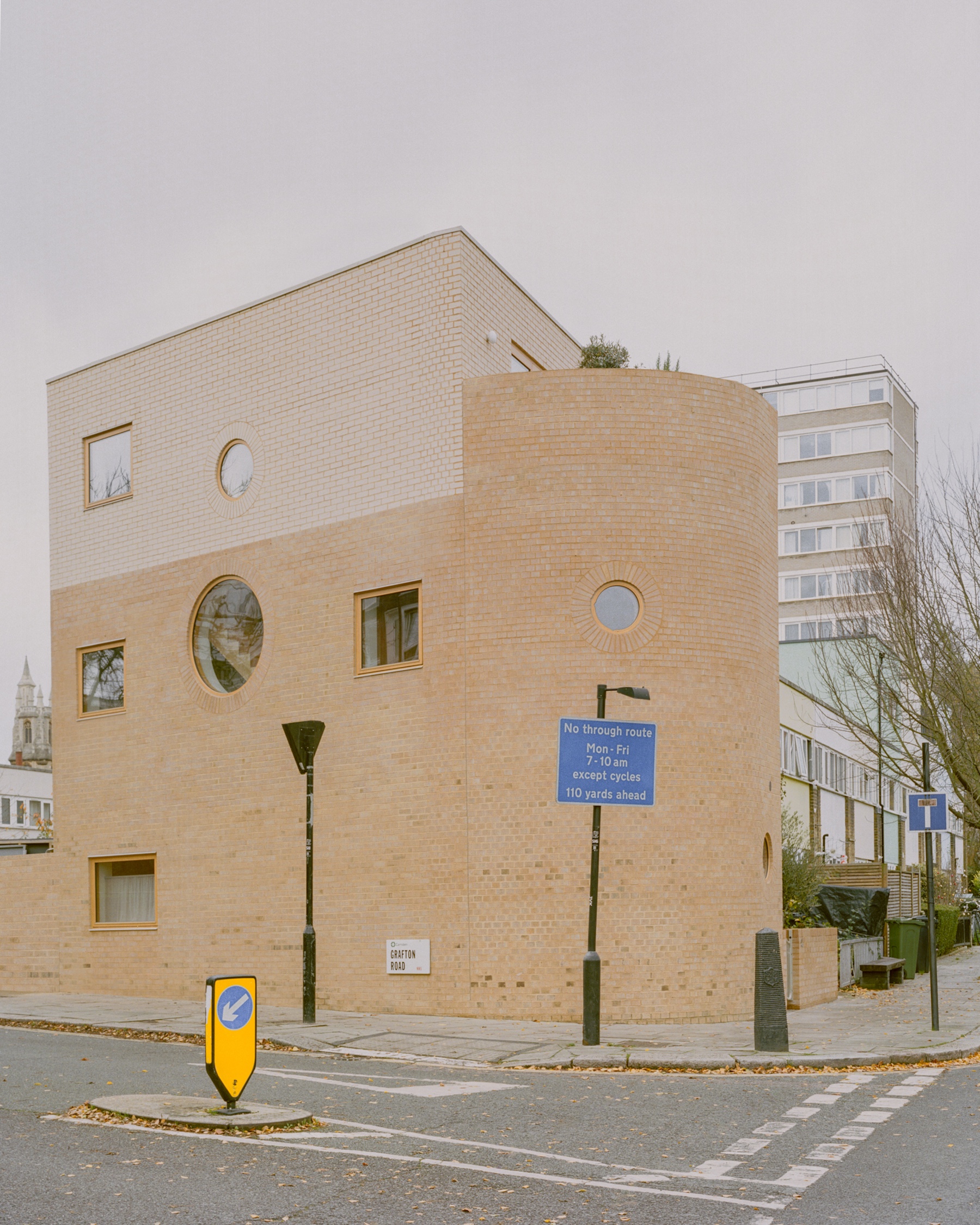
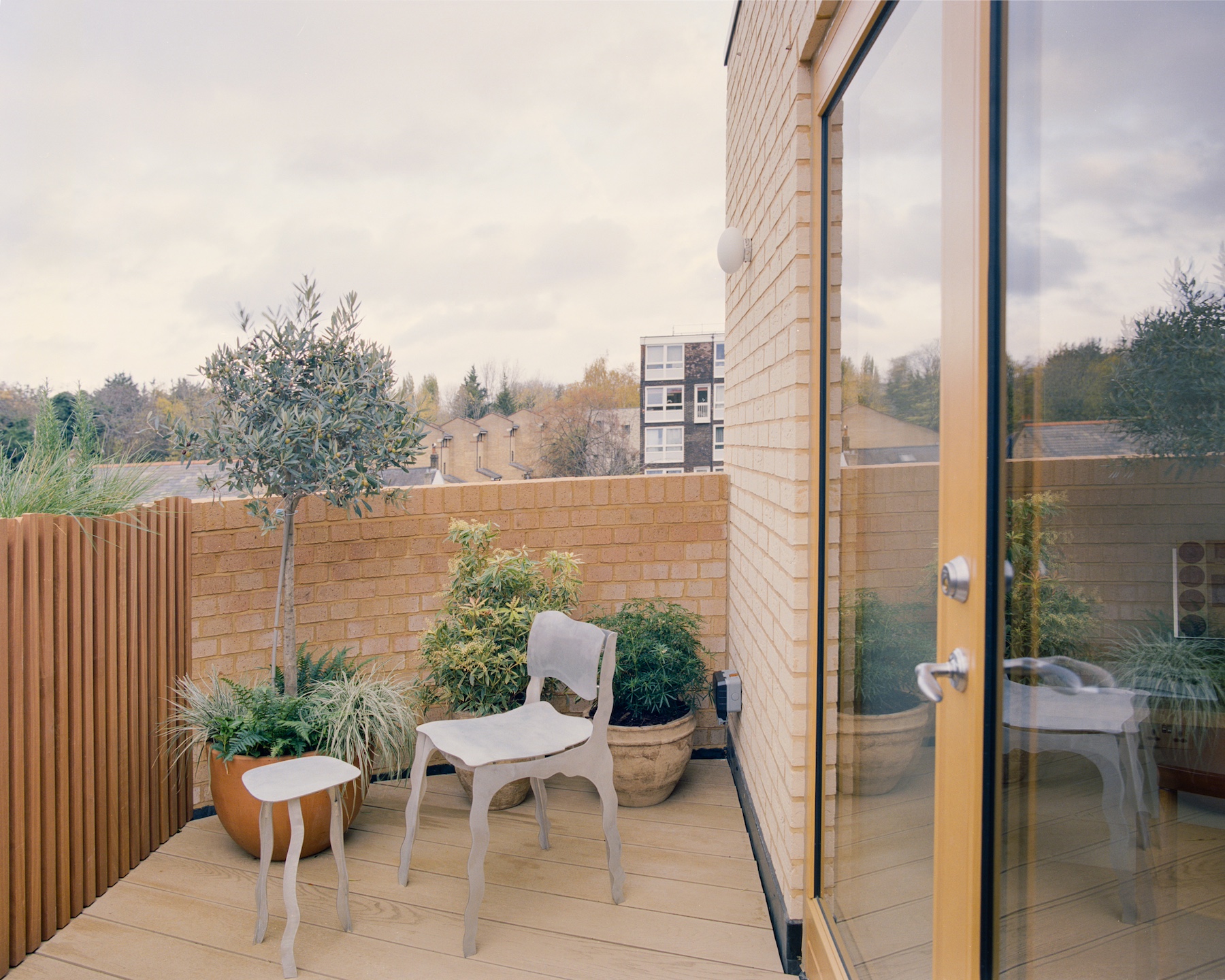
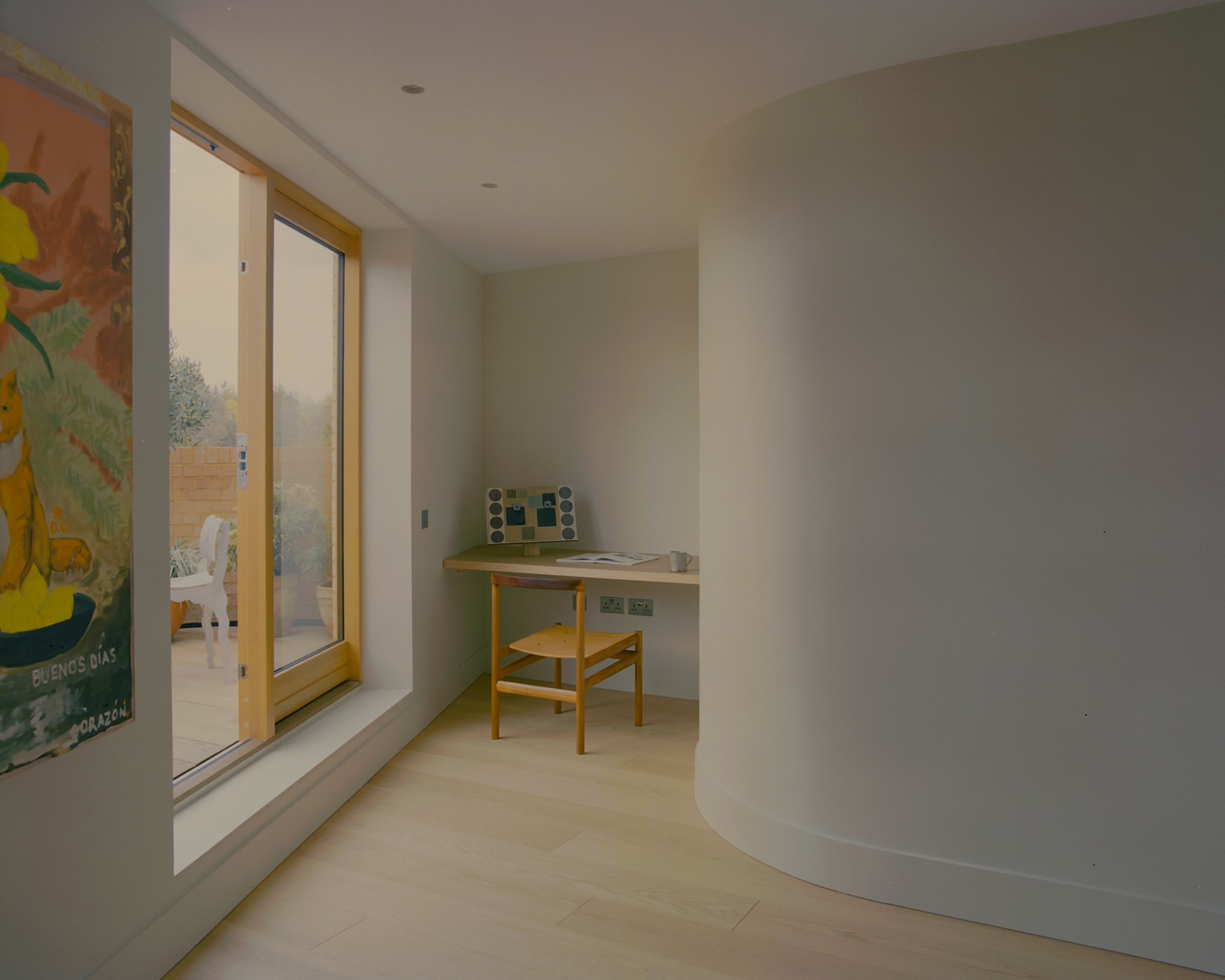
Conceived as a fully timber-framed new build, Runda is defined by its curvaceous vernacular: circular windows, gently sloping walls and a fluid spatial sequence between floors. The house is playful and precise, combining an expressive formal quality with a measured approach to sustainability and construction.
Timber framing was selected to reduce embodied carbon relative to conventional masonry, while also enabling the complex geometry of the plan. The house achieves a projected 62 per cent reduction in CO₂ emissions compared with current Part L1 standards. A green roof and air-source heat pump also support the low-energy build, while the timber structure contributes to lower embodied carbon overall.
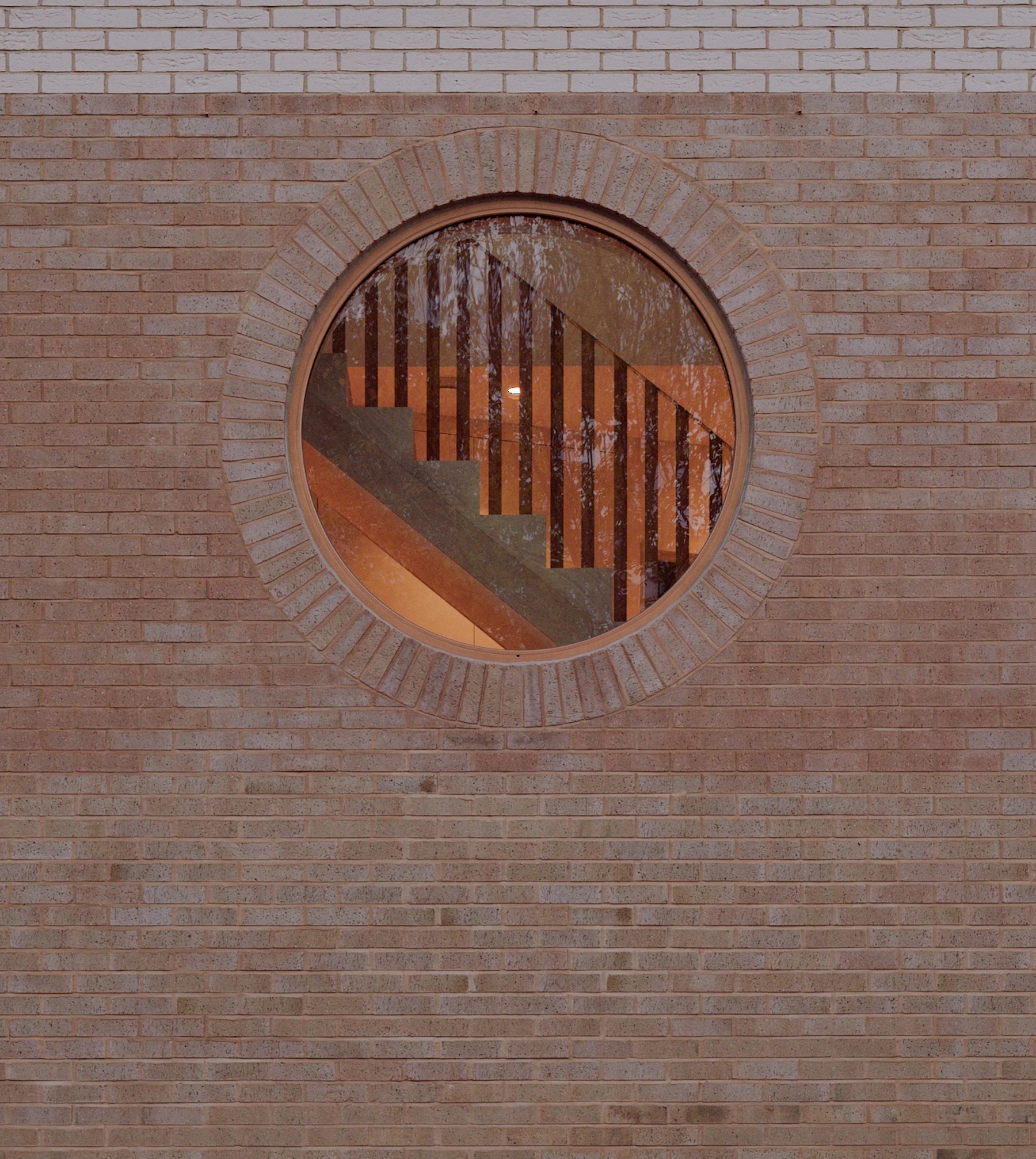
Brick cladding references the site’s industrial history and the surrounding residential context while double-toned brickwork traces the height of neighbouring terraces, breaking down the perceived mass of the building and establishing a calm rhythm across the elevation. Circular and semi-elliptical openings punctuate the façade, introducing daylight and signalling the project’s refined sense of play.
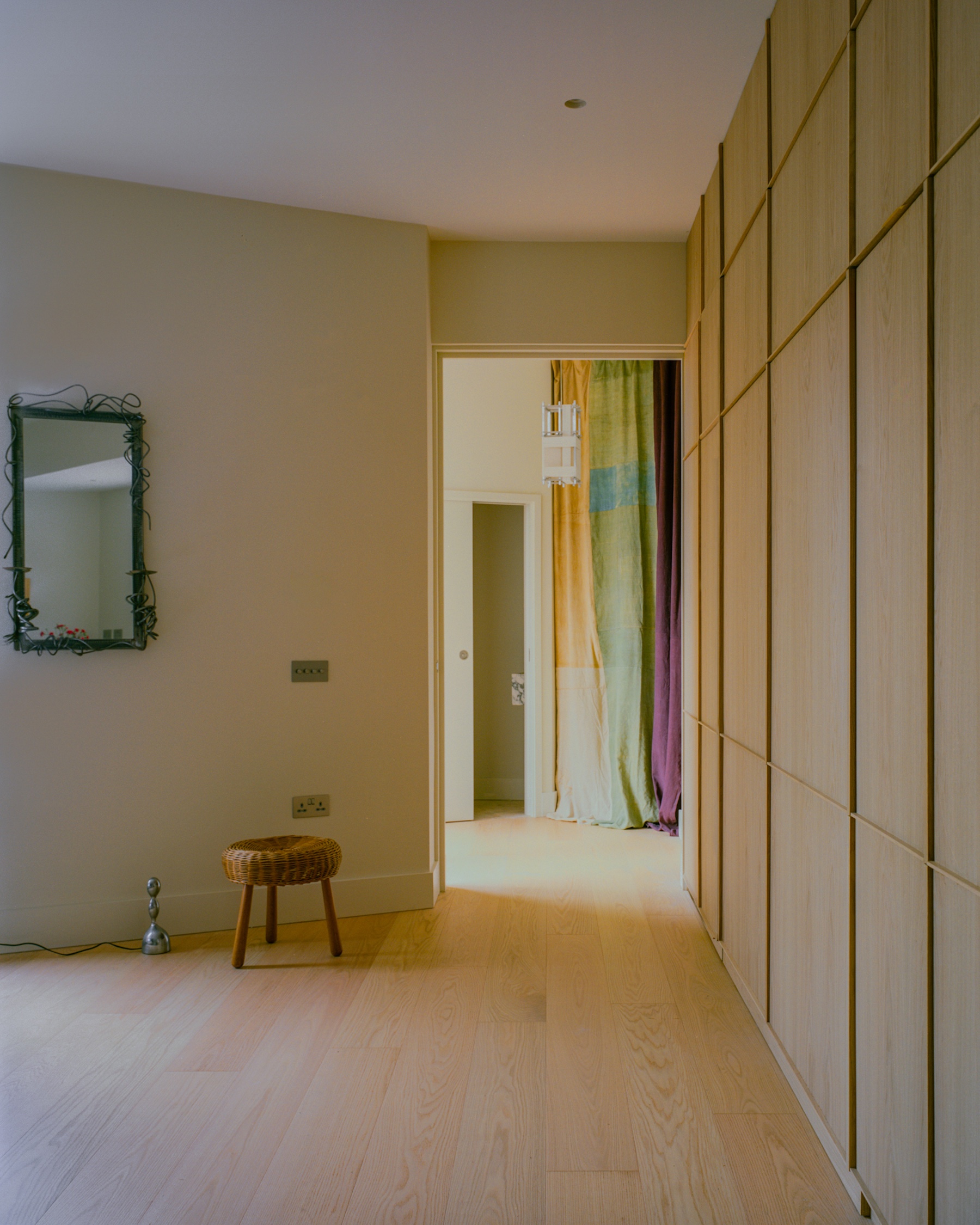
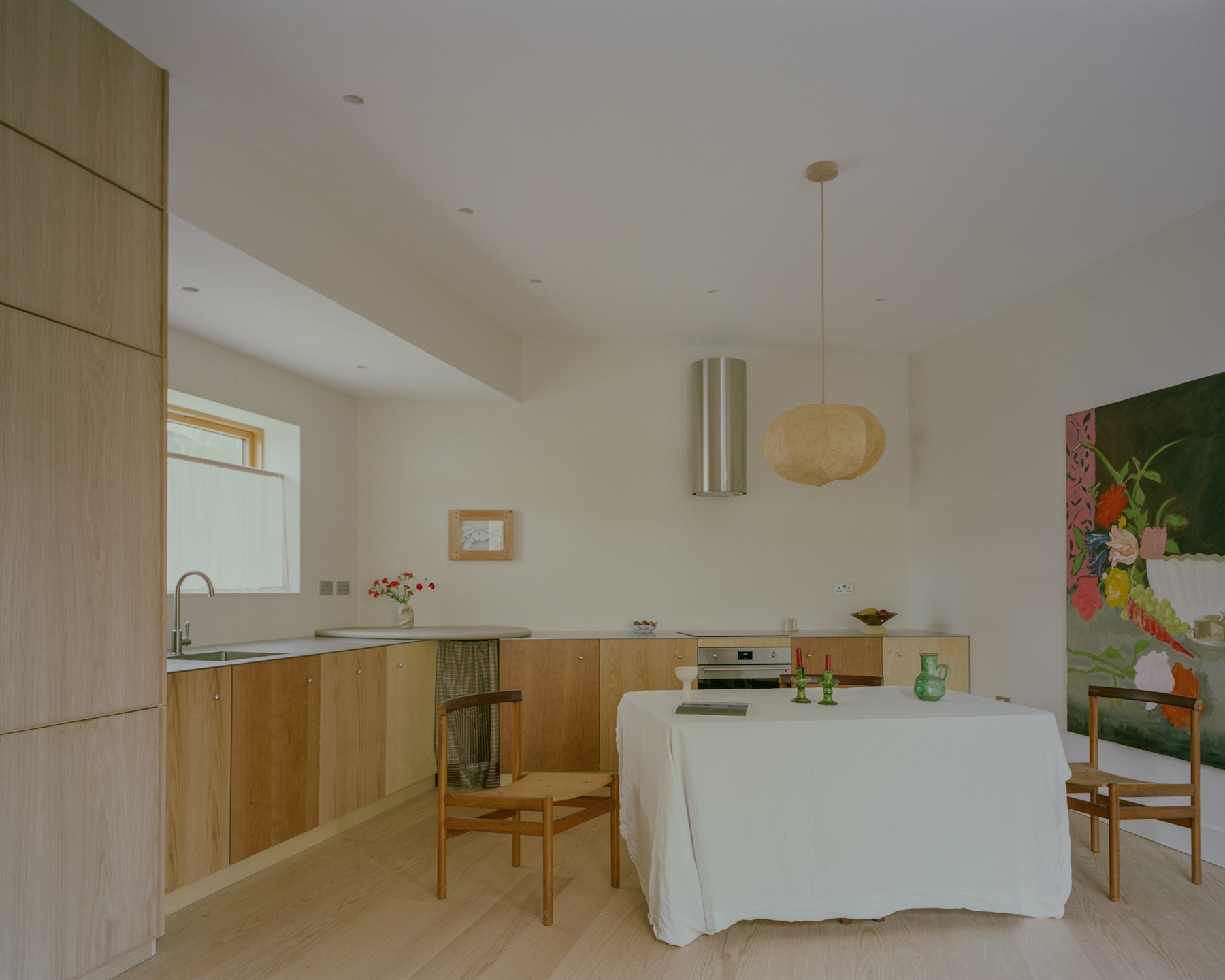
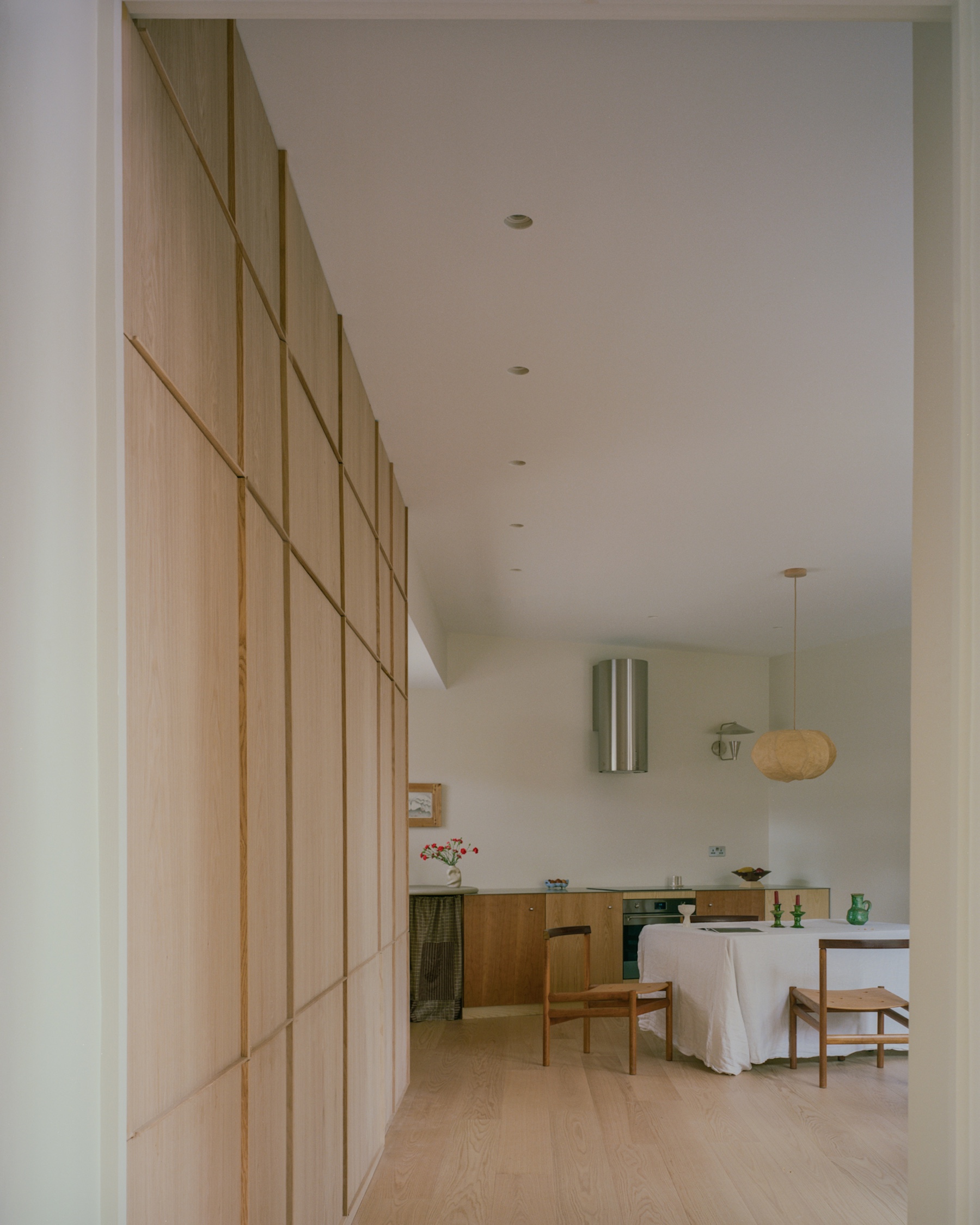
Inside, timber becomes the more dominant material, the interior being designed and fabricated in-house by Flawk. The home’s entrance opens into an open-plan kitchen and living space overlooking a planted courtyard garden through oversized glazing. A wall of timber panelling anchors the room, concealing under-stair storage and forming a fold-out door that allows the space to be discreetly subdivided.
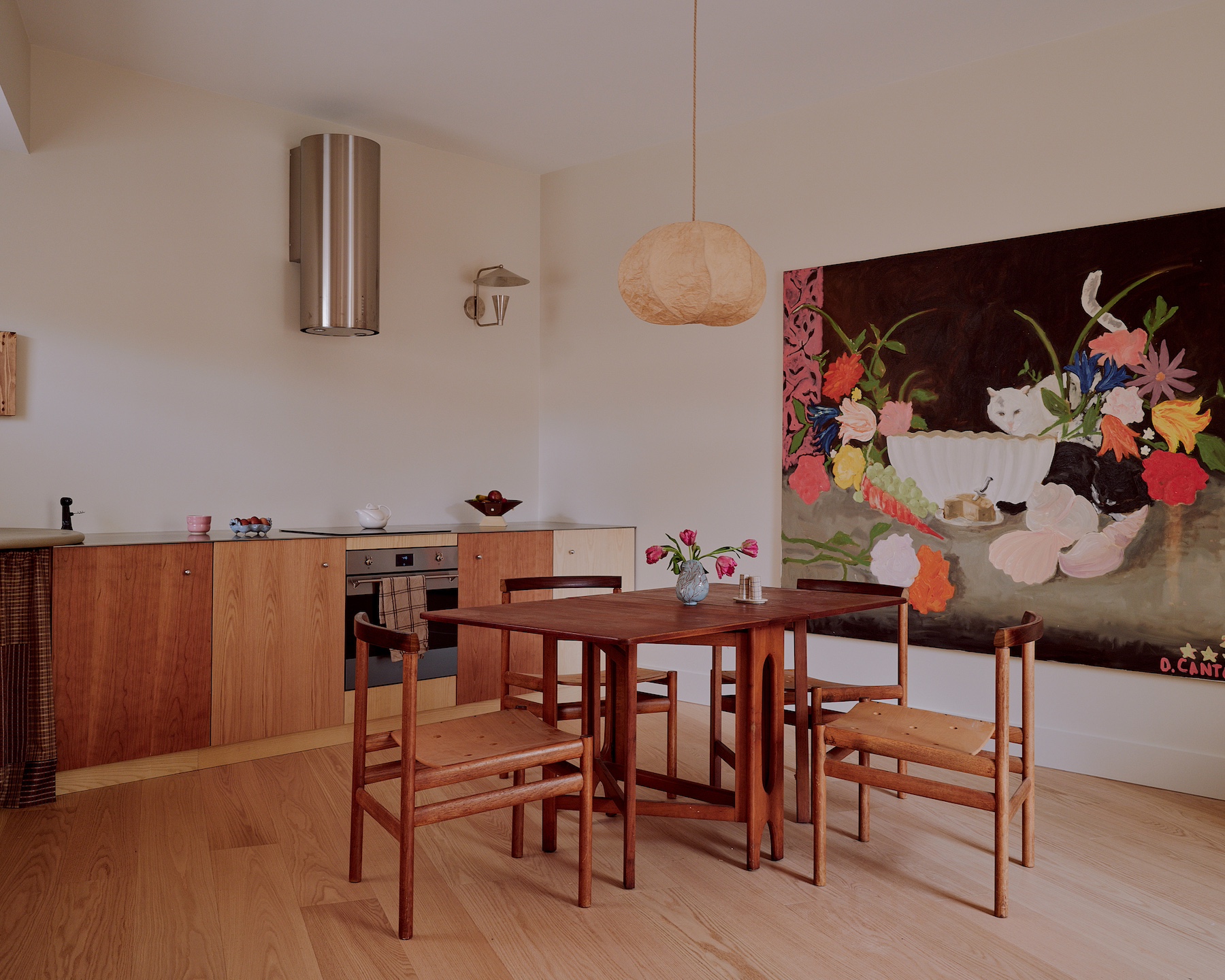
The kitchen combines pine, oak and cherry cabinetry with a fingerprint-resistant stainless-steel worktop. A bespoke concrete ‘bean’ corner counter softens the junction between walls, its curved form echoing the geometry of the site. Beneath the concrete lies fabric collected from Flawk founder Ashley Law’s travels, embedding a personal layer within the building’s fabric.
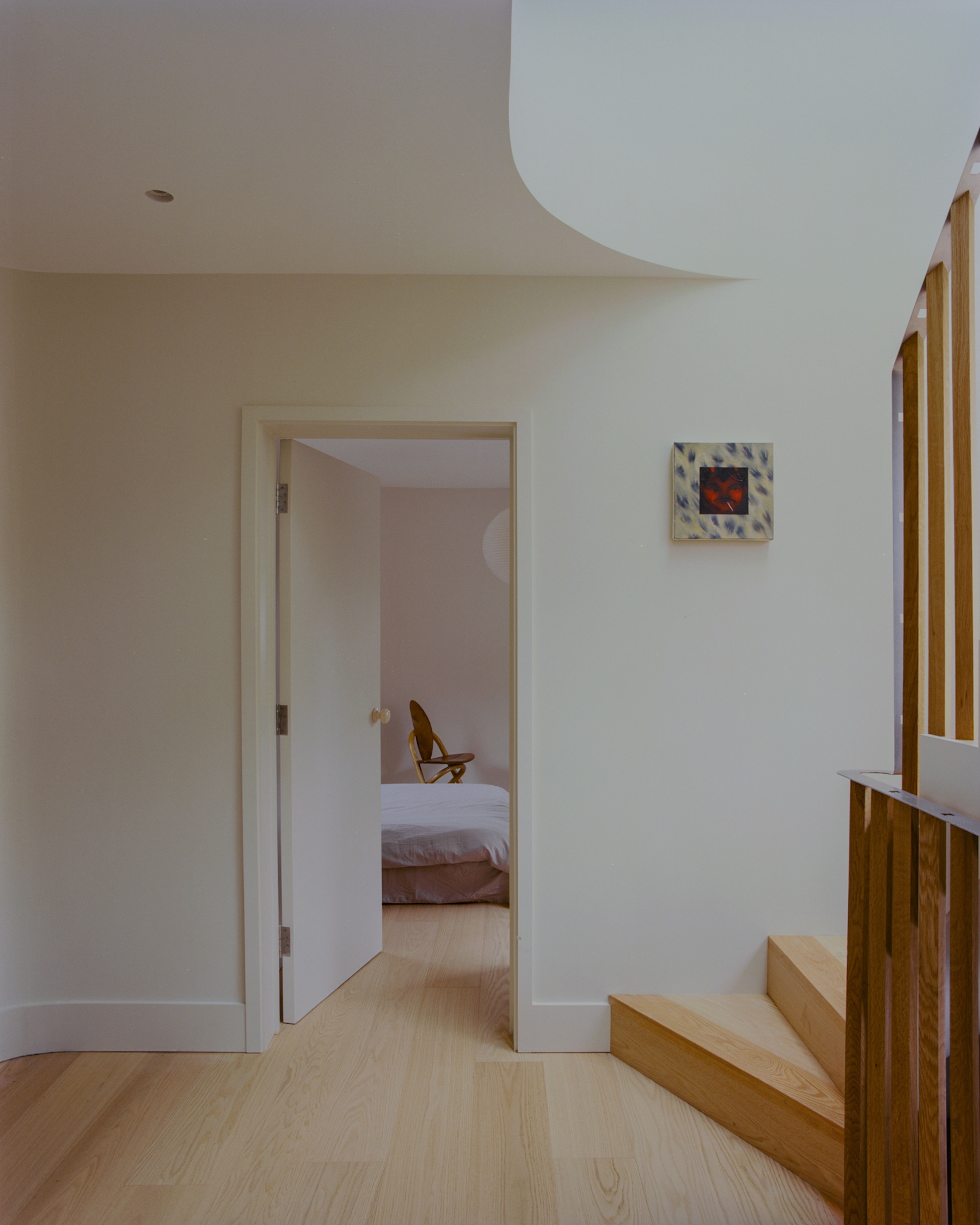
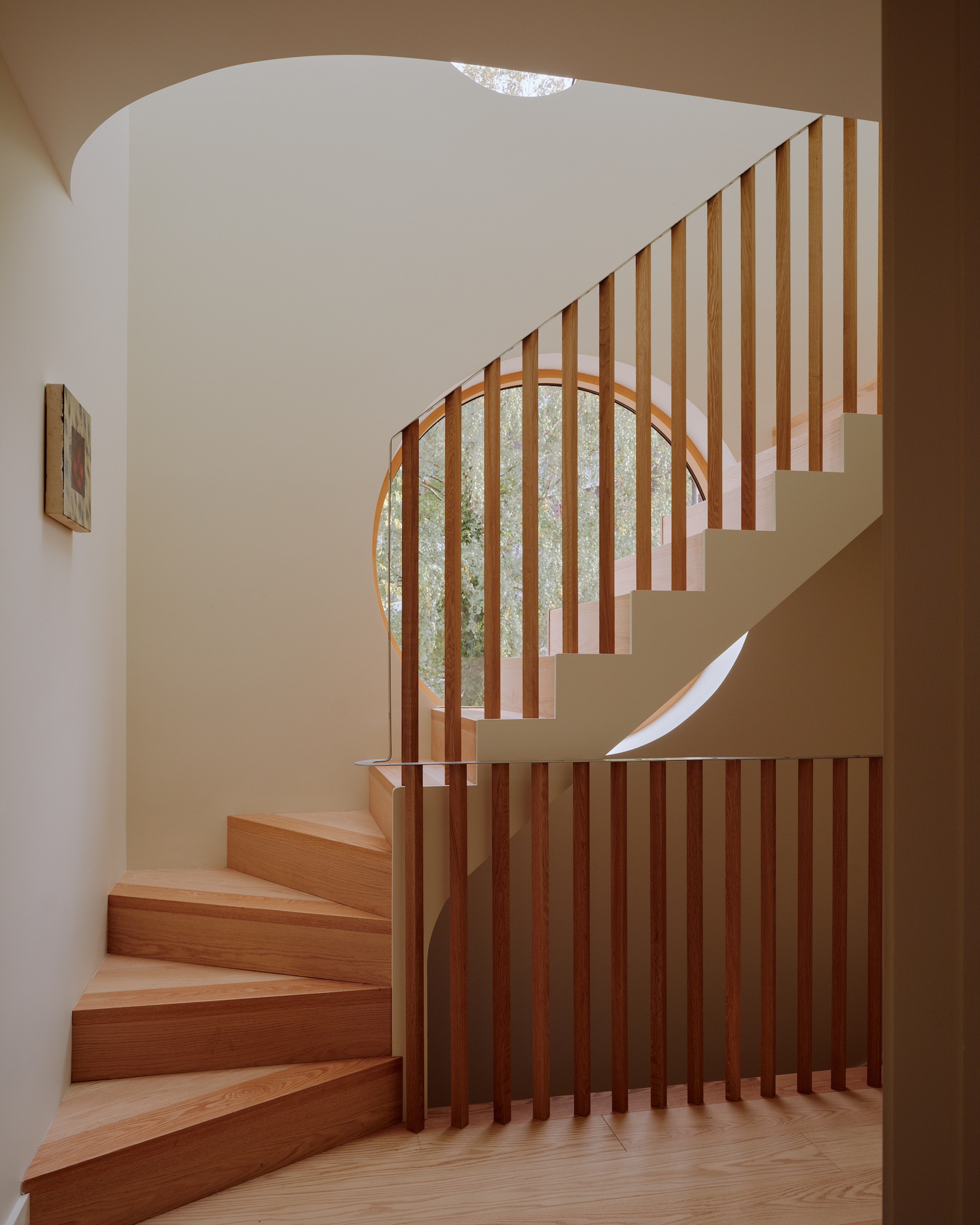
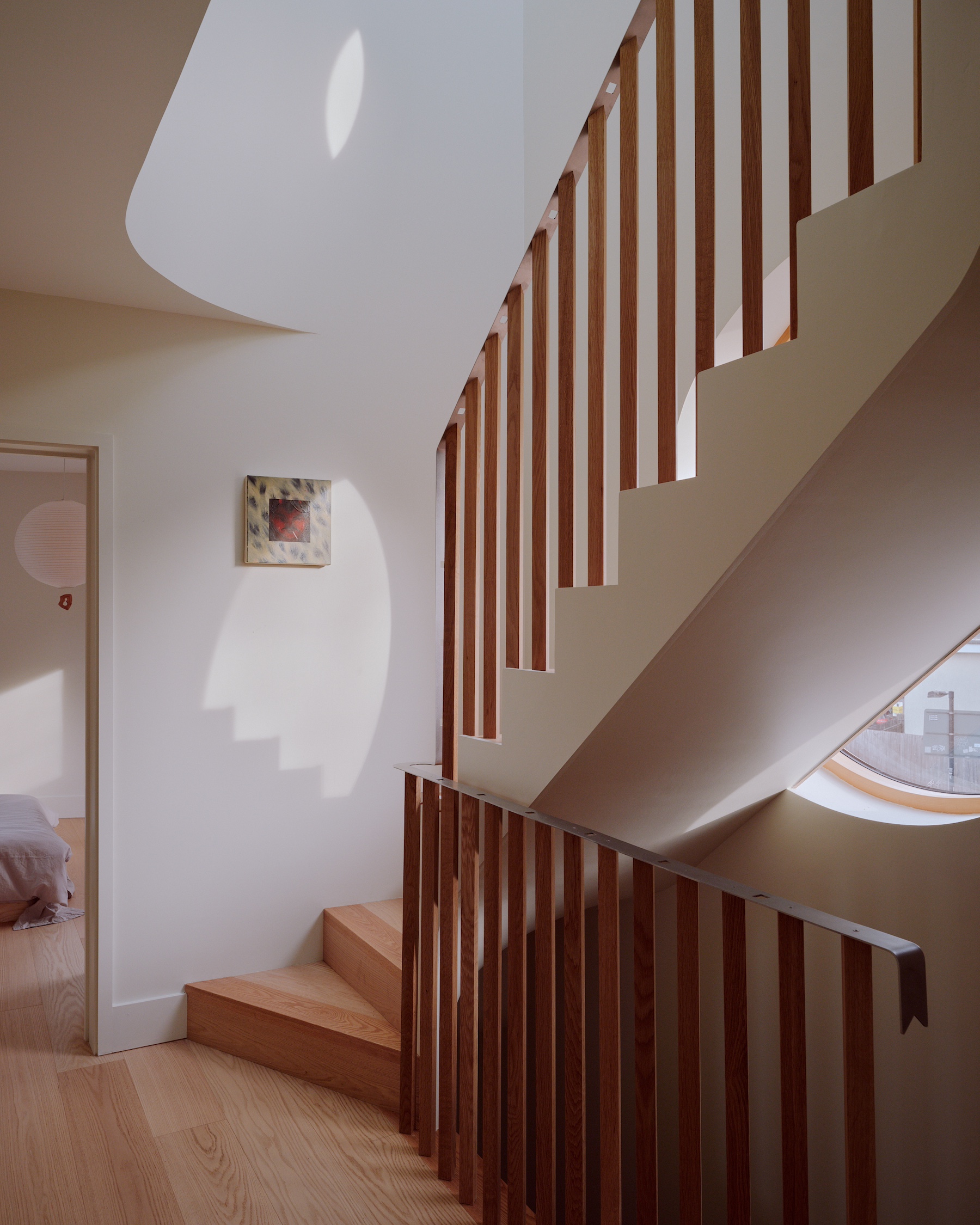
Connects all three floors is a curved staircase, made from stainless steel and oak. Daylight is drawn deep into the plan via a rooflight above the stairwell, while a circular porthole window on the mid-landing frames views of the surrounding neighbourhood. As a result, the stair becomes both a spatial and visual thread, reinforcing the building’s sculptural continuity.
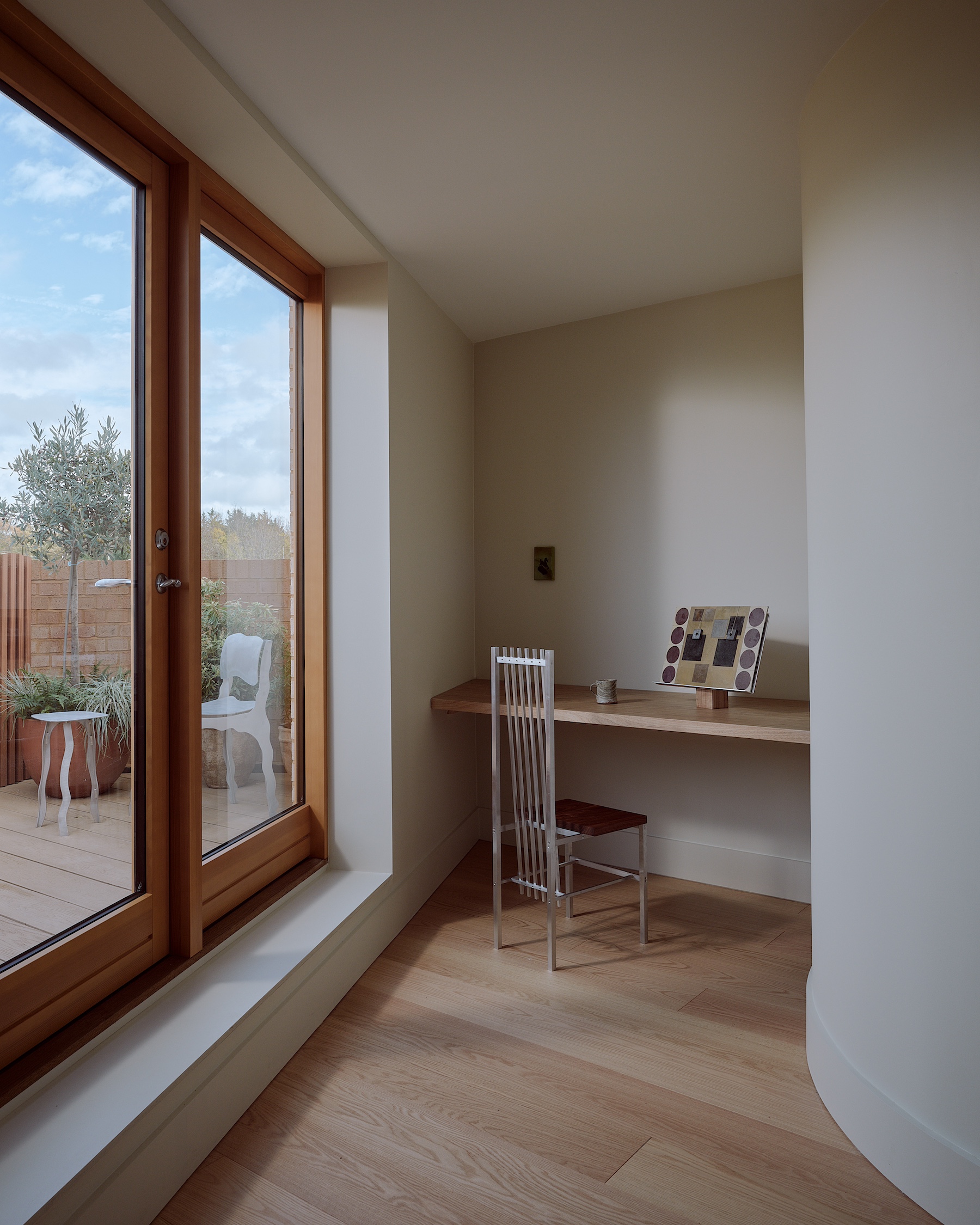
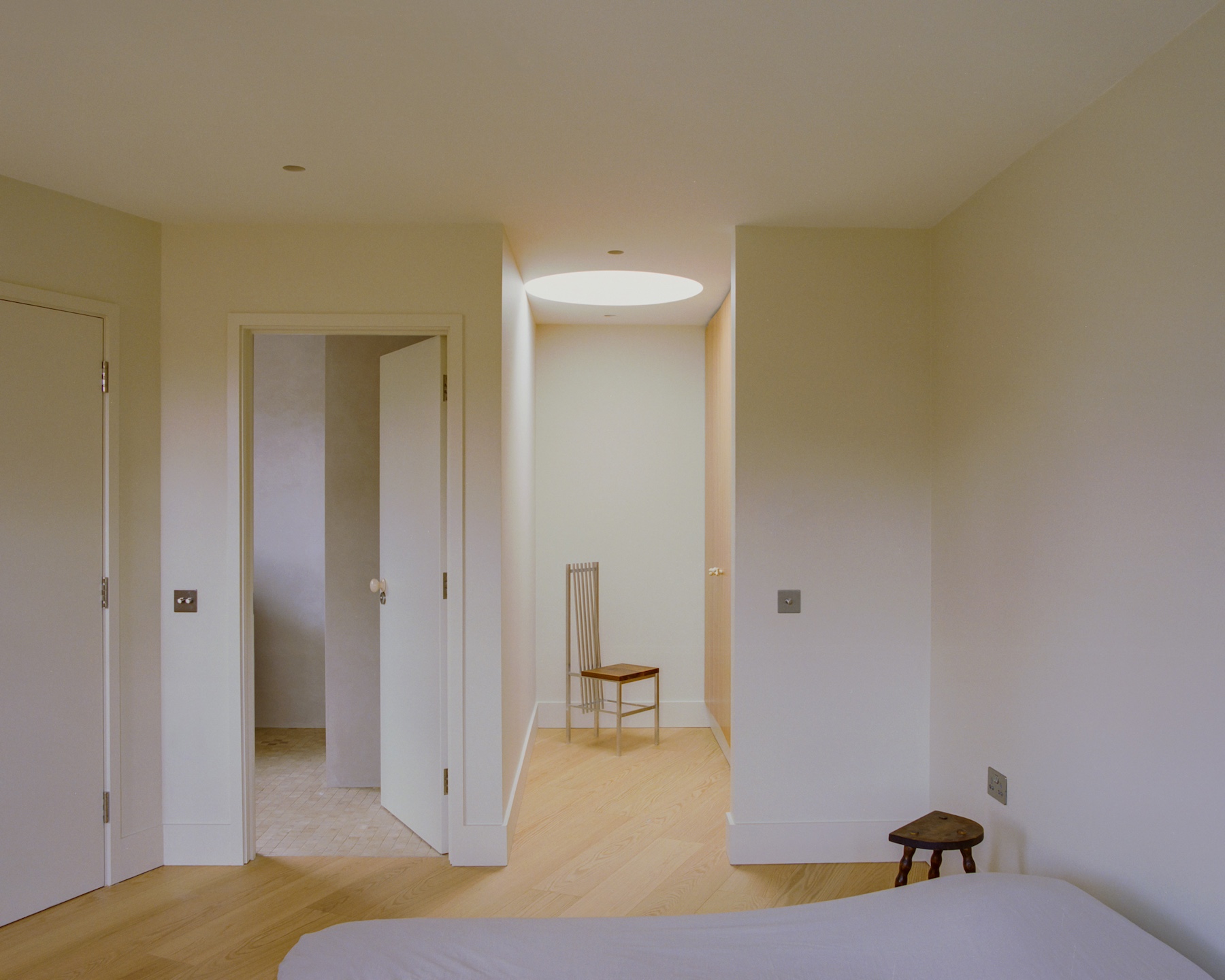
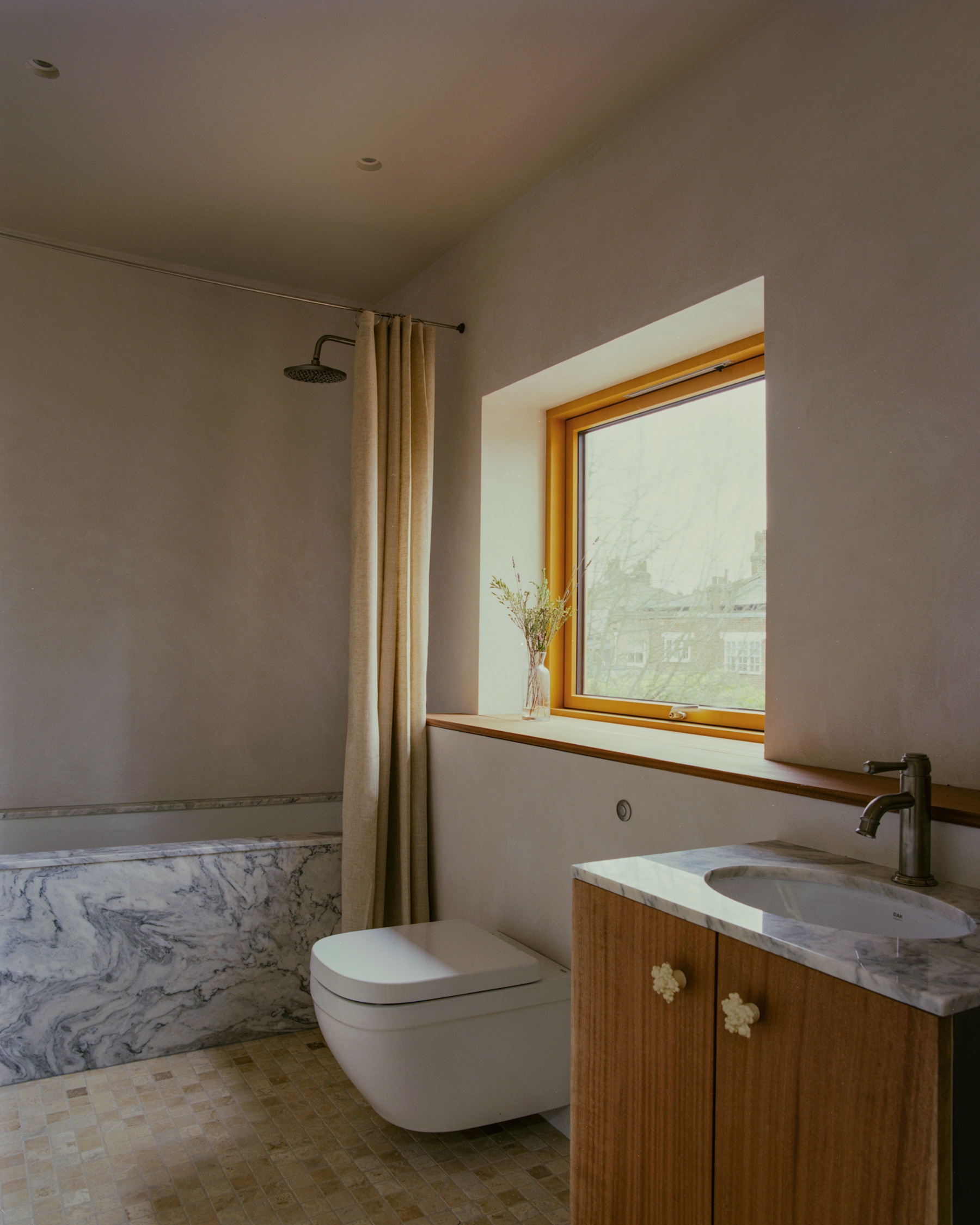
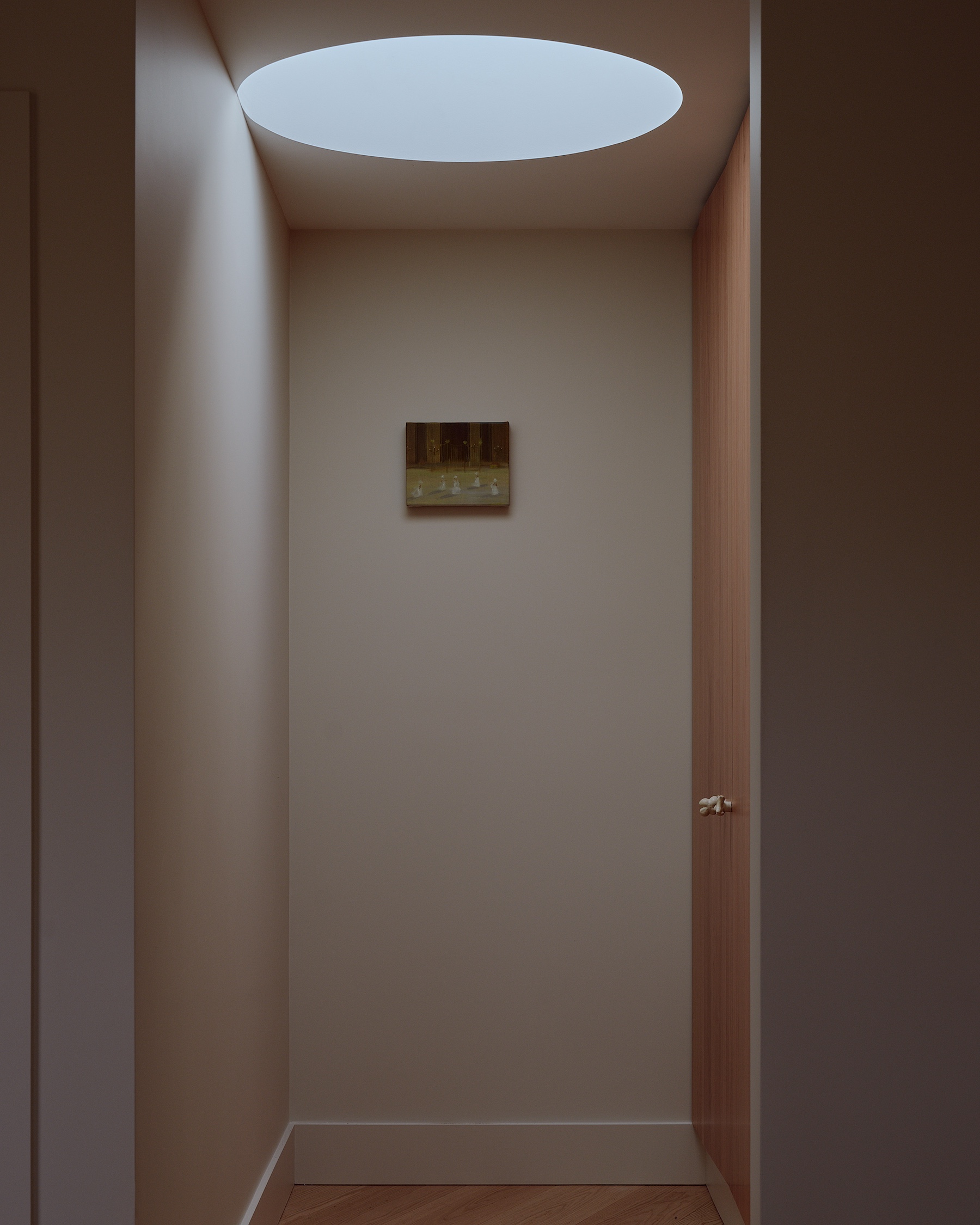
The first floor accommodates two bedrooms and a family bathroom, where polished plaster, pale timber and brushed-metal fittings create a calm and resilient backdrop for daily life. On the top floor is a master suite that opens onto a private terrace, with an ensuite bathroom illuminated by a circular rooflight and fitted with custom mirrors and fittings.
Travertine mosaic tiles are used throughout the property, with darker accents marking thresholds and wet areas. Bathroom joinery is formed in sapele, while marble surfaces are produced from off-cuts, continuing the project’s resource-conscious approach – an ethos that also extends to collaboration.
Working with STORE Projects, Flawk developed an educational programme connected to the site’s history as a kiln. Students from STORE’s after-school initiative learned physical modelling, 3D scanning and ceramic casting to produce the handmade ceramic knobs and handles used throughout the house – described by the team as the building’s literal ‘handshakes’.
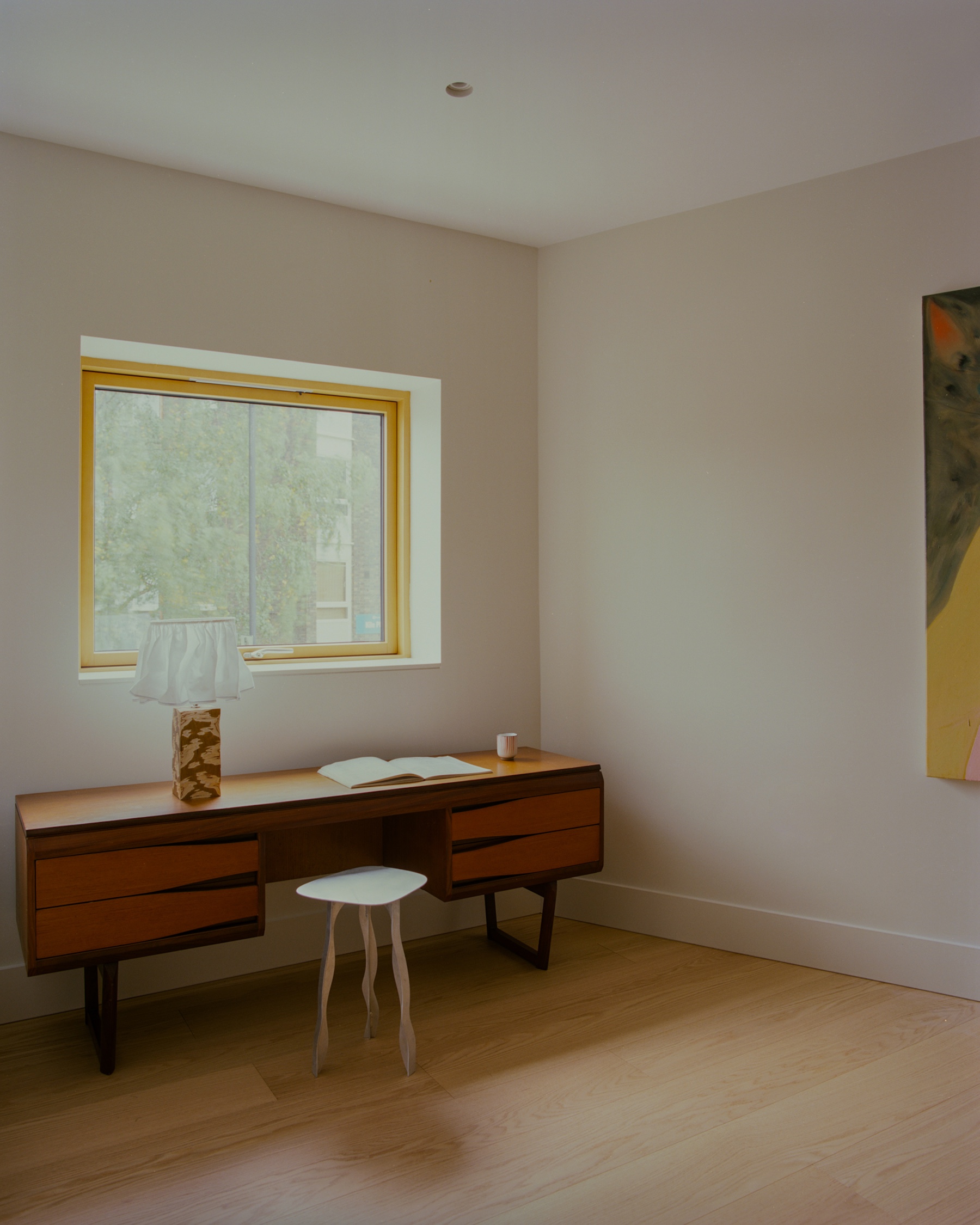
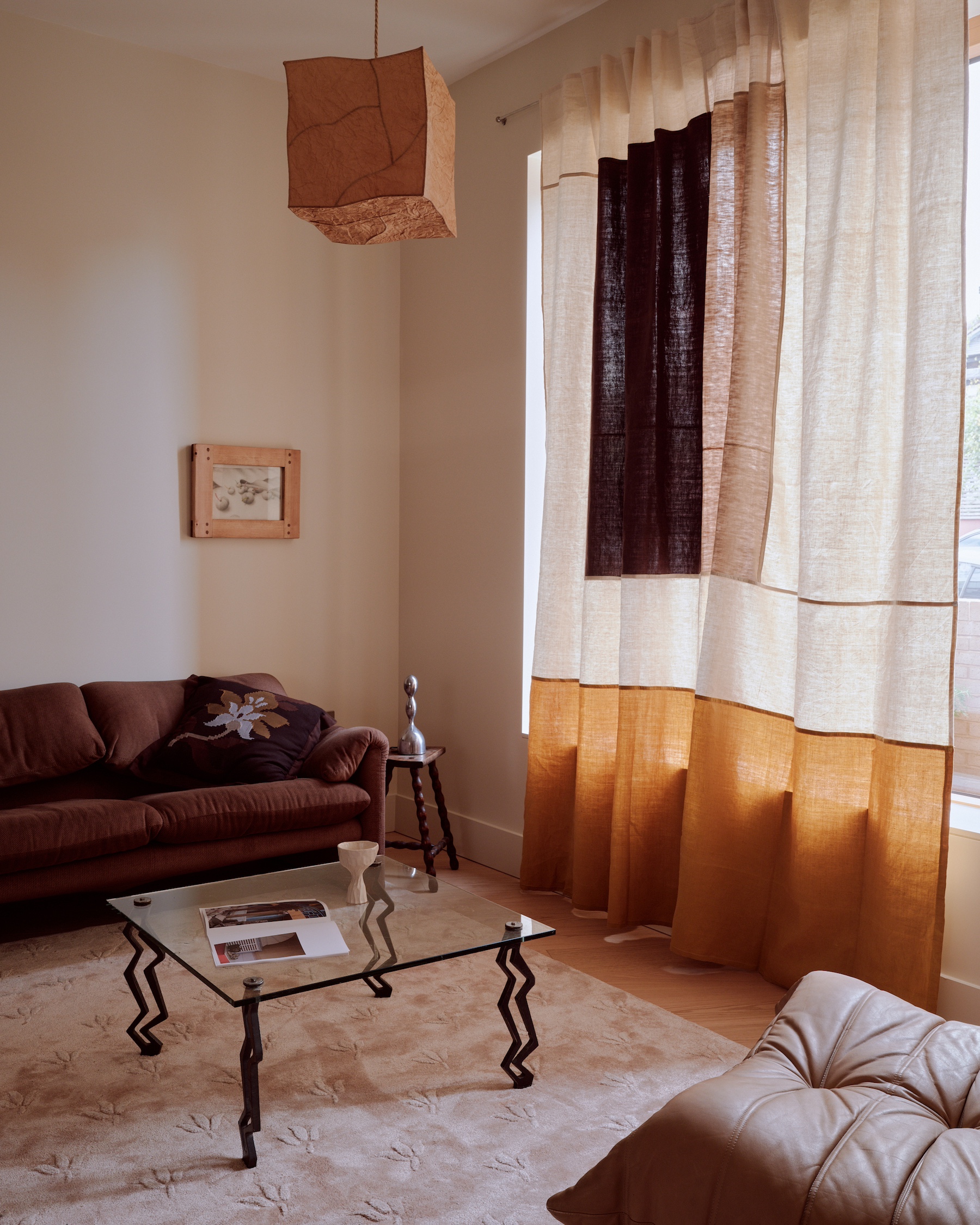
Elsewhere, a hand-sewn semicircular café curtain dresses the circular window of the ground-floor WC, paired with a handmade brass tap. Artworks were curated with Miłość Gallery, while vintage furniture is sourced from specialist dealers, reinforcing the project’s layered and considered interior landscape.
Credits
Client
Flawk
Architect
NIKJOO
Interior design
Flawk
Structural engineer
Constant SD
Drainage design
Spillways
Contractor
Coste & Beno
Additional images