A long-held commitment to environmental responsibility, underpinned by rigorous quality control, informs Optima’s manufacture of glazed partitions and door systems.
In association with
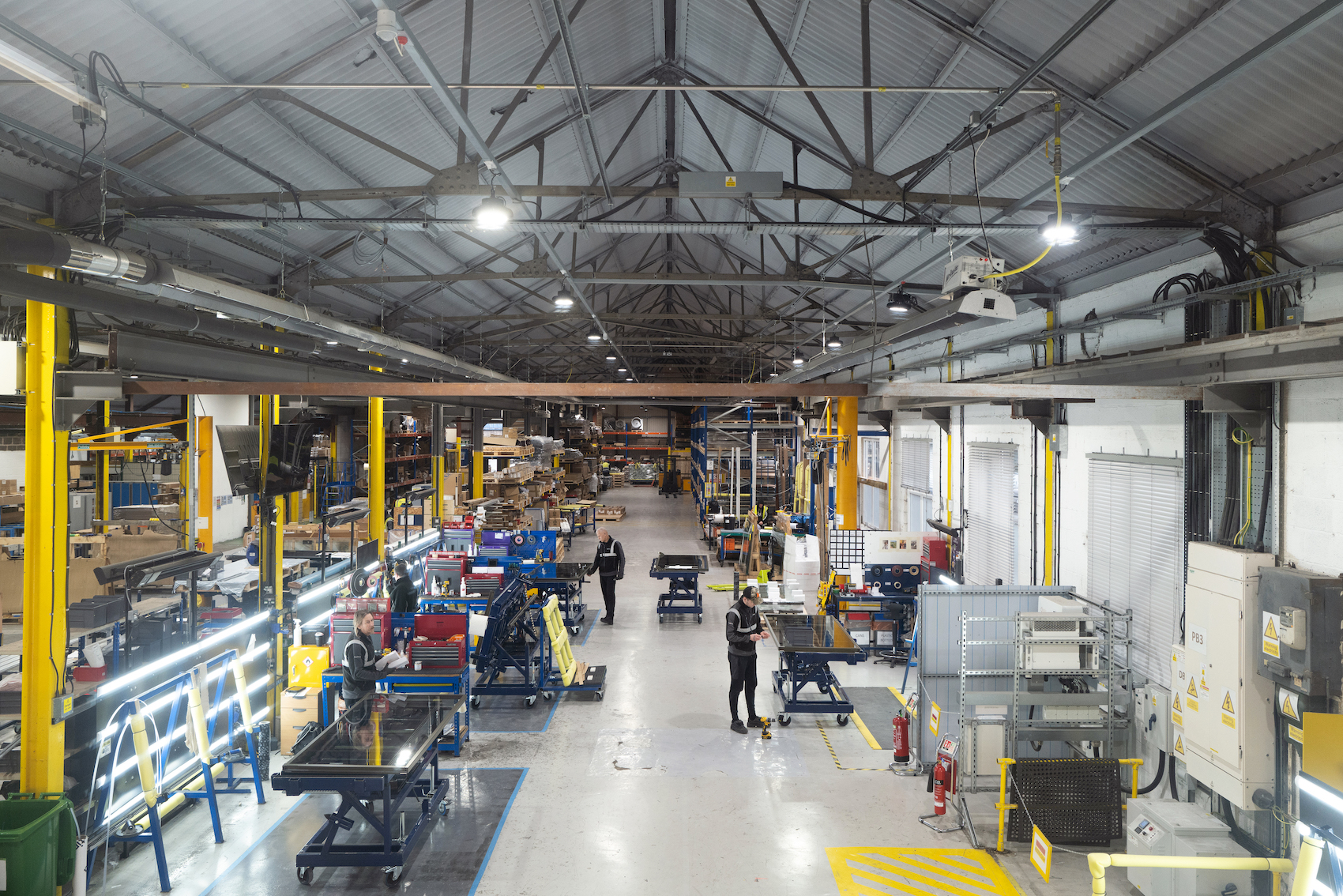
Aerial view of the assembly and dispatch area (photo: Agnese Sanvito).
Optima Systems is a leading specialist in the design, production and installation of high-quality internal glass partitions and door systems. Manufacturing excellence and sustainability are central to its approach, with products made from low-carbon aluminium (Hydro CIRCAL 75R), supported by full Environmental Product Declarations and designed for reuse and reconfiguration. Committed to achieving operational net zero by 2030, the company has been continually evolving and developing its UK manufacturing base in Radstock, Somerset, over the last 20 years. AT took a tour around the facility to see how the company produces its products, and what it is doing to further reduce its carbon footprint.
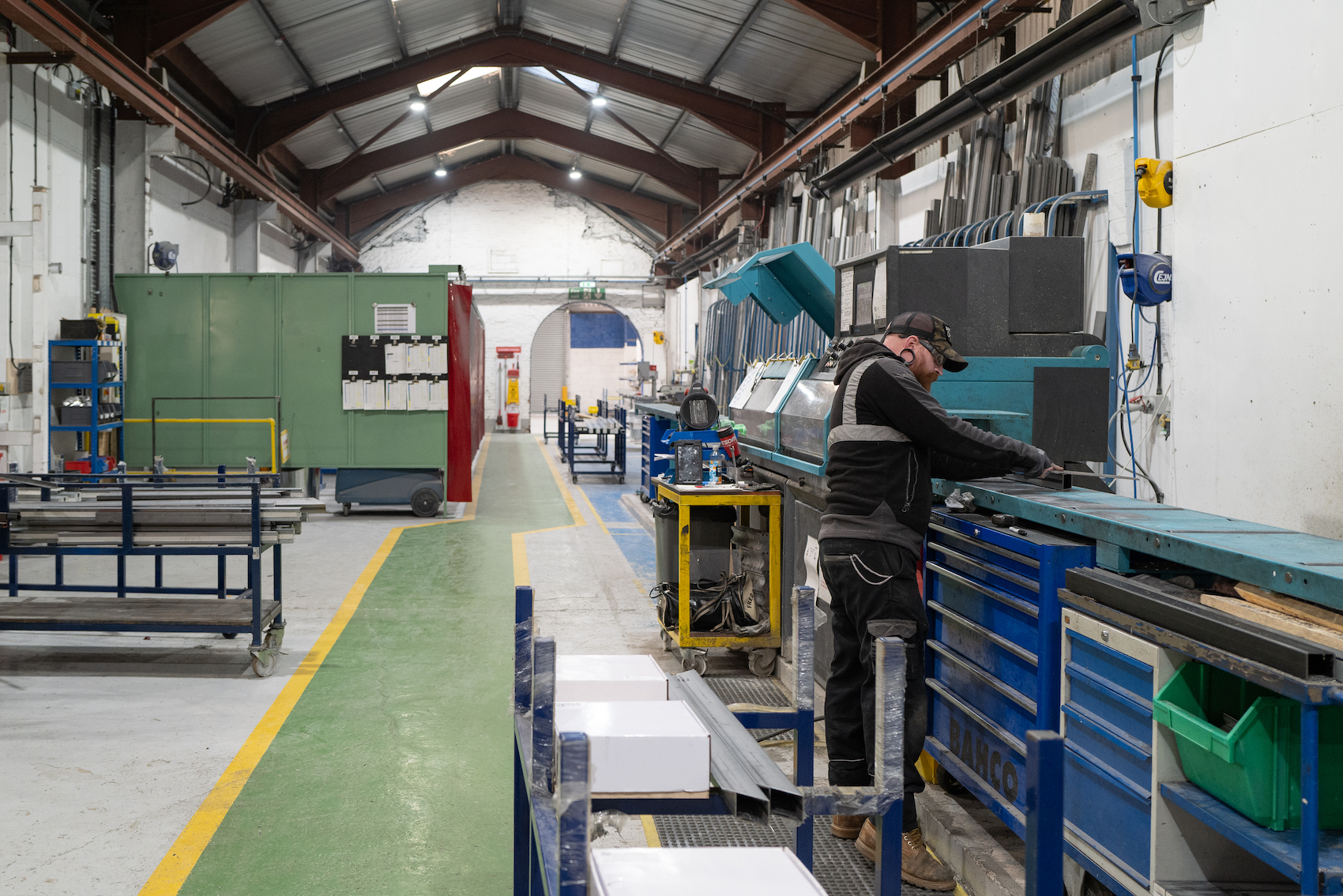
Steel sections for Optima’s fire-rated systems are prepared and fabricated prior to assembly.
Fabrication: precision from the outset
The tour begins in fabrications, where Optima produces its steel fire-rated systems. The department is divided into three areas: preparation, fabrication and assembly. In the preparation zone, steel profiles are cut and prepared according to detailed job-specific cut lists. These are generated from Optima’s enterprise resource planning system (ERP), which sits at the heart of the factory’s operations. Each job is issued with a digital ‘traveller’ that specifies material type, dimensions, quantities and the sequence of operations required.
Cutting is carried out on a semi-automatic Kaltenbach saw, capable of achieving tolerances of 0.2mm on length and 0.2 degrees on angle. Profiles are programmed into the machine in an optimised sequence to maximise material yield and minimise waste. Once an operation is completed, the operator scans a QR code to log completion and completes a digital inspection record, creating a permanent, auditable manufacturing trail. This level of traceability is critical for Optima’s fire-rated products, where certification demands proof that each operation has been carried out exactly as specified, by competent personnel, and in the correct sequence.
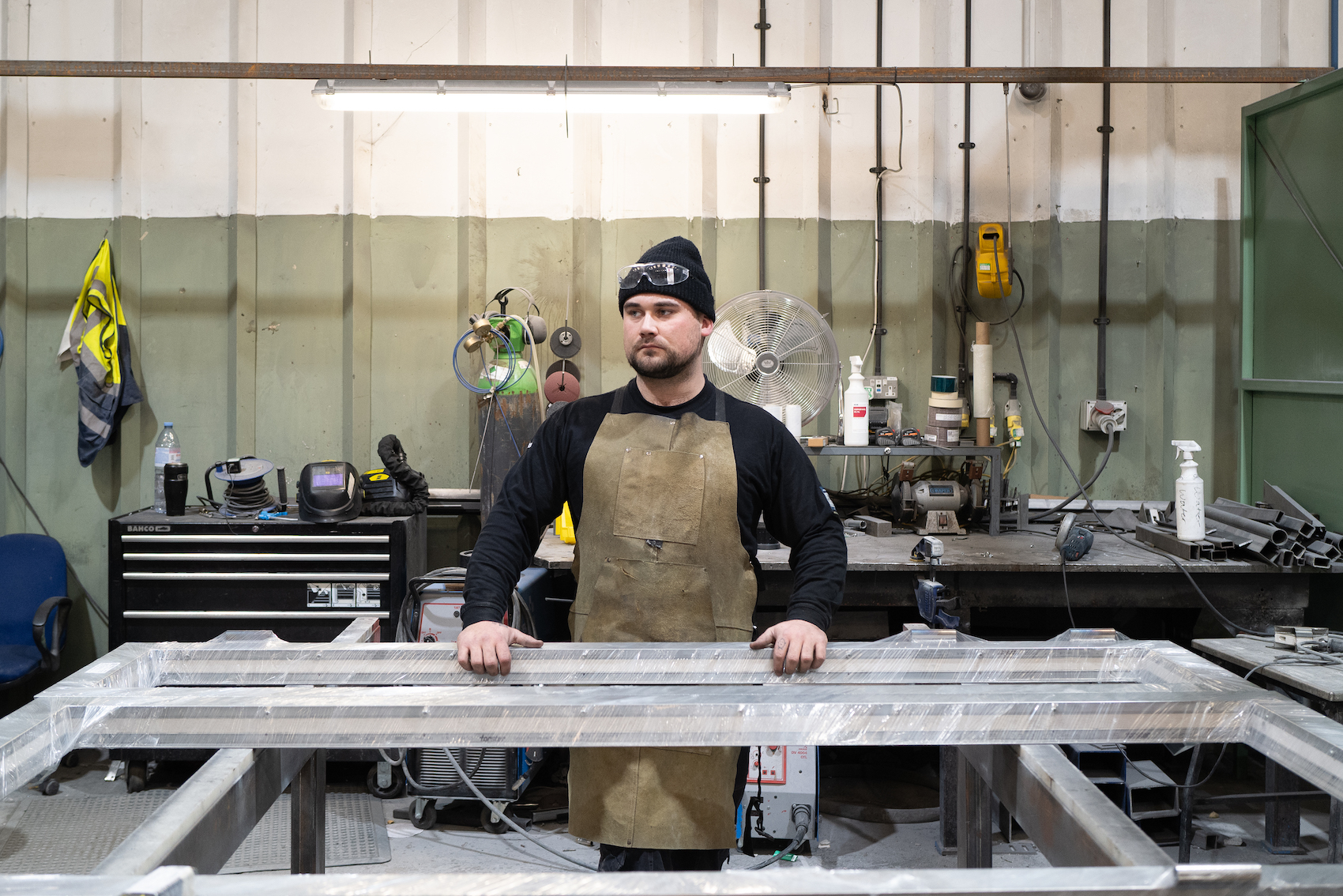
Welds achieve full penetration and are ground flush for a seamless painted finish.
Welding and finishing: skill and consistency
Next, the prepared components are moved into the welding bays, where steel frames are assembled and finished. Here, craftsmanship is as important as compliance. Welds must achieve full structural penetration, while also being dressed back to an invisible finish that will remain seamless after painting. Rather than using fillers, Optima relies on fabrication skill: profiles are mitred, welded and ground flush so that joints disappear once coated.
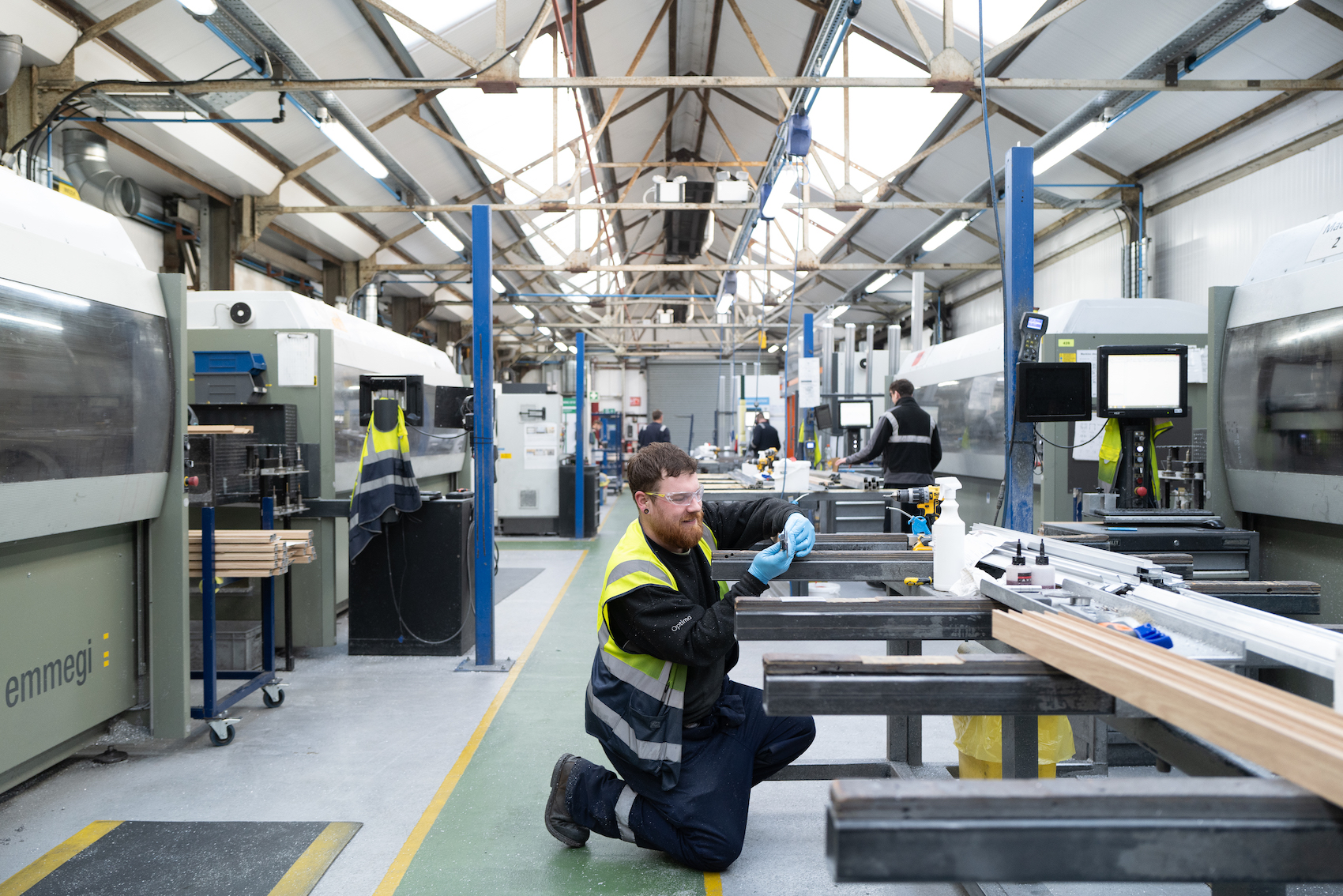
The machine shop comprises a suite of CNC saws and five-axis machining centres.
Aluminium machining: accuracy at scale
Beyond the steel fabrication area, production shifts to Optima’s aluminium systems. Extrusions arrive at Radstock in stock lengths, produced in the UK using Hydro CIRCAL 75R – aluminium made from at least 75 per cent post-consumer scrap. In the machine shop, aluminium components are cut, notched, drilled and machined on a suite of CNC saws and five-axis machining centres. Swarf generated during machining is collected and returned for recycling. QR codes link each part to its machining programme and inspection documentation, ensuring consistency across large production runs.
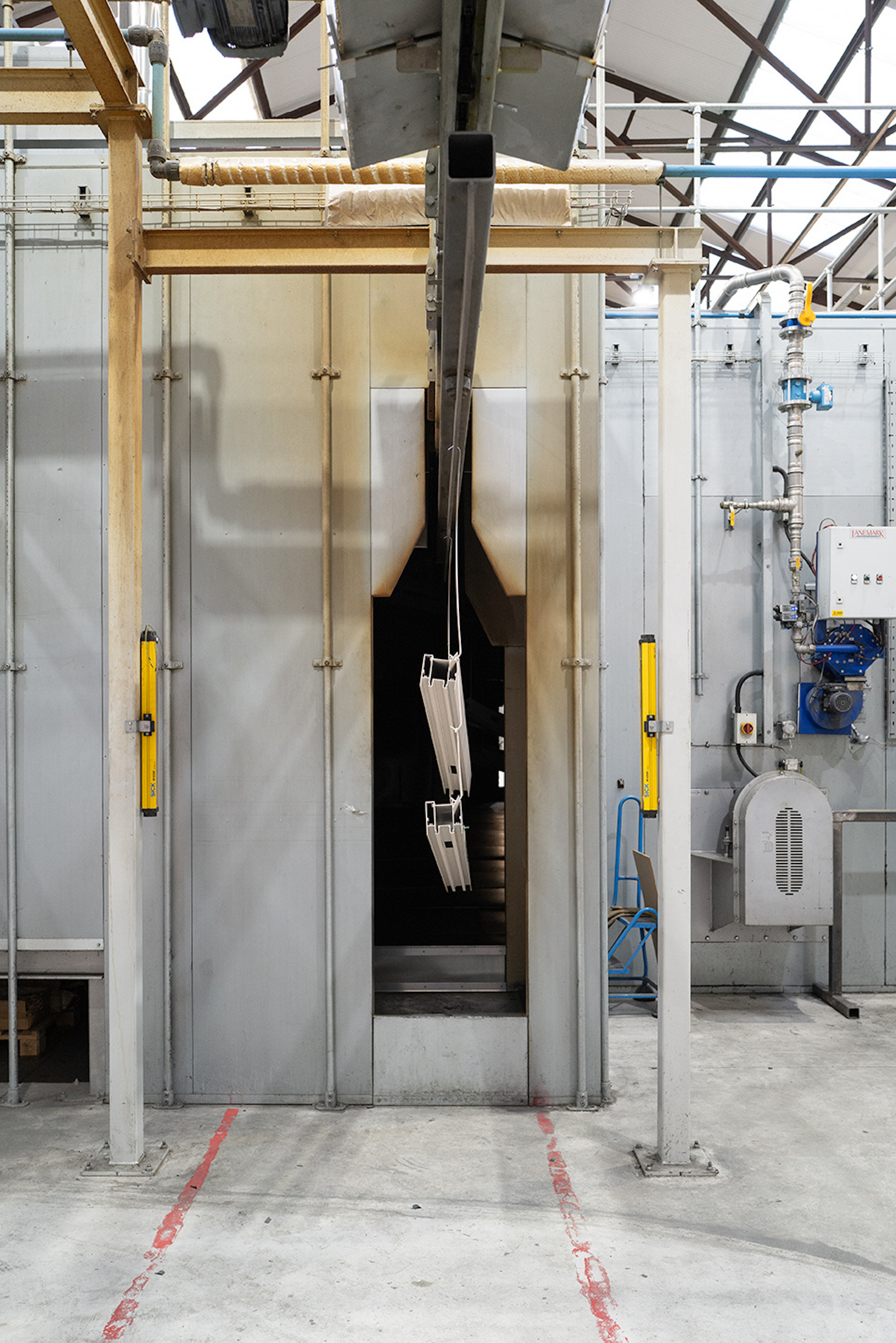
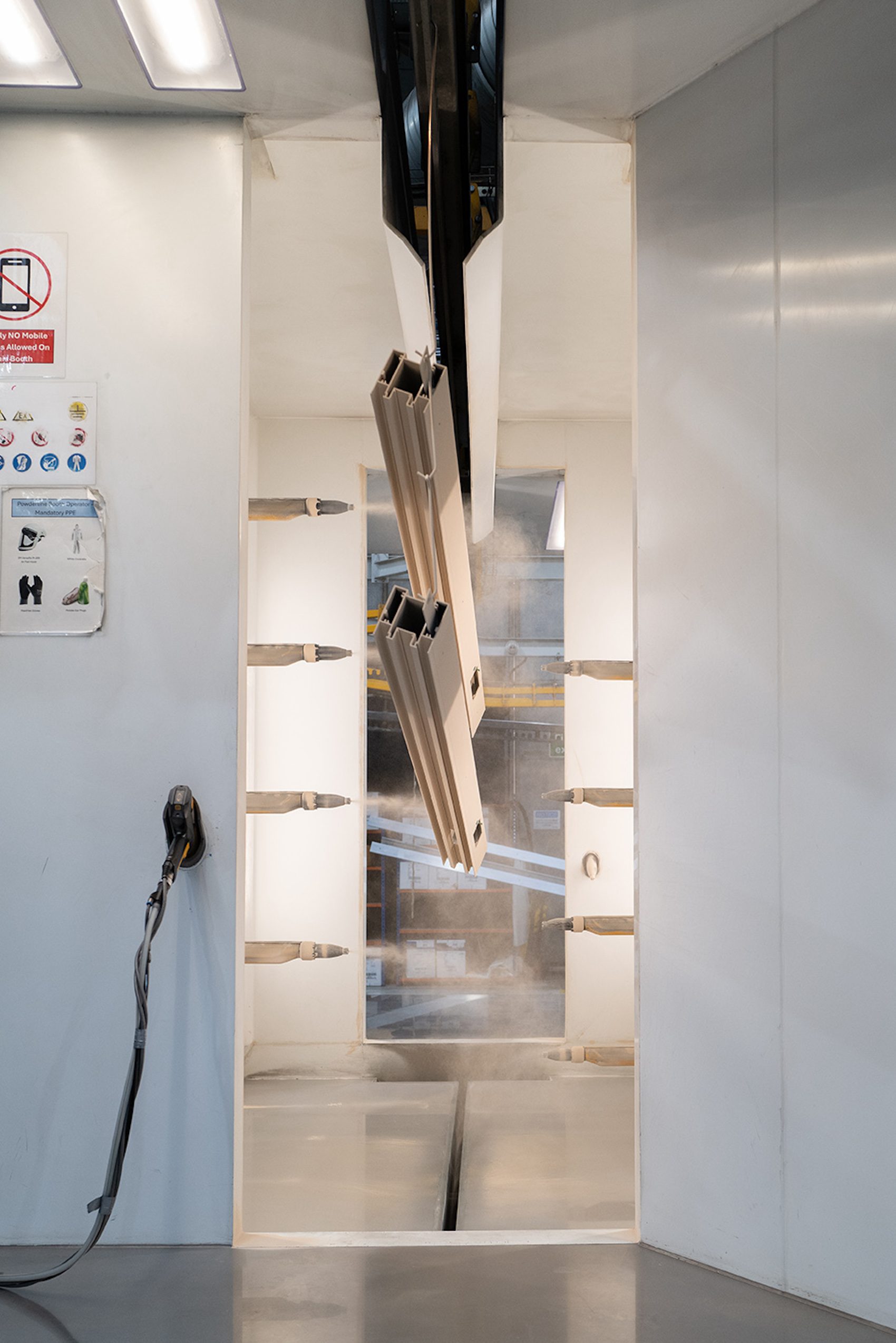
Colours can be changed on the powder coating line in 12-15 minutes.
Surface finishing: controlled and consistent
The aluminium components are powder coated in-house using a process that avoids solvents, delivers a durable finish, and ensures consistency across batches. Before coating, components pass through a four-stage pre-treatment process, including a chromate-free chemical clean, reverse-osmosis water rinses, and a dry-in-place coating that enhances corrosion resistance and paint adhesion. Powder is applied in automated booths with overspray cyclonically recovered. Colour changes are rigorously controlled, with test pieces passed through the line and quality checked before production resumes.
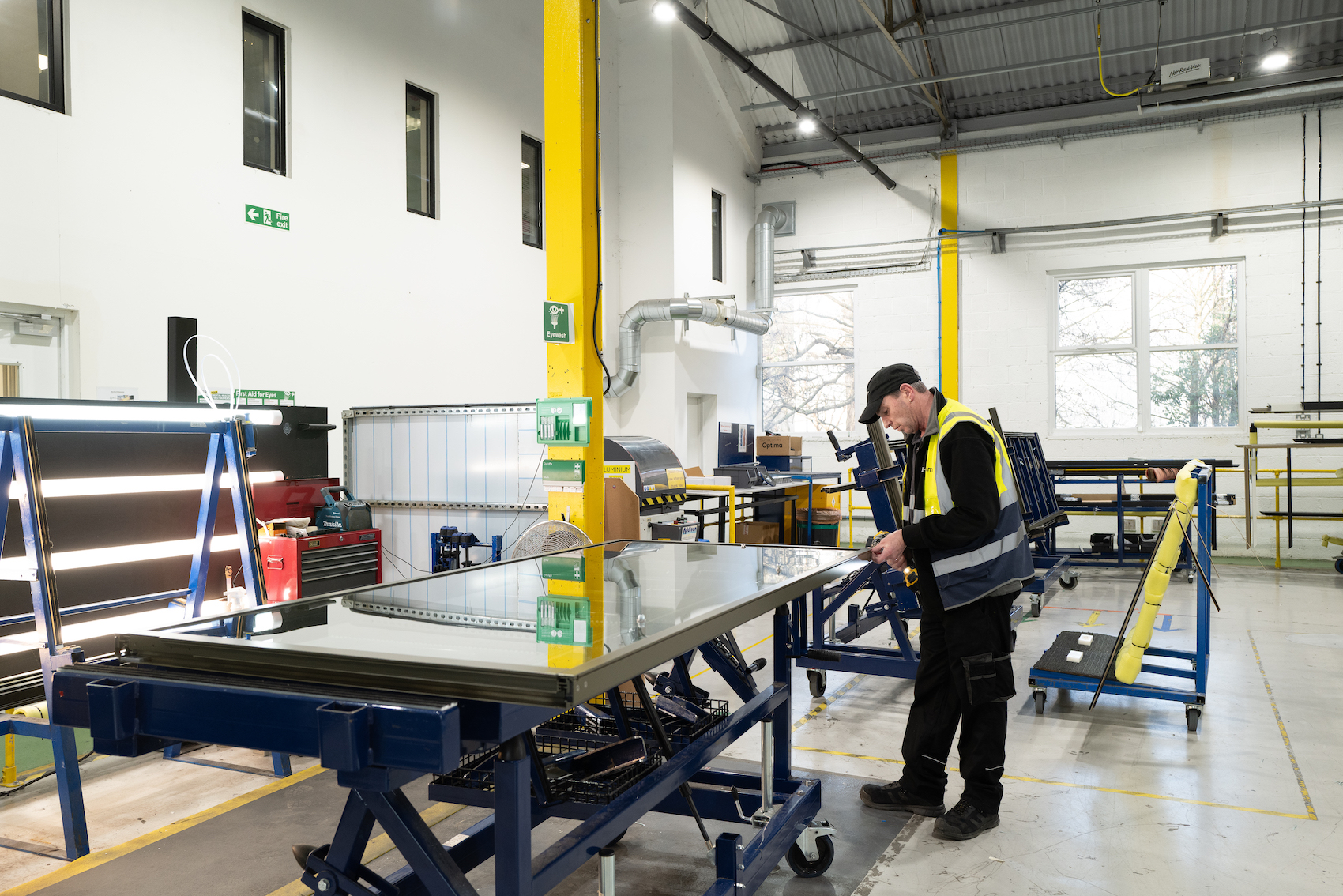
Dedicated cells within the glass assembly area are designed to reduce manual handling and improve throughput.
Assembly and dispatch: ready for site
Finished components move to assembly and dispatch, where partition trackwork
is wrapped and prepared for delivery, and glazed doors are fully assembled. Fire-rated door frames are packaged individually in FSC-certified cardboard, complete with fixings and instruction. In the glass assembly area, doors are built in dedicated cells designed to reduce manual handling and improve throughput. Glass is cleaned, inspected under high-intensity lighting, and assembled into pre-built aluminium frames using tilting tables. Throughout assembly, the same principles apply: clear information, controlled processes, and final inspection before products leave the factory. Transport is consolidated wherever possible to reduce emissions, with delivery mileage tracked through the ERP system, as part of Optima’s wider environmental reporting.
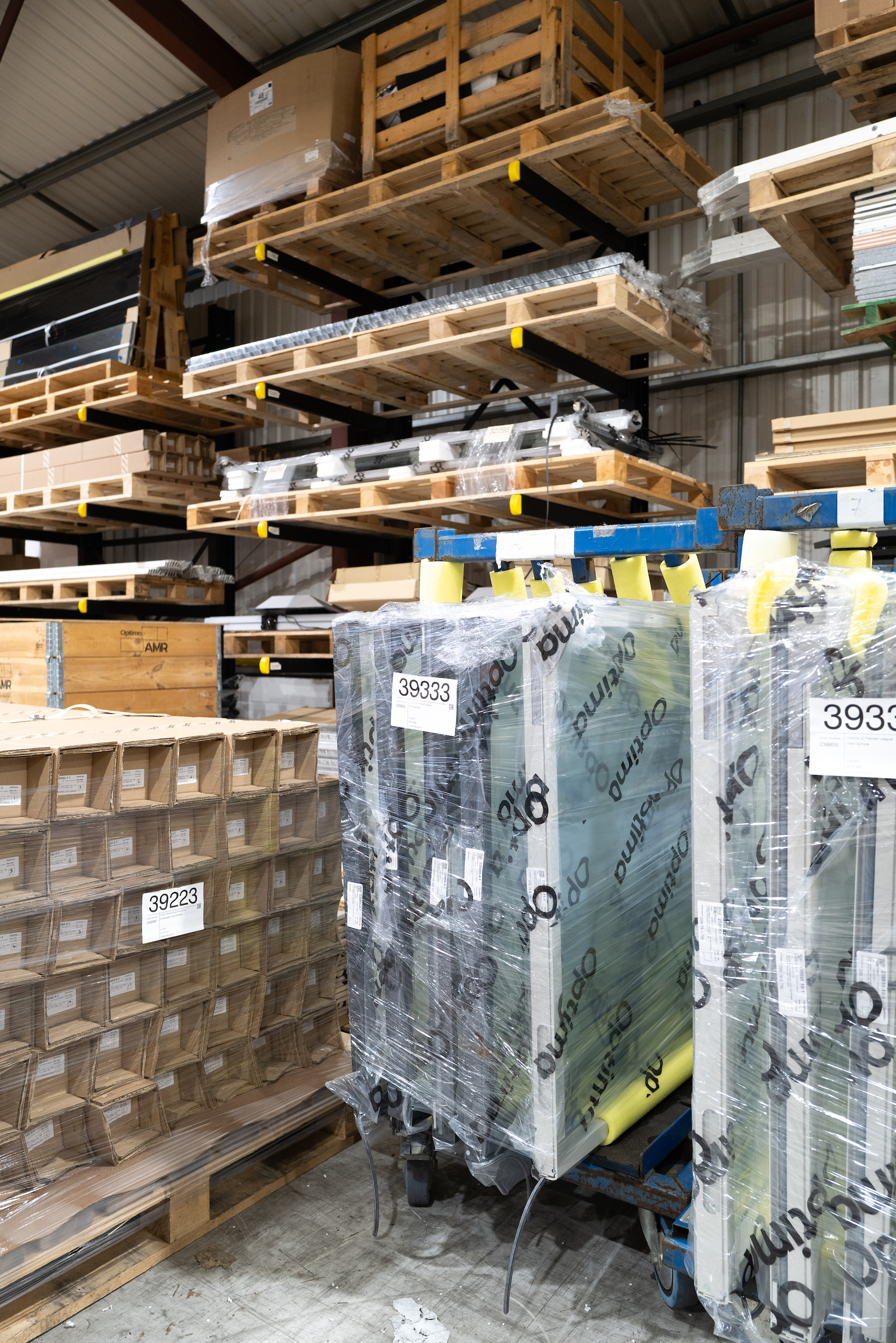
Packaged components await dispatch.
Looking to the manufacturing future
In the second part of this article, Managing Director Christian Mabey, and Environmental & Sustainability Manager Paul Gooden discuss the principal challenges and opportunities in making Optima operationally net zero by 2030.
Christian Mabey: One of the main challenges is the pace of change required: 2030 is not far away, and the investment needed – whether in infrastructure, new equipment, or fleet transition – must be carefully planned and balanced against operational realities. Technology readiness can also be a constraint; not every low carbon solution is commercially mature today, so timing our moves sensibly is crucial.
Paul Gooden: For me, our biggest operational challenge lies in energy consumption. The majority of our Scope 1 emissions come from our powder coat line ovens, which use natural gas to finish aluminium profiles to clients’ specifications. While the line has been upgraded to the most energy-efficient technology available, switching fully to electricity would currently increase costs dramatically (UK electricity prices remain several times higher than gas) making immediate electrification commercially unviable. We’ve already reduced absolute consumption through smarter shift patterns, higher loading efficiency and heat recovery, but the real breakthrough will come from identifying a technically and economically viable low-carbon alternative to natural gas.
Christian Mabey: Paul is right, the biggest gains will come from accelerating improvements in energy efficiency across our operations. By upgrading equipment, investing in smarter process controls, and reducing waste in all its forms, we can cut carbon while also lowering operating costs and improving productivity. There is also huge potential in embracing new technologies, from advances in electric commercial vehicles to cleaner curing solutions and more efficient powder coating systems, which will fundamentally reduce our reliance on fossil fuel based processes.
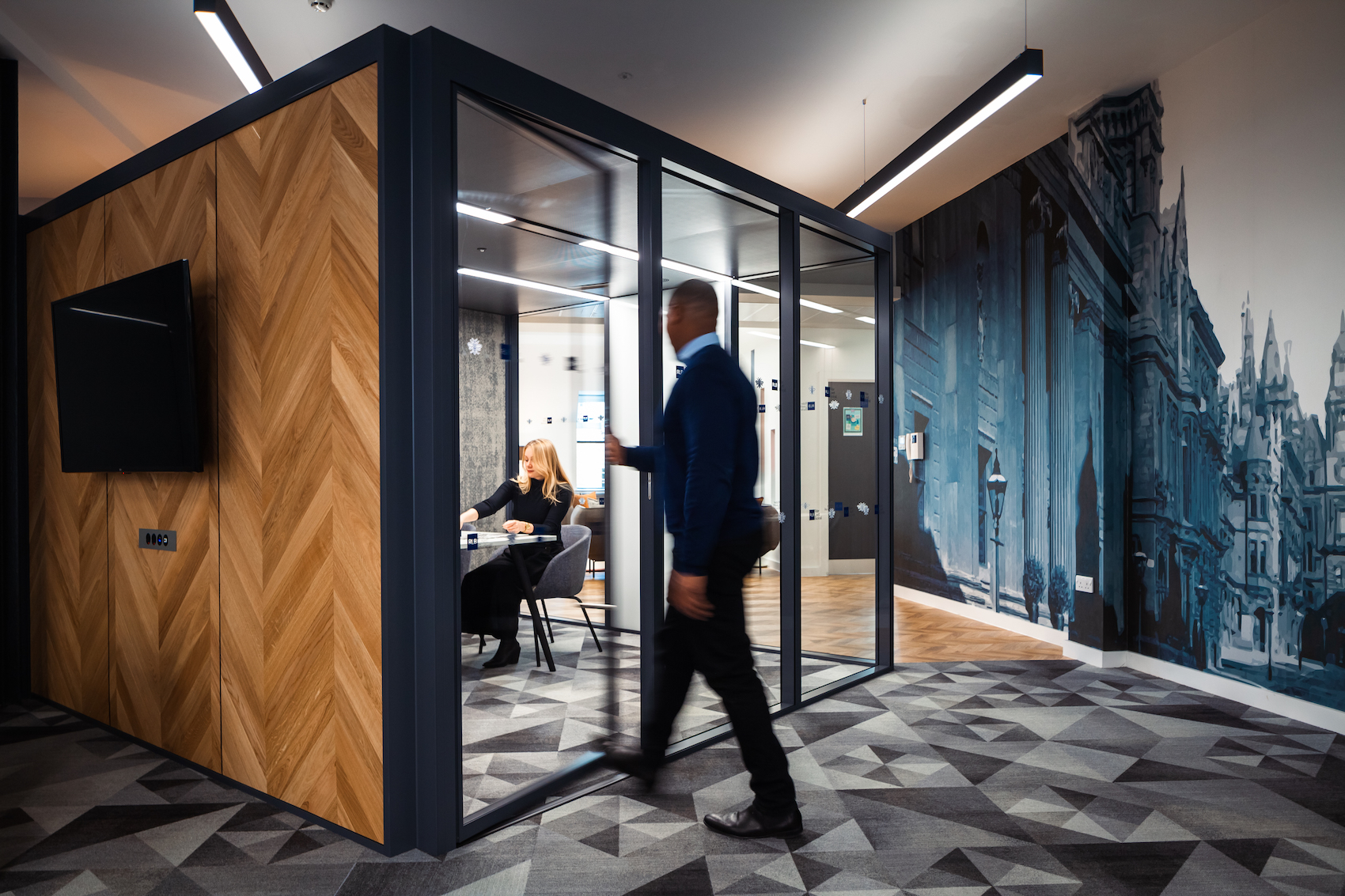
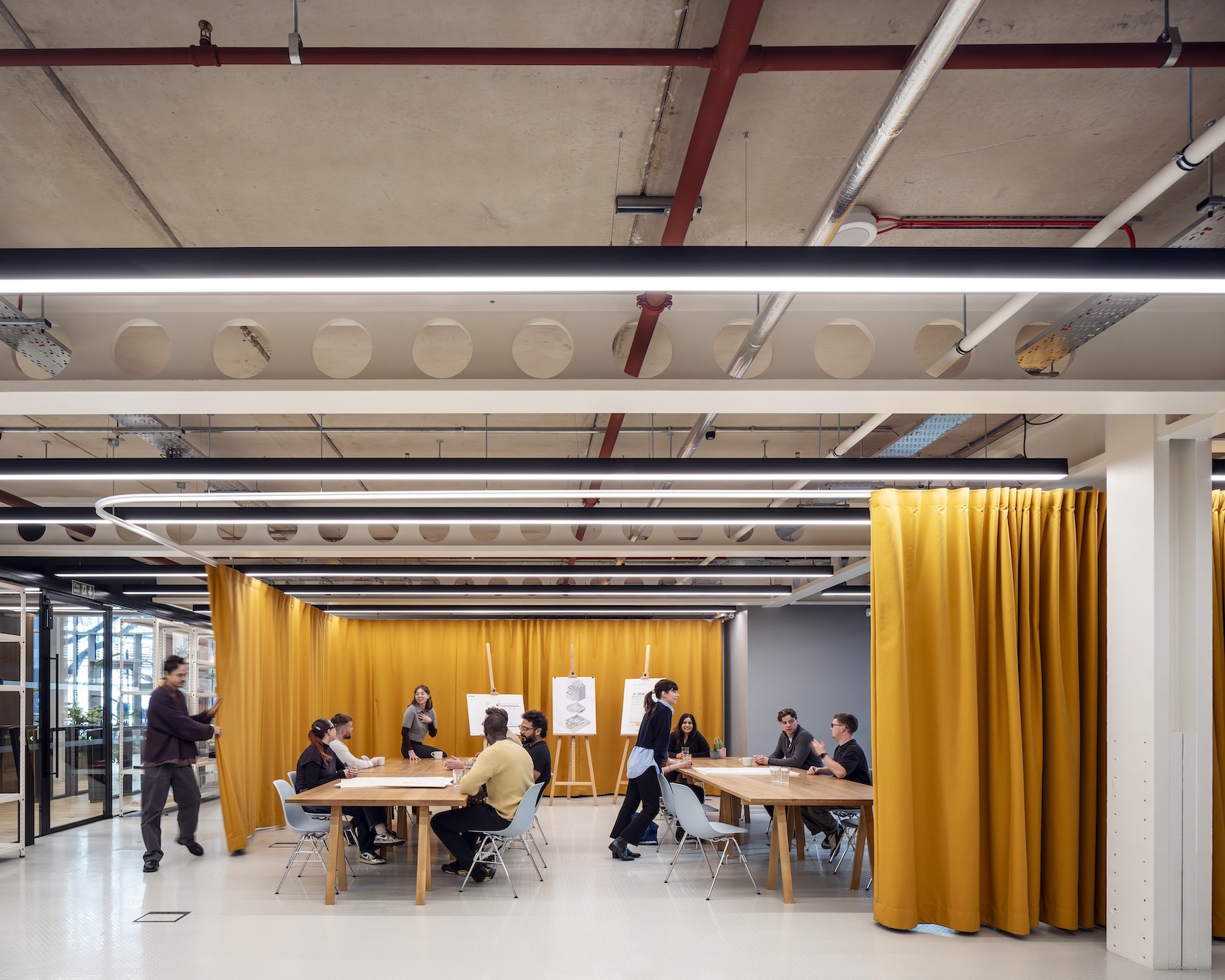
Optima Systems’ Adaptable Meeting Room (AMR) can be demounted and reused (photo: Matthew Nichol).
Paul Gooden: Our systems are designed to be demountable, relocatable and reusable, which reduces the need for new materials and repeat deliveries, cutting emissions before they’re even created. From my perspective, further gains lay beyond the factory walls. Logistics, business travel and commuting represent a meaningful share of operational emissions. Optimising delivery routes, transitioning fleets and encouraging lower-carbon travel behaviours offer practical, immediate gains while we continue to decarbonise manufacturing.
Christian Mabey: Another key opportunity is strengthening partnerships across our supply chain. Working with suppliers who are developing lower carbon materials, better recycling systems, and more transparent reporting will help us reduce embodied carbon and make stronger, more informed choices. These collaborations will become increasingly important as customers and regulators expect clearer demonstrations of environmental responsibility.
Paul Gooden: I think it’s important to remember that reaching operational net zero isn’t about a single solution: it’s the combination of better materials, smarter processes and more efficient ways of working. And we’re tackling each of those in parallel.
Christian Mabey: Overall, our sustainability journey will be shaped by our willingness to embrace innovation and form the right partnerships with suppliers and technology providers.
Contact Details
For more information, please call 01494 492 600, email, or visit the Optima website.