Darryl Chen, Partner, Urban Design Sector Lead at Hawkins\Brown and Julian Lewis, Director at East on pedestrianisation, public life and the long-term transformation of Oxford Street.
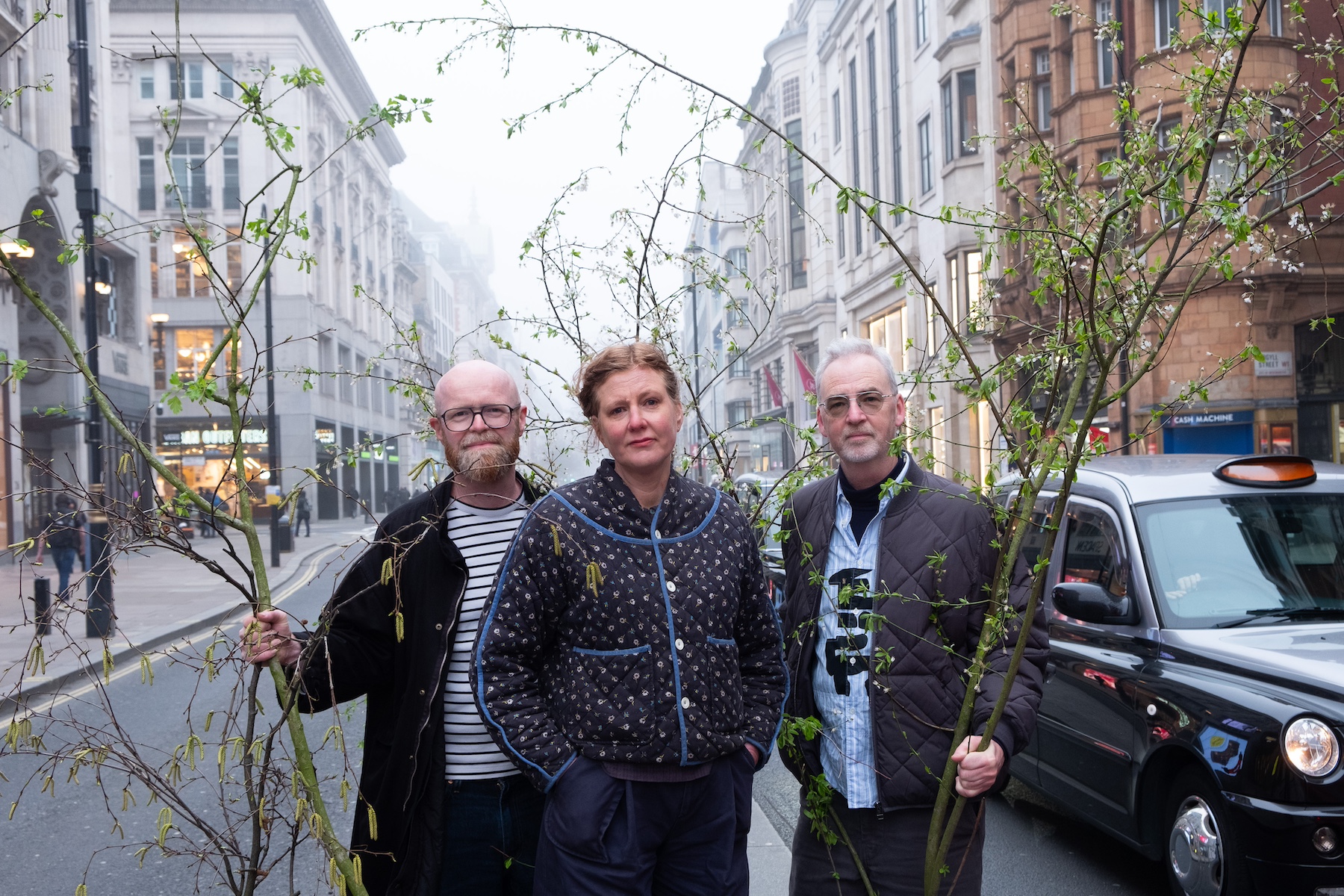
East directors, from left to right: Dann Jessen, Judith Lösing and Julian Lewis. (Credit: Tara Darby)
Can you both outline your role on the project and how your teams are working together?
Darryl Chen We were appointed to develop the whole street strategy, looking at the full length between Marble Arch and St Giles Circus. Our role includes setting KPIs, defining long-term ambitions and thinking about future phases of work beyond the initial pedestrianisation. In that sense, we’re working from the top down, addressing macro concerns and the wider ambitions for the street rather than just its immediate physical changes. Alongside us are Aspect Studios, who bring experience from major pedestrianisation projects like George Street in Sydney, as well as Urban Movement, Rob Bevan of Authentic Futures and lighting consultants Michael Grubb Studio.
Julian Lewis East is focused on delivery: designing and implementing the pedestrianisation itself as well as activation improvements to areas west and east of the core section. We’re working with Gehl, Publica, J&L Gibbons, Etude, NRP and 59 Studio. A key aspect of the project is the collaboration between Hawkins\Brown and East as parallel teams. We are constantly testing ideas, sharing insights and influencing each other’s thinking, which creates a productive overlap between strategy and on-the-ground design.
At its simplest, what is the brief?
Julian Lewis At its simplest, the brief is to make Oxford Street a place for everyone, more accessible, more enjoyable and more capable of supporting a wide range of activities. It’s about unlocking the potential that already exists within the street and building on its history to expand social opportunity and enhance spectacle. Virginia Woolfs’ text The Oxford Street Tide illuminates this approach beautifully. She compares Oxford Street to a “bright stream…” where “Everything glitters and twinkles”.
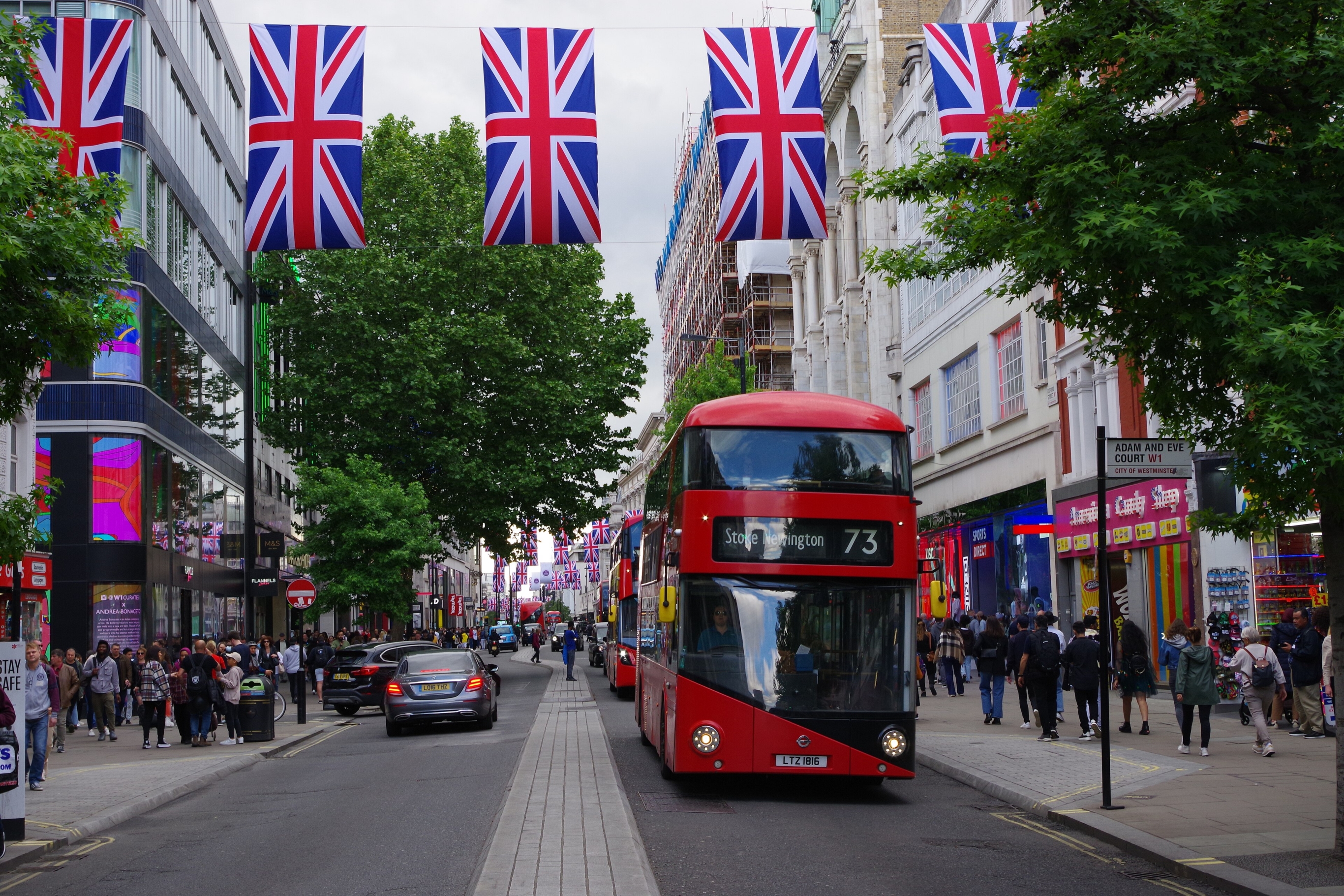
Route 73 along Oxford Street, May 2022. (Credit: London Connected via Wikimedia Commons)
Pedestrianising Oxford Street has been discussed for years. What makes this iteration different?
Darryl Chen The biggest difference is that this scheme actually removes vehicles from a portion of the street. That’s fundamental. It’s difficult to imagine a meaningful transformation while buses, taxis and cyclists are still moving through such a constrained space. Those conditions create pinch points and compromise pedestrian comfort. By removing vehicles, you suddenly unlock a huge amount of space and possibility for everything else that a successful street should do.
Julian Lewis There’s also a broader cultural shift happening. Oxford Street is becoming a public space rather than just a movement corridor. It’s fascinating because it’s a place everyone knows and has an opinion on, yet it’s not somewhere people currently want to spend time. This project is about changing that dynamic, creating a place where people can linger, meet and experience the street, rather than simply passing through it.
What has your data revealed about how people use Oxford Street?
Julian Lewis The data shows a very mixed demographic, with both younger and older people using the street. What’s striking is that while people do spend time there, there’s nowhere for them to actually be. Movement is slow and ‘sticky’, people browse shopfronts and linger along the edges, but the space doesn’t support that behaviour. We’ve started to identify where flows need to be maintained and where opportunities exist for people to stop and dwell. The side streets are particularly important, at the moment they feel disconnected from Oxford Street, but they have huge potential to support social activity, seating, eating and even play.
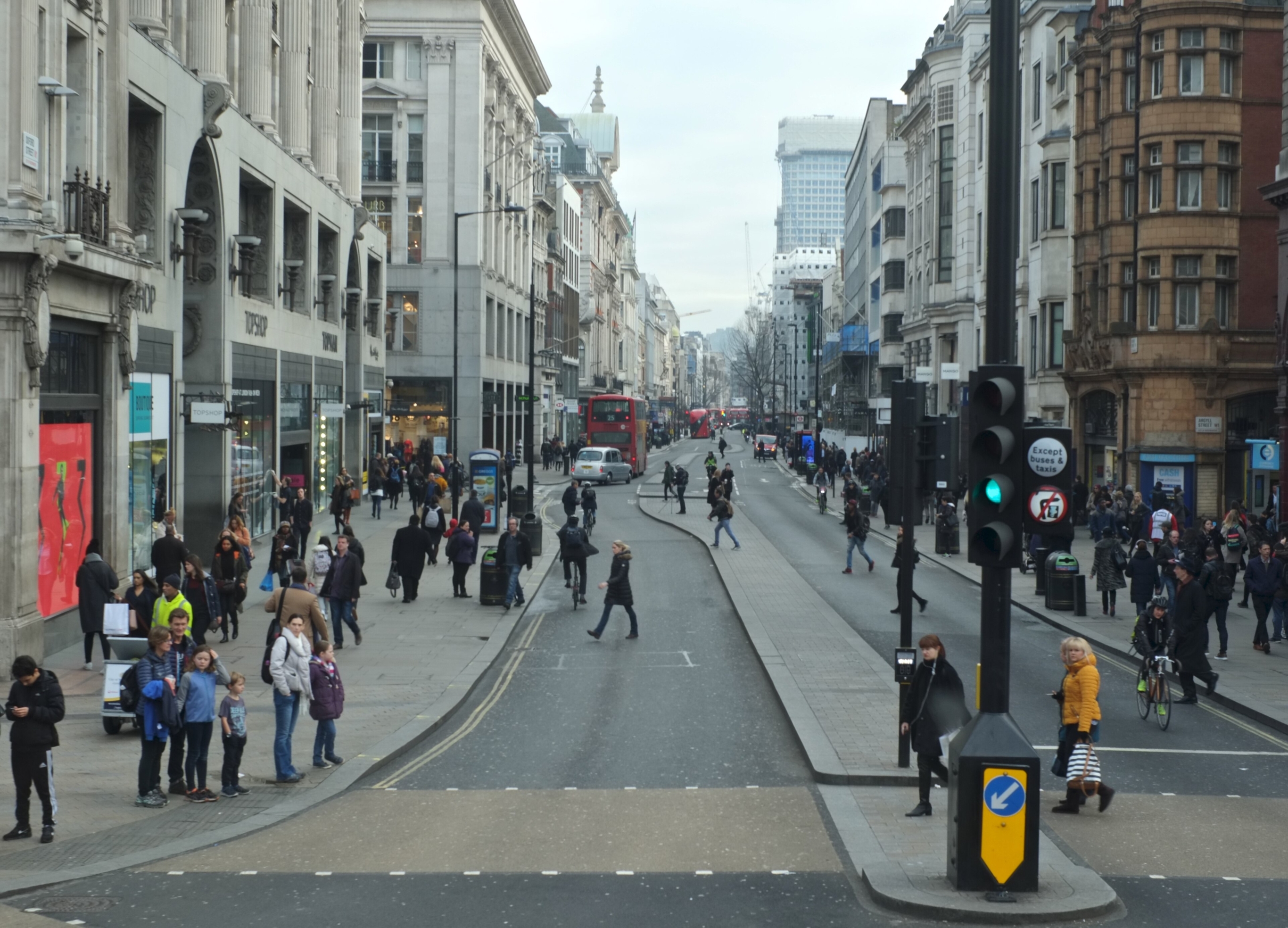
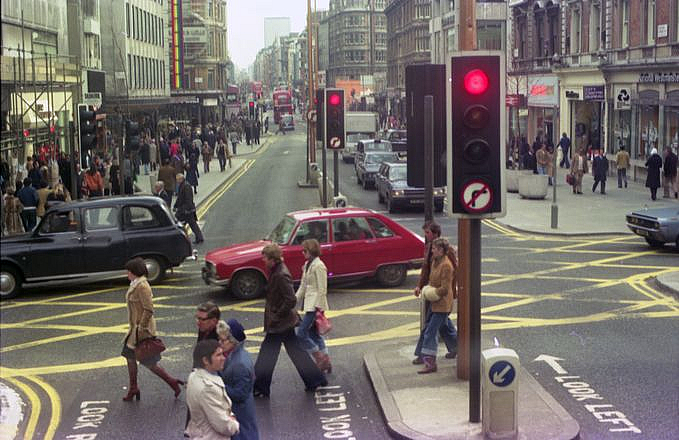
Oxford Street, towards Holborn, 2017. (Credit Anthony O’Neil / Wikimedia Commons)
How are you balancing public realm improvements with the needs of retailers?
Darryl Chen Although there’s a broader narrative about the decline of the high street, Oxford Street is a unique case. It remains a global flagship destination, and recent development activity reflects renewed confidence in it. Retail is evolving to become more experiential and media-driven, and our role is to create the best possible setting for that. A street where people want to dwell and spend time will ultimately generate more value for retailers. There are also practical considerations, sightlines, security requirements and clear zones, but fundamentally, a better public realm supports better retail.
Julian Lewis There’s also a continuity with Oxford Street’s history. Visibility and spectacle have always been central to its success. What we’re doing is building on that, enhancing the experience of being in the street and strengthening the threshold between public space and shopfront. It’s about expanding what’s already working and enriching it, rather than replacing it.
What kinds of interventions can people expect?
Julian Lewis We’re looking at increasing greening where possible, although that comes with challenges due to underground services. Seating is a major priority, the data suggests there are hundreds of people at any given time who would like to sit down. There’s also potential for play, informal activity and for people to eat and spend time in the street in ways that currently feel impossible. All of these ideas will be tested through transitional stages before becoming permanent.
Darryl Chen Flexibility is crucial. Rather than prescribing exactly how the street will be used, we’re creating a framework that allows for a range of activities, from individuals and social groups to brands and civic events. The street needs to be adaptable to uses we can’t fully anticipate at this stage.
What will the transition period look like?
Julian Lewis The most immediate and noticeable change will be the removal of traffic, that will fundamentally alter how the street feels. Beyond that, people can expect more opportunities to sit, more greenery and a stronger sense of civic space. Importantly, this will be a transitional process, allowing us to test and refine ideas before moving towards a permanent scheme.
How are you addressing traffic displacement?
Darryl Chen Bus traffic has already been significantly reduced in recent years as part of TfL’s efforts to decongest central London. So while routes will change, it’s not as dramatic a shift as it might appear. There has been a detailed consultation process with broadly positive feedback, and there will still be access at either end of the street.
Julian Lewis Perception of distance will also change. As the quality of the street improves, people are more willing to walk along it rather than simply arriving at specific places. Access from nearby bus stops will feel more intuitive and less of a barrier.
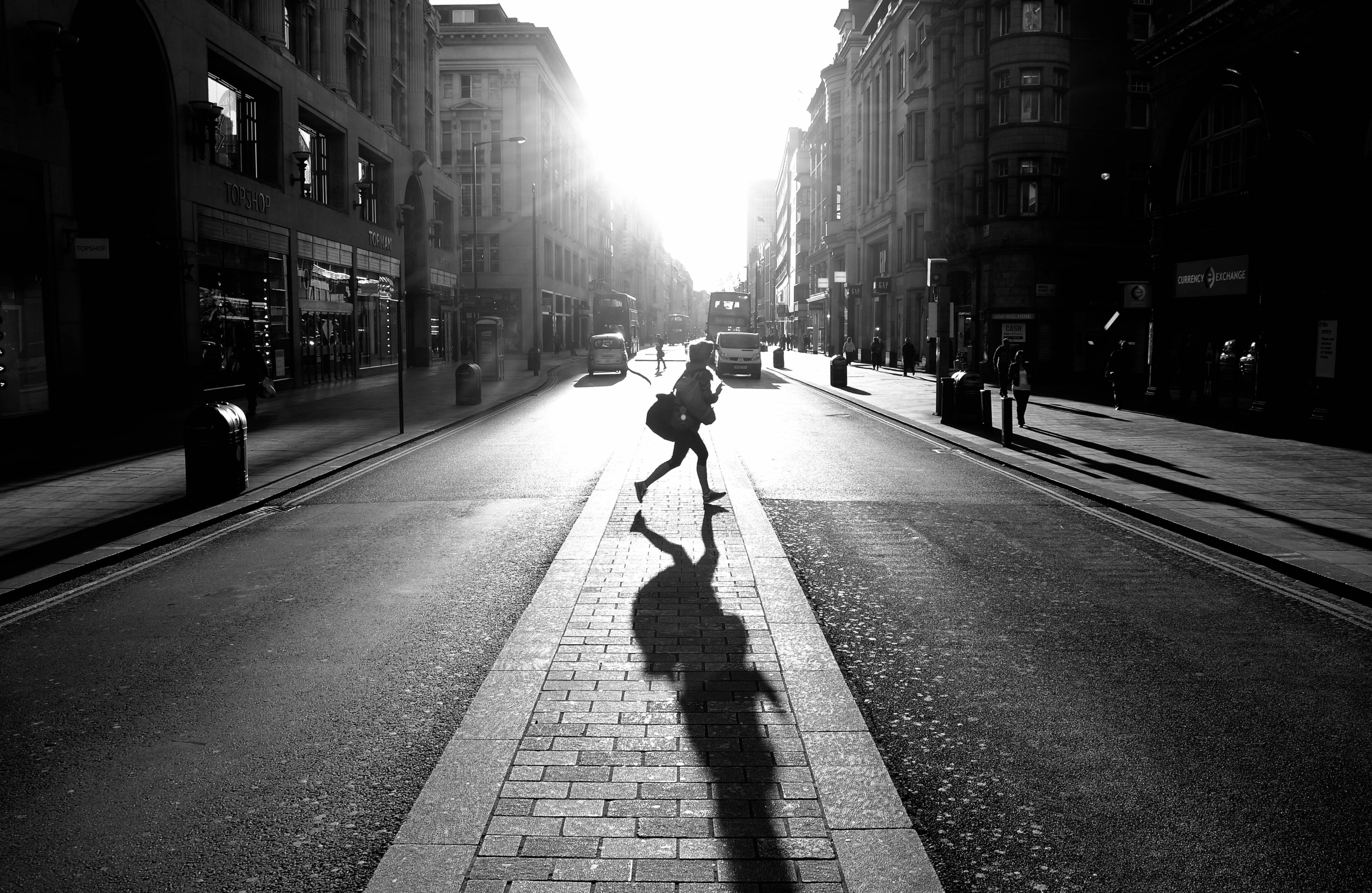
Oxford Street Sunrise. (Credit: Dom Crossley / Wikimedia Commons)
What about servicing and deliveries?
Julian Lewis Servicing will continue to take place out of hours. The challenge is designing a public realm that can accommodate heavy vehicles when required, while still delivering a high-quality environment during the day. This involves careful consideration of materials, sub-bases and durability. It’s a complex balancing act, but one that is typical of working in London.
How are side streets and junctions being handled?
Julian Lewis Each junction is being designed as part of the public realm, incorporating safe crossings, traffic signals and security measures. The aim is to ensure these elements feel integrated and deliberate, rather than added on.
Darryl Chen The continued presence of north-south routes actually helps reconnect Oxford Street to the wider West End. The project has the potential to act as a binding element, drawing people into surrounding neighbourhoods rather than acting as a barrier.
Is climate resilience part of the design?
Darryl Chen Yes, research suggests that within 15 years, a significant proportion of summer days could be heat stress days. If the street doesn’t provide shade, manage water effectively and offer respite from heat, it won’t be comfortable to use.
Julian Lewis This project is part of a long historical evolution. Oxford Street has continually adapted over centuries, and this intervention continues that trajectory while also reconnecting it more effectively to the wider city.
Oxford Street over the years
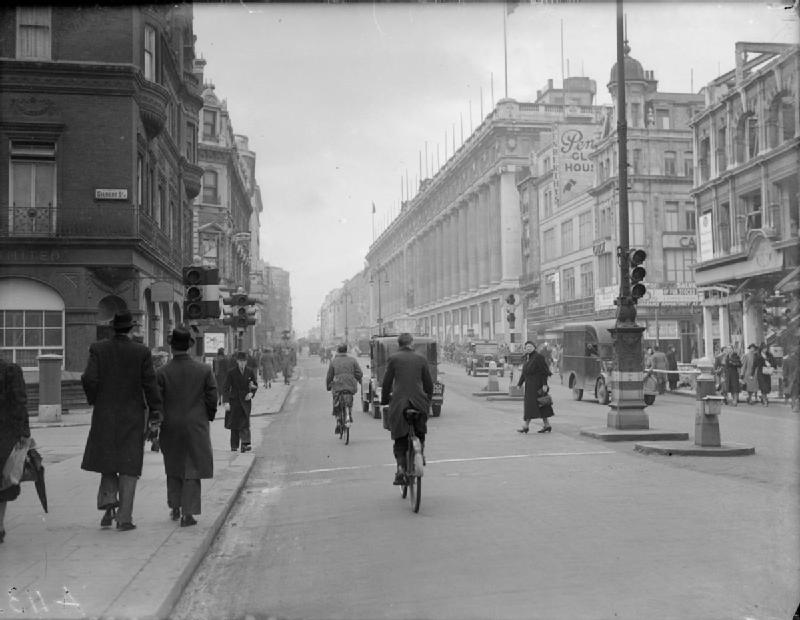
Oxford Street 1941 (Credit: Imperial War Museum / Wikimedia Commons)
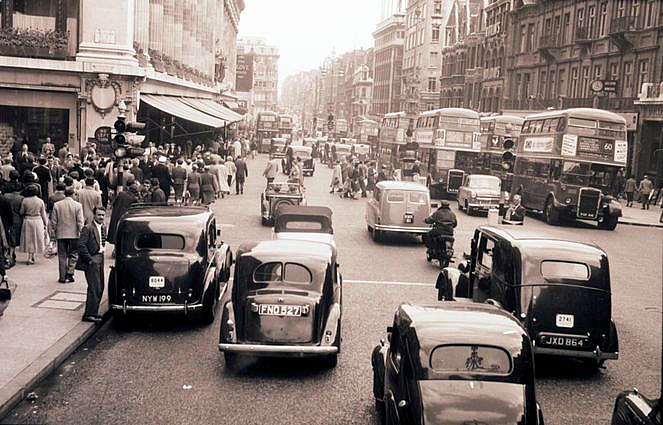
Oxford Street 1955 (Credit: Sammlung Willy Pragher / Wikimedia Commons)
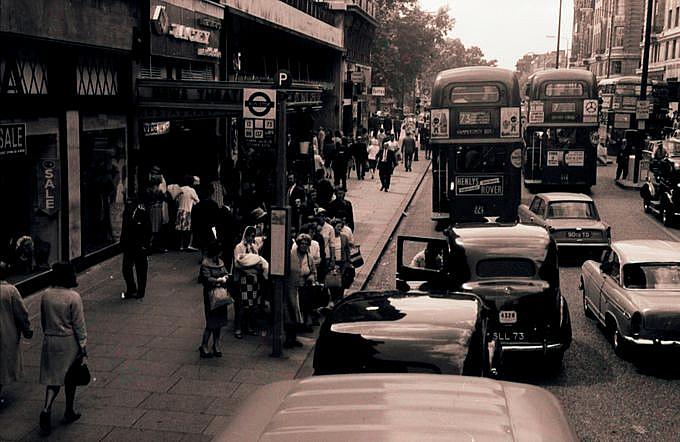
Oxford Street 1964 (Credit: Sammlung Willy Pragher / Wikimedia Commons)