HTA Design’s new play landscape for Crystal Palace Park draws on the site’s 19th-century ‘journey through time’ concept to create an immersive environment that combines education, accessibility and imaginative play within a wider programme of park regeneration.
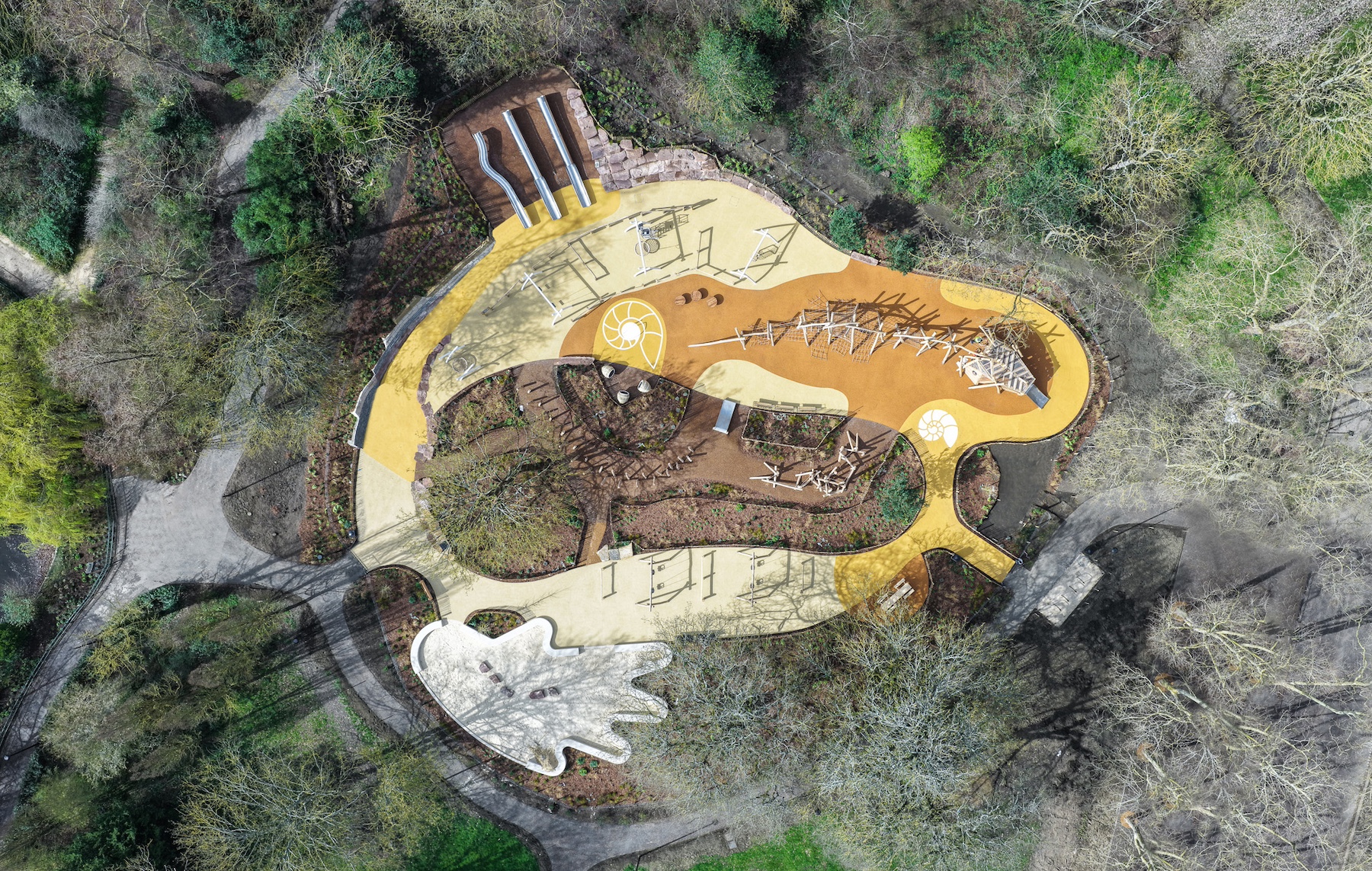
HTA Design has completed a new dinosaur-themed playground in Crystal Palace Park, south London, as part of the ongoing regeneration of the Grade II* listed historic landscape. Commissioned by Bromley Council and delivered in collaboration with Crystal Palace Park Trust, the project sits within a wider programme of works that is restoring key heritage features while introducing new amenities for contemporary use.
Located close to the park’s celebrated dinosaur sculptures, the playground builds on the original vision established by Sir Joseph Paxton in the mid-19th century, when the park was conceived as a chronological ‘journey through time’. The adjacent Geological Court, home to the world’s first attempts to reconstruct prehistoric creatures, provides both a historical anchor and a conceptual framework for the new intervention.
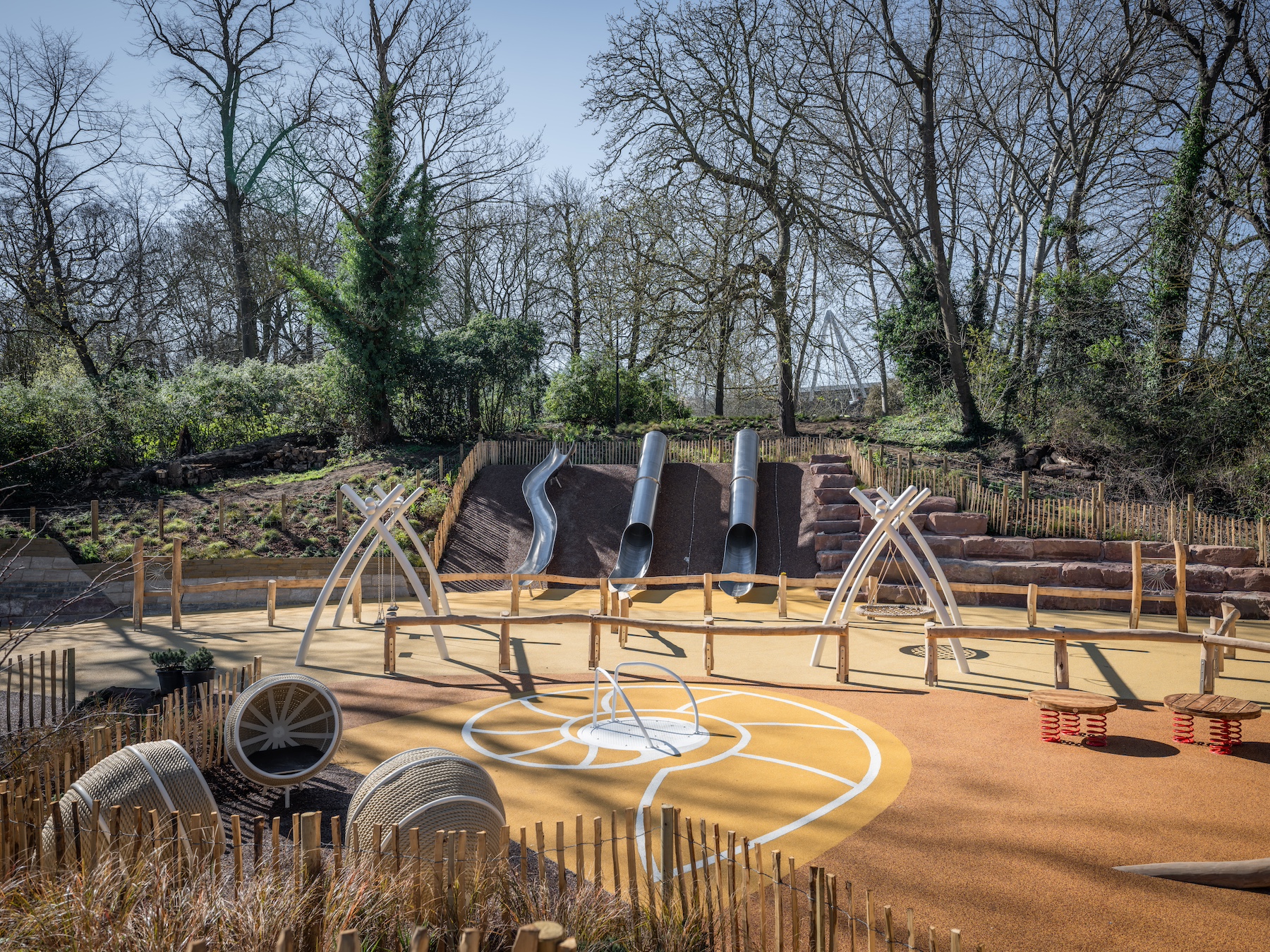
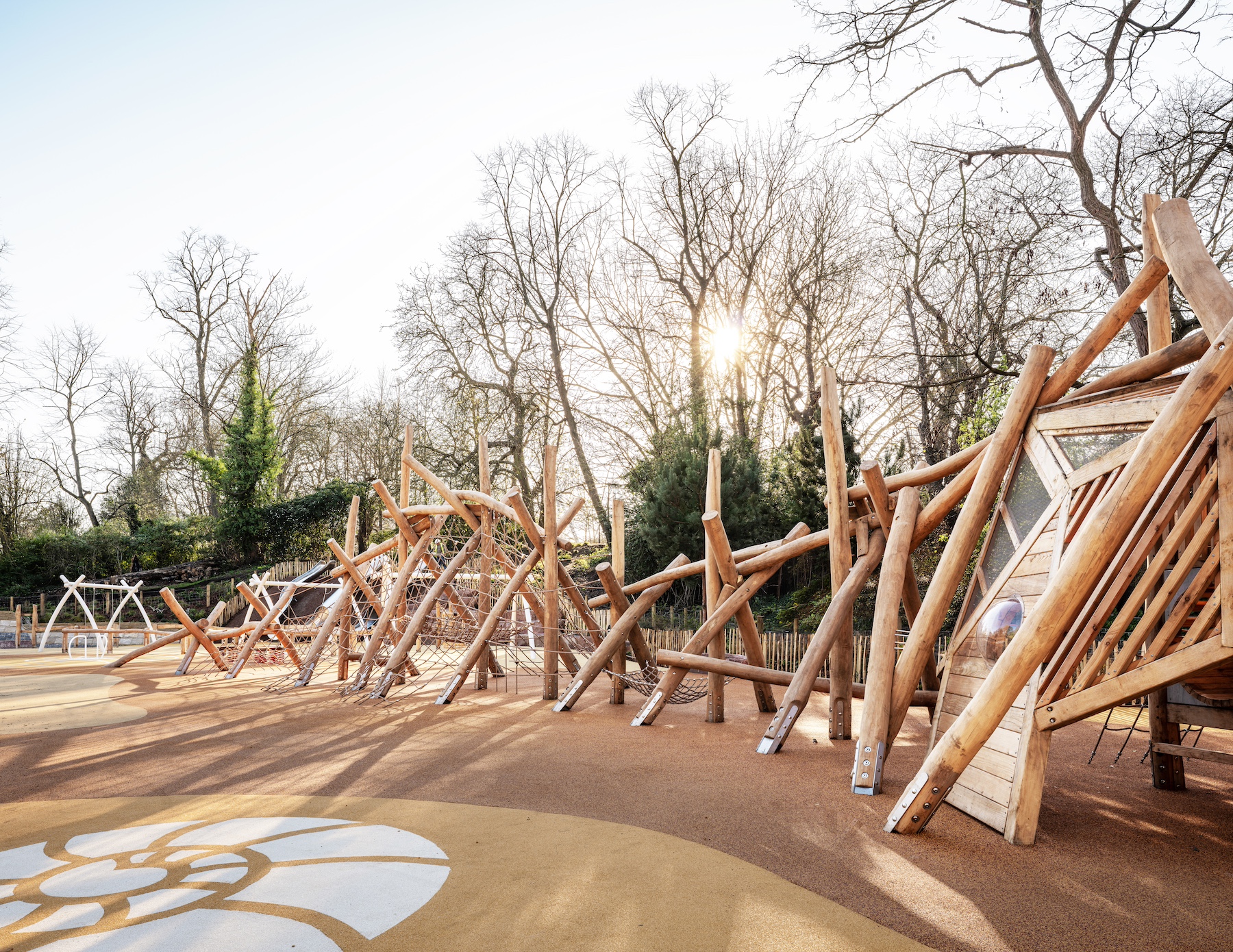
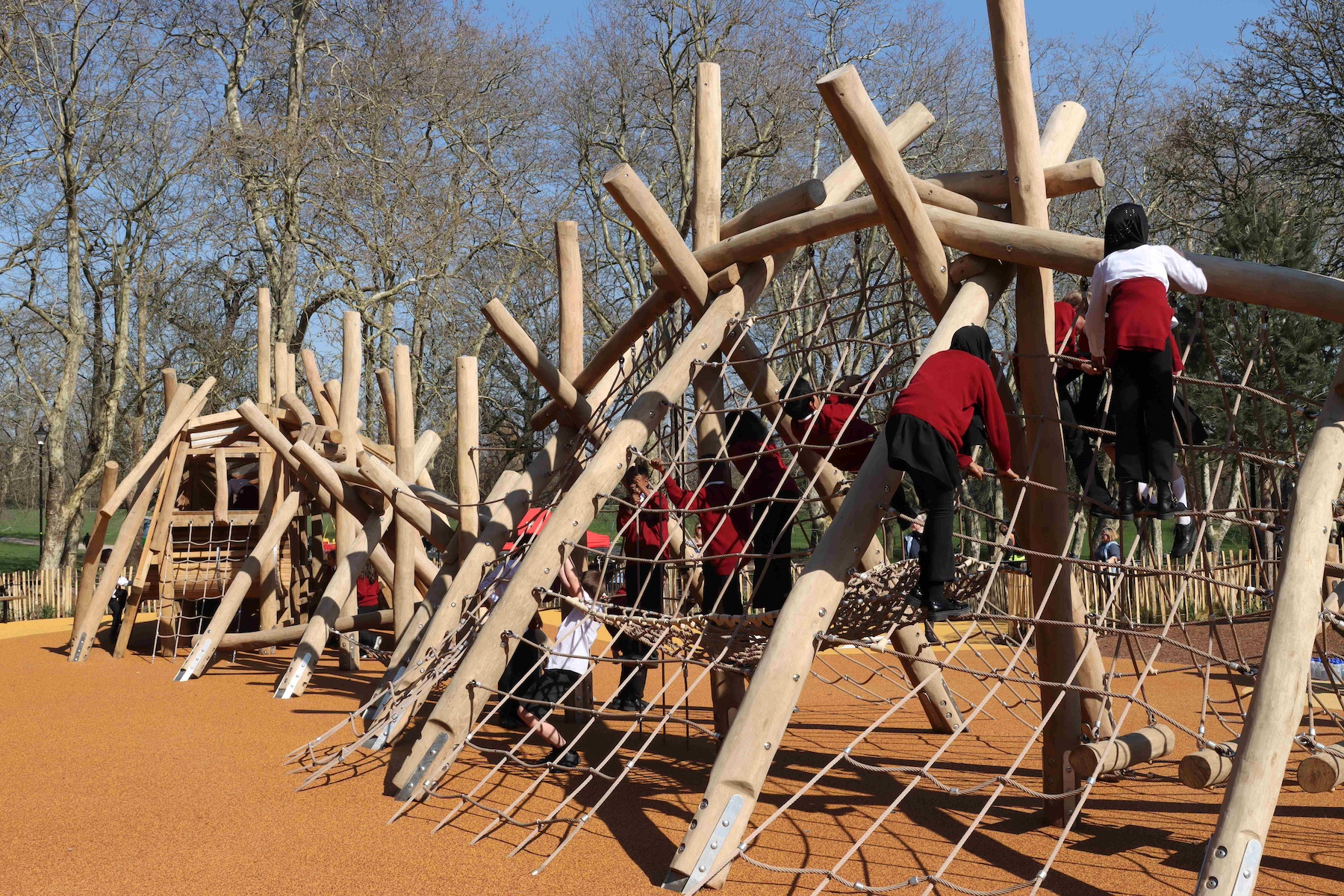
The play area takes the form of an immersive palaeontological landscape, structured as a sequence of discoveries embedded within the ground. Rather than organising play around discrete items of equipment, the scheme integrates climbing, sliding and exploration into a continuous terrain of mounds, excavations and sculptural forms. Dinosaur-inspired elements emerge from the landscape, encouraging children to interpret and navigate the space through movement and imagination.
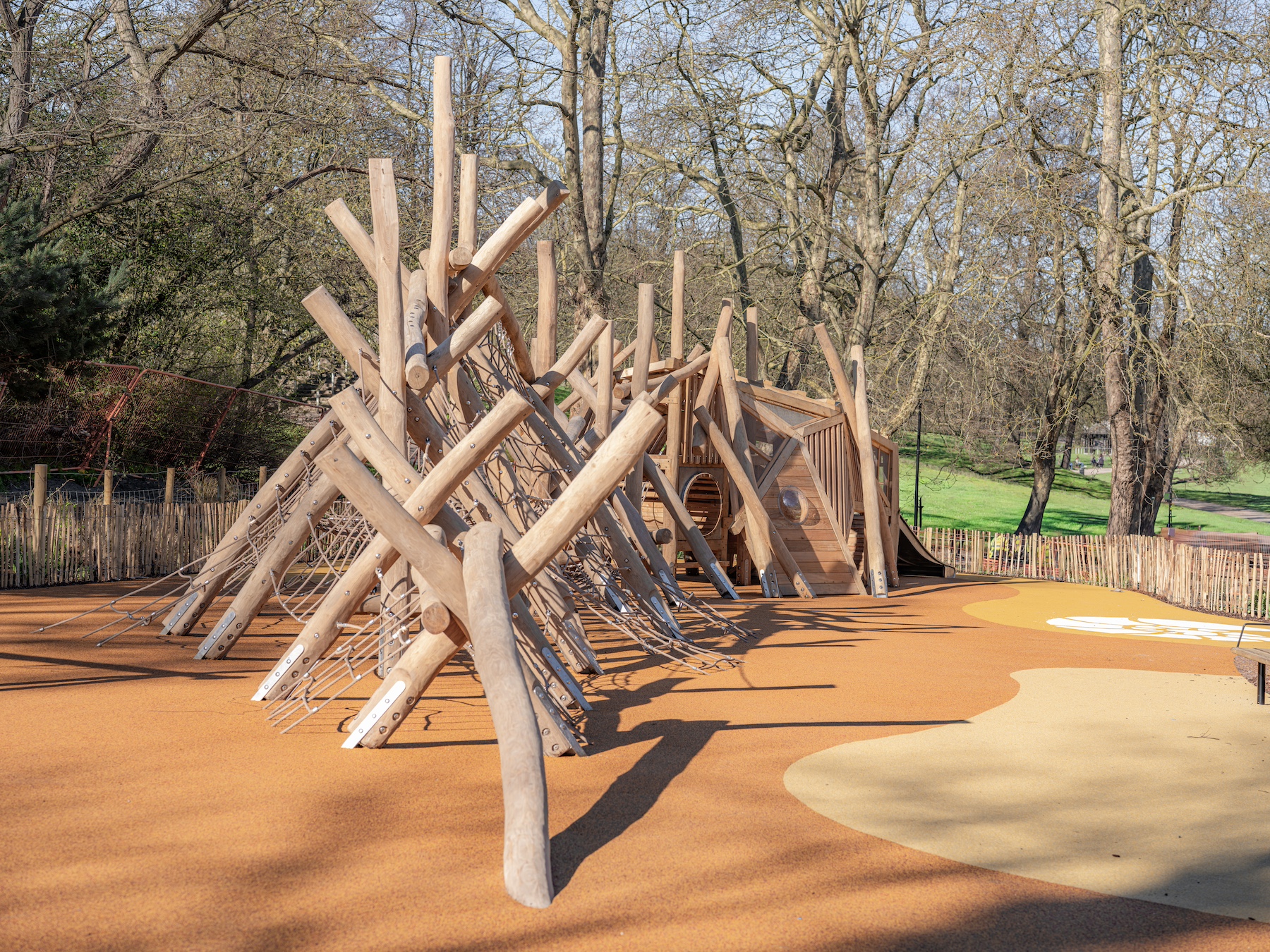
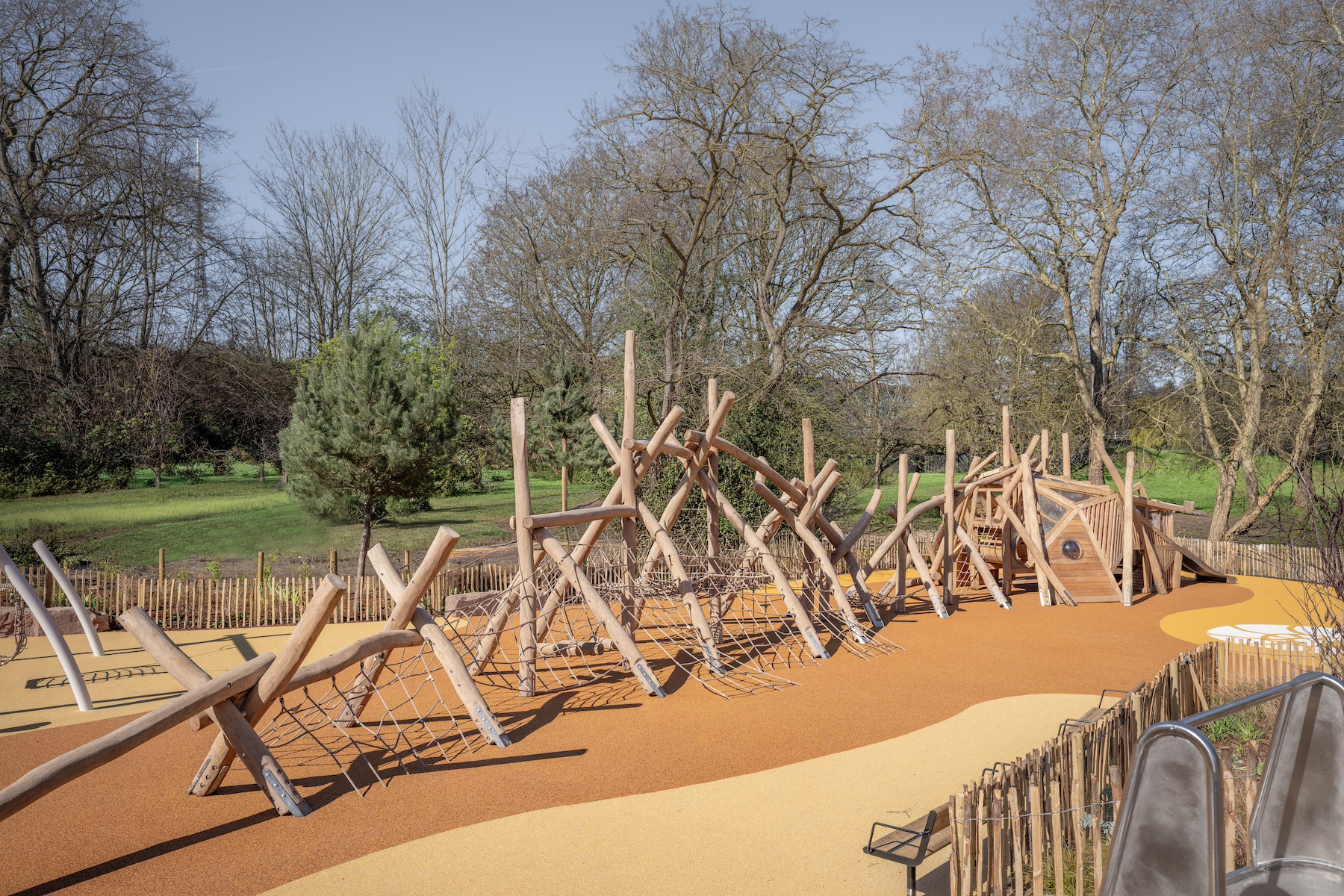
Key features of the playscape include a large skeletal climbing structure, slides carved into embankments to evoke claw marks, and a series of sinuous elements derived from tails and spines that double as routes for balancing and traversal. A giant skull structure invites children to pass through its open jaws, while a footprint-shaped sandpit introduces opportunities for tactile play and fossil discovery. These elements are complemented by a geological play wall and climbable boulders, referencing the Victorian illustrations that underpin the park’s educational legacy.
The project was developed through an extensive co-design process with local residents, schools and community groups. Workshops and engagement sessions informed both the narrative and the specific play features, with particular emphasis placed on the inclusion of well-known dinosaurs associated with the park, including Megalosaurus, Hylaeosaurus and Iguanodon. Swinging and climbing, identified as the most popular activities, are integrated throughout the scheme rather than treated as standalone attractions.
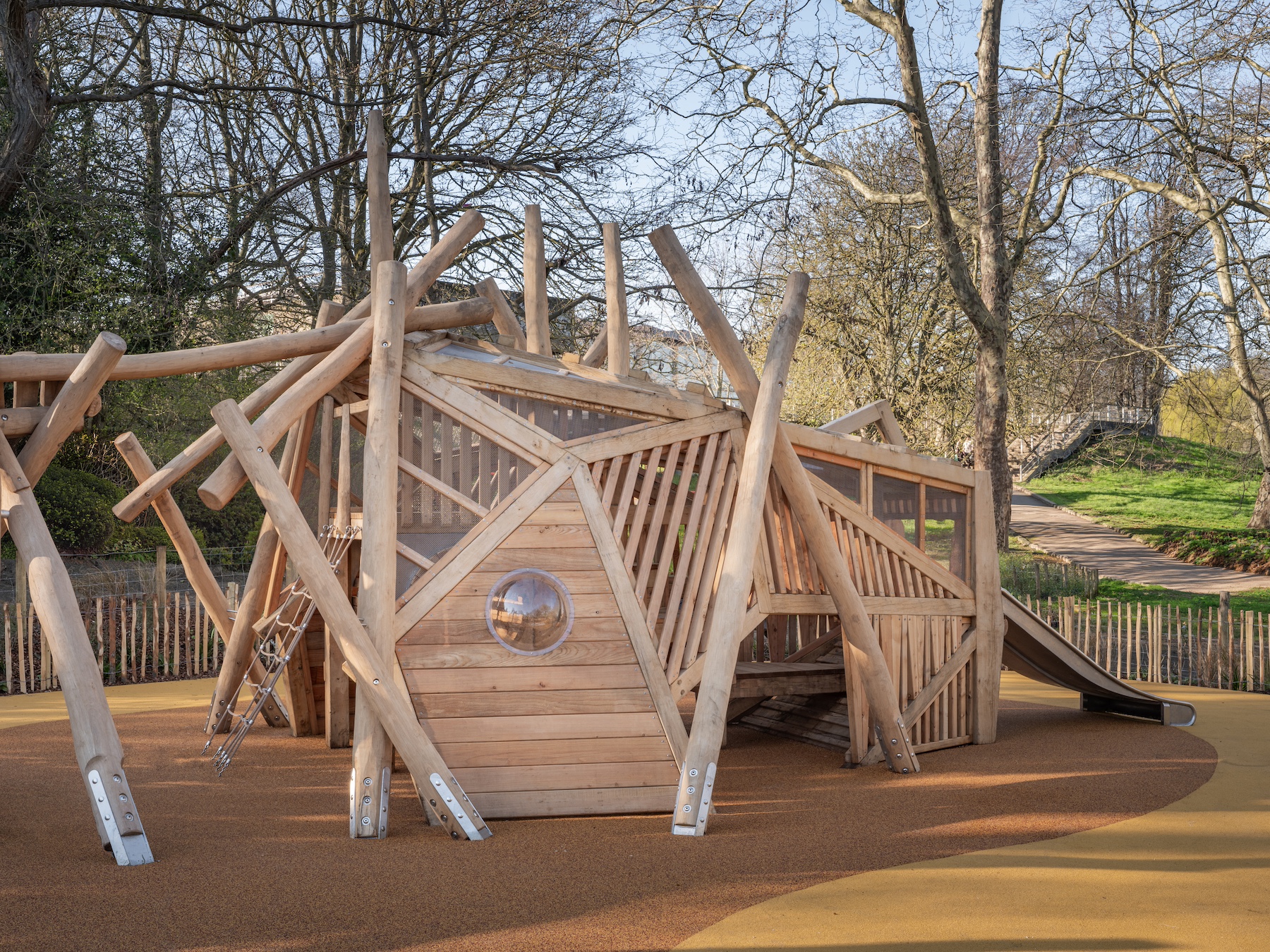
Accessibility was another major focus of the project, and the playground incorporates wheelchair-accessible equipment, inclusive seating and adjustable play elements, alongside proximity to a Changing Places facility within the park. The intention here is to create an environment in which children of all abilities can engage with the space at their own pace, without segregation or hierarchy.
From a flora perspective, a palette of ‘paleo-planting’, referencing prehistoric species, frames the play area and reinforces the educational narrative. Through this, the landscape is conceived as a setting for play, also acting as a medium through which broader themes of geological time, evolution and environmental change can be explored.
The playground forms part of a wider phase of investment across the park, which includes the restoration of the Italian Terraces, improvements to circulation routes and renewed access to the Tidal Lakes. Funded through a combination of public and charitable contributions, including support from The National Lottery Heritage Fund and the London Marathon Foundation, the project contributes to a long-term strategy aimed at securing the park’s future as both a heritage asset and a civic resource.
“The new play area continues Paxton’s vision for the park as a destination for education and entertainment,” said Natalia Roussou, landscape design director at HTA Design. “Co-designed with the local community and delivered by Bromley Council, and Crystal Palace Park Trust, it enriches the park’s prehistoric narrative and encourages children to discover and interpret the play structures using their own imagination.”
Credits
Client
London Borough of Bromley
Landscape architect
HTA Design
Trust partner
Crystal Palace Park Trust
Contractor
Maylim
Play equipment
PlayEquip
Funding
The National Lottery Heritage Fund, London Marathon Foundation, Garfield Weston Foundation, Wolfson Foundation, The Pilgrim Trust