DSDHA has reworked Sheep Field Barn at Henry Moore Studios & Gardens at the Hertfordshire hamlet of Perry Green, doubling its footprint and setting a new benchmark for low carbon gallery design.
Celebrated sculptor Henry Moore and his wife Irina moved to Perry Green, Hertfordshire, in 1940 after their Hampstead home was damaged during the Blitz. What was meant to be a temporary refuge from the war-battered city became their lifelong home. They initially rented half of Hoglands, a former farmhouse in the centre of the hamlet; however, as Moore’s fame and fortune grew, he began buying up neighbouring pieces of land, extending his holdings to what is now a 28-hectare estate.
Moore famously preferred to work outdoors, believing it to be the ideal setting for his sculptures. In the ensuing decades, he would build and acquire more studios within the arcadian environs of his home to accommodate both the production and storage of his ever-growing body of work. These studios are rustic, utilitarian things: repurposed farm buildings, a converted village shop, a self-built studio of metal framing clad in corrugated plastic and constructed with the help of a local builder, and a sixteenth-century barn purchased offsite and reconstructed near his Perry Green residence.
He and his family set up the Henry Moore Foundation in 1977, an educational charity dedicated to the promotion of sculpture and the stewardship of his personal effects and life’s work. This rural homestead became the formalised as the Henry Moore Studio & Gardens. Functional, albeit unrefined, and filled to bursting with various maquettes, prints, and other works of the artist, much of the studios that now make up the Studios & Gardens have been kept largely the same and, in some cases, restored to their original states to preserve the way the prolific artist lived and worked.
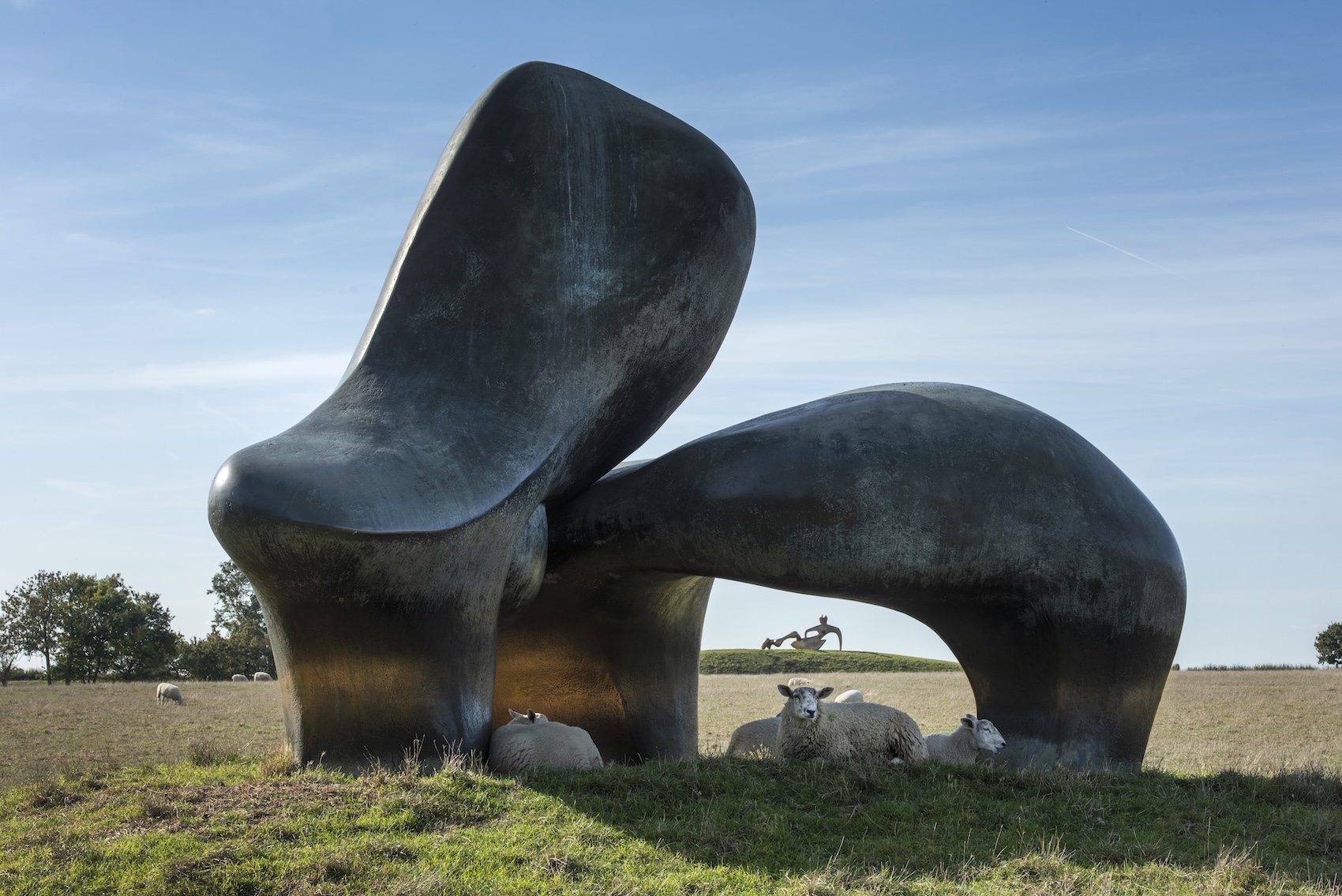
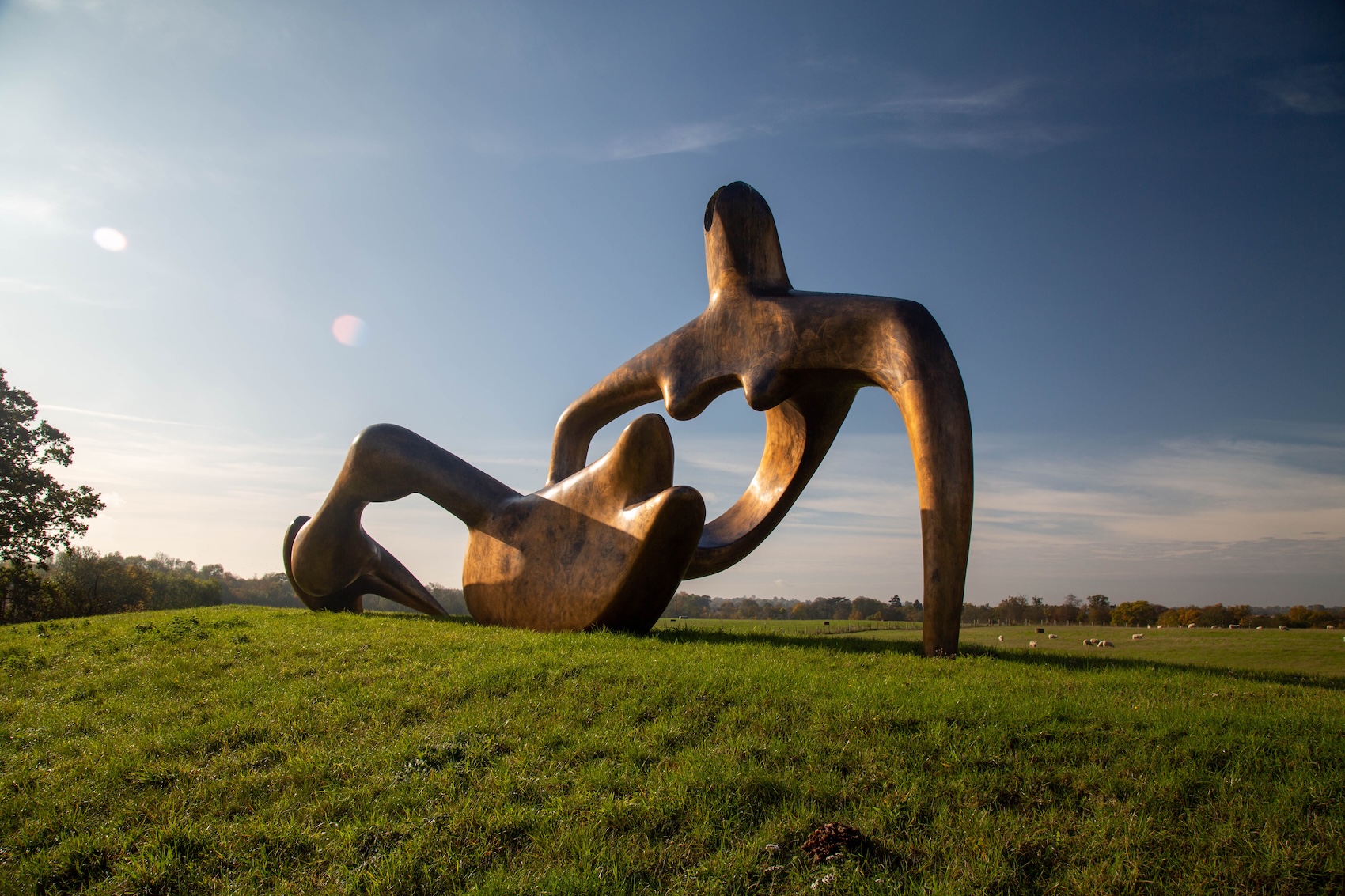
Left: Sheep take shelter under Sheep Piece, a bronze sculpture by Henry Moore 1971-72. Right: Large Reclining Figure 1986, the product of Moore’s fourth and final collaboration with I M Pei. Photos by John Chase.
The wave of modern interventions, intended to transform the rural estate into a contemporary cultural institution, began with Hugh Broughton Architects’ masterplan. Completed in 2018, the scheme included the extension of Elmwood House – now home to the Henry Moore Archive, which contains thousands of drawings, photographs, letters, maquettes and other materials relating to the artist’s life and work, as well as the construction of a new 1,300-square-metre sculpture storage facility designed to keep and conserve large-scale works from the Foundation’s collection. The project also involved the extension and refurbishment of Dane Tree House, a former office building that now serves as the main visitor centre, containing exhibition and interpretation spaces, visitor amenities, educational facilities, and offices overlooking the surrounding sculpture gardens.
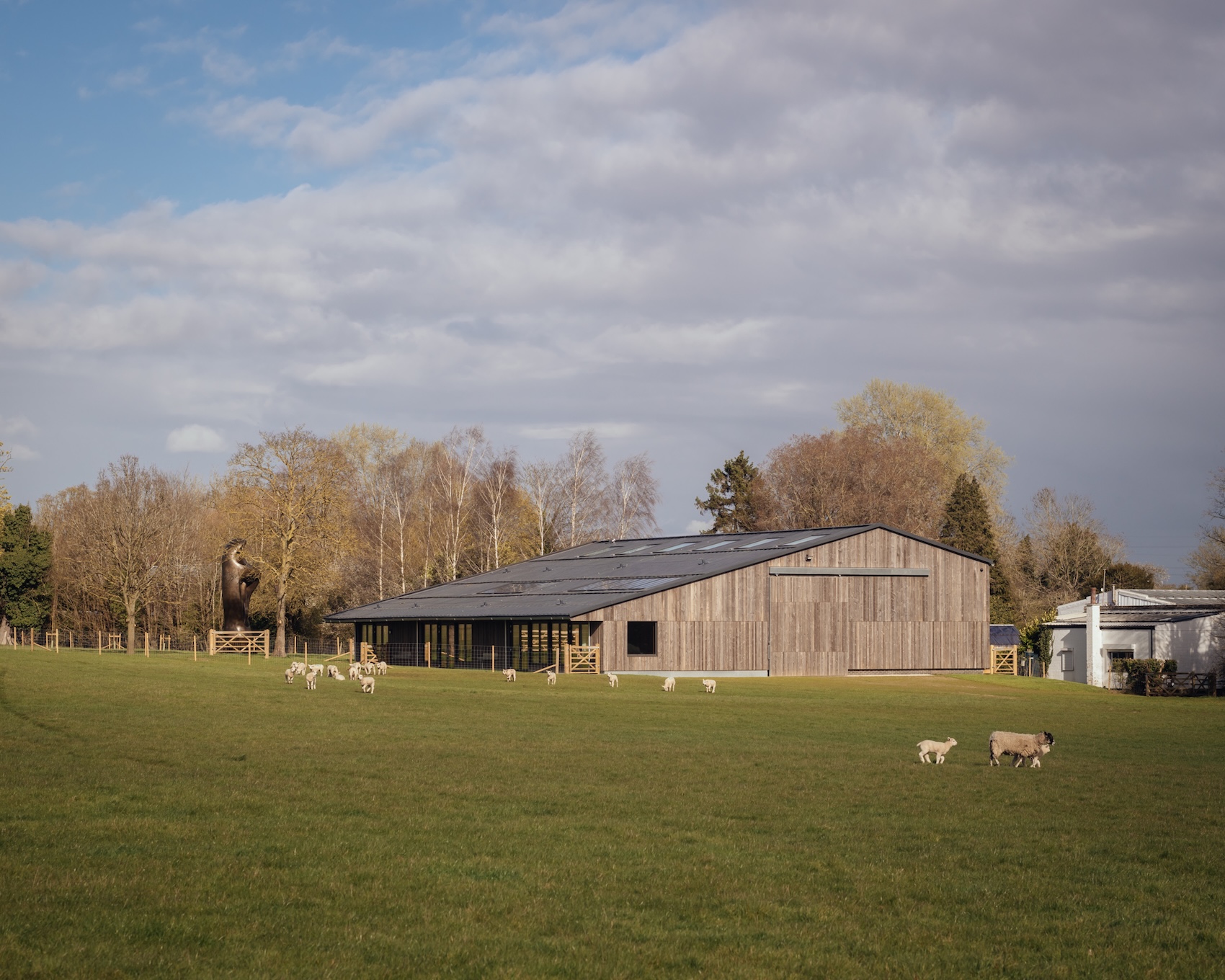
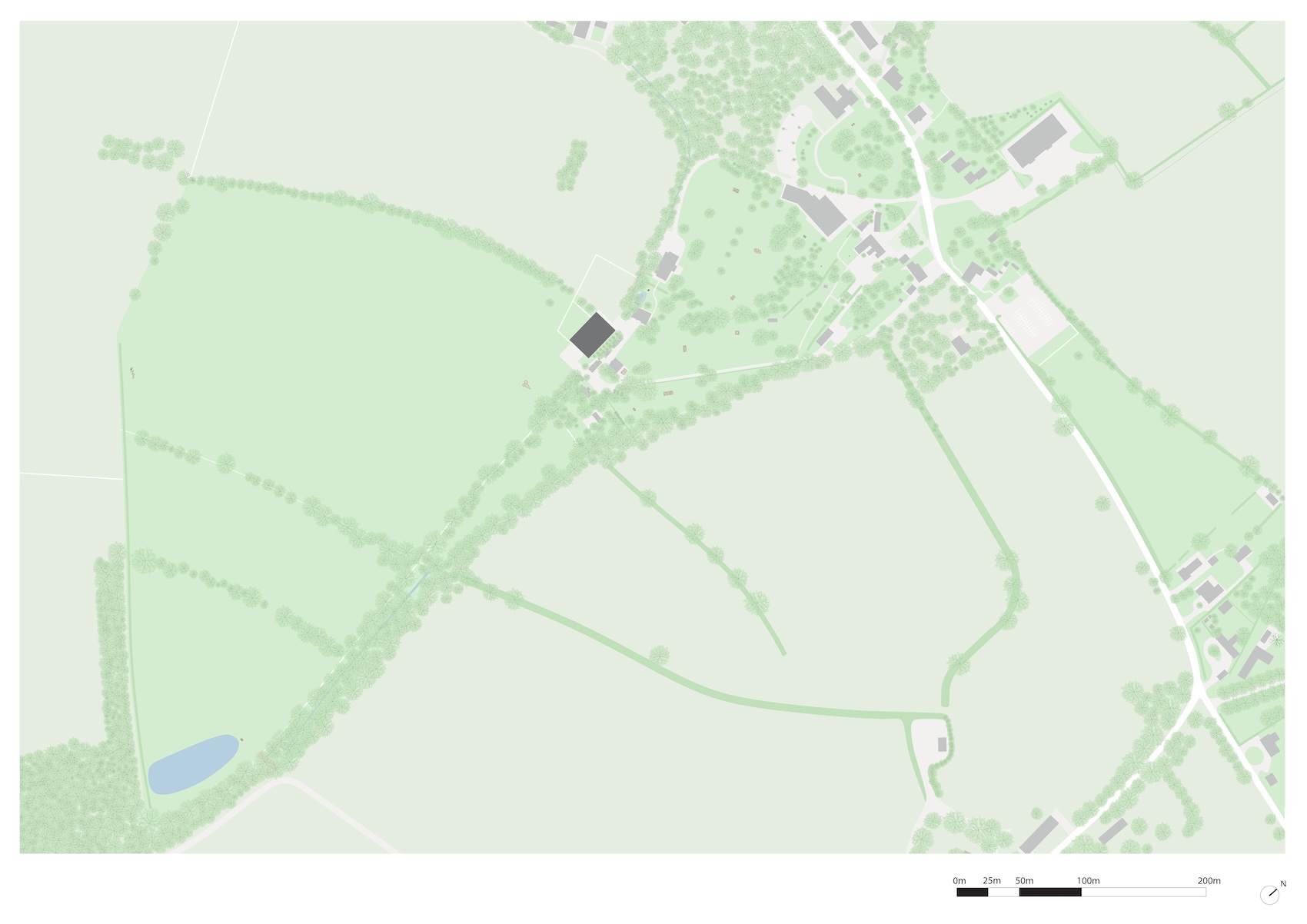
DSDHA’s recently completed reworking of Sheep Field Barn marks the latest intervention on the estate dedicated to the life and work of Moore. Approaching via the main route from the road, the barn lies well beyond the gardens’ main entrance and is almost entirely obscured by the existing structures and the site’s topography. The journey towards it, however, is a picturesque one, framed by fragrant hedgerows, lush green fields, and sculptures dispersed throughout the landscape.
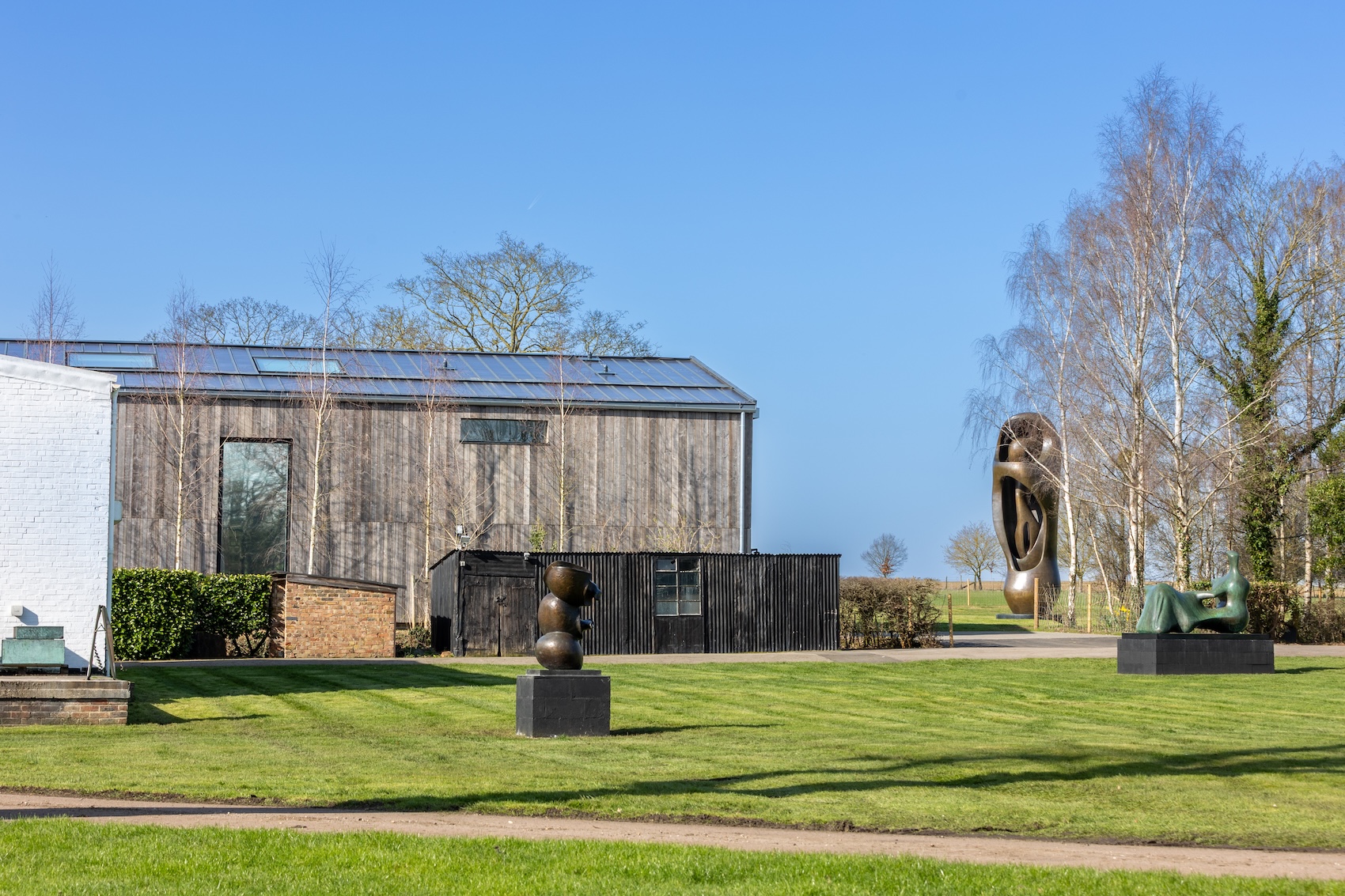
The building receded, allowing for a personal and collective connection to landscape, sculpture and sky.
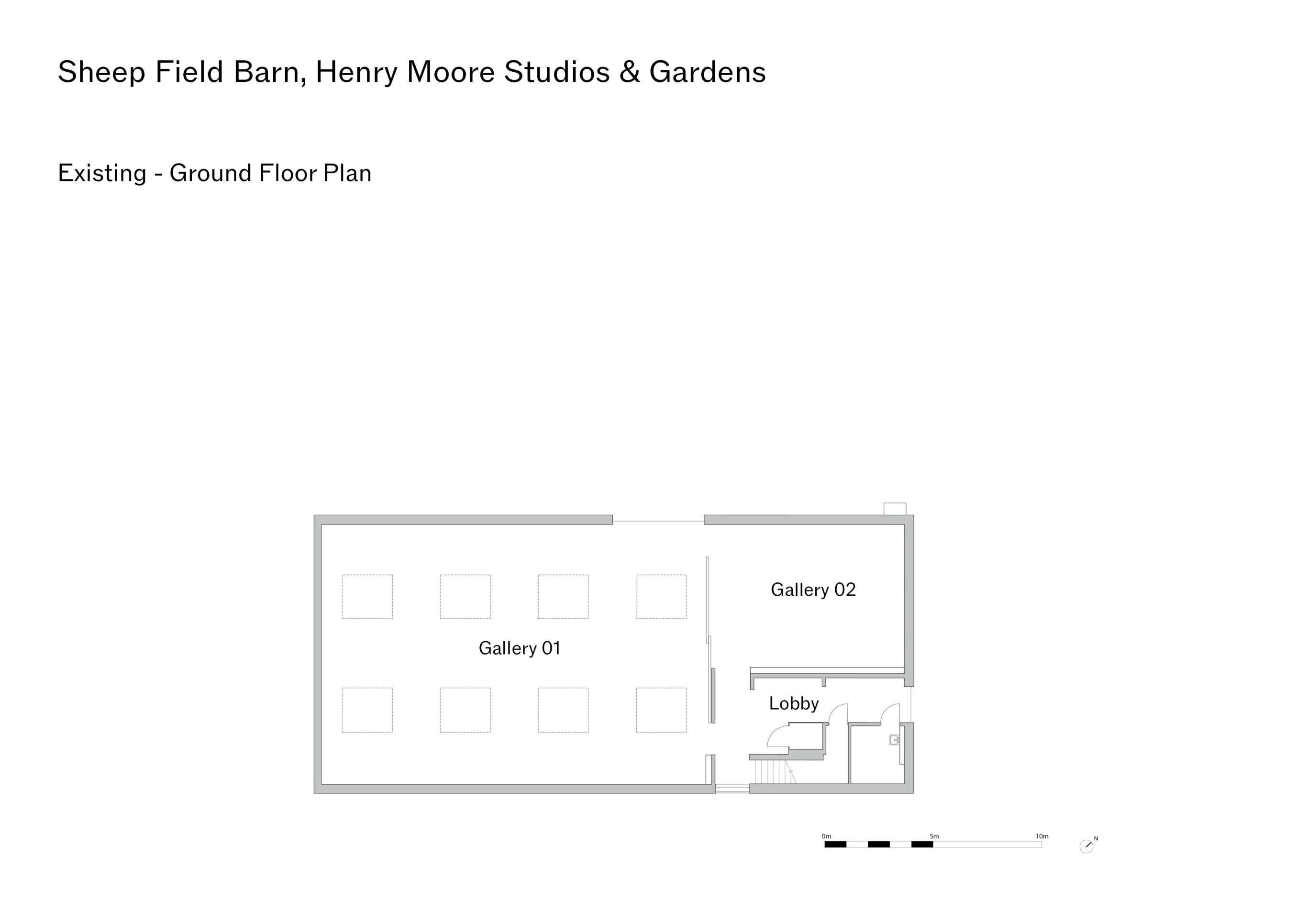
Sheep Field Barn was originally a working agricultural building, constructed in the 1970s. It was used by Moore to store work materials until 1999, when it was adapted into an art gallery by Hawkins\Brown. The Foundation commissioned DSDHA in 2022, following an invited competition, to create new learning and engagement facilities, and deliver improvements to its gallery spaces and building services.
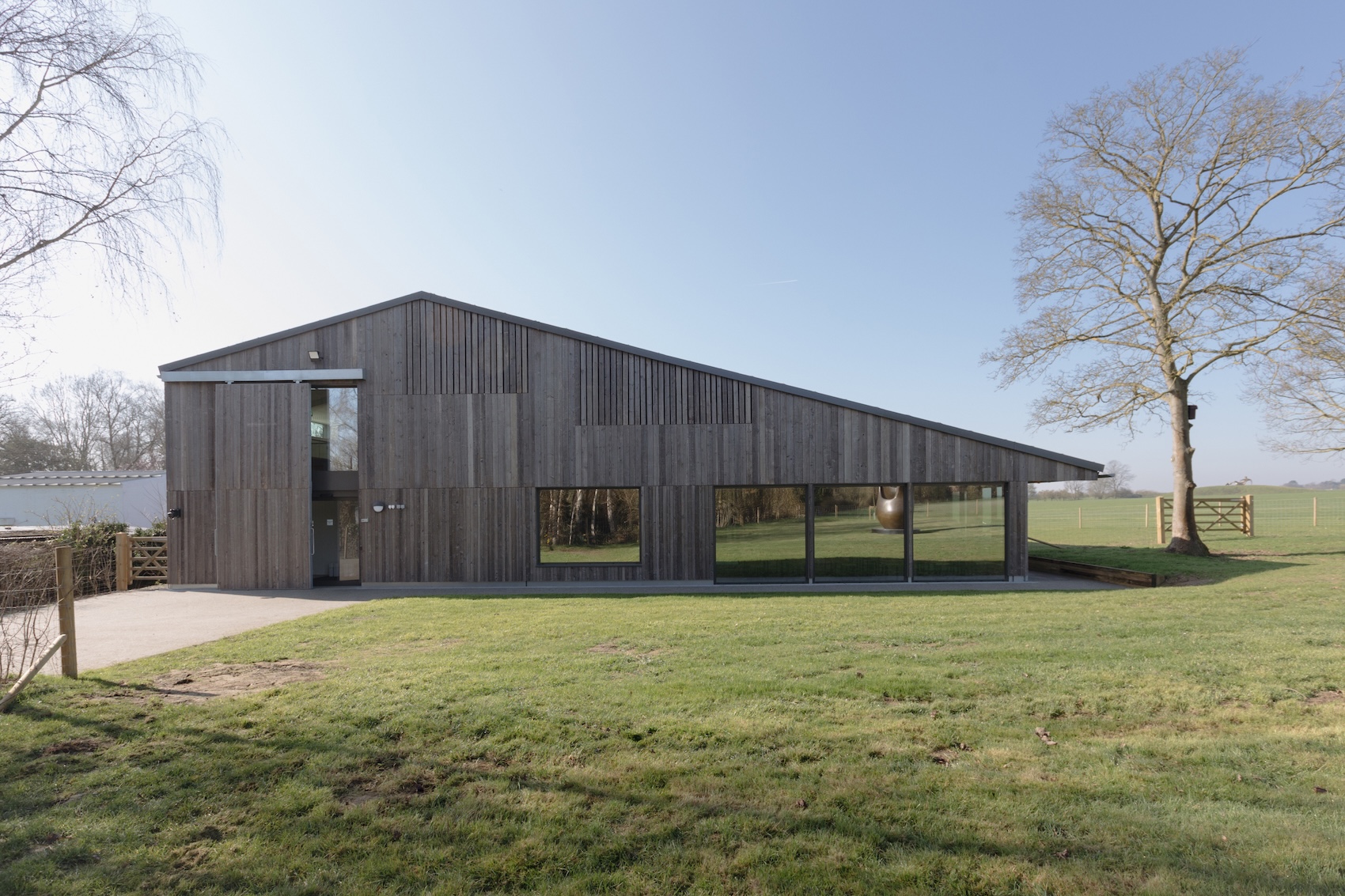
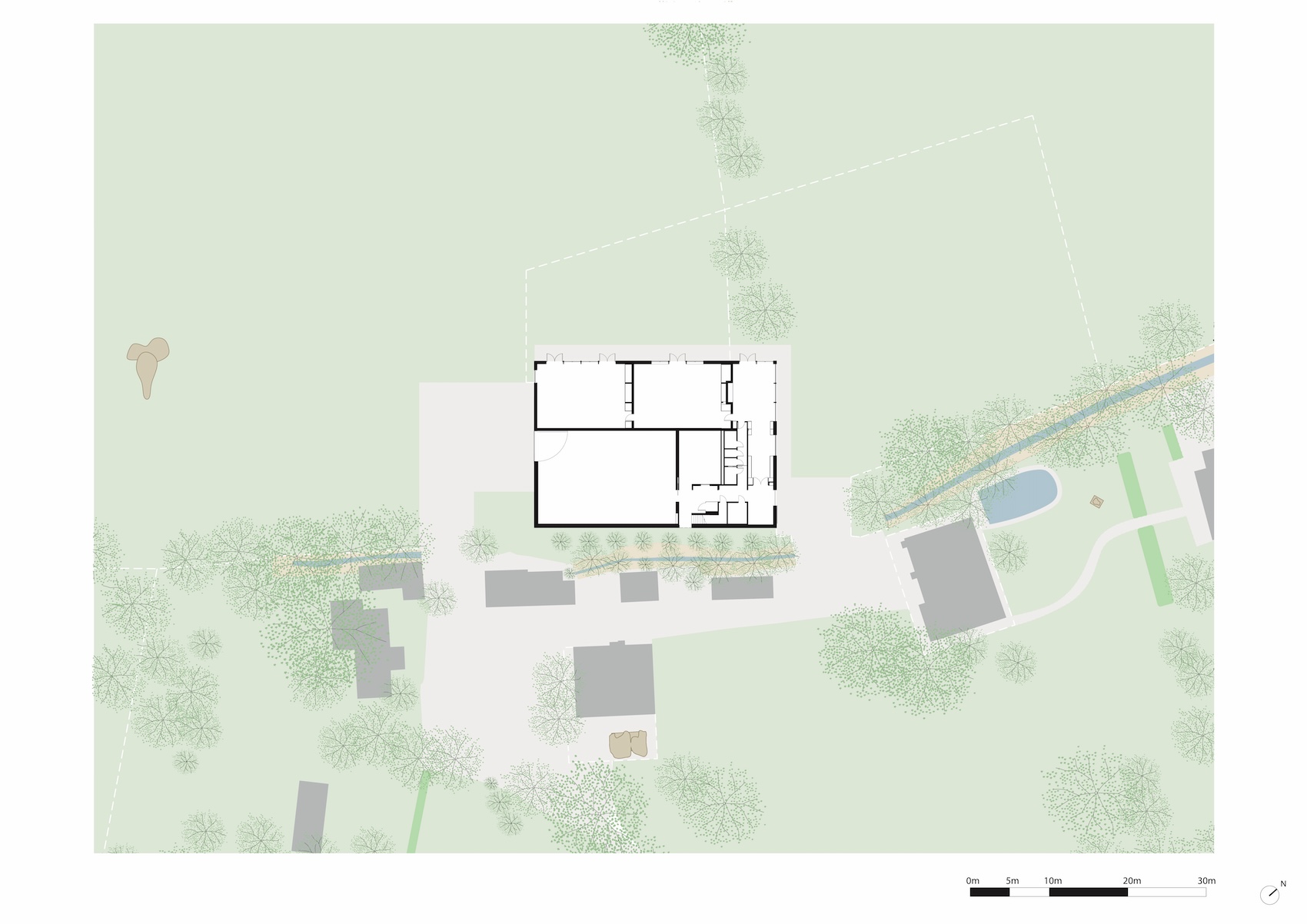
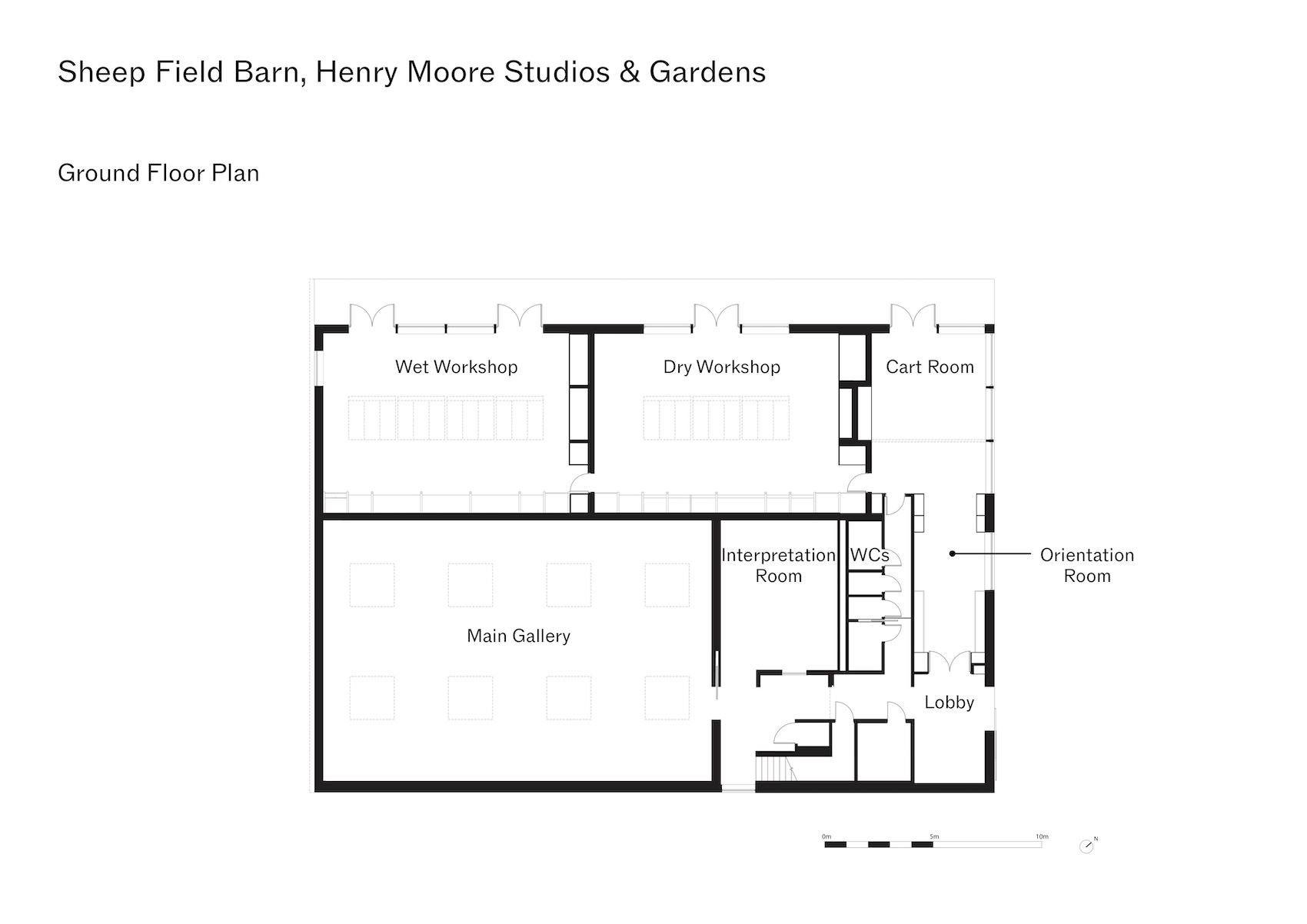
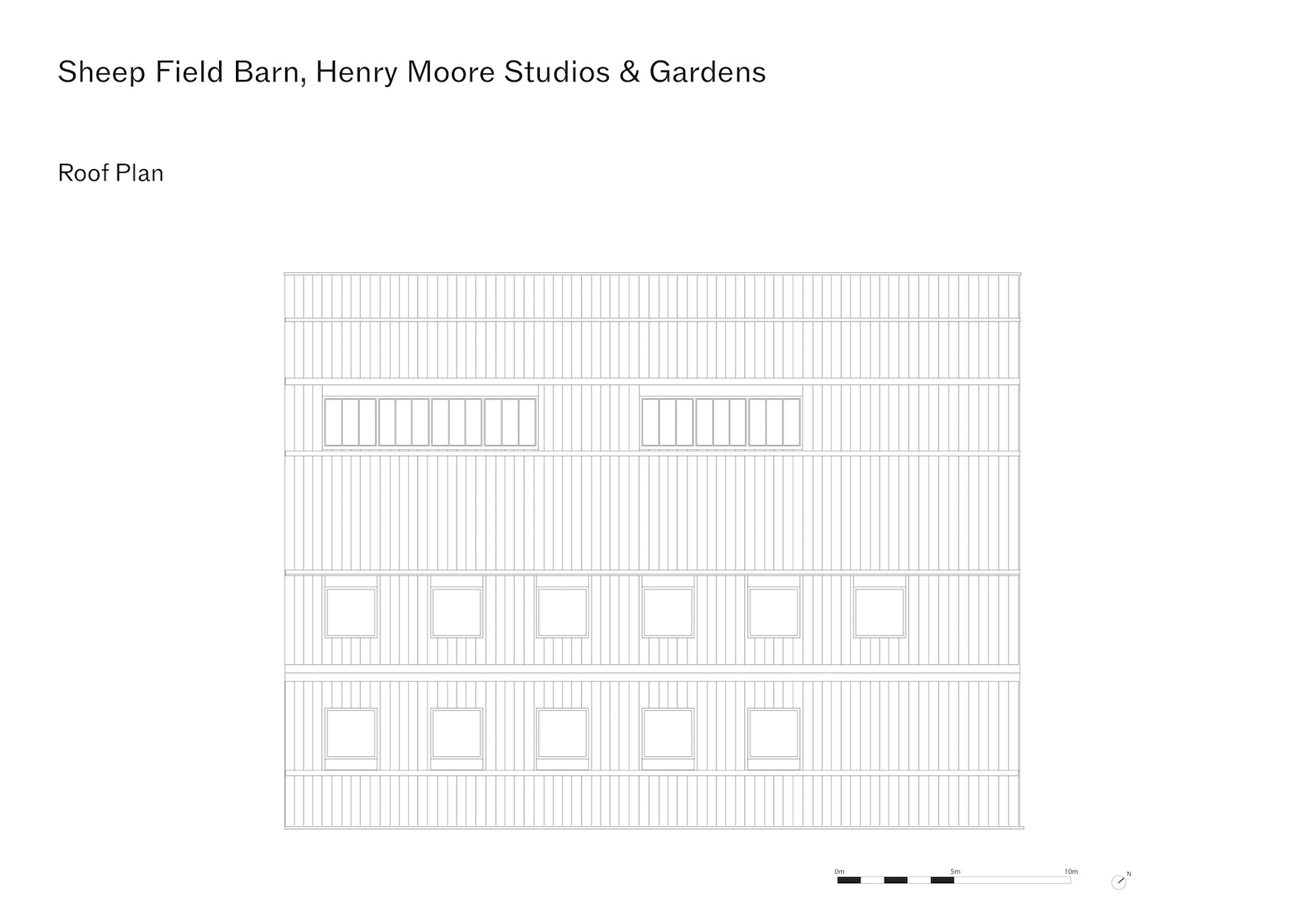
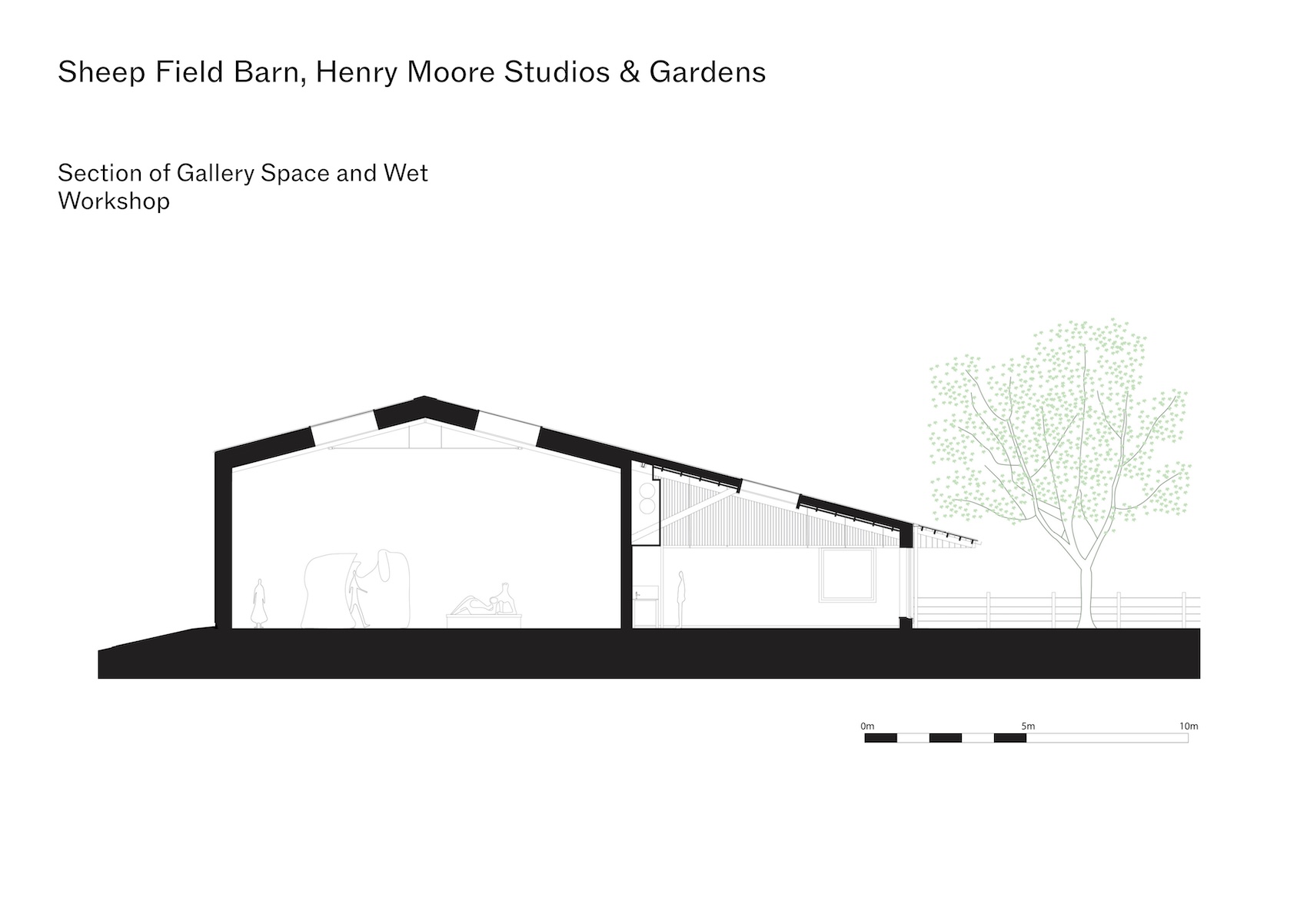
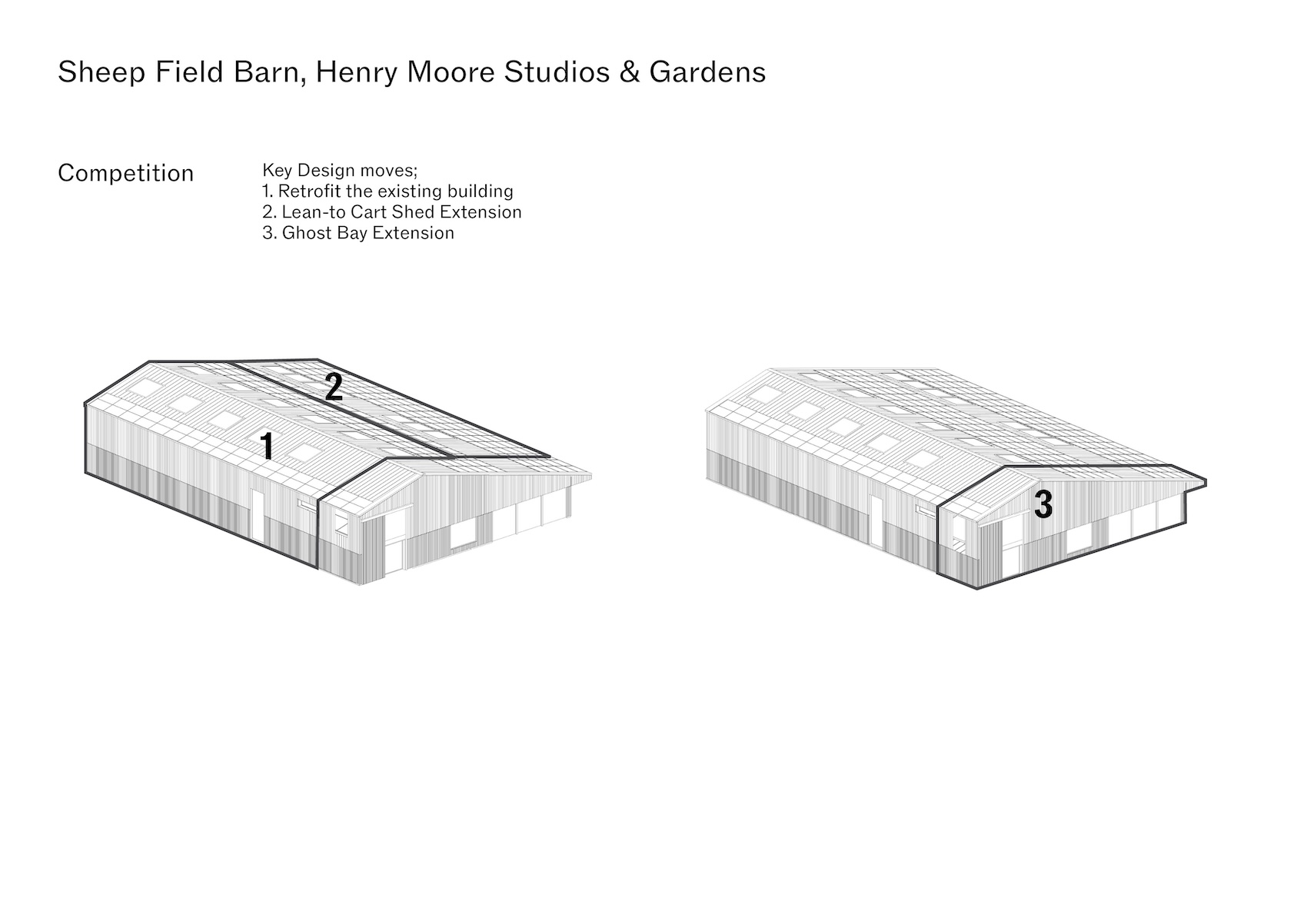
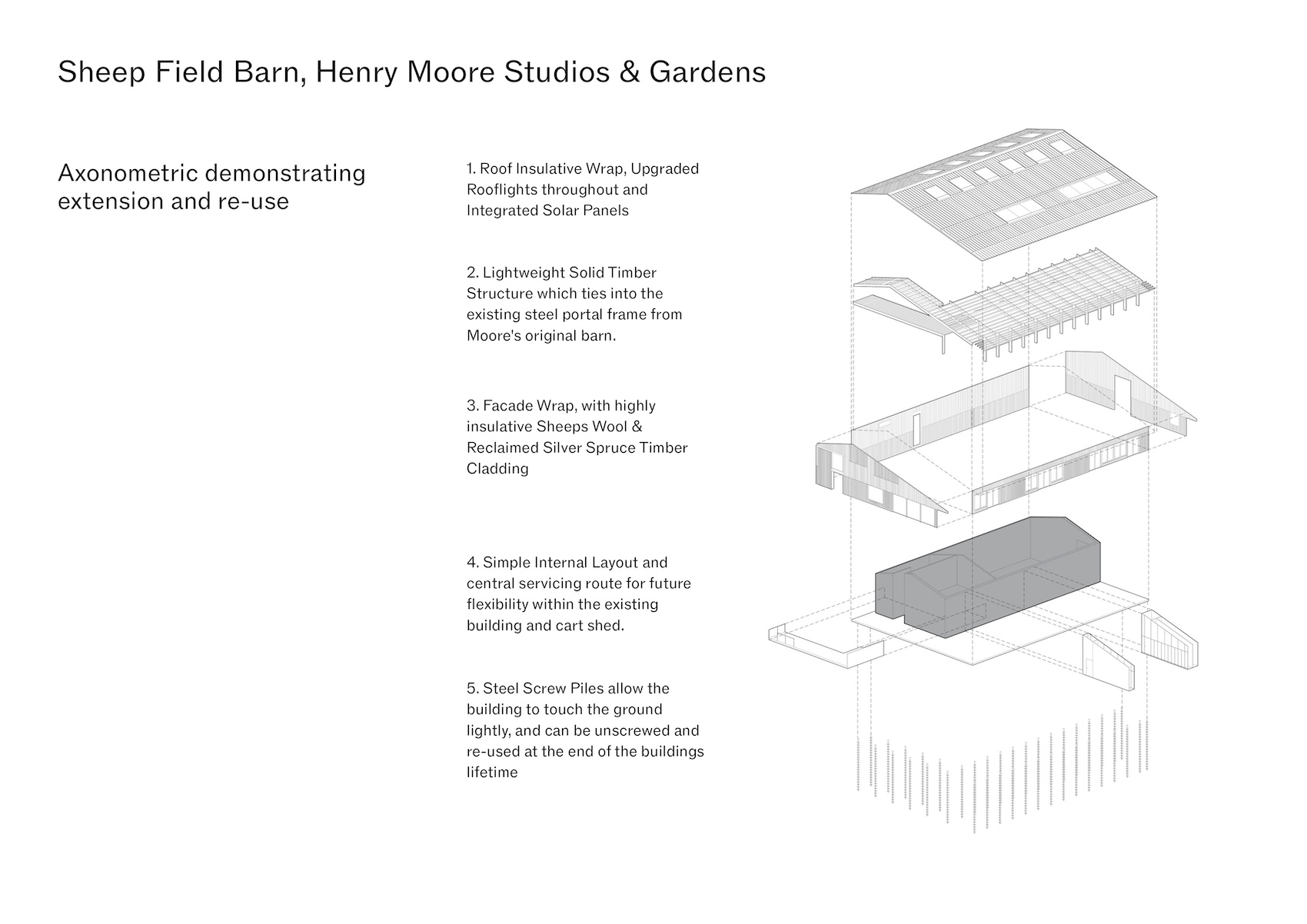
DSDHA’s designs add a timber-framed lean-to cart shed tied to the steel portal frame of the existing building. The ‘ghost-bay’ extension to the east forms an enlarged entrance and houses new foyer, circulation and storage spaces. The extension to the west provides two new teaching and making studios – for wet and dry ceramic work – arranged in enfilade and lined internally with repurposed Douglas fir boards from the old building’s façade, retreated with a natural finish. Grey poly-resin flooring and an exposed timber structure complete the muted palette: a material economy and visual restraint that adhere to Moore’s concept of ‘elegant frugality.’
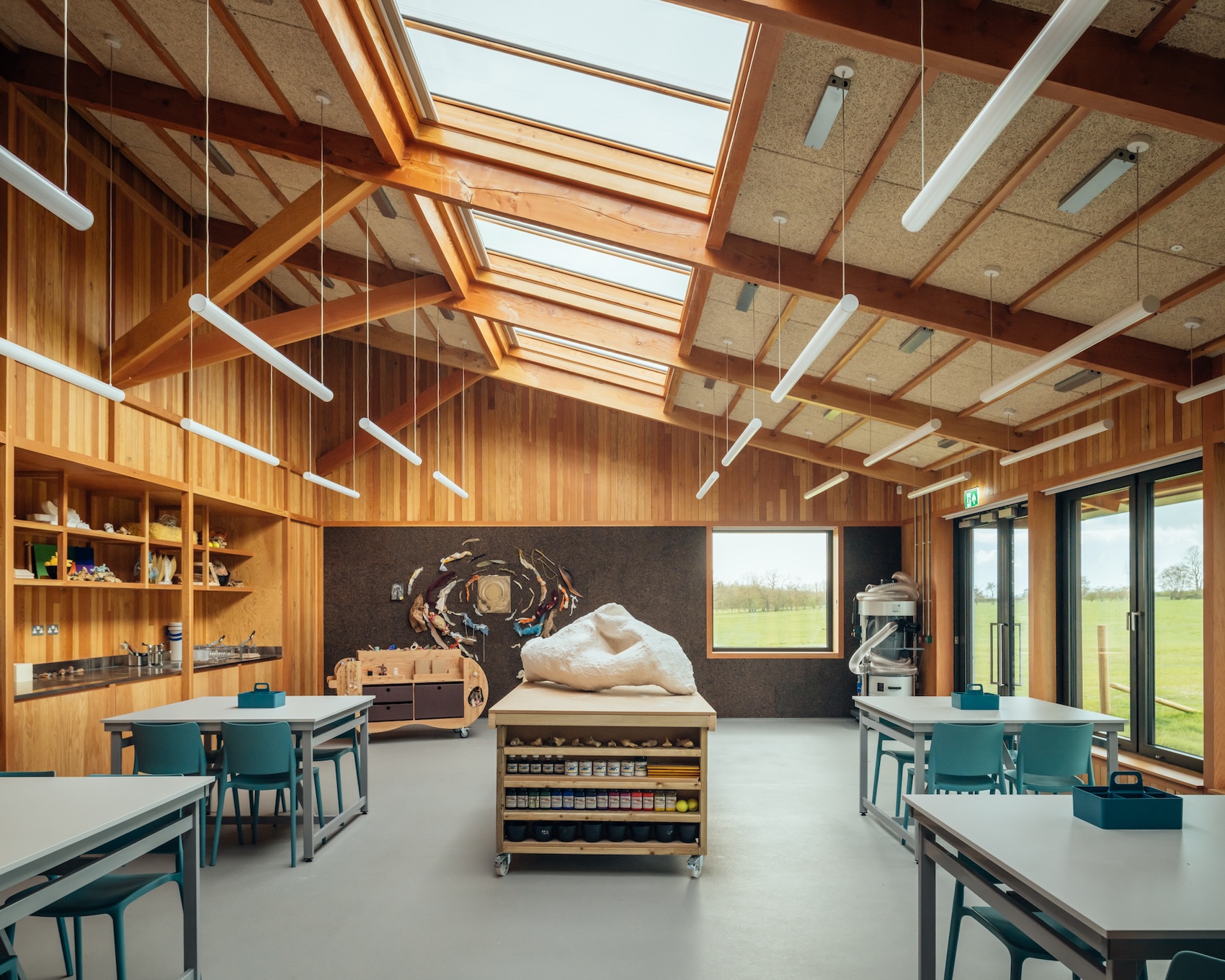
The top-lit ‘dry’ workshop, one of two teaching and making studios housed within the new cart shed extension.
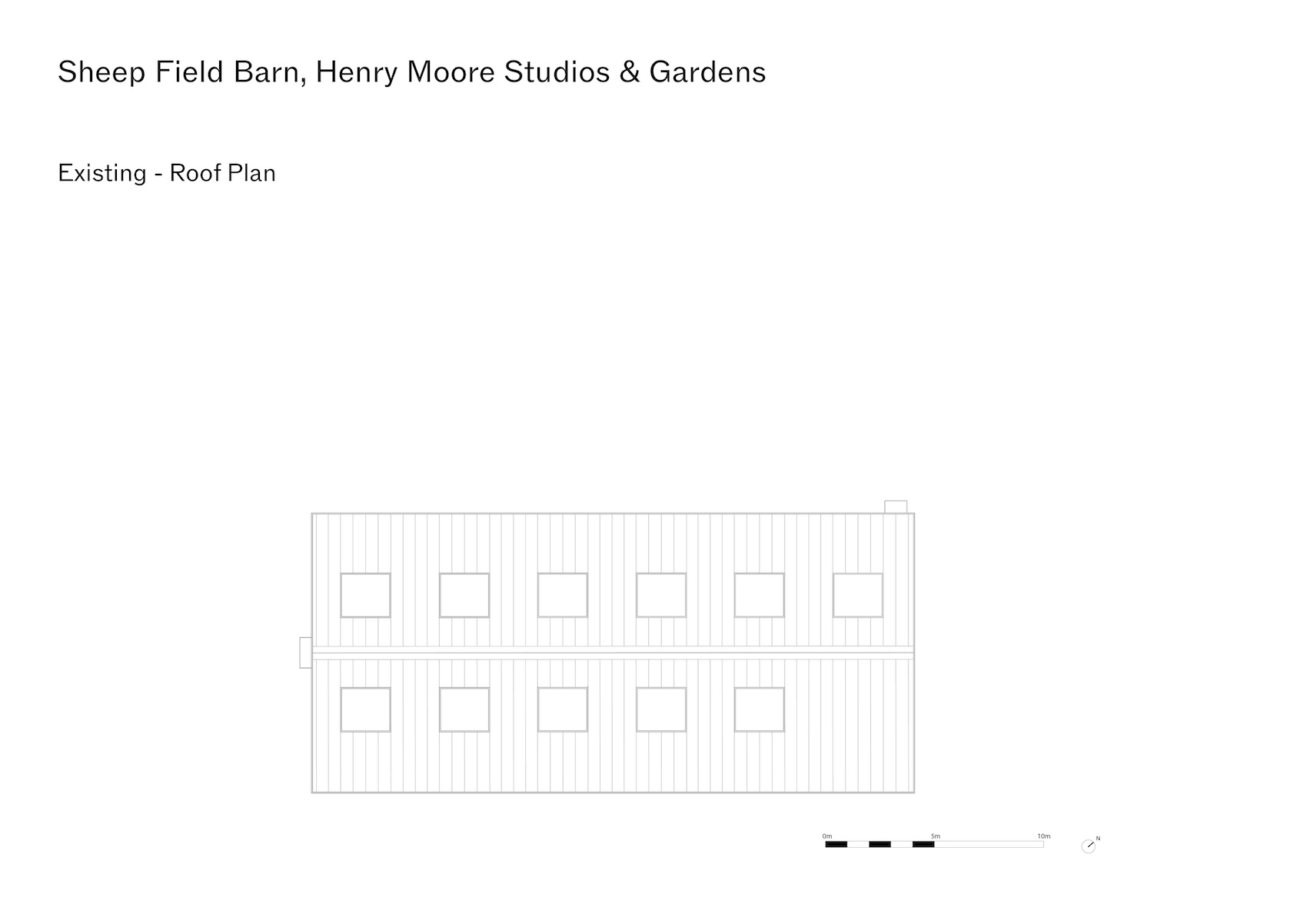
This ethos is evident throughout. The sheep’s wool insulation within the building envelope provides an environmentally-friendly solution for thermal efficiency, as well as a nod to the pastoral setting of the scheme. Reused steel serves as lintels for new openings within the existing walls, while the extension’s structure sits lightly on the ground atop reusable steel screw-pile foundations. The entire extension is clad externally in reclaimed silver spruce timber boards, the subtly irregular pattern of which bears the imprint of their reuse and adaptation.
Rigorous material reuse is combined with operational improvements, including integrated ground source heat pumps and efficient airconditioning systems. Photovoltaic panels populate the extension roof, sitting alongside openable rooflights that facilitate natural ventilation to the new spaces. DSDHA’s designs have halved the studio’s running costs while doubling its previous footprint. The project also boasts impressive sustainability credentials, achieving less than half of the LETI embodied and operational carbon emission targets for schools. All of this sits squarely in line with the environmental values embedded in Moore’s life and work, as well as the Foundation’s own green initiatives.
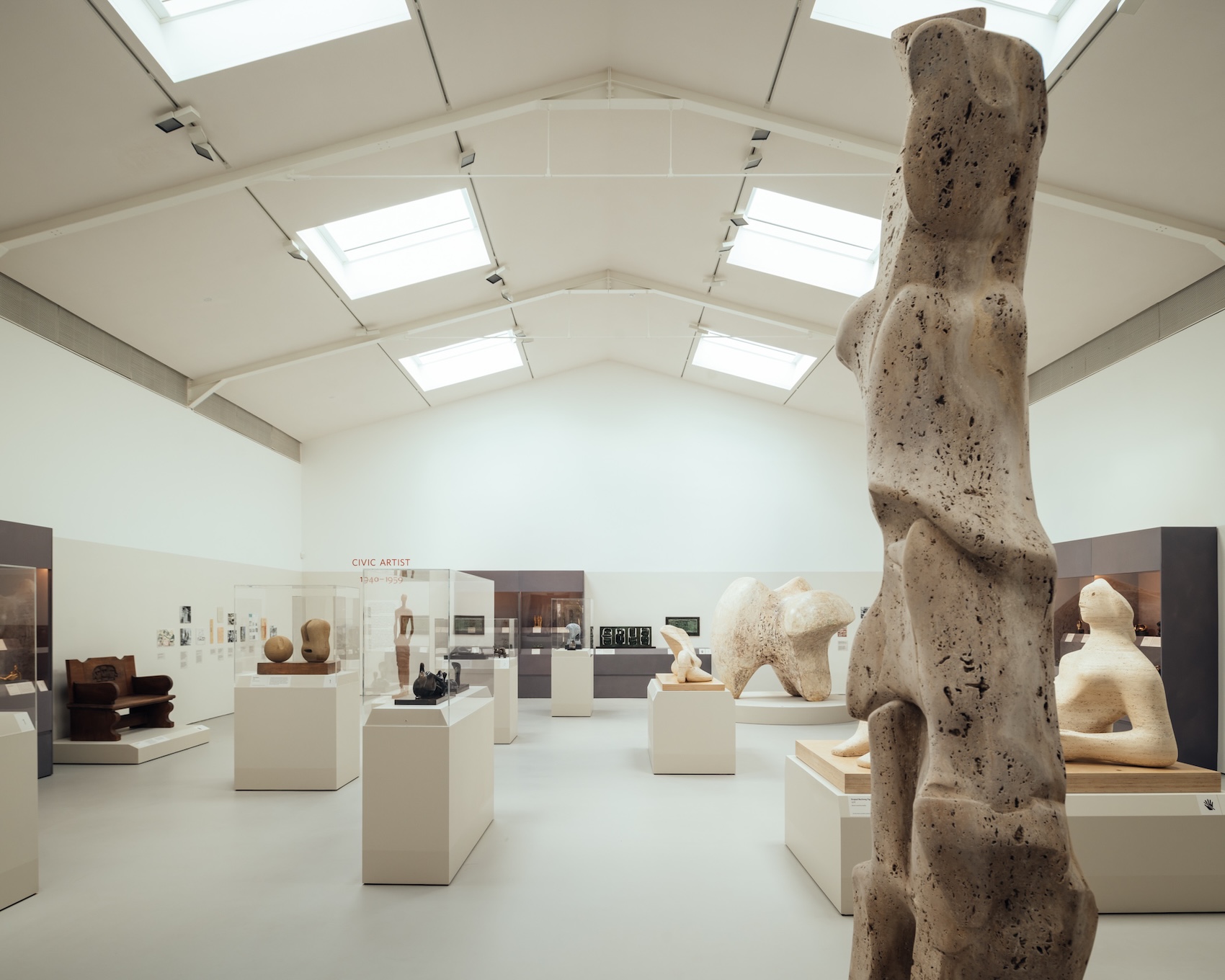
The reworked ground-floor gallery hosts the site’s first permanent exhibition dedicated to the life and work of Henry Moore.
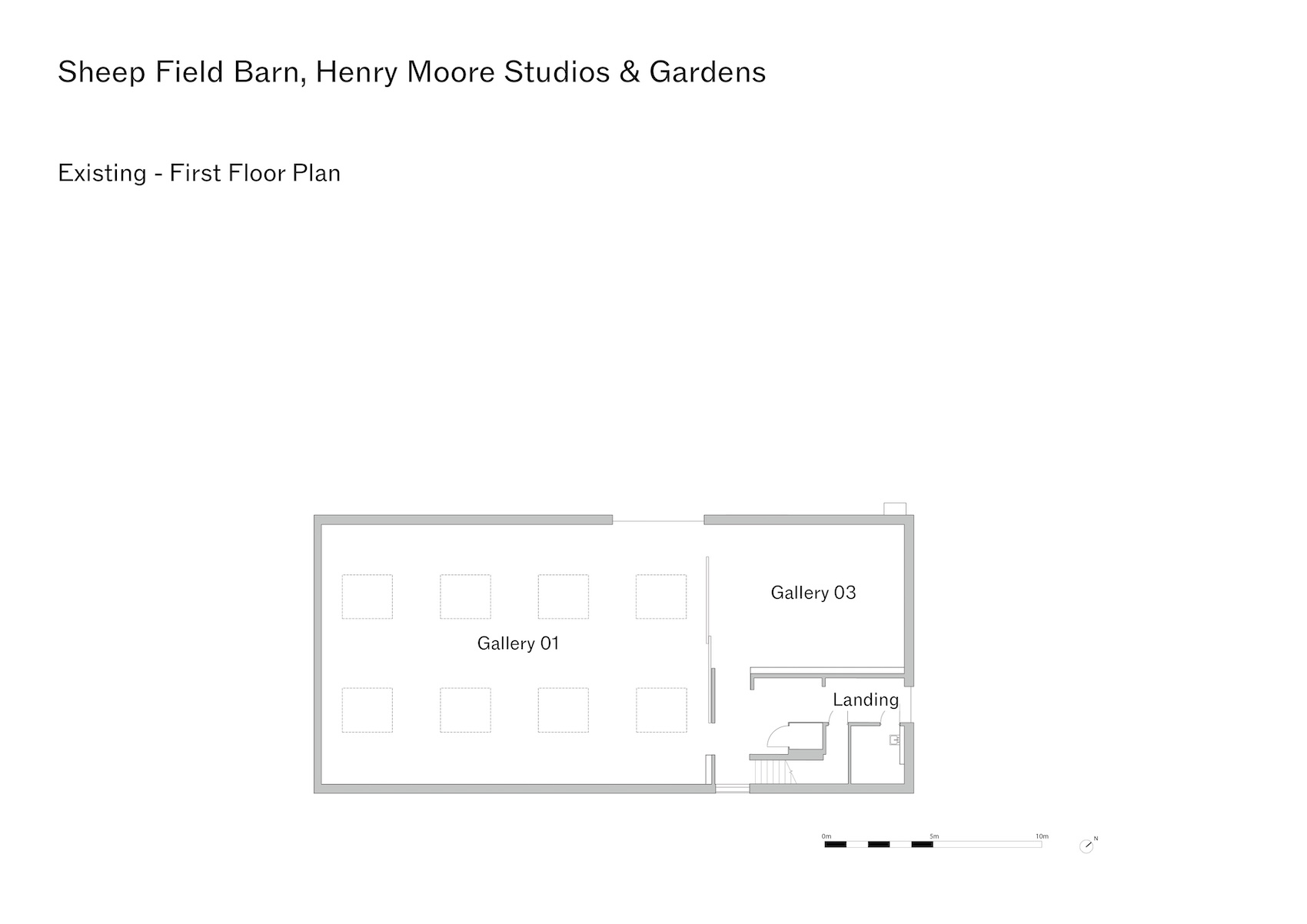
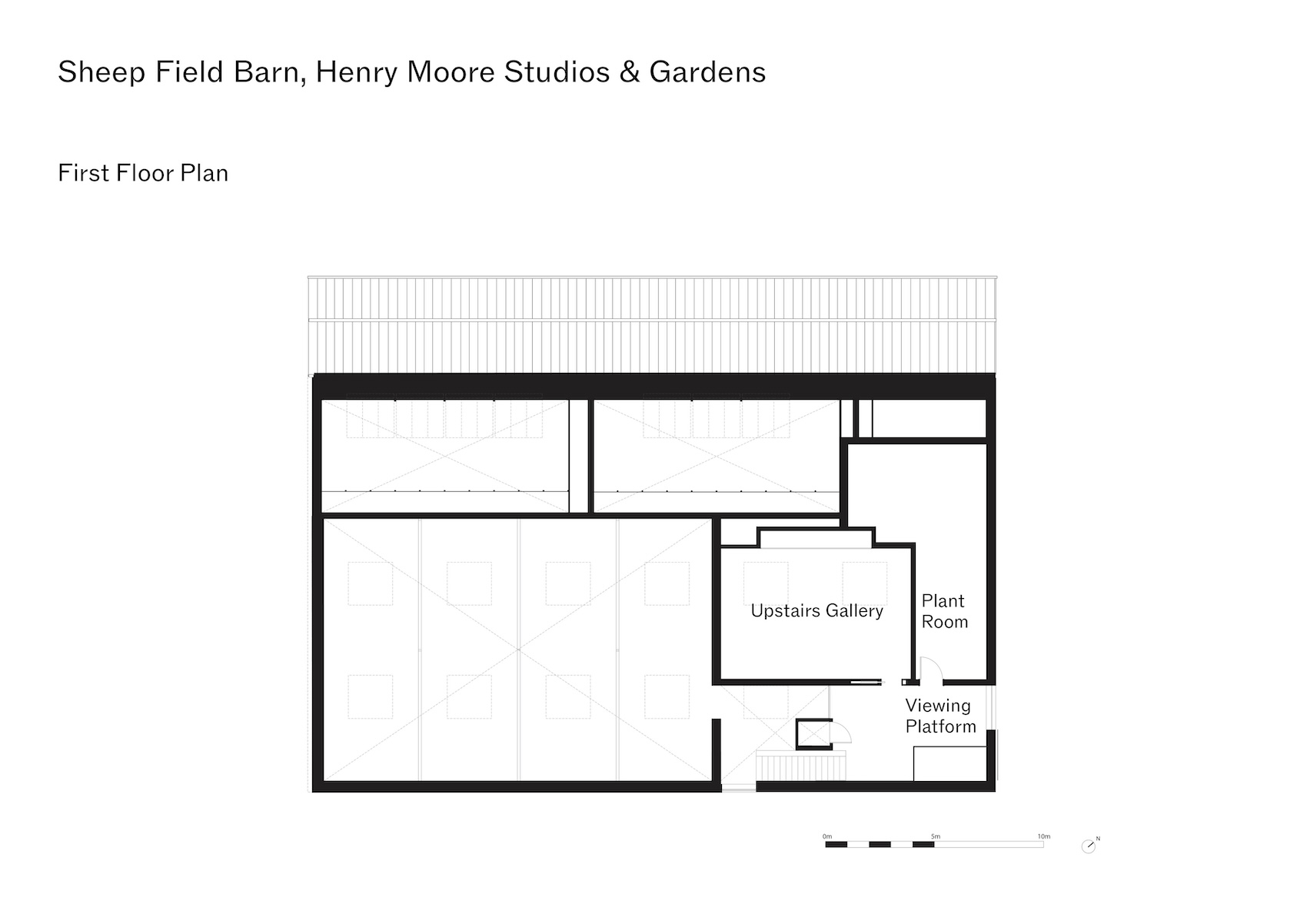
The improved main gallery space now contains a permanent display dedicated to Moore’s life and a selection of his notable sculptural works, the first of its kind at the Studio & Gardens. The refurbished first-floor exhibition space will host a programme of changing shows, opening with a display of Moore’s World War II Shelter Drawings – the collection of striking, evocative work he made depicting Londoners taking shelter in the London Underground during the Blitz. This display, in particular, expresses the versatility as well as the sensitivity and humanity of the artist.
Moore first trained as a teacher before going on to study sculpture. He taught for many years and, coming from a humble background – he was the son of a coal miner – he had a lifelong belief in the transformative power of education. There was always a didactic component both to his own work and to the collected objects in his possession, using them as tools for teaching. He took great pride in his collection of African masks, Aztec and early Mexican sculptures, and drawings and paintings, displaying them in his Hoglands living room and showing them to friends and clients. He believed that sculpture in particular was about “teaching people to use their eyes and so get a lot of enjoyment out of what they see”, and there is so much of Sheep Field Barn that is about seeing.
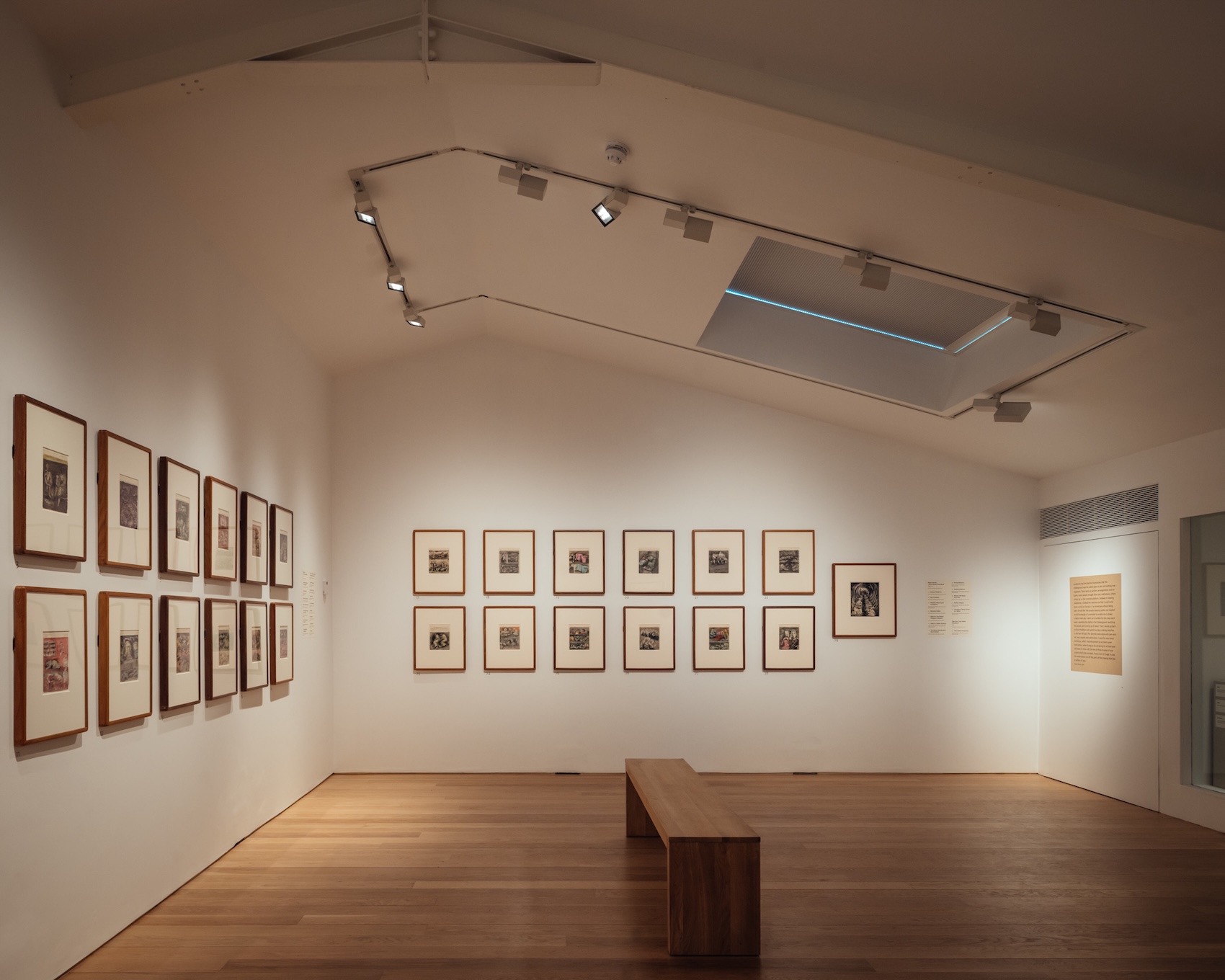
The refurbished upper gallery hosts changing exhibitions, with an inaugural display of Moore’s World War II shelter drawings.
Vistas and visual connections abound throughout the modest building. The visitor entrance, accessed via a double-height sliding barn door, offers views directly to the upgraded main gallery and laterally towards the foyer serving the new learning spaces. Access to the upper floor has been opened up, cut, and carved to create double-height spaces and lightwells, bathing the lower levels in diffuse light. A large picture window fronting a viewing platform offers an oblique view of the Large Upright Internal/External Form sculpture in the fields, selected for the way in which it reflects the wrapped and sheltered design concept of the building. By providing large openings and level access towards the sheep fields, the teaching and making studios – beyond their formalised educational function – encourage this more personalised form of teaching: of seeing.
The sheep themselves were a source of great fascination to Moore, whilst working from the Bourne Maquette studio (adjacent to Sheep Field Barn) in the early 1970s. He became fascinated with the local farmer’s flock – their unique movements and body shapes. He sketched them obsessively, and these studies formed a new and important dimension to his recurring mother-and-child series of sculptures. A notable example is the Sheep Piece, a large bronze sculpture which can be seen from the barn. The affecting view towards the fields from the Bourne Maquette studio, which so inspired Moore, remains uninterrupted by the extension. At the right time you can see sheep grazing around and sheltering beneath the Large Reclining Figure on the horizon from the teaching studios.
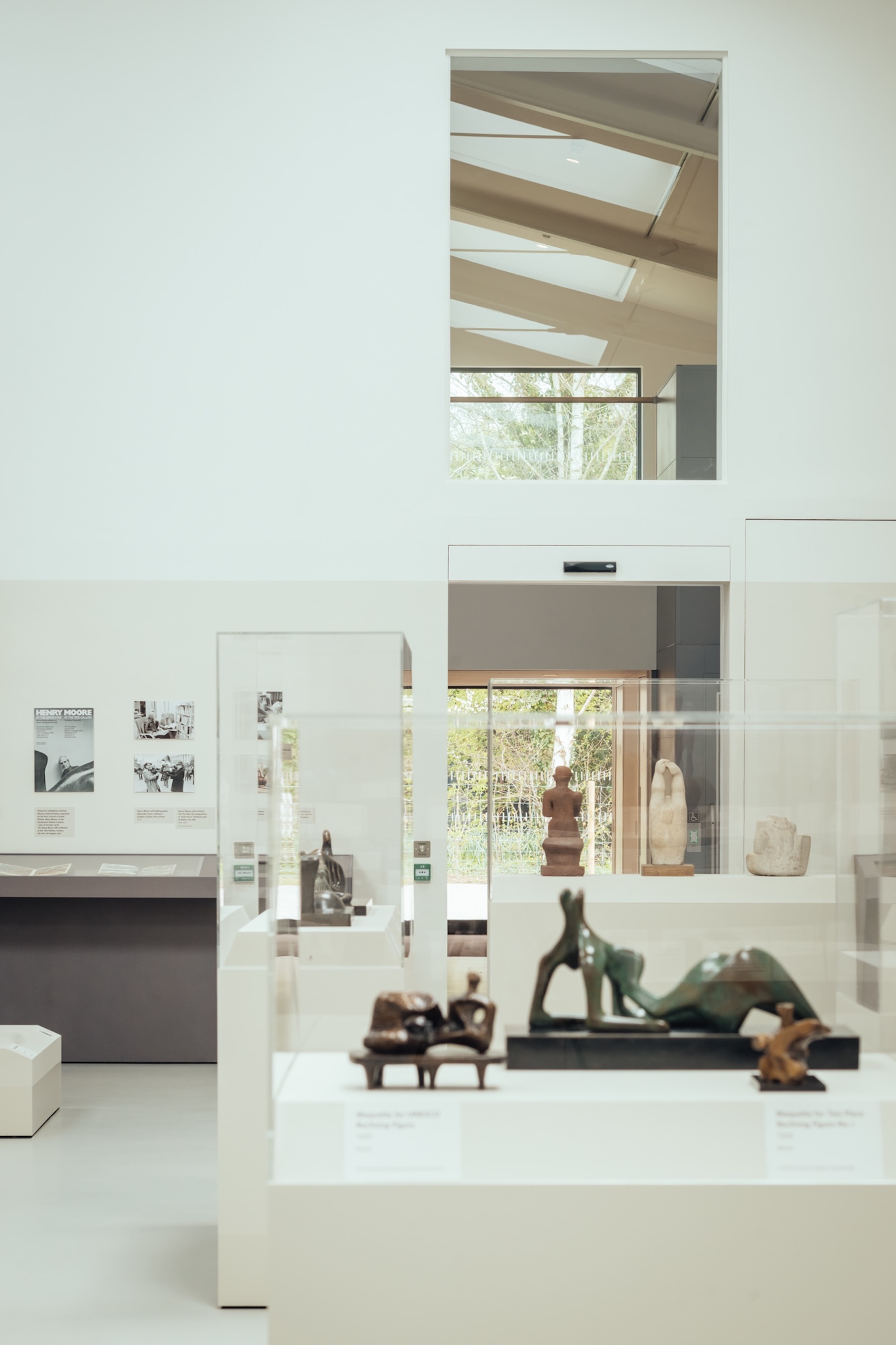
View from the main gallery towards the double-height entrance space.
Moore passed away almost 40 years ago, however his influence and enduring legacy remain deeply embedded within both the terrain of Perry Green and the broader language of modern sculpture. He once asserted, “I prefer my sculpture to be seen with trees, and the sky, and water, rather than architecture.” It is here that Sheep Field Barn succeeds most convincingly. The architecture speaks, but it does so quietly: a considered, laconic intervention within the historic landscape surrounding the home and studios of the artist. The project delivers robust, functional, and even sensuous spaces (the scent of the newly refinished timber walls is a delight), yet, when necessary, the building recedes, allowing for personal and collective connection to landscape, sculpture, and sky.
Walking the studios and grounds today, the estate still hums with life. Visitors of all ages continue to travel daily to this remote Hertfordshire hamlet to immerse themselves in the same environment in which Moore spent decades living and working. With the scale of his ouvre, and the strength of the Foundation’s stewardship, and the exhibition and educational programmes housed within Sheep Field Barn, it is easy to imagine further refurbishments and even new structures emerging across the Perry Green site in years to come. They would do well to learn from Sheep Field Barn.
Drawings
Credits
Client
Henry Moore Foundation
Architect
DSDHA
Structural engineer
Webb Yates
Mechanical engineer
Harley Haddow
QS
Stockdale
Main contractor
Roofe
Approved Building Inspector
Socotec
Fire consultant
BWC
Ecologist and arboroculturalist
TMA
Acoustic consultant
Sandy Brown