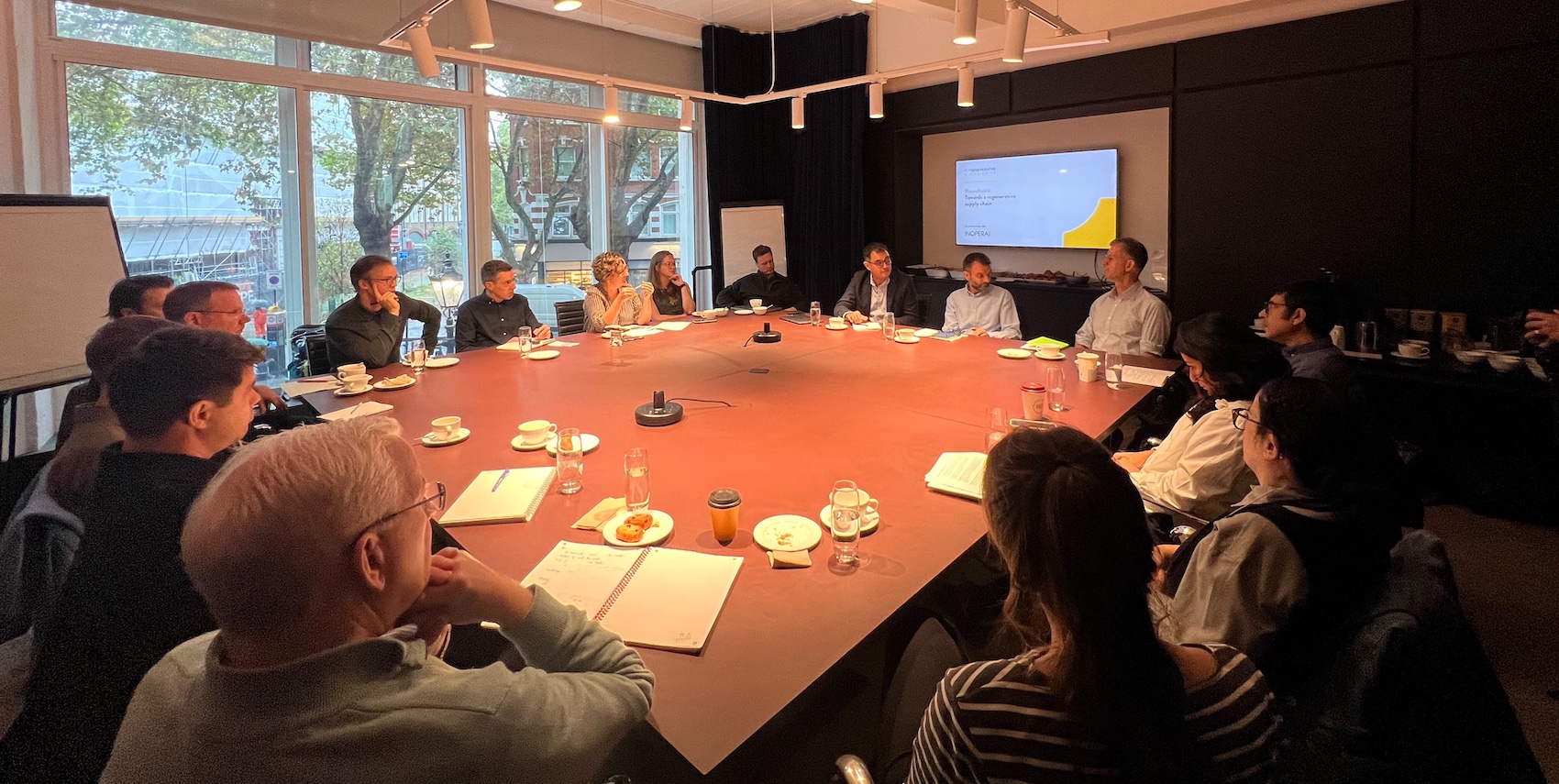
AccuRoof Trading Director Robert Edwards, in conversation with AT Technical Editor John Ramshaw, discusses how to design solar PV roofs that deliver robust waterproofing, coordinated compliance and lasting value.
In association with
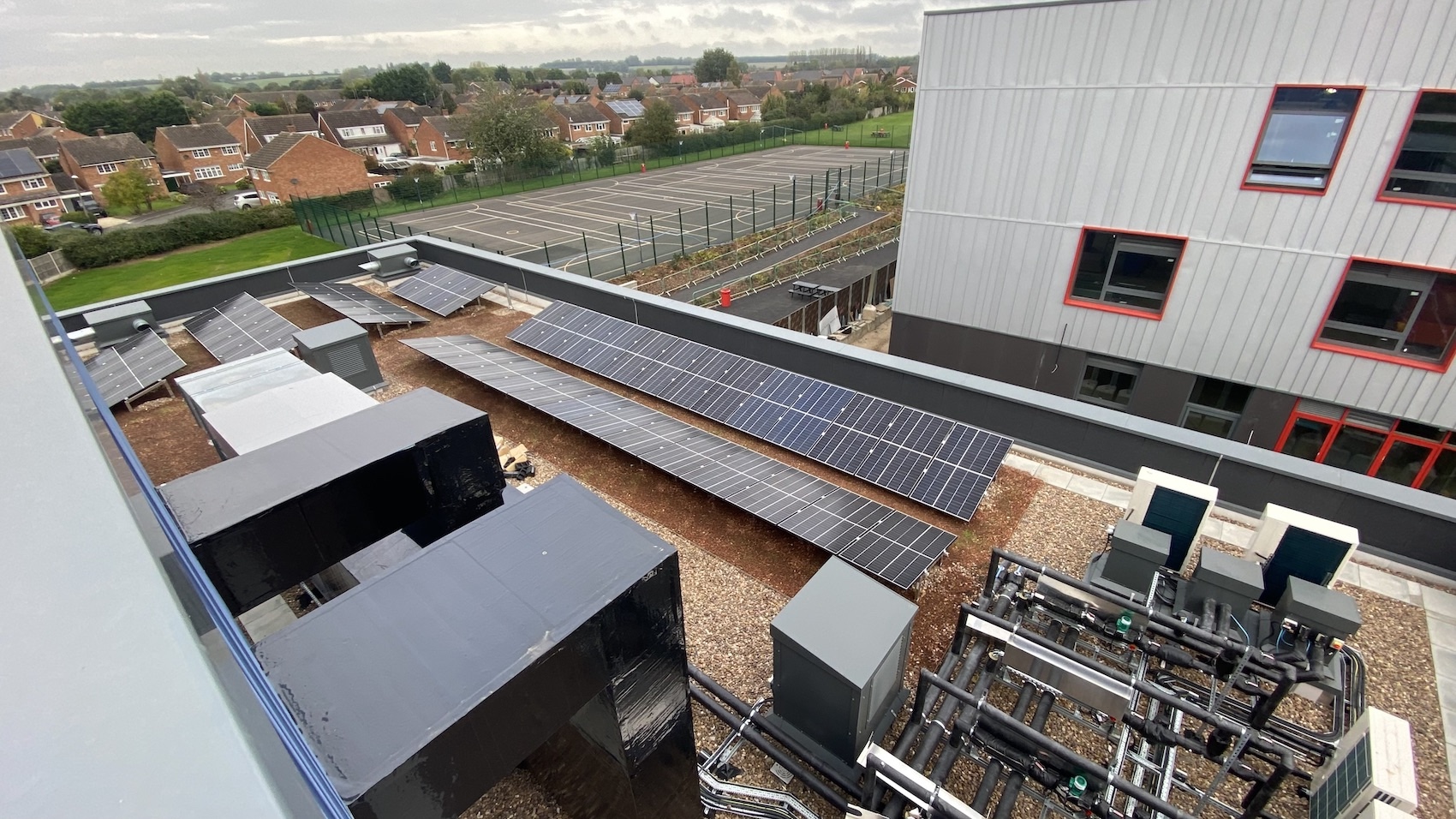
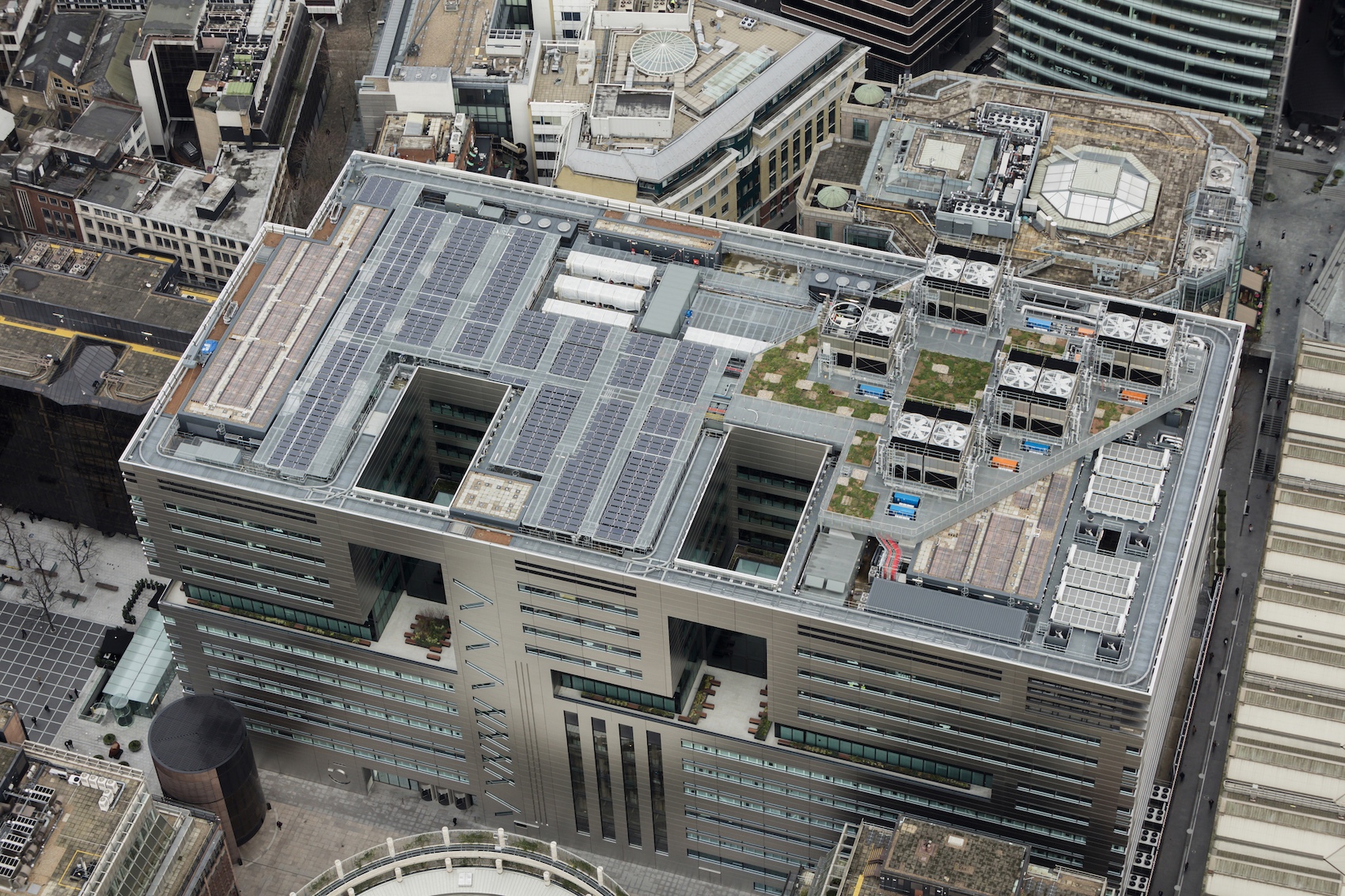
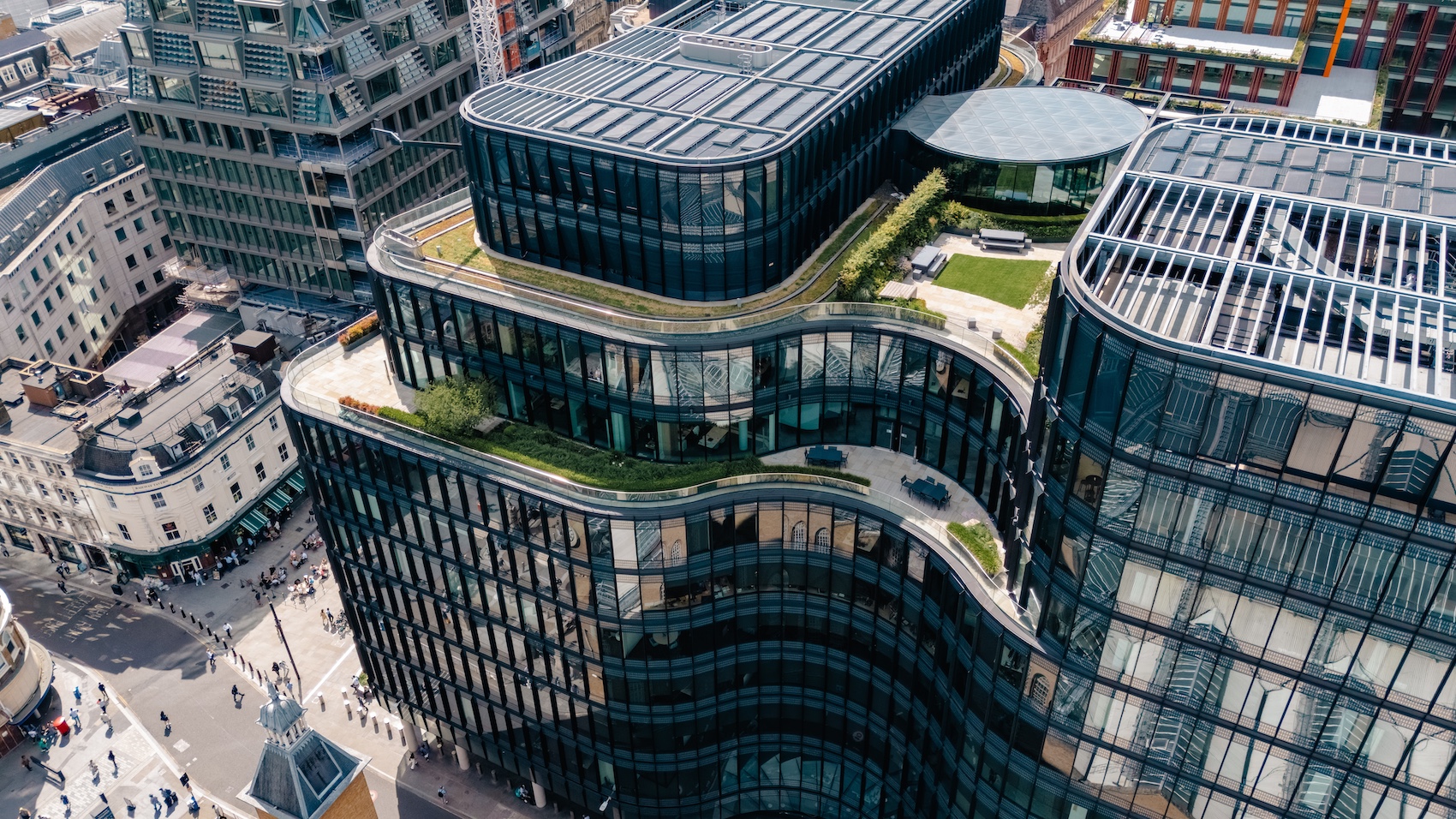
Photo: courtesy of Eco Green Roofs.
Rooftop solar is rapidly becoming a defining feature of commercial, industrial, and new-build residential projects. Driven by tighter energy regulations, rising client expectations and the transition towards net zero, photovoltaic (PV) systems are no longer viewed as optional additions, but increasingly as fundamental components of the building envelope. This shift is placing new demands on architects to specify the right technologies and roof build-ups to ensure compliance and long-term building performance. Early coordination between roof design and solar integration is equally important, helping to reduce risk, preserve warranty cover and deliver more robust, integrated solutions.
So what types of solar PV systems are available, and where is each best suited? How should architects coordinate roof structure, waterproofing and PV mounting systems? What are the most common specification pitfalls, and why is a system-agnostic approach increasingly important? These questions and more were discussed by AccuRoof Trading Director Robert Edwards, in conversation with Architecture Today’s Technical Editor John Ramshaw.
Why has solar PV become such an important consideration for commercial, industrial, and new-build residential projects?
Solar PV has evolved from being an optional sustainability feature into a fundamental part of building design. Rising energy costs, increasingly stringent carbon reduction targets and client expectations around operational performance mean that generating renewable energy on-site is now a key consideration across most sectors.
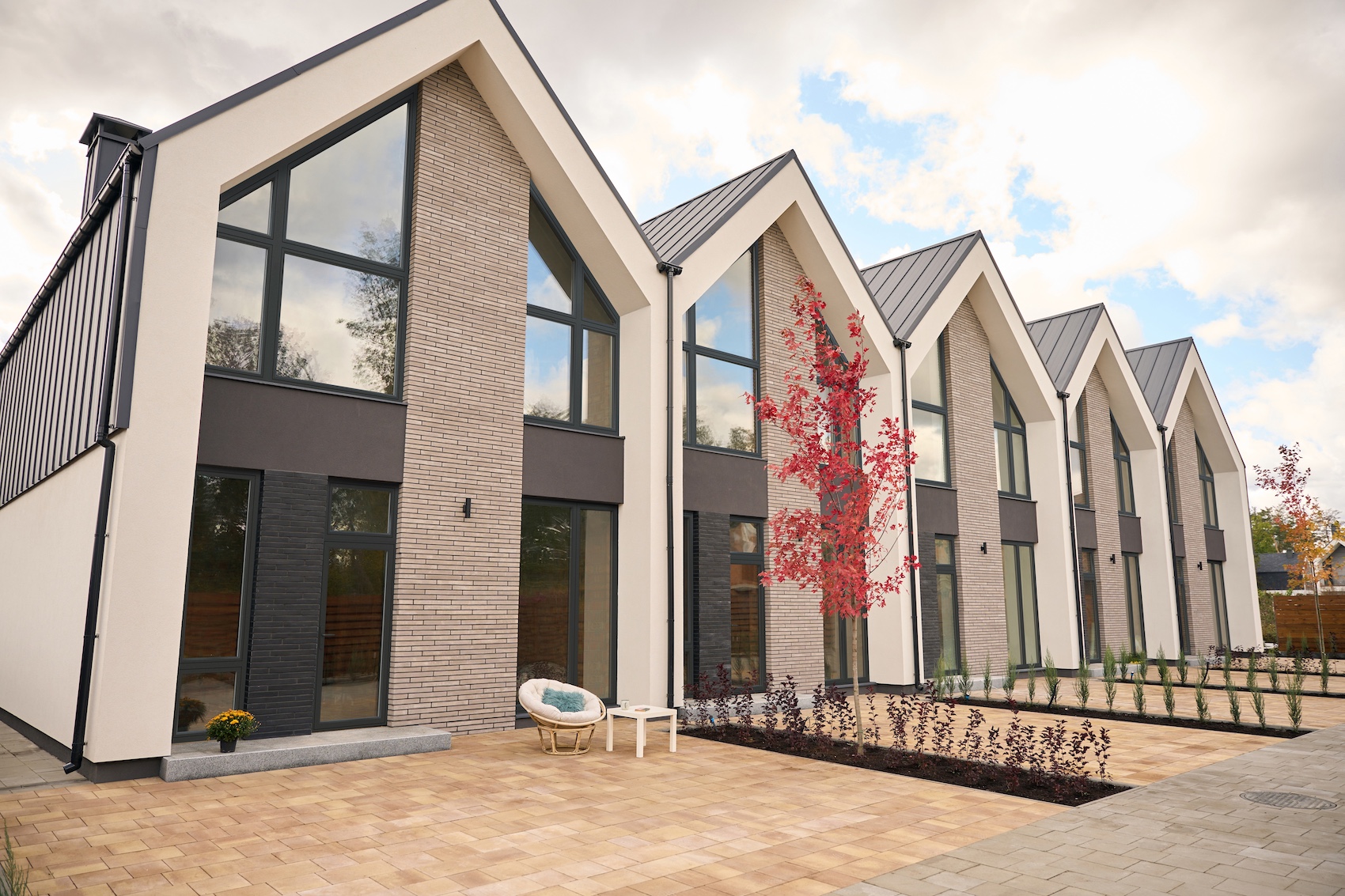
For commercial and industrial buildings, large roof areas present an excellent opportunity to generate significant amounts of electricity, reducing operational costs while improving ESG credentials. In the residential sector, particularly new-build housing, solar PV is increasingly being incorporated to help achieve compliance with Part L of the Building Regulations and to prepare developments for the forthcoming Future Buildings Standard.
Architects are also recognising that roof space has become a valuable asset rather than simply a waterproof covering. Every roofing decision now has implications for energy generation, maintenance, future adaptability and whole-life value. At AccuRoof, we work with architects from the early design stages to ensure that roofing systems are selected not only for their waterproofing performance but also for their long-term suitability for integrated solar PV, helping clients maximise both building performance and investment.
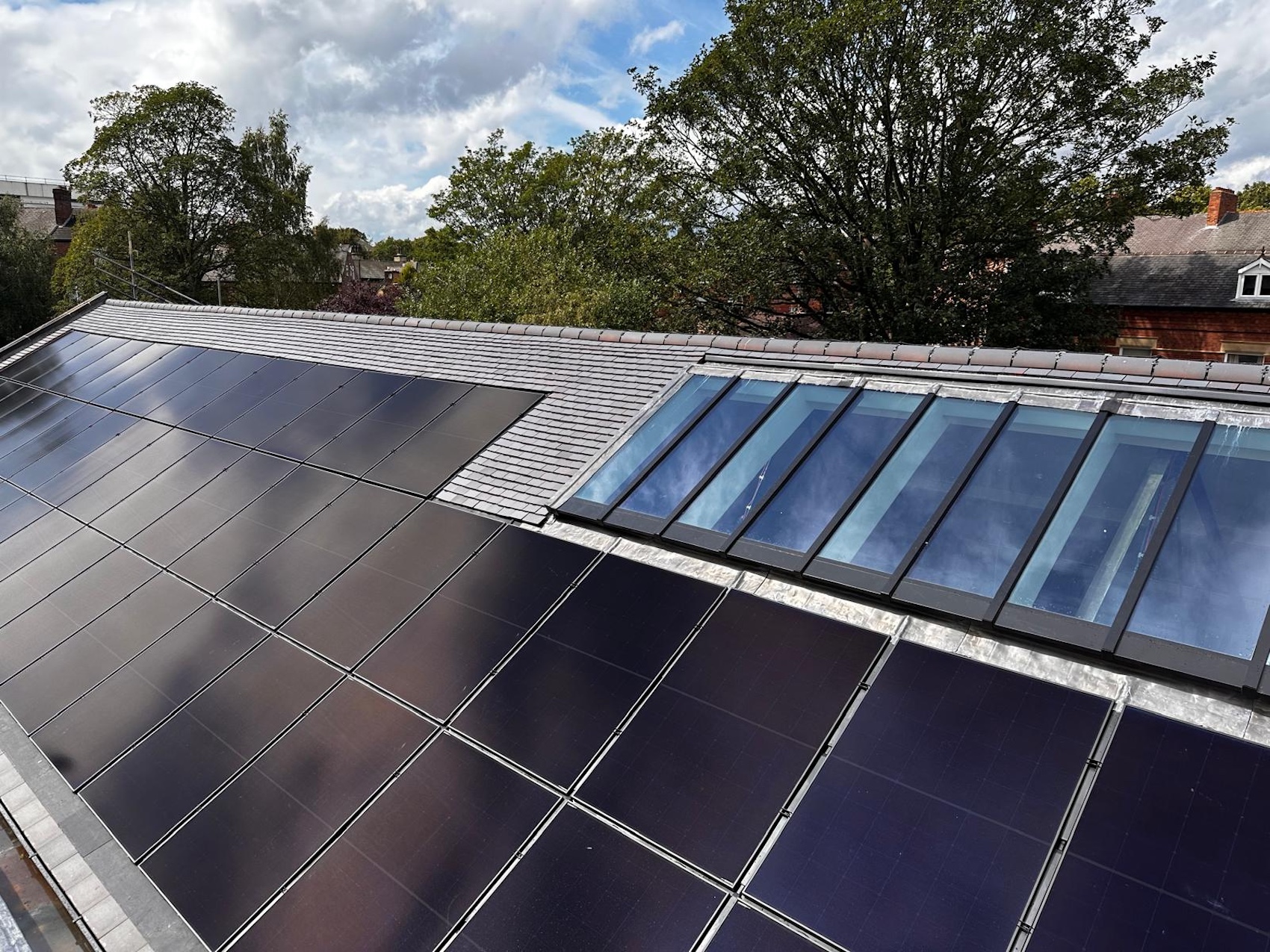
A 30kw GSE in-roof solar PV system at West Yorkshire Police Headquarters in Wakefield (photo: courtesy of SRM Solar).
What are the principal types of solar PV roof systems currently available, and where is each most appropriate?
There are three principal approaches to integrating photovoltaic (PV) systems into buildings. On-roof systems involve mounting PV modules above the finished roof covering using proprietary fixing systems. In-roof systems replace part of the roof covering with PV panels, creating a more integrated architectural appearance. Flat roof systems typically use ballasted or mechanically fixed mounting frames positioned at an optimum angle to maximise solar performance.
On-roof systems generally offer the greatest flexibility and are widely used on both commercial and pitched residential roofs. In-roof systems can deliver a streamlined aesthetic and may reduce the need for separate roof coverings over the PV area, making them attractive for high-quality residential projects. Flat roofs require careful consideration of wind loading, roof structure, waterproofing interfaces and maintenance access. They often provide the greatest generation capacity but also present the greatest coordination challenges.
The most appropriate solution depends on many factors, including structural capacity, roof construction, planning constraints, desired aesthetics, maintenance strategy and budget. AccuRoof’s system-agnostic approach allows us to evaluate all available options and recommend the solution that best suits the project rather than promoting a single manufacturer’s system.
How are changing Building Regulations and the Future Buildings Standard influencing the specification of solar PV roofs?
The regulatory direction of travel is clear: buildings are expected to become significantly more energy efficient while producing more of their own renewable energy. Recent updates to Part L have already increased energy performance requirements, and although the Future Buildings Standard is still being finalised, it is widely anticipated that solar PV will become commonplace on many new developments.
This shift means architects are increasingly considering solar PV at concept stage rather than as a late design addition. Early integration allows roof layouts, plant locations, drainage, access routes and structural design to be optimised around the PV installation. Future-proofing is equally important. Even where PV is not installed immediately, designing roofs capable of accommodating future systems can avoid costly alterations later. AccuRoof regularly assists design teams in reviewing roof build-ups and detailing to ensure projects remain adaptable to evolving regulatory requirements while protecting long-term roof performance.
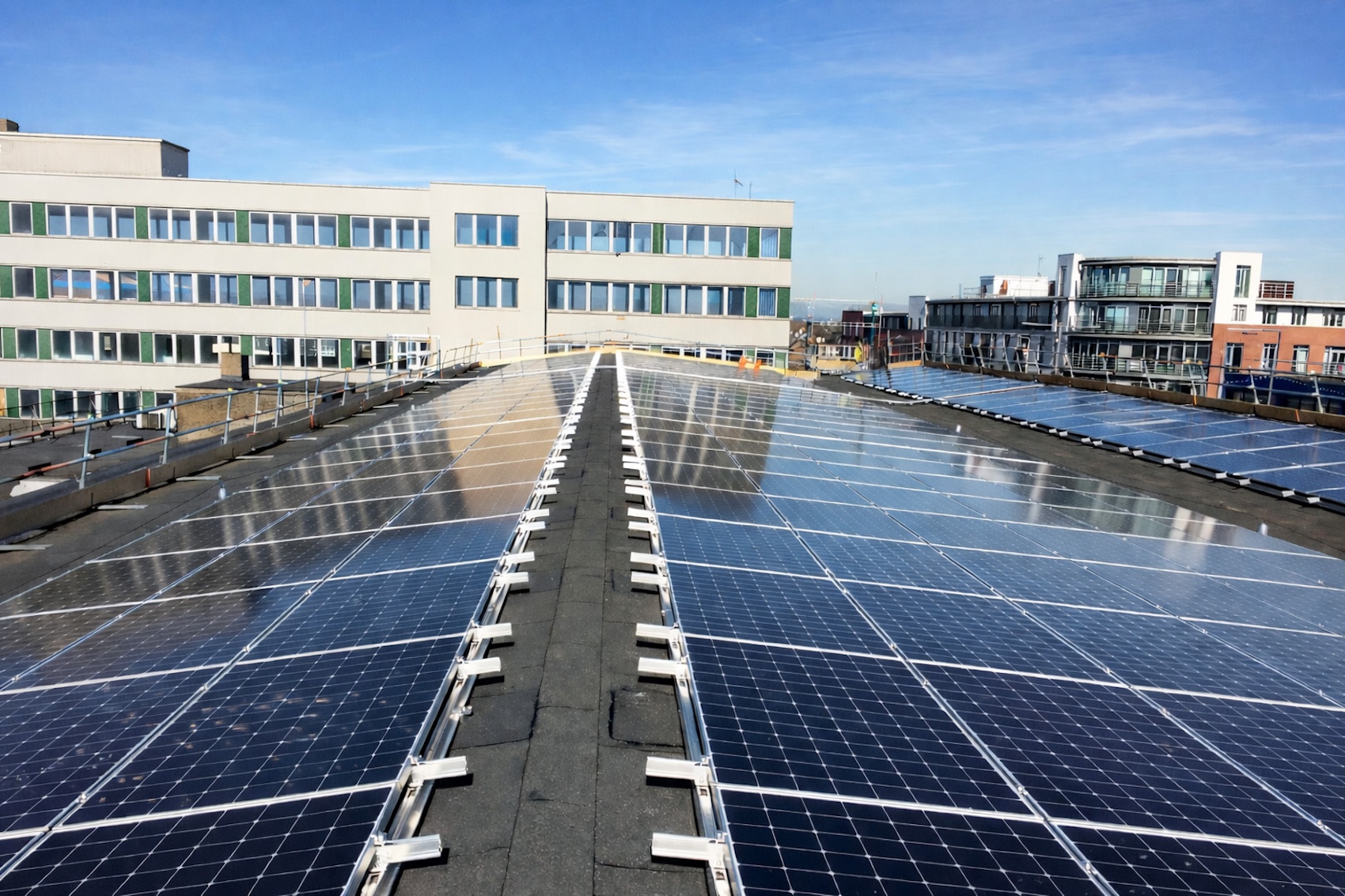
PV solar panels at Barking Station in London (photo: courtesy of Nicholson).
What are the most common technical challenges architects face when specifying solar PV roofs?
The greatest challenge is often coordinating multiple disciplines. Solar PV affects structural design, waterproofing, drainage, fire performance, wind loading, electrical services and long-term maintenance. Decisions made in one area can have significant implications elsewhere. Common challenges include accommodating structural loads, avoiding roof penetrations where possible, and maintaining the integrity of the waterproofing system. Architects must also coordinate maintenance access, prevent shading from rooftop plant, ensure fire compliance, and manage interfaces between multiple contractors.
Another frequent issue is that roofing and solar systems are procured separately, resulting in design responsibility becoming fragmented. By involving roofing specialists early, architects can identify potential conflicts before construction begins. AccuRoof works alongside architects, structural engineers and M&E consultants to coordinate roofing and PV design as an integrated system rather than separate packages.
What factors should architects consider when assessing whether an existing roof is suitable for solar PV?
Existing buildings require a thorough assessment before a solar installation is specified. Key considerations include the roof’s structural capacity, the remaining life expectancy of the waterproofing system, and the overall condition of the roof. Architects should also assess wind exposure, drainage performance, available maintenance access, existing plant and services, cable routing, and the building’s fire strategy.
One of the most important questions is whether the roof covering is likely to last as long as the proposed PV installation. If a roof requires replacement within the next 10–15 years, installing solar beforehand may create unnecessary future costs through removal and reinstatement. Architects should also consider whether strengthening works or roof refurbishment would provide better whole-life value than simply installing PV onto an ageing roof.
AccuRoof regularly undertakes roof condition surveys and technical assessments that help clients understand whether refurbishment, replacement or direct solar installation represents the most appropriate long-term solution.
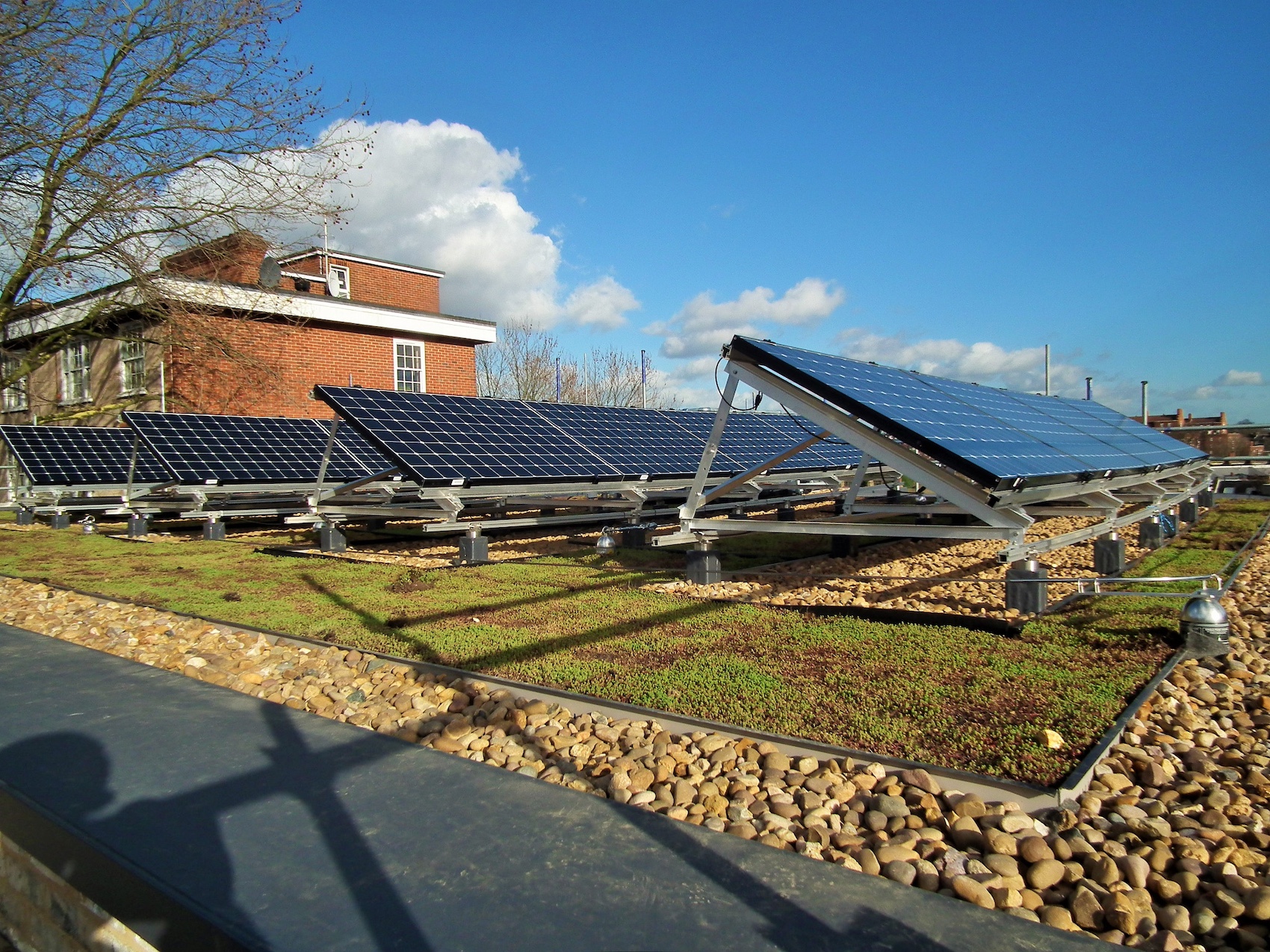
Photo: courtesy of Nicholson.
How should roof structure, waterproofing and PV mounting systems be coordinated to achieve a robust long-term solution?
Successful solar roof design relies on treating the roof as a single integrated system rather than a collection of separate components. Structural engineers need confidence that imposed loads, wind uplift and dynamic loading have been properly assessed. Roofing designers must ensure waterproofing remains uncompromised throughout the installation and operational life of the system. Mounting systems should be selected to minimise unnecessary penetrations while remaining fully compatible with the chosen roof covering. Equally important is ensuring that any penetrations are detailed using manufacturer-approved methods that preserve warranty cover.
Design teams should also consider thermal movement, drainage paths and future replacement of individual components. AccuRoof works across all these interfaces, coordinating roof specification, waterproofing and PV mounting solutions to provide a fully considered long-term design that balances performance, durability and maintainability.
What should architects consider when planning maintenance access and the long-term operation of solar PV roofs?
Solar PV should never compromise safe access to the roof or make future maintenance unnecessarily difficult. Architects should allow for designated access routes, edge protection requirements, safe cleaning and inspection of PV arrays, access to roof outlets and drainage, maintenance of rooftop plant, and the replacement of individual PV modules if required. Ignoring maintenance during design often leads to expensive alterations later or increased health and safety risks throughout the building’s life.
Whole-life thinking is increasingly important. A roof designed for straightforward inspection and maintenance will typically deliver better long-term performance, lower lifecycle costs and improved system reliability. AccuRoof helps design teams incorporate practical maintenance strategies into roof layouts from the outset, ensuring both roofing and PV systems remain accessible throughout their operational life.
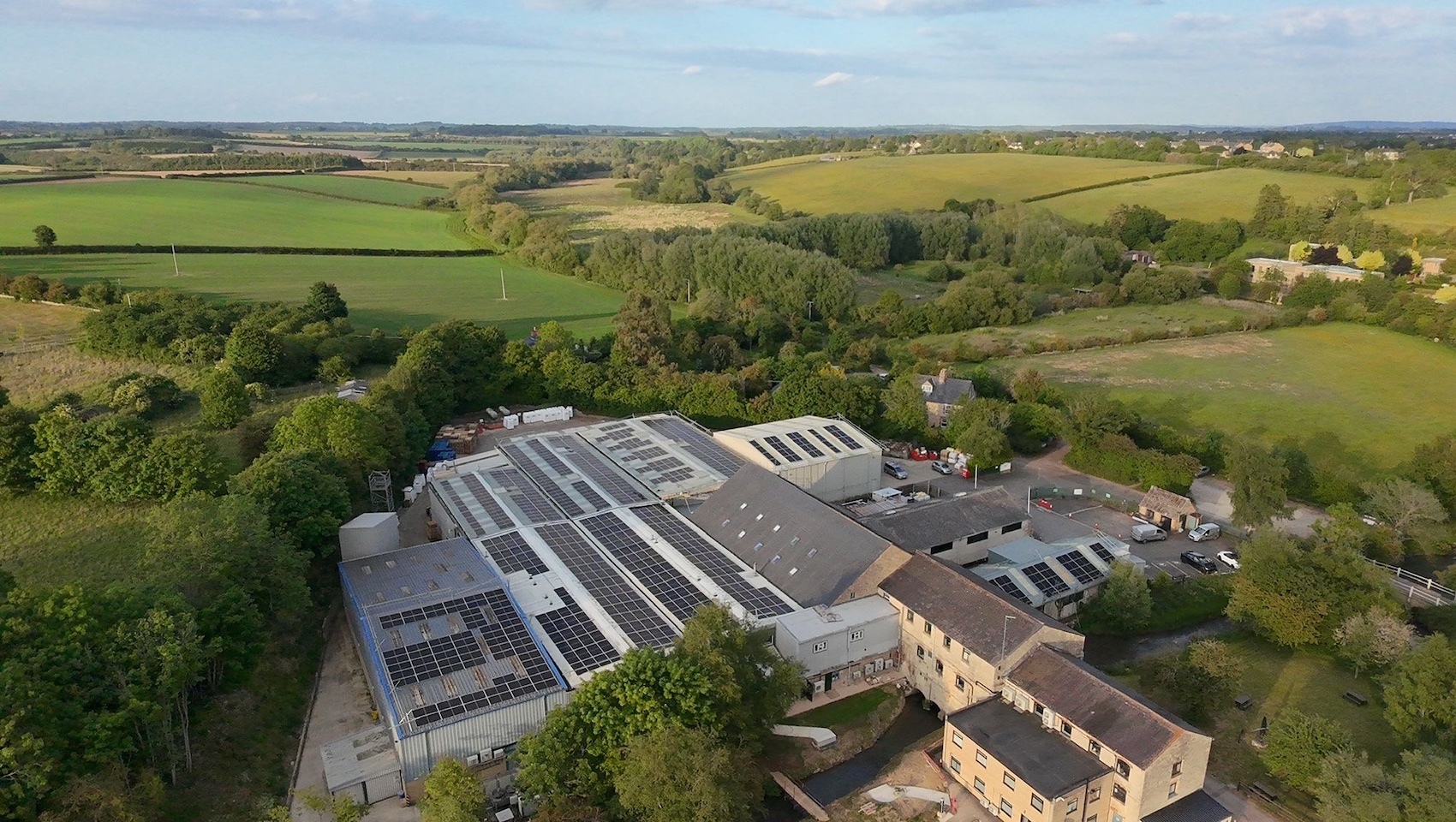
PV panels installed by The Solar Roofing Company on an industrial building in the south east of England (photo: Chris Nottingham).
What are the most common mistakes you encounter when reviewing solar roof proposals?
The most common issue is that solar is often treated as an add-on rather than an integral part of the roof design. Other recurring problems include insufficient structural assessment and inadequate consideration of waterproofing details. Poor coordination between disciplines, inaccessible roof drainage, excessive roof penetrations, shading from rooftop plant, overlooked maintenance requirements, and unclear allocation of design responsibility can also compromise the long-term performance of the installation.
Another mistake is focusing solely on installation cost rather than whole-life performance. A slightly lower-cost solution may introduce significantly higher maintenance or replacement costs over the building’s lifespan. Independent technical review at design stage frequently identifies opportunities to improve durability, reduce risk and avoid costly remedial works.
How do warranties and system responsibility influence the specification of solar roofs?
Warranties should be considered as part of the overall risk management strategy rather than simply a contractual requirement. Where roofing and solar installations are delivered by different contractors using unrelated products, responsibility for future defects can become unclear. If problems arise, disputes over whether an issue relates to waterproofing, mounting systems or installation methods can delay remedial works.
Architects should seek clarity on system compatibility, approved fixing methods, manufacturer warranties, installer accreditation, and design responsibility. They should also establish who will be responsible for long-term maintenance throughout the life of the installation. Coordinated specifications and clearly defined responsibilities significantly reduce future risk. AccuRoof assists clients by ensuring roofing systems, mounting solutions and installation methodologies are technically compatible and that warranty implications are fully understood before construction begins.
AccuRoof promotes a product and system agnostic approach. Why is that important when designing and specifying solar PV roofs?
No single roofing or solar system is suitable for every project. Every building presents different structural constraints, performance objectives, architectural requirements, planning considerations and budgetary pressures. Selecting products based solely on manufacturer preference can limit design flexibility and may not provide the best long-term outcome.
A product and system agnostic approach enables each project to be assessed on its own merits. The focus becomes selecting the most appropriate combination of roof construction, waterproofing system and PV solution to achieve the client’s objectives while minimising technical risk. This independent approach also allows architects to receive objective technical advice during specification rather than product-led recommendations.
At AccuRoof, we believe our role is to help clients develop the right roof for the building – not simply specify a particular product. By remaining independent of individual manufacturers, we can evaluate a wide range of roofing and solar solutions, coordinate their integration, and deliver technically robust, commercially practical and future-ready roof designs that perform throughout the building’s life.