Studio Wignall & Moore has created a memorial landscape at Brookwood Military Cemetery in Surrey, commemorating more than 400 First World War service personnel whose graves were never formally identified.
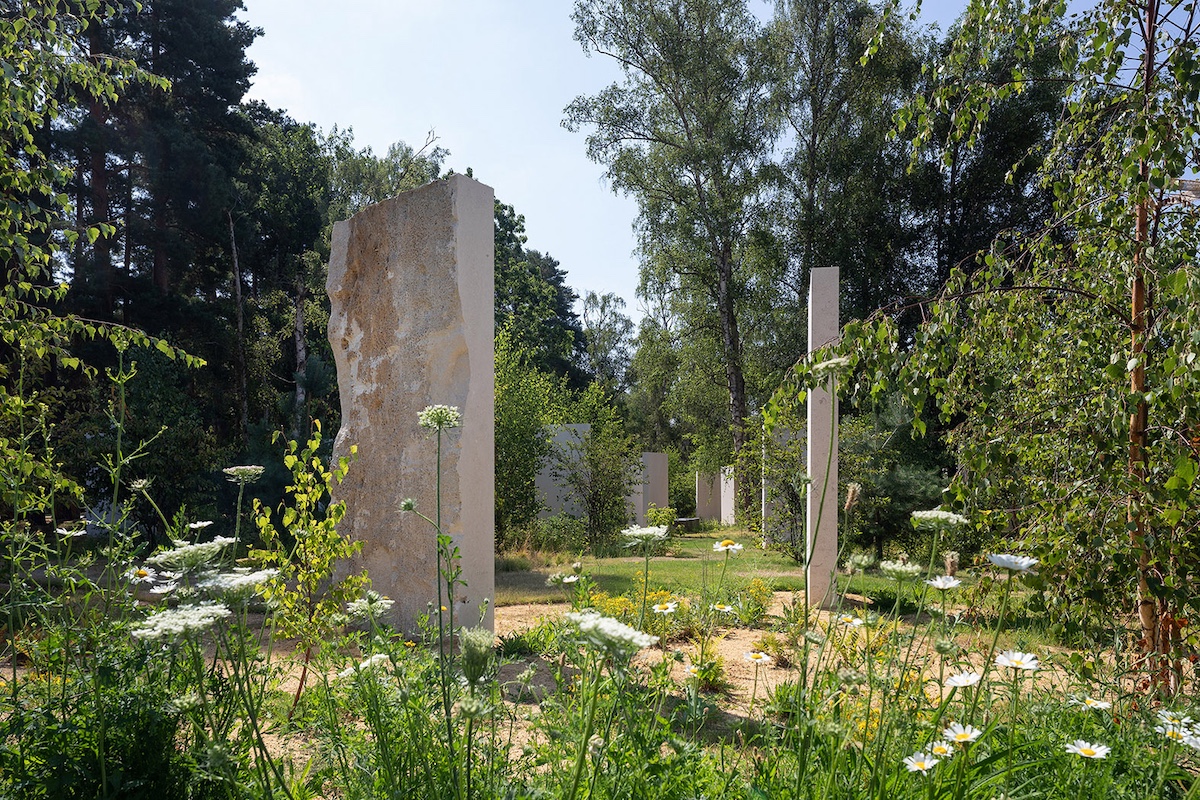
Studio Wignall & Moore has completed a memorial at Brookwood Military Cemetery in Surrey for the Commonwealth War Graves Commission (CWGC). Conceived as a ‘memorial forest’, the project commemorates more than 400 First World War service personnel from the UK and Ireland whose graves were never formally identified and whose contribution went unrecognised for more than a century. The memorial has been officially inaugurated by HRH The Princess Royal, President of the Commonwealth War Graves Commission.
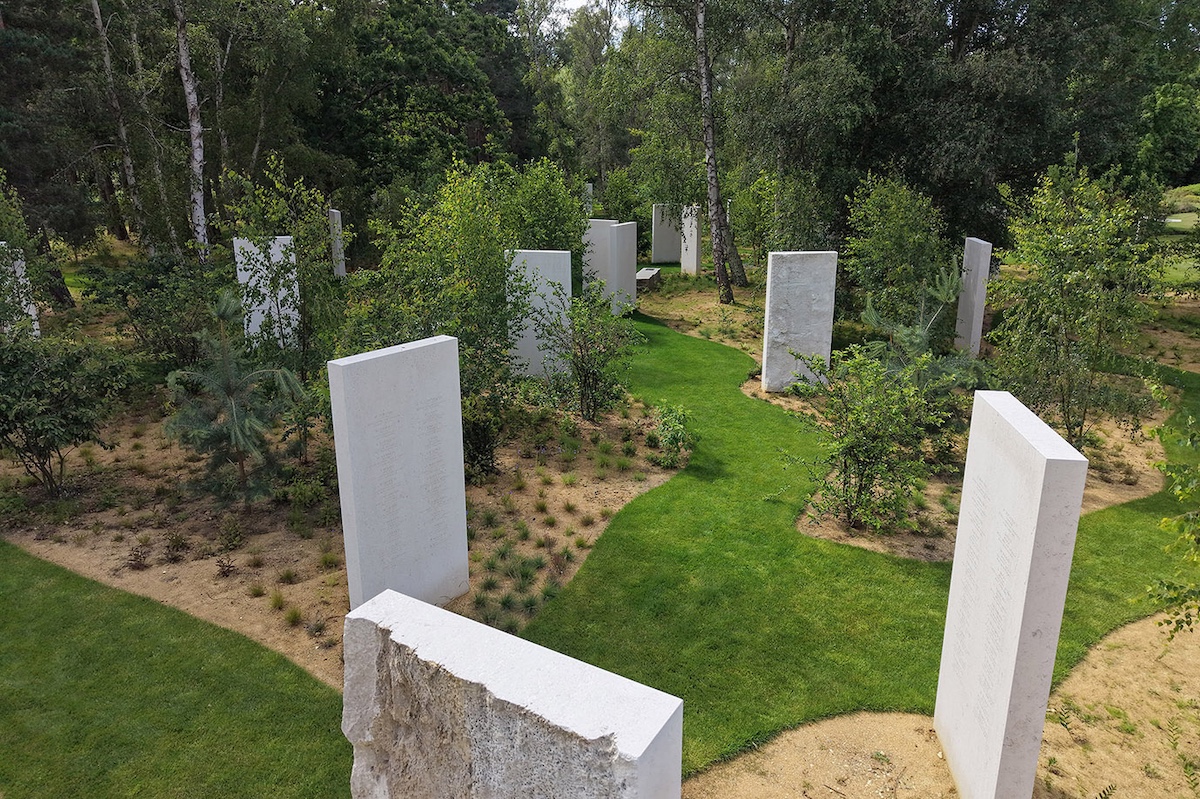
Rather than designing a single monumental object, the architect has created a landscape of Portland stone stelae, trees, meadow and heathland that visitors can move through and spend time within. Developed in collaboration with landscape designer Tom Stuart-Smith, the scheme brings architecture, horticulture and commemoration together within the setting of the UK’s largest Commonwealth war cemetery.
“We wanted the site to feel reflective rather than monumental; somewhere visitors could pause, spend time and reconnect with individual stories of loss and commemoration,” commented Bradley Moore, Director of Studio Wignall & Moore.
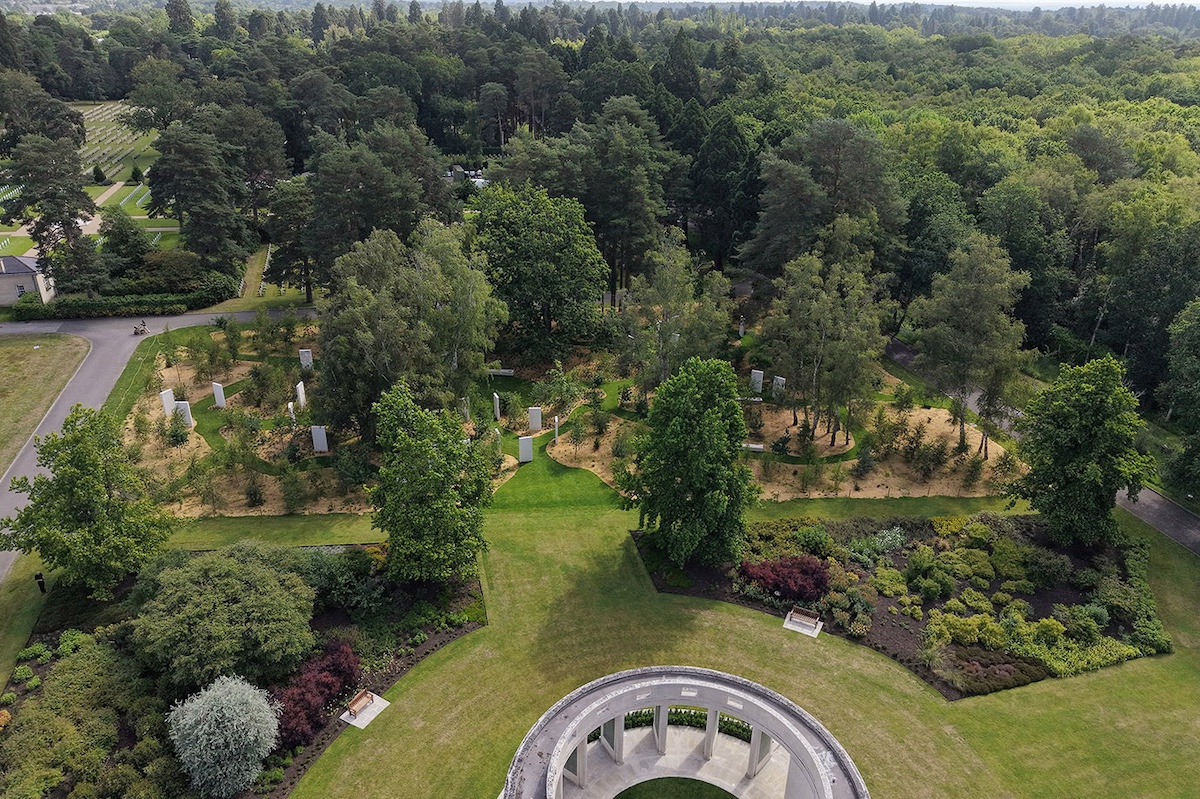
Photo courtesy of Stonewest Ltd.
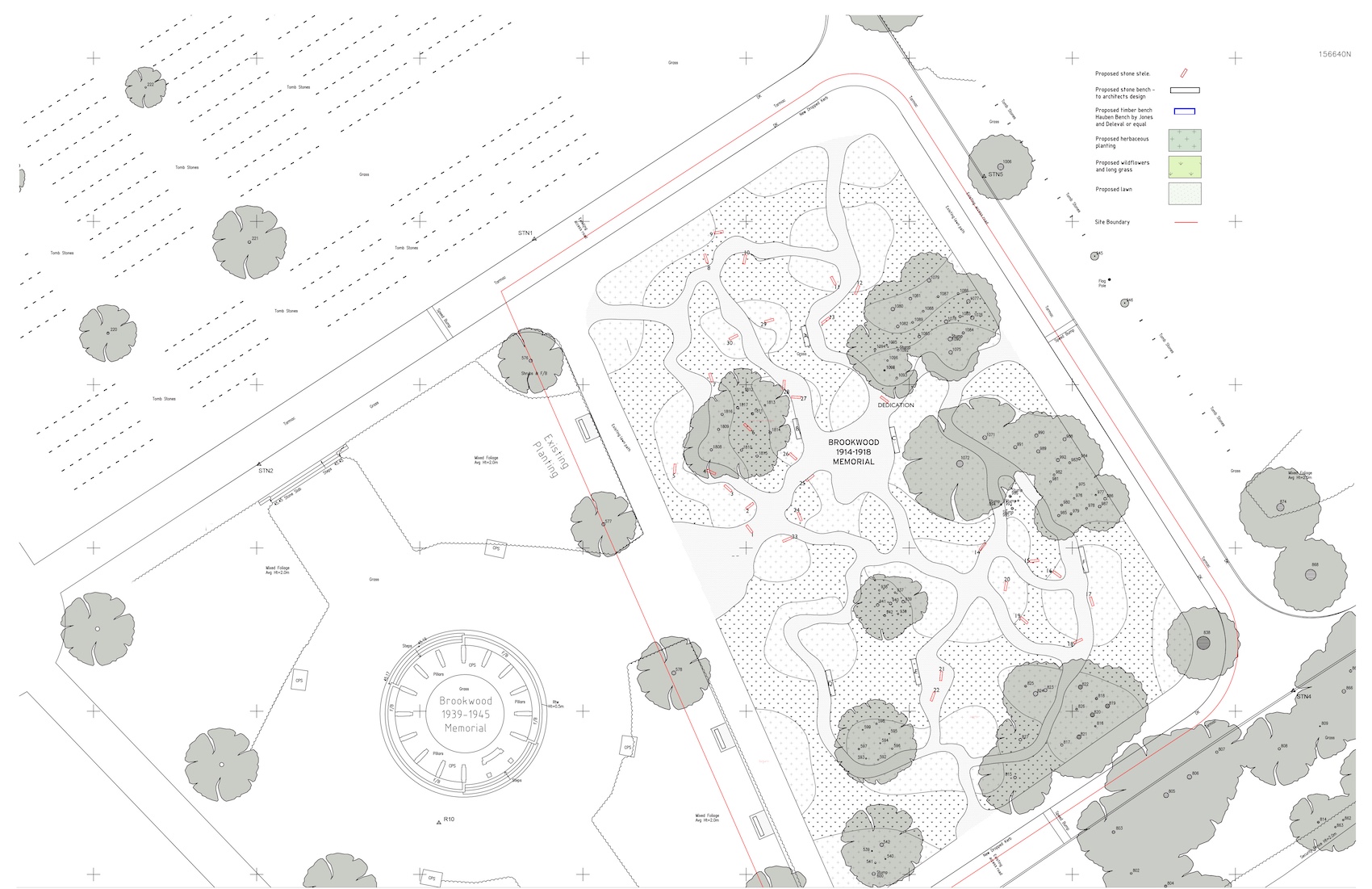
At the heart of the layout is a celestial reference to the moment the First World War ended. Working with the Royal Astronomical Society, the practice mapped the night sky above Brookwood as it would have appeared in the early hours of 11 November 1918, when the armistice was signed. The positions of its brightest visible stars informed the arrangement of 30 commemorative stelae, each named after the star it represents, accompanied by an additional dedication stone.
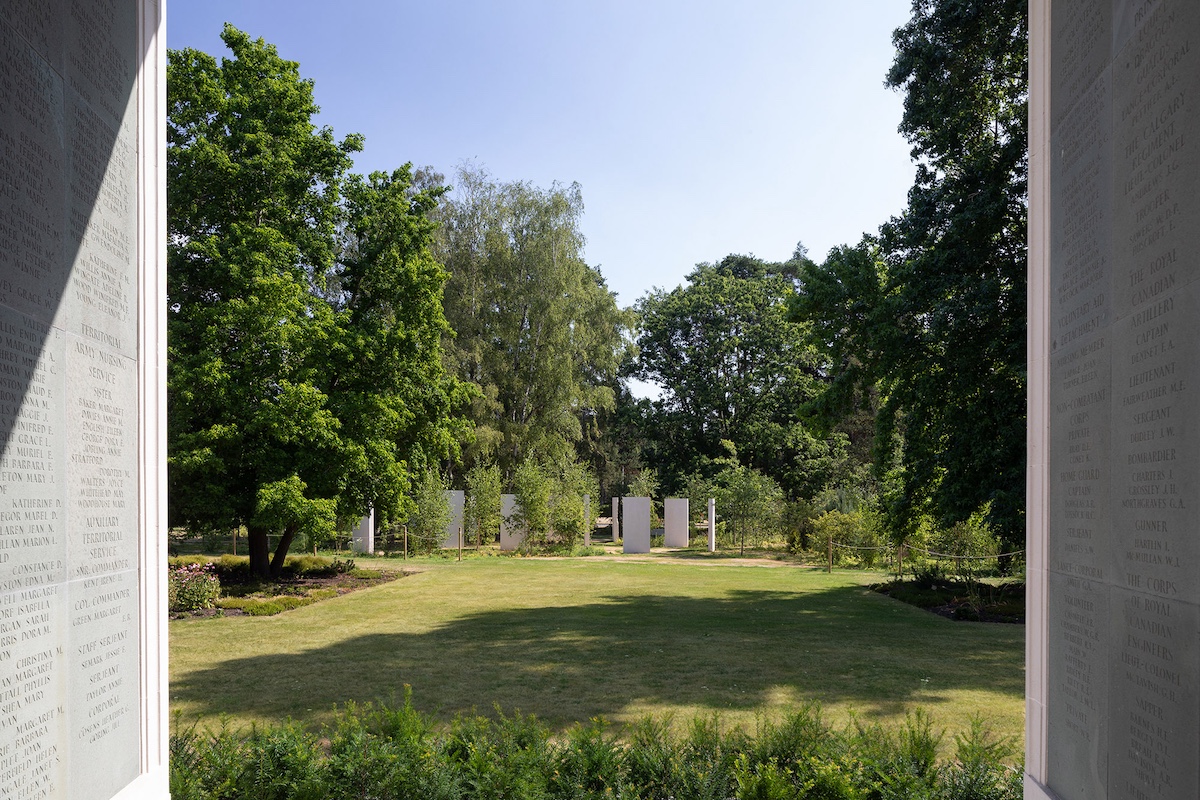
The stelae are carved from Portland stone sourced from the same geological beds used for the CWGC’s earliest memorial stone, with their dimensions determined by the largest blocks available from the Dorset quarry. Eight retain their natural quarry faces, exposing geological formations that would ordinarily be removed during processing.
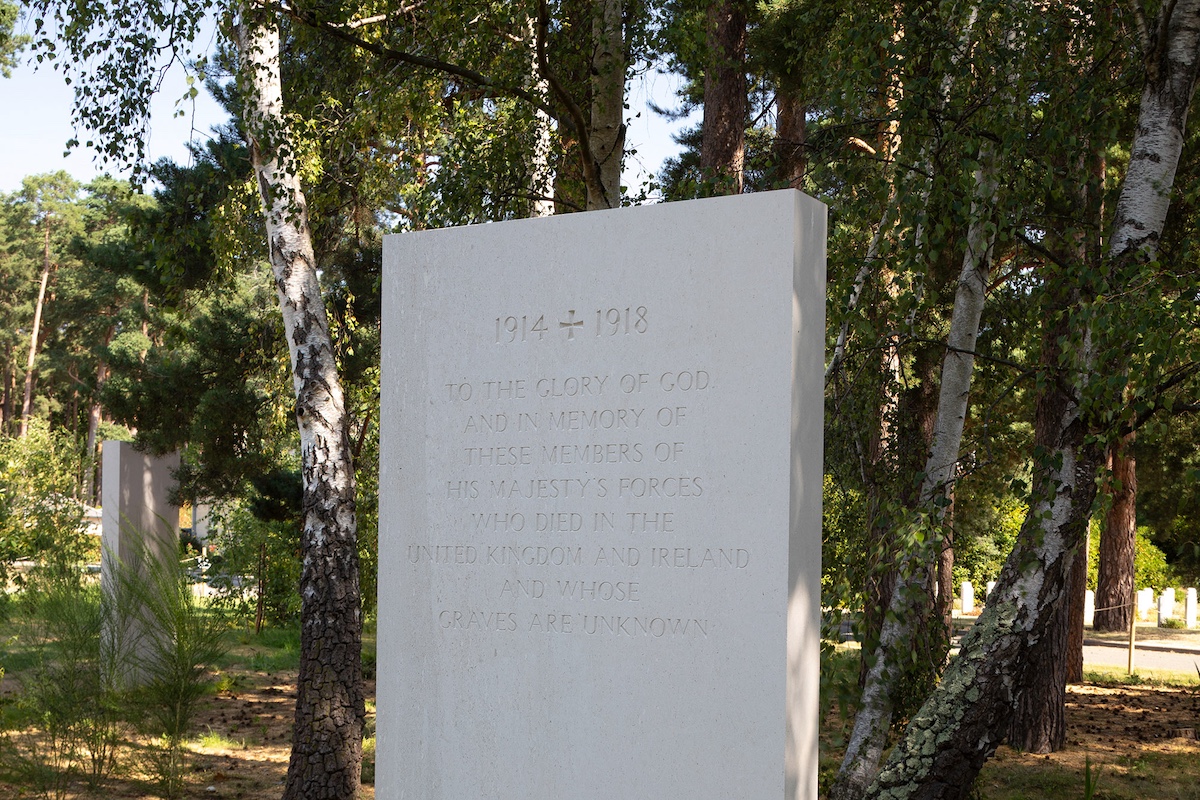
“The inclusion of the unrefined faces” Moore explained, “reveals the history embedded within the stone, exposing traces of ancient riverbeds, fossilised vegetation and other formations created over millions of years. In doing so, the design treats stone not simply as a construction material, but as an expression of time, connecting individual acts of remembrance to a far broader temporal landscape.”
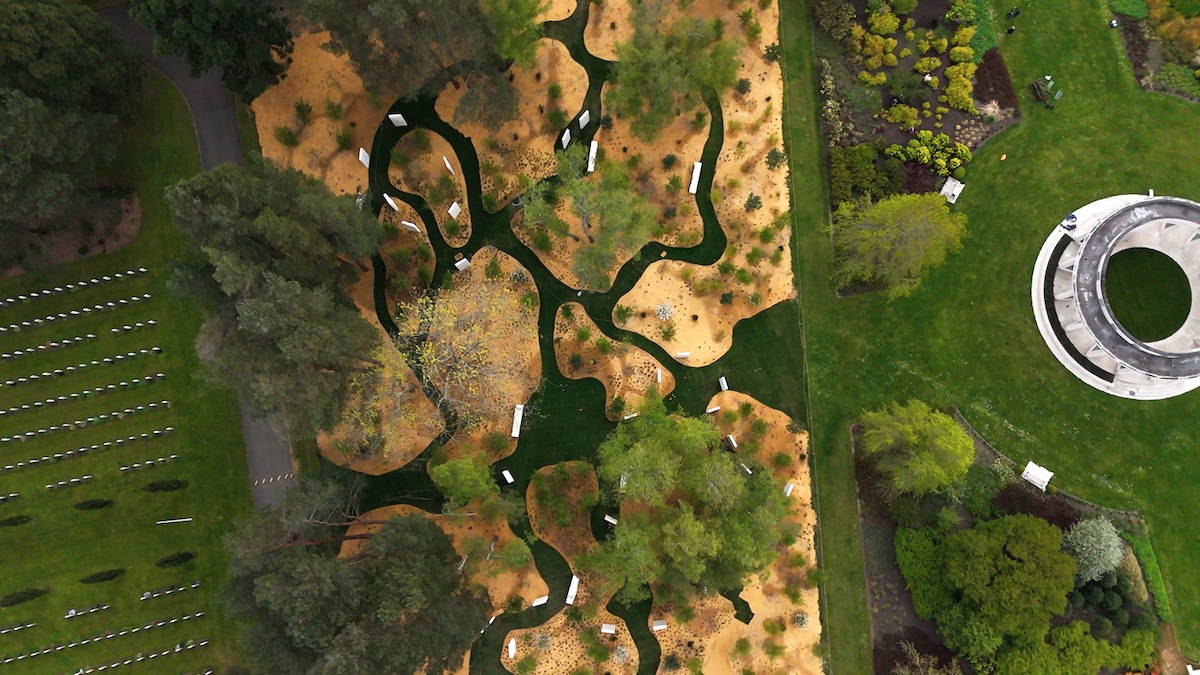
Photo courtesy of Stonewest Ltd.
Despite their scale, the stones are installed using a foundation system that requires no concrete, reducing the intervention within the landscape. Six monolithic Portland stone benches are positioned around the site and aligned with the arc of the sun, providing places to sit and reflect.
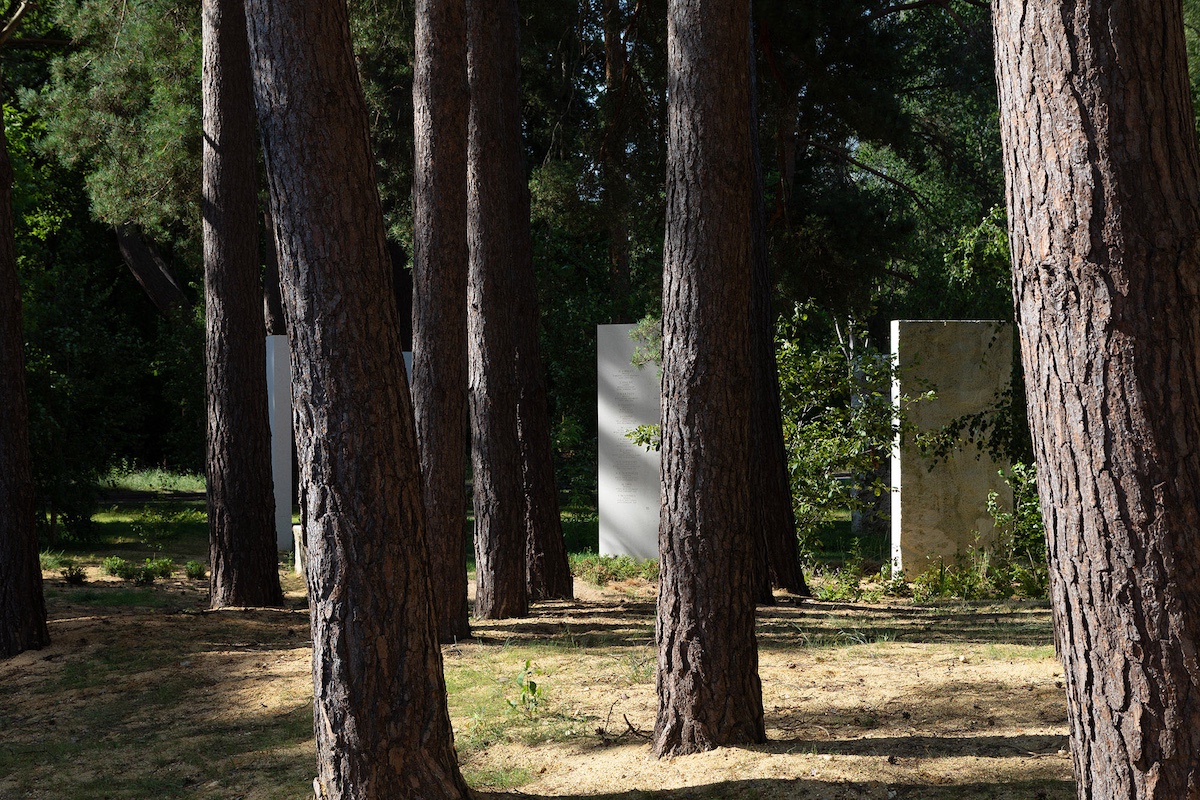
The surrounding landscape includes more than 400 newly planted trees alongside wildflower, pollinator-friendly and heathland species selected to thrive in Brookwood’s low-nutrient, acidic sandy soil without long-term irrigation. The planting is intended to develop over time, increasing biodiversity and establishing an evolving woodland setting around the memorial.
The project follows research by the CWGC’s Commemorations Team and volunteers from the In From The Cold Project, which identified hundreds of additional personnel who died from wounds, illness or trauma associated with their wartime service after returning home. The memorial provides a permanent place for their commemoration and has capacity for a further 800 names as research continues.