Studio KO has transformed a 1912 tram depot and diesel station in Old Tashkent into Uzbekistan’s first permanent institution for contemporary art, retaining the character of the industrial complex while introducing new galleries, public spaces and facilities for research and cultural exchange.
Studio KO has completed the transformation of a former tram depot and diesel station in Tashkent into the Centre for Contemporary Arts Tashkent (CCA Tashkent), a new cultural institution commissioned by the Uzbekistan Art and Culture Development Foundation. Located in the heart of Old Tashkent, the complex was completed in 1912 for the city’s first tramway line and remained part of the electricity network for more than a century before being transferred to the Foundation in 2019.
Designed originally by Wilhelm Heinzelmann, whose other work in the city includes the Palace of Grand Duke Romanov and the Treasury Chamber, the collection of industrial buildings provided Studio KO with a robust existing framework. Rather than substantially reworking the complex, architects Karl Fournier and Olivier Marty have sought to preserve its utilitarian character, retaining the principal volumes and concentrating new interventions around circulation, servicing and the requirements of a contemporary arts institution.
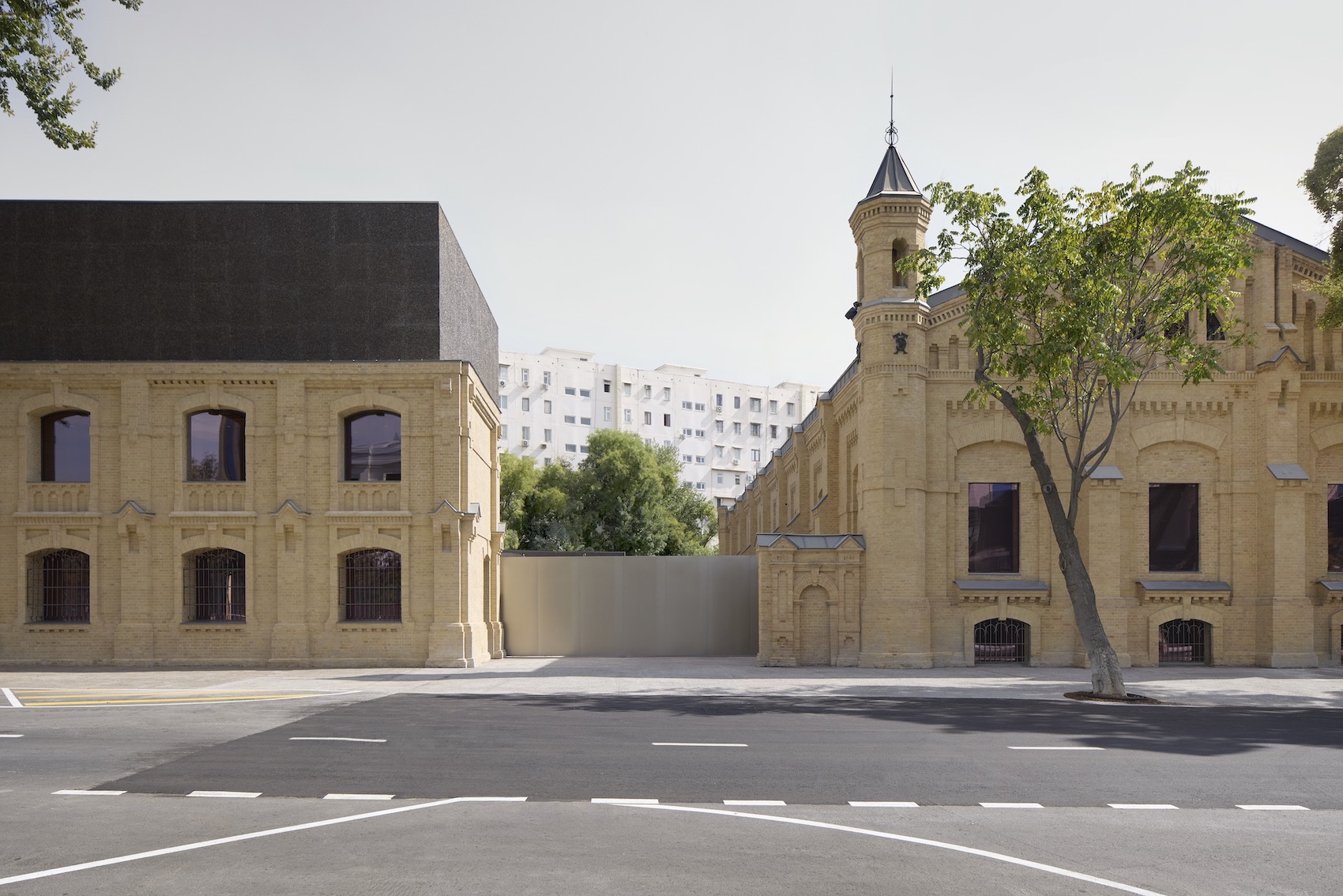
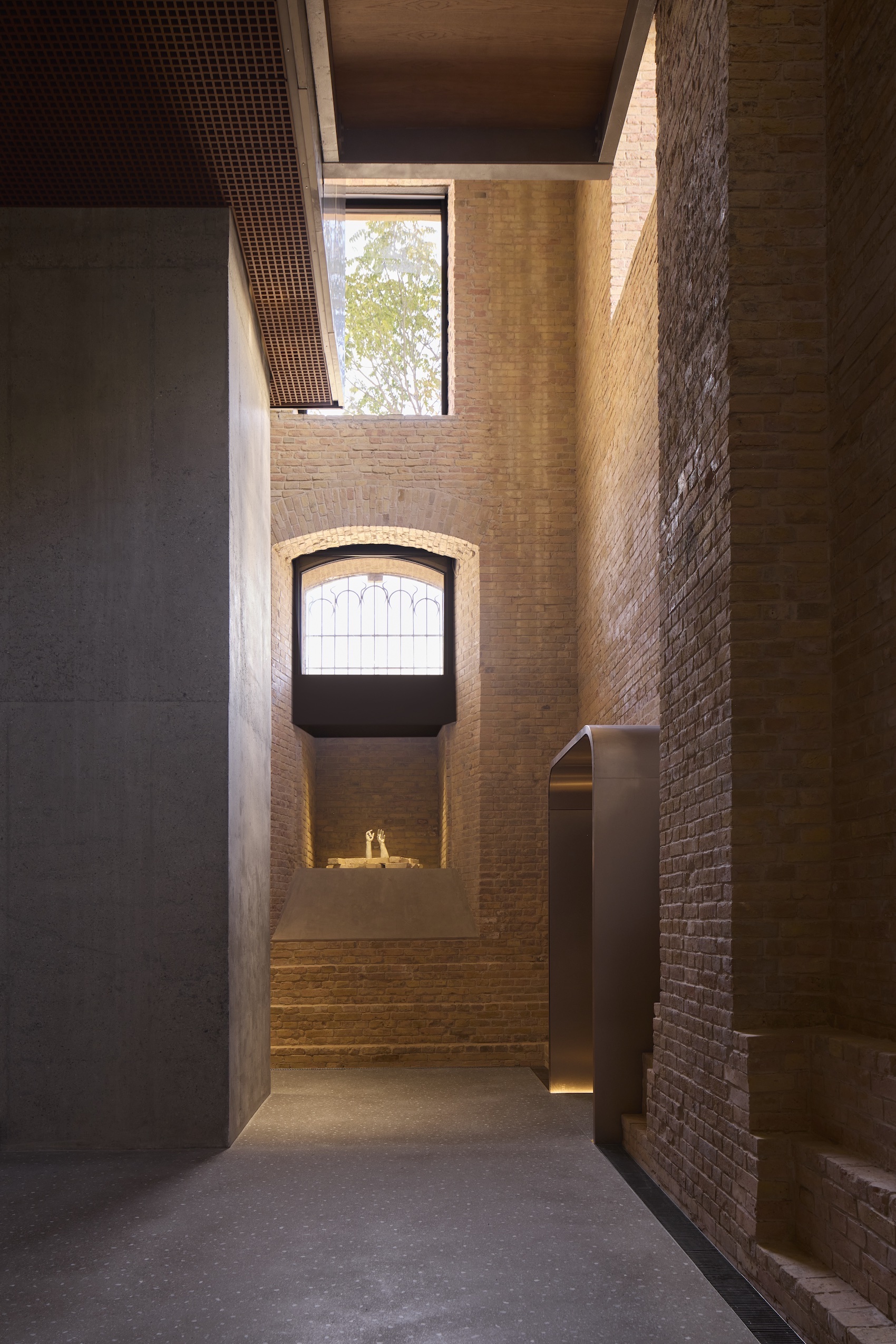
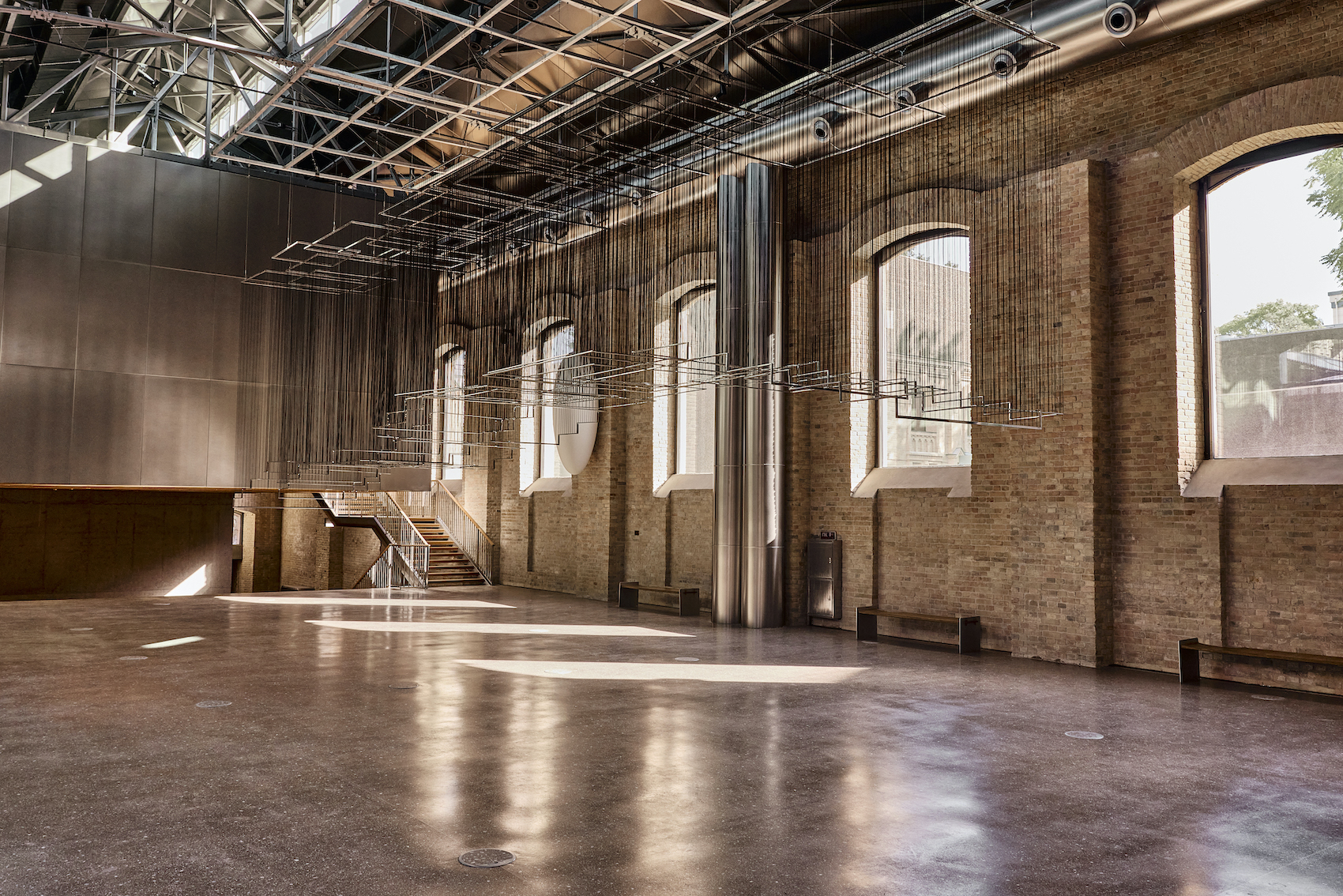
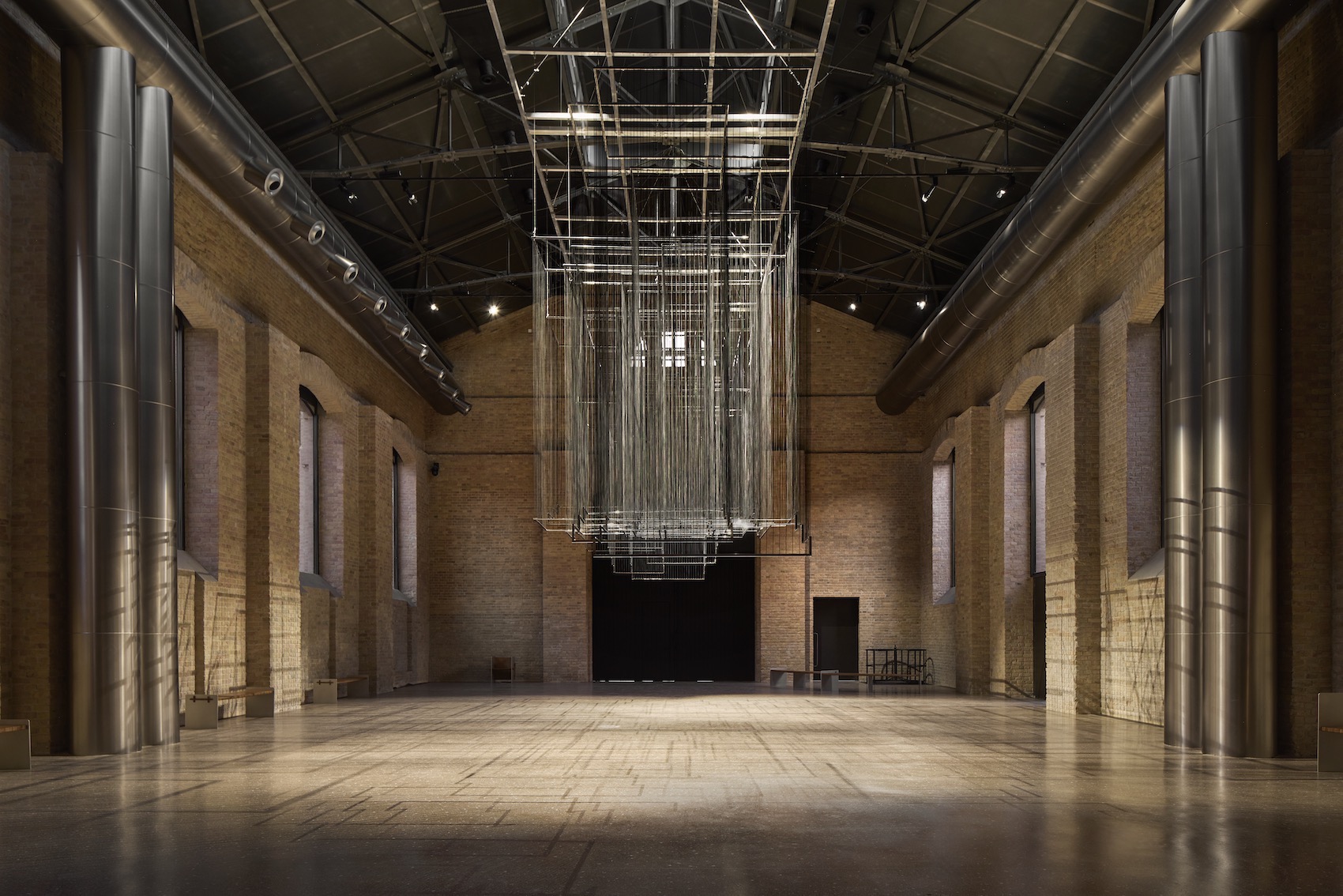
The former diesel station forms the main exhibition space. Its tall brick walls, steel roof structure and generous industrial proportions have been retained, with the early twentieth-century Imperial-era brickwork carefully repaired. New elements are deliberately distinct from the existing fabric, allowing the traces of the building’s previous use to remain visible rather than presenting the interior as a conventional white-box gallery.
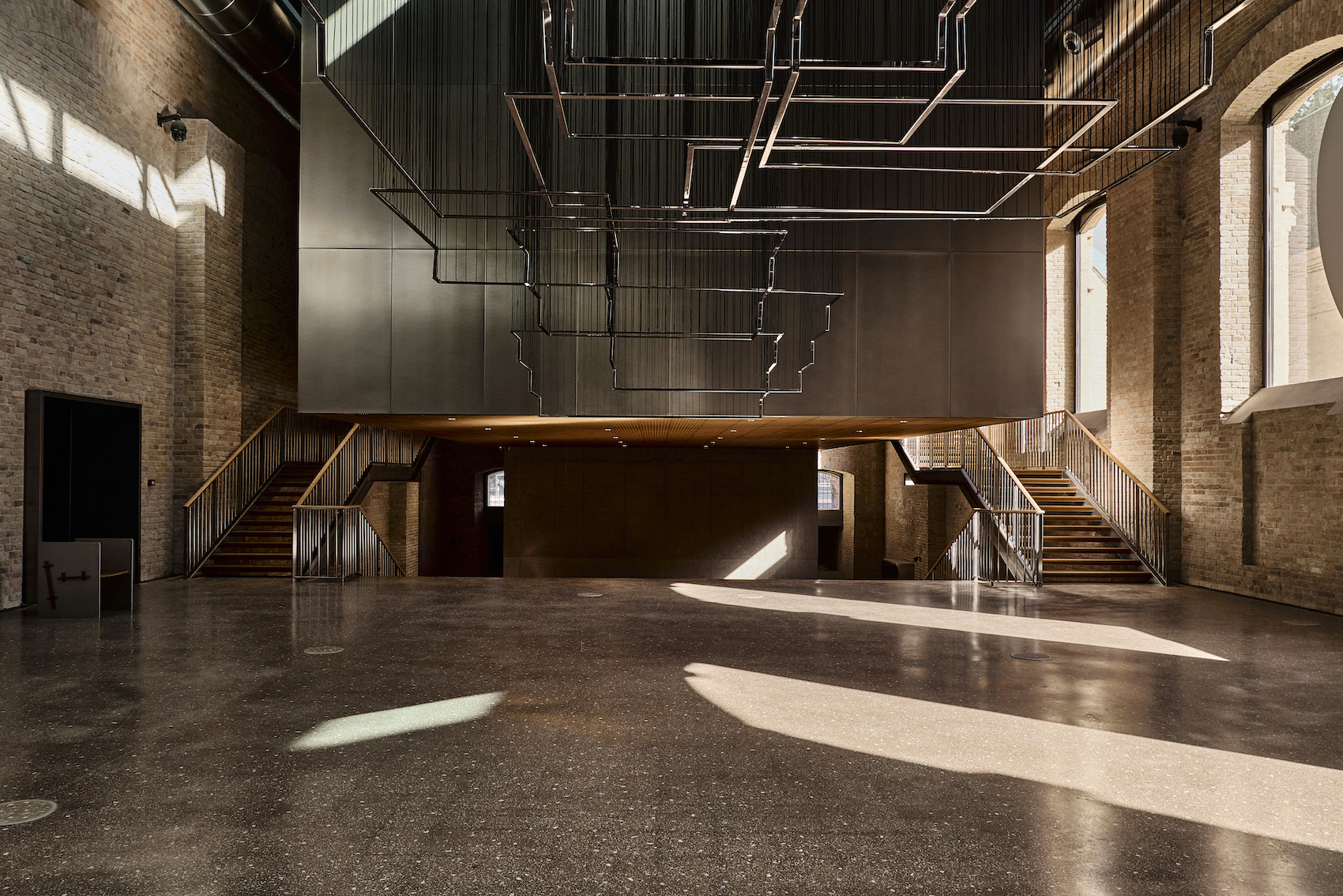
View of the larger exhibition space, with Flying Carpets (2011) by Nadia Kaabi-Linke currently on display.
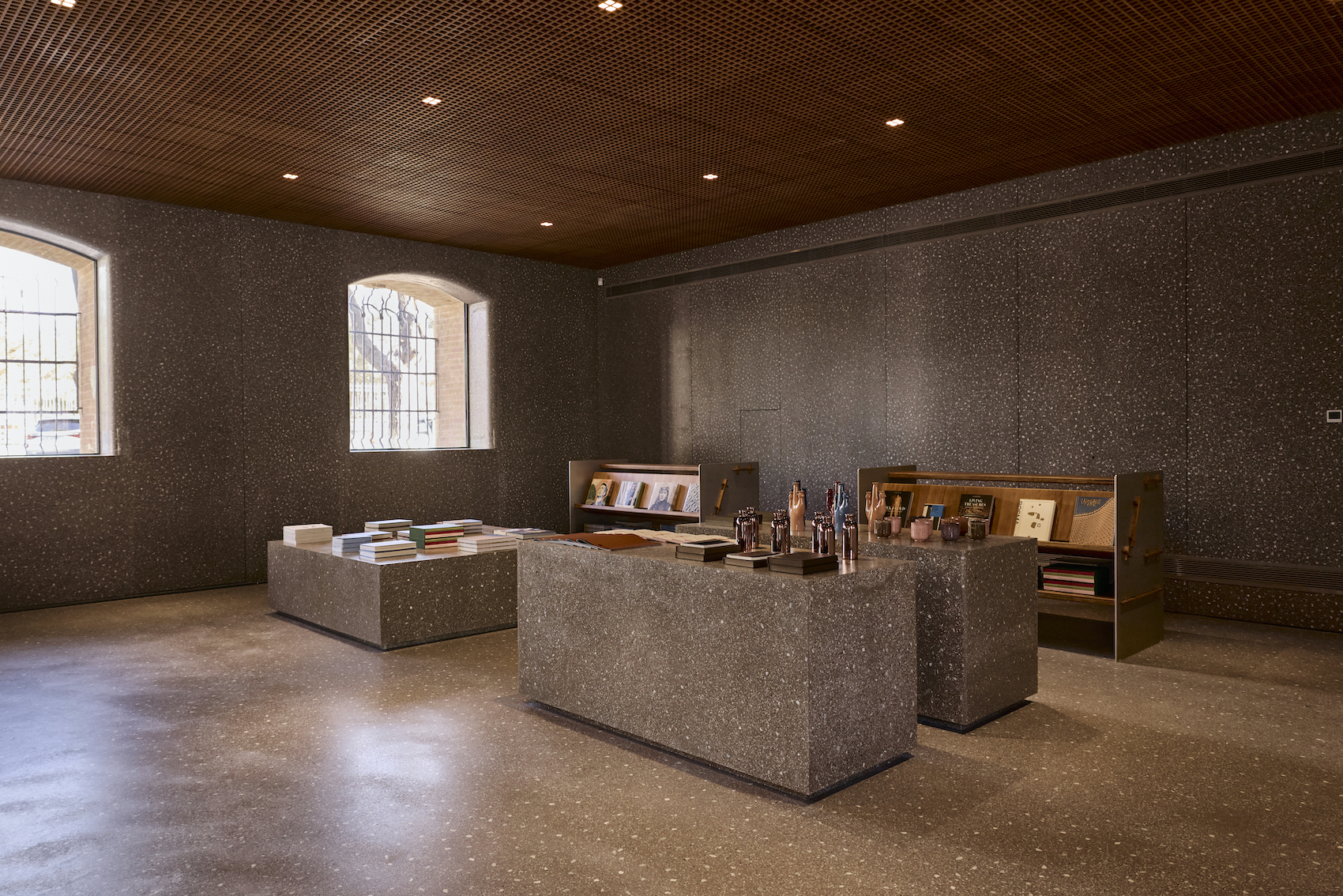
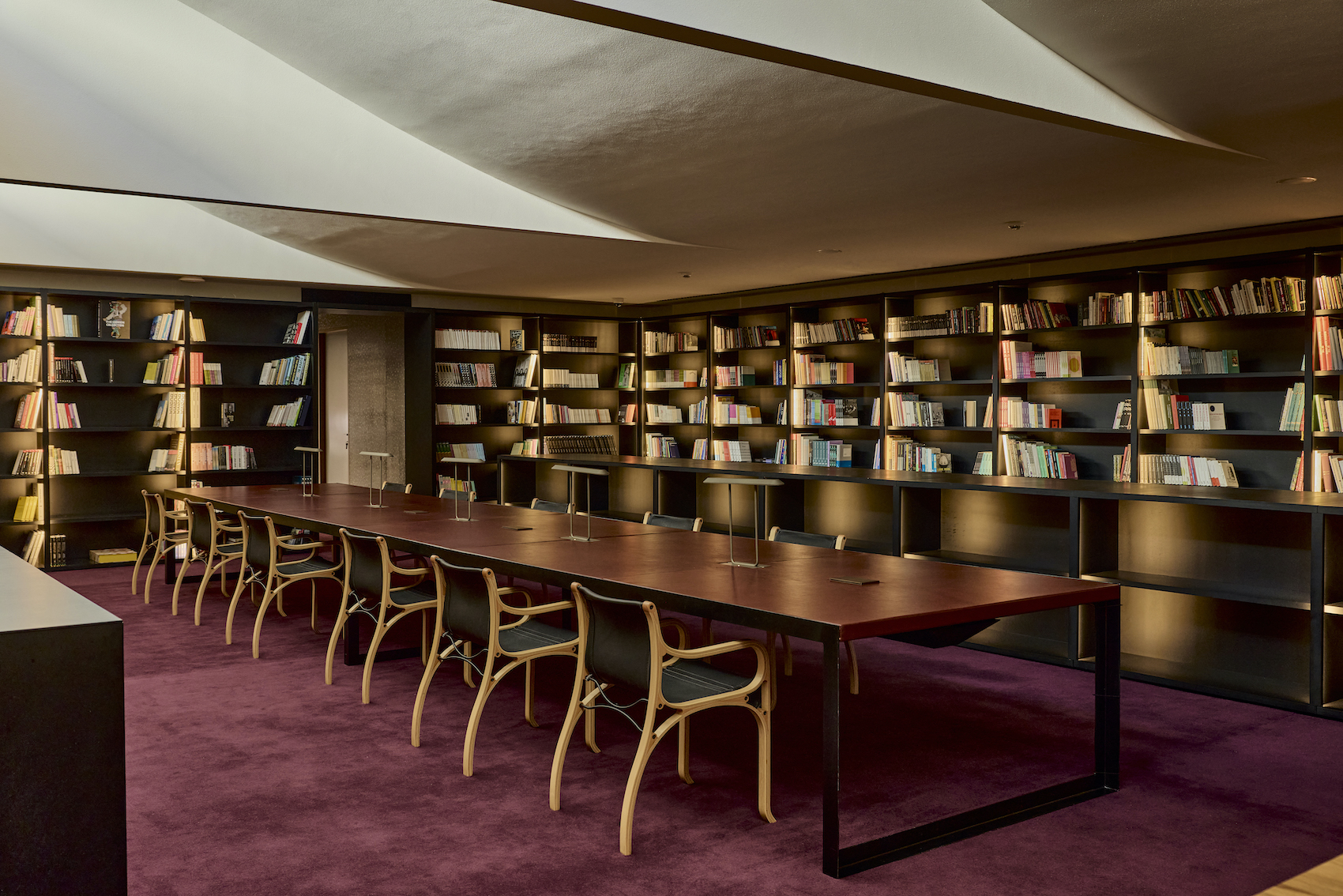
Elsewhere, the former administrative building has been adapted to house a bookshop and library, including an archive focused on art history, world literature and Oriental studies. The courtyard has been conceived as another part of the institution rather than simply a space between buildings, accommodating workshops, gatherings and public events, together with an outdoor cinema for regular screenings.
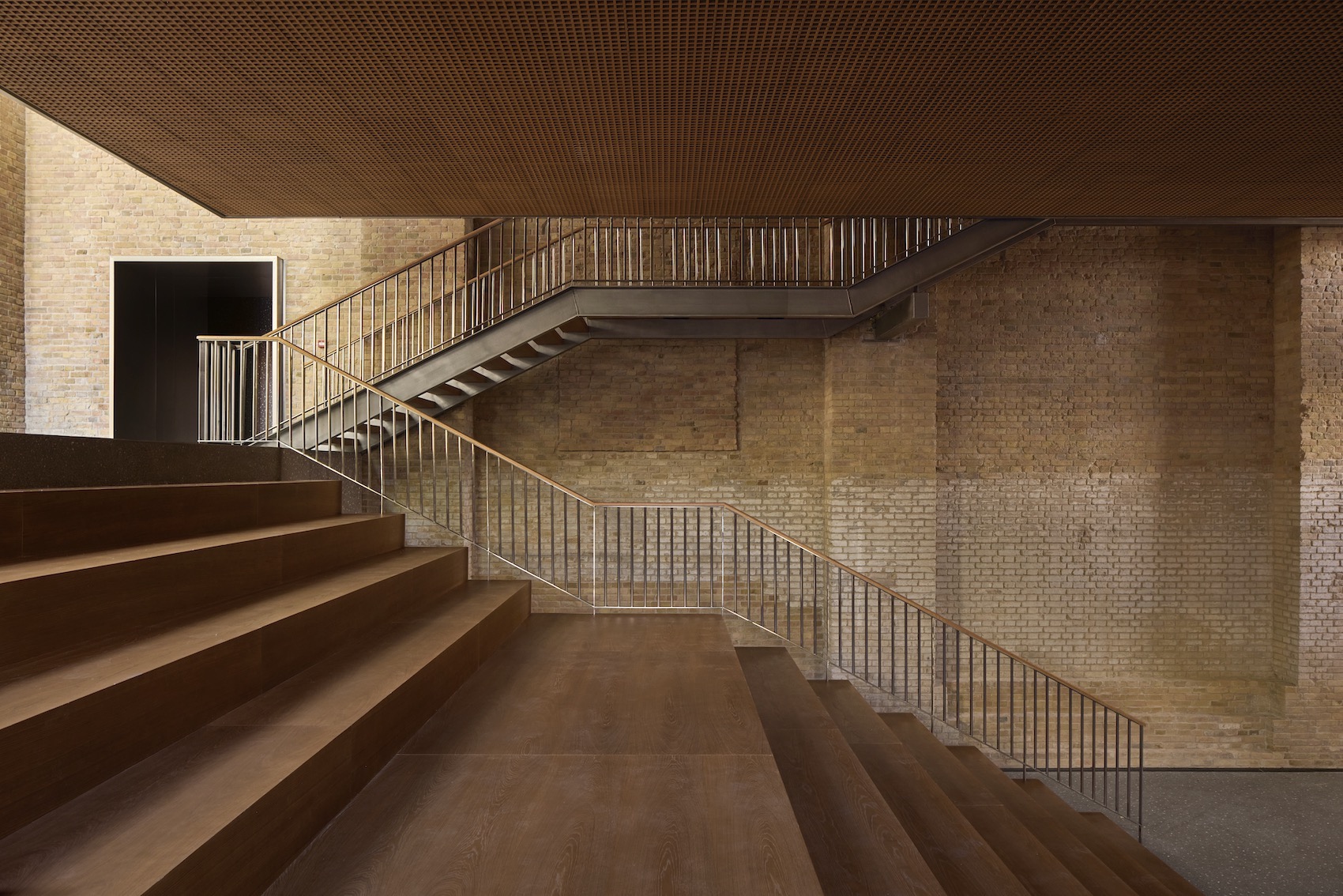
Materials developed for the project extend the relationship between old and new. Studio KO worked with local craftspeople to produce a bespoke concrete mix using materials sourced in Uzbekistan, while tiles were commissioned from the Rakhimov family ceramics studio in Tashkent. These contemporary additions sit alongside the repaired brickwork and existing industrial structure, introducing a finer layer of detail without competing with the scale and character of the original buildings.
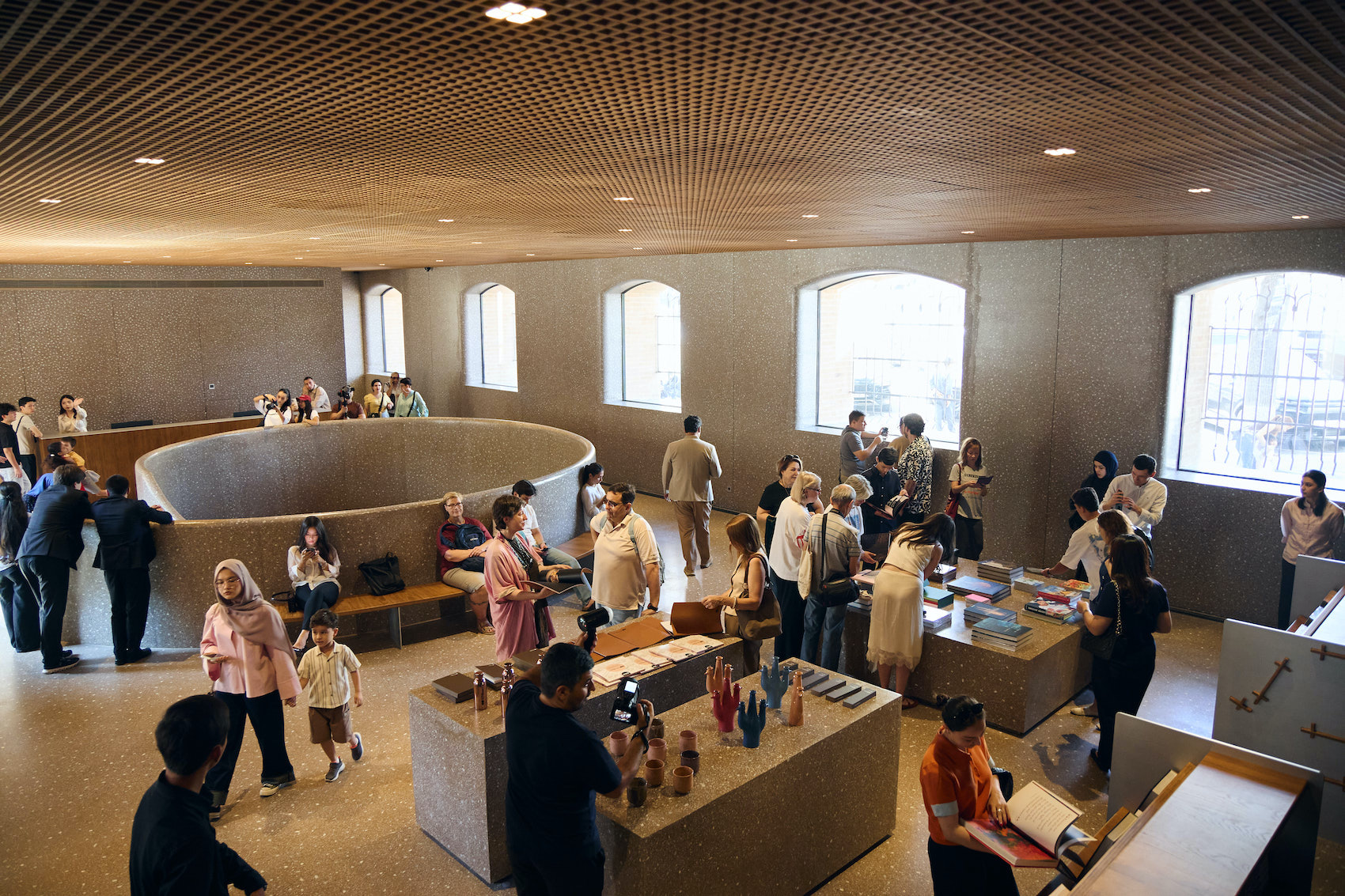
The architects have used filtered daylight and patterned elements to soften the large industrial interiors and create more contemplative spaces within them. Fournier and Marty describe the intention as giving the building “a new poetic life”, with the architecture conceived as an adaptable framework capable of accommodating changing exhibitions and programmes over time.
Studio KO architects Karl Fournier and Olivier Marty explain, “In designing the Centre for Contemporary Arts Tashkent, we sought to honour the memory of a powerful industrial building while giving it a new poetic life. Our work with traditional Uzbek materials and light – filtering motifs allowed us to create a space that is both contemplative and open – one that can evolve alongside the diverse programmes and ideas it will host. The architecture is intended as a vessel for the spirit of contemporary art in Central Asia.”
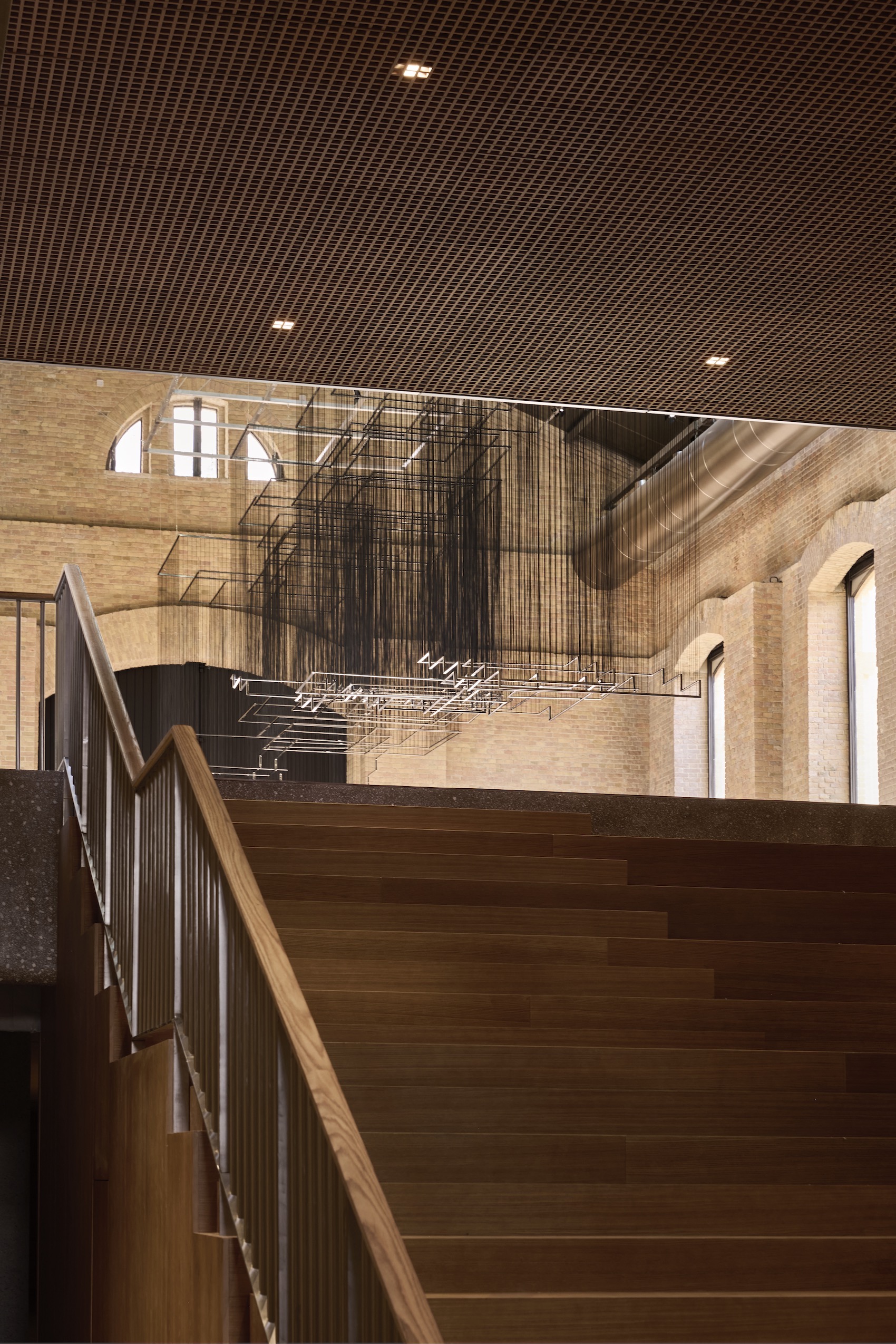
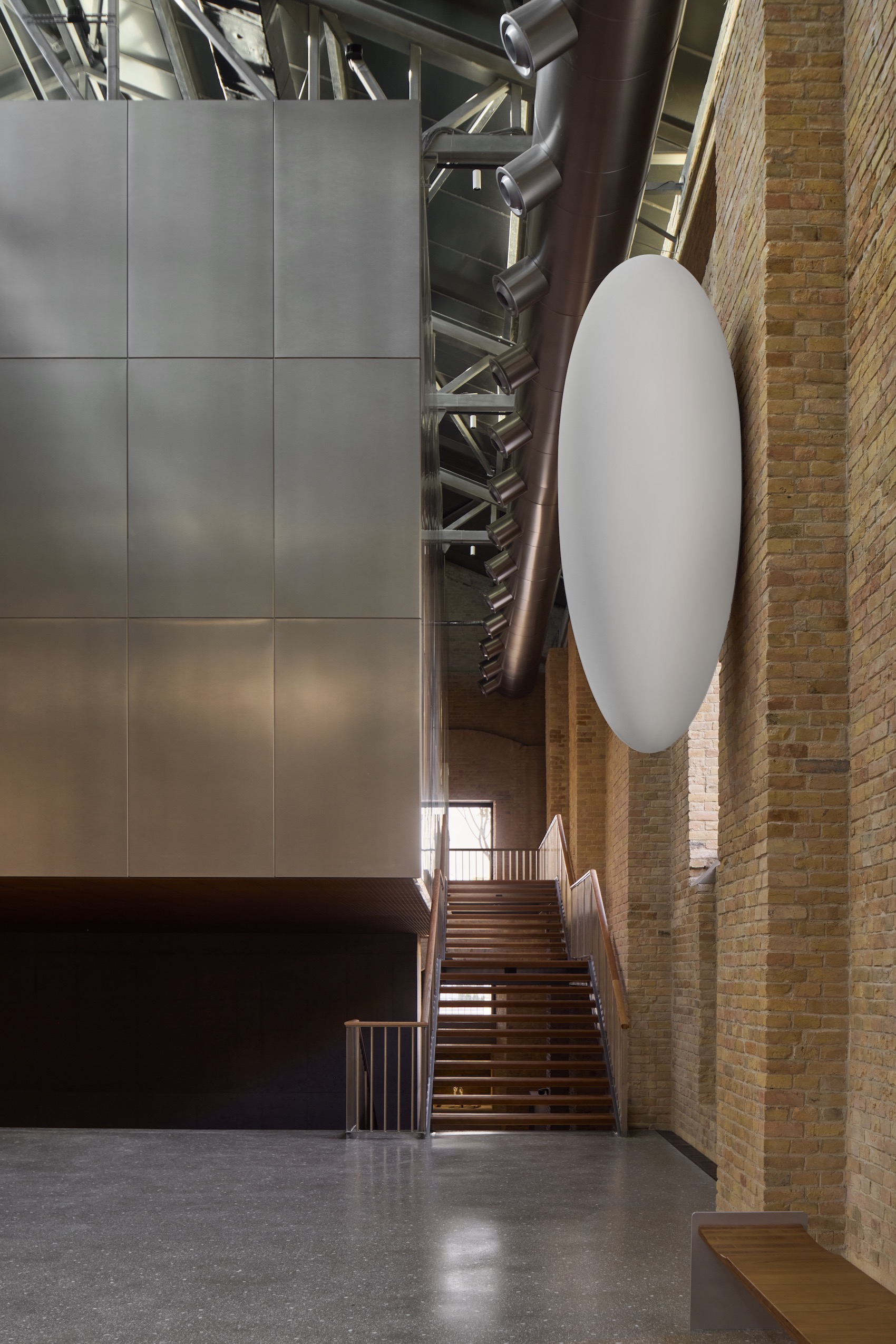
CCA Tashkent opens with Hikmah, an exhibition curated by chief curator Dr Sara Raza that brings together work by ten Uzbek and international artists. Several of the pieces have been commissioned specifically for the Centre and respond directly to its architecture and to the cultural histories of Uzbekistan, extending the dialogue between the retained industrial fabric and the institution’s new use.
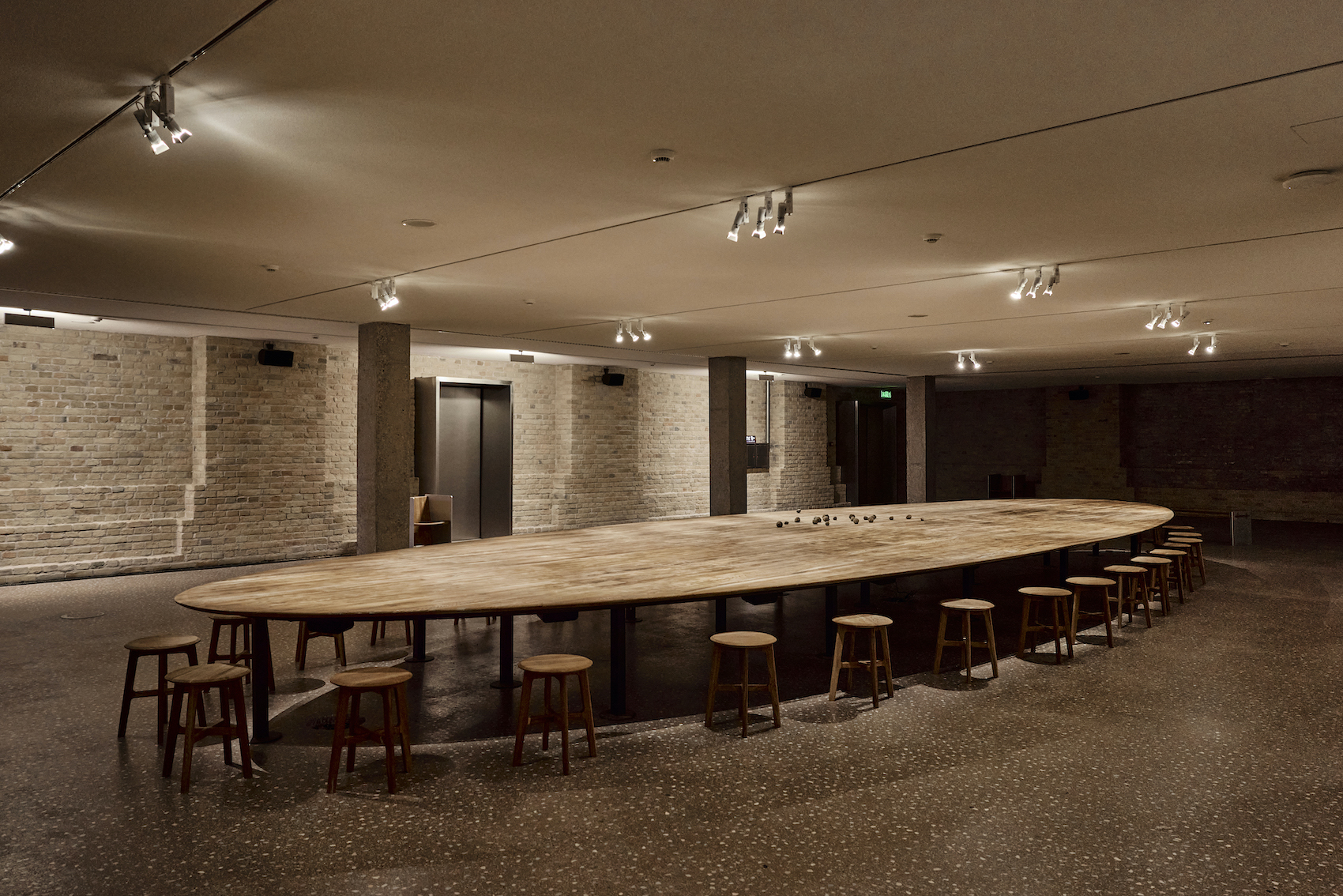
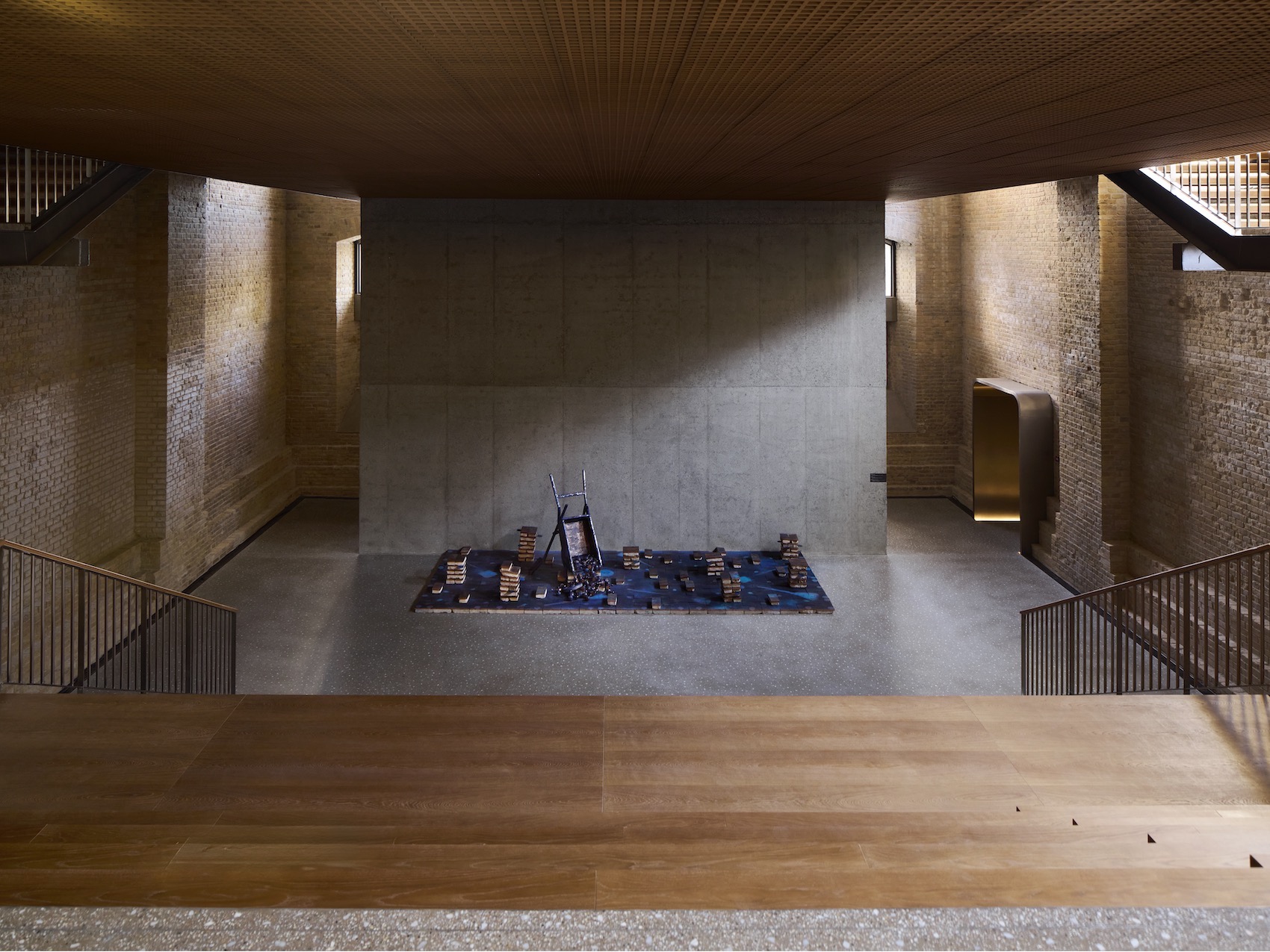
Archive of Mind (2016/2026) by Kimsooja on display in the lower gallery.
Beyond the galleries, the Centre will support residencies, research and educational programmes, including an existing artist residency in Tashkent that is being extended to Samarkand. Together with the library, courtyard and public programme, these activities are intended to establish the complex as a year-round cultural institution rather than a building used solely for exhibitions.
Credits
Architect
Studio KO
Client
Uzbekistan Art and Culture Development Foundation
More pictures