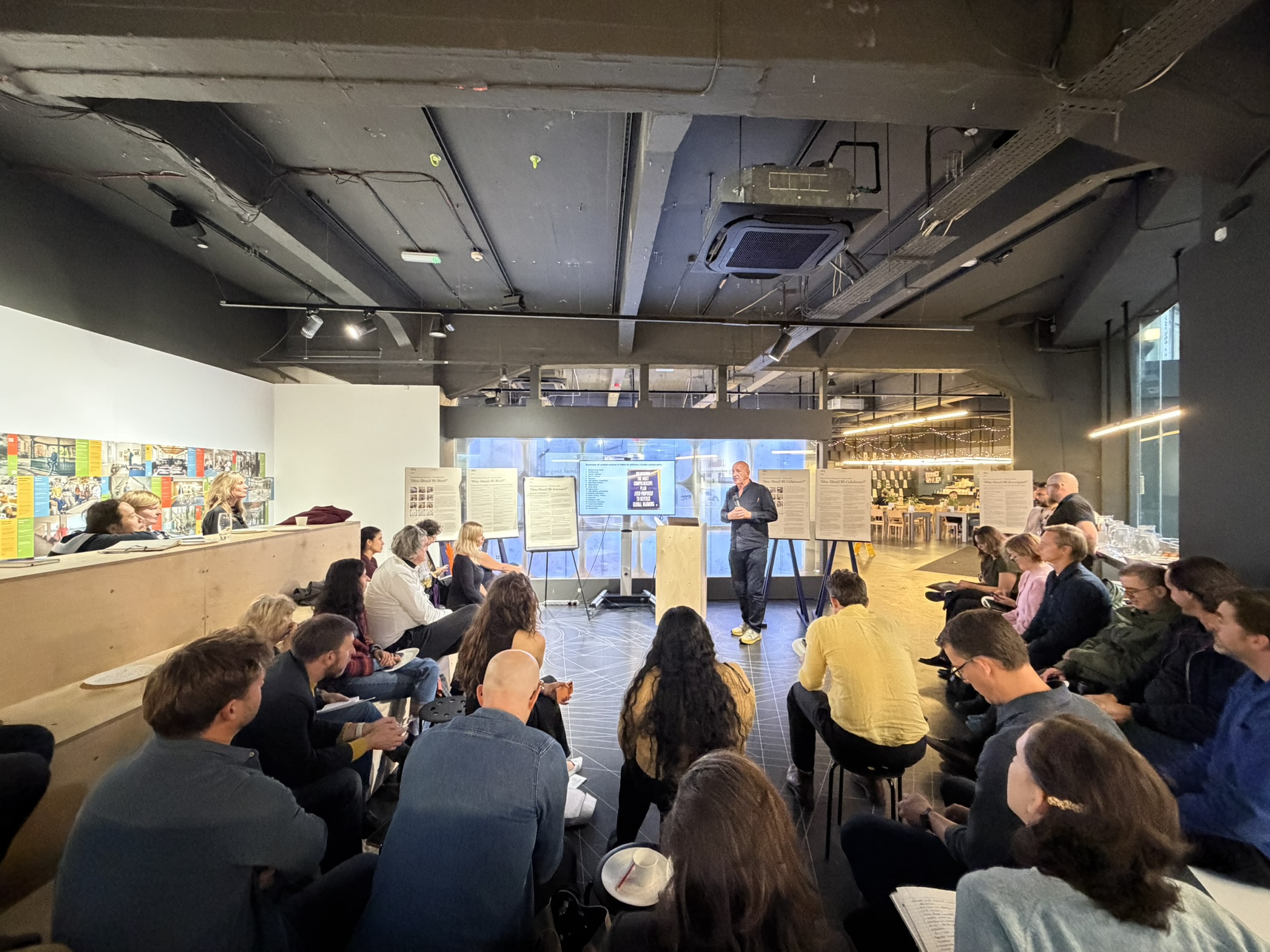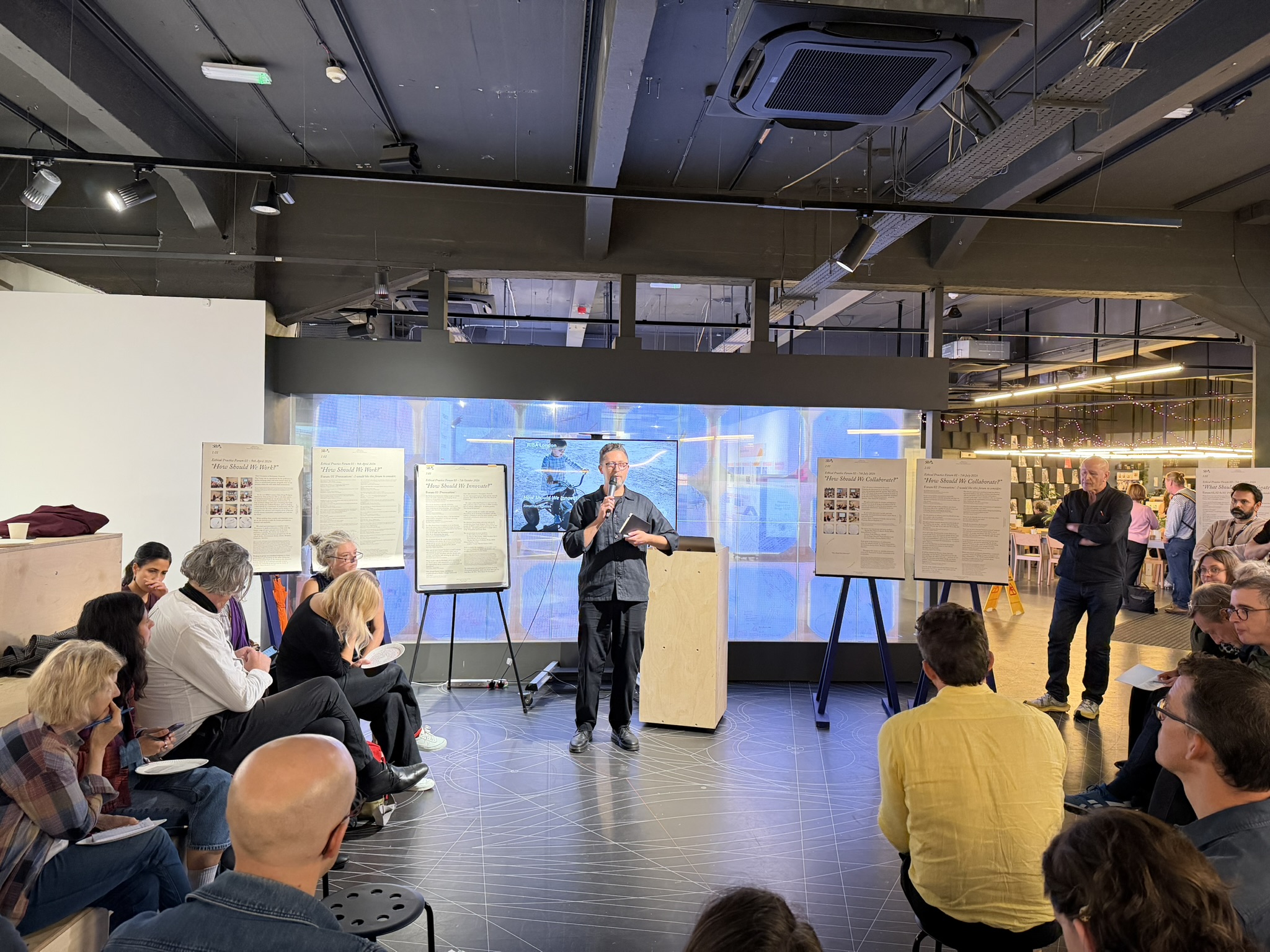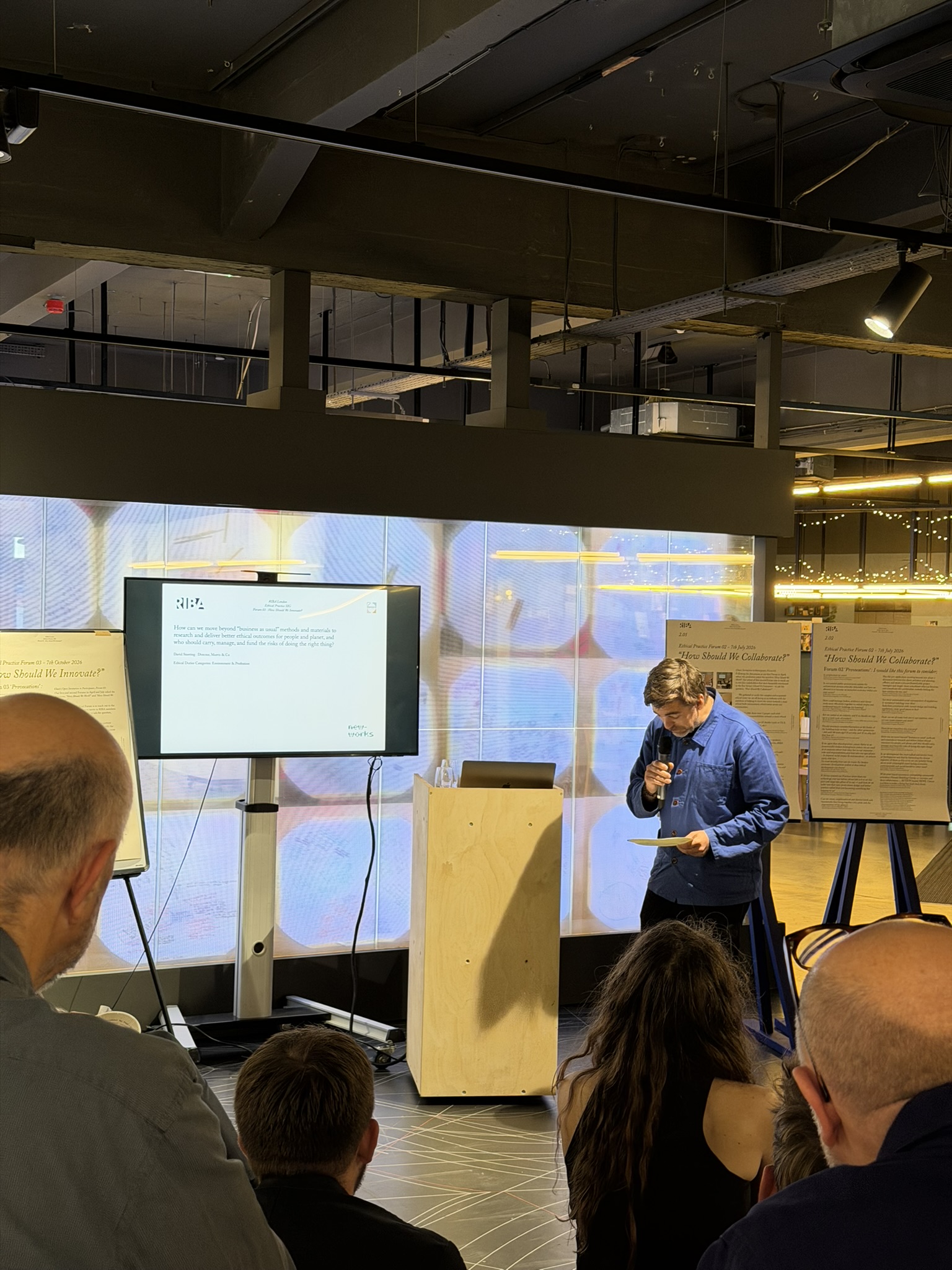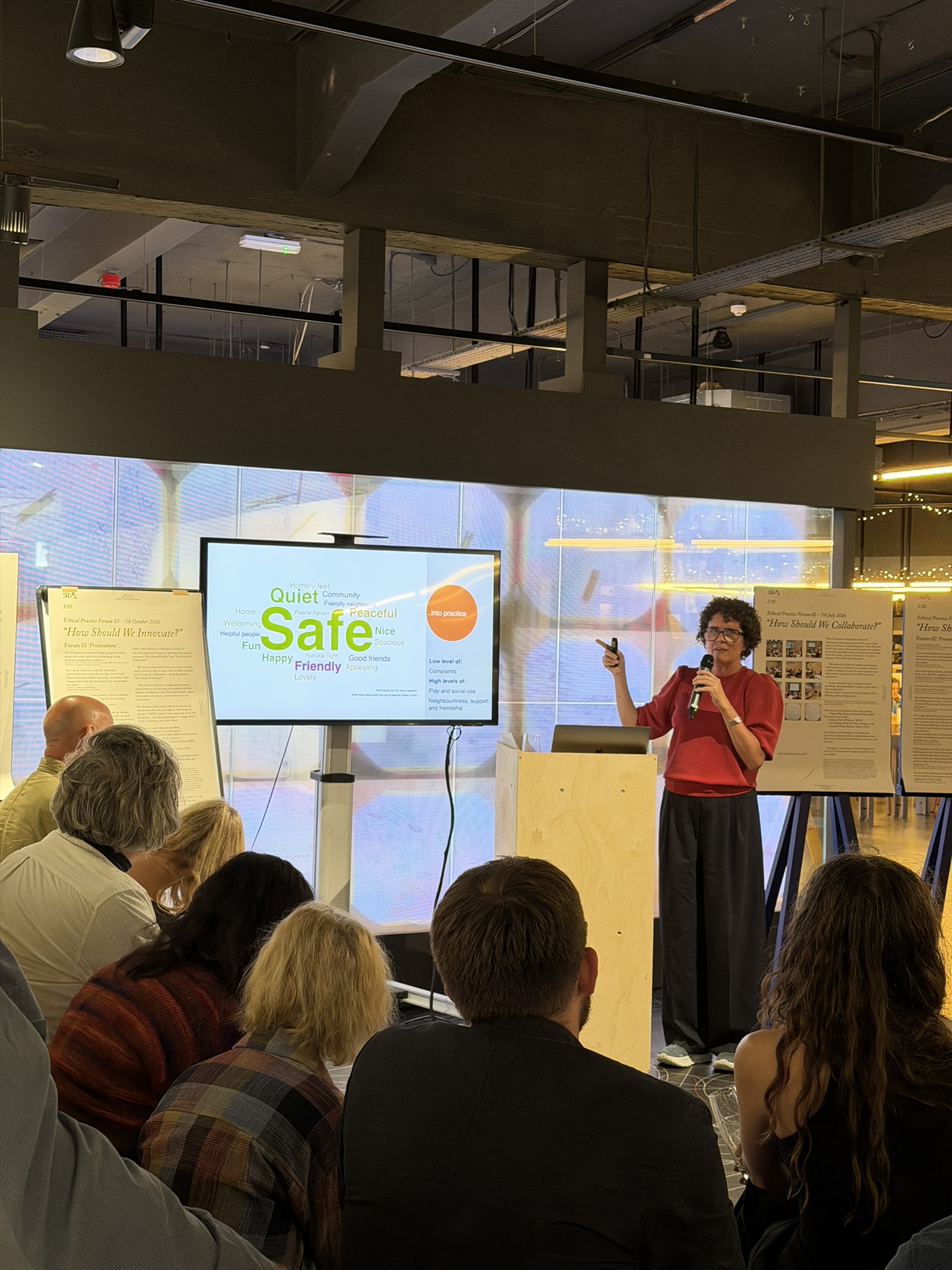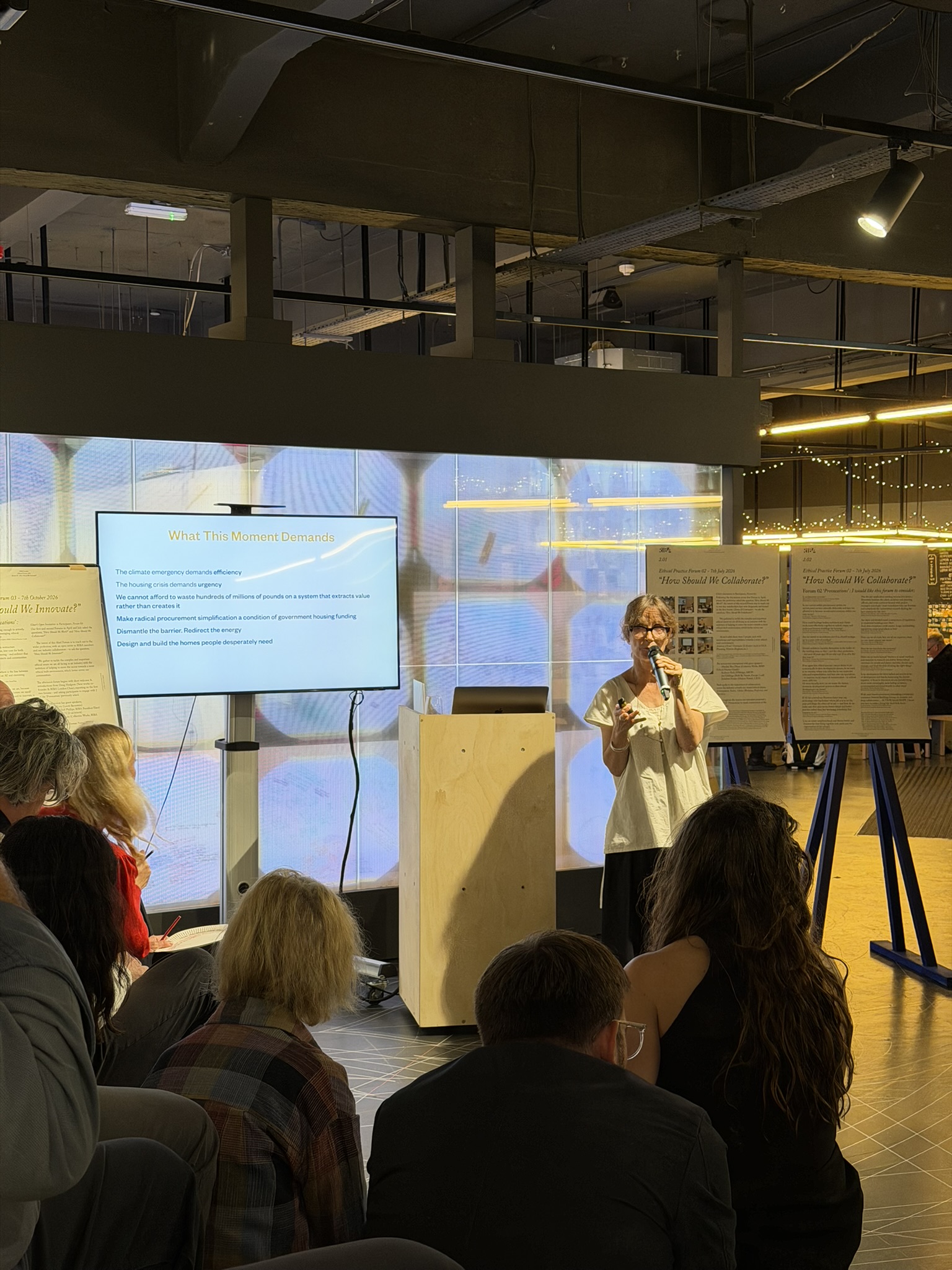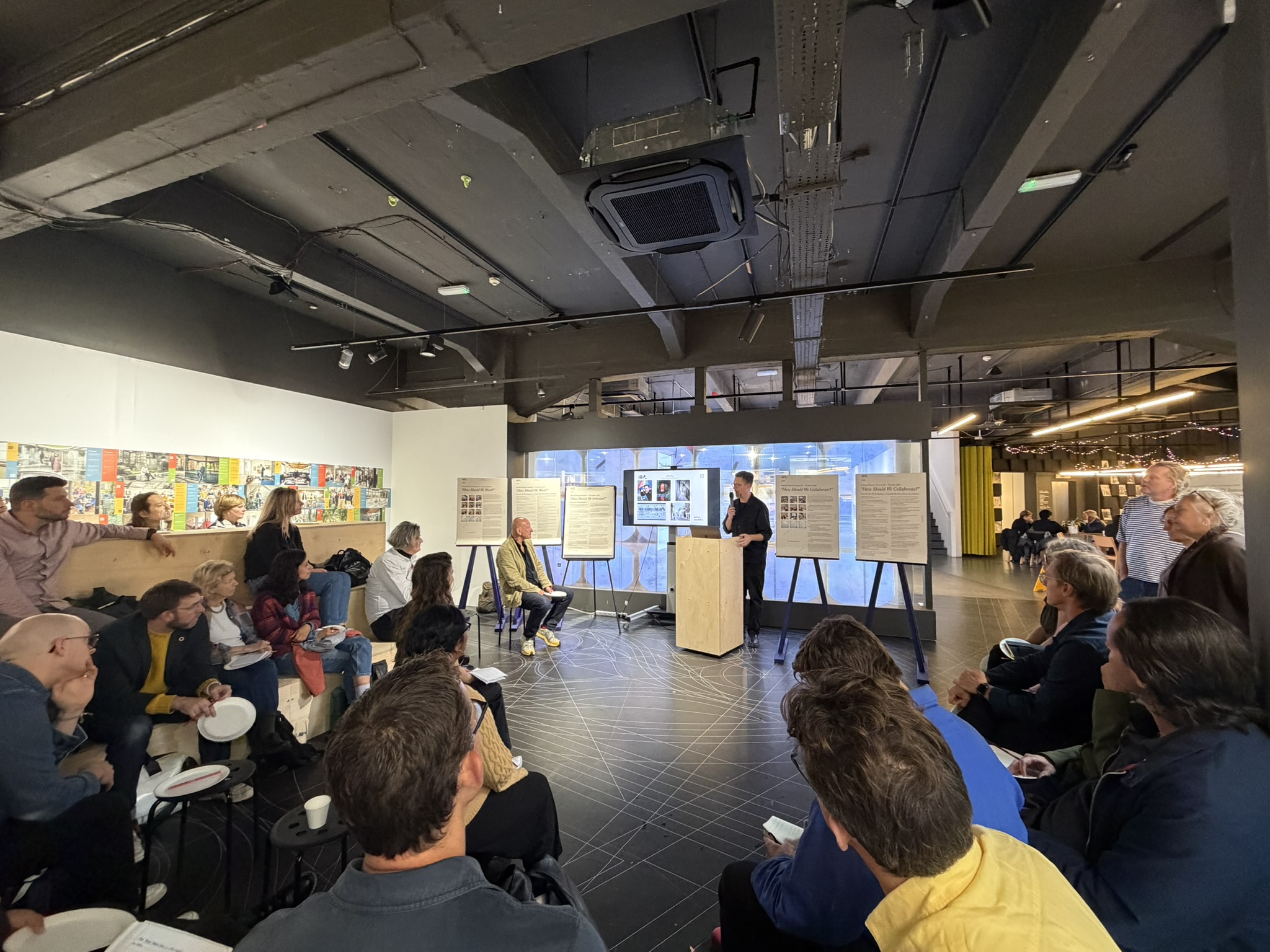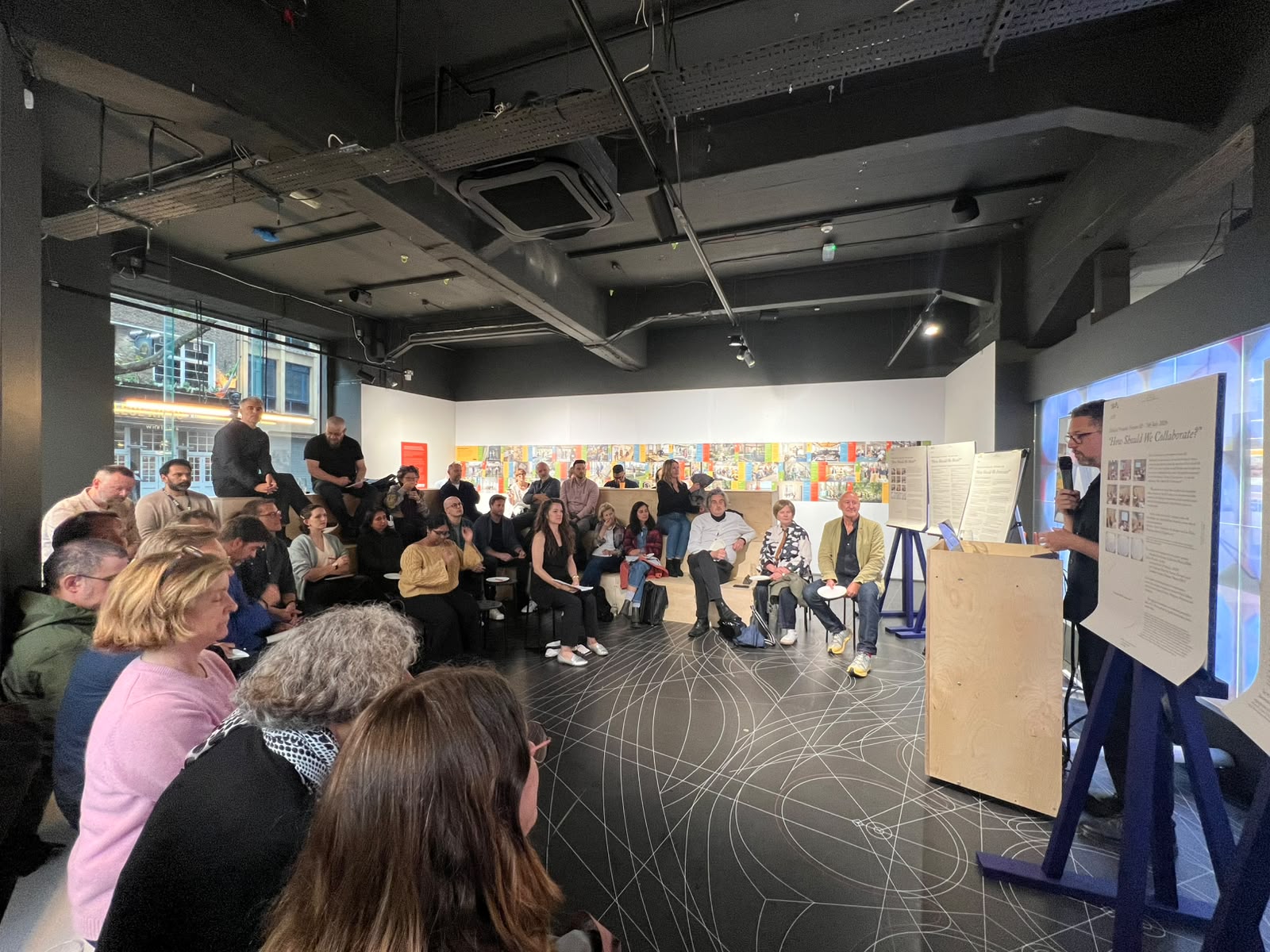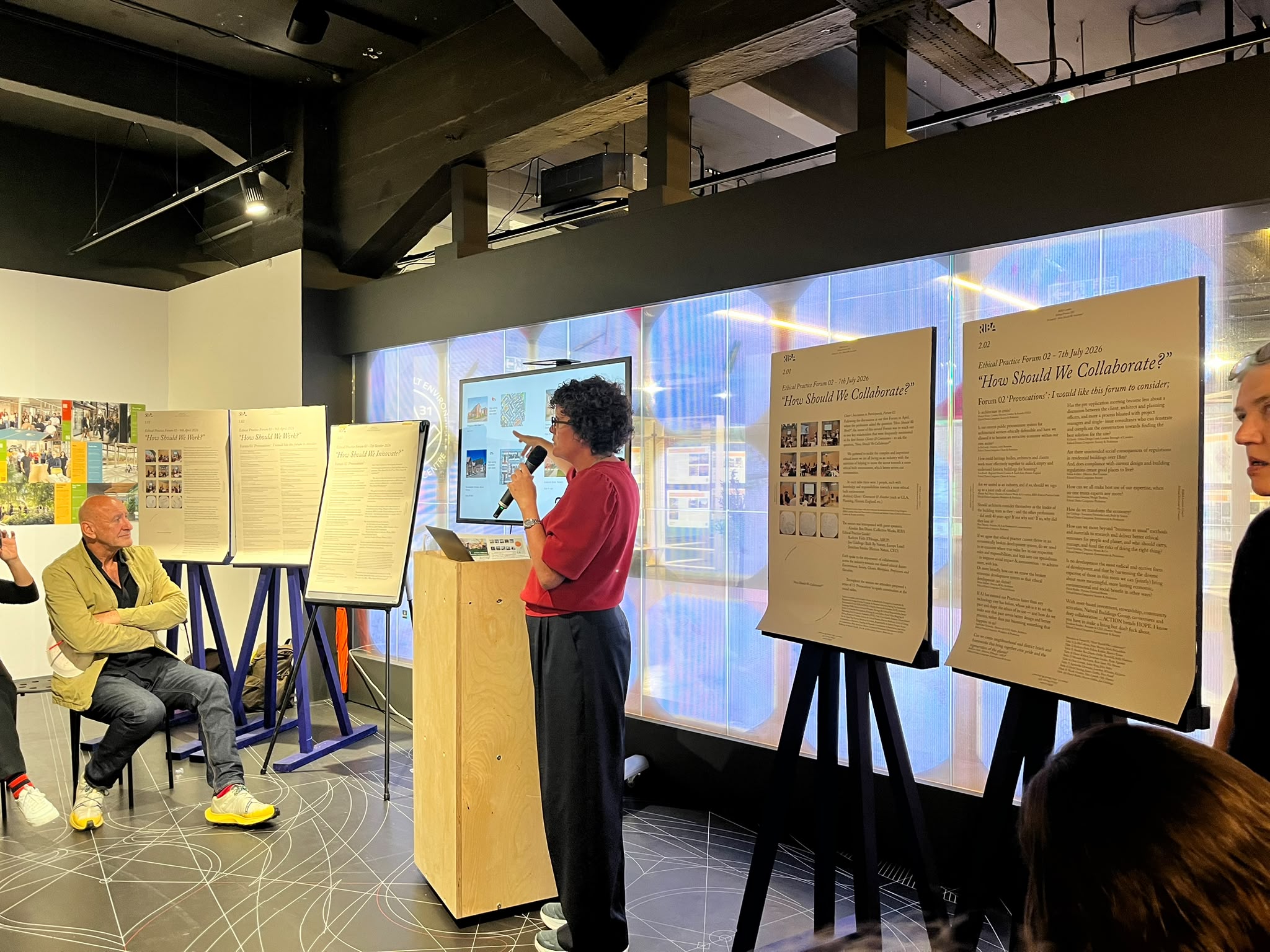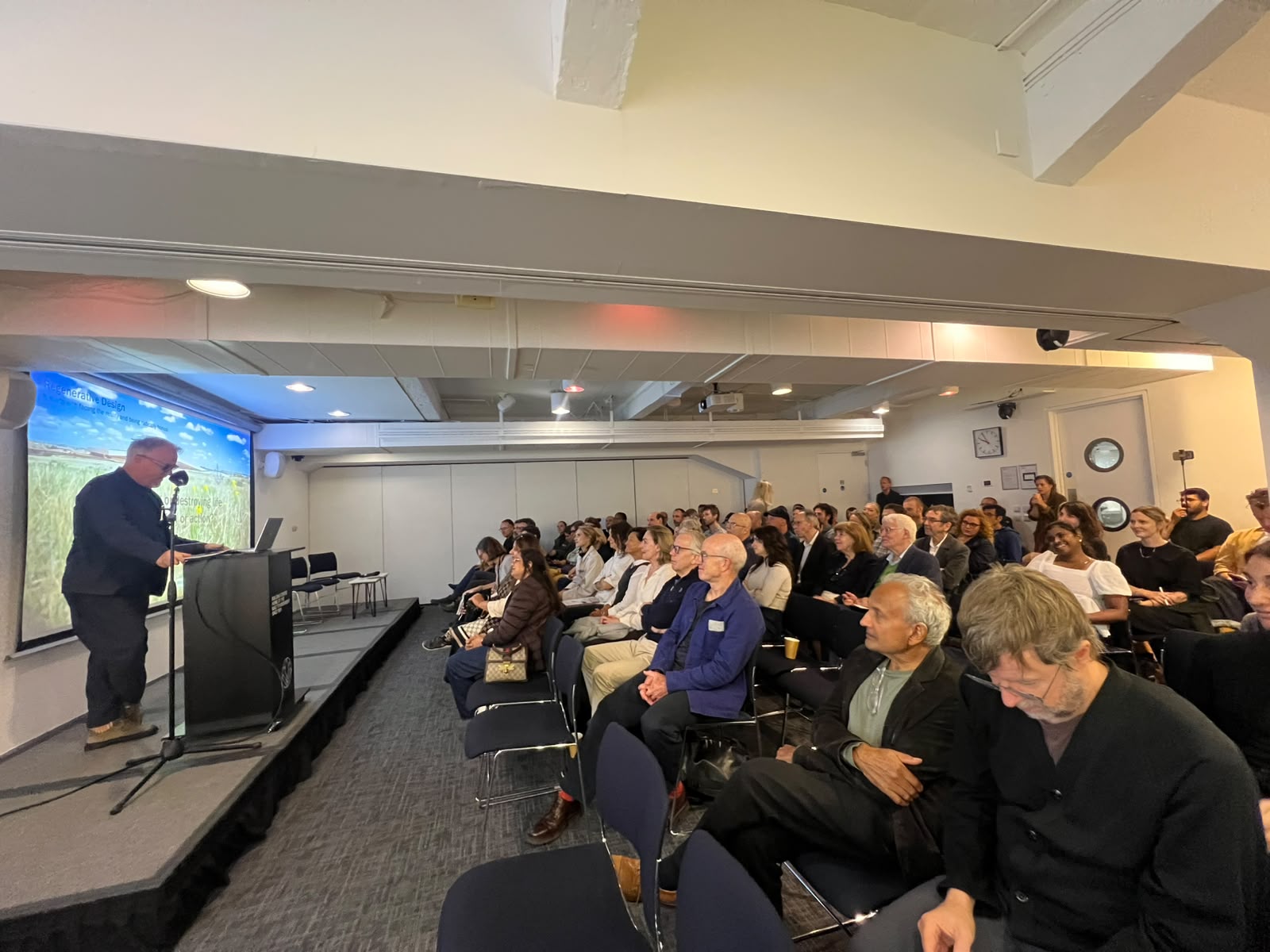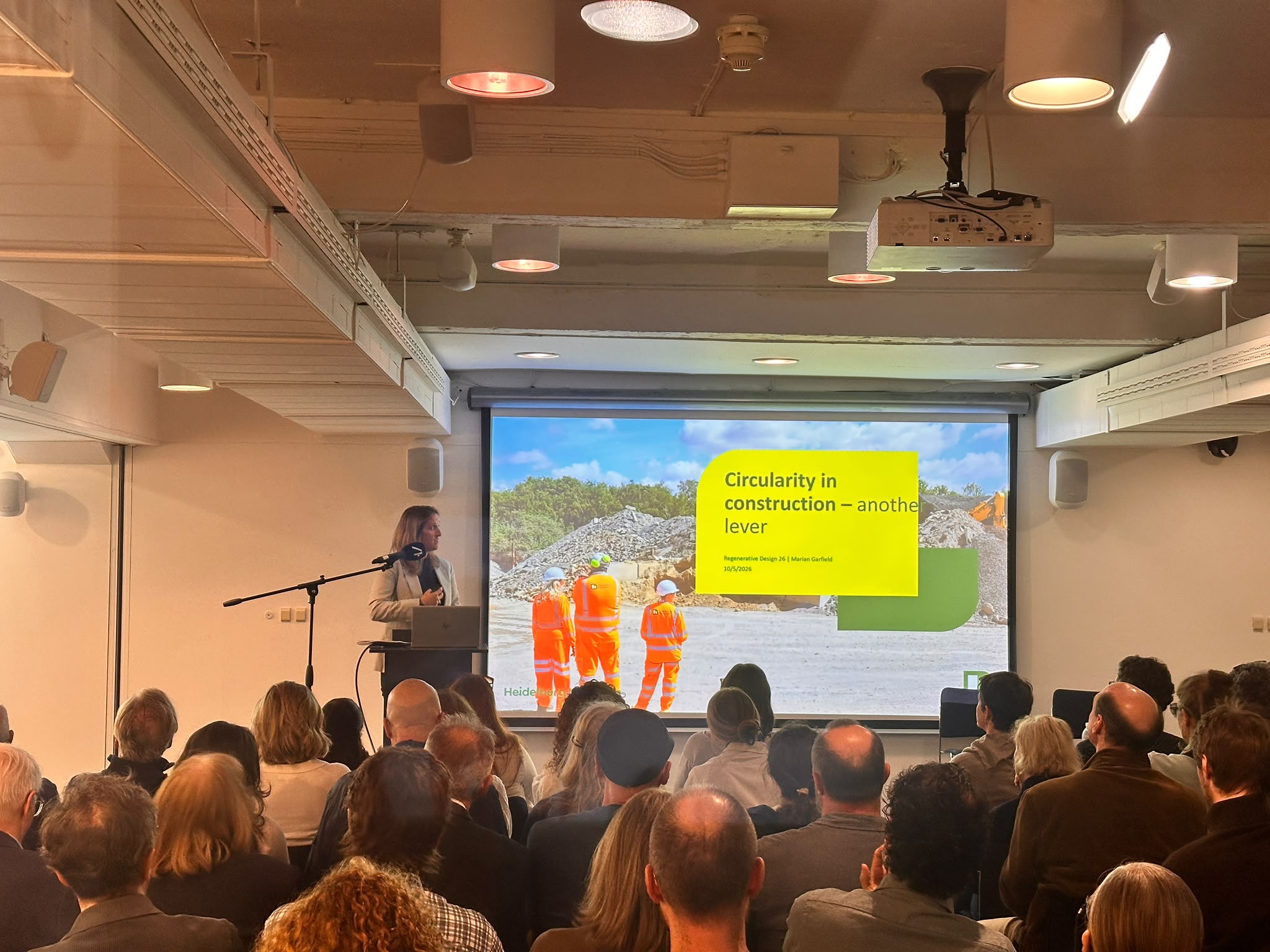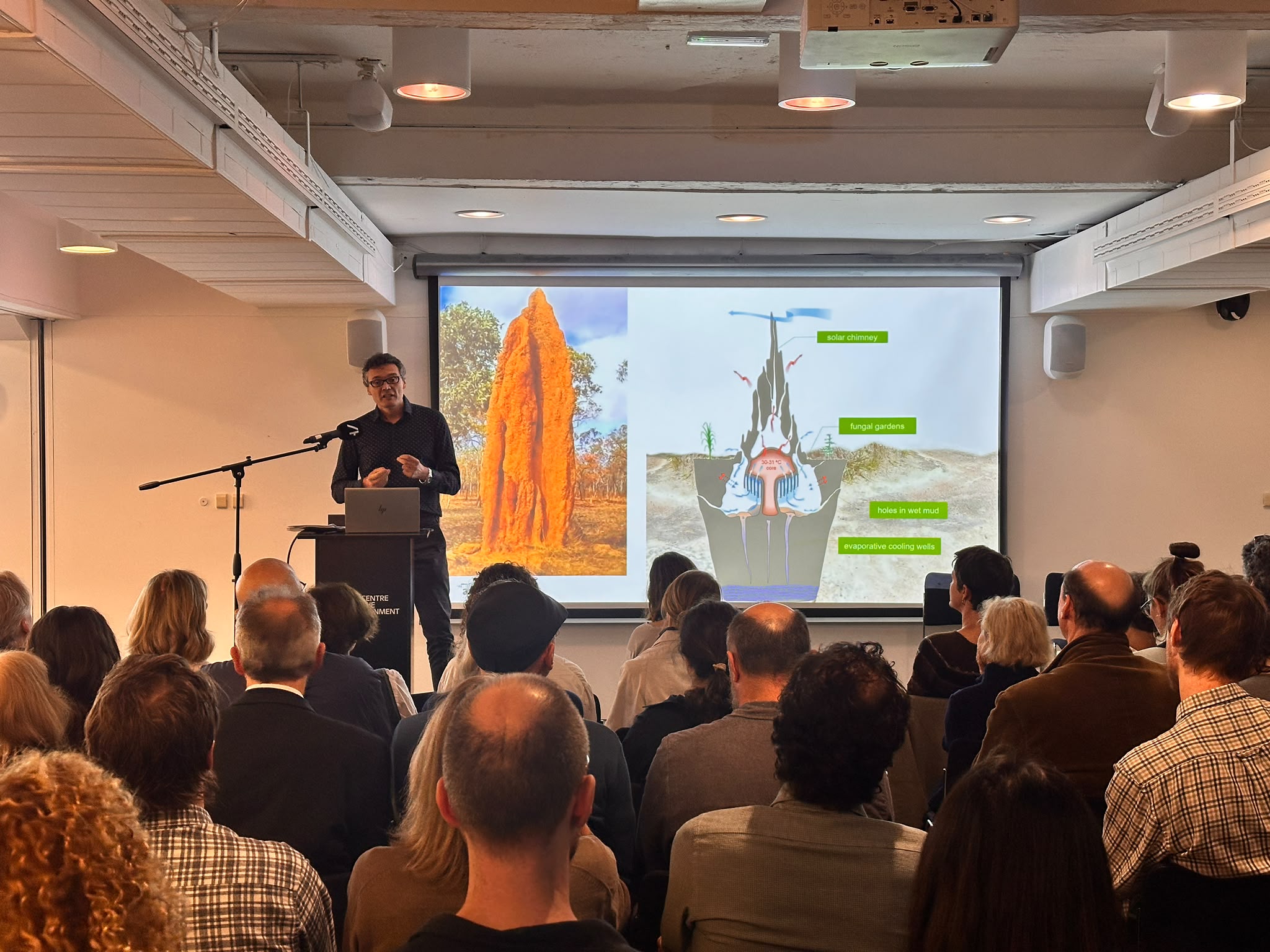
The third RIBA London Ethical Practice Forum brought built environment professionals together at Regenerative Design 2026 to explore how innovation can help renew architectural practice.
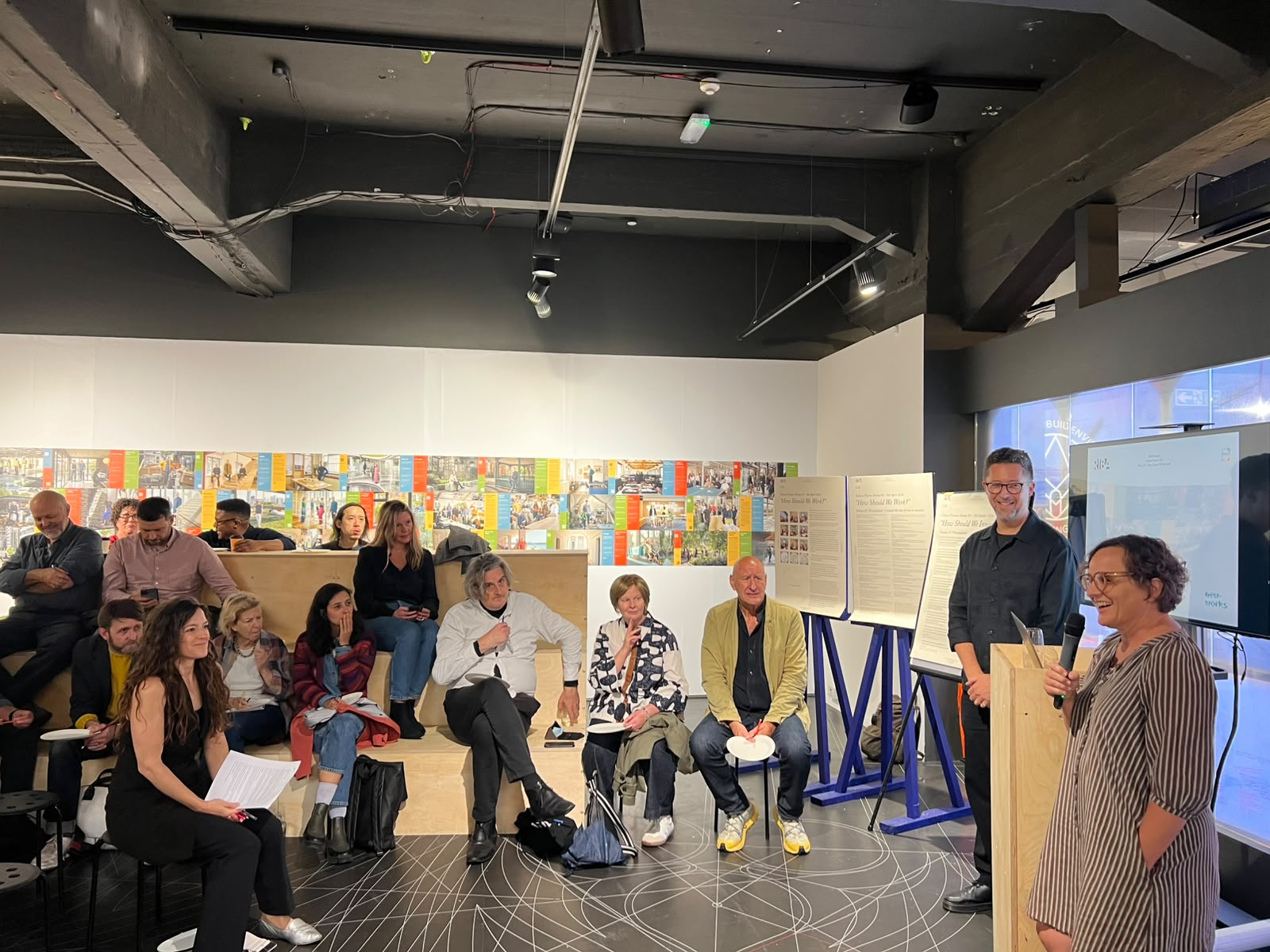
AT Editor Isabel Allen introducing the session alongside Co-Founder of New-works and RIBA London Chair, Doug Hodgson.
This third RIBA London Ethical Practice Forum sought to reach out to the wider profession, with an open invitation to RIBA members and industry collaborators to explore the question, “How Should We Innovate?” Held as part of Regenerative Design 2026, the forum brought participants together to tackle the complex and important ethical issues facing the industry, with the ambition of helping to move the sector towards a more ethical built environment that better serves our communities.
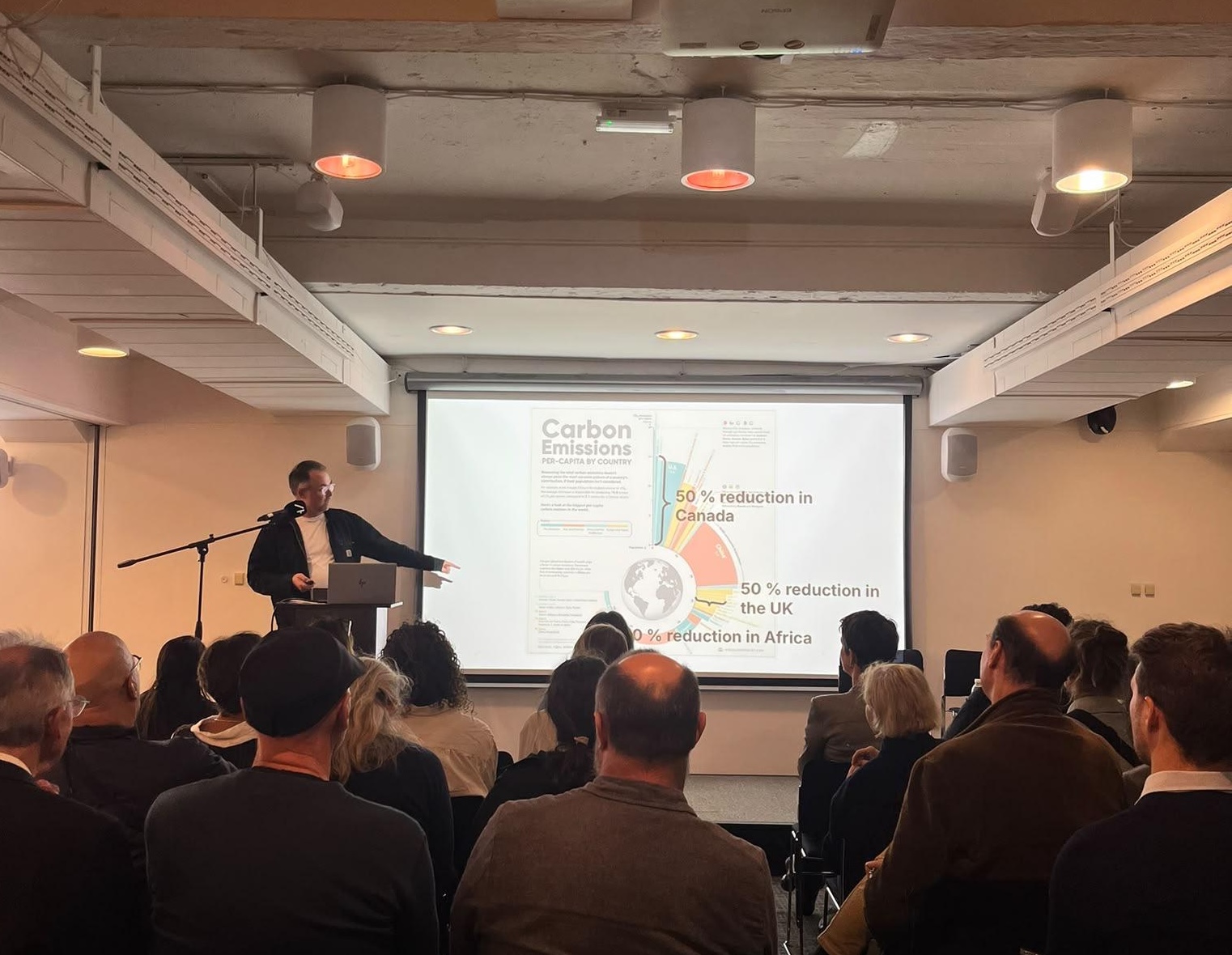
The three-hour afternoon forum was attended by more than 40 built environment professionals and began with a short welcome and introduction from Doug Hodgson (New-works co-founder and RIBA London Chair). Doug reported on the first two Ethical Practice Forums held earlier in the year, which explored the questions “How Should We Work?” and “How Should We Collaborate?” Participants were invited to engage with two of the ethical ‘Provocations’ from the previous forums, which focused on material use, with “What is enough?”, and inclusive language, with “Looking for a more ethical vocabulary to express our values”.
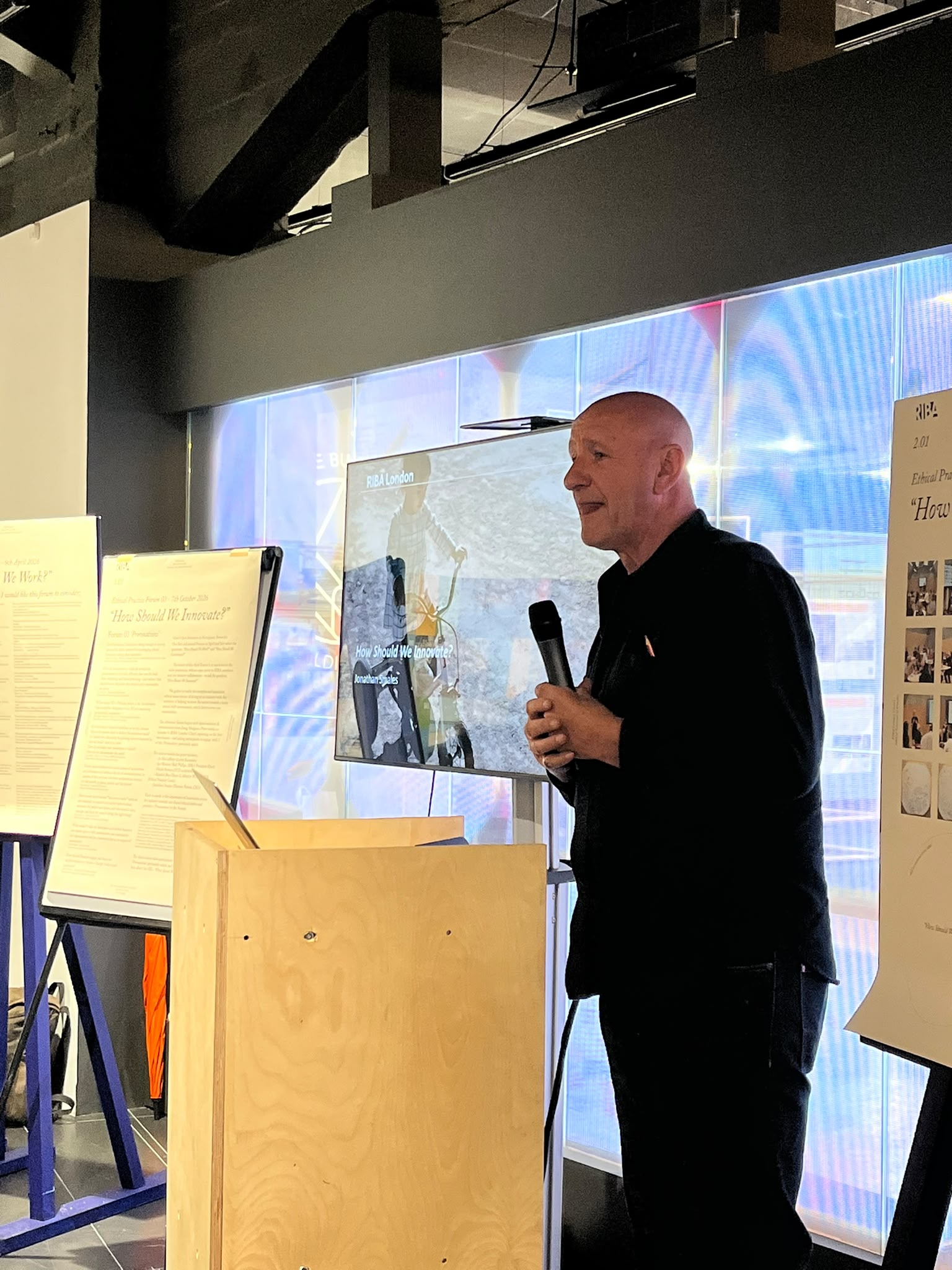
Jonathan Smales. Founder & CEO of Human Nature.
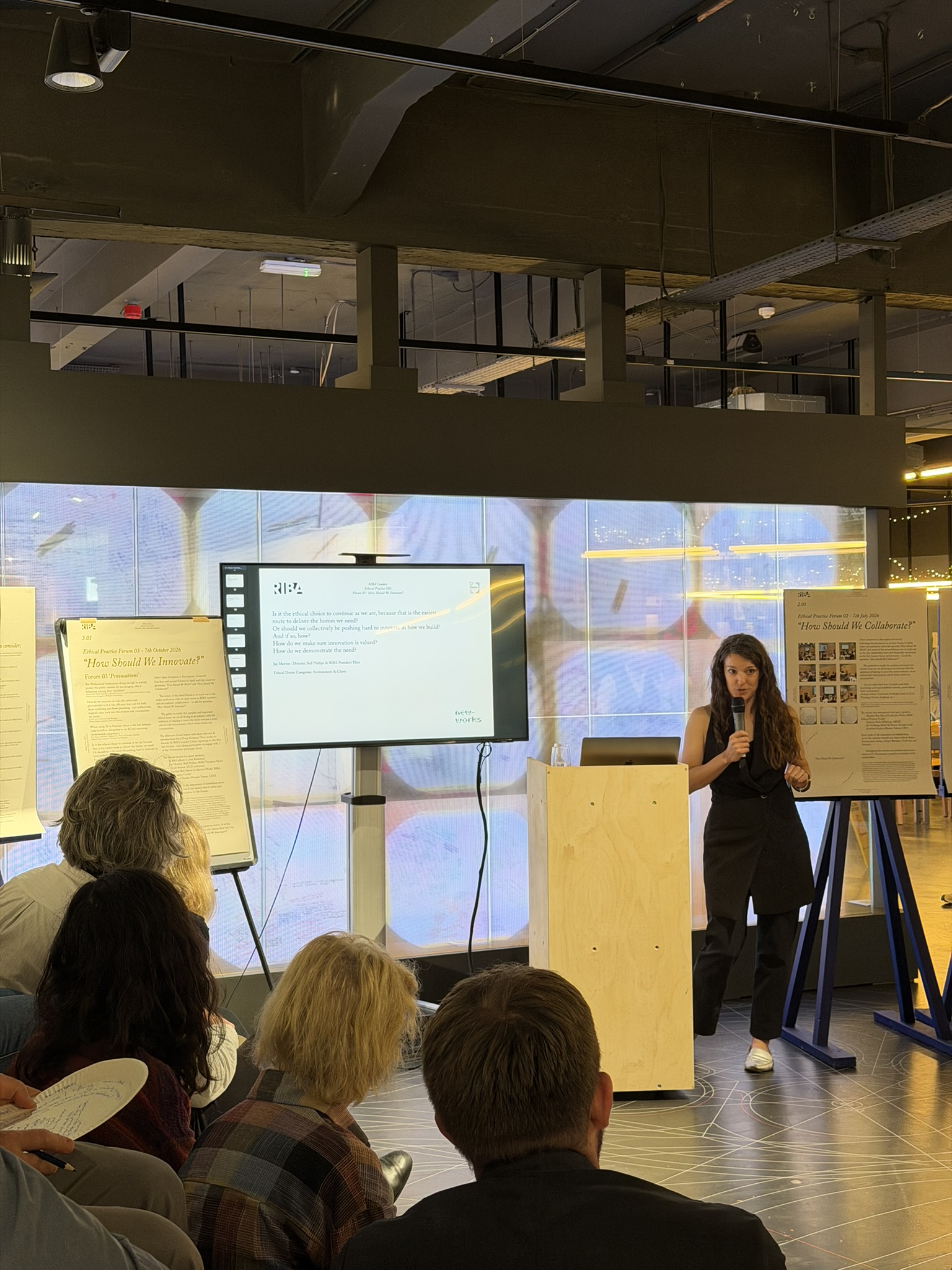
Jay Morton, Director, Bell Phillips Architects and inbound RIBA President.
The second session featured presentations from five guest speakers, each addressing different aspects of ethical practice from their professional experience, with a focus on the importance of innovation across the industry in meeting our shared ethical duties. Each speaker ended their 10-minute presentation with a ‘Provocation’ for the forum to consider.
Alasdair Ben Dixon (Collective Works & Co-author RIBA Ethical Practice Guide) discussed the ethics of choosing projects and asked, “Are we doing enough to actively protect the public interest by encouraging ethical behaviour?”
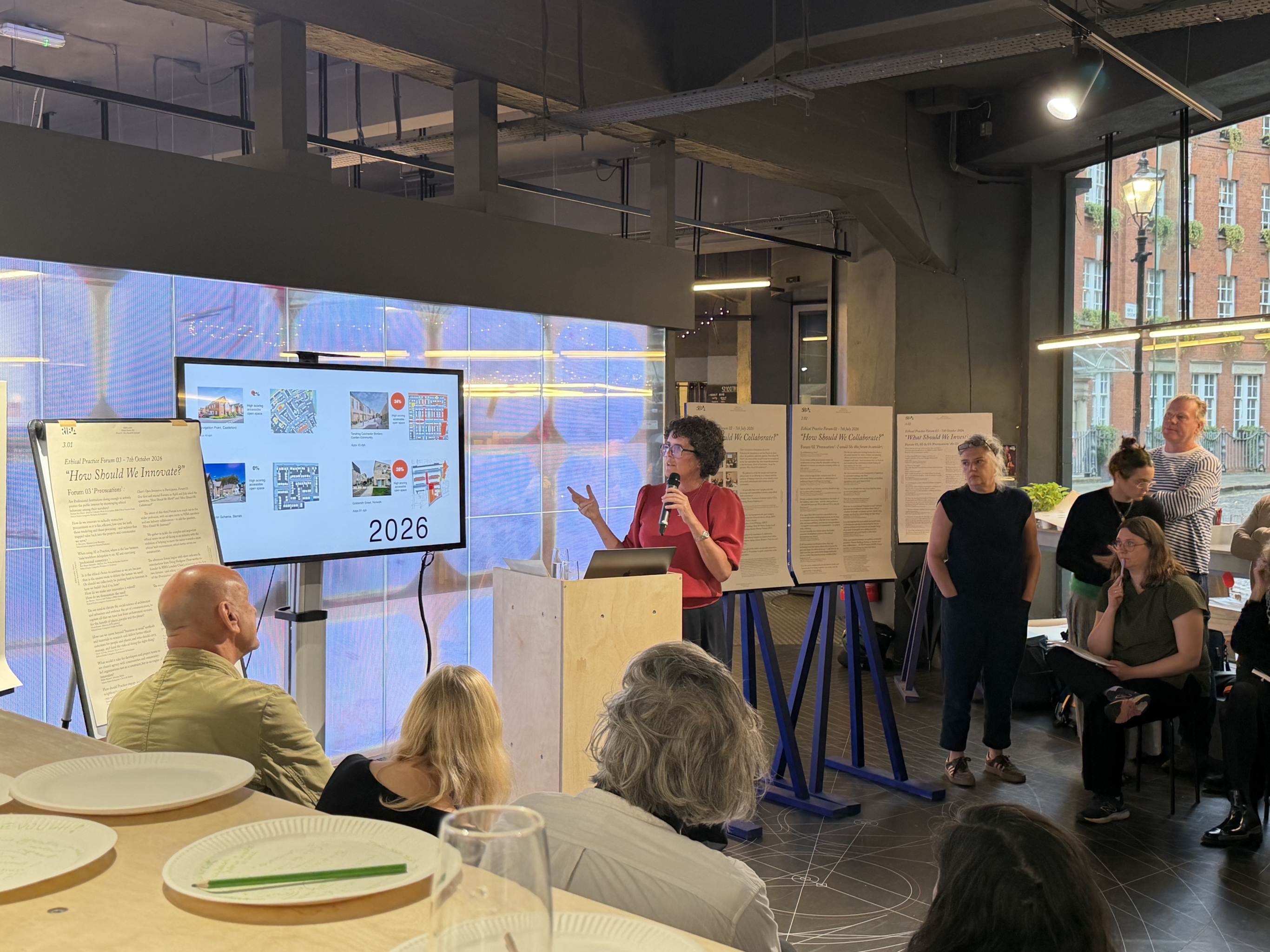
Jo McCafferty (Levitt Bernstein) spoke about the wastefulness and extractive processes within the current procurement system and asked, “How do we innovate to radically restructure procurement … to redirect that trapped value back into the projects and communities?”
Jay Morton (Bell Phillips and RIBA President-elect) asked the forum to consider whether economic viability should be a core design principle of ethical practice, posing the question, “How do we make sure innovation is valued?”
Dinah Bornat (ZCD Architects) spoke about the need to “… elevate the social science of architecture and urbanism” and asked whether the profession needs to “embrace the art of communication?”
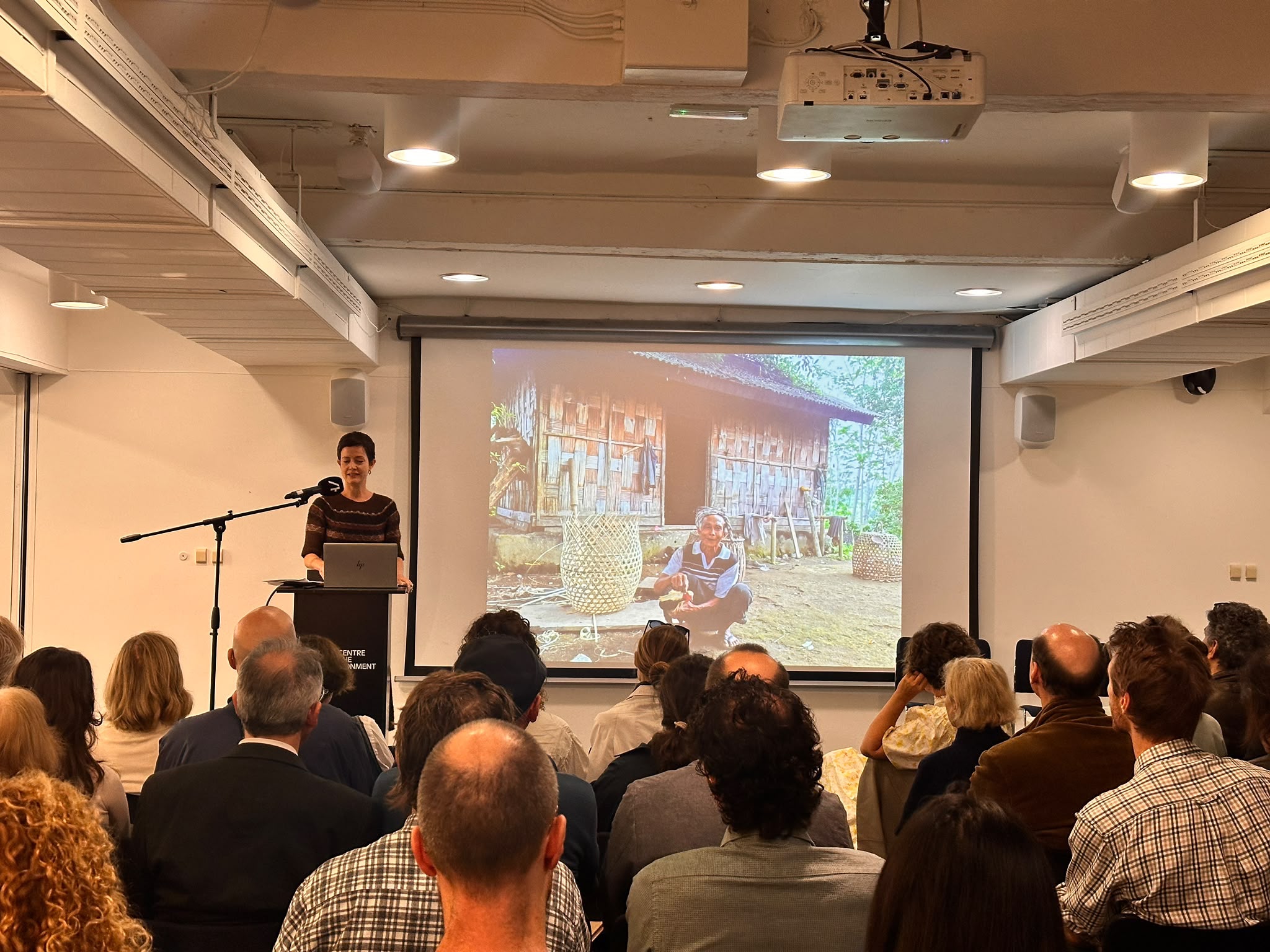
The final speaker of the afternoon was Jonathan Smales (CEO, Human Nature), who spoke passionately from the perspective of a developer client about his vision for “neighbourhoods as System Change” to create a more ethical built environment.
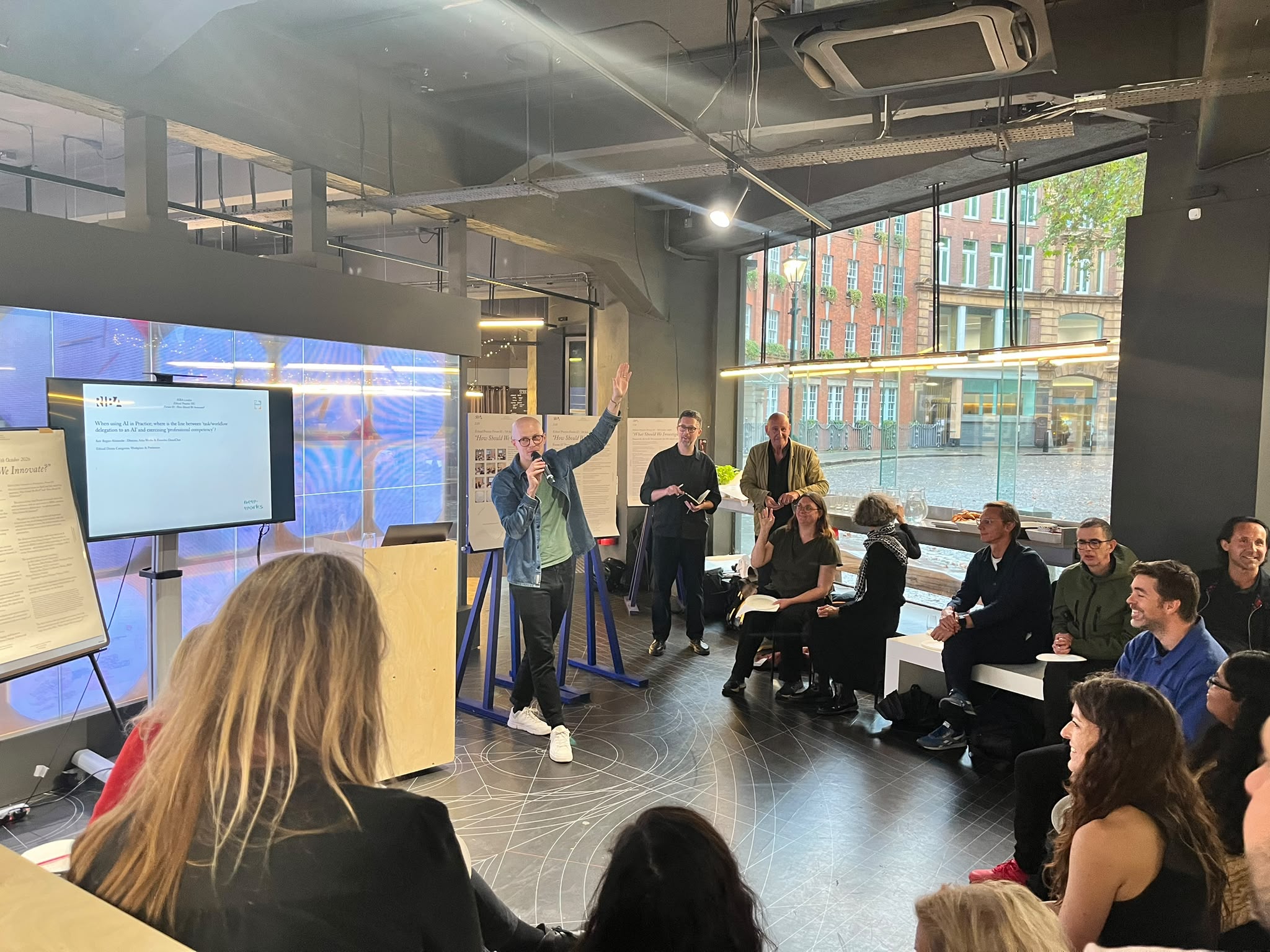
Three participants also contributed short provocations to the forum. Keir Regan-Alexander (Arka Works and founder of OmniChat) questioned where the ethical line lies regarding “delegation to an AI and exercising professional competency?” David Storring (Morris & Co) asked, “How can we move beyond ‘business as usual’ and make circularity and material reuse the norm?” Mellis Haward (Archio) offered a provocation focused on “shared agency with communities … as an engine of innovation.”
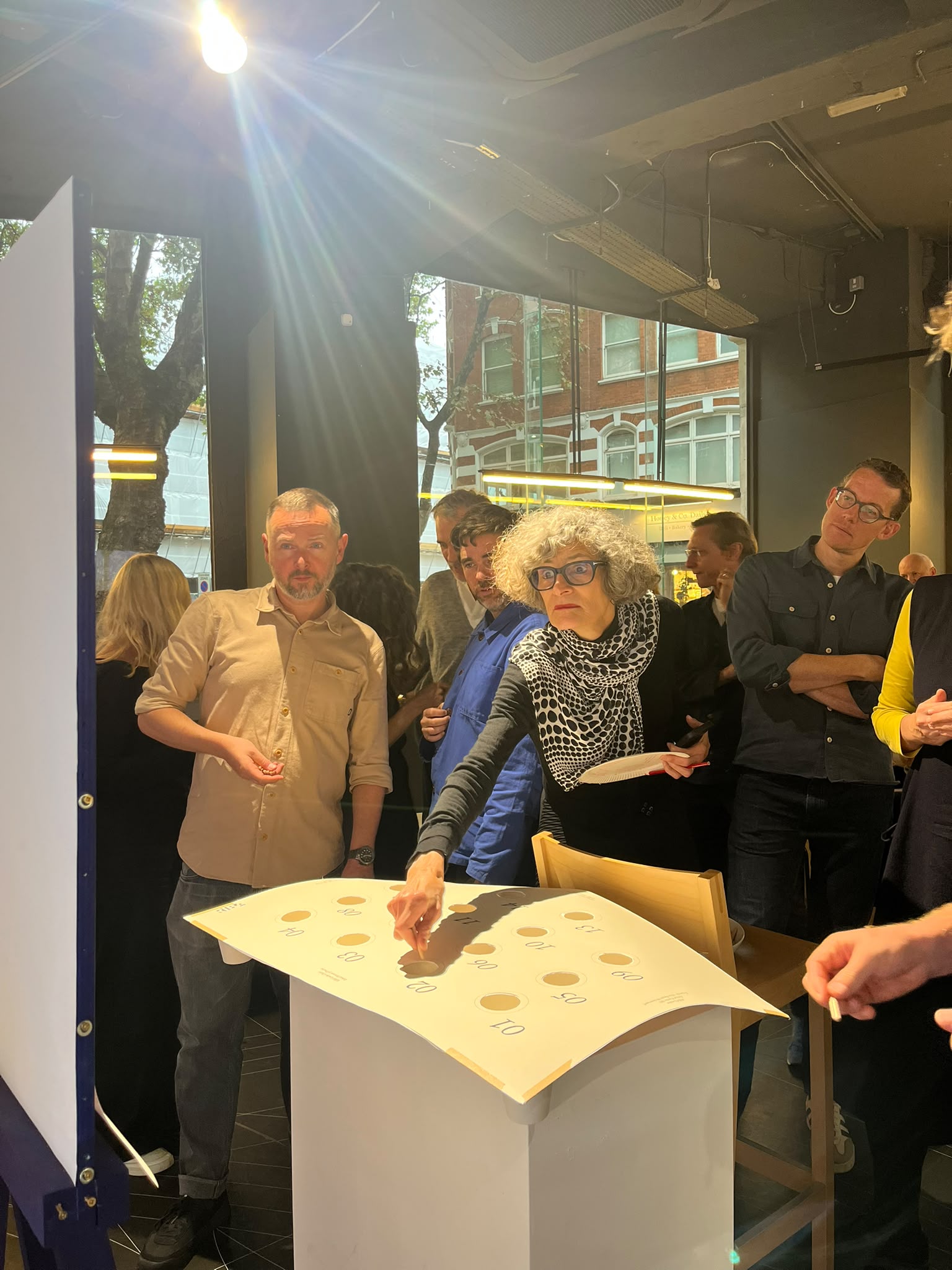
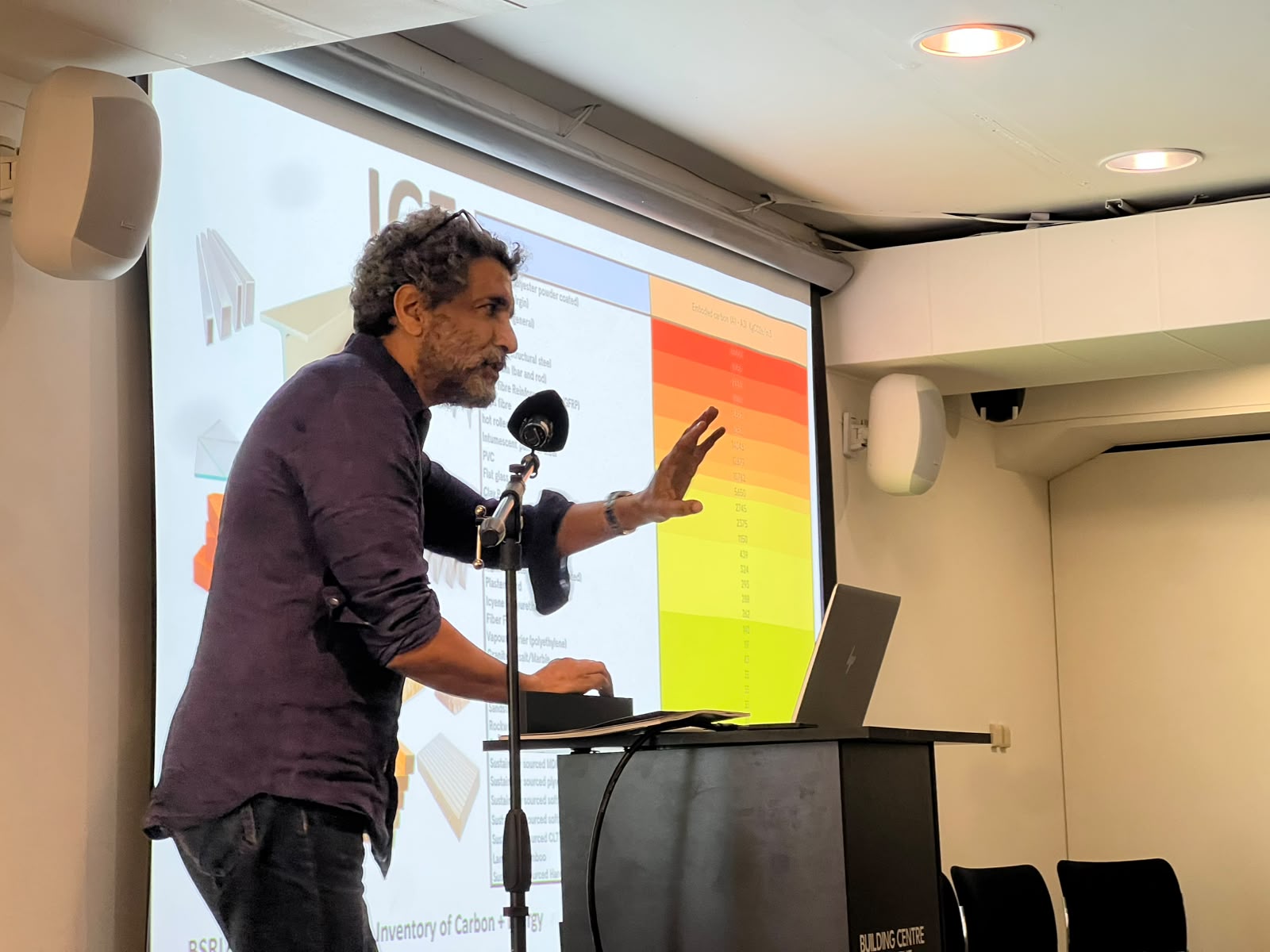
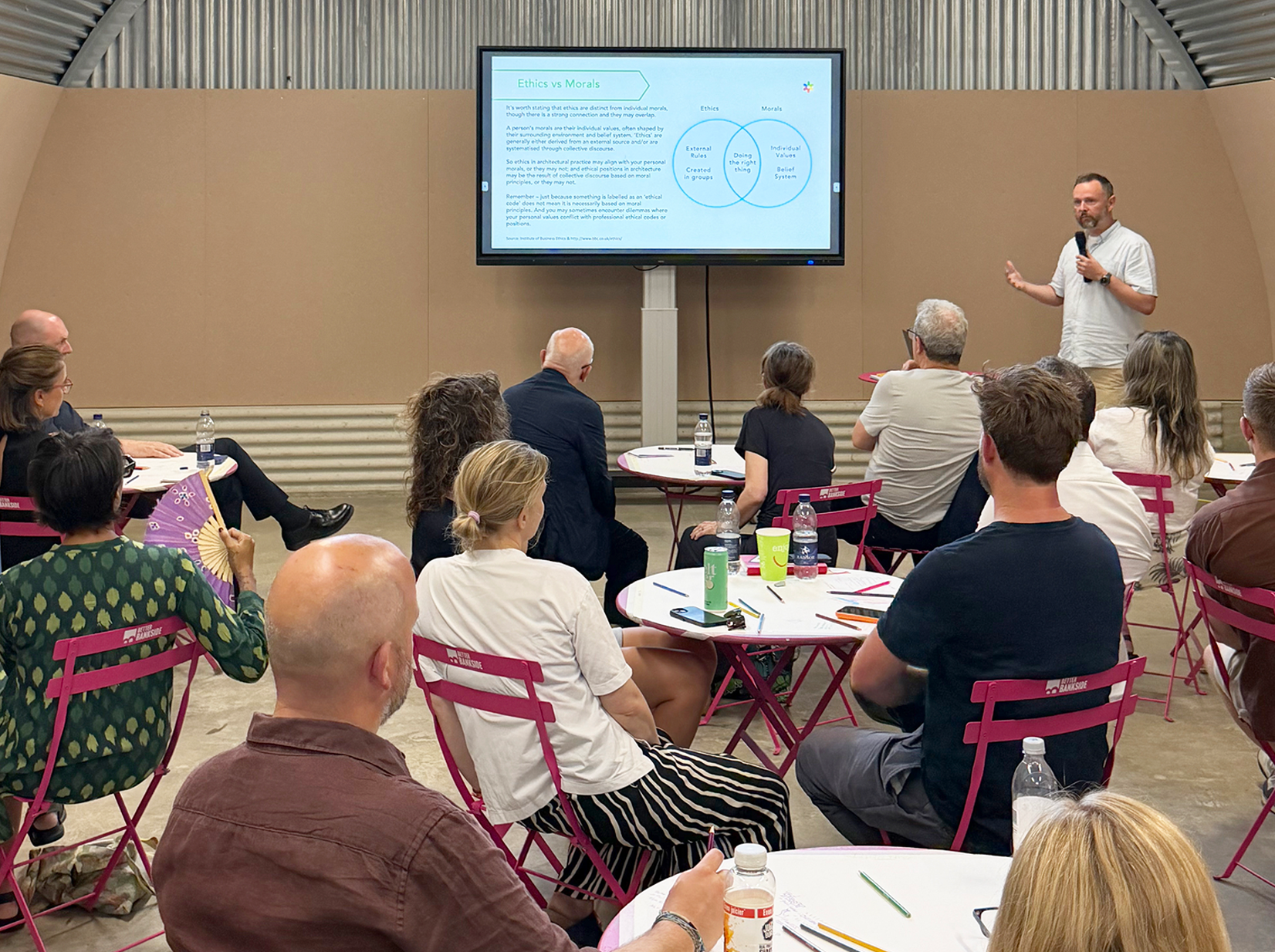
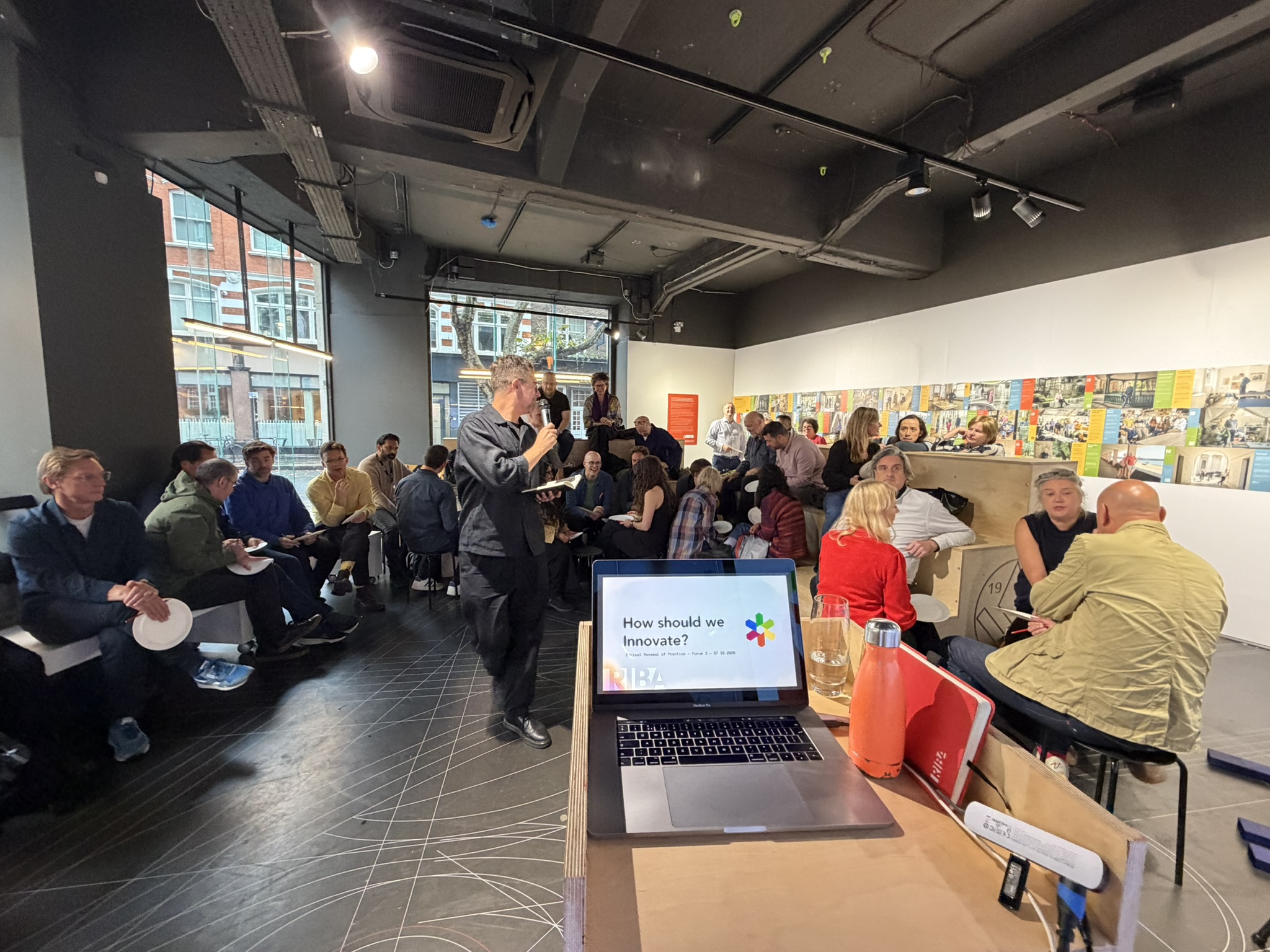
Workshop in action at the Building Centre.
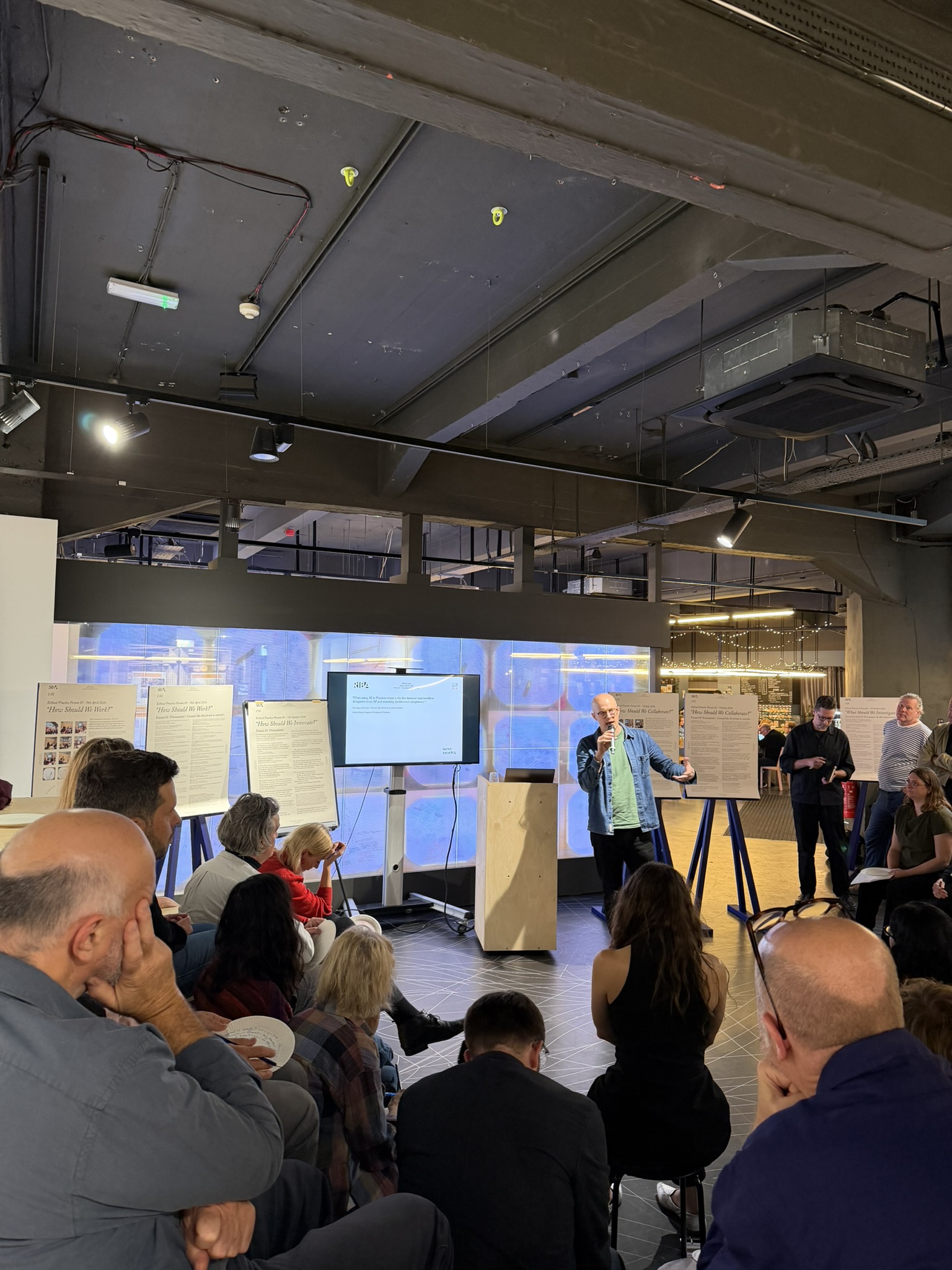
Keir Regan Alexander, Principal at Arka Works.
The final session asked participants, “What Should We Investigate?”, with a review of 14 ‘Provocations’ selected by Doug and Alasdair from the first three forums. To help guide the future work of RIBA London’s Ethical Practice SIG, participants were invited to select the five provocations they considered most urgent based on their own experiences of contemporary practice. The most votes were received for provocations relating to the ethical practice topics of Procurement, Specialism & Collaboration, Public Interest & Social Purpose, Economic Viability, and Tech & AI Revolution.
The three RIBA London Ethical Practice SIG forums held this year have identified areas of common ground and disagreement, and surfaced practical insights that are being considered by the group to inform its future work and conversations across RIBA and the wider industry. The aim is to increase awareness of the need for ethics to be central to the renewal of architectural practice.
Topics discussed include: Climate & Biodiversity Emergency, Sustainable & Regenerative Design, Circular Economy & Material Lifecycles, Saying No, Sustainable Development Goals (SDG & UNGC), Equity, Diversity & Inclusion (EDI), Inclusive Language, Public Interest & Social Purpose, Heritage & Cultural Responsibility, Social Justice, Procurement Systems, Community Participation, Housing & Land Ethics, Social Value Mapping & Measuring, Post-Occupancy Evaluation (POE), Time-Cost-Quality Balance, Clients’ Ethical Duties, Economic Viability, Service & Critical Practice, Practice Resilience, Cost of Living, Fair & Equal Pay, Practice Structure & Culture, Responsibility & Action Groups, Access & Retention to the Profession, Teaching & Research, Continuation & Innovation, Specialism & Collaboration, Why Architects Matter, Continuing Professional Development (CPD), Wellbeing & Mental Health, Tech & AI Revolution, and Support Networks.
More pictures