Mexican practice LANZA Atelier’s 2026 Serpentine Pavilion uses a winding brick wall, passive cooling strategies and a commitment to reuse to create a playful and porous intervention in Hyde Park.
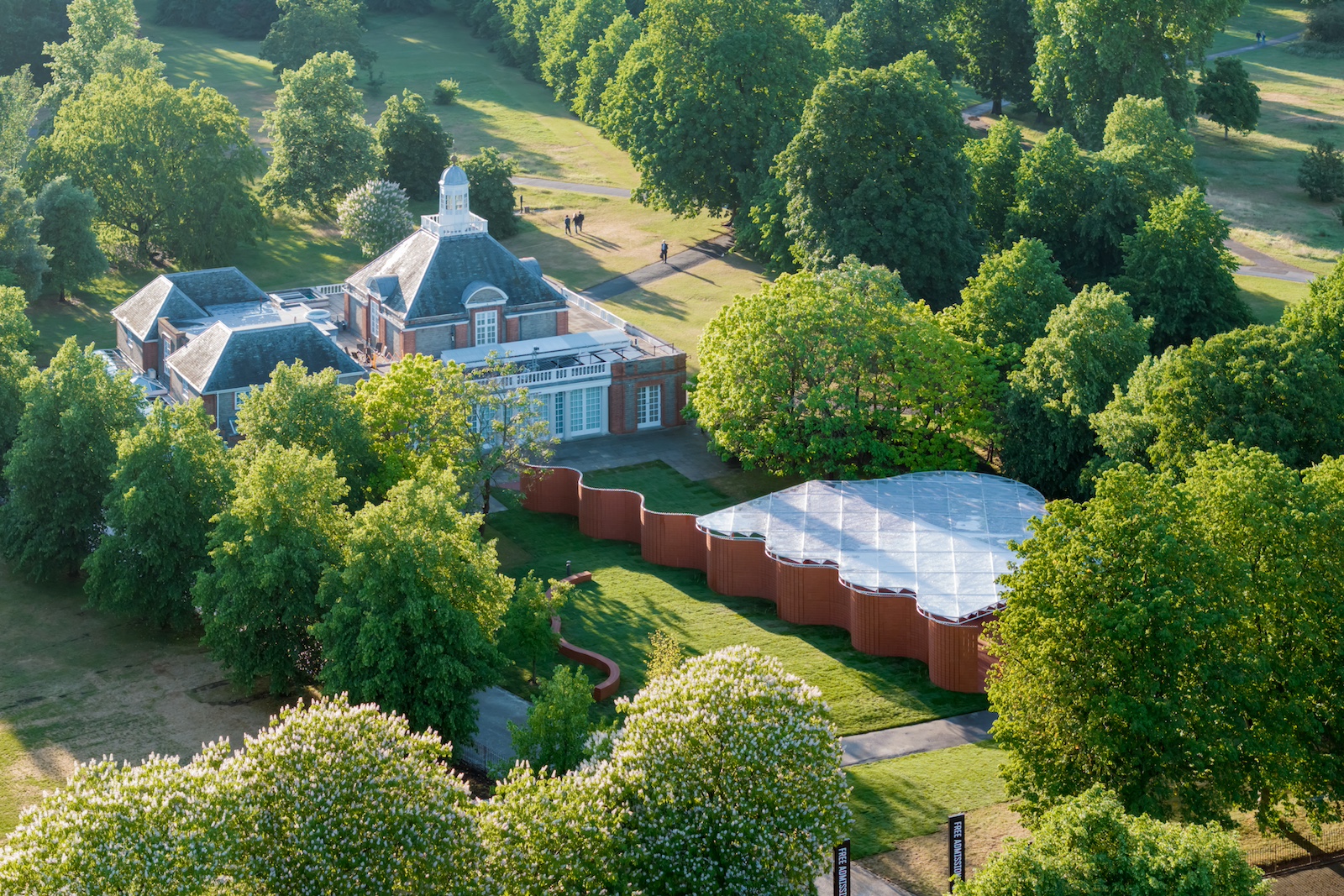
The 2026 Serpentine Pavilion by LANZA Atelier uses a sinuous crinkle-crankle brick wall to draw visitors from the gallery into a sheltered, naturally ventilated gathering space.
On a rainy Wednesday morning in June, the 2026 Serpentine Pavilion was unveiled to the press. Despite the less-than-ideal conditions to reveal your first built work in the UK, Mexican studio LANZA Atelier’s work impressed, not just because it provided ample shelter from the elements – which can’t be said for many of its predecessors – but because it supplied new sense of flow, rhythm, even a dash of whimsy to this sought-after patch of Hyde Park.
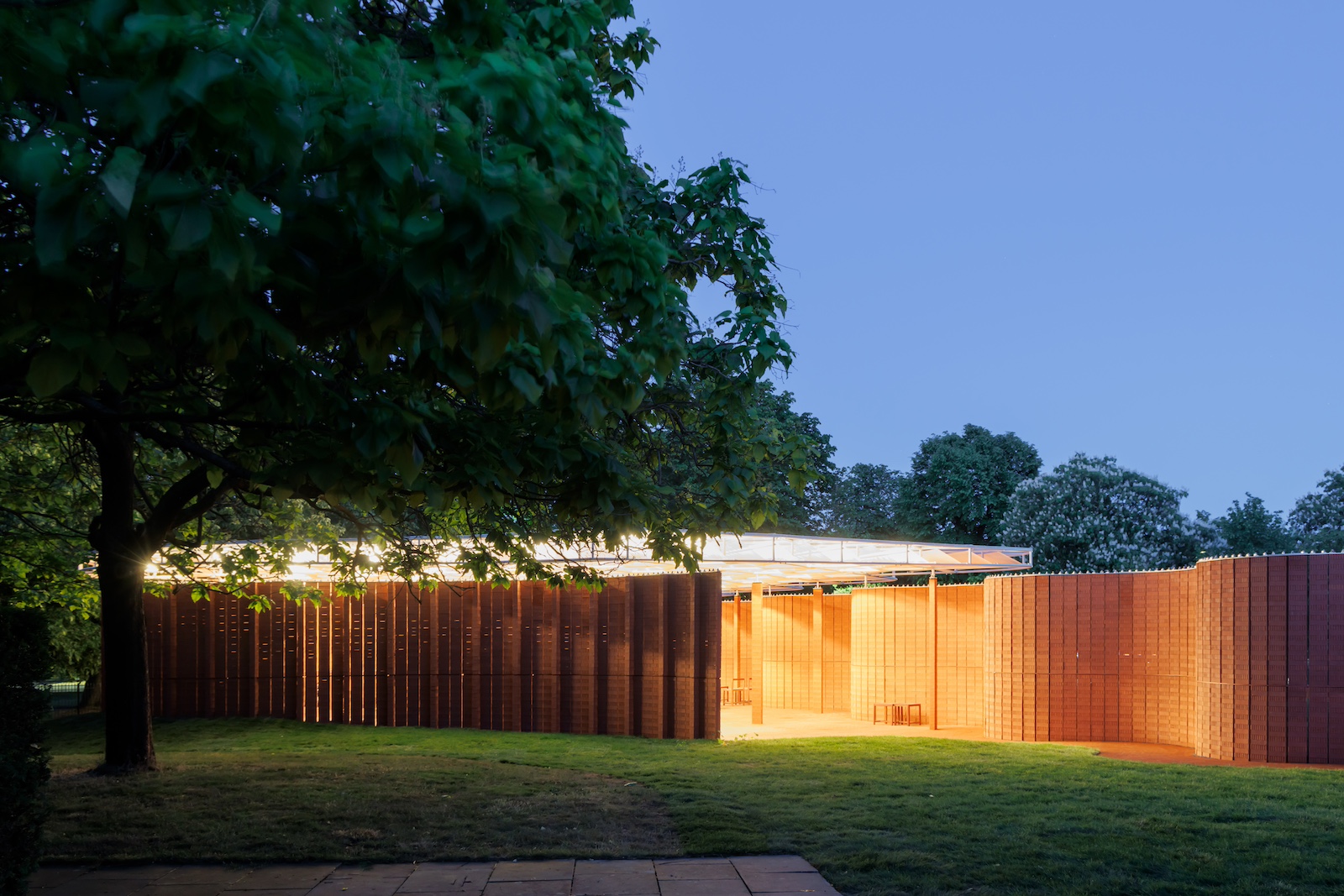
The pavilion’s showpiece is its crinkle-crankle wall: a brick flourish that undulates its way from the Serpentine Gallery to the main road. While this serpentine structure, known formally as ‘a serpentine’ is clearly a nod to its commissioner, it also serves as a means to invite visitors in, stretching out beyond the pavilion’s main footprint to the gallery.
It’s easy to see how younger visitors will enjoy this aspect of the pavilion: the depth of each undulation sufficient enough to hide a person – something which (adult) journalists were even seen taking great joy in. It’s also nice to see ‘fun’ manifest in this more abstract way, able to be interpreted, rather than in the prescriptive sense, a la a previous edition which featured a ‘play wall‘.
A slight complication, however, is that the footpath to the pavilion isn’t exactly straight, either, and for anyone who knows what a ‘desire line’ is then they can expect the emergence of one here, should the Serpentine security team permit such venturing onto the newly laid grass.
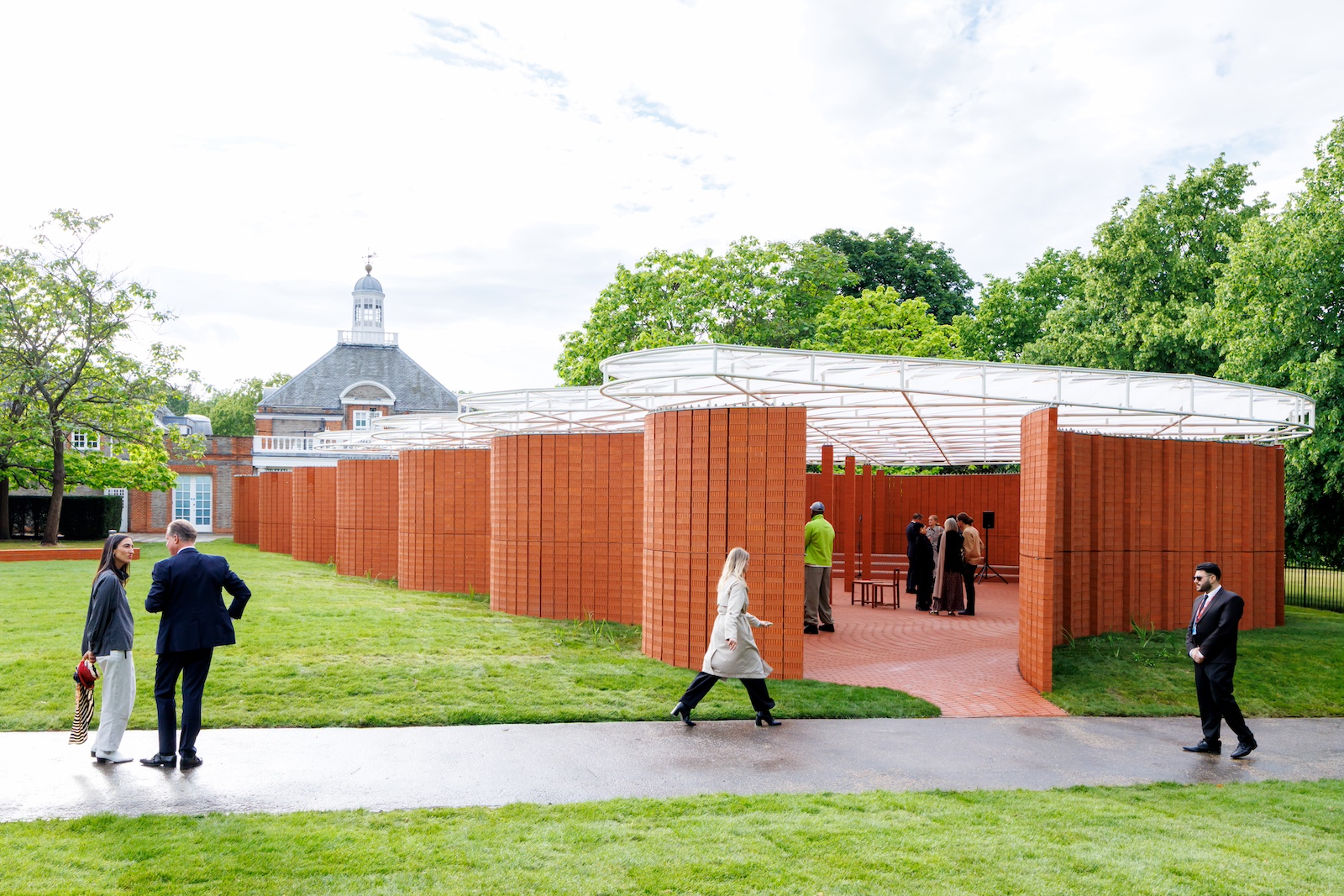
LANZA Atelier’s pavilion is structured around a crinkle-crankle brick wall that extends beyond the main 244 sqm footprint of the temporary structure.
Bar the openings at either end, LANZA’s pavilion employs brick to encase all aspects of the structure and visitors will note the exemption of mortar keeping the bricks in place. Gaps can even be spied within the brick walls – a deliberate decision that allows air to flow through the structure and even afford glimpses through it.
Air can also flow through the much larger gap between the brick walls and roof structure; while it may be rainy today, the recent heatwave and impending summer means the visiting public will welcome such a cool haven, which the pavilion promises to be.
“We spoke with the construction team on site, and they were highlighting how much cooler the interior of the Pavilion feels compared to the outside. Breeze moves naturally through the gaps between the brick columns, while the bricks themselves provide thermal mass that helps insulate the space from the heat,” Isabel Abascal and Alessandro Arienzo, the co-founders of LANZA, told AT over email in the week before the pavilion’s unveiling – a week which saw London temperatures climb above 30 degrees Celsius.
As well as serving to regulate the pavilion’s climate, the decision to use brick so extensively was guided by the material’s architectural history as well as the pavilion’s potential afterlife.
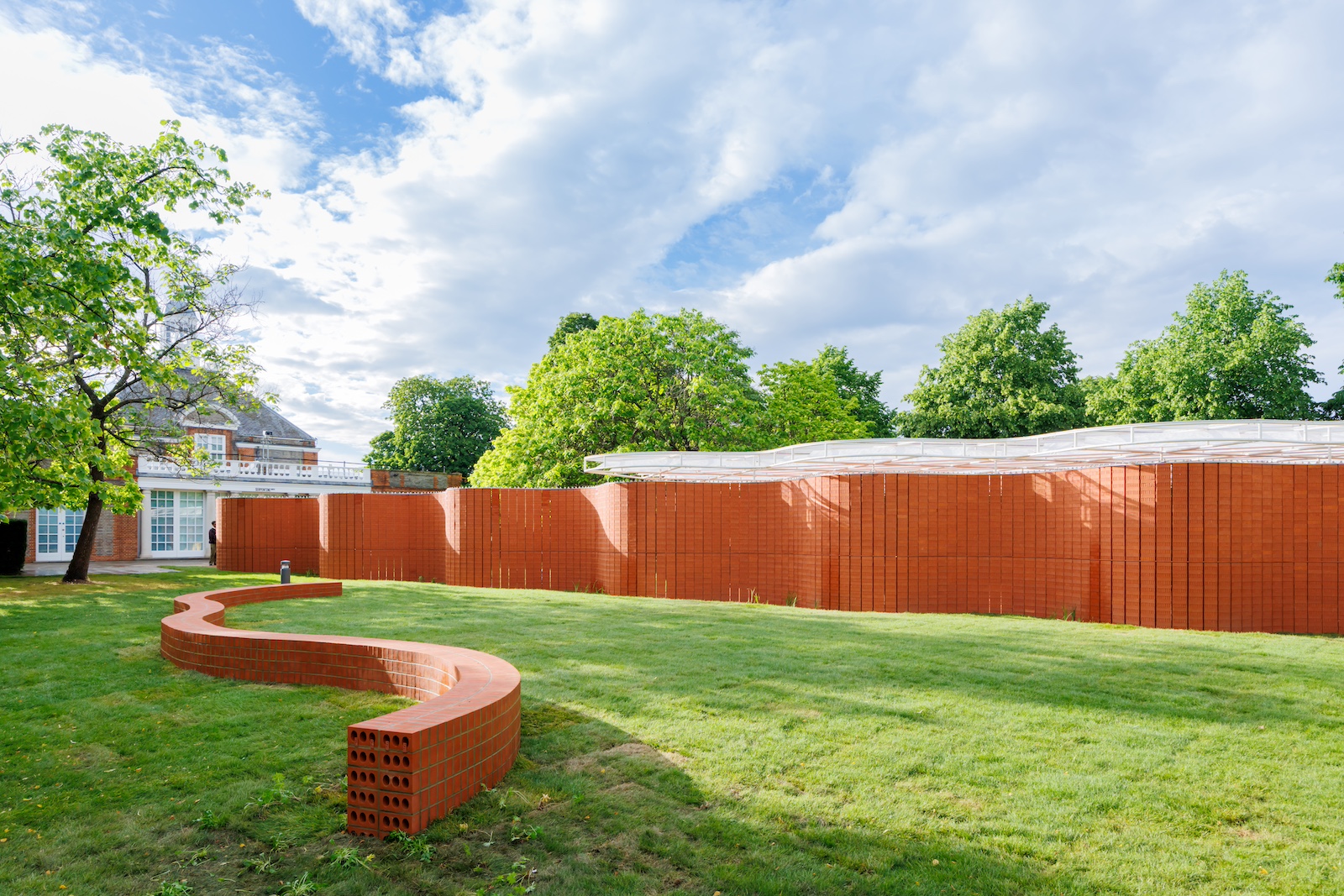
“We are using brick walls, made from clay, to highlight artisanal construction methods as tried-and-true technologies for our collective present. But these walls, rather than monumental and opaque, are permeable and unapologetically graceful. They reveal the power of walls not to divide, but to bring together.”
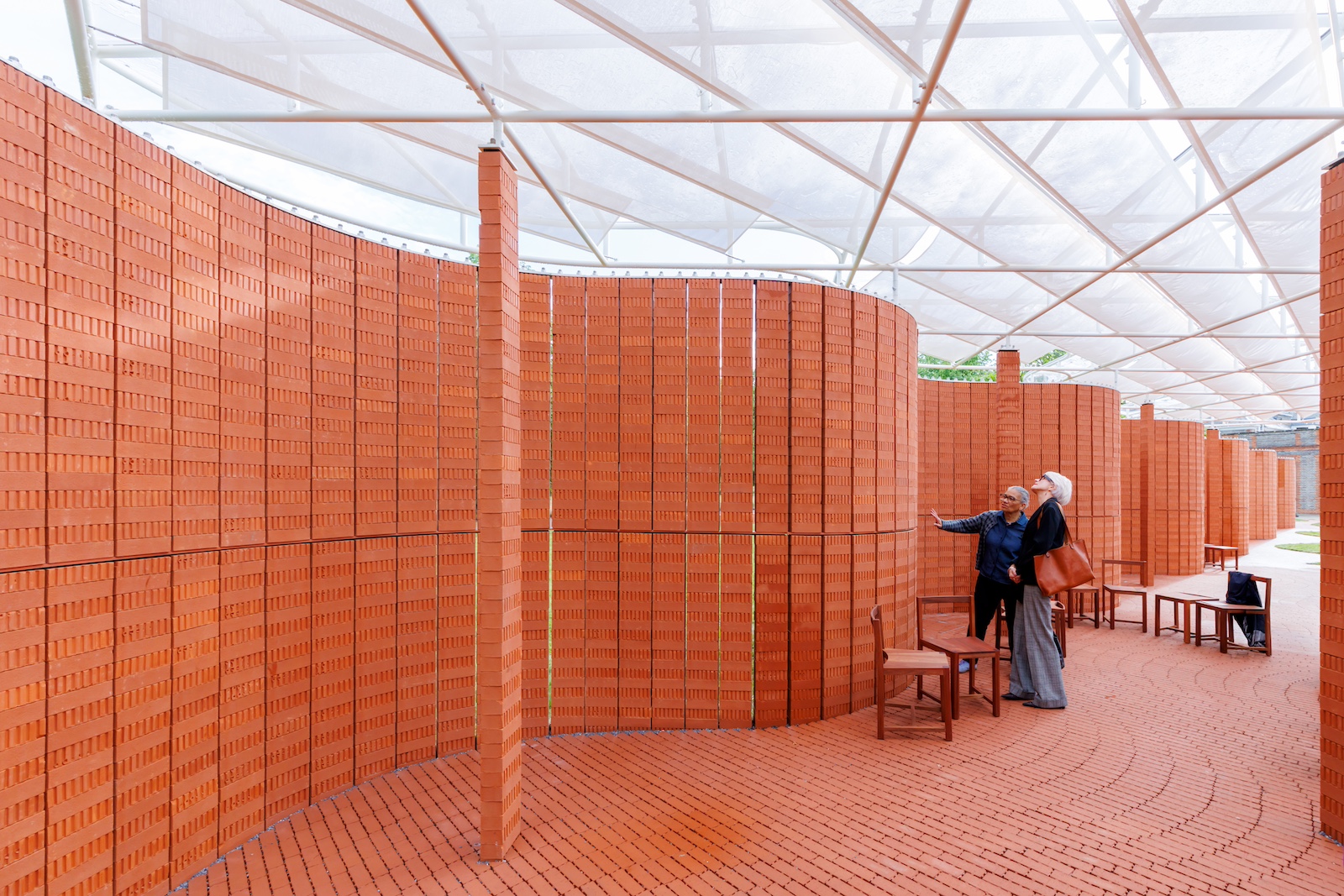
“The brick columns that construct these walls, have at least a 10mm gap between them so people can see through a surface that is traditionally opaque, and eventually gazes can connect.”
“Brick is an ancient material that carries the history of the first cities humanity built. The earliest examples of large-scale religious, institutional, and residential architecture were created with earth in Mesopotamia. Those sun-dried mud bricks, and later fired clay bricks, have lasted for millennia. This is a material with an extremely long lifespan that can consequently reduce the amount of debris we produce.”
“Brick is often associated with permanence, but we are interested in showing that it can also support circular approaches to construction. Many of the elements have been designed so they can be carefully dismantled and reused rather than demolished.”
The bricks and pavers can all be disassembled and relocated or incorporated into future built works. “We like the idea that the Pavilion will continue to exist in fragments, memories or future structures after its time in Hyde Park. In a way, that ephemerality is part of the project itself. Architecture does not always need to be permanent to have a lasting impact.”
LANZA had employed the material in a similar way before, notably with 1973-2021, an installation at Concéntrico, a Spanish design festival, in 2021. “We worked with exposed red brick – a material representative of social interest architecture in Spain – stacked without using mortar so that at the end of the festival more than 90 per cent of the bricks were dismantled and effectively reused. We like how brick is made of earth – of clay – its thermal mass and how it is just the right size to fit in one hand, so it ultimately refers to the human body.”
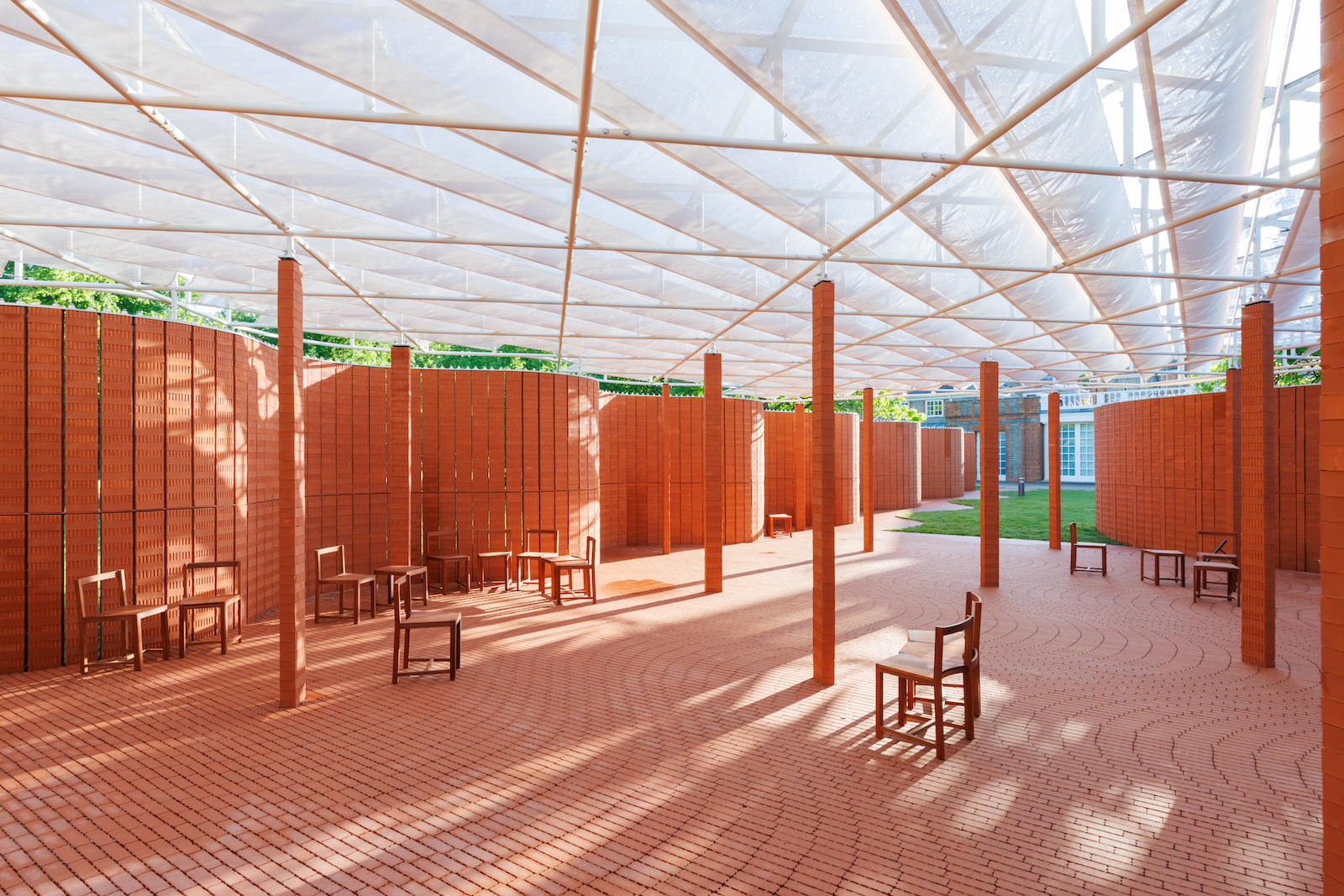
The pavilion’s brick walls are designed to be dismantled and reused after the structure’s time in Hyde Park.
The pair also elaborated on delivering a pavilion in a relatively short timeframe, a factor which has been a scourge of those who have come before them.
“One of the biggest challenges has been translating an experimental idea into a structure that could be built within an extremely short timeframe and under very precise technical requirements,” they continued.
“Because this is an ephemeral structure, we were also constantly thinking about reversibility and reuse, so it was clear to us from the beginning that we could not use mortar to keep the bricks together, we needed to devise another system. Many of the construction decisions were guided not only by how the Pavilion would stand, but by how it could eventually be dismantled responsibly and given another life afterwards.”
“We are using brick walls, made from clay, to highlight artisanal construction methods as tried-and-true technologies for our collective present. But these walls, rather than monumental and opaque, are permeable and unapologetically graceful. They reveal the power of walls not to divide, but to bring together.”
“The brick columns that construct these walls have at least a 10mm gap between them so people can see through a surface that is traditionally opaque, and eventually gazes can connect.”
“Brick carries so much historical and cultural memory, especially in architecture, so we wanted to respect the material while also pushing it somewhere unexpected. The Pavilion depends on a delicate balance between solidity and openness – walls that feel protective but also porous and inviting.”
Sitting atop the brick surrounds is a spatial steel grid, that allows light to enter from above via clear polycarbonate, filtered through composite fabric Eco-Bau fins. The fins are from composite membrane supplier’s Serge Ferrari’s Soltis range – technical solar-protection fabrics designed to provide thermal comfort, durability and UV resistance, say LANZA. The fins feature a micro-perforated mesh that acts as a kind of ‘thermal shield’, blocking up to 97 percent of heat while still allowing natural light to pass through. At night, they allow the roof to glow and illuminate the space below, bringing the warm hues of the brickwork to life for evening events.
“We had previously worked with a similar type of fabric in our project for the 10th anniversary of Palacio de Hierro Polanco. In that case, we used an opaque version installed by labg, a Mexican construction and structural design company led by Eric Valdez.”
Indeed, working on such commissions was how the Mexican atelier came into being.
“We started our practice doing exhibition design. These were ephemeral projects with a high degree of freedom for material and structural experimentation because we were putting up structures that were going to be taken down after some months, so the museums and cultural spaces felt comfortable letting us do things that had not been done before. Since then, we have pursued a certain degree of experimentation through our more permanent projects as well. We try to push the boundaries of our practice with every project. a serpentine is definitely inscribed in this line of thinking.”
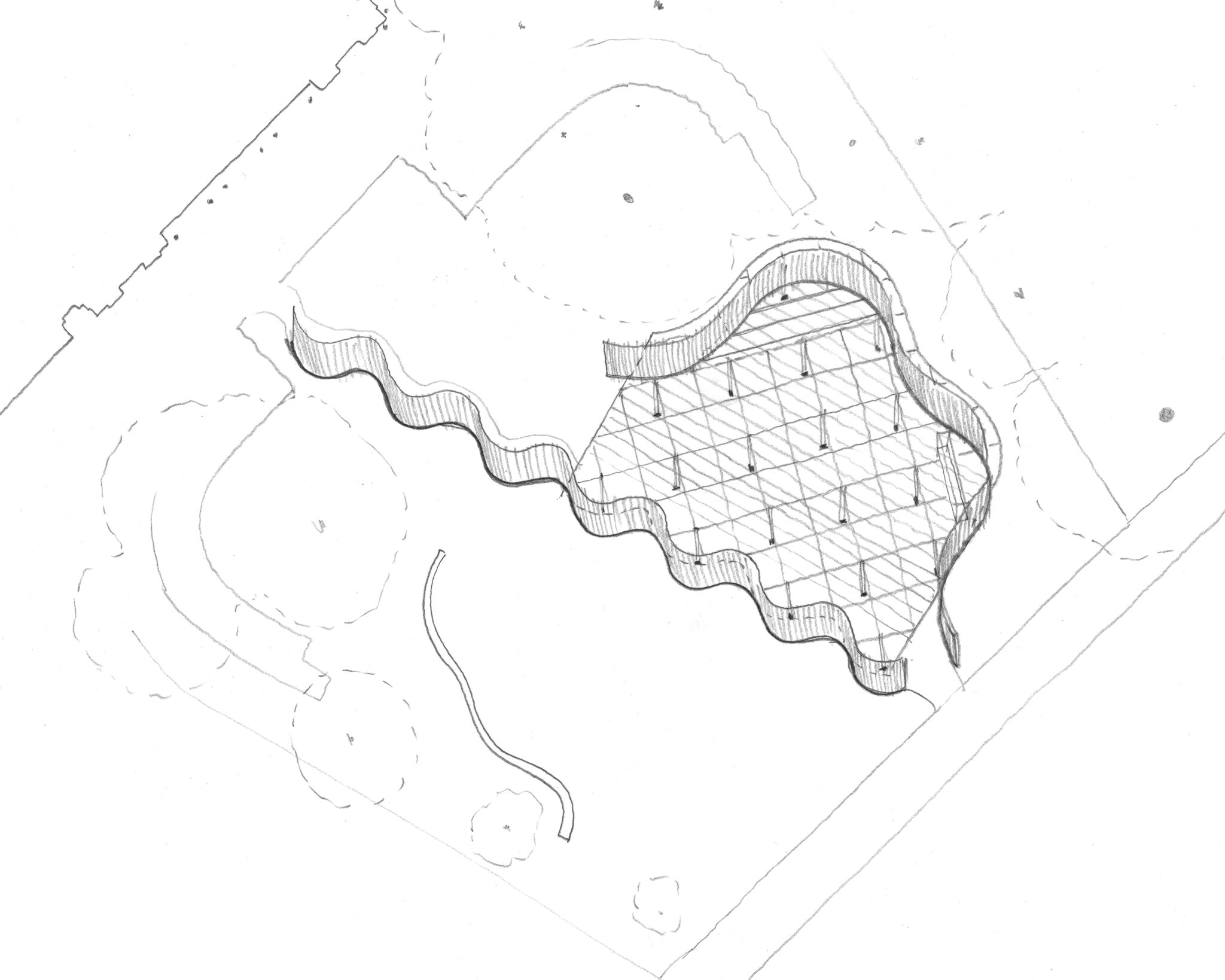
Serpentine Pavilion 2026 a serpentine, designed by Isabel Abascal and Alessandro Arienzo, LANZA atelier. Conceptual sketch, worm’s eye view. © LANZA atelier. Courtesy Serpentine.
Credits
Client
Serpentine
Architect
LANZA atelier
Principal architects
Isabel Abascal and Alessandro Arienzo
Technical advisor
AECOM
Town planning consultant
DP9
Contractor
Stage One Creative Services
Health and safety consultant
Gallowglass
Electrical services
The Technical Department
Brick supplier
Wienerberger