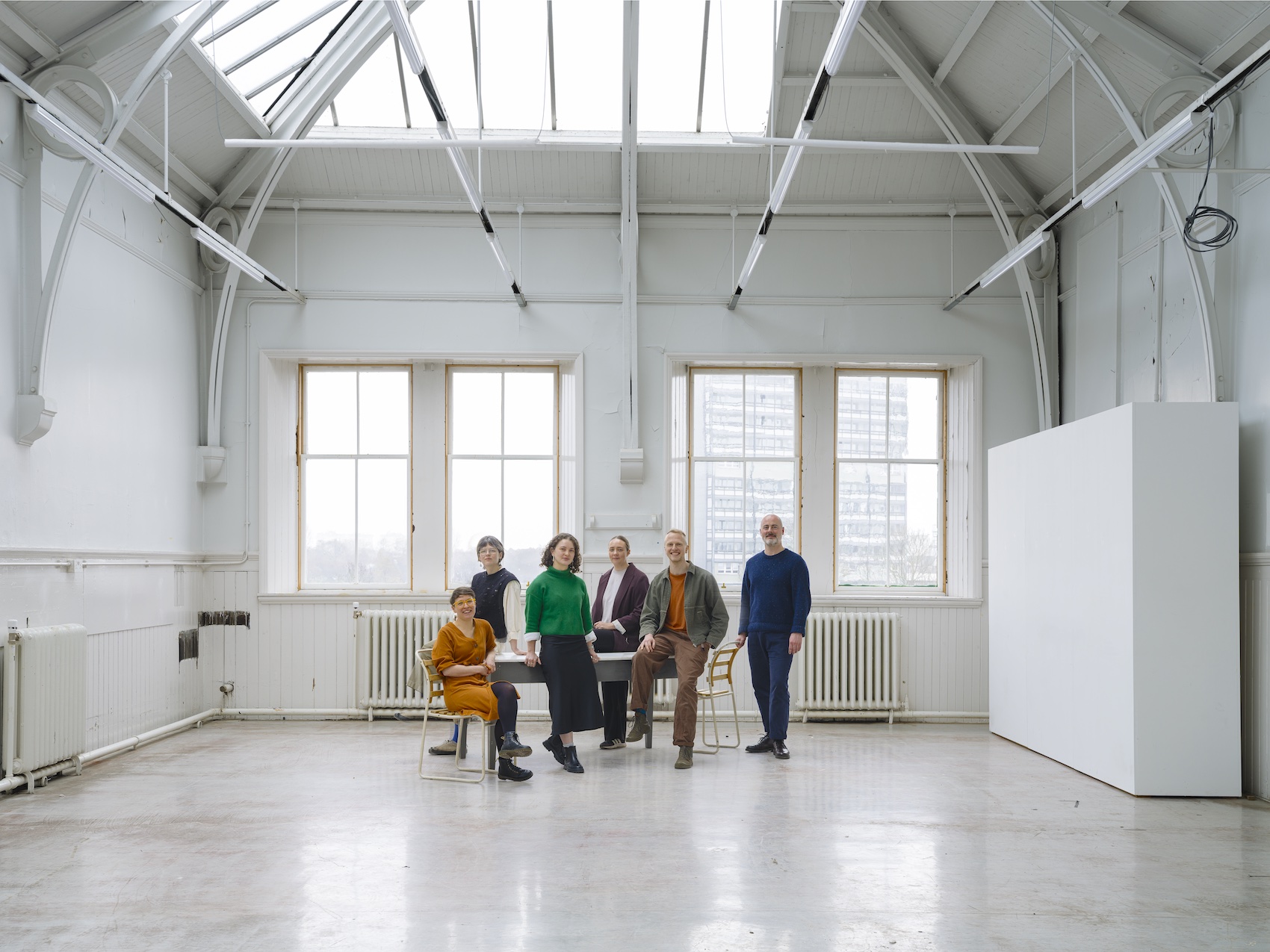
Louis Weir, Sustainability Manager at IKO, answers readers’ questions on how whole life carbon assessment is shaping the design and specification of flat roofing systems.
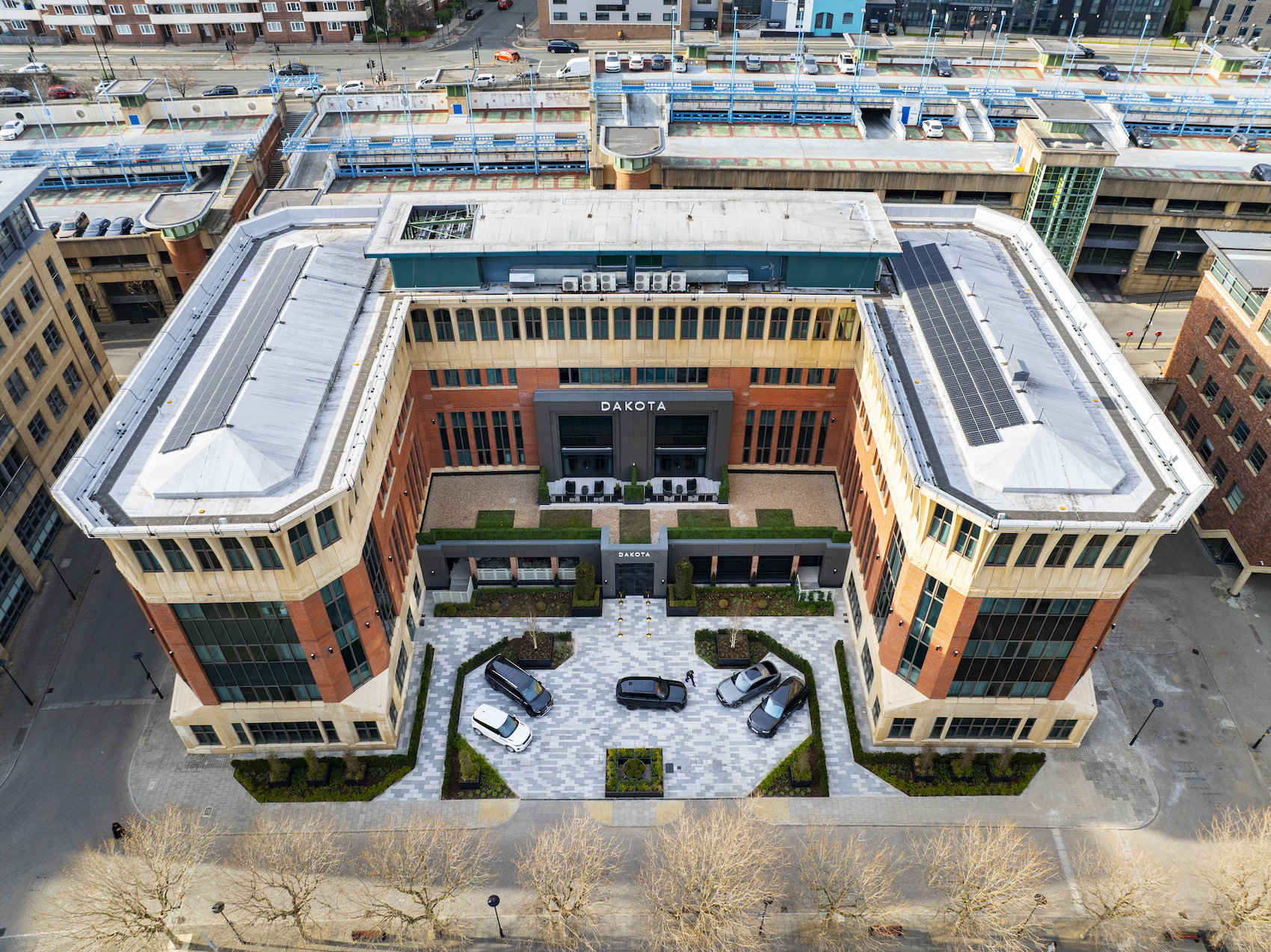
The Dakota Hotel in Newcastle is the first project to use IKO Permatec LI hot melt waterproofing (photo: Daniel Crosbie/IKO).
What is Whole Life Carbon Assessment, and why is it increasingly relevant to flat roofing design and specification?
Whole Life Carbon Assessments measure a building’s total greenhouse gas emissions from raw material extraction through to end-of-life and potential reuse. This broadens the focus beyond embodied carbon at the point of manufacture, enabling more informed product and design decisions that reduce impact across the entire project lifecycle.
Flat roofing systems contribute not only to a project’s embodied carbon through the materials used, but also to its operational carbon through the roof’s thermal performance. Conducting Whole Life Carbon Assessments for flat roofing broadens the specification criteria beyond functionality, aesthetics, and cost – placing greater emphasis on performance, durability, embodied carbon, and end- of-life recyclability. It also highlights often-overlooked factors, such as ongoing maintenance, particularly in the case of green roof systems.
With the adoption of RICS WLCA across the UK construction industry, and tendering frameworks frequently published with lifecycle thinking built into project delivery, Whole Life Carbon is rapidly becoming the language of responsible design, and roofing – once seen as an element to address later in the process – is now central to that conversation.
How does the WLCA framework apply specifically to flat roof systems, and what stages should specifiers focus on most?
The first priority is about matching each roofing system’s inherent strengths to the project’s design intent, structural form, and performance expectations. Whole Life Carbon Assessment applies across every stage for all roofing system materials, from material extraction through to end-of-life or recovery. Specifiers should pay close attention to stages A1–A5, where the majority of emissions arise from material production and installation methods. However, the B stages – durability, maintenance, and thermal performance – often determine a roof ’s true long-term carbon value. A system that lasts twice as long or continues to achieve a desired U-value over time can halve, or eliminate replacement impacts and significantly reduce operational emissions.
What role do Environmental Product Declarations (EPDs) and Life Cycle Assessments (LCAs) play in measuring roofing sustainability?
An LCA is the detailed analysis that quantifies a product’s environmental impacts across its full lifecycle from raw material extraction through to end-of-life. It measures a range of impact categories, including global warming potential, water use, and resource depletion. An EPD takes that LCA data and presents it in a standardised, third- party-verified format, allowing architects and specifiers to compare products on a like-for-like basis.
The data from LCAs and EPDs is the lifeblood of the whole life carbon framework. You can’t manage what you don’t measure and LCAs and EPDs enable us to measure, benchmark, and set meaningful targets for reducing carbon across both individual projects and the wider built environment. The process isn’t perfect and relies on continual improvement: better data quality, greater industry understanding, and more streamlined tools to calculate and track whole life carbon emissions.
What should specifiers look for when interpreting EPD data for roofing products?
When reviewing EPDs for roofing products, the first step is to understand that not all EPDs are created equal, they vary by scope, data quality, and assumptions. Specifiers should look closely at the declared unit (1 m², Kg, Ton of installed roof material) to ensure fair comparison between systems. Pay attention to the system boundaries, whether the EPD covers just A1–A3 (manufacture) or includes transport, installation, use, and end-of-life stages (A1–C4). A cradle-to-grave EPD gives a much clearer picture of real-world impact. Check the data source and verification: third-party verified EPDs following a recognised Product Category Rule (PCR) provide greater confidence and comparability. The reference service life is also key, a longer-lasting system may show higher embodied carbon upfront but a lower whole-life impact overall.
Is product longevity fully reflected in whole life carbon assessments, and how can longer-lasting flat roofs contribute to sustainability?
When carrying out a Whole Life Carbon Assessment, a temporal scope is defined. This sets out how long the building or system is expected to perform its intended function. In most cases, that’s 60 years, following the RICS Whole Life Carbon Assessment for the Built Environment. Longevity plays a big part in those calculations. A flat roofing system that lasts longer can dramatically cut its whole life carbon impact by avoiding early replacements, reducing material use over time, and minimising maintenance. Even if it starts with a slightly higher embodied carbon figure, its extended service life often means a lower total footprint over the building’s lifetime.
What are the key sustainability trade-offs between different flat roofing systems?
Rather than comparing systems against each other, the more meaningful question is how to minimise the carbon impact of the chosen system. Once the technically appropriate solution is identified, the real trade-offs lie in the build-up design and installation method. Take a single-ply roof, for example: its performance can vary significantly depending on the insulation type, fixing method, and installation approach. Can it achieve the airtightness needed for a Passivhaus-level envelope to reduce operational carbon? Can it be mechanically fixed rather than adhered, allowing clean separation of layers at end-of-life to support a circular economy?
How does IKO’s Permatec LI product contribute to WLCA goals?
The preservative properties of bitumen have been recognised for centuries. In fact, the word mummy originates from the Arabic mumiya, meaning bitumen, and early explorers noted how the Pharaohs’ bodies had blackened from being embalmed in it to preserve them for the afterlife. IKO Permatec LI essentially replicates that preservation process for the modern built environment. But instead of preserving Pharaohs on rooftops, we’re preserving biogenic carbon. The plant- based feedstock used in IKO Permatec LI would otherwise decompose or be converted into biofuel, releasing carbon back into the atmosphere. By locking that carbon into the hot-melt membrane for the building’s full design life (typically 60 years), it’s prevented from decaying and re-emitting CO2. Importantly, this isn’t achieved through mass balancing or offsetting – the biogenic carbon is physically present in every IKO Permatec LI system installed. This innovation, along with our anti-root compound and zero- waste wrappers that reduce packaging on site, has enabled us to lower the whole-life carbon of the product compared to standard IKO Permatec. It also means IKO Permatec LI can contribute to projects targeting sequestered or stored carbon.
What are the WLCA implications when designing for green, blue, or solar roofs?
From a WLCA perspective, each brings its own considerations. Green roofs require regular maintenance; they’re not an install-and-forget solution. The same applies to solar panels, and while their warranty typically covers 20–25 years, performance declines over that period, and cleaning is essential to maintain output. In short, these systems can offer clear environmental and operational benefits, but to truly deliver value over their life cycle, they must be the right solution for the right project, properly maintained and realistically assessed within a WLCA framework.
What practical steps can architects take at design stage to reduce whole life carbon in flat roof specifications?
All major frameworks, including the RICS Whole Life Carbon Assessment and PAS 2080, emphasise early and open collaboration across the supply chain. The earlier manufacturers, designers, and contractors come together, the easier it is to make decisions that balance performance, durability, and whole-life impact. I appreciate how difficult it can be to find independent advice on the suitability of different roofing systems, there’s a lot of information and opinion out there. At IKO, we manufacture all the main flat roofing technologies, so we’re able to provide unbiased technical guidance to ensure the right system is specified as early in the process as possible. Getting those fundamentals right from the outset is where the biggest carbon savings are made.
How should roof design be approached to optimise maintenance and refurbishment strategies across a building’s life?
I can only really answer this from a materials perspective, but one of the most important considerations is understanding how the roof will be used over its design life. For example, where roof space includes MEP plant or equipment that will need regular servicing, a dedicated walkway from the access point to the plant should use a more durable system, such as a hot-melt solution, to cope with ongoing foot traffic. That same area would be less suited to a single-ply system, which isn’t designed for frequent access or concentrated loading.
Where is regulation on whole life carbon heading, and how can architects future- proof their flat roof specifications now?
For us as a manufacturer, our ability to develop systems that meet tomorrow’s carbon goals is directly tied to our economic performance for the foreseeable future and the same applies across the entire supply chain. The way architects collect, use, and analyse Whole Life Carbon data in their designs is already a massive value-creating activity for the industry. So, I’d focus on building competence, efficiency, and confidence in Whole Life Carbon Assessments, and make the most of digital tools that can support this process.
As for where regulation is heading, the direction of travel is clear. The UK is moving toward mandatory reporting of embodied and whole life carbon in the built environment. We’re already seeing this embedded in frameworks, such as the RICS Whole Life Carbon Assessment, BS EN 15978, and early adoption by public sector bodies like the department of education, NHS and Greater London Authority.
For further information, please visit www.ikogroup.co.uk