A former 1960s workers’ dormitory in Košice, Slovakia, has been reimagined by local practice Atrium Architekti as a model for the adaptive reuse of socialist-era housing.
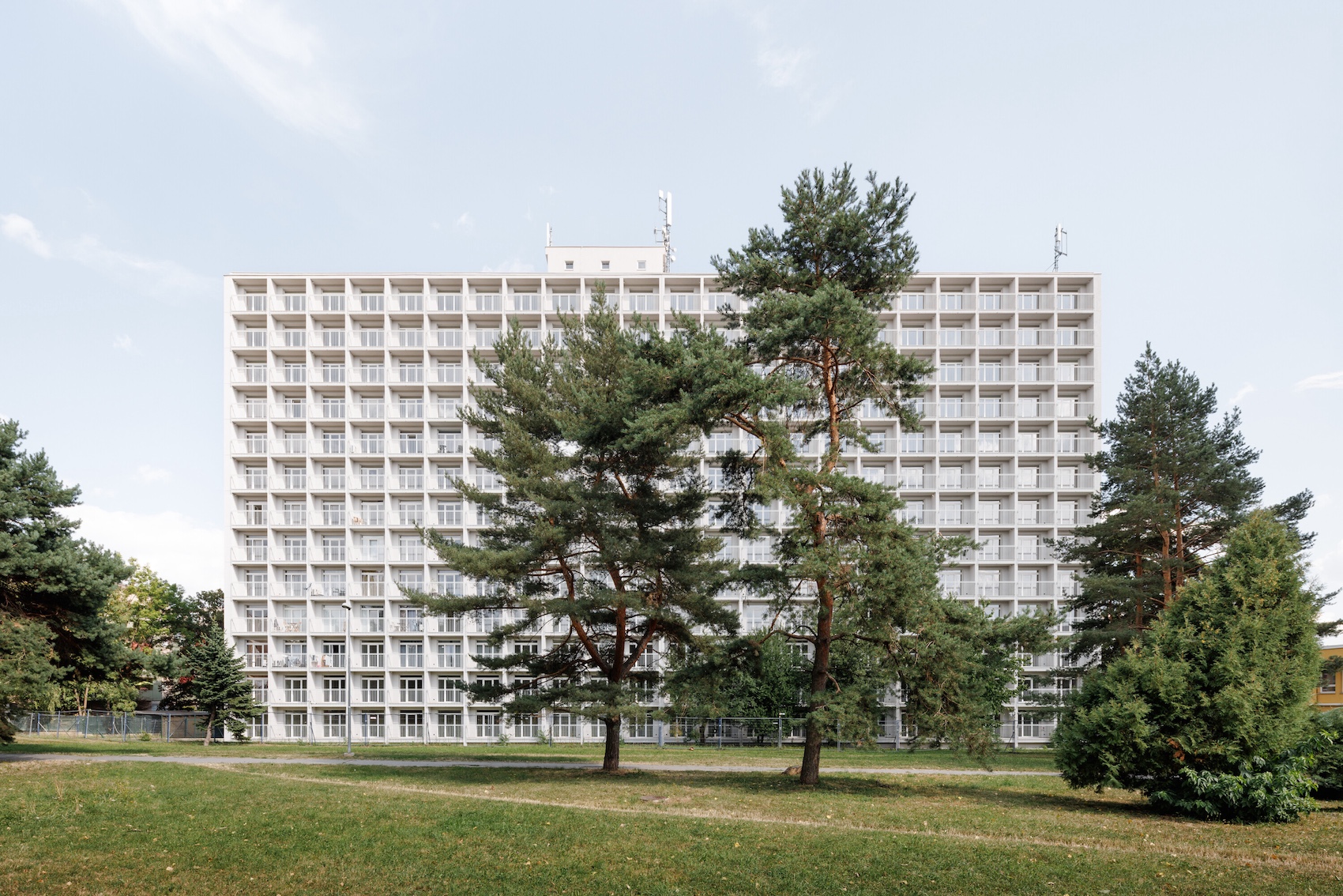
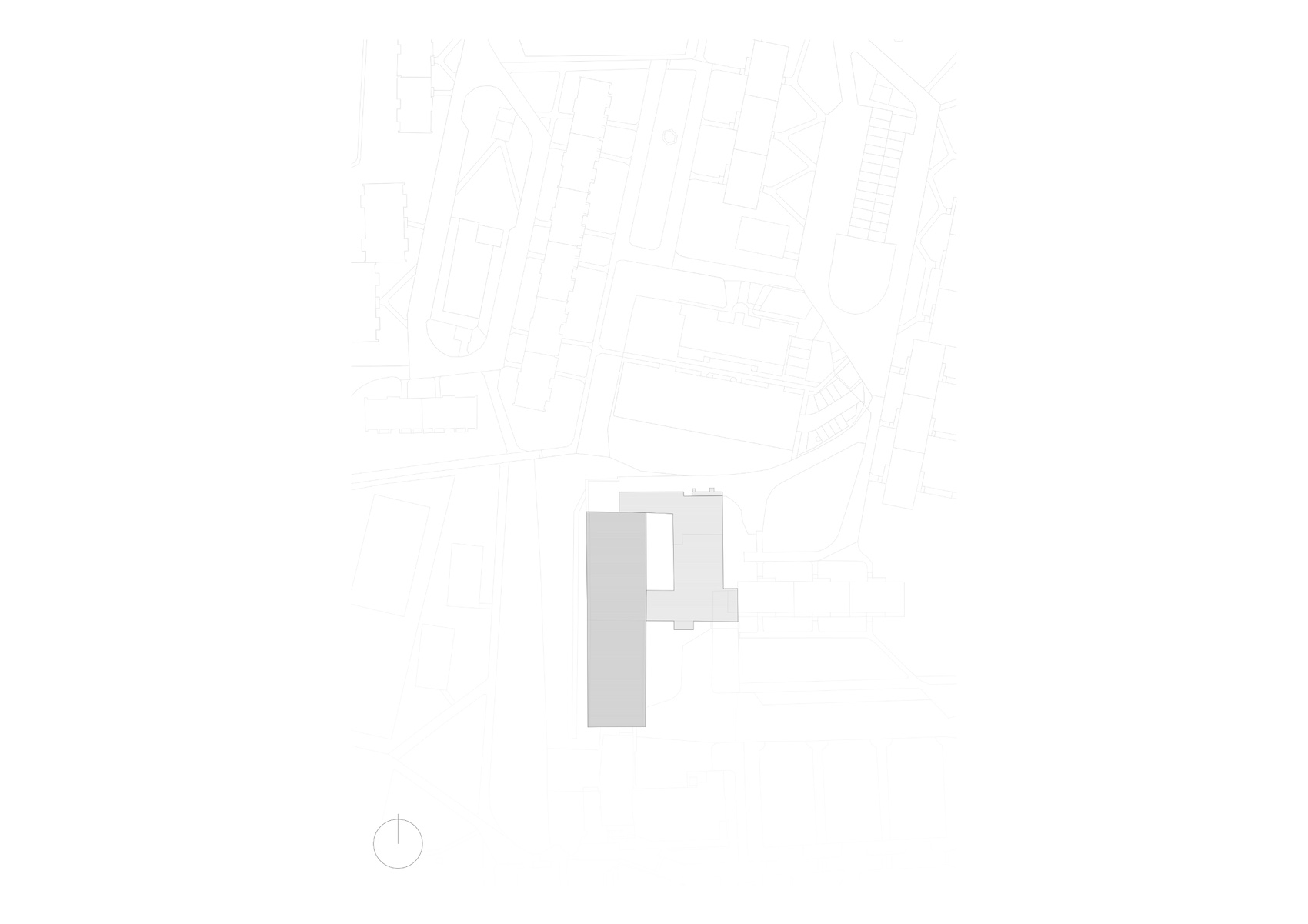
Atrium Architekti has completed the comprehensive renovation of kosmalt in Košice, Slovakia, converting one of the city’s most recognisable post-war residential buildings into a contemporary housing complex while retaining its architectural identity. Originally constructed in the 1960s as the largest workers’ dormitory for the VSŽ steelworks, the 13-storey building has been reimagined as a model for the adaptive reuse of socialist-era housing infrastructure.
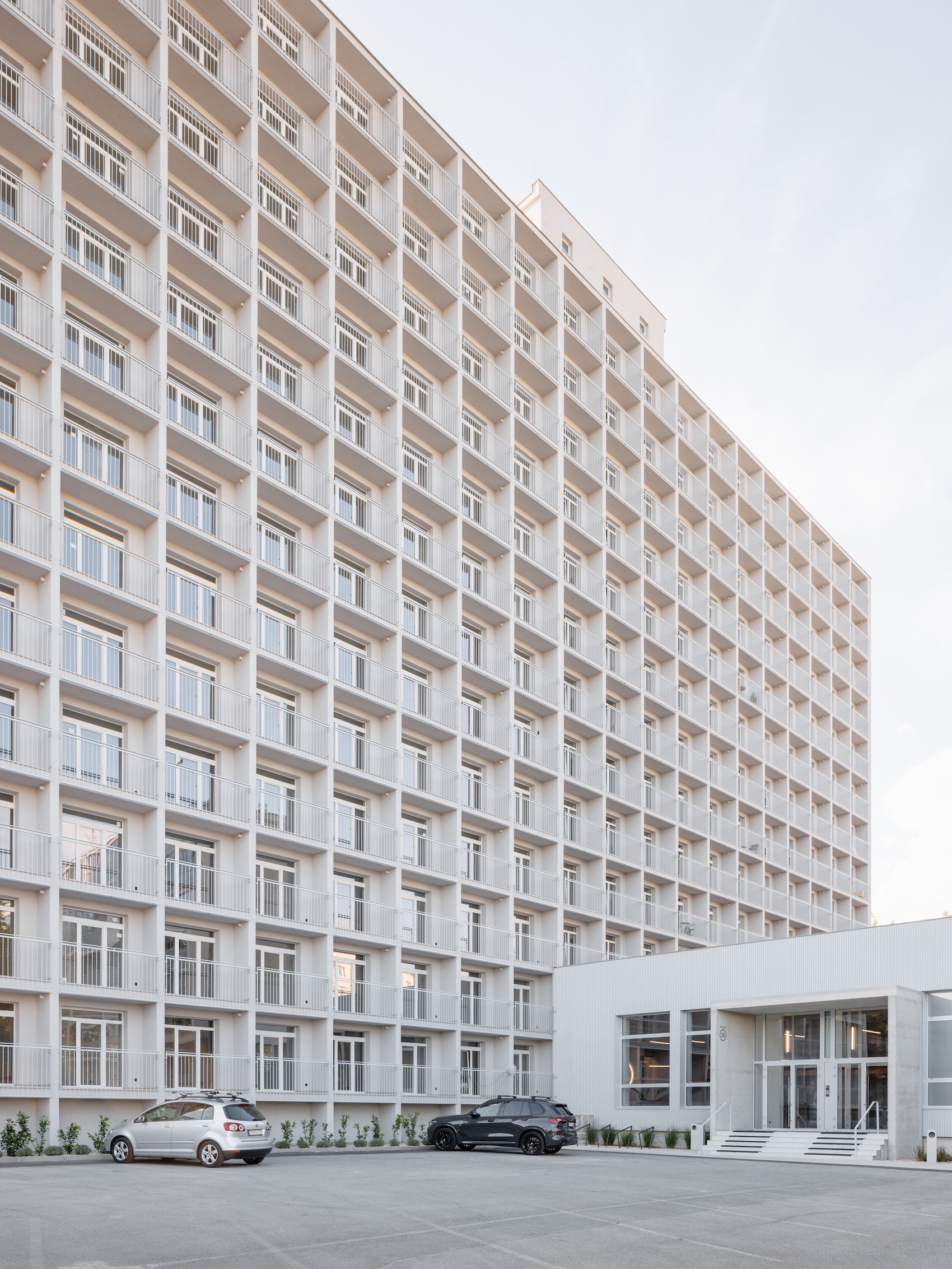
Originally designed by architects Ladislav Greč and Róbert Kandrík, the building occupies a prominent position within the Terasa housing estate. Its name derives from a type of enamelled steel associated with the local steel industry, while its rigid geometric façade and distinctive silhouette have long made it a local landmark.
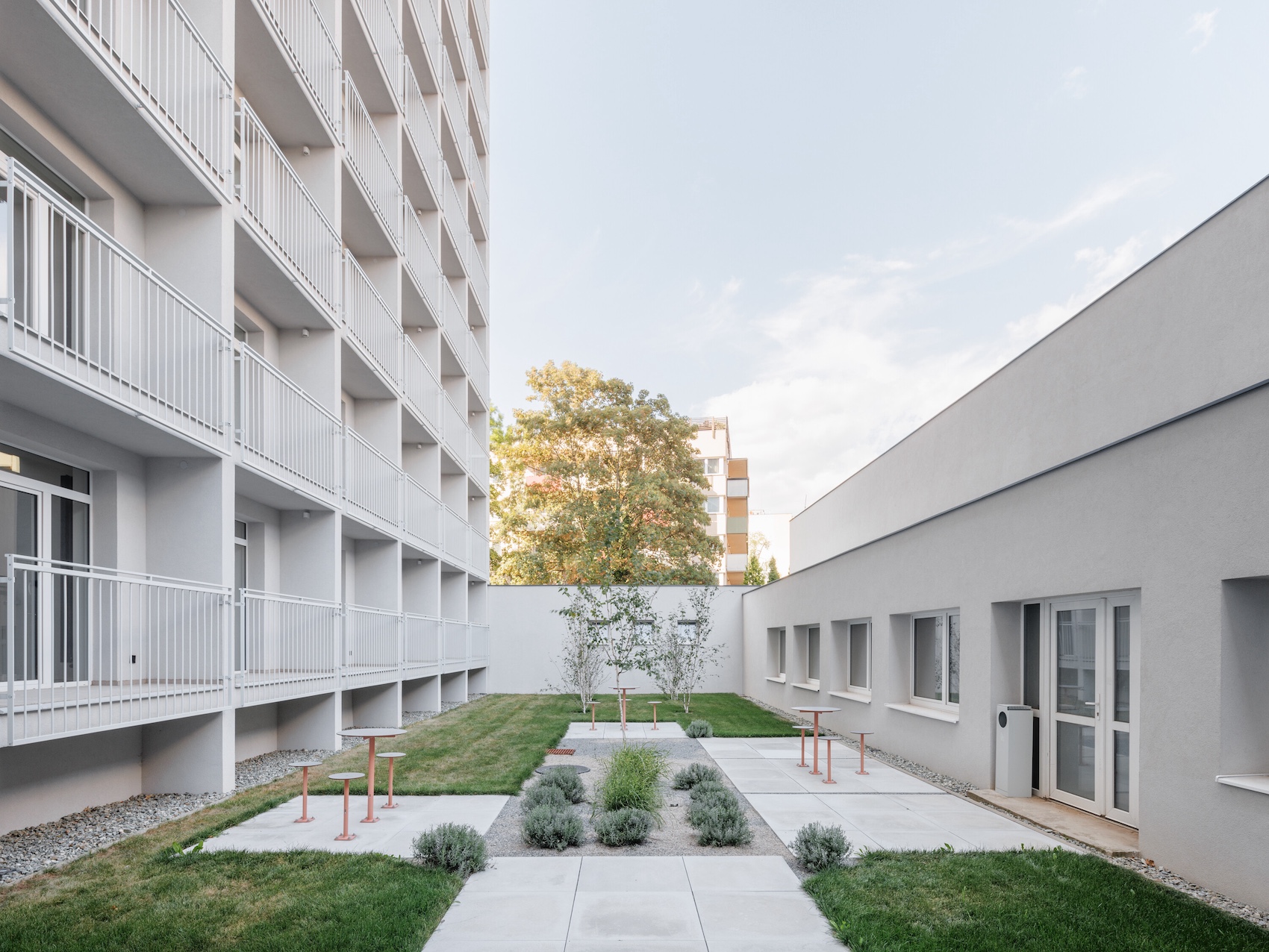
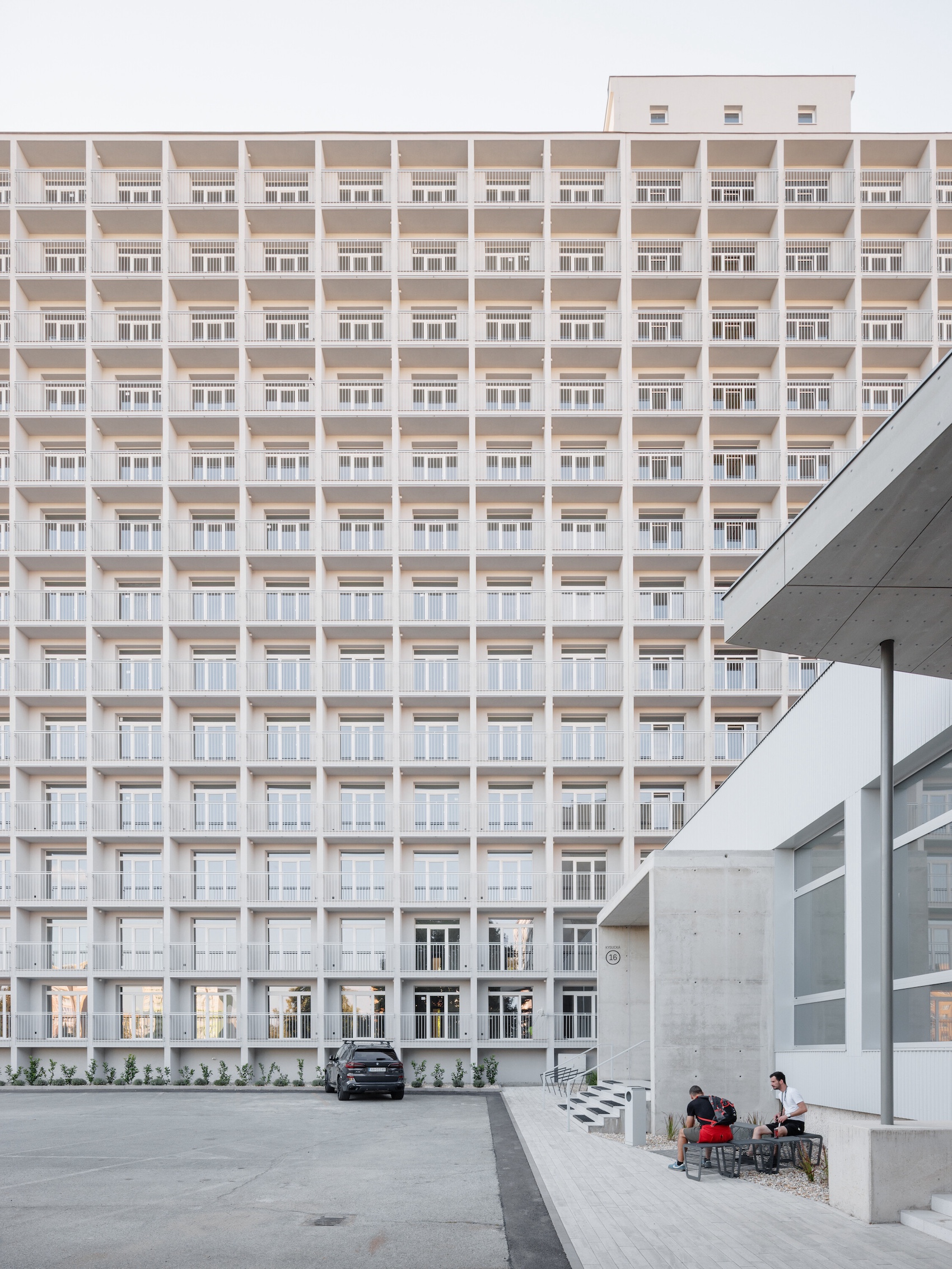
Led by Michal Burák, Dušan Burák and Jana Varchola Buráková, Atrium Architekti approached the project as both restoration and reinterpretation. Rather than erase the building’s origins, the scheme seeks to preserve and strengthen its defining architectural qualities while adapting the interior to contemporary residential standards. The building’s strict structural grid forms the basis of the redesign, with the eastern and western façades organised as repetitive arrays of prefabricated concrete modules. A restrained monochromatic grey finish is intended to emphasise the façade’s geometric monumentality.
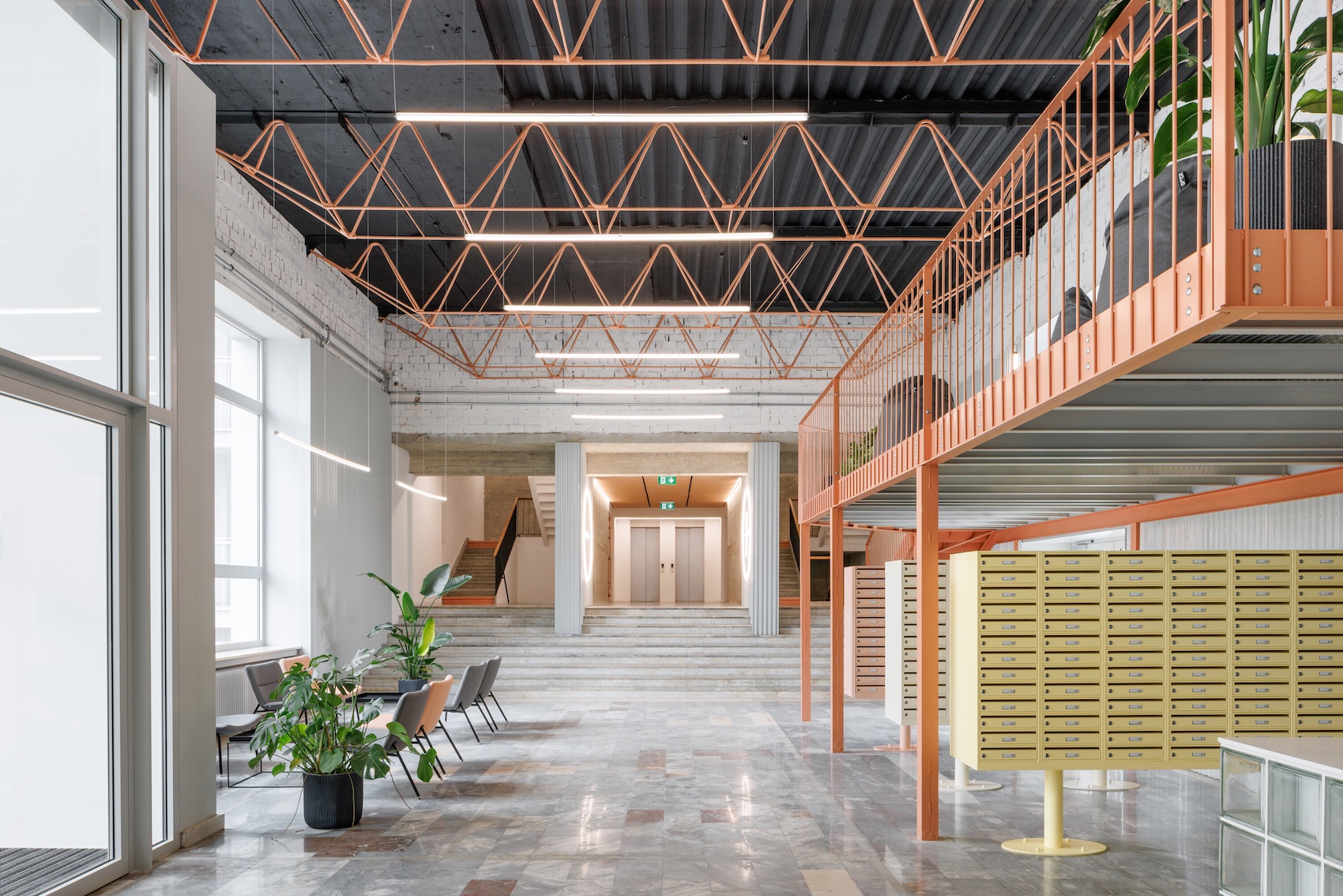
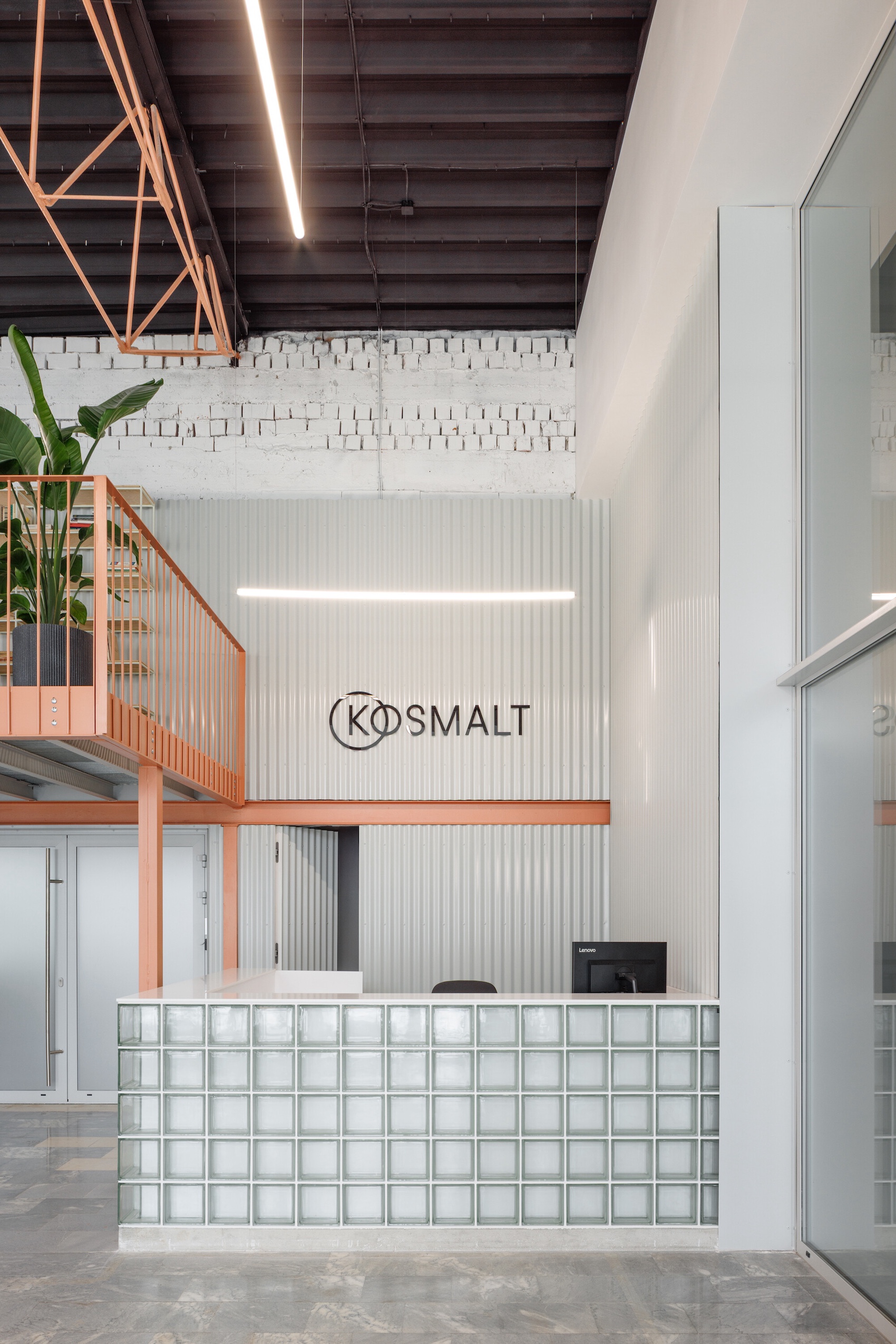
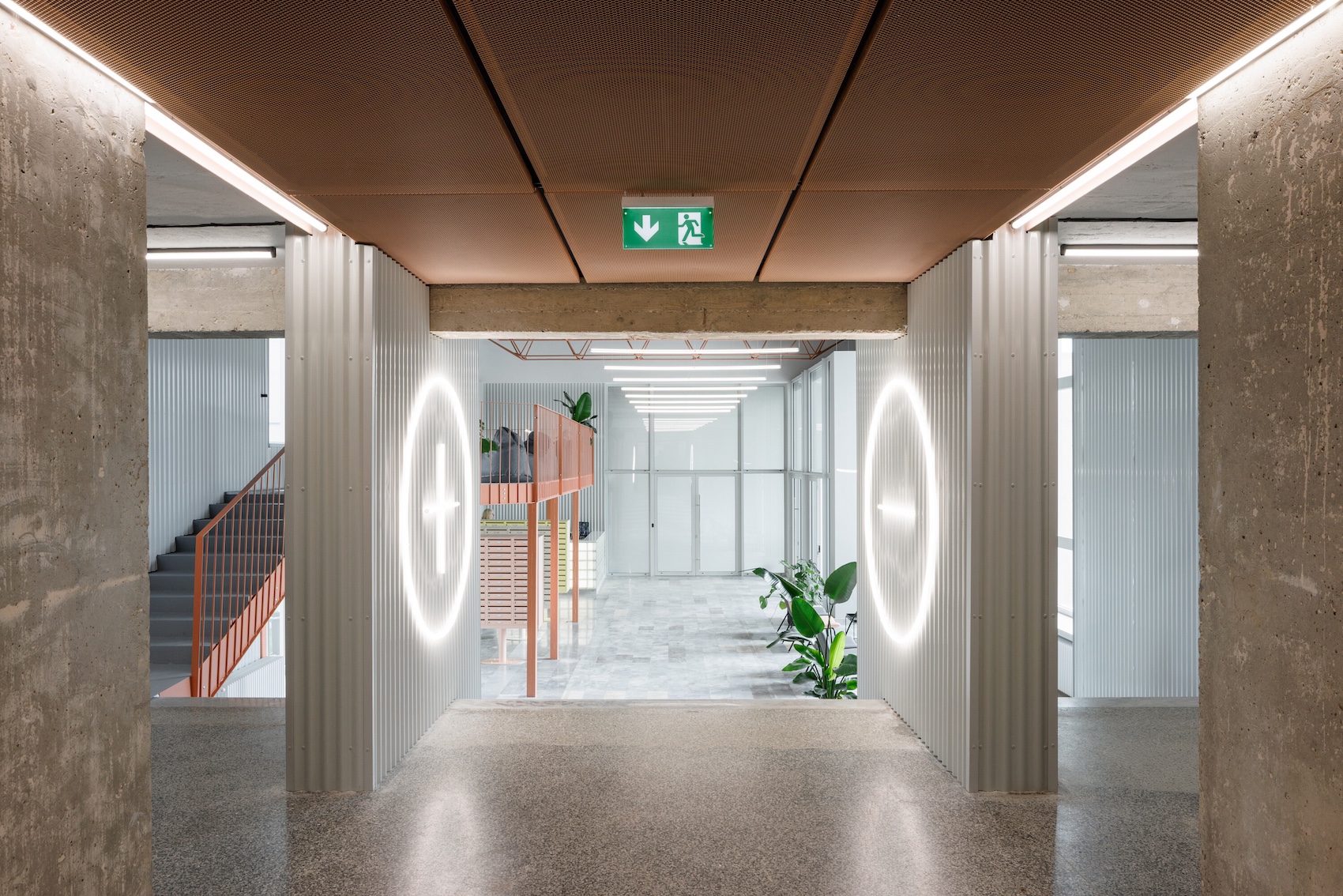
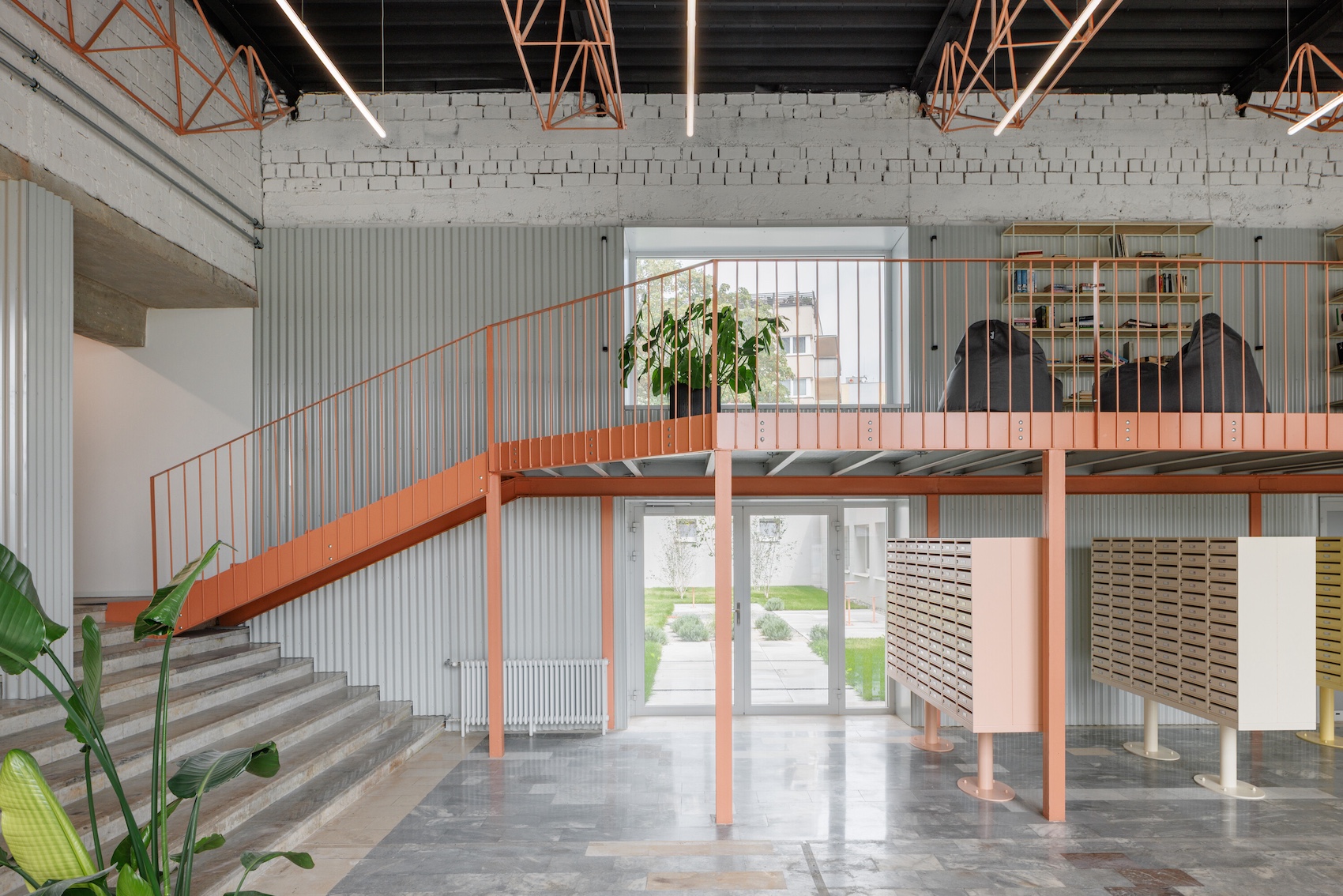
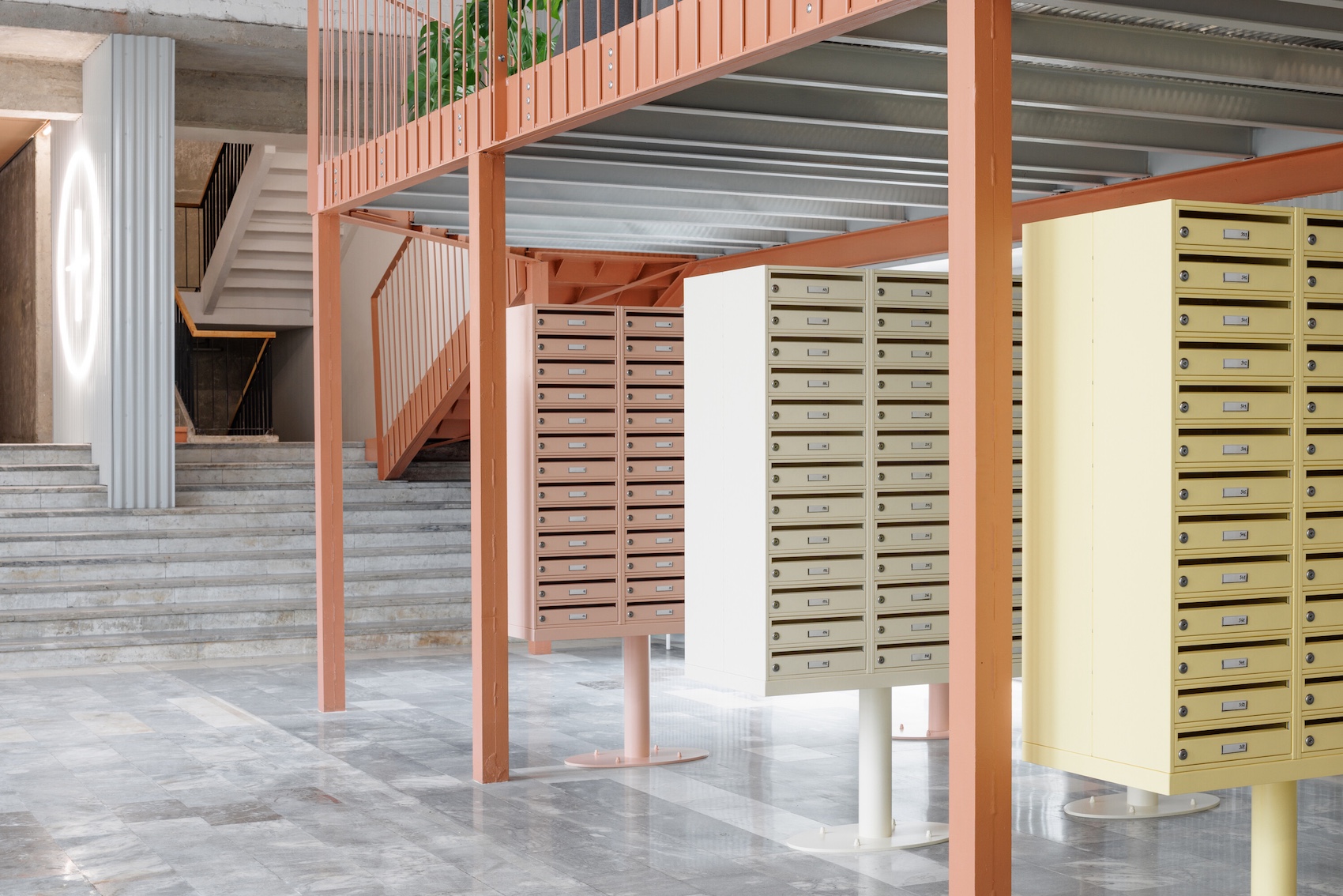
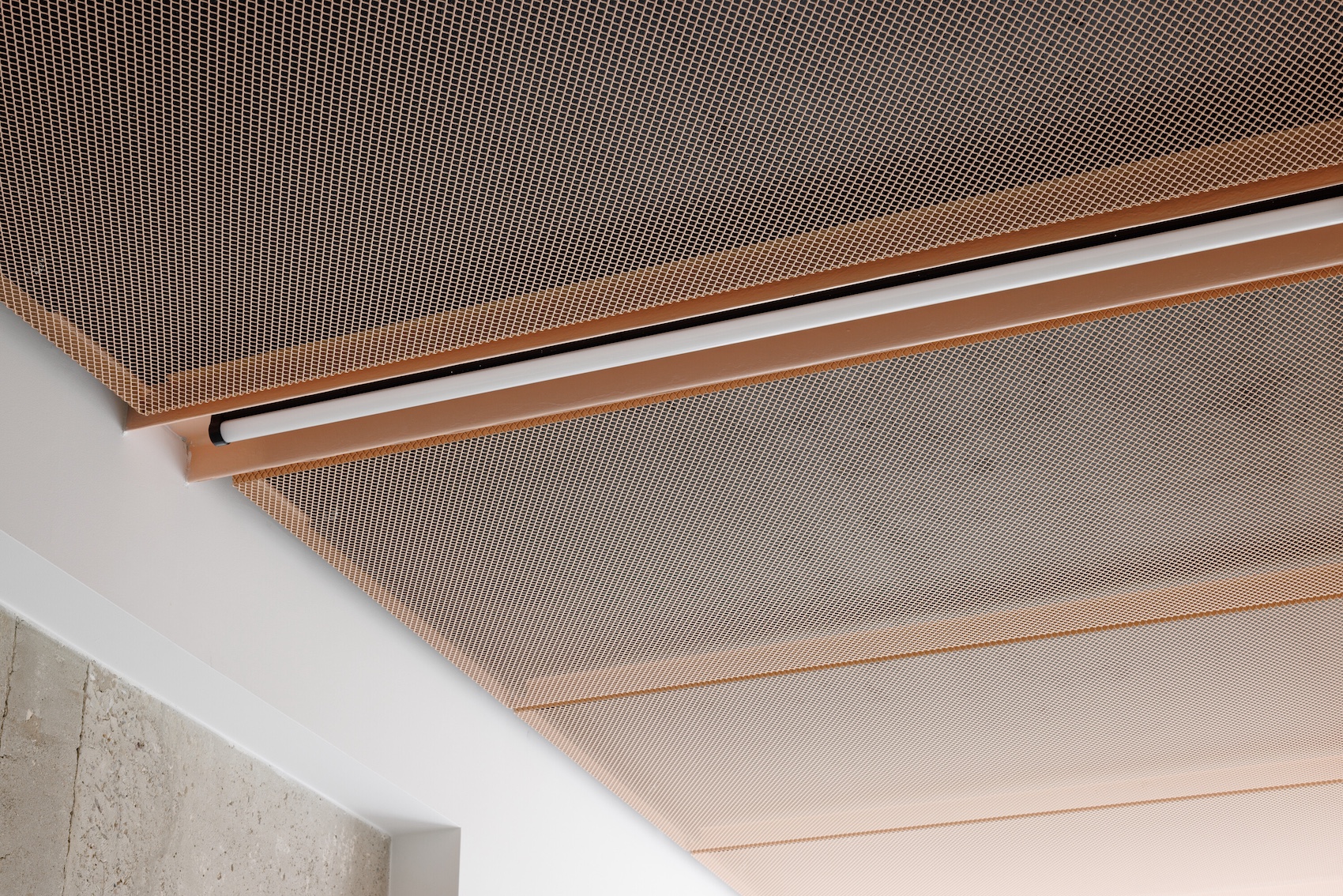
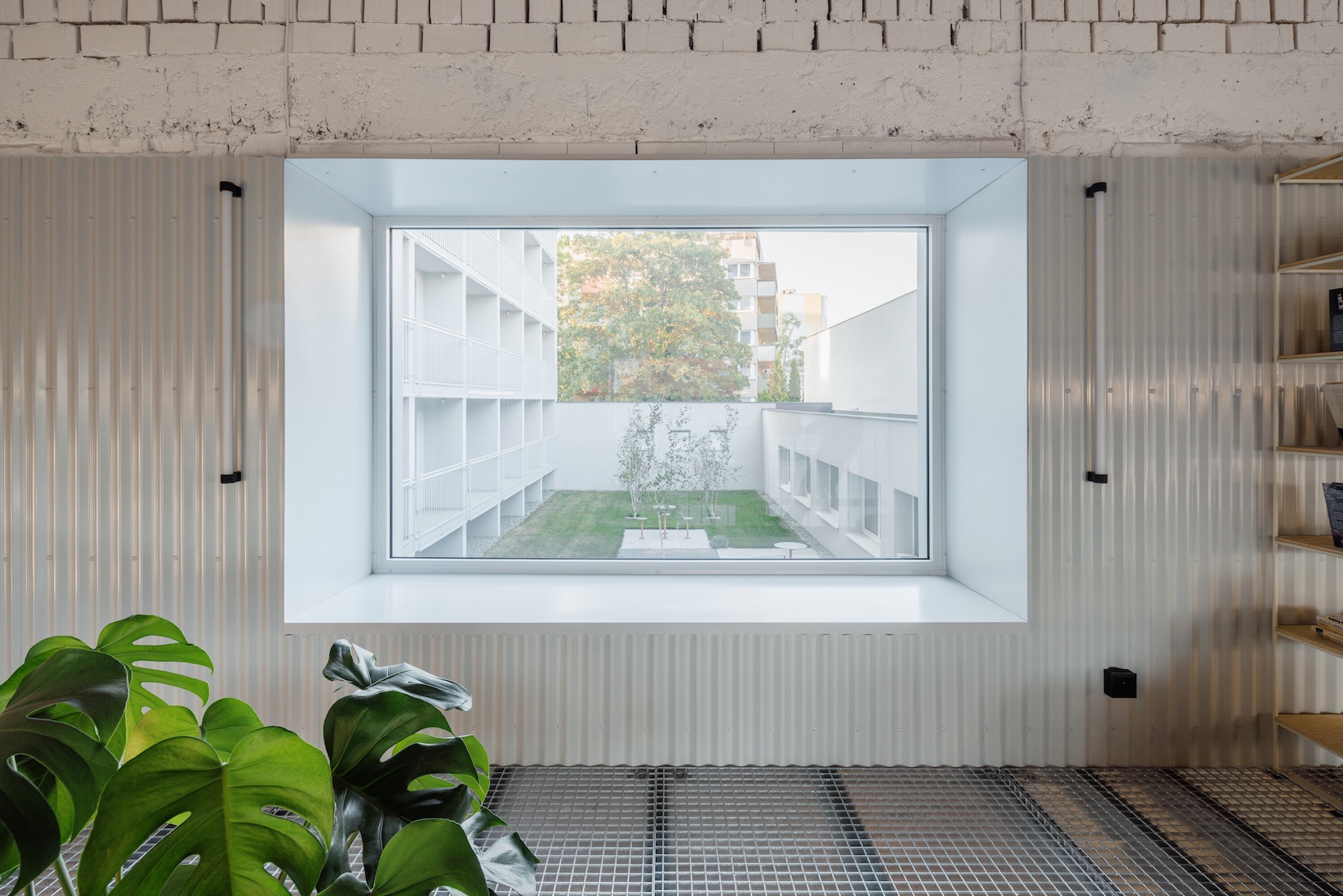
Internally, the architects retained and restored a significant number of original materials and details that had been obscured over decades of alteration. Cast terrazzo flooring in the corridors and staircases has been refurbished, alongside marble cladding in the vestibule, travertine plinths, exposed steel beams and the original steel gallery staircase within the entrance hall. Contemporary additions are deliberately distinguishable, and include corrugated metal surfaces, expanded metal screens, bespoke lighting and bold colour accents.
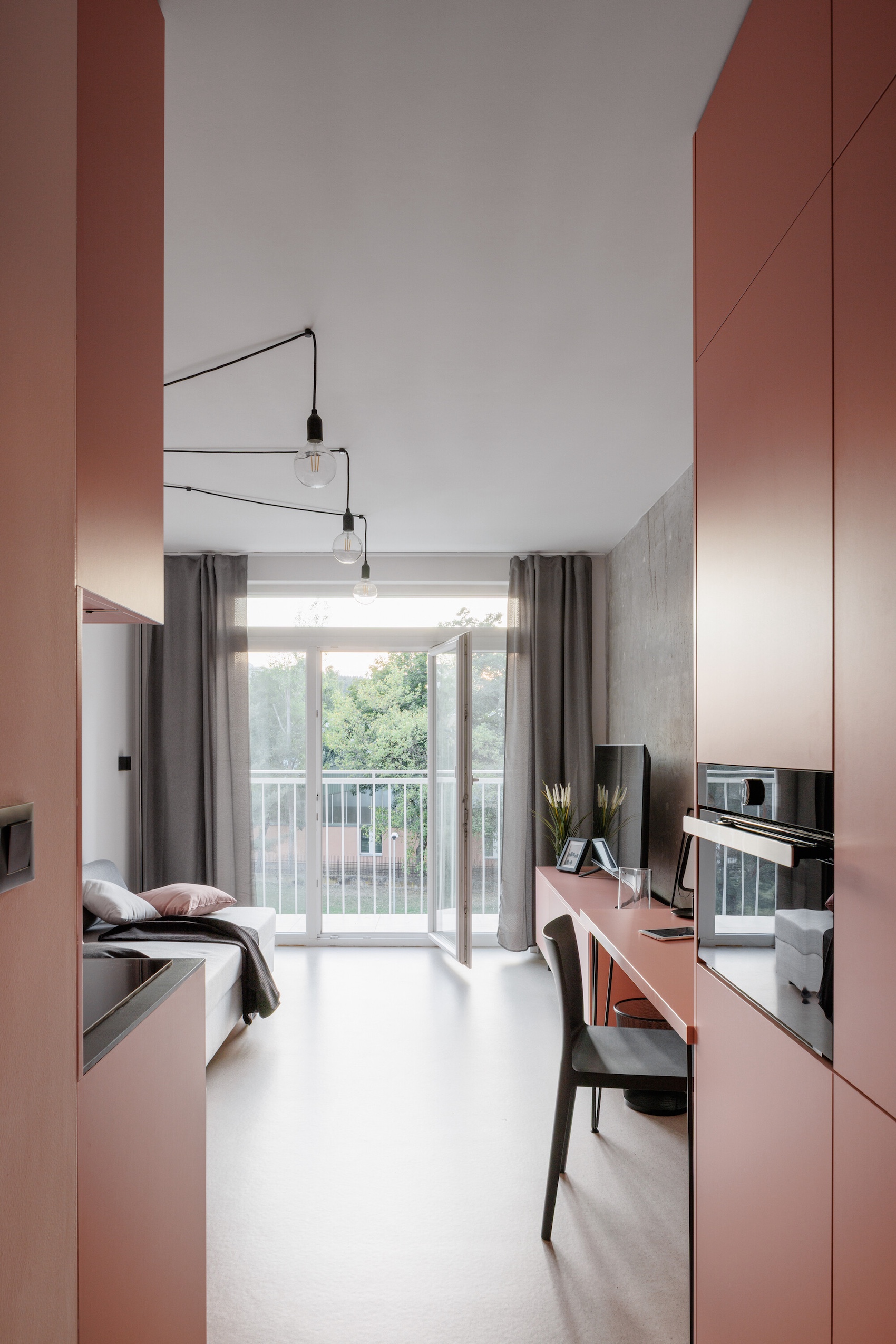
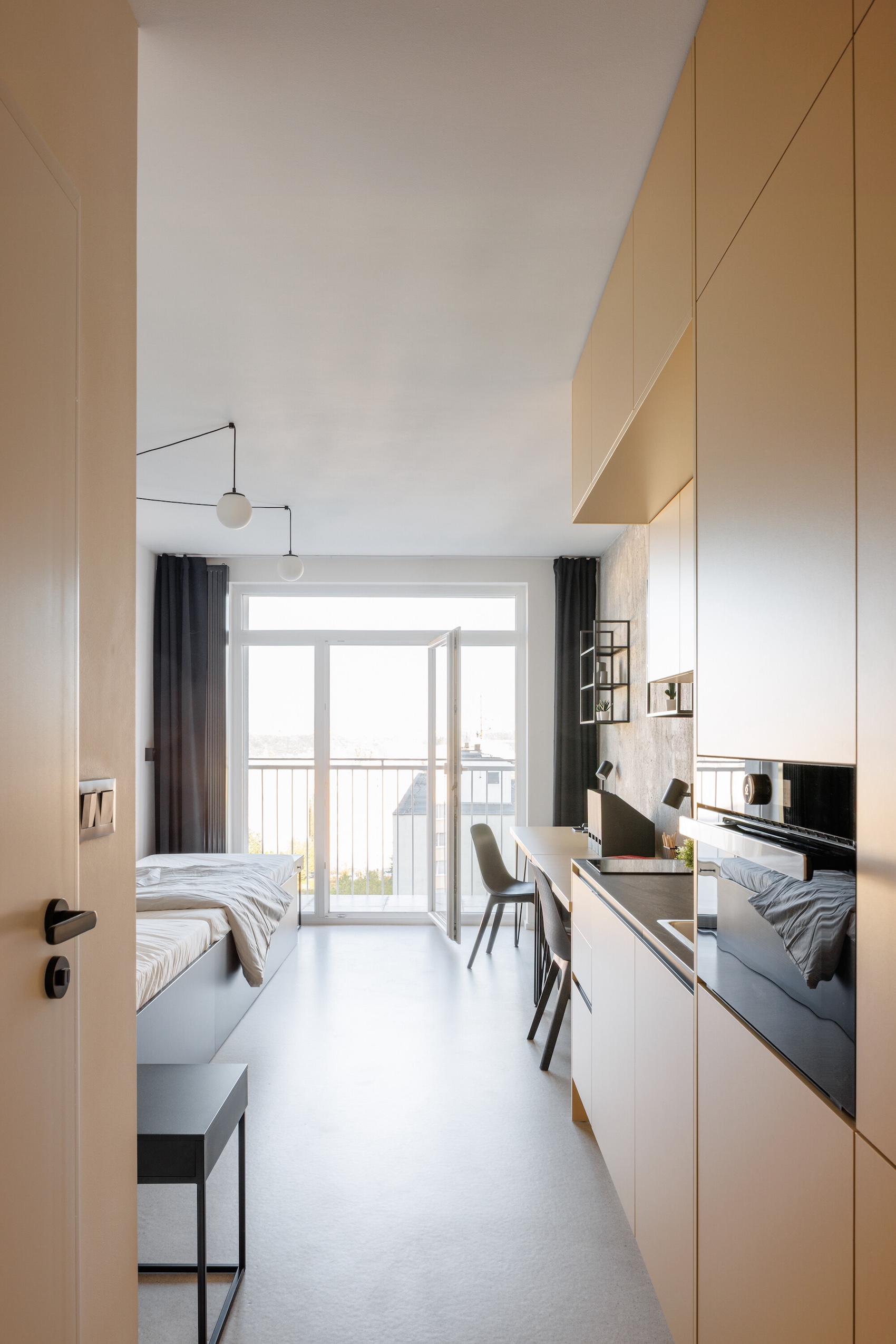
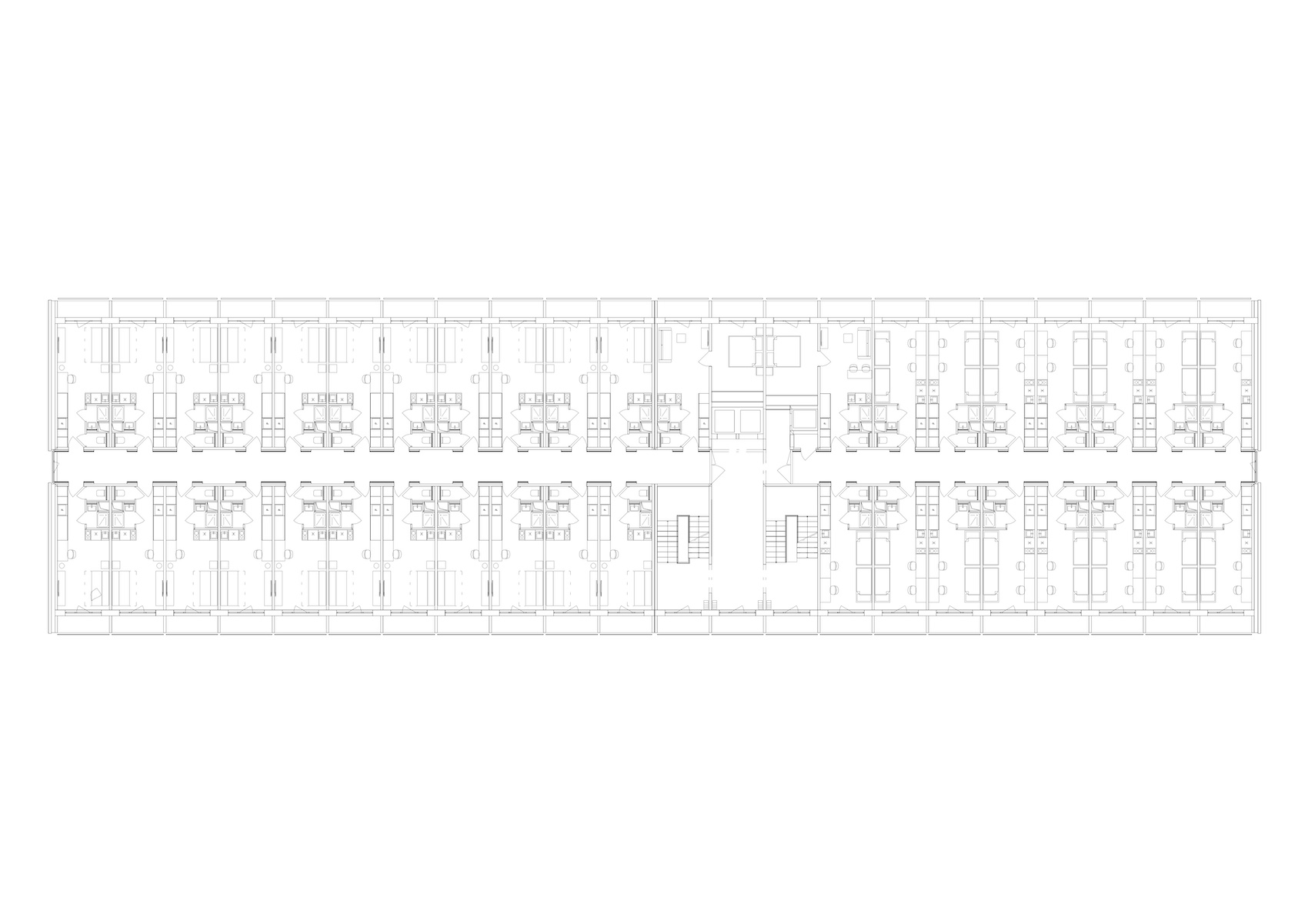
The project retains the building’s residential function while reconfiguring its dormitory accommodation into 507 apartments. While the apartments are compact, they include generous glazing, loggias and expansive views across the city. Communal areas are treated as social spaces rather than purely functional zones, reinforcing the collective character of the building. The original twin-stair arrangement, which historically separated male and female residents, has been preserved as part of the building’s organisational logic.
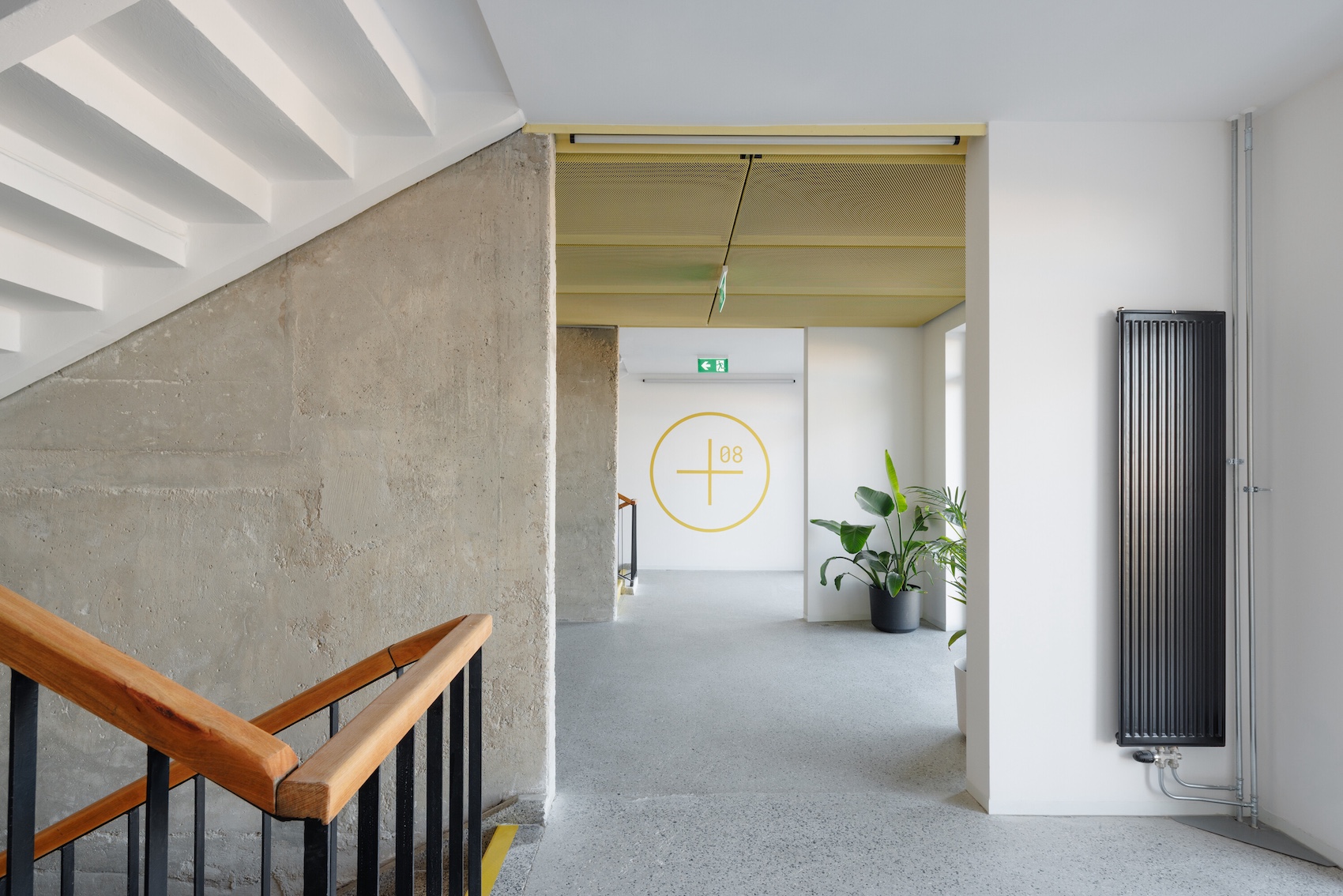
A new wayfinding system based on colour and symbols has also been introduced. Salmon, ivory and yellow tones, combined with plus and minus graphics, differentiate corridor wings and help residents navigate the floorplates intuitively.
The project also addresses questions of long-term adaptability. Although the original structure was not conceived as a flexible building, the redesign introduces a new level of resilience and usability, demonstrating how large-scale post-war housing stock can be successfully repurposed rather than demolished.
Credits
Architect
Atrium Architekti
Structural Engineer
Erik Duhaň
Services engineer
Štefan Petkanič
Main contractor
Chemkostav
Graphics
Sedem
Concrete paintings
Natreto
Additional Images