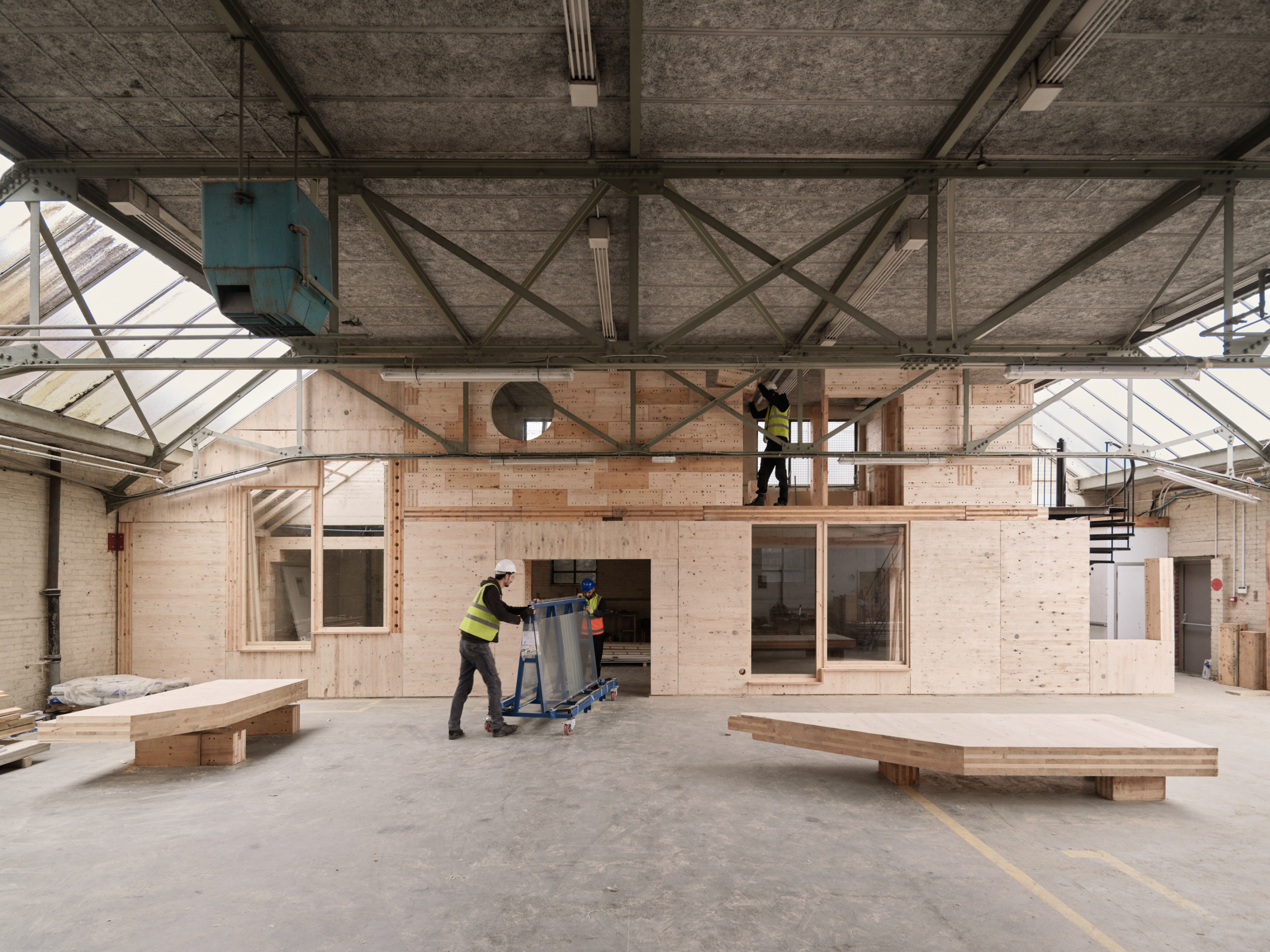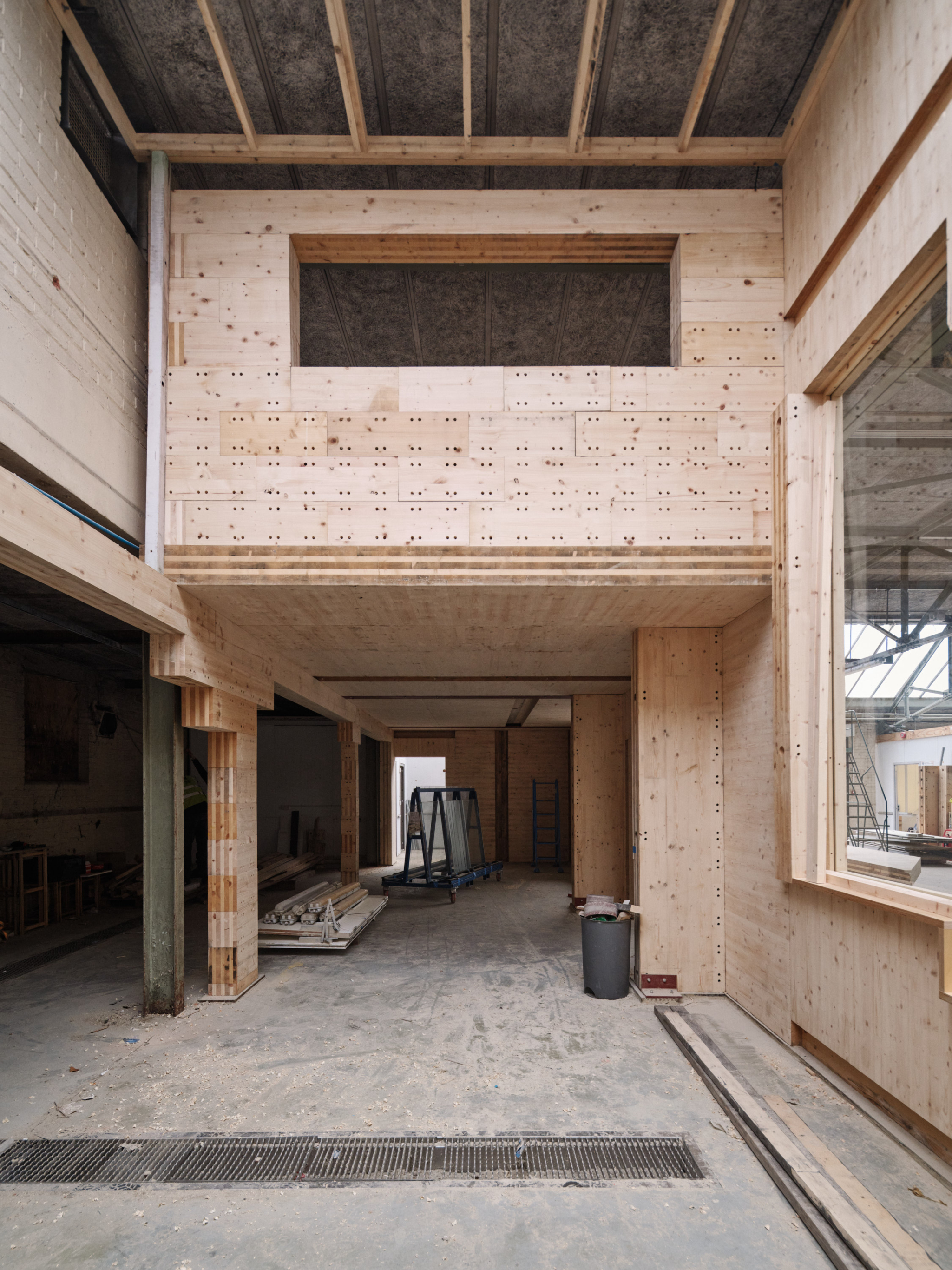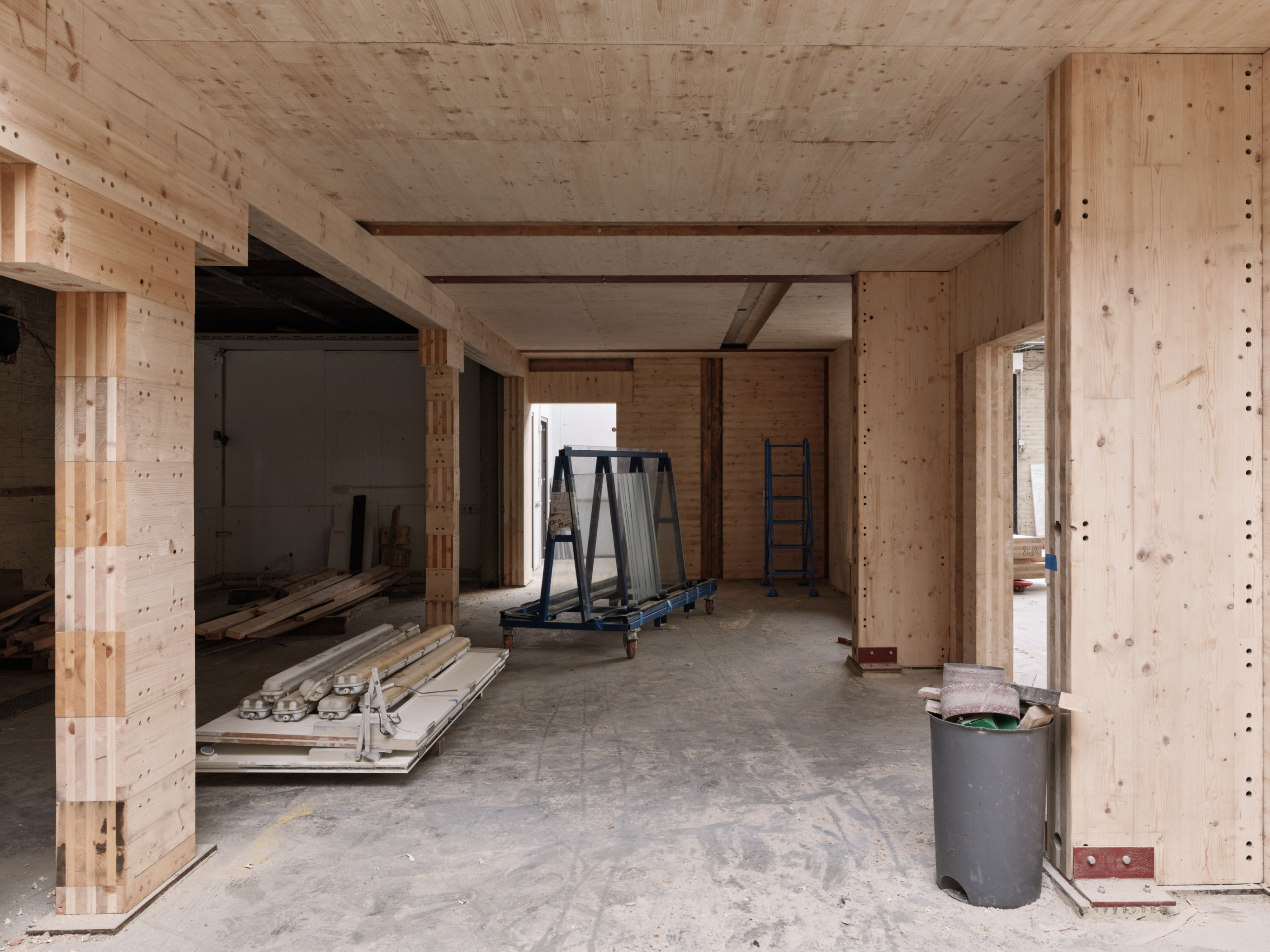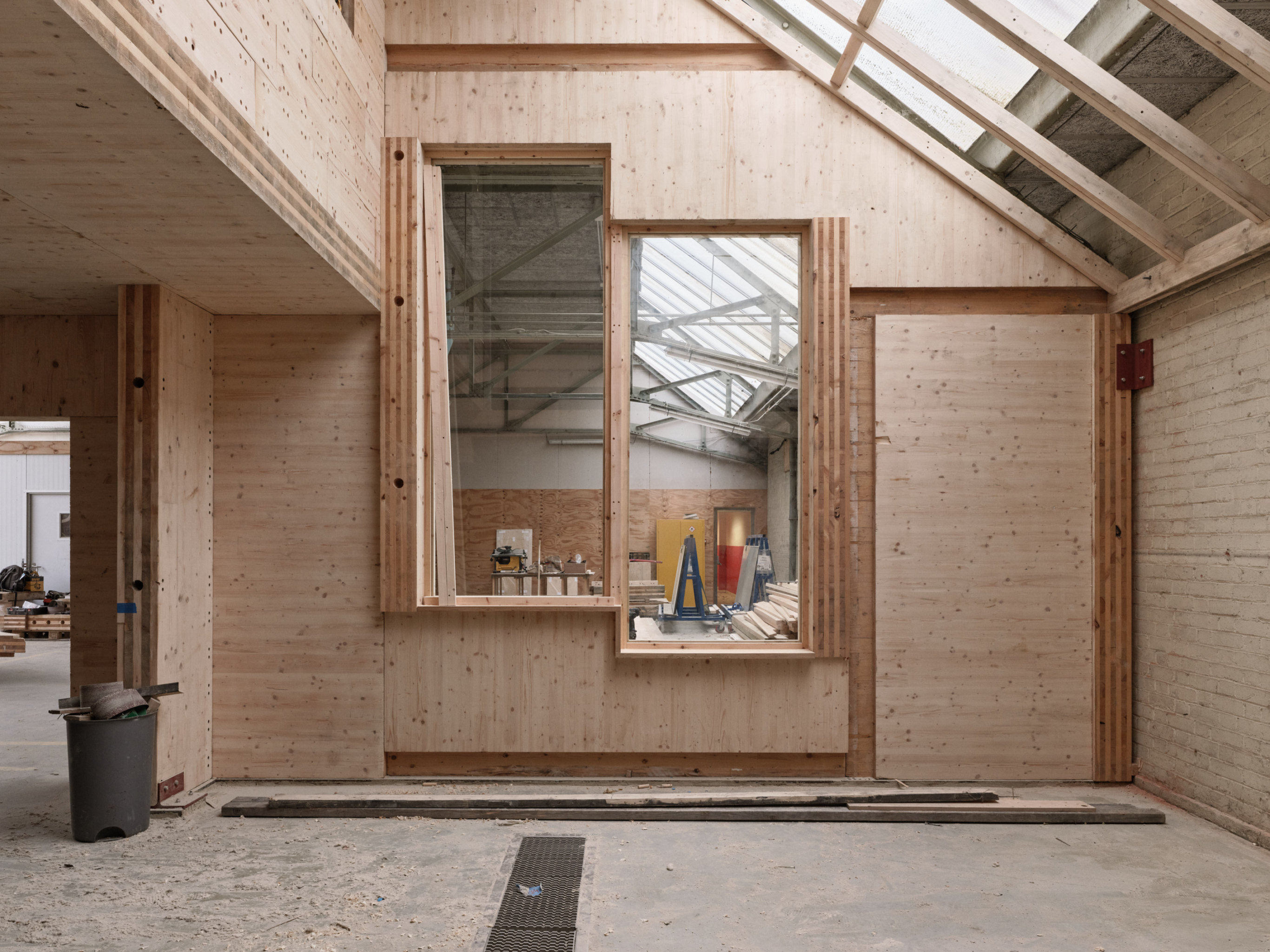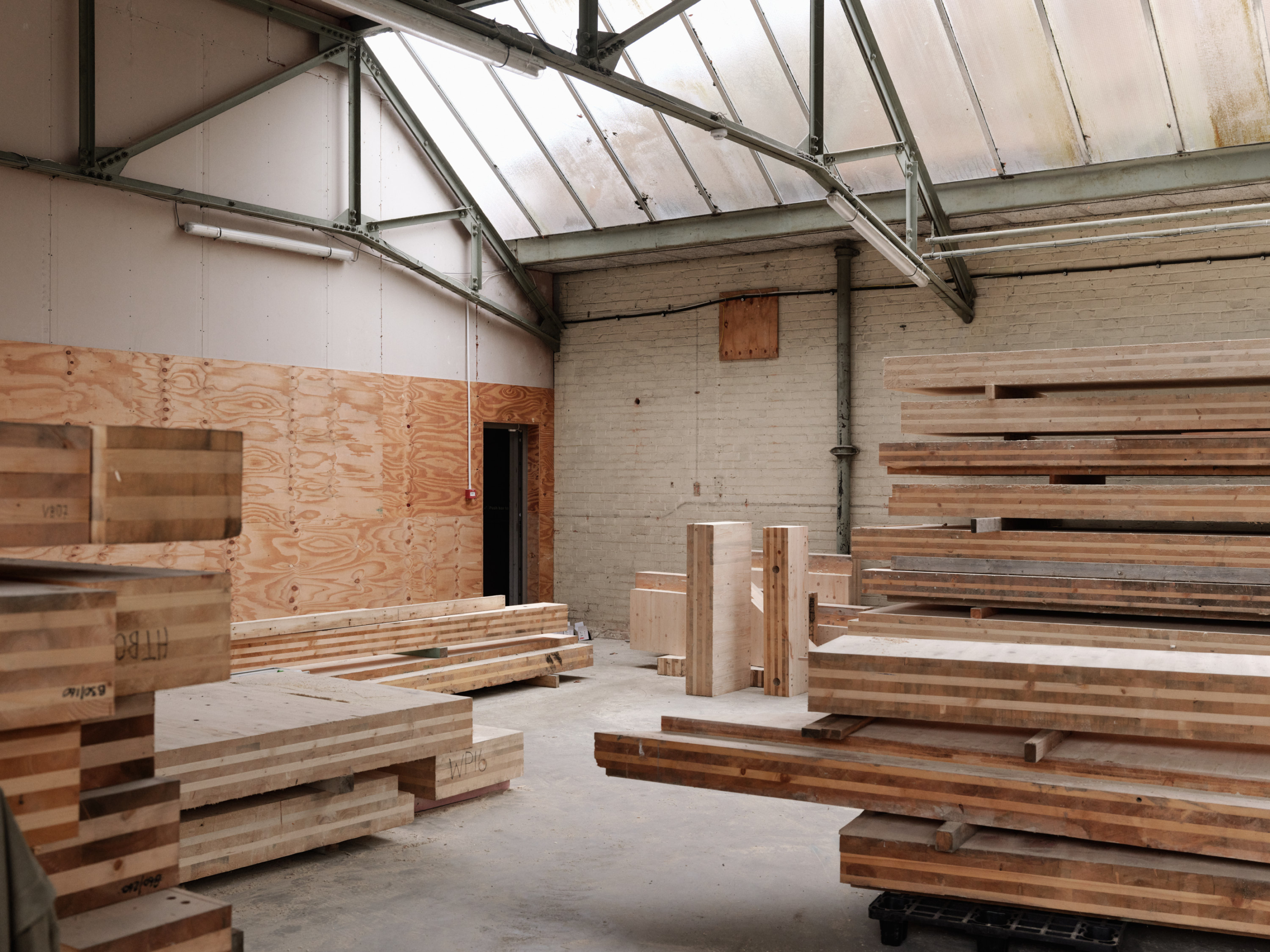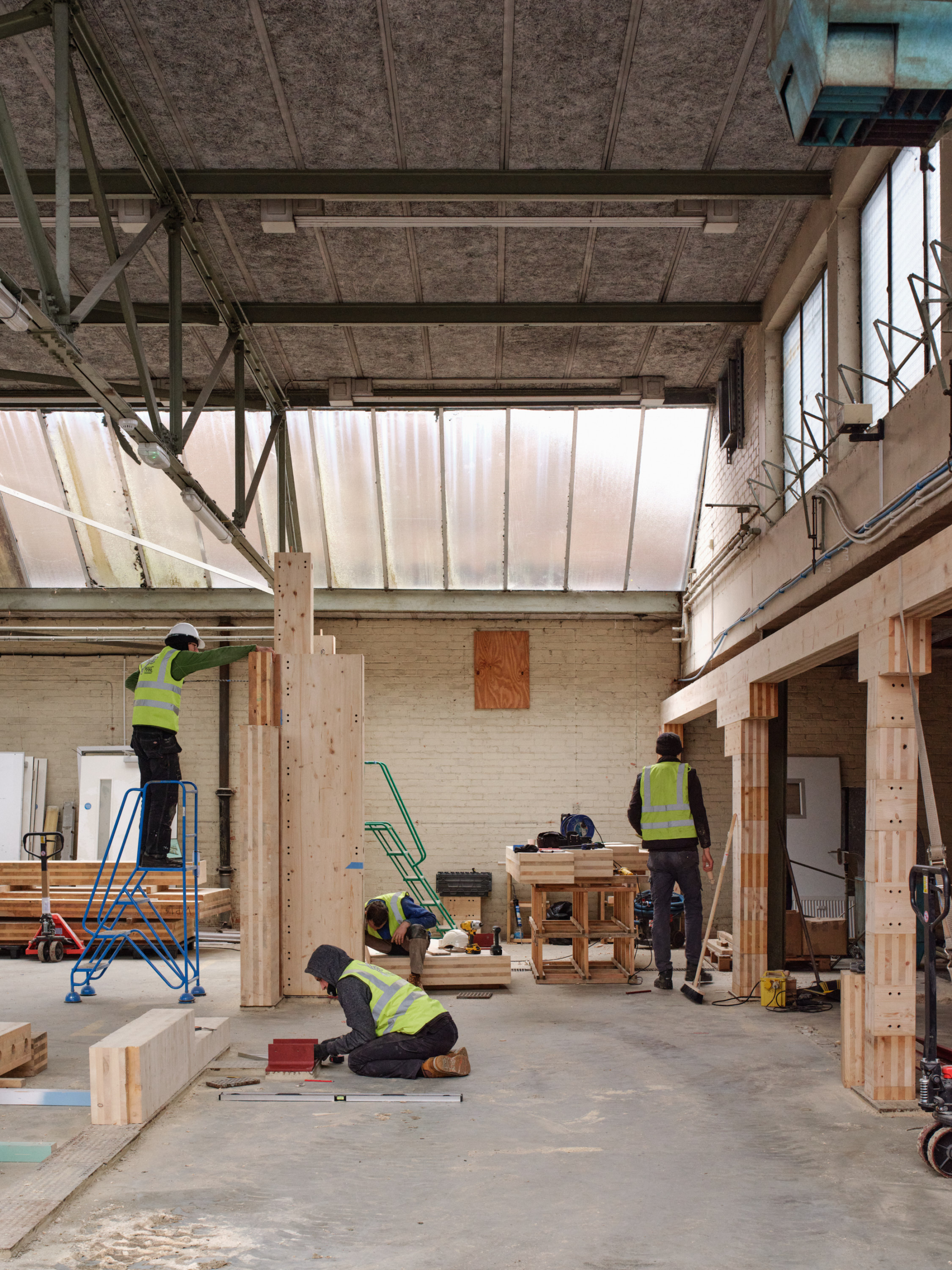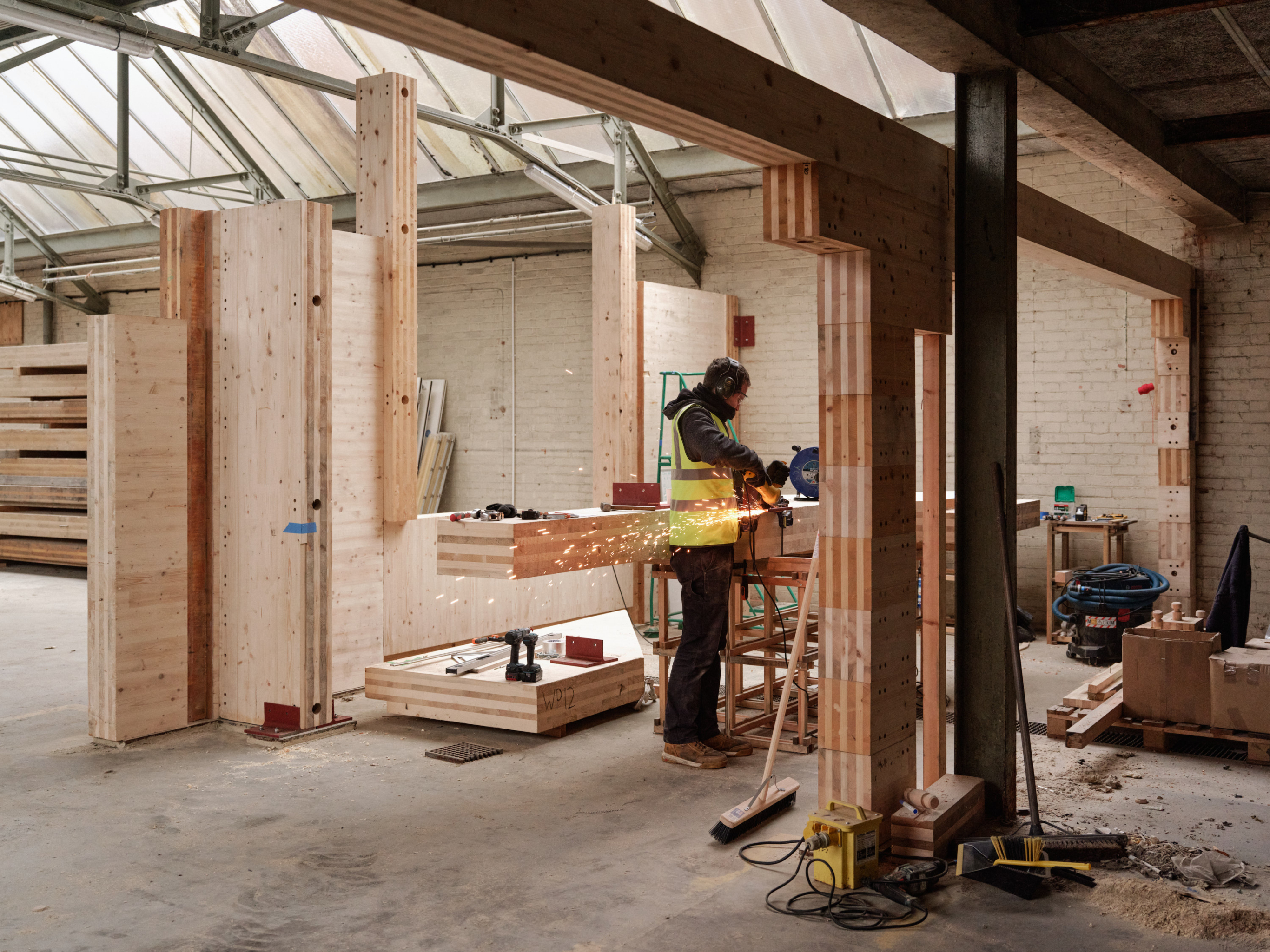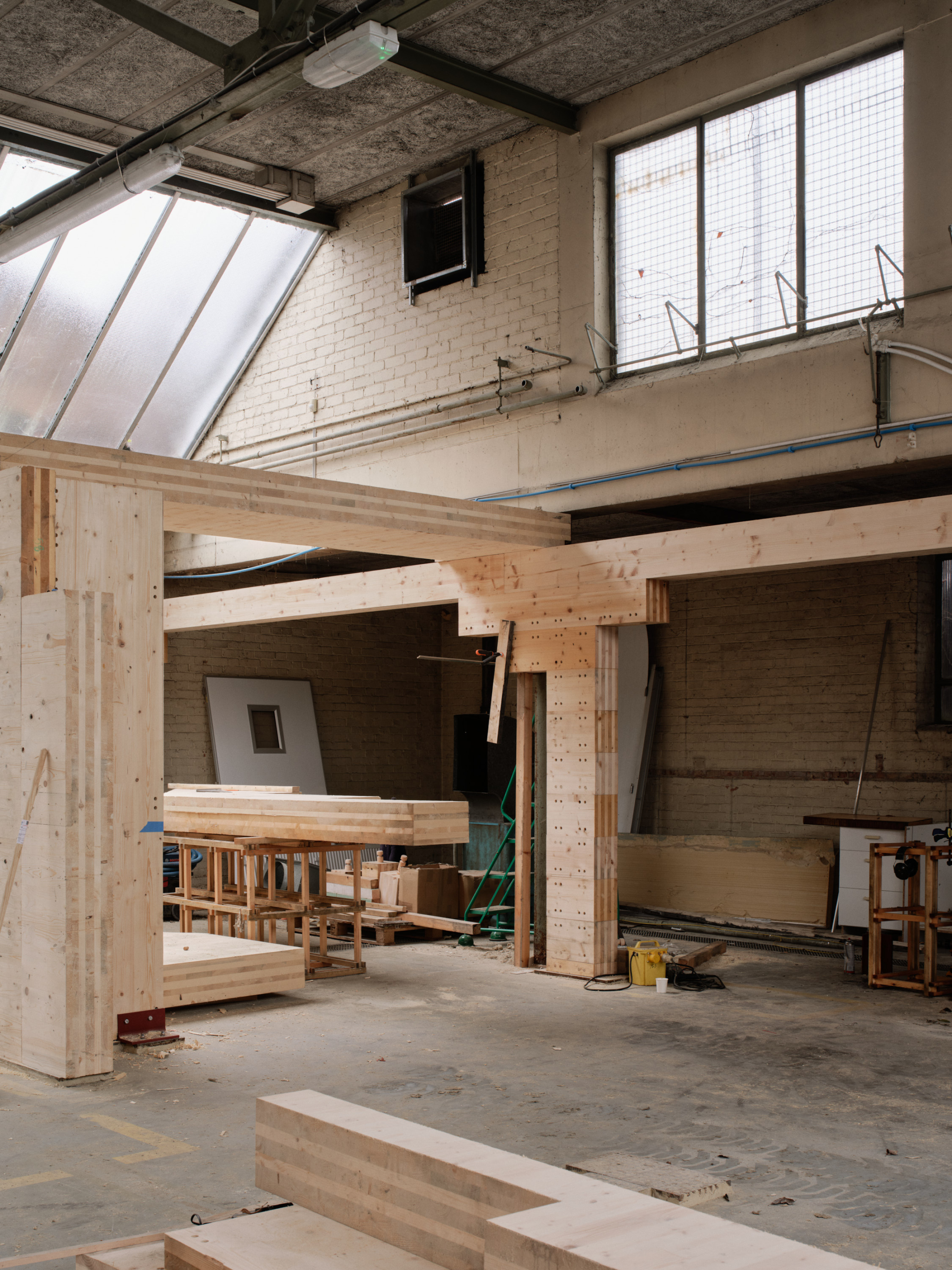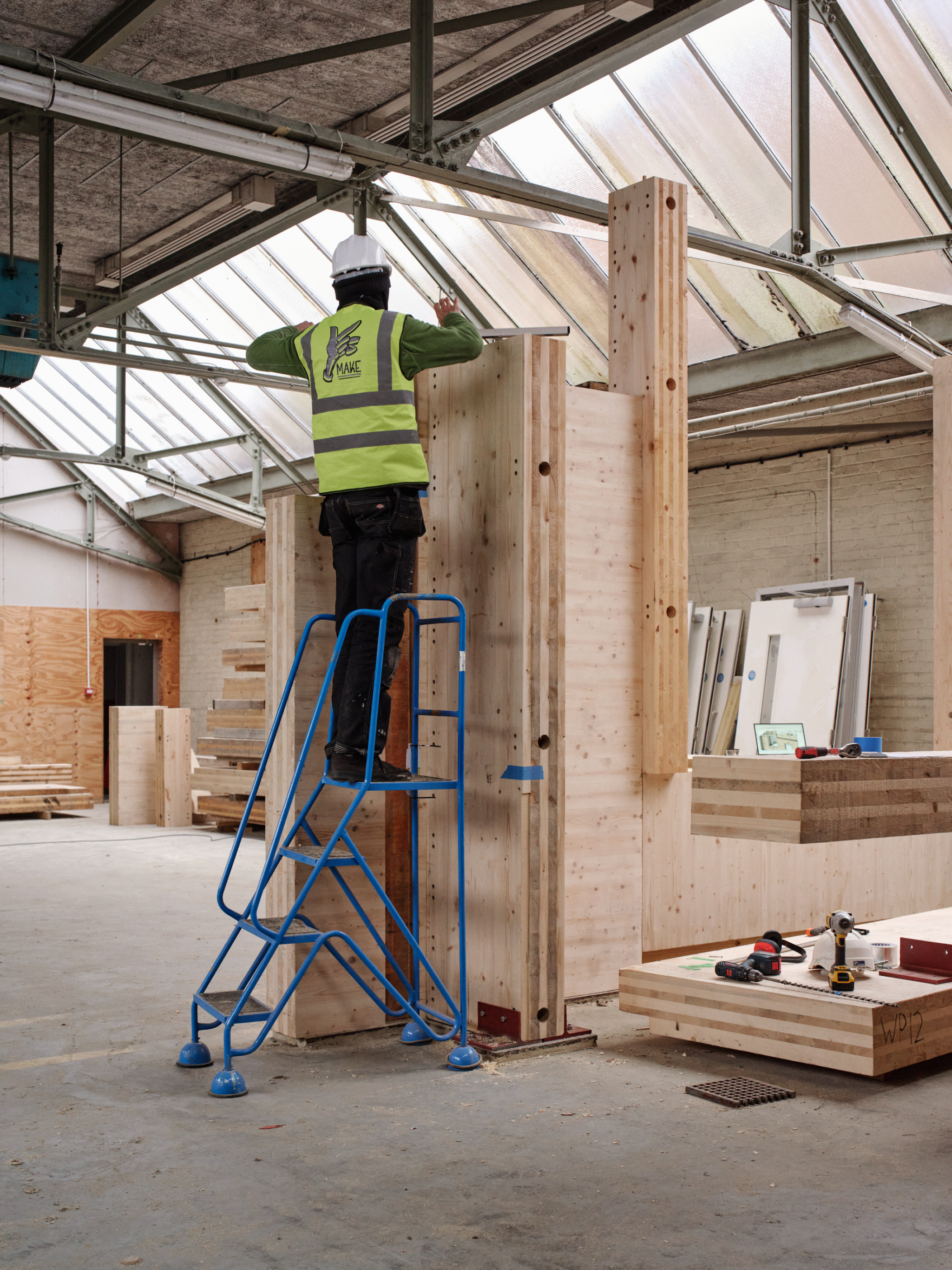
Bringing together Yes Make, Resolve Collective and Material Cultures under a single operational site in Silvertown, east London, Tipping Point East combines material storage, fabrication, education and construction in a shared attempt to address the systemic waste embedded within the built environment and cultural sectors.
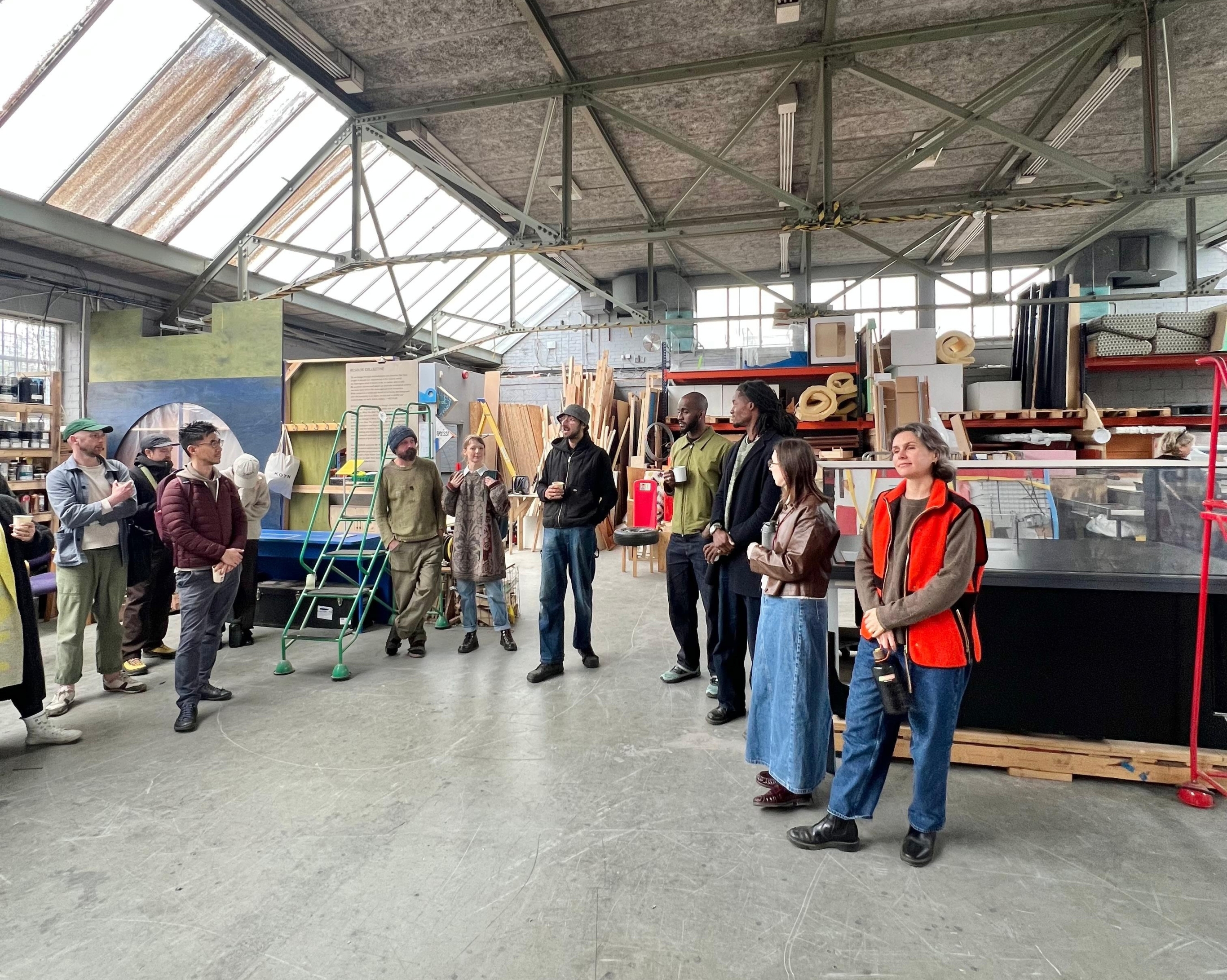
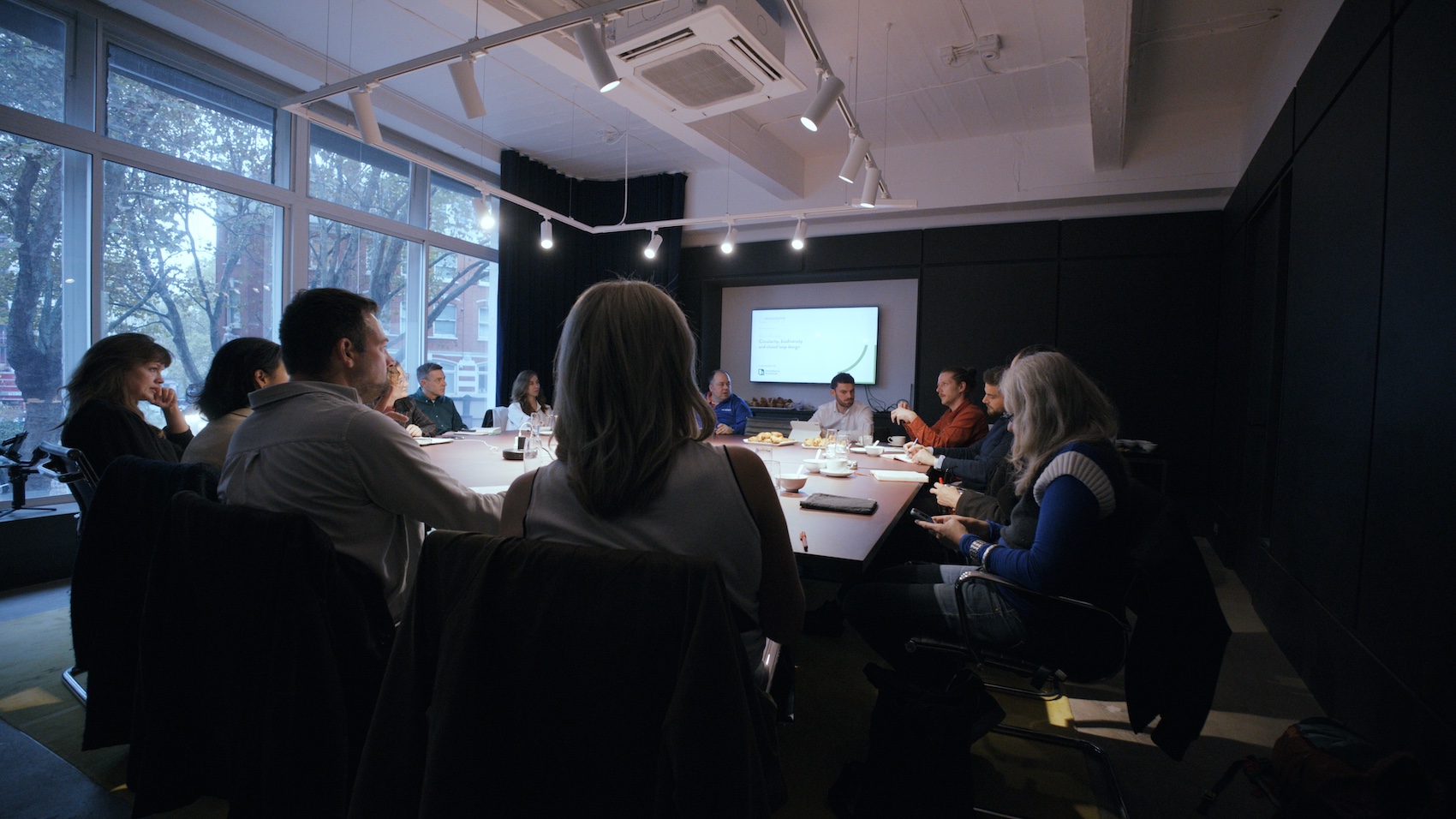
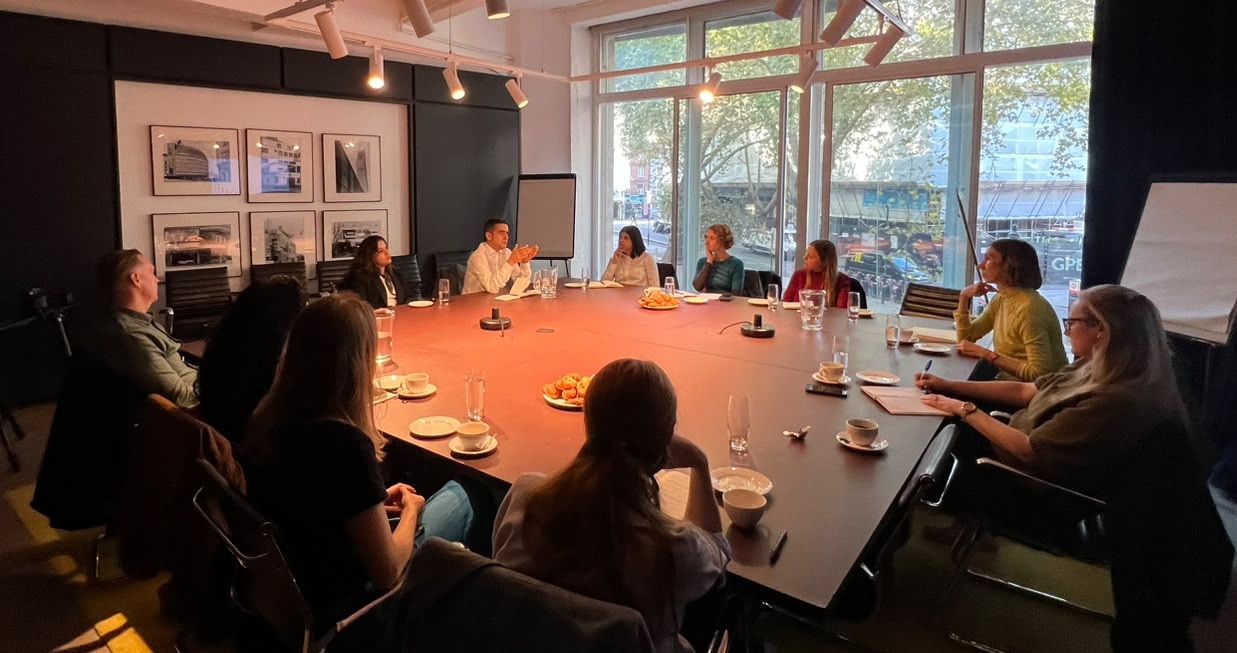
Pictured, from left to right: Joel de Mowbray (speaking) of Yes Make, Seth Scafe-Smith and Akil Scafe-Smith of Resolve Collective, Dr Silvie Jacobi of Tipping Point East and Summer Islam of Material Cultures.
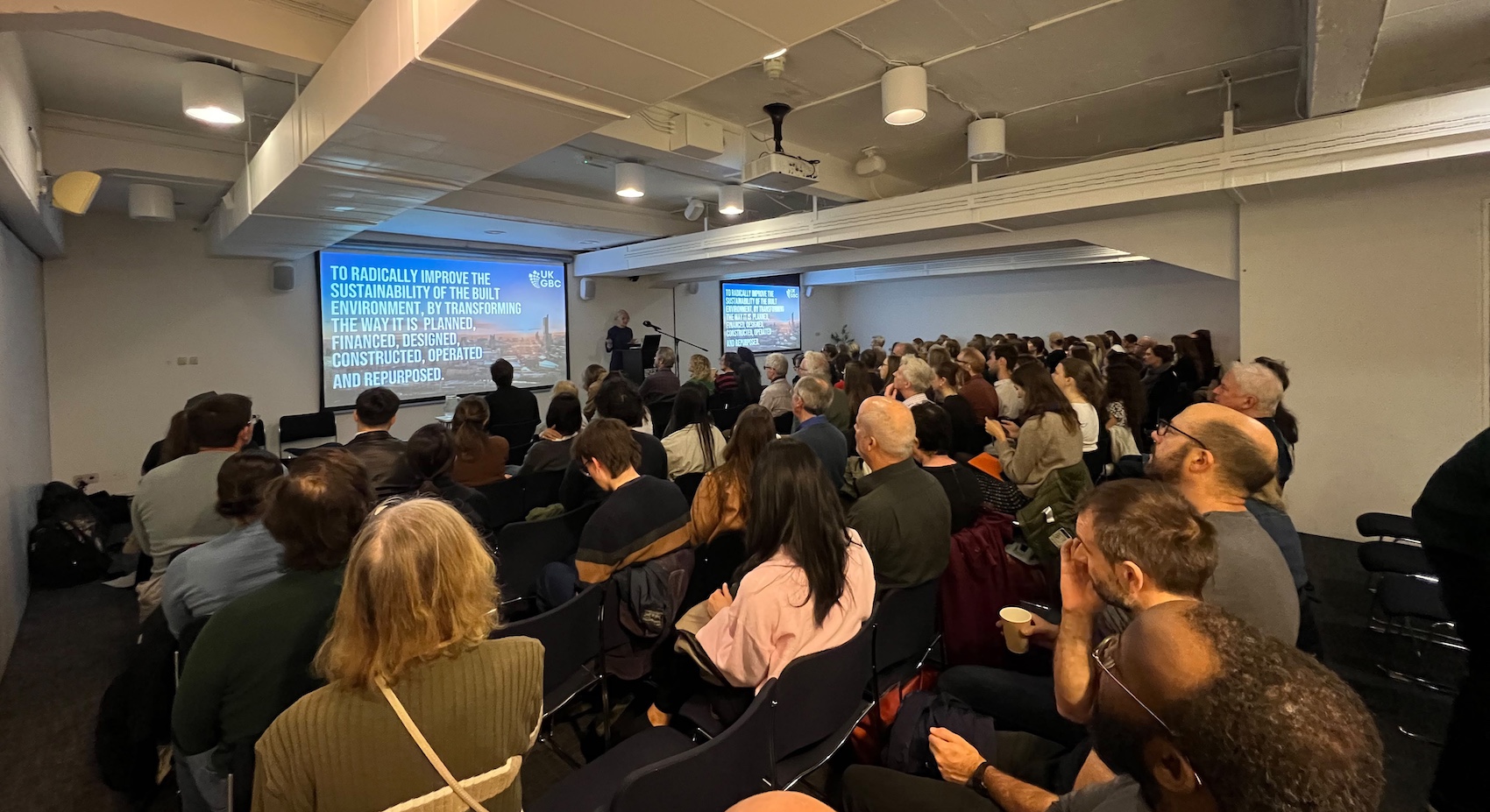
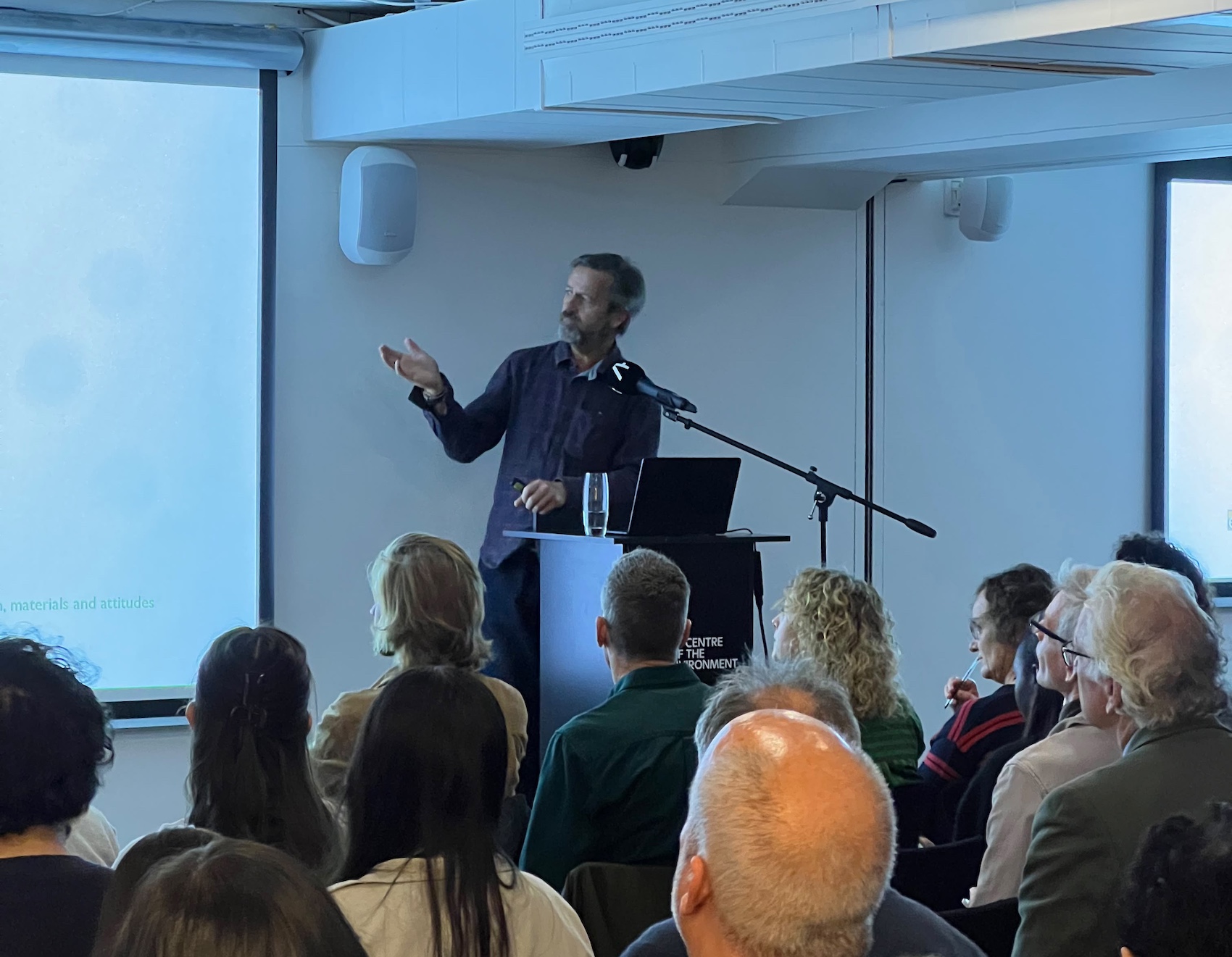
Clad in denim dungarees, Joel De Mowbray stands tall, his legs crossed, one hand in his pocket, the other adjusting his bucket hat. In another pocket pokes out a folding carpenter’s ruler, primed for use. But the time for that is not now. De Mowbray is instead explaining to a gaggle of architects, students, makers and local practitioners how Tipping Point East came into being, and why the organisations gathered here believe the future of construction may depend less on inventing new materials than on learning how to value the ones already in circulation.
The project occupies a former industrial site leased from the Mayor of London for an initial five-year period at an affordable rent. Operational only since January, following what the team describe as a lengthy and often difficult negotiation and handover process, the initiative has nevertheless already begun functioning as a live testing ground for new models of circular construction, community distribution and material recovery. Across workshops, yards and teaching spaces, discarded exhibition infrastructure, construction products and felled urban timber are catalogued, processed, redistributed and, increasingly, reimagined as part of a wider social and environmental project.
Developed in partnership with the Greater London Authority and Newham Council, the project is positioned as both a practical intervention and a prototype for wider systemic change. According to the team, Tipping Point East will divert an estimated 15,000 tonnes of material from landfill over the next five years, while the retrofit of the site’s office building alone has already saved more than 165,000kg CO2e through the use of reclaimed rather than new materials.
For the organisations involved, however, the ambition is not simply to rescue waste materials from landfill, but to build the systems, partnerships and public access required to make reuse ordinary rather than exceptional. “We are a design and build practice,” explains De Mowbray, creative director and founder of Yes Make. “We are structural engineers and architects that typically collaborate with the mainstream industry to be able to support material-led models of design in our urban environment.”
De Mowbray established Yes Make five years ago as what he described as “a moonlighting exercise in getting away from a desk.” Initially working with salvaged pallets and small-scale community projects, the practice gradually evolved into a material recovery operation dealing with waste streams at an urban scale. “We started to take entire trees from different local authorities in London to convert that into timber for community projects,” he explained. “Then the problem is, when you get a reputation for someone that can take materials, nobody really wants to throw anything away.”
Soon afterwards came offers at a far larger scale: “10,000 fire doors, 500 massive exterior glazed windows.” Operating from a small community garden in southeast London, the practice was forced to reject the overwhelming majority of materials offered to it. “I was saying no to way over 99 per cent of what was offered to us,” De Mowbray recalls, “and feeling like everything I was taking was just really high-quality materials that really anyone should’ve wanted to take.”
The solution was to create a permanent site with enough capacity to receive, process and redistribute materials at scale. Tipping Point East emerged through conversations between Yes Make, Material Cultures and Resolve Collective, organisations that had independently been grappling with different aspects of the same problem. Material Cultures had initially been approached to help develop learning programmes and retrofit strategies for the site, while Resolve Collective had already been in discussion with Yes Make about the possibility of taking on former industrial and builders’ merchant sites elsewhere in London. Gradually, the idea coalesced into a shared organisation capable of combining storage, education, fabrication and public access under one roof.
Today, Yes Make operates as what De Mowbray describes as “a parallel supply chain of material, design and build activity to support the mainstream industry”, organised around four interconnected strands: materials, design, make and build. The aim, ultimately, is to normalise reuse to the point where it no longer appears novel. “The process of reuse is boring,” he says with a grin. “So I’m striving to be boring.”
Resolve Collective arrived at the project from a different but overlapping direction. Established a decade ago, the interdisciplinary collective works across art, architecture, engineering and technology, focusing on questions of agency, representation and participation within the built environment. “We were really interested in how we can build spaces that think about agency in our built environment,” explained Akil Scafe-Smith. “The communities that we work with and for are underrepresented, but also left out of the decision-making and power structures that determine how our cities are made.”
The distribution of these materials can go to the hands of different practitioners and organisations who are working against the grain to try and provide for their own communities”
Working initially in an informal and improvised way, the collective began salvaging and foraging materials for projects before developing a more structured approach to redistribution. “We were operating in a very DIY and informal capacity,” Scafe-Smith said. “We made do with the resources around us and the relationships that we held in those moments.”
As the practice expanded, material reuse became increasingly central to its work. “We started to think about a system where we could start to think about how we take material that comes from cultural institutions, creative institutions, museums, galleries that we work with, and how we can distribute it out to communities,” Scafe-Smith explained.
That process eventually evolved into the Material Store, now housed within Tipping Point East. The store functions as both archive and distribution network, holding everything from exhibition plinths and theatre panels to prototype biomaterials and salvaged timber. Membership costs between £2 and £3 per month, granting access to materials, workshops and a wider cultural programme.
“The idea is that the distribution of these materials can go to the hands of different practitioners and organisations who are working against the grain to try and provide for their own communities,” added Scafe-Smith. “What we found was that these materials can really catalyse not only the organisational capacity of different organisations, but also the imagination of different organisations.”
For Scafe-Smith, the Material Store is as much about narrative as utility. “This is a space of latent imagination as much as it is one of materials,” he said. “All of the materials have a story and a narrative that they come with.”
Among the materials currently stored on site are coloured panels salvaged from Talawa, the UK’s only Black-owned theatre company, hay from Material Cultures’ exhibition at the Wellcome Collection, reused exhibition plinths from Whitechapel Gallery and prototype wetland-based boards developed by Material Cultures. Many of these materials would otherwise have been incinerated or sent directly to landfill. “Everything in here was going to go to a skip or to incineration,” Scafe-Smith noted. “Not because people are evil, but because they don’t have the capacity to allow it to be somewhere else.”
The initiative operates through multiple overlapping systems. Resolve Collective’s membership-based Material Store focuses primarily on community organisations, local residents and cultural groups, while Yes Make’s adjoining yard and fabrication infrastructure caters more directly towards architects, contractors and construction professionals. Together, the organisations describe Tipping Point East as a charity structure intended to tackle different parts of the same systemic problem simultaneously.
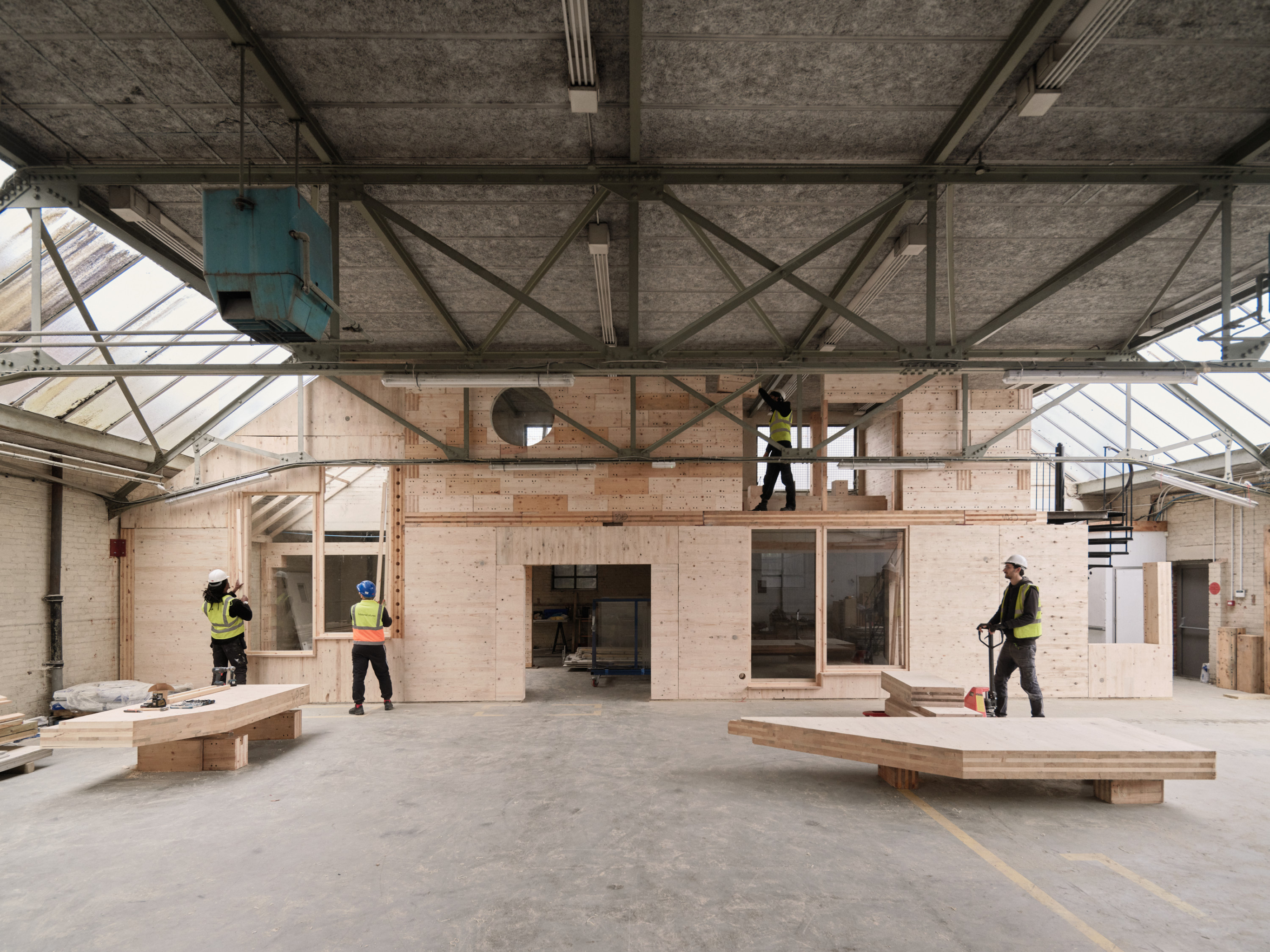
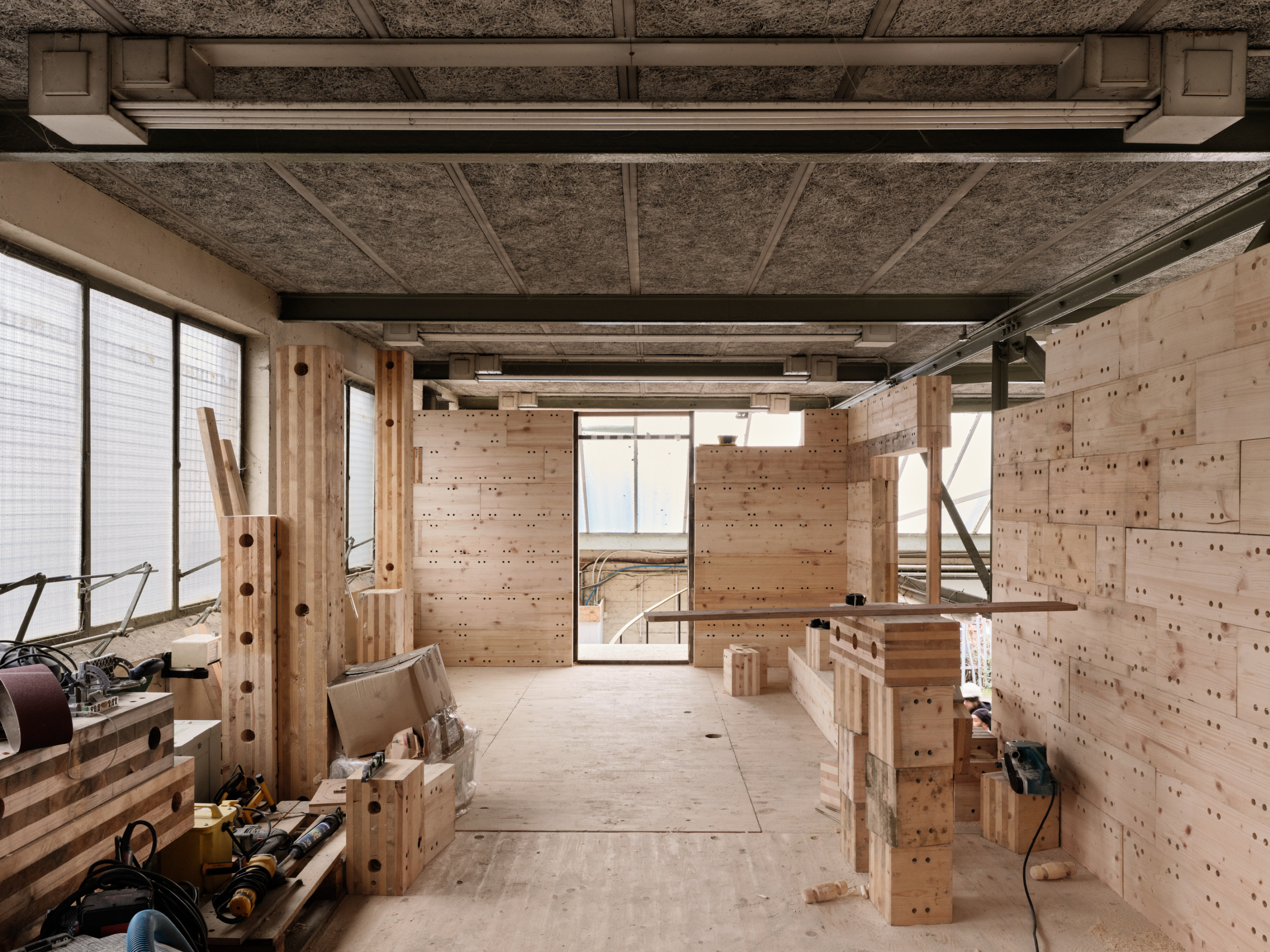
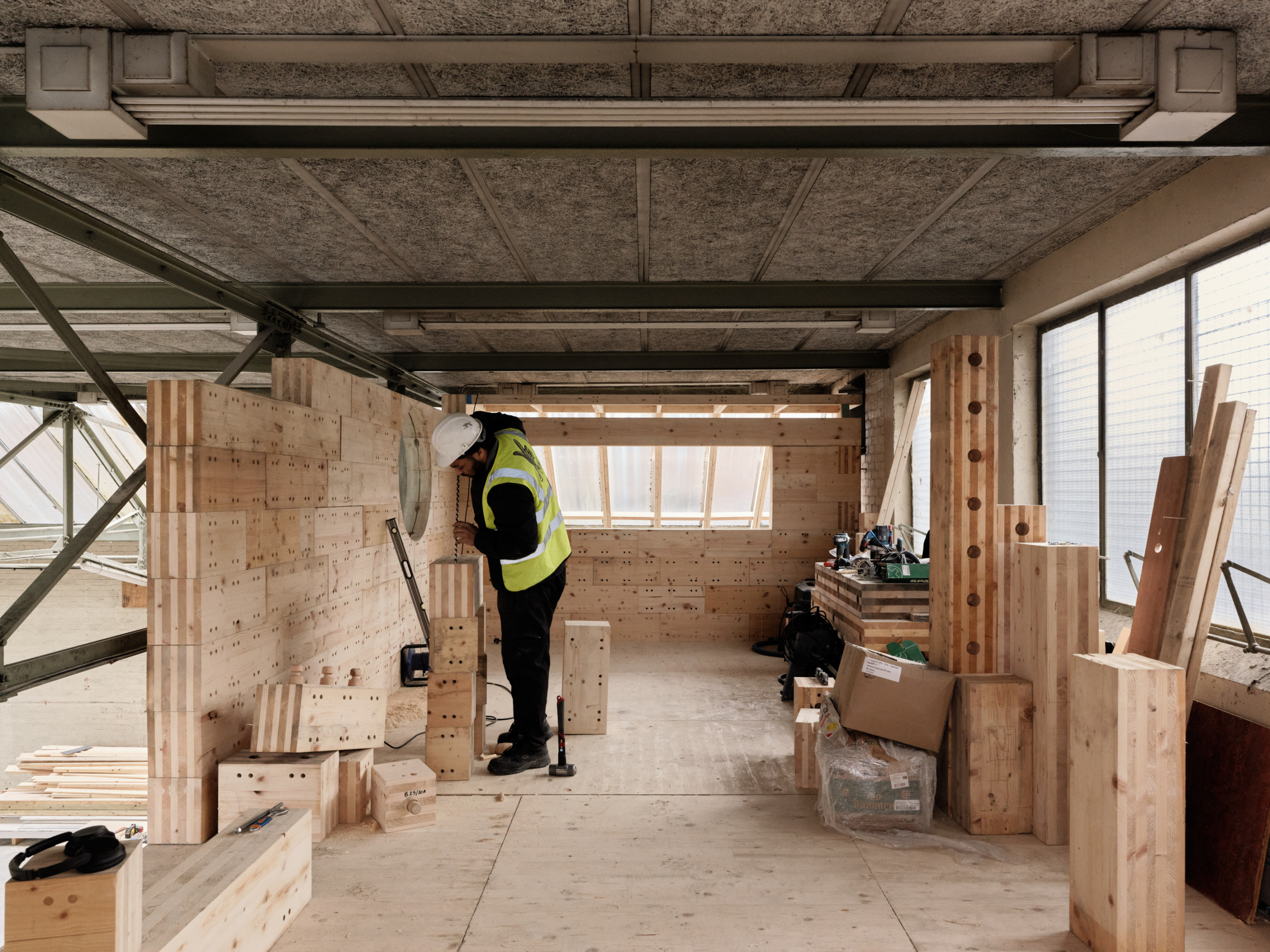
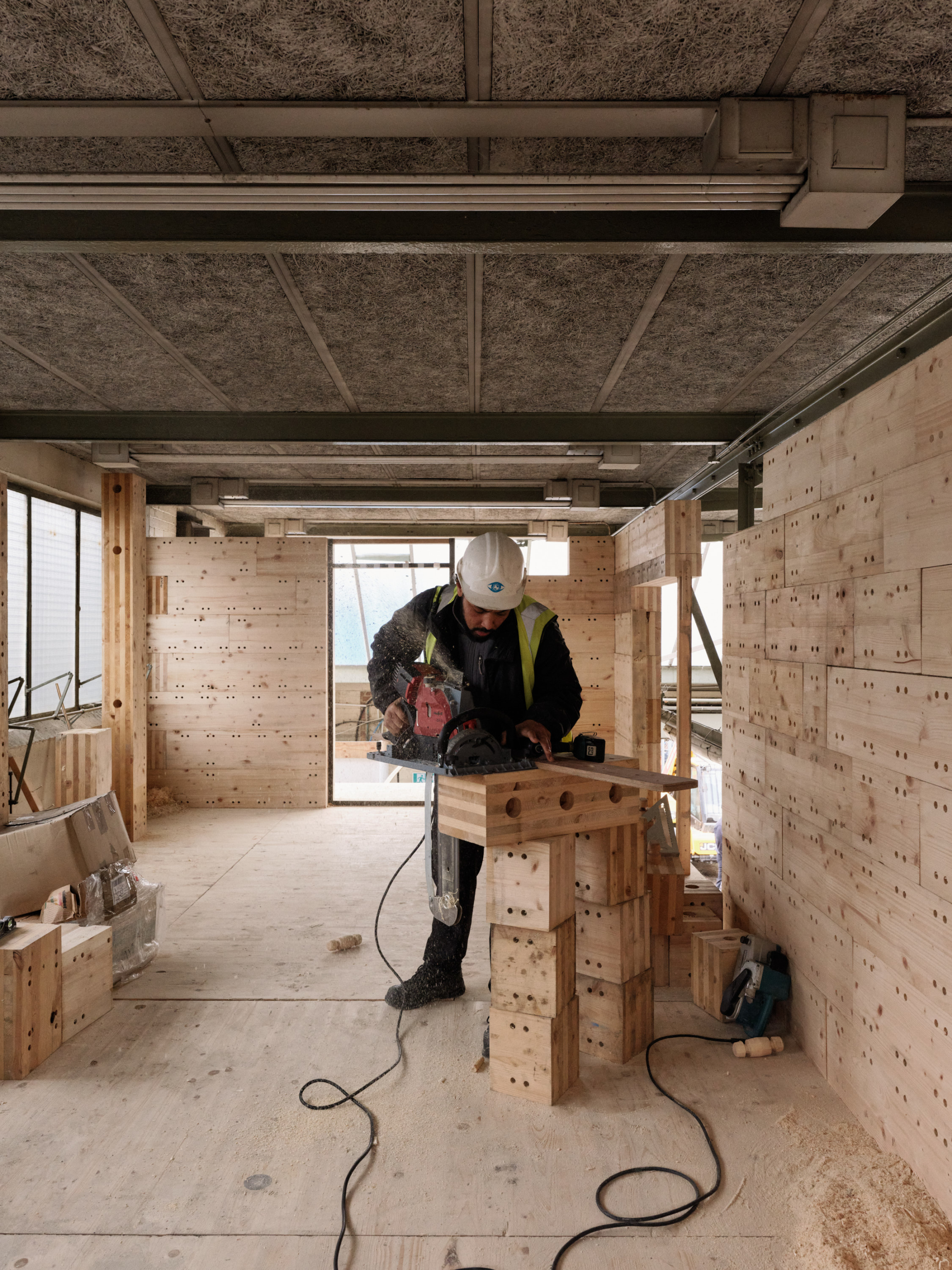
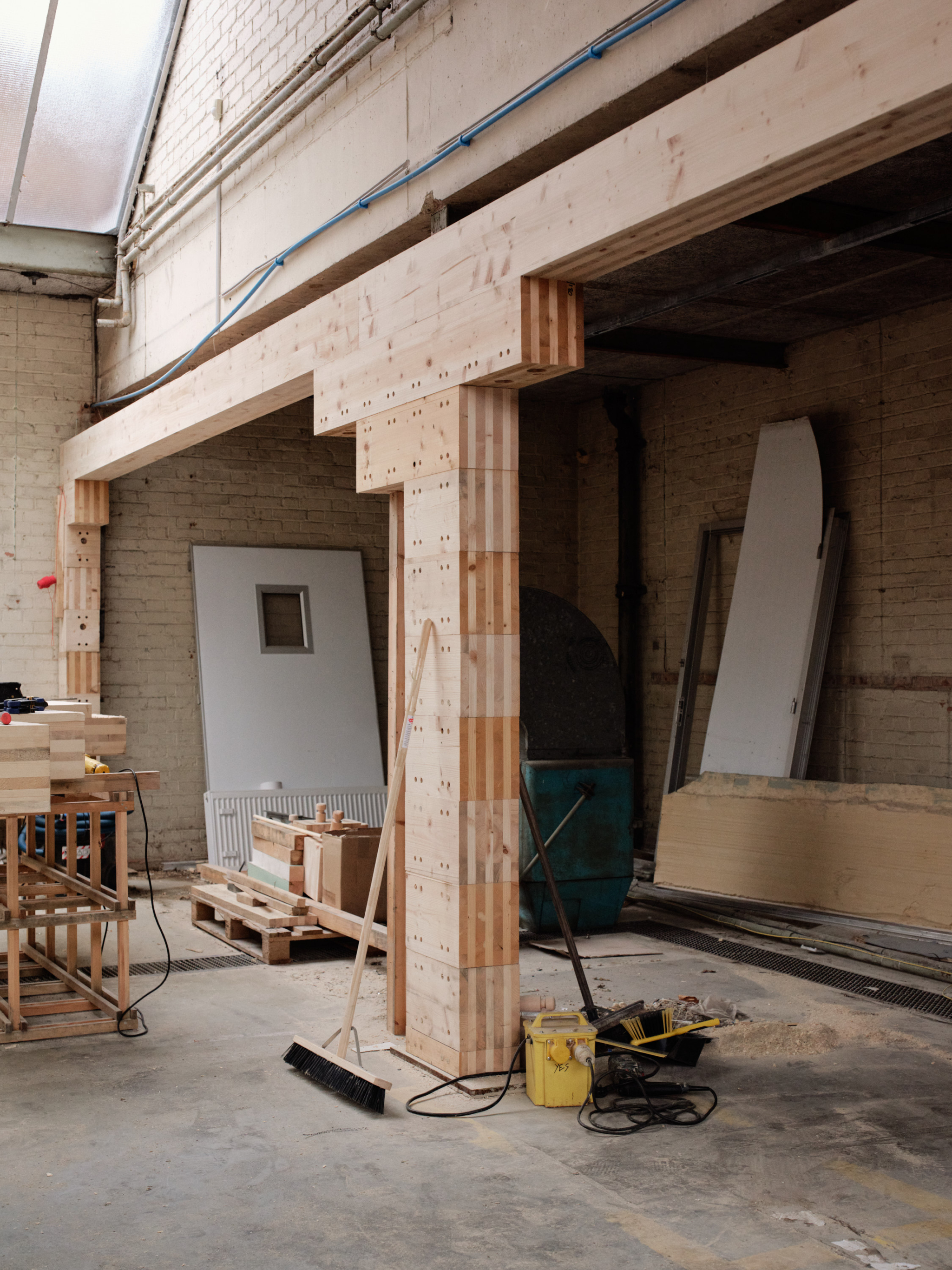
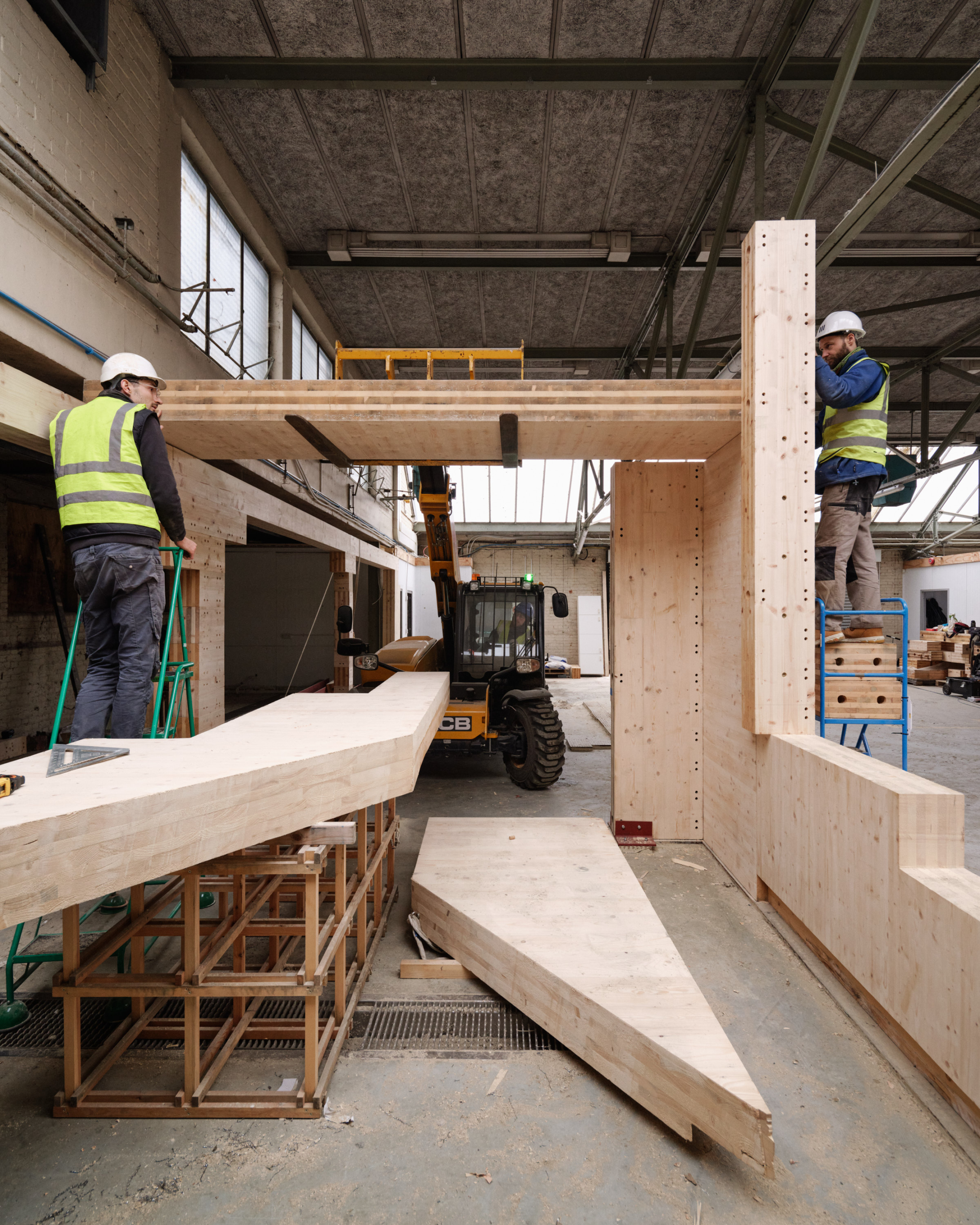
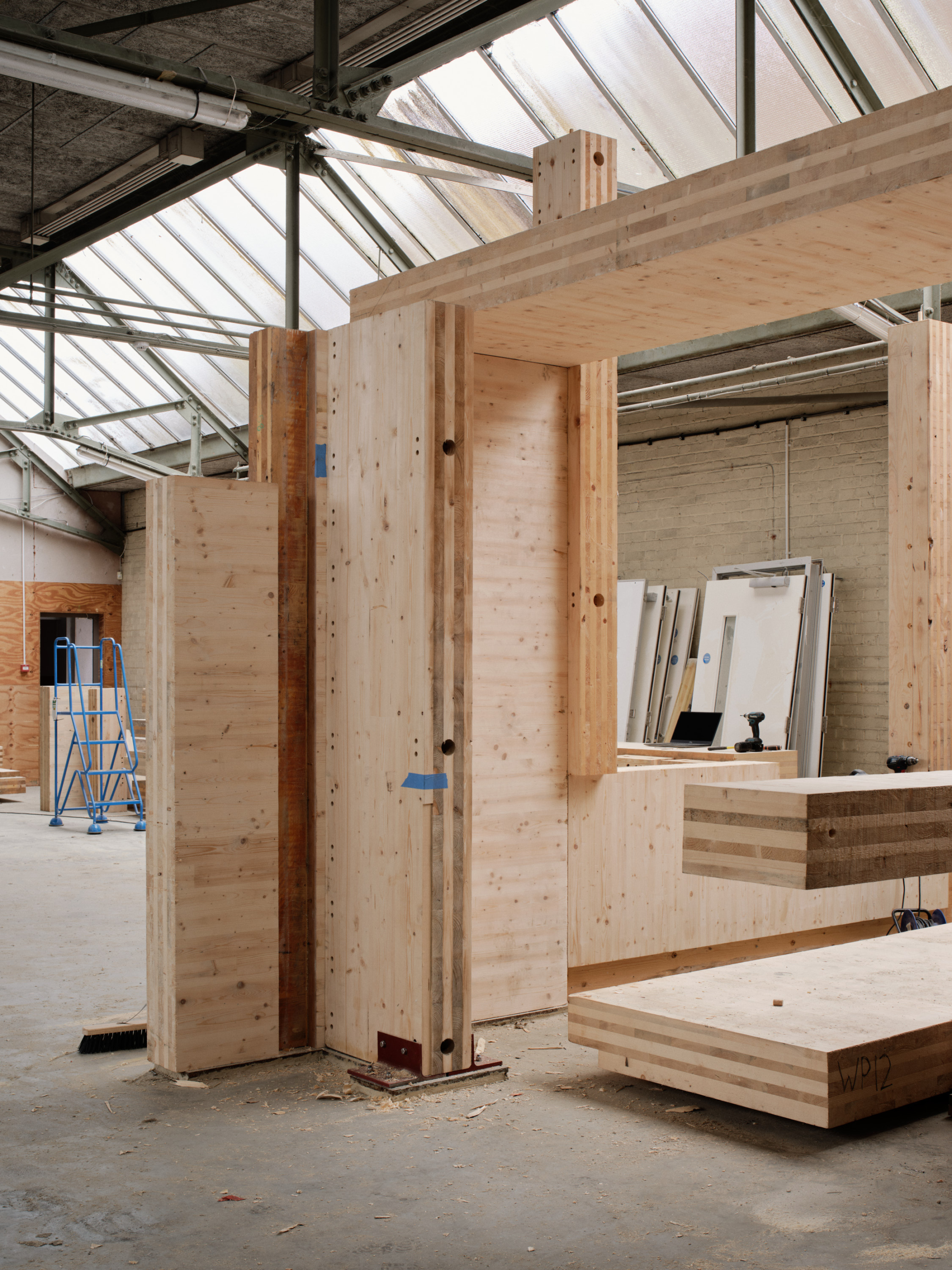
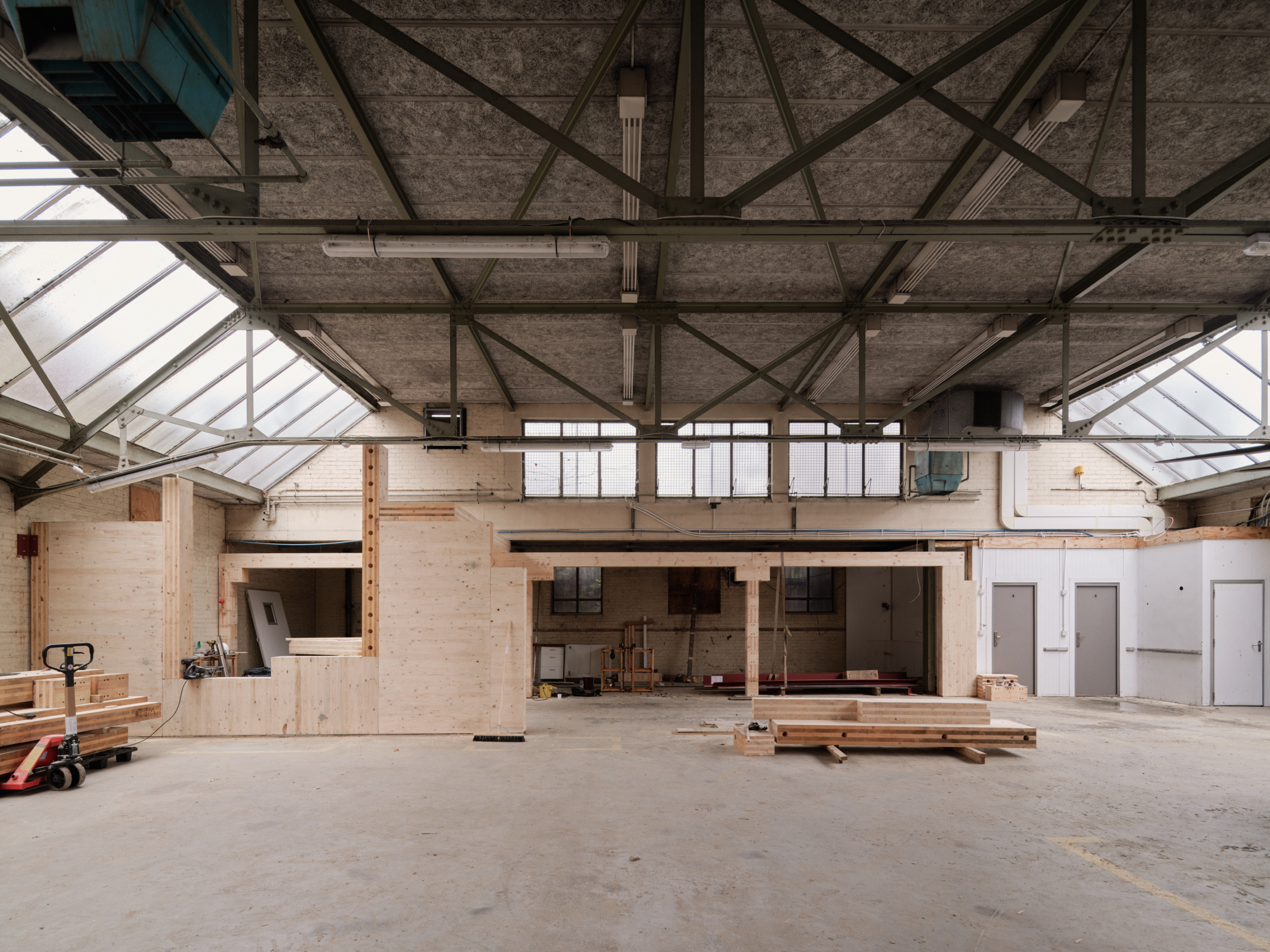
Designed by Material Cultures, the interior refurbishment underway inside one of the warehouses at Tipping Point East. Now complete, Tipping Point East is looking to acquire more storage space in warehouses that sit adjacent to the site.
Material Cultures bring a further layer of research and environmental advocacy to the initiative. A not-for-profit organisation its work spans investigations into ecological supply chains, biodiversity impacts and labour conditions, alongside the design of buildings demonstrating the architectural potential of natural materials. “We do quite a lot of research work, which looks at the impact of scaling natural materials and the impact that has on our wider ecologies and biodiversities, supply chains, the impact that has on labour, how those mechanisms are galvanised by policy,” Summer Islam explained.
Alongside research, Material Cultures has increasingly focused on construction-based teaching, looking, as fellow co-founder George Massoud explained, to broaden access to and understanding of natural materials through programmes aimed at architecture students, communities, self-builders and existing construction workers.
For the practice, Tipping Point East provides something previously unavailable: permanence. “One of the most amazing things that Tipping Point East unlocks for us,” Islam explained, “is the capacity now to have that kind of teaching in a residential way where we have our own equipment in one place. We can run more programmes.”
Massoud described the project as a stepping stone towards Material Cultures’ longer-term ambitions for a larger “Land Lab” bringing together research, education, fabrication and demonstration projects in a single location. In the meantime, he sees Tipping Point East as an opportunity to deepen collaboration between the three organisations while refining new ways of practising. “Being able to demonstrate what that looks like,” he explained, “and developing that vision in a bit more detail while we’re here, and also learning from our partners and really adding more richness to the way that we practice by learning from them, I think that probably will be pretty good as an outcome.”
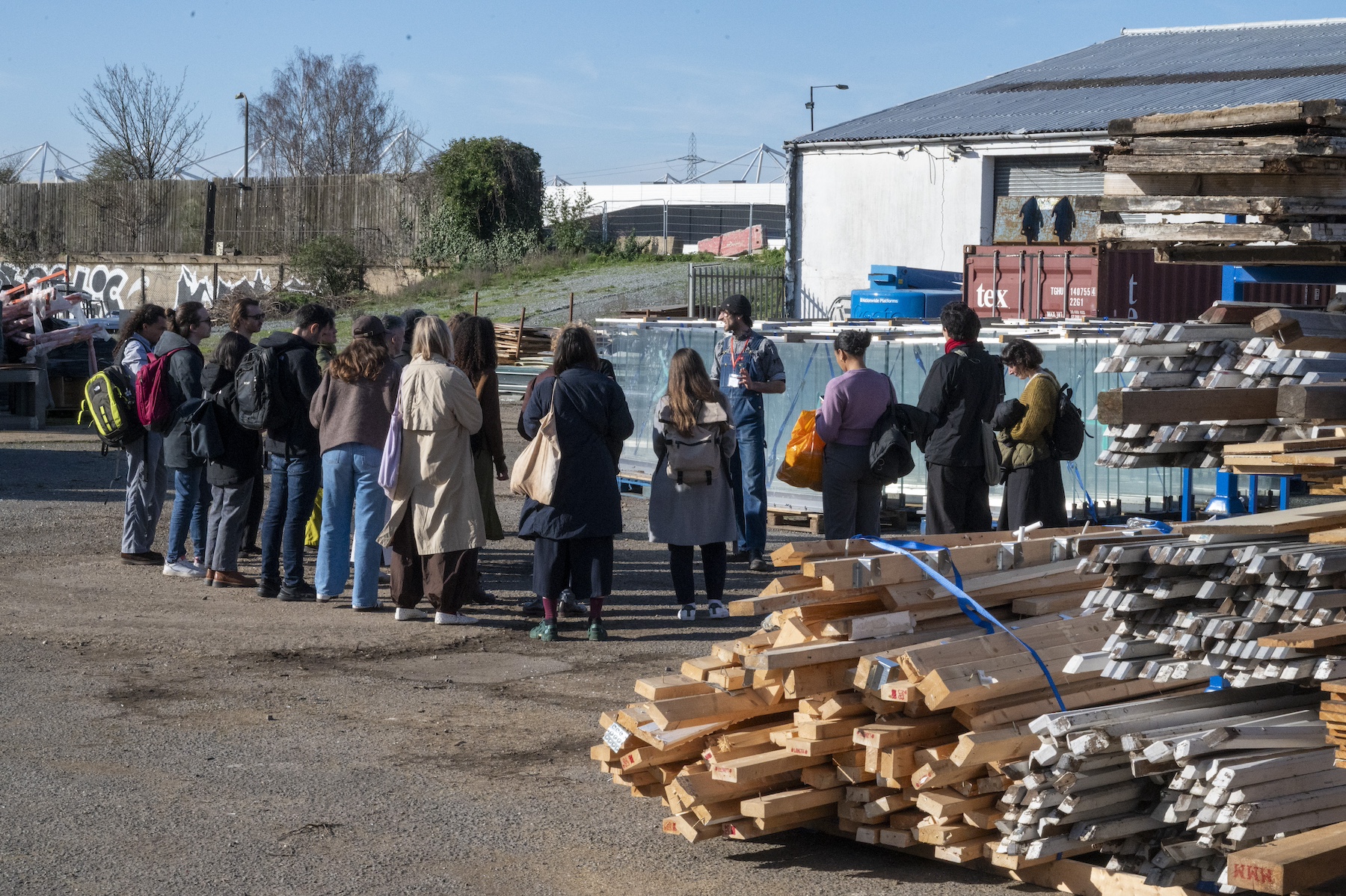
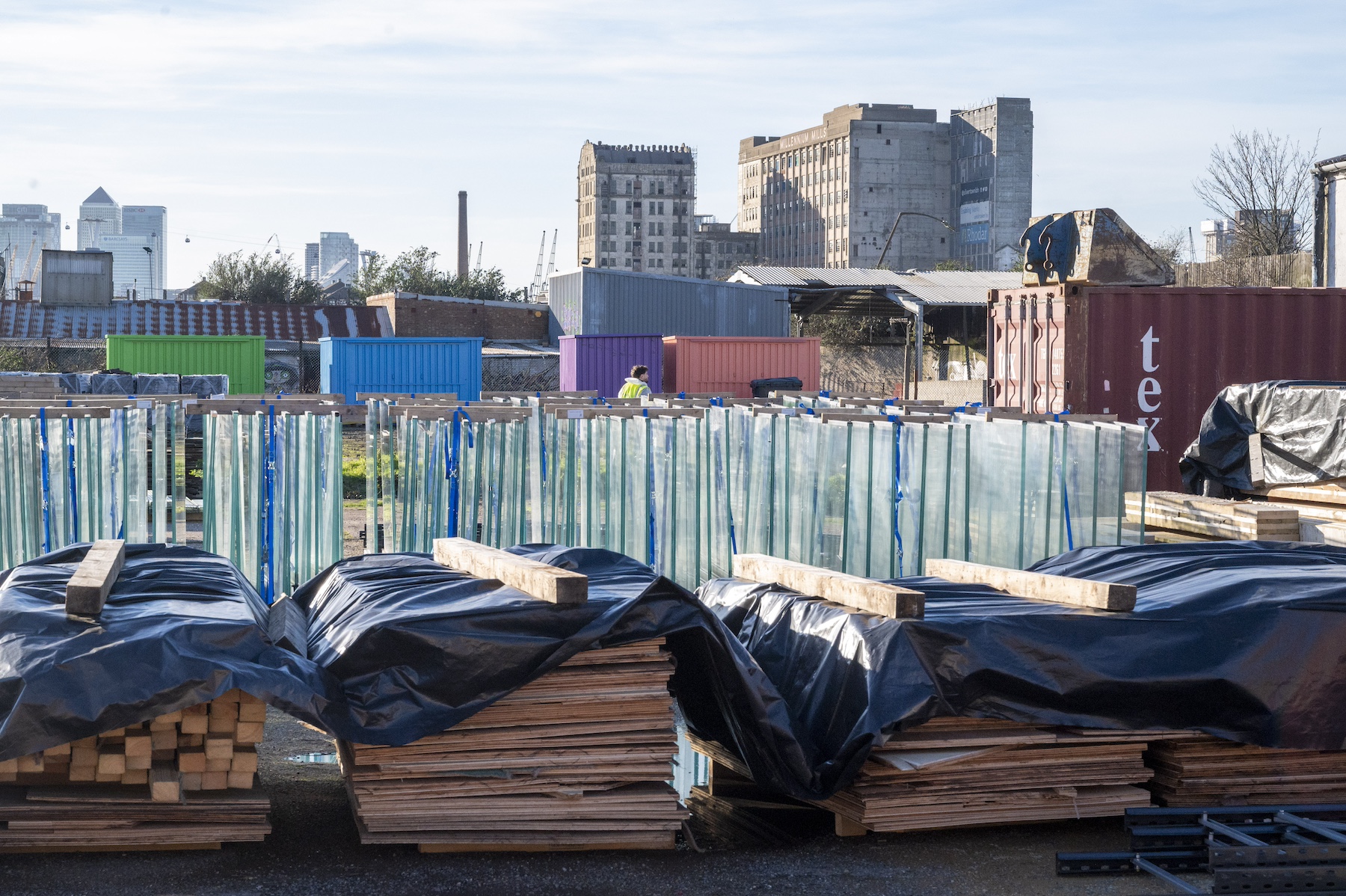
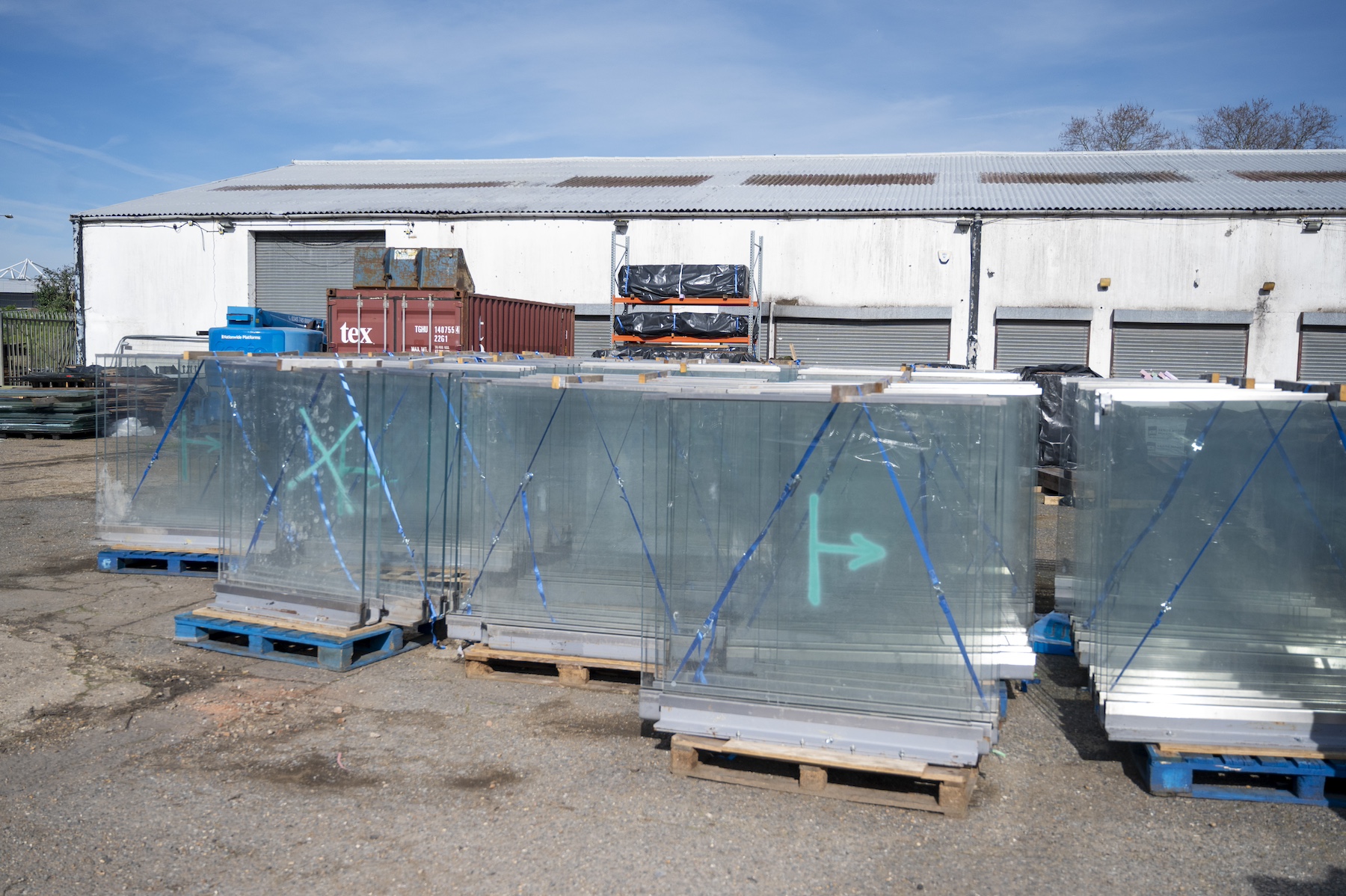
Outside, the yard reveals the industrial scale of the operation. Stacks of salvaged timber, glazing systems and construction products sit alongside a giant fallen sequoia tree recently recovered from Lynford Arboretum in Norfolk. The tree, dead for five years and felled 18 months ago, is due to be milled on site into structural timber for future projects. “This is all one tree,” De Mowbray explains. “And actually it’s also missing two more stems of this size that are going to be coming later this week.”
The milling process itself is treated as both production and public event. “There’s a thousand roles on a milling day,” De Mowbray said. “And it’s a beautiful process.”
The yard currently functions as a transitional landscape between waste stream and construction supply chain. Much of the material arrives from film studios, galleries, demolition sites and commercial developments, each sector generating different forms of surplus. “Film and TV are throwing away such great timber, in particular, in a way that construction just never would,” De Mowbray observed.
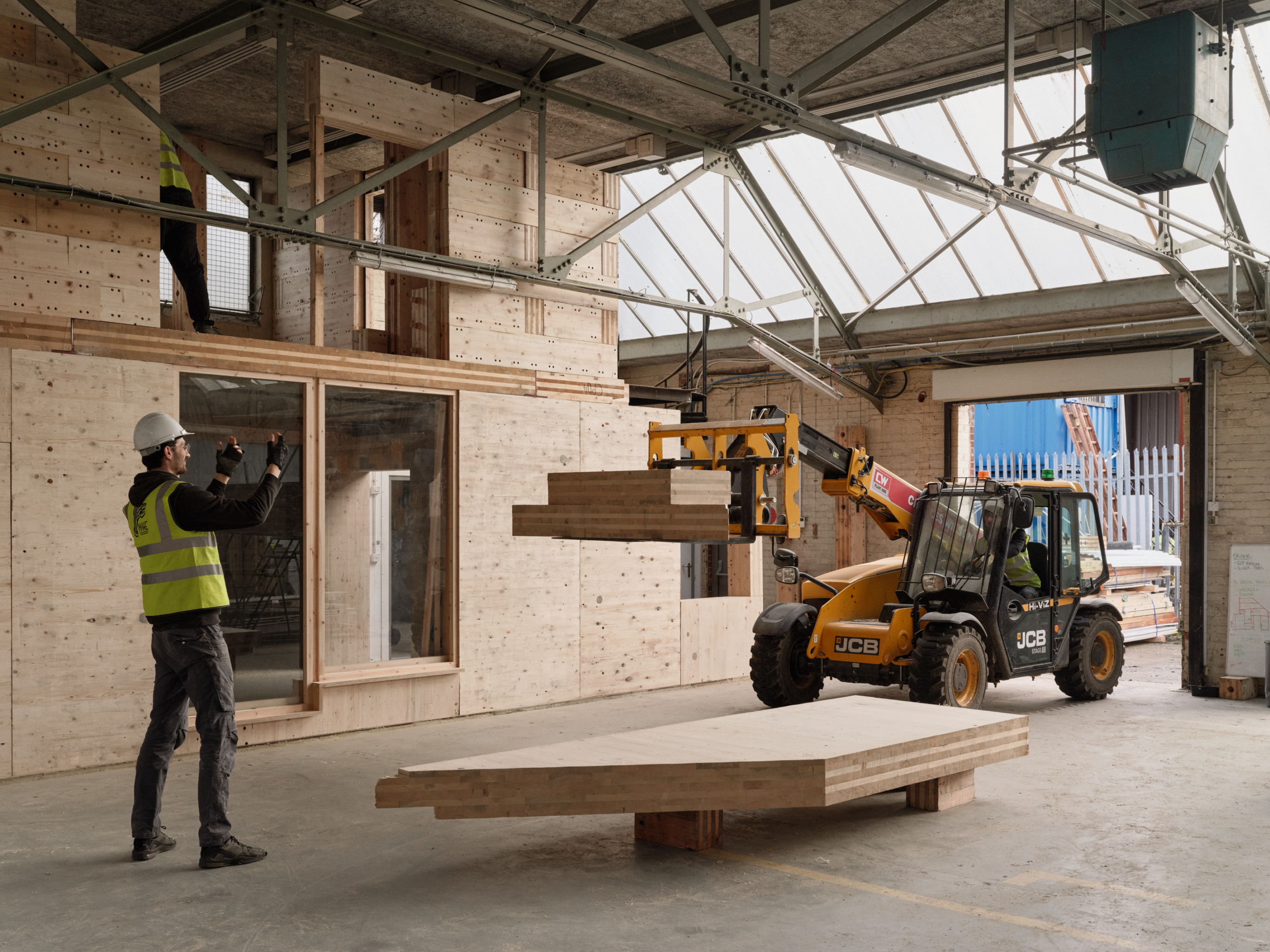
Increasingly, the organisation is assembling complete buildings from these recovered materials. One current project in Hackney, De Mowbray explained, is being built almost entirely from stock already held in the yard. “We estimate we’ve got about six complete buildings at the kind of outbuilding to small two-storey building scale in this yard right now,” he said.
Underlying the project is a critique of the way circularity is currently handled within the construction industry. “There’s a lot of misjudgements around circularity,” De Mowbray argued, “especially in the construction industry where it’s more time consuming, more expensive, more this, more that.” In reality, he suggested, reuse is often financially advantageous. “The vast majority of items we will save the contractor, both on labour and waste disposal, as a result of our involvement.”
Circularity has been well served by consultants, digital platforms and the intangible aspects of practice for a long time now… The real piece of infrastructure that is missing is the physical capability to get it done.”
Although London’s planning system now requires major developments to produce circular economy statements, De Mowbray believes much of the process remains administrative rather than operational. “In the absence of infrastructure like this, that doesn’t actually translate into increasing reuse,” he said. “It’s more of a reporting function as opposed to an impact function.”
For De Mowbray, the missing piece is not theory, consultancy or digital reporting platforms, but practical capability. “Circularity has been well served by consultants, digital platforms and the intangible aspects of practice for a long time now,” he said. “The real piece of infrastructure that is missing is the physical capability to get it done.” He points to reused fire doors as an example. “A mainstream fire door installer just won’t touch them. So for us, the novel piece of the puzzle is to be the hands that get it done.”
For Scafe-Smith, the ambition extends beyond London. Asked whether the model could be replicated elsewhere, he responded unequivocally: “100 per cent.” Rather than creating a national chain of centrally controlled depots, however, the group envisages locally adapted versions shaped by different regional conditions. “Our idea wouldn’t be that we have loads of Resolve-run Material Stores all over the country,” he explained. “The idea would be that we can take our learnings, share them with others, and they can set up processes that are relevant to their own context.”
In that sense, Tipping Point East is less a finished project than an evolving infrastructure. Part warehouse, part school, part construction yard and part public experiment, it attempts to demonstrate that reuse is not primarily a question of scarcity or technological innovation, but of organisation, access and imagination.
As the open day draws to a close, De Mowbray finally reaches for the folding ruler that has remained tucked in his pocket throughout the afternoon. In one of the newly retrofitted interiors, he flicks it open with a practised movement and points towards a junction within the wall assembly, explaining how the reused materials had to be continually adapted in response to changing stock, fire guidance and on-site discoveries. Around him, the building itself becomes evidence of the argument he and the wider team have been making all day: that circular construction is not an abstract policy ambition, but a physical, negotiated and deeply hands-on process, measured not only in tonnes diverted from landfill, but in the careful act of making things fit together again.
Credits
Lead organisations
Yes Make, Resolve Collective, Material Cultures
Partner organisations
Greater London Authority, Newham Council
More pictures