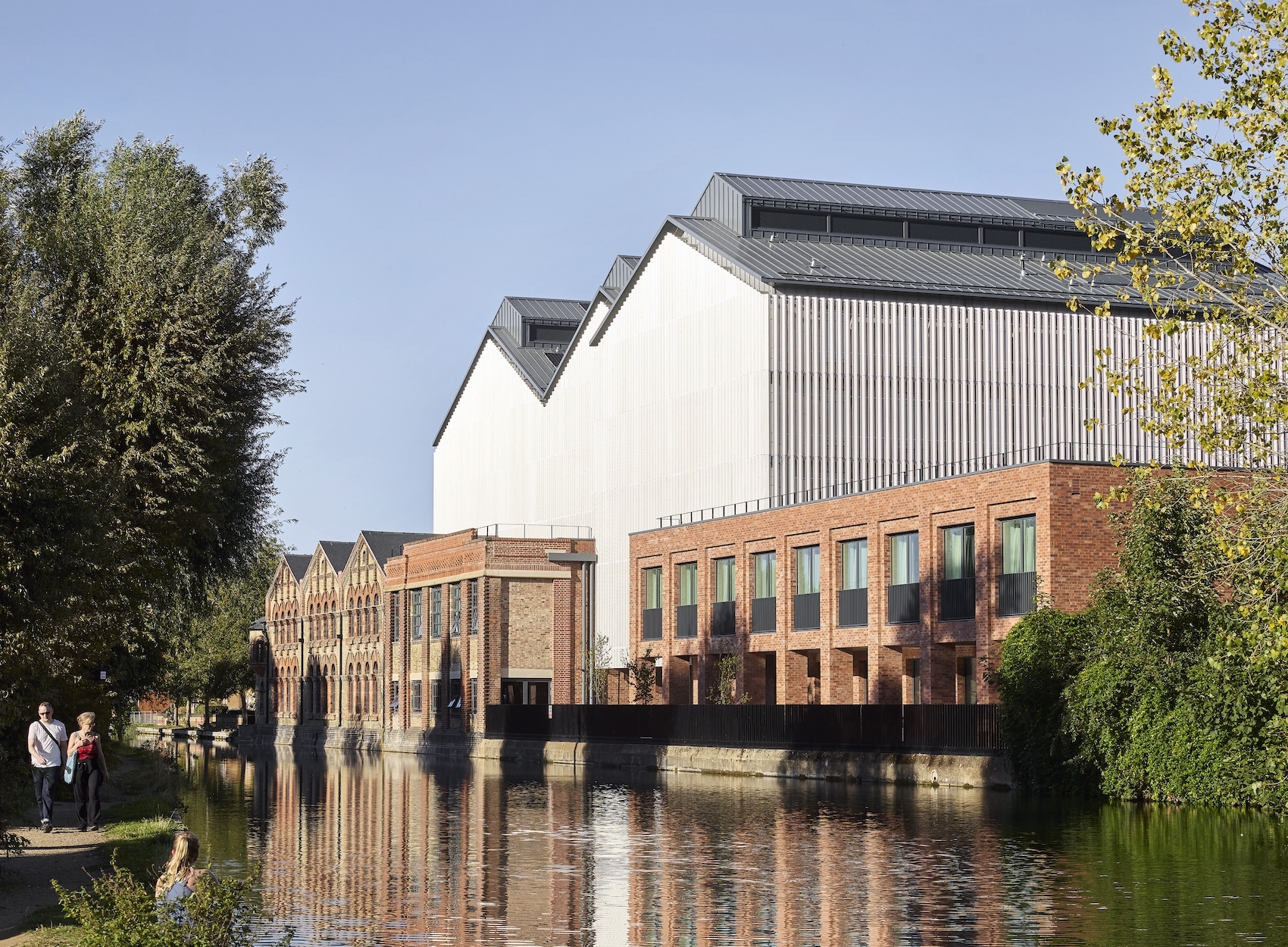
Sovereign Network Group’s Homes and Place Standard was co-created by its customers and is used to measure a portfolio of more than 86,000 homes across London and the South and West of England. This is against 140 metrics which are underpinned by three pillars: Home, Place and Sustainable Futures. The panel discuss why the new standard presents a crucial shift in the industry’s approach to placemaking and the creation of sustainable communities, and how it seeks to tighten the gap between quantity and quality.
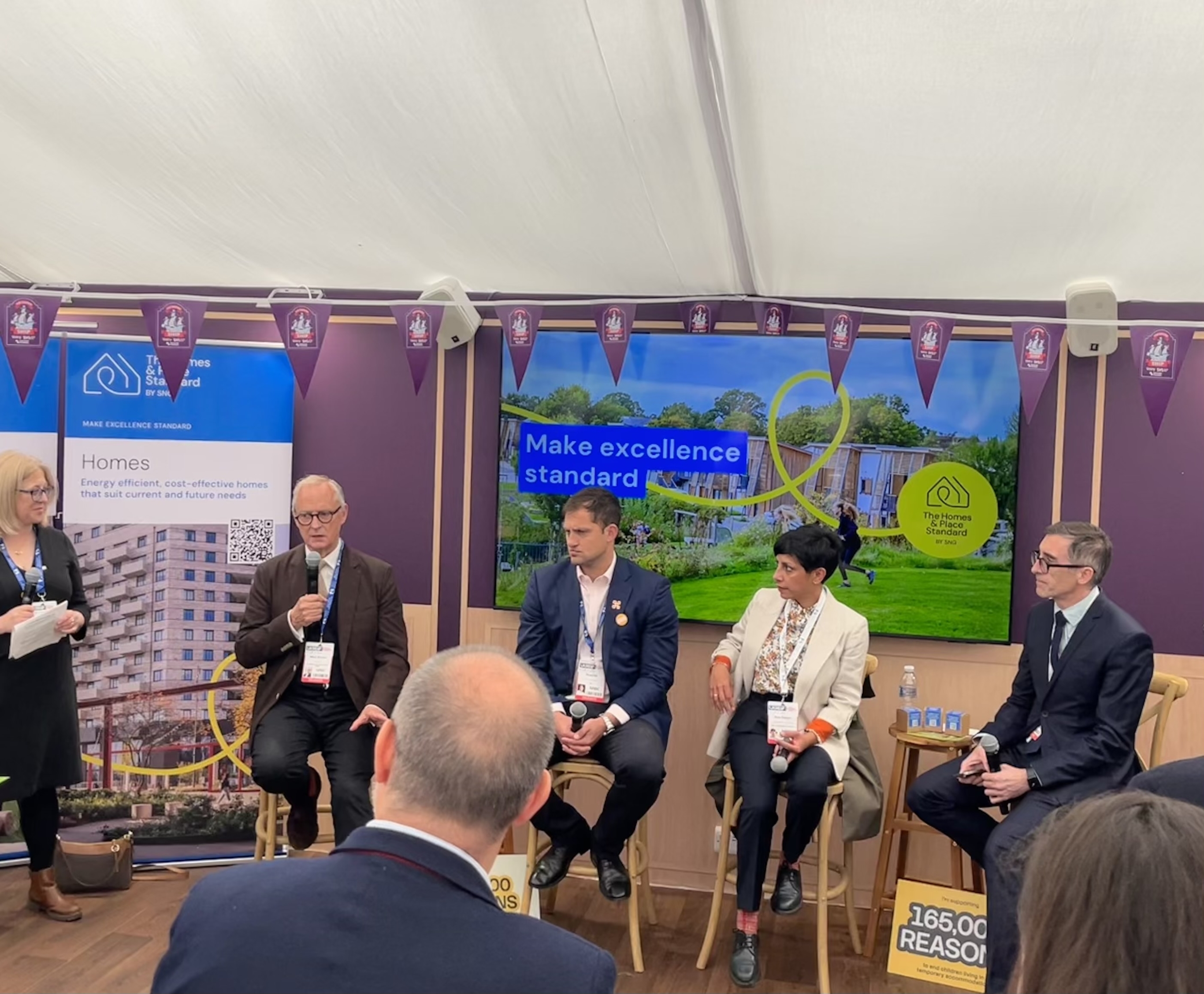
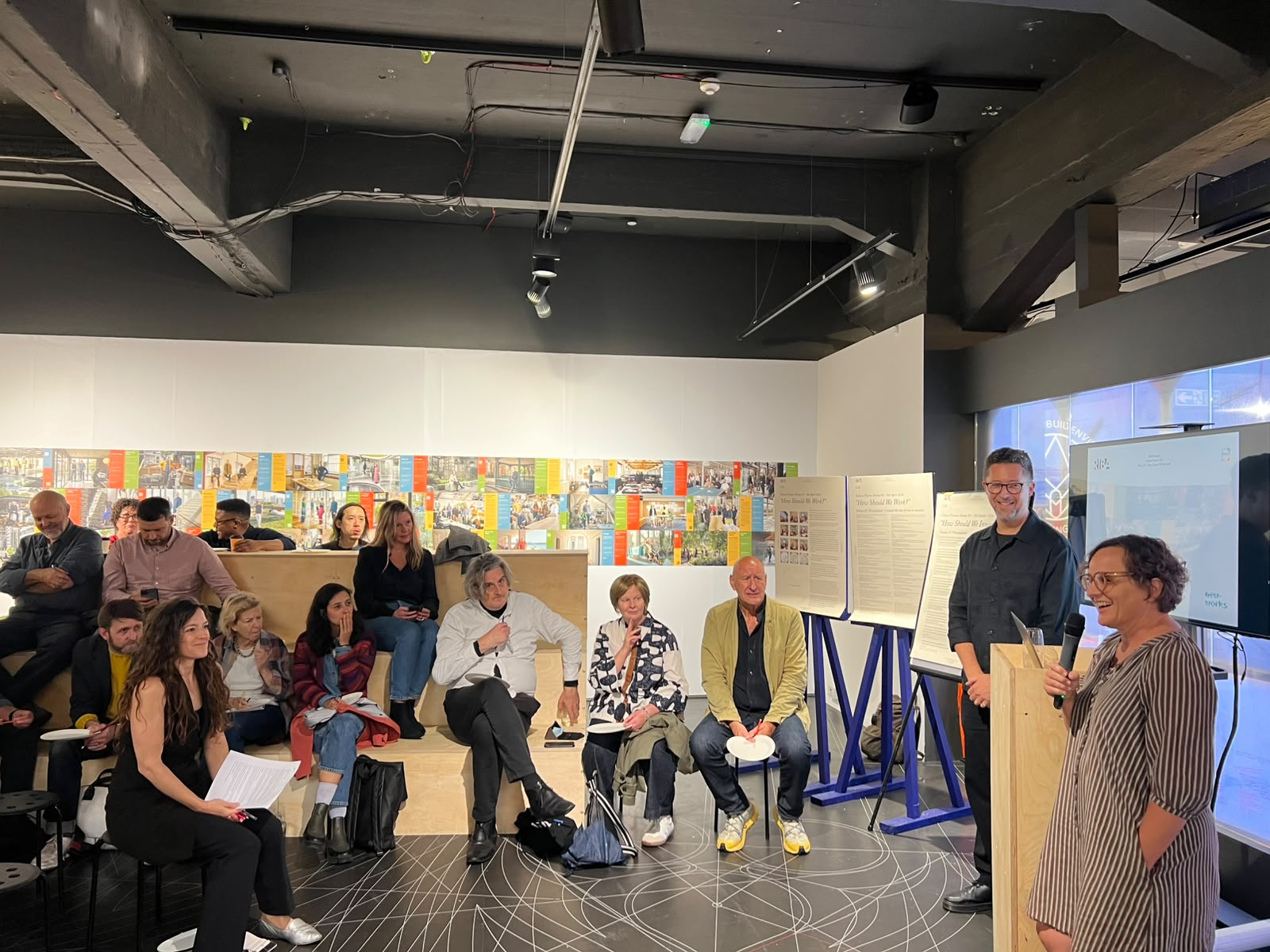
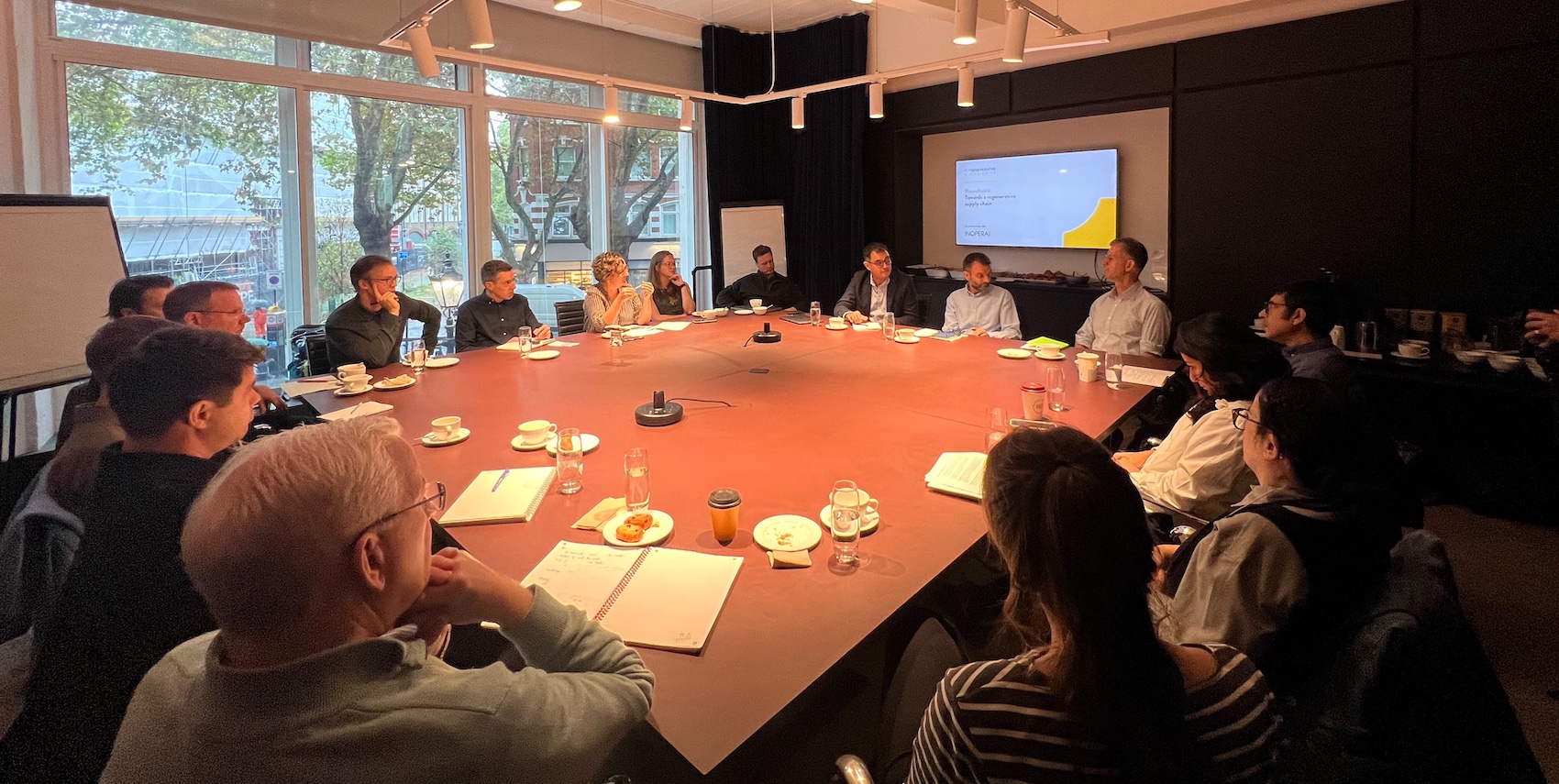
From left to right: Mark Washer, CEO , SNG; Greg Hill, Chief Executive, Hill Group, Alpa Depani, Director, London Borough of Waltham Forest; Alex Ely, Founding Director, Mæ Architects.
At a time when housing delivery is increasingly dominated by regulation, viability pressures and political uncertainty, SNG’s promotion of their Home and Place Standard brought together a panel who argued for an approach centred not simply on units delivered, but on the long-term quality of place.
The discussion brought together Mark Washer, group chief executive officer and board member at SNG, Greg Hill, deputy chief executive at The Hill Group, Alex Ely, director at Mae Architects, and Alpa Depani, acting assistant director for place and design at the London Borough of Waltham Forest.
A main focus of the conversation was the standard’s assessment toolkit – a framework designed not as a compliance mechanism, but as a way of evaluating the broader social, spatial and environmental quality of housing. Washer described the standard as an ongoing process rather than a finished product. “It tells its story and creates a long-term vision,” he said, adding that SNG is now looking to share it more widely across the sector. “We’re really keen to hear what other people think of it.”
For Hill, the value of such a framework lies in the clarity and consistency it can bring to an increasingly fragmented landscape of standards and expectations. “You’ve got government regulations, local authority policies, partner requirements and your own standards,” he said. “What you don’t want to do is reinvent the wheel every time.” That fragmentation, he argued, is one of the sector’s enduring weaknesses. “As an industry, we’re pretty rubbish at learning from what we’ve done,” Hill said. “We like starting again and tearing up the good stuff before we’ve given it enough time to live and breathe.” Instead, he called for a more consistent baseline across the industry — particularly for smaller housing associations and local authorities that may not have the same internal resources or specialist expertise as larger organisations. “If there’s a framework that can drive common standards across the sector, that would be really useful,” he said.
The conversation repeatedly returned to the tension between compliance and judgement. For Alex Ely, the danger is that housing delivery becomes reduced to technical metrics and formulaic outputs. “We’re always under the pressures of speed, cost, and bio-efficiency,” he said. “But the priority has to be designing communities.” Ely argued that the toolkit succeeds because it shifts the conversation back towards people and place, rather than purely quantitative measures. “It isn’t just about floor ratios, net-to-gross ratios and technical compliance,” he said. “The toolkit allows a conversation…What we need is a culture of judgement rather than a culture of compliance.”
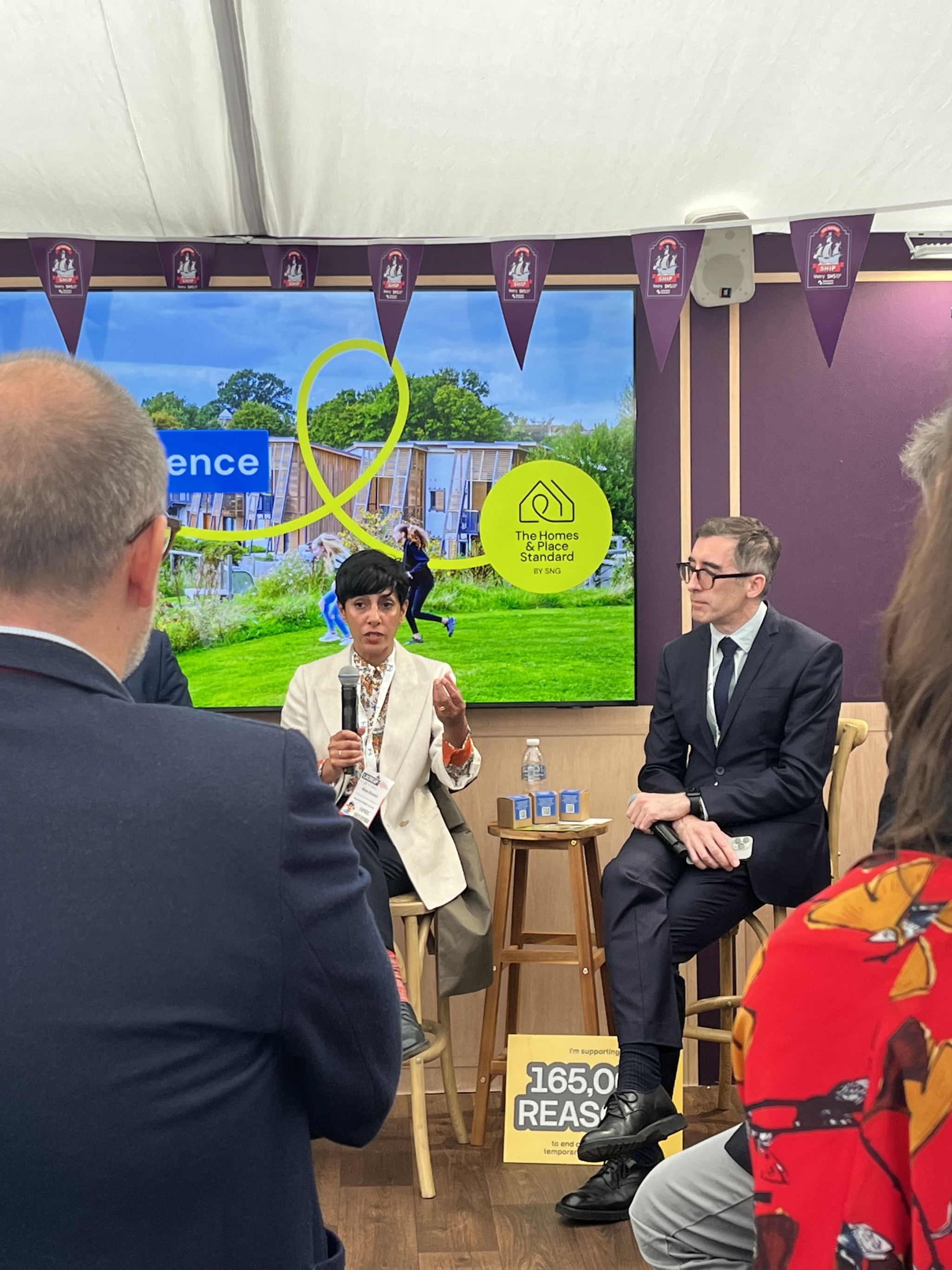
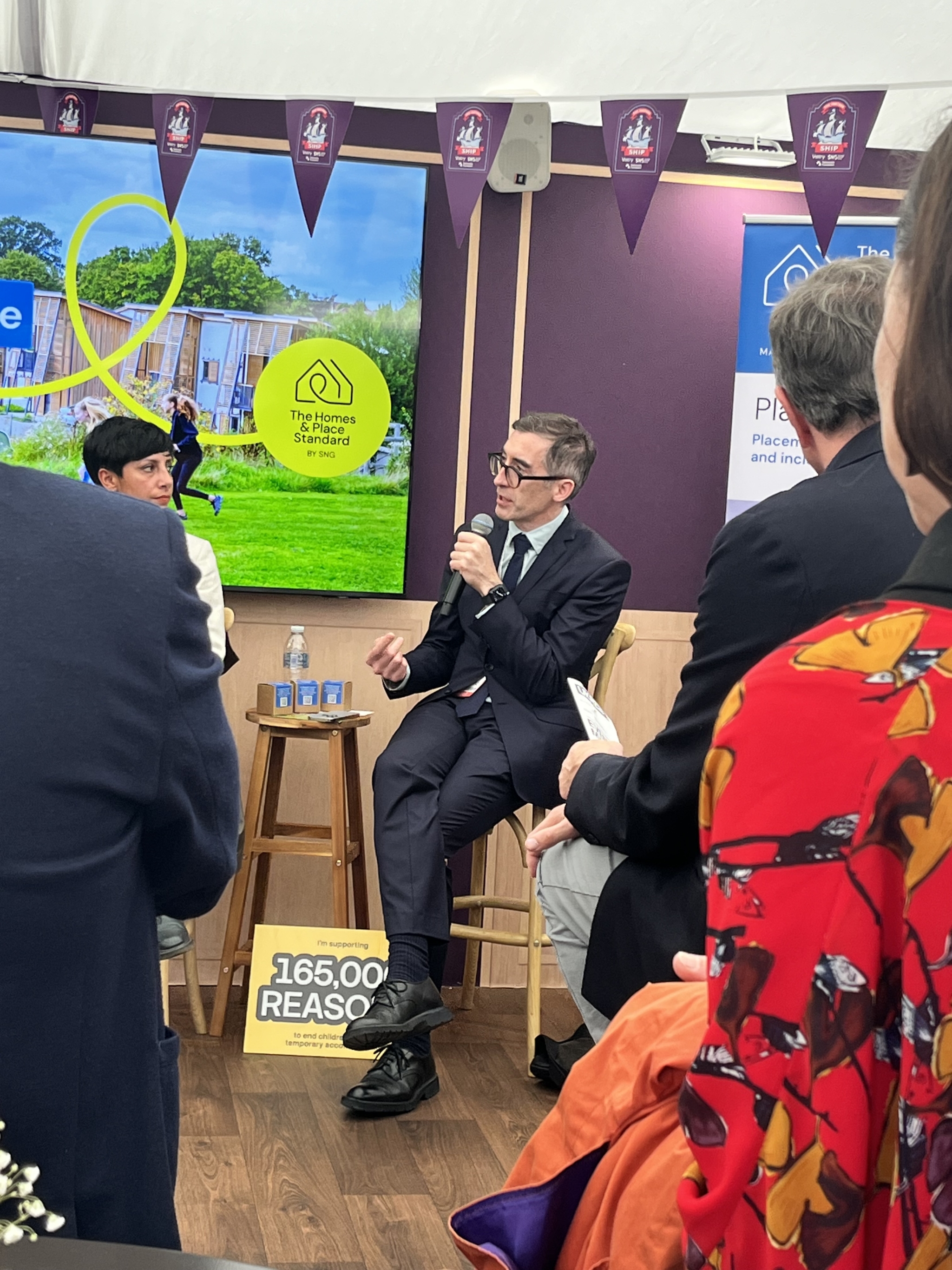
That distinction became a recurring theme. Washer stressed that the Home and Place standard was never intended to operate as a rigid pass-fail checklist, despite encompassing more than 140 separate metrics. “It cannot be a compliance mechanism,” he said. “It’s more of a roadmap.”
For SNG, the standard’s assessment tool informs both investment decisions and development partnerships. Schemes are assessed holistically, with the resulting score helping determine whether a project aligns with the organisation’s long-term ambitions. “There isn’t any single tick box,” Washer explained. “What it creates is a funnel.” The emphasis, he said, is ultimately on stewardship. “We have to think long term about the fact that we will be owning these homes and our customers will be living with them decades from now.”
Depani placed the discussion in the context of Waltham Forest’s wider ambitions around growth and placemaking. With thousands of homes planned across the borough, she stressed that housing delivery cannot be separated from questions of infrastructure, employment and civic identity. “It has never just been about homes,” she said. “It has always been about placemaking.” She described the cultural shift required to embed good design across local government; from changing internal processes to building broader understanding around what design quality actually means. “Design used to be seen as a luxury,” she reflected. “We’ve had to show that it’s much more than that.”
For Ely, quality begins with understanding the character and DNA of a place before development even starts. He argued against the increasing homogenisation of housing across the country — what he described as schemes “designed for nowhere and built for everywhere”. Instead, he called for a more context-driven approach that draws from local landscape, urban grain and existing social infrastructure. “It’s not necessarily the buildings themselves that create the quality of place,” he said. “It’s the public realm, the landscape and the social infrastructure around them.”
The panel also explored the relationship between certainty and delivery. Hill noted that while developers consistently call for greater certainty from national and local government, the reality is often a shifting landscape of policy and regulation. “Certainty is what we all crave and what we don’t get,” he said. One frustration, he argued, is the variation in requirements between local authorities, particularly where standards diverge significantly from national guidance. “You can be in one authority where you need three parking spaces for a two-bedroom house,” he said, “and just across the border there are no parking spaces at all.”
The discussion concluded with questions around public trust and community resistance to development. Several panellists acknowledged growing scepticism towards new housing, particularly where previous schemes have failed to integrate successfully into existing neighbourhoods “Too often we’ve built places that are just a series of boxes,” Washer said, “with no real thought about how they fit into the existing environment. Better communication, stronger engagement and visibly higher-quality development were all identified as ways to rebuild confidence. But the panel’s broader argument was that trust ultimately comes from delivery: creating places people genuinely want to live in, and which improve over time rather than deteriorate.