Holly Lewis, co-founding partner of We Made That, reflects on UKREiiF, the value of targeted conversations, and why small practices should go in prepared but leave room for serendipity.
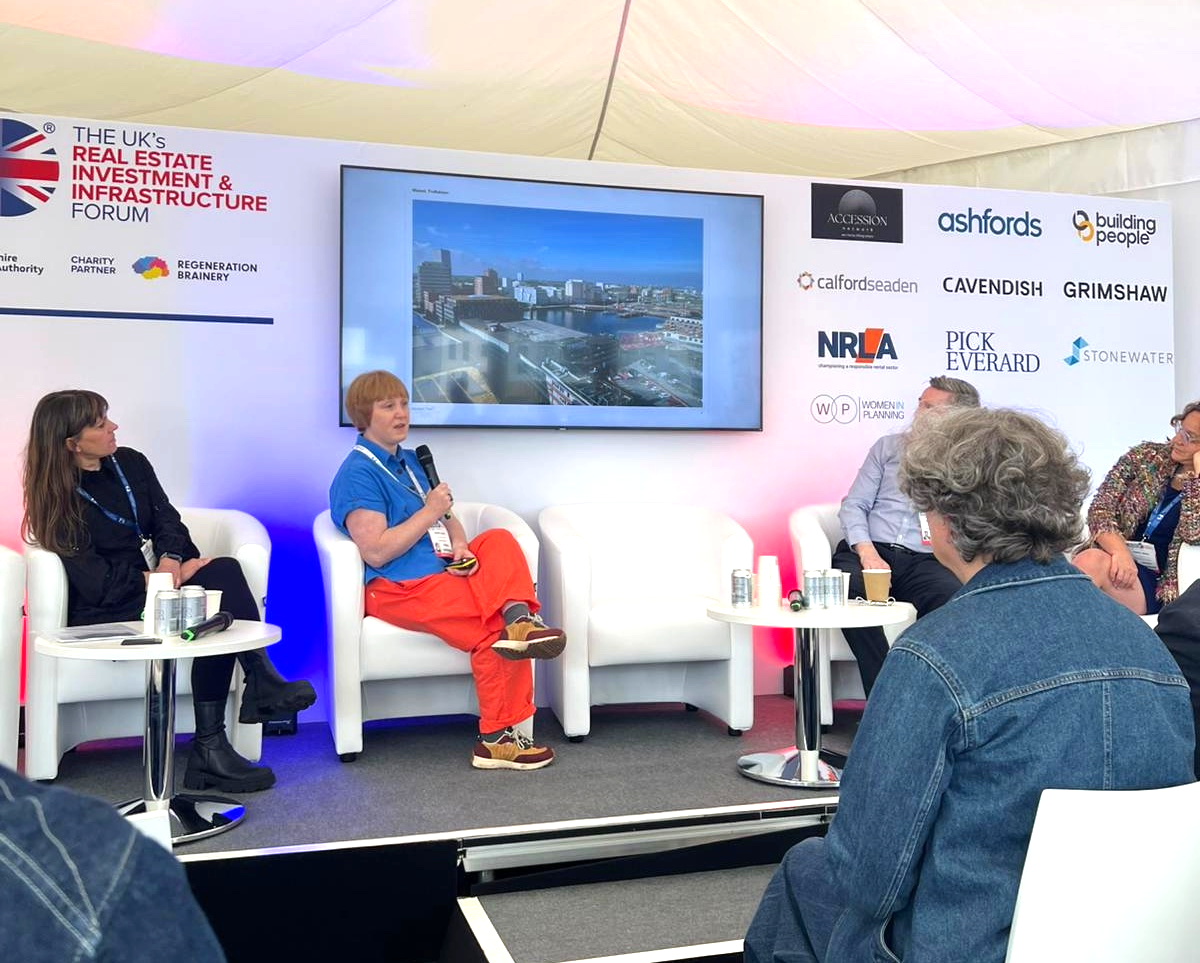
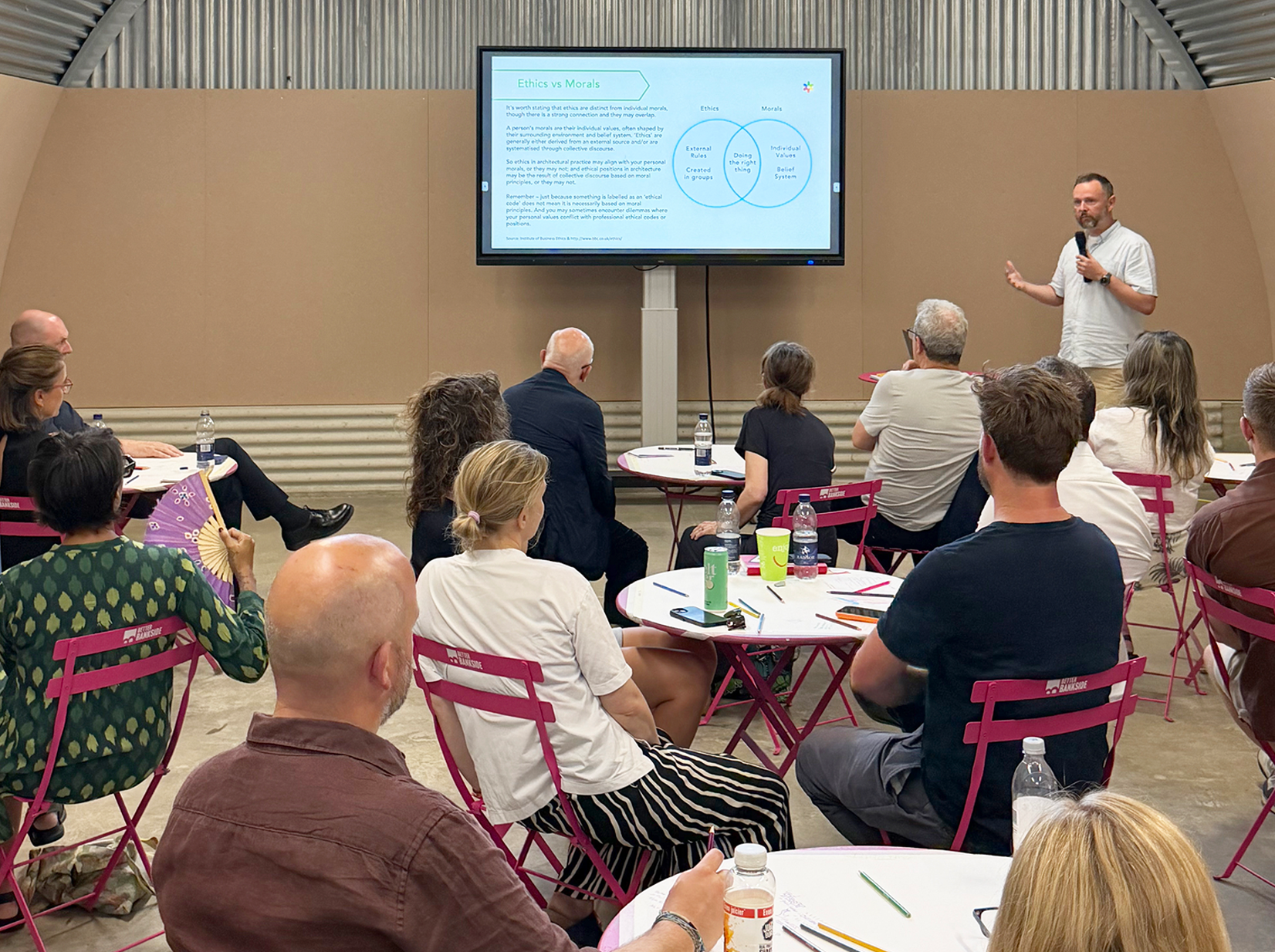
Holly Lewis at Architecture Today and UK Architect’s Declare ‘Regenerative Futures’ panel discussion at UKREiiF. Read more here. (Credit: Jason Sayer)
How many times have you been to UKREiiF?
This was my fourth!
How many people from We Made That were in Leeds this year?
Just me this year. We’ve had more than that in the past, but this time it was just me.
Did you stay in Leeds?
I stayed in Bradford this year, which was the first time I haven’t stayed in Leeds. Partly because when I looked for accommodation, almost straight after the previous UKREiiF, there was basically nothing available. Or, if there was, you were being completely fleeced. It was thousands of pounds for accommodation.
But Bradford is doing some really interesting things, so it seemed like a good excuse to go and visit, have a look around and learn a bit more about the city. We’ve been following what they’ve been doing through various channels, and it was great to have the opportunity to explore it properly.
It wasn’t too inconvenient either, although in the evenings I did have to be a bit of a party pooper and go and catch the train. But it was a good experience, and I wasn’t ripped off, which is always a nice feeling.
In terms of taking part in talks or discussions, did you take part in any beyond our session?
No, I was also on a roundtable about the performance of screen industries, which was really interesting. It’s nice that you can get into those niches. Something really quite specific. That was quite revealing, actually.
What was that roundtable about?
That was a roundtable in the Bradford zone, and it was particularly about screen industries and their current trajectory. For a while, it felt like everybody wanted to build a massive studio. Now that’s not quite the case. In some places they’re being successful, while other places want film and screen industry provision but don’t know how to get it.
There was quite an interesting mix around the table: people operating facilities, local authorities trying to attract investment into the sector, and consultants supporting projects across the country, it was interesting.
If people aren’t building big studios anymore, what are they doing instead?
It’s a mixture. The nature of what screen industries are has changed. Anybody can create content from their phone. People are doing podcasts, TikToks and smaller, more ad hoc productions.
So it’s not just Warner Brothers investing heavily and taking a massive long lease. The industry is much more flexible now, and I think the sector as a whole is having to adjust to that. The built spaces needed to support it are quite different as well. That was definitely a big subject of conversation.
Did you go to any fringe events?
Yes! I went to a fringe evening event with Donald Insall Associates, which was a Pecha Kucha bingo session, which was really good fun. All the speakers had to provide twenty words they were going to say during their presentations. Attendees got a bingo card and had to cross off words as they were mentioned.
It turned into a weird kind of built environment drinking game. It was fun and attracted a slightly different crowd. I think there’s a tendency, particularly in the evenings, to gravitate towards people you already know and relax a little bit. But that event was something different and was great fun.
What were the standout events that you saw at UKREiiF?
I have to say that I’ve been perfecting my UKREiiF technique over the years, and I didn’t do loads and loads of the bigger events. I did many more direct meetings.
One of the conversations that I found really interesting was at the Landscape Institute Pavilion, which was about landscape-led approaches. The quality of speakers was really good and, because the room was comparatively small and pretty knowledgeable, you could really get into the challenges around putting landscape first. Why don’t we do it all the time?
It was really insightful. Nobody was there to sell anything, which was the other thing. It wasn’t a “this is why you should invest in my place” conversation. It was knowledgeable people having a really intelligent discussion around a tricky subject. I really enjoyed that one.
Based on your previous experiences of UKREiiF, what was your strategy for this year?
It was fewer panels, fewer sessions sitting in the audience, and more direct conversations. Actually, next time I think I’d do a little bit more listening to selected panels, but that was the strategy this year.
What was your approach to ensuring those conversations happened?
Getting them booked in in advance, mostly. Then, if there were people I wanted to speak to more directly, I’d try to find them on Tuesday and then book a more in-depth slot on one of the subsequent days.
How much time were you putting into research on who you wanted to meet at UKREiiF?
A fair amount, I would say. A good few days. And not just me, actually. Others in the team were tapping me on the shoulder and handing over names, saying: “It would be great if you spoke to this person,” or, “Maybe you can find time to meet this person.”
So it was a shared effort. Even if I was the only one attending, everyone was putting people on the table for me.
If you were advising a small practice attending for the first time, what advice would you give them?
I would say do a bit of preparation in advance. Think about who you might want to meet, or at least the places you want to learn more about. Definitely don’t turn up and then start looking through the programme because you’ll feel like you’re drowning.
Maybe also go easy on yourself. A couple of good conversations can be enough. It can feel as though streams of people are flowing past you and every single one of them could be someone who might commission you or have a great conversation with you. It can feel a bit like your future is slipping through your hands as these people flood past.
So I’d say be a bit relaxed about it and try to have maybe three really good conversations in a day. That’s good.
When you say “do your research beforehand”, what does that involve?
The specifics are probably done a couple of weeks beforehand. I’m definitely not just trawling through the delegate list. From our point of view, there are certain places we’re interested in. We’ve been doing a lot of work in coastal locations, and we know which authorities have received things like Pride in Place funding.
Quite quickly we can identify authorities we’d like to speak to, people we already know and should reconnect with, and new contacts we’d like to meet. It’s good to have a mixture of outreach to new people and consolidating existing relationships. I’d say start planning a couple of weeks ahead because people’s diaries fill up quickly.
Is there anything you’d do differently next time? Or anything you’d like to see at future UKREiiFs?
I think we all know the nature of the beast by now. There’s quite a mixed calibre of panel discussions. Some can be brilliant, with people who really know their subject talking very frankly in a way that’s genuinely helpful. Others are less high quality, it’s fair to say.
I don’t really know how that can be safeguarded against, but there is something about that inconsistency. Sometimes you can find yourself sitting in a room thinking: “I don’t know if this is the best use of my time. Do I need to sneak out?”
Now you’ve had time to relax and recuperate from UKREiiF, what has proved to be the most fruitful conversation or endeavour you undertook there?
I had a couple of quite specific conversations around projects that we might like to be involved with, so those are always good.
Will you be going to UKREiiF next year?
Yes!