AccuRoof National Sales Manager, Solar and Renewables, Edward Cooke explains why solar PV and flat roofs should be designed as a single system to reduce risk and ensure compliant, reliable performance.
In association with
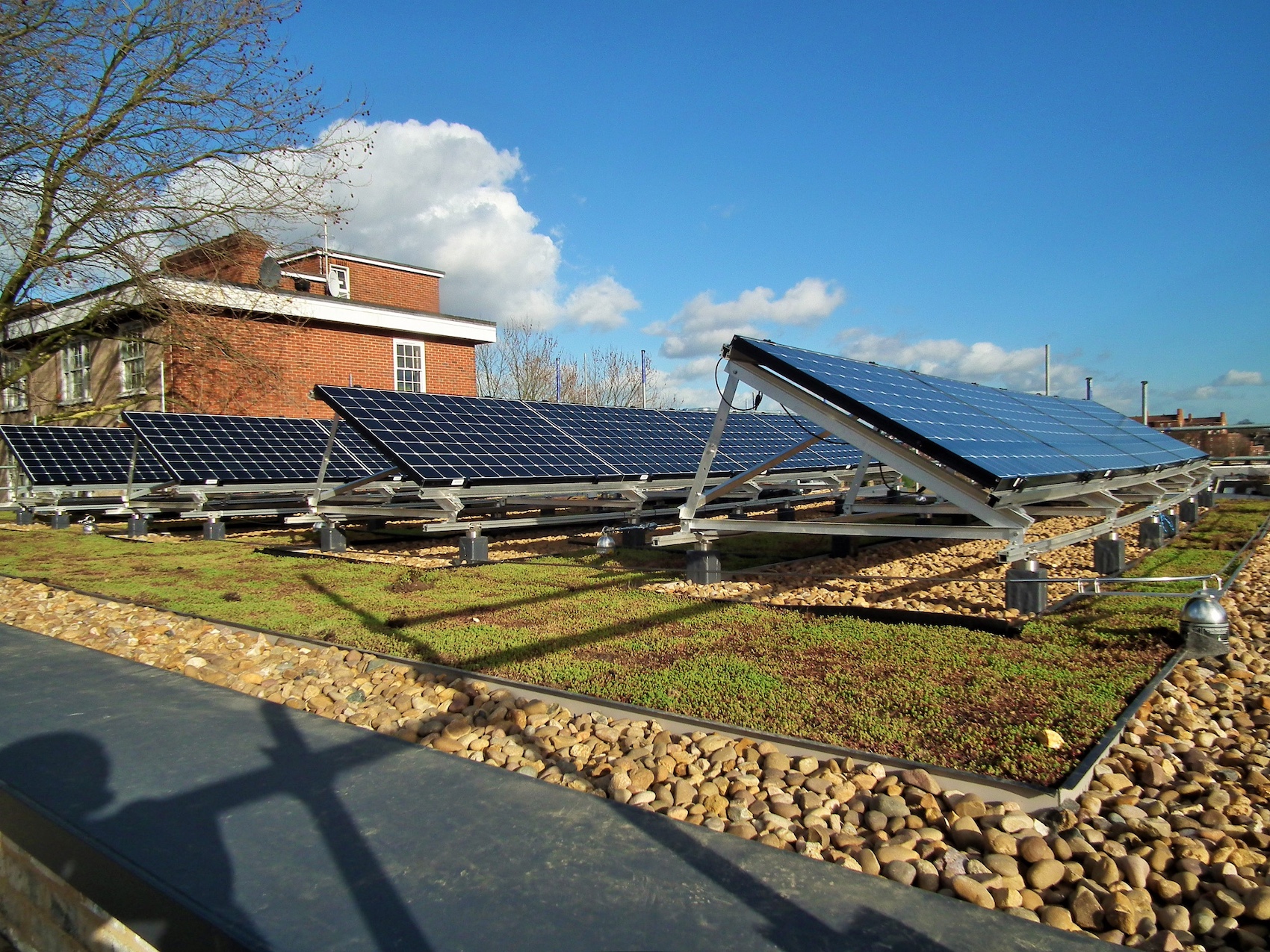
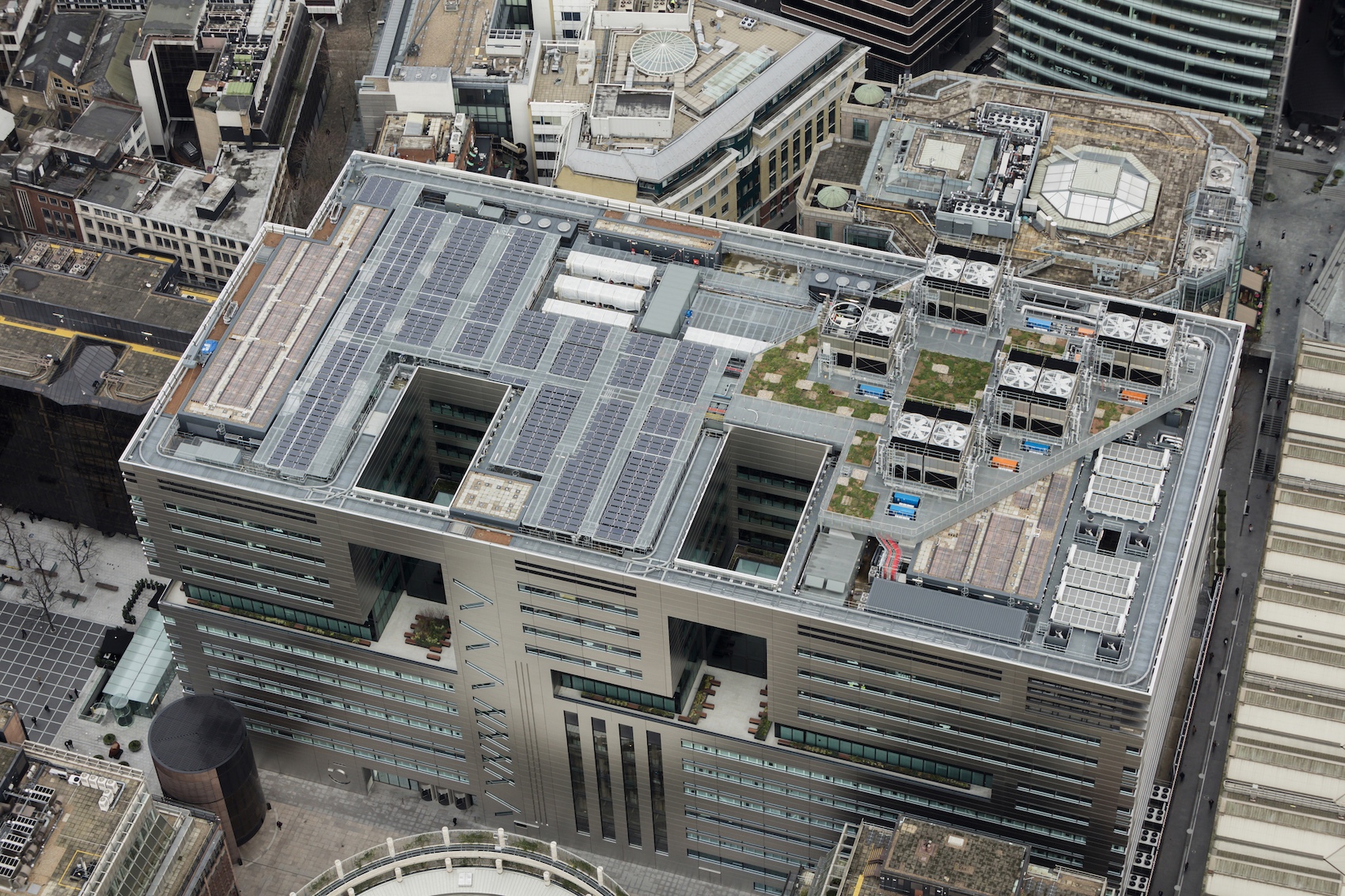
Rooftop solar is rapidly becoming a baseline requirement for UK commercial buildings. Yet in many projects it is still treated as an afterthought, introduced only after the roof has been designed and specified. This disconnect is creating a growing concentration of technical and commercial risk at a single point: the roof-solar interface. This is where mounting systems meet waterproofing, where structural loads are transferred, where fire strategy must be maintained, and where warranty responsibility can become blurred.
AccuRoof National Sales Manager, Solar and Renewables, Edward Cooke explores why this interface demands a more coordinated, system-led approach, and how integrating solar and roofing from the outset can minimise risk, improve build certainty and deliver compliant, high-performing outcomes.
The hidden risk in conventional design
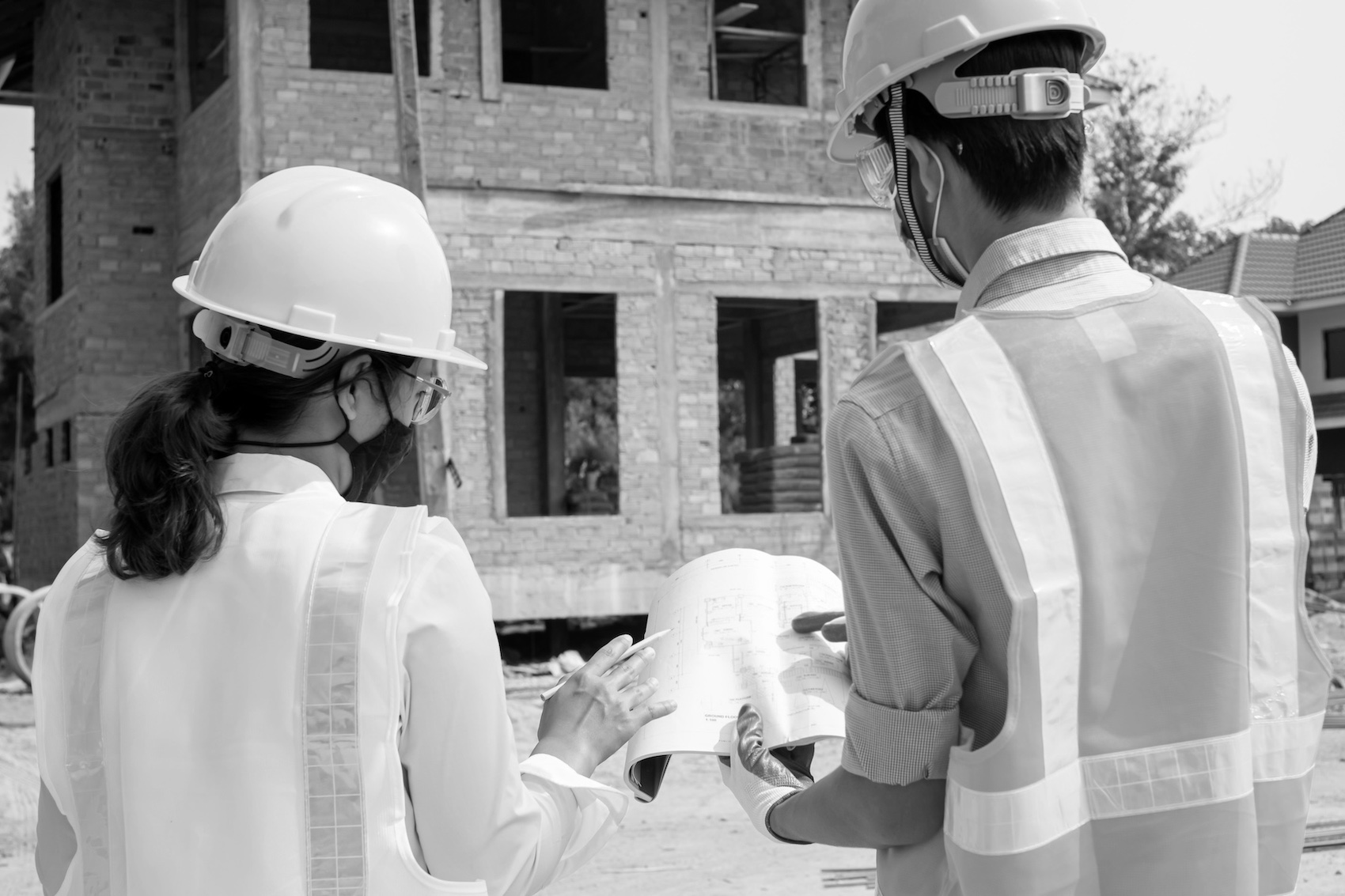
On a typical project, the roof is designed and specified first. Solar PV is then introduced later, often by a separate contractor, with structural and fire considerations assessed retrospectively. On paper, this sequencing appears manageable. In reality, it introduces a series of avoidable risks.
Compatibility between roofing systems and PV mounting is rarely considered in advance. Waterproofing can be compromised at fixing points. Ballasted systems may be over-engineered, adding unnecessary structural load or delamination risk. And when issues arise, responsibility is frequently unclear. The result is a fragmented approach that reduces design efficiency, increases project uncertainty, and ultimately weakens confidence at specification stage.
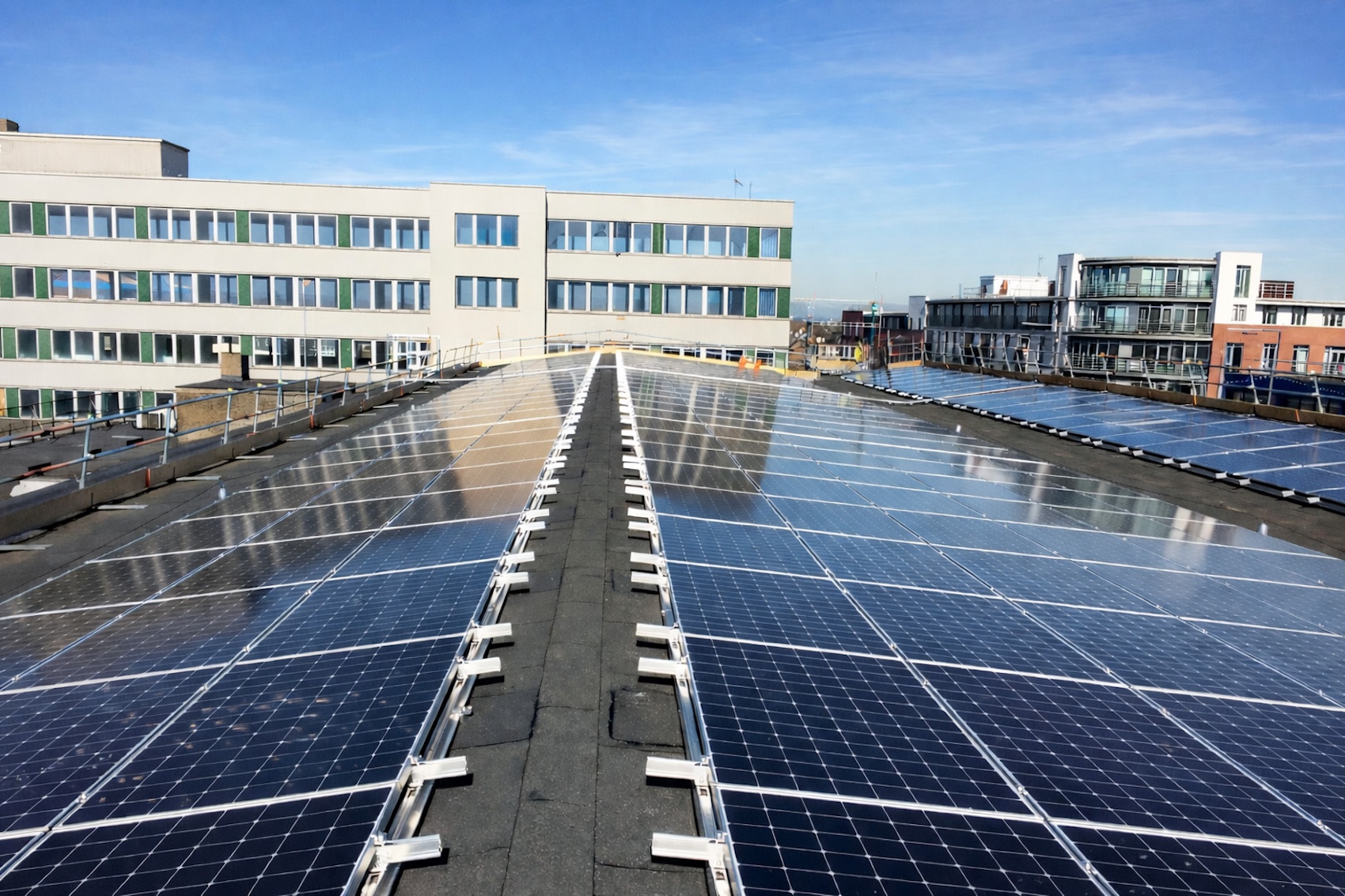
Nicholson’s Rooftrak 280 IFP300 fixings supporting solar panels at Barking Station in London.
The solution
From overlay to integration, AccuRoof’s approach challenges this convention entirely. Rather than treating solar as an add-on, the company defines Integrated roofing as the combination of waterproofing and solar, delivered as a single coordinated solution. This means one partner, one warranty, and one system designed to perform cohesively from the outset.
Central to this strategy is a compatible interface between Nicholson’s Rooftrak IFP system and the Van der Valk ValkPro+ mounting solution. Crucially, this is not a theoretical alignment, it has been physically tested under applied PV loading. The outcome is measurable: confirmed structural performance, maintained waterproofing integrity, and proven compatibility between components – all while preserving manufacturer warranties. This moves specification away from assumption and towards evidence-based system design.
Engineering the interface
To formalise this methodology, AccuRoof has developed its Solar Integrated System Assurance (SISA) framework. Under SISA, the roof-solar interface is engineered rather than improvised. A common point of failure is effectively designed out, and project teams are given clear definition of responsibility, particularly around the critical junction between waterproofing and mounting systems. At the same time, the model maintains appropriate separation of warranties for PV equipment, ensuring clarity without compromising flexibility.
Reducing load, improving performance
Integration also unlocks tangible dead load benefits. By combining ballast with an engineered fixing, the system reduces overall roof loading compared to traditional ballasted-only approaches. This not only improves structural efficiency but also expands the viability of retrofit projects.
Alongside structural gains, the coordinated system supports compliance with key regulatory requirements, including Approved Document A (Structure), Approved Document B (Fire Safety), and Approved Document L (Energy Performance). It also aligns with the evolving expectations of the Building Safety Act. More information can be provided upon request.
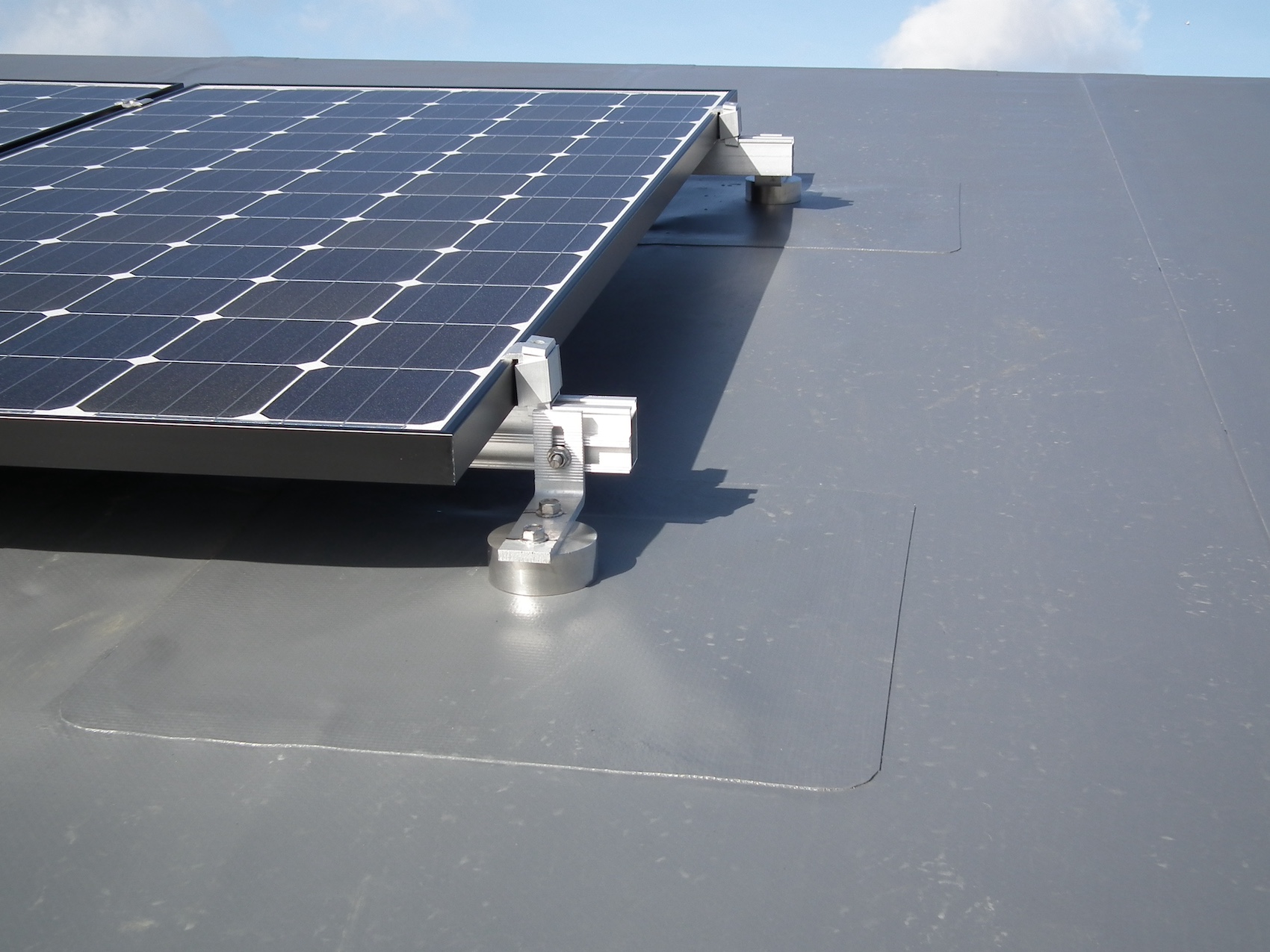
The Rooftrak integrated fixing point system ensures a strong connection to the structure while maintaining the integrity of the waterproofing layer.
Flexibility without compromise
One of the more significant advantages of the AccuRoof model is its open specification approach. Unlike closed, single-supplier systems, it allows for competitive procurement and continued involvement from M&E contractors. This avoids locking projects into rigid supply chains, while still ensuring that all components work together as a compatible system.
The importance of early engagement
Early engagement with AccuRoof is crucial. Integration from day one allows loads to be optimised, fire strategies to be coordinated, and PV systems to be properly aligned with energy targets. Late-stage solar integration, by contrast, often leads to redesign, compromise, and inefficiencies. Solar is no longer an overlay; it is part of the roof design. Our specialist solar team supports clients with system design, supply, and access to approved contractors, helping to deliver fully coordinated project solutions.
Raising the standard for solar-ready buildings
With the Future Buildings Standard set to come into force from early 2027, expectations around building performance will only increase. By combining tested compatibility, clearly defined responsibility, and coordinated design, AccuRoof provides a practical and scalable route to designing out risk at specification stage. This is a clear direction for the industry; roofs can no longer be designed in isolation. The future is solar ready, where roof and solar are designed together, not separately.
Contact Details
If you require design assistance on a solar PV-integrated roofing project, please call 01509 505 714, email edwardcooke@sigplc.com or visit the AccuRoof website.
Let’s discuss your project in more detail. Click here to book a visit.