TiggColl’s modular floating house on the Grand Union Canal reimagines waterside living through sustainable materials, accessible design, and an ingenious system of interlocking steel hulls.
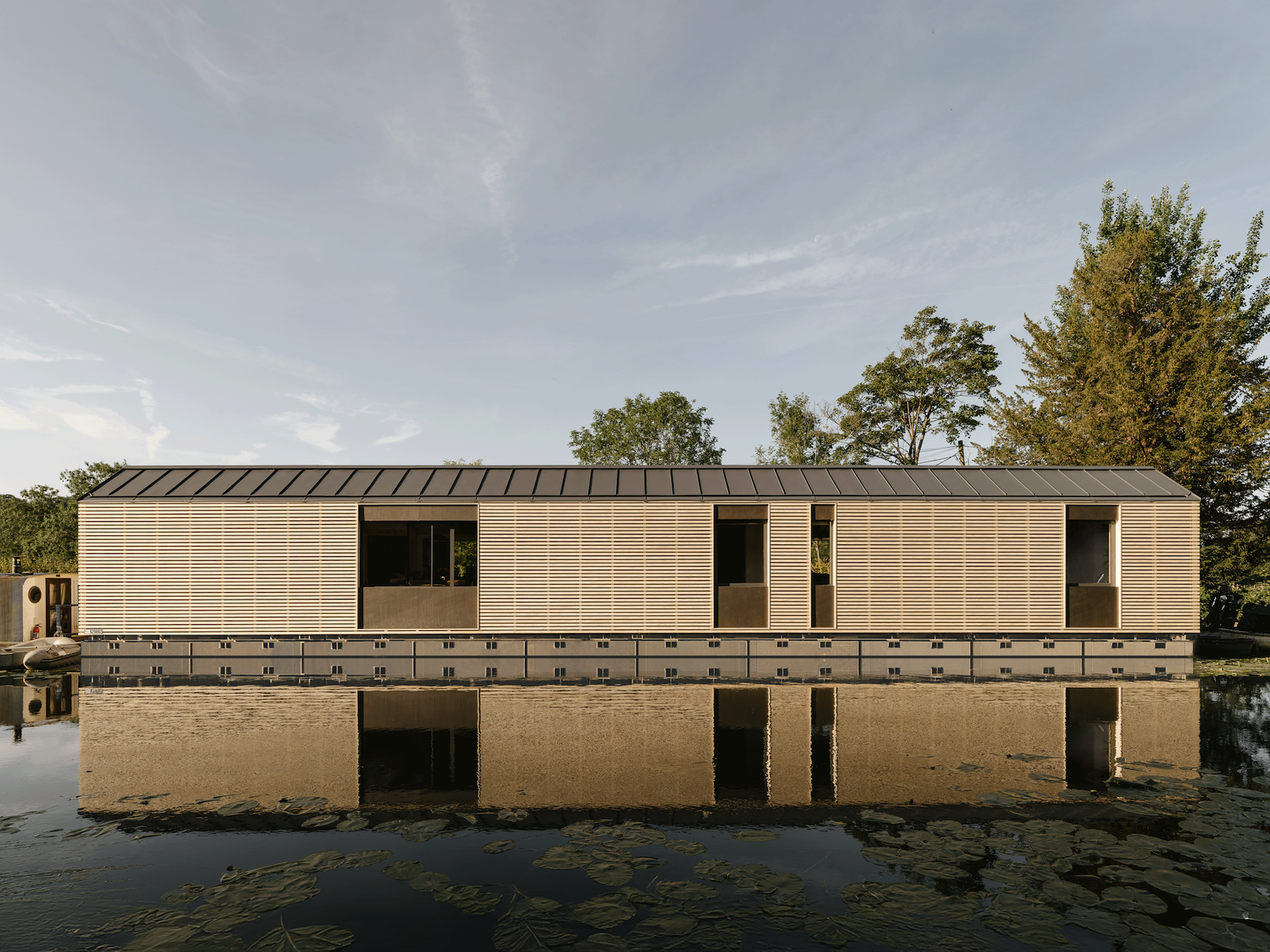
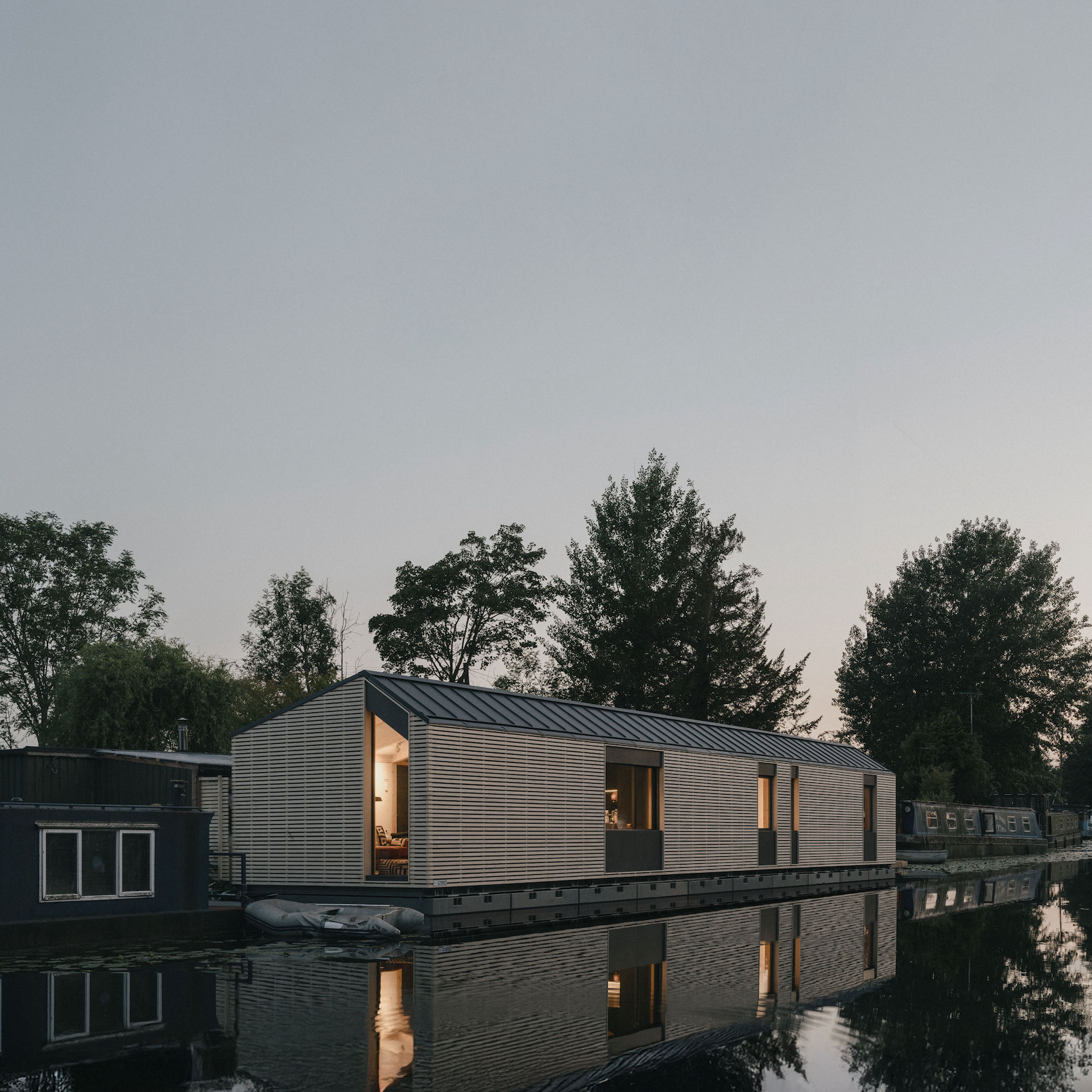
TiggColl has completed The Float House, a modular, floating family home designed for a private residential mooring in Ruislip, northwest London. Replacing an existing canal barge that no longer met the client’s needs, the project rethinks the possibilities of water-based living, combining spatial ingenuity with environmental responsiveness and long-term adaptability.
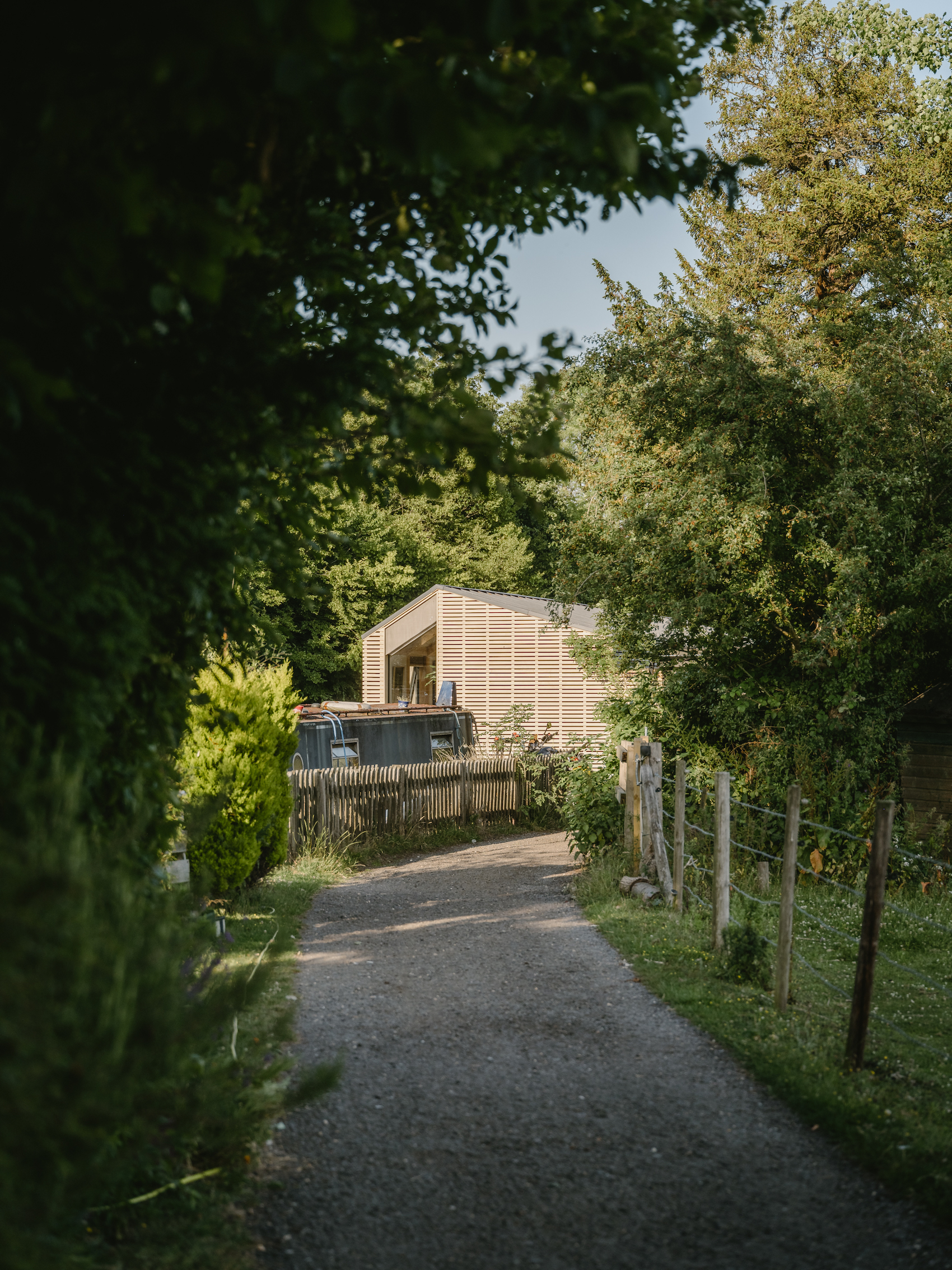
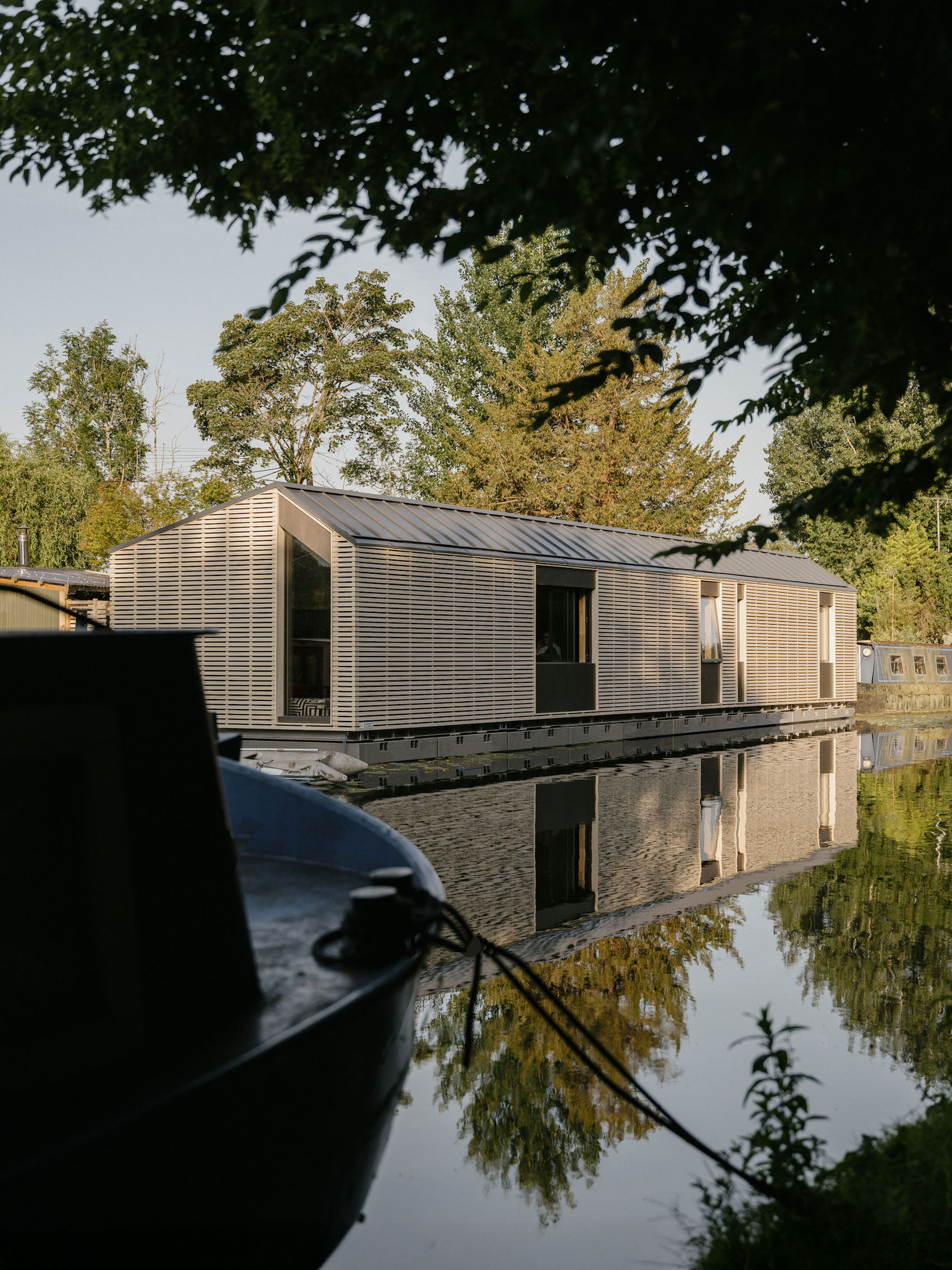
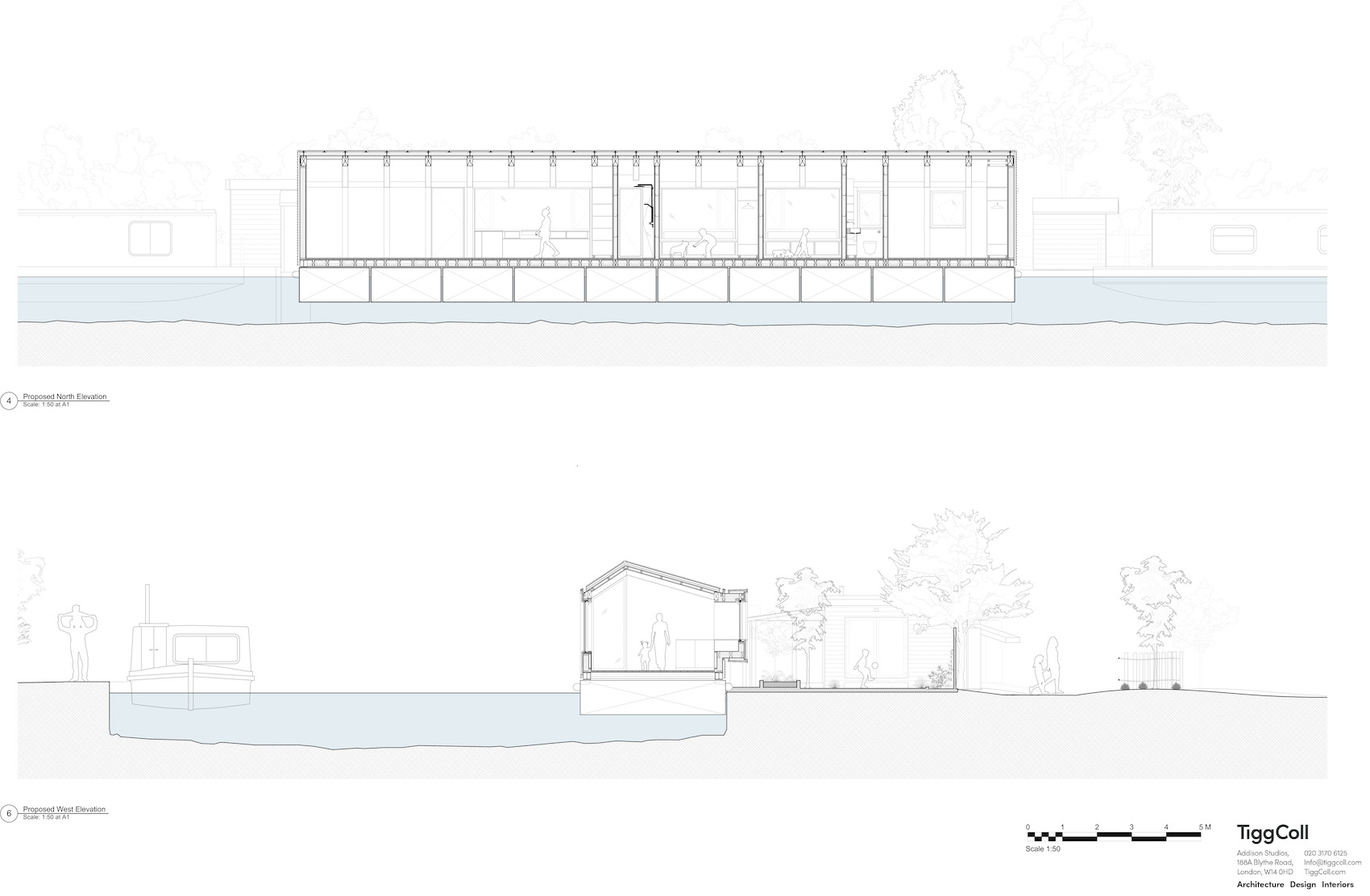
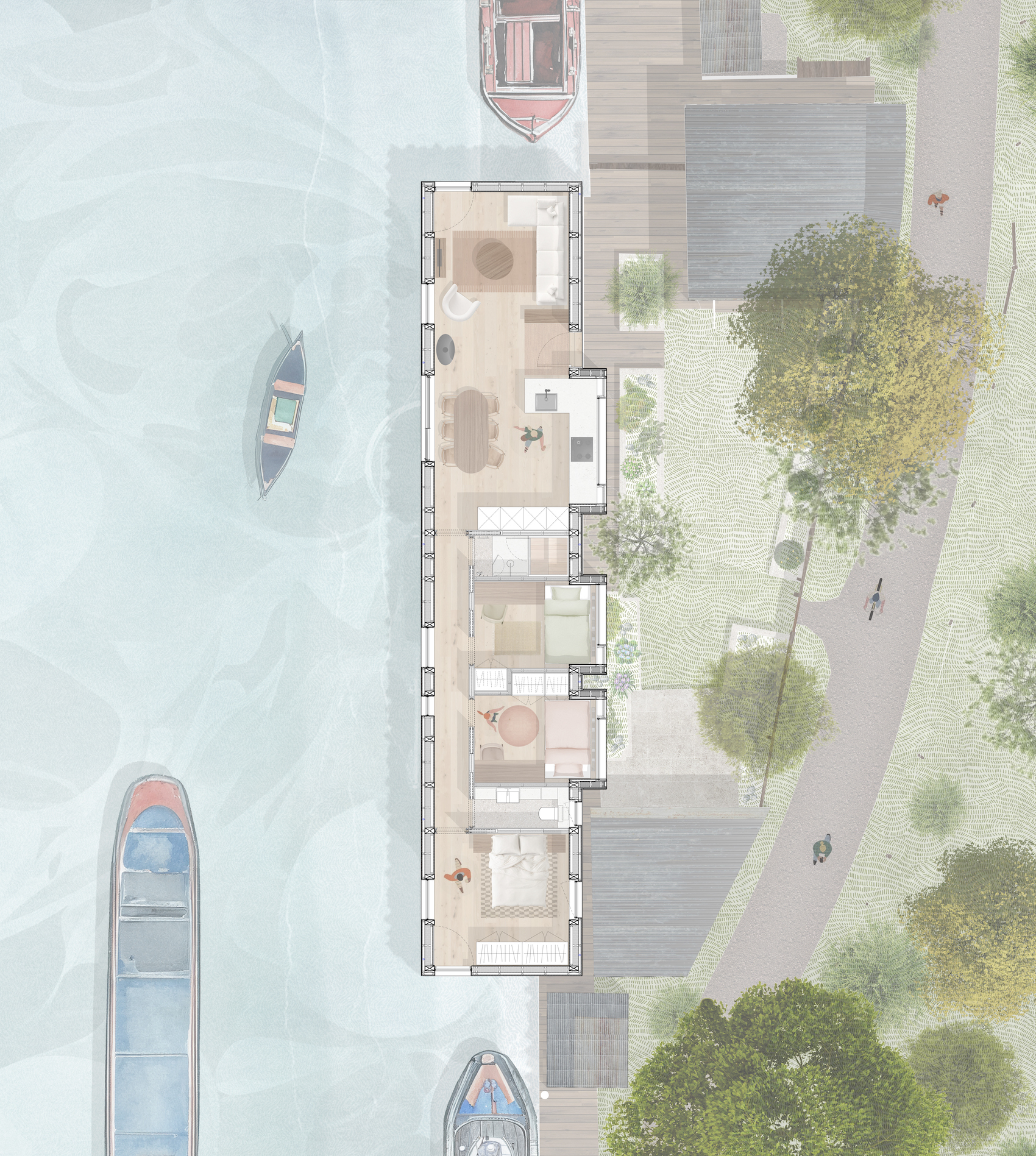
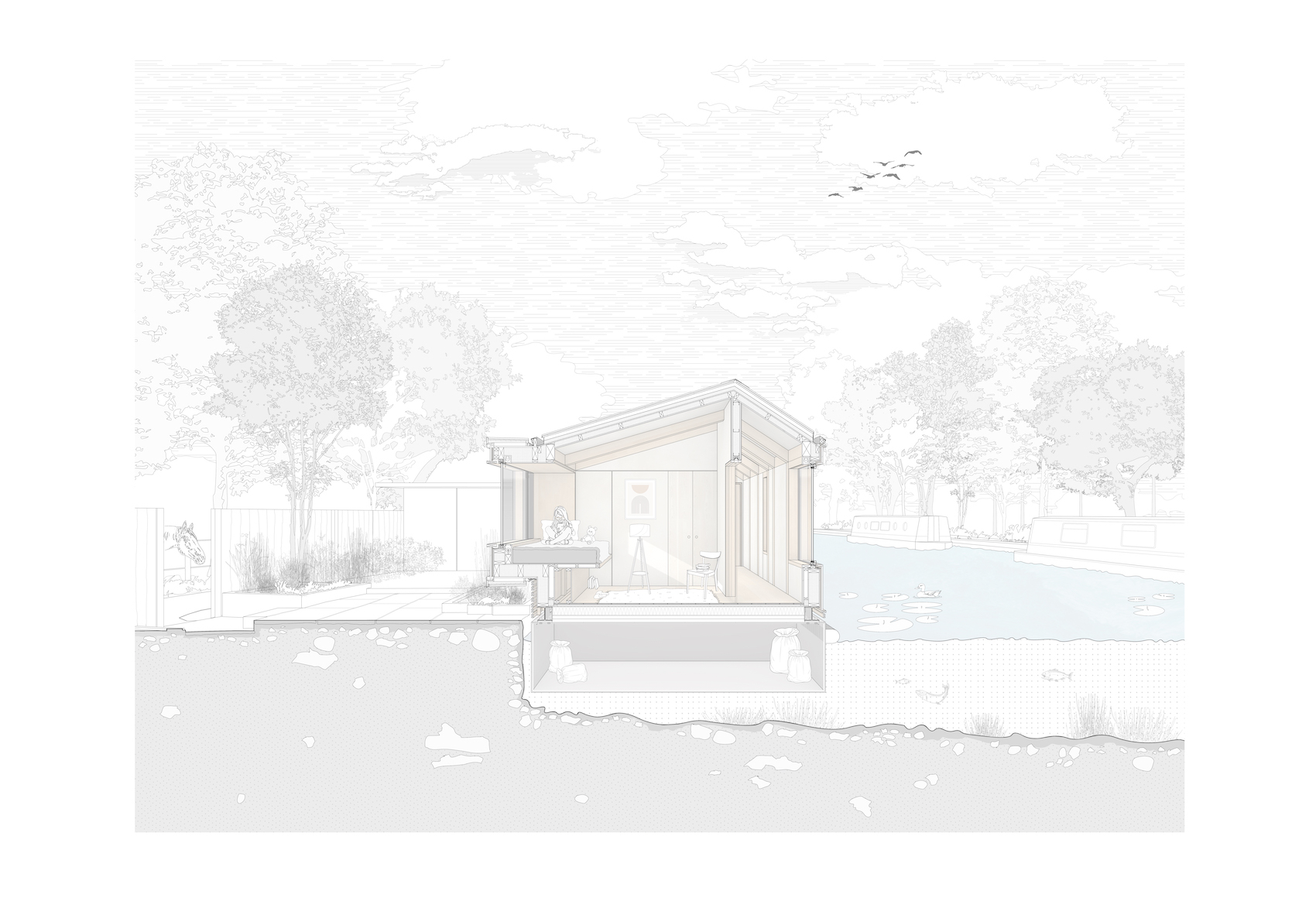
The brief was for a spacious, level-access family home above the waterline – a significant departure from the traditional canal barge typology where interiors sit below the water line, often resulting in cold and damp conditions. The constrained 4×20 metre footprint, dictated by the mooring and canal width, demanded a highly efficient plan incorporating open-plan living, a primary suite, two children’s bedrooms and a shared bathroom.
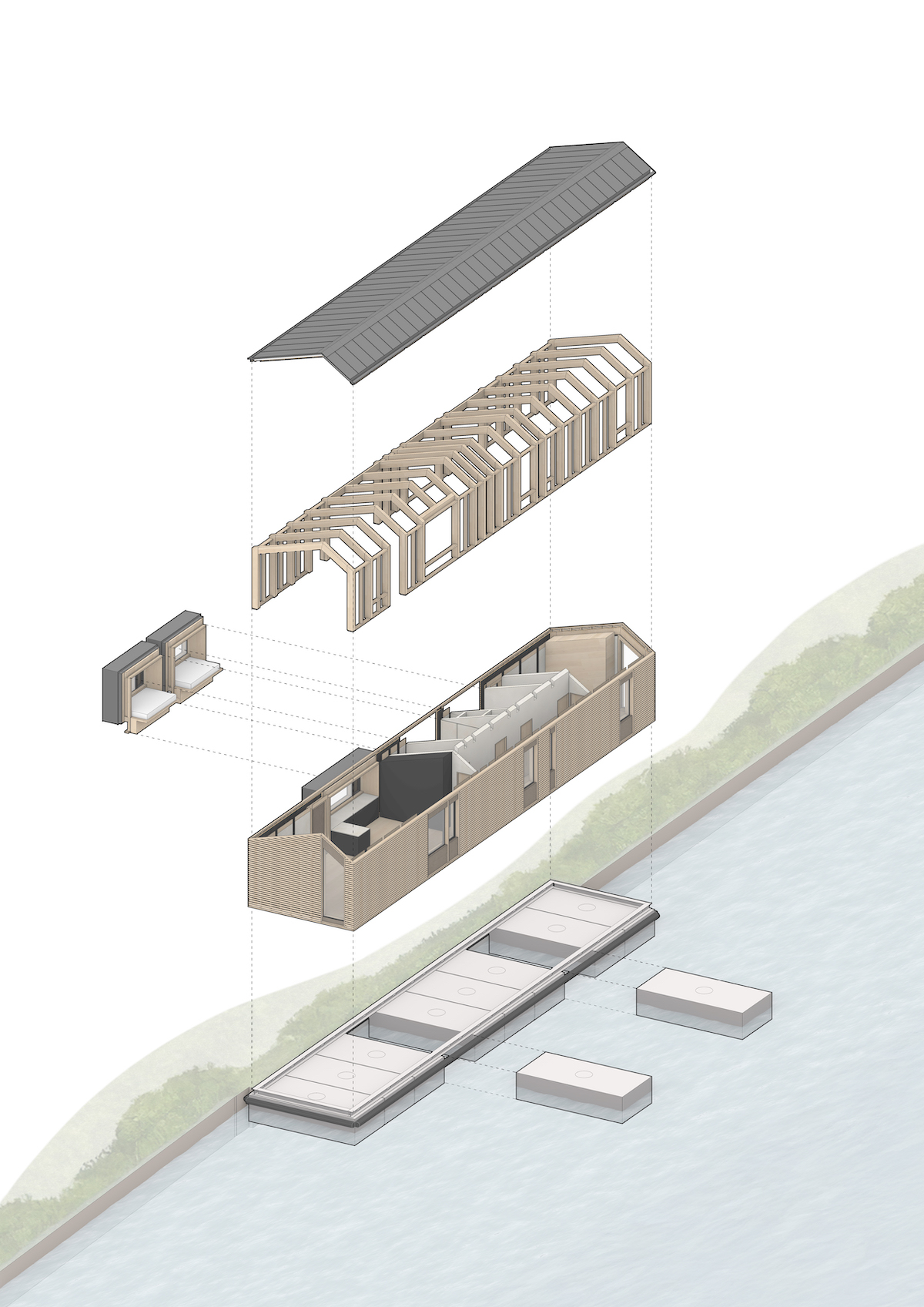
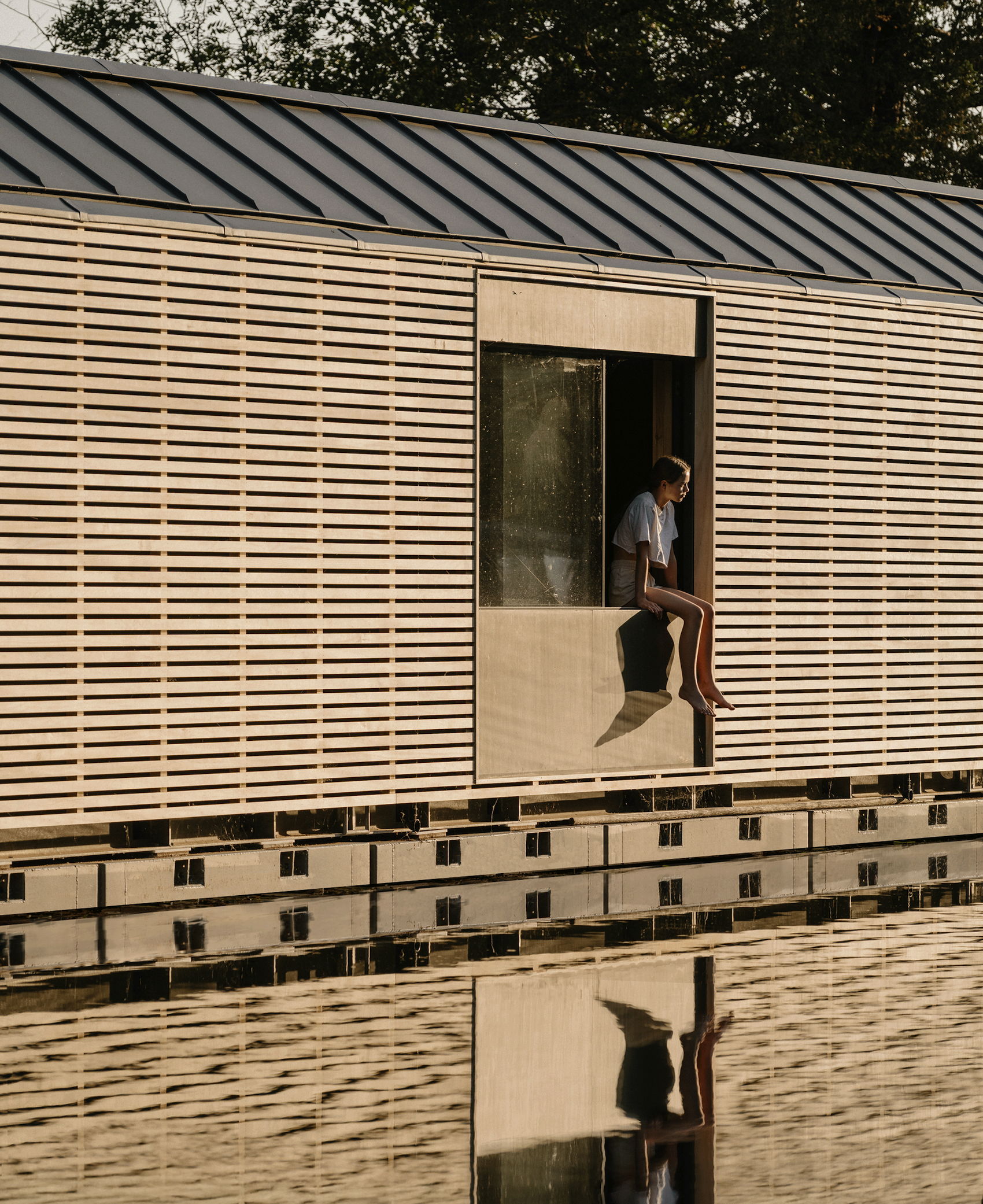
Working closely with marine and structural engineers, the architect developed an innovative system of ten interlocking steel hulls secured by a central gantry. This chassis allows each section to be floated away and maintained independently, overcoming challenges posed by the low bridges and lack of dry dock access along the canal. The prefabricated hull system also minimises site disruption and enables future-proofed maintenance without reliance on specialist lifting infrastructure.
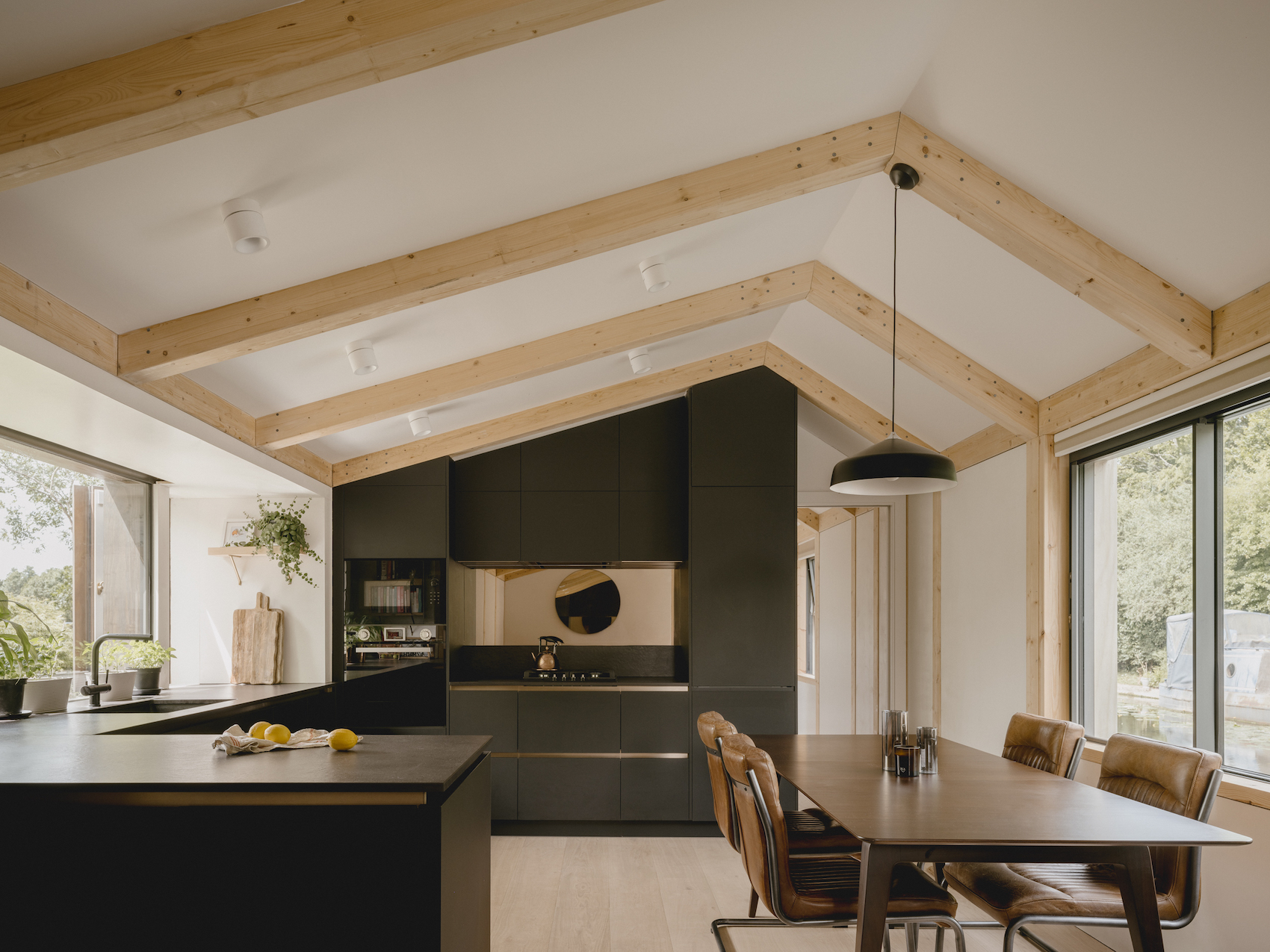
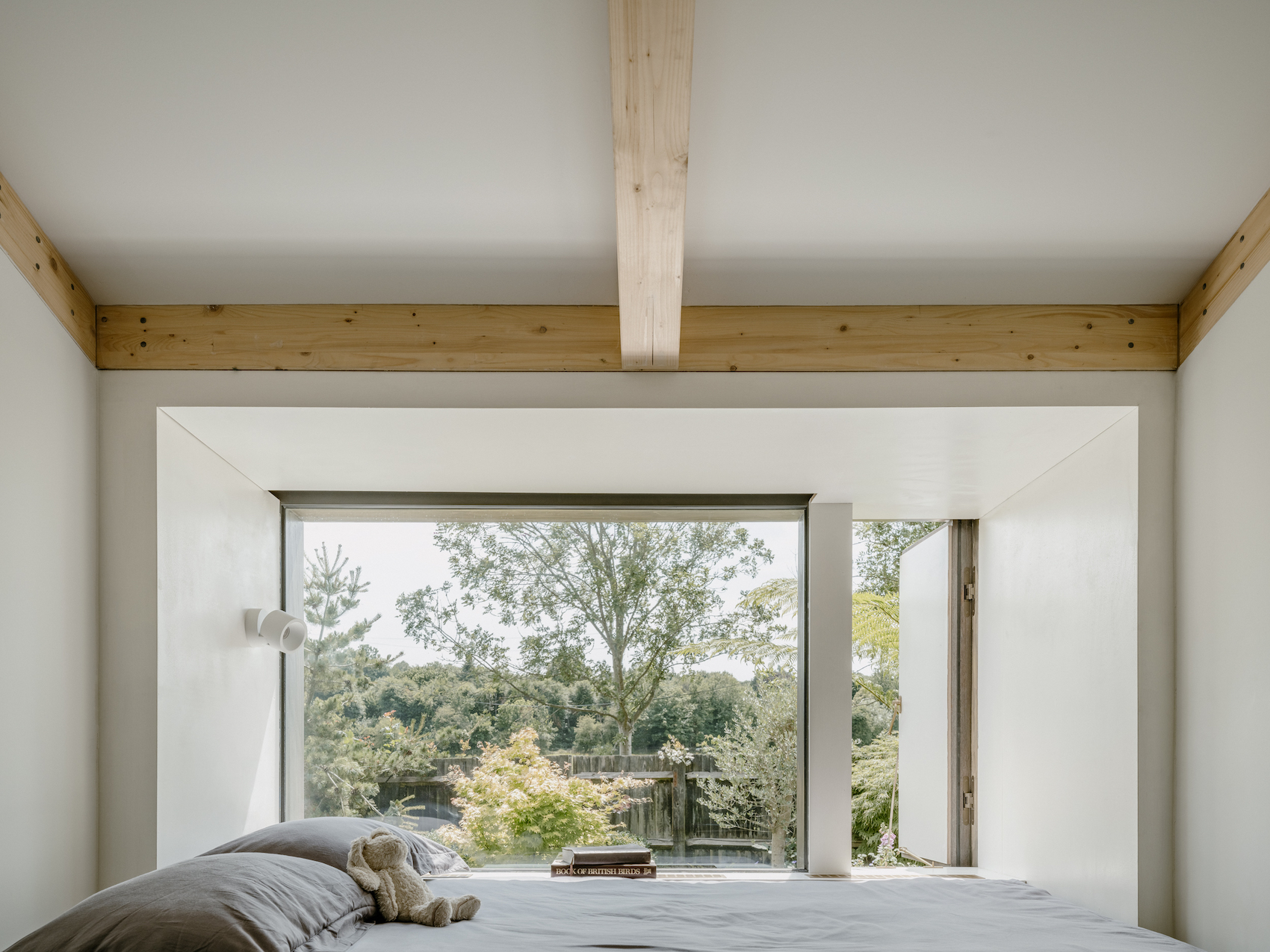
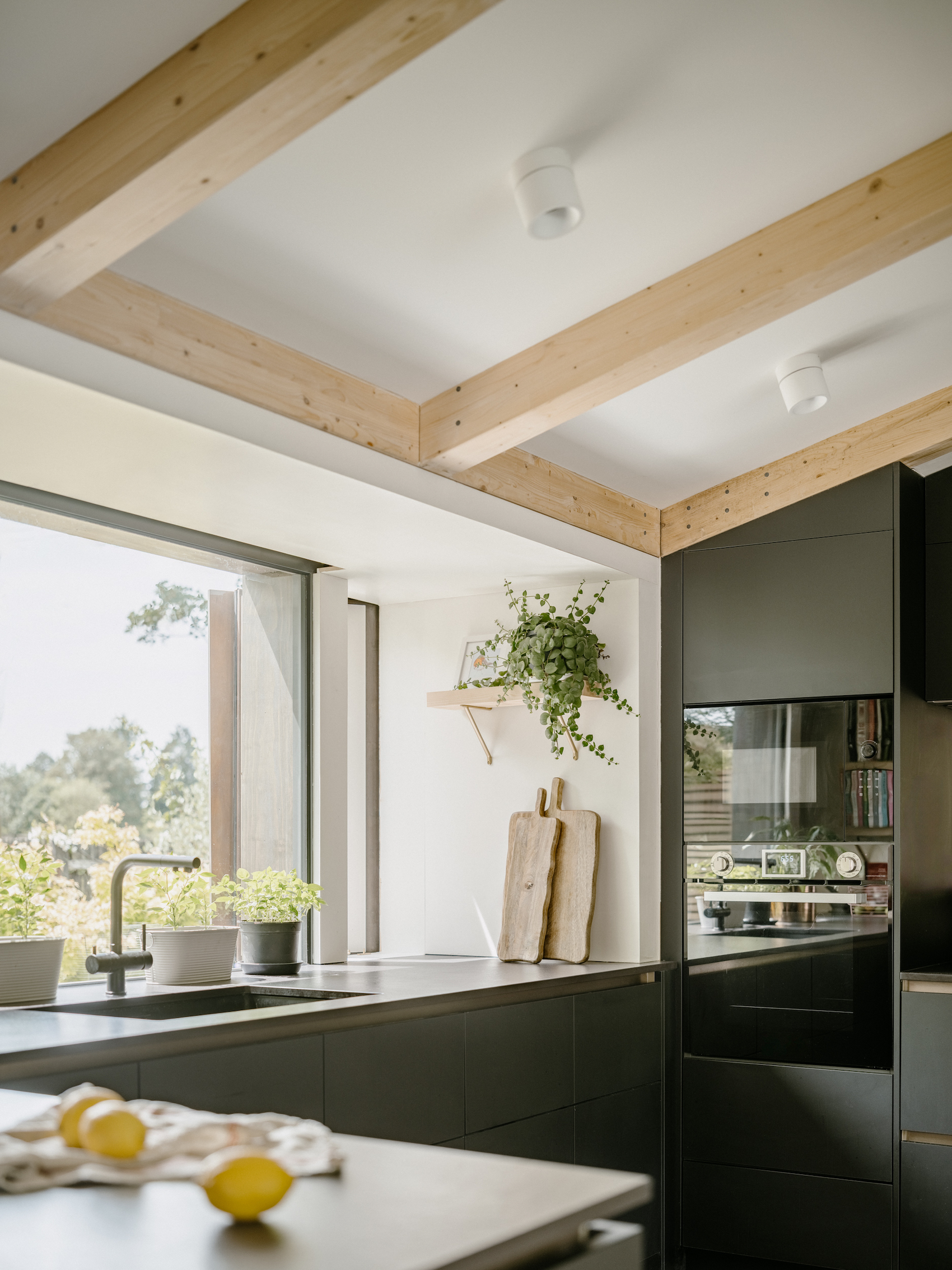
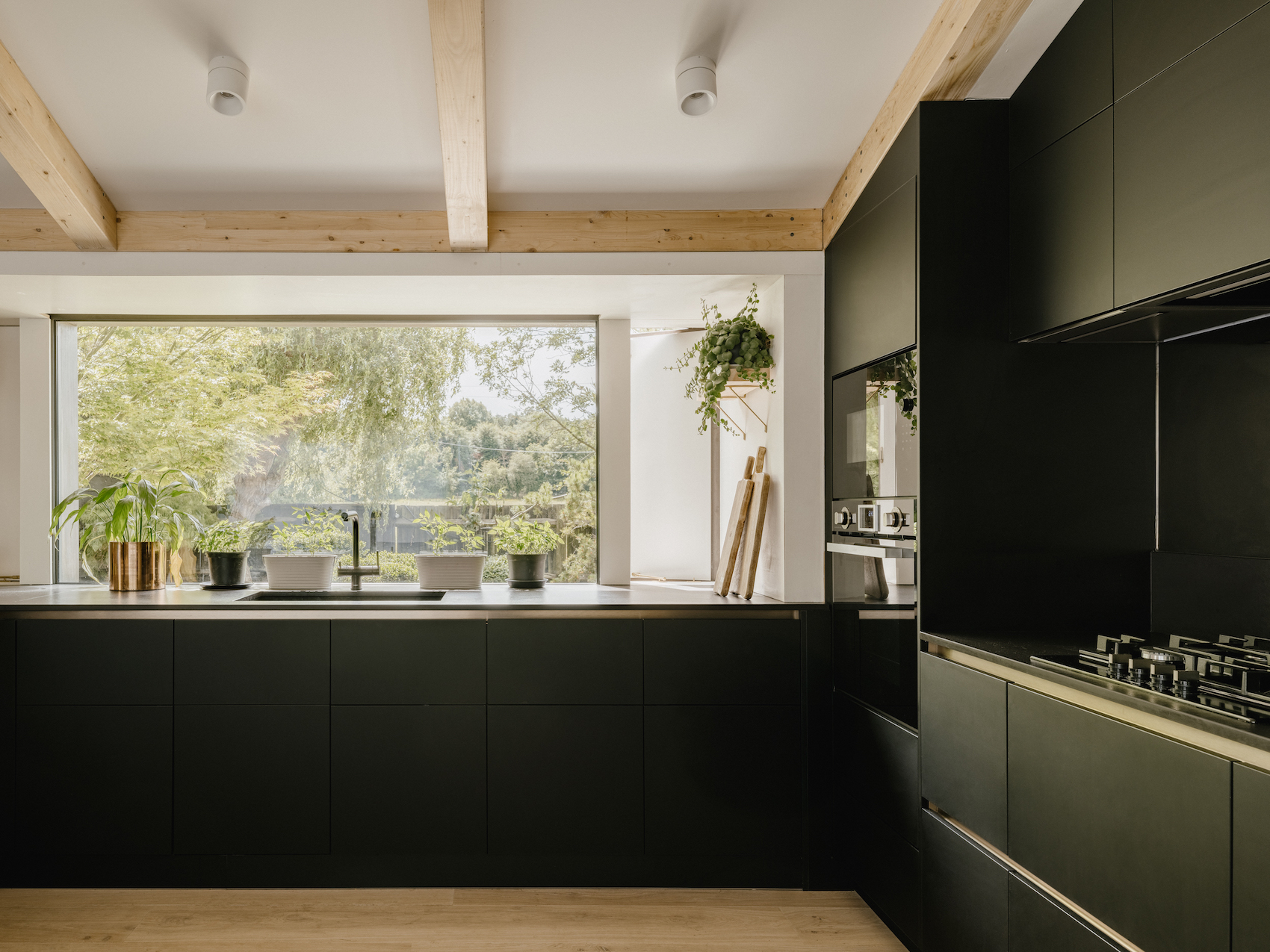
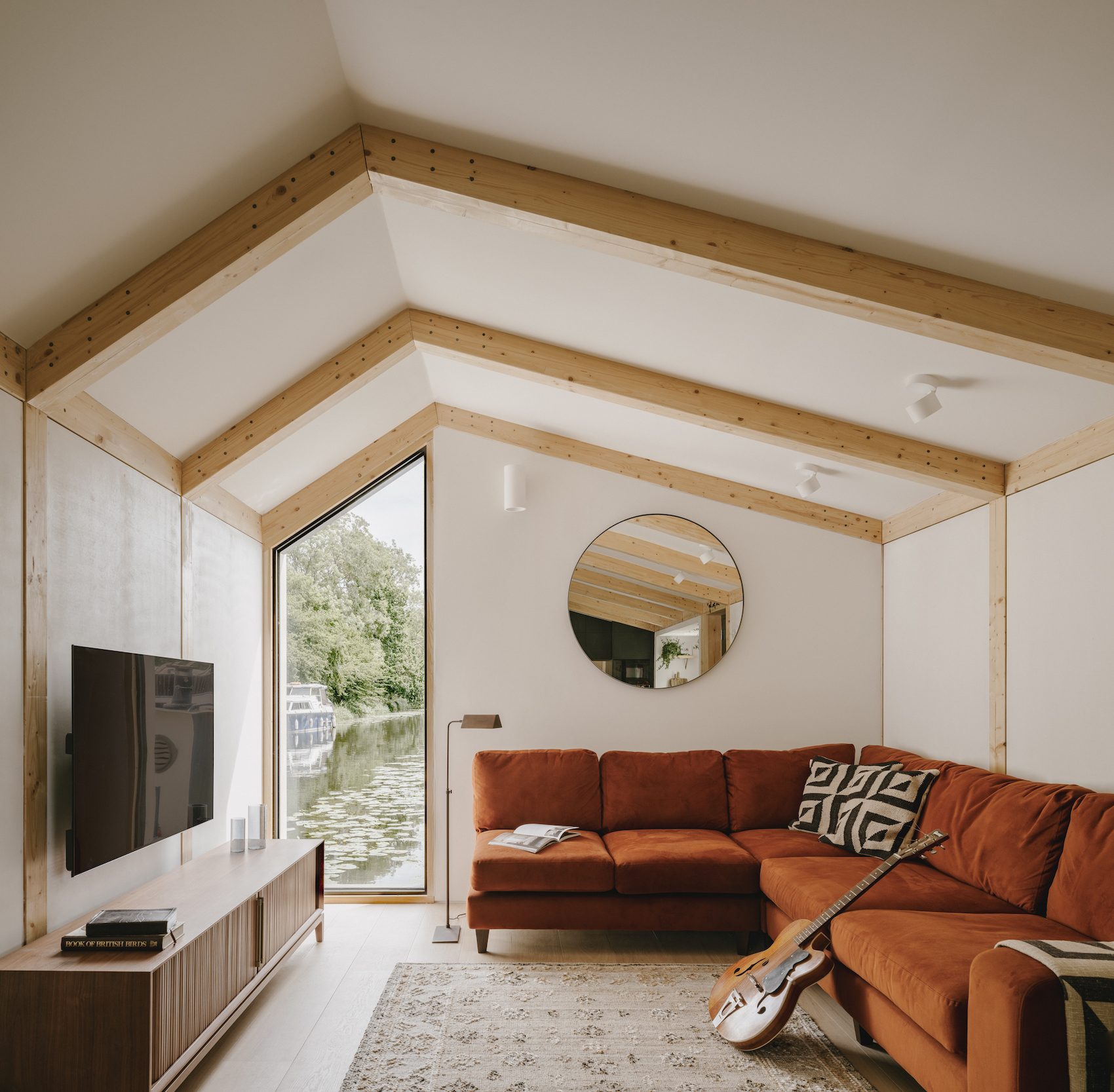
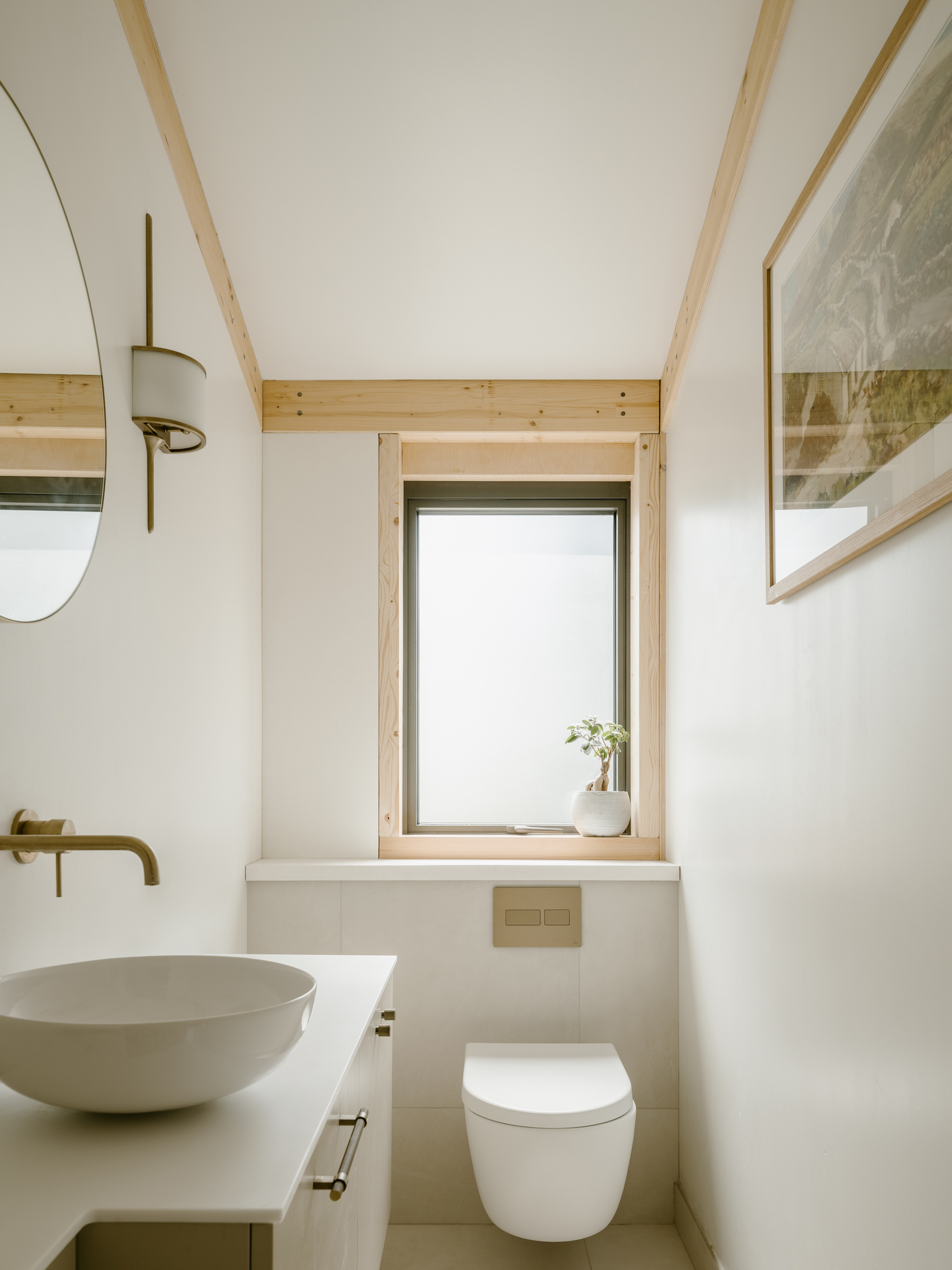
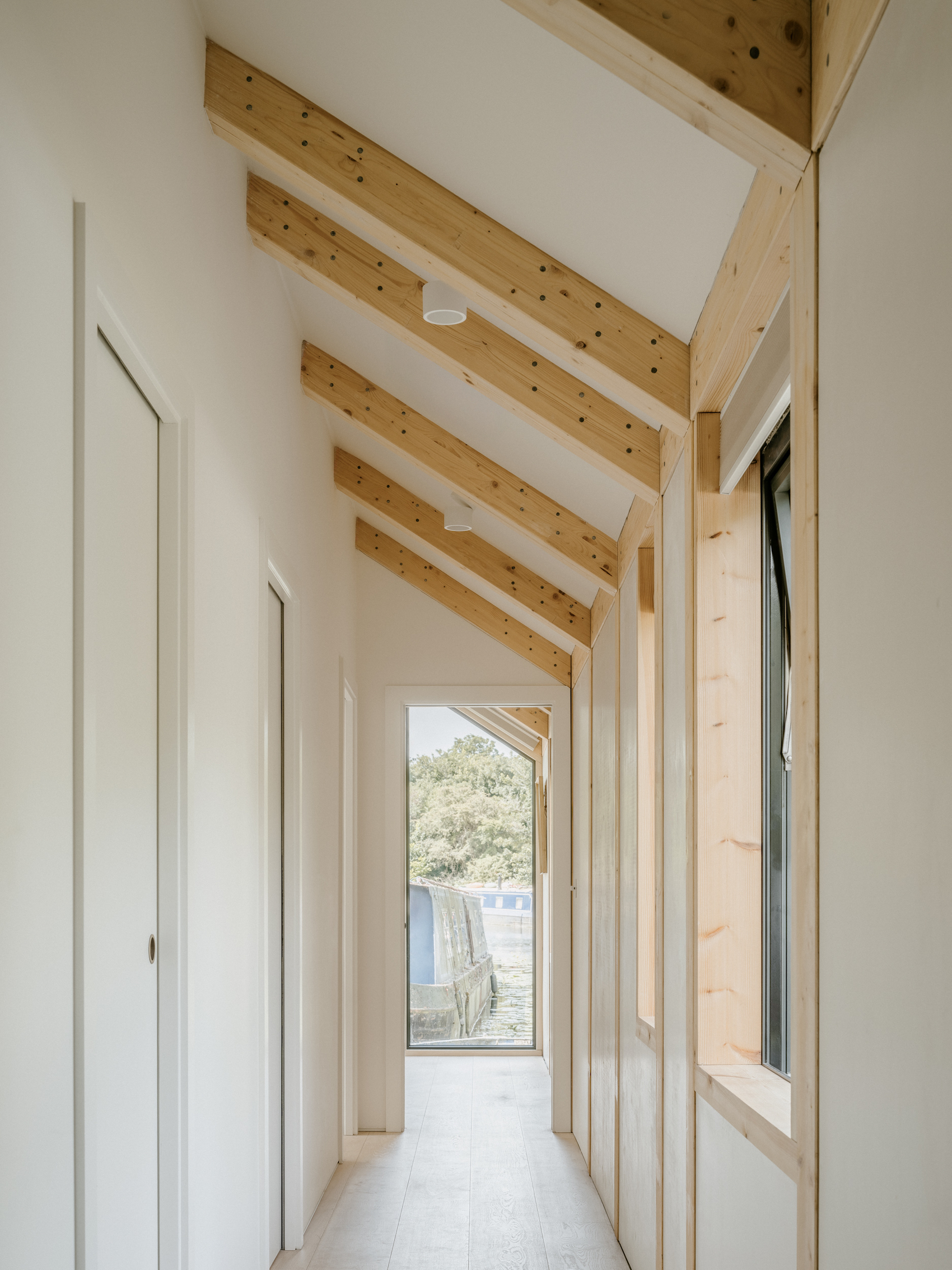
Above the floating base, a panelised timber-frame structure – manufactured in collaboration with Bucklands Timber – was quickly assembled on site. The exposed timber frame defines the interiors, creating a visually warm and tactile setting. A sleek black-painted kitchen and engineered oak floors are combined with pared-back finishes and crafted detailing throughout. Large windows frame ever-changing scenes across the canal, delivering a continuous visual relationship with the water, while also ensuring privacy and comfort for the family.
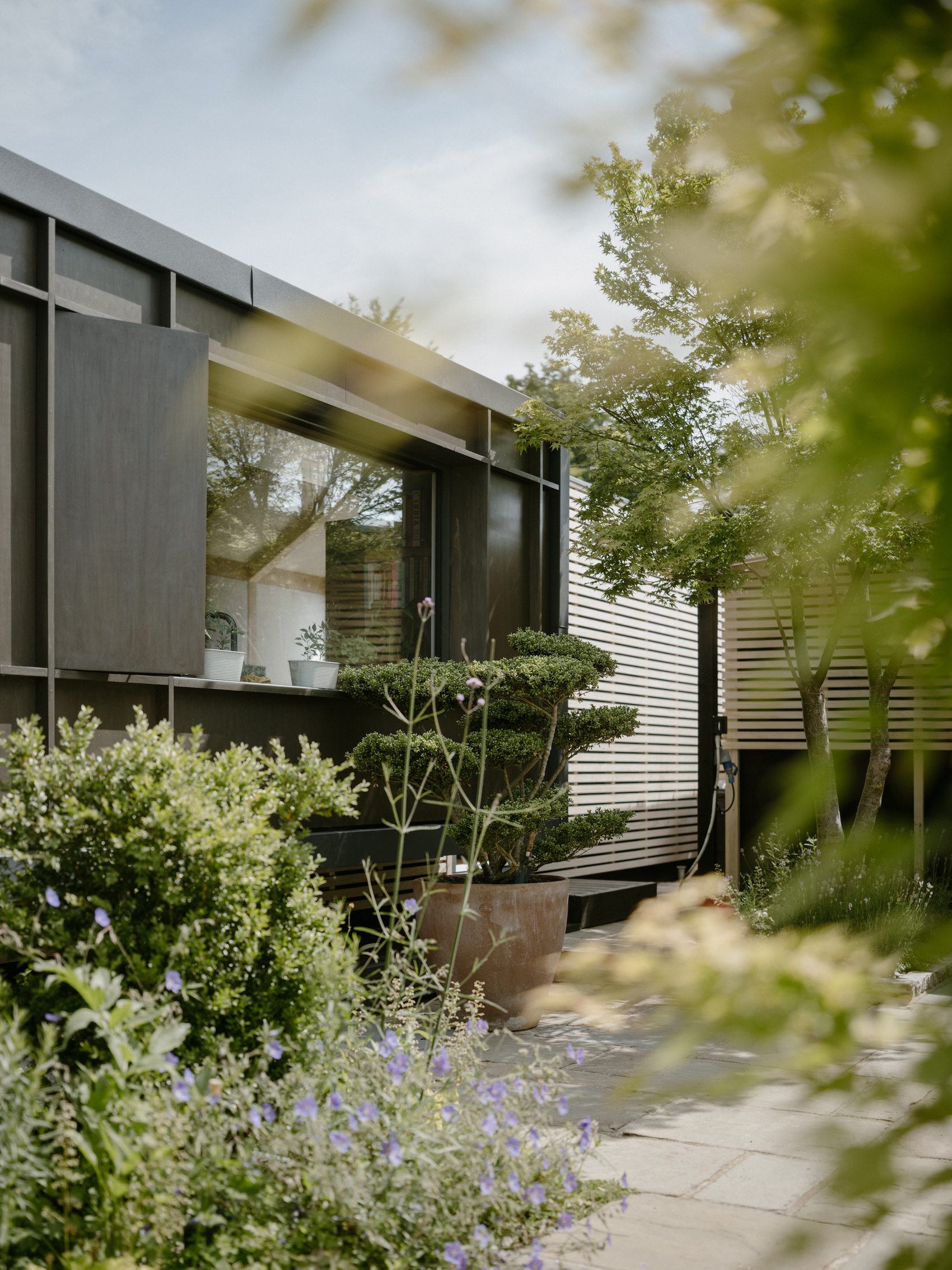
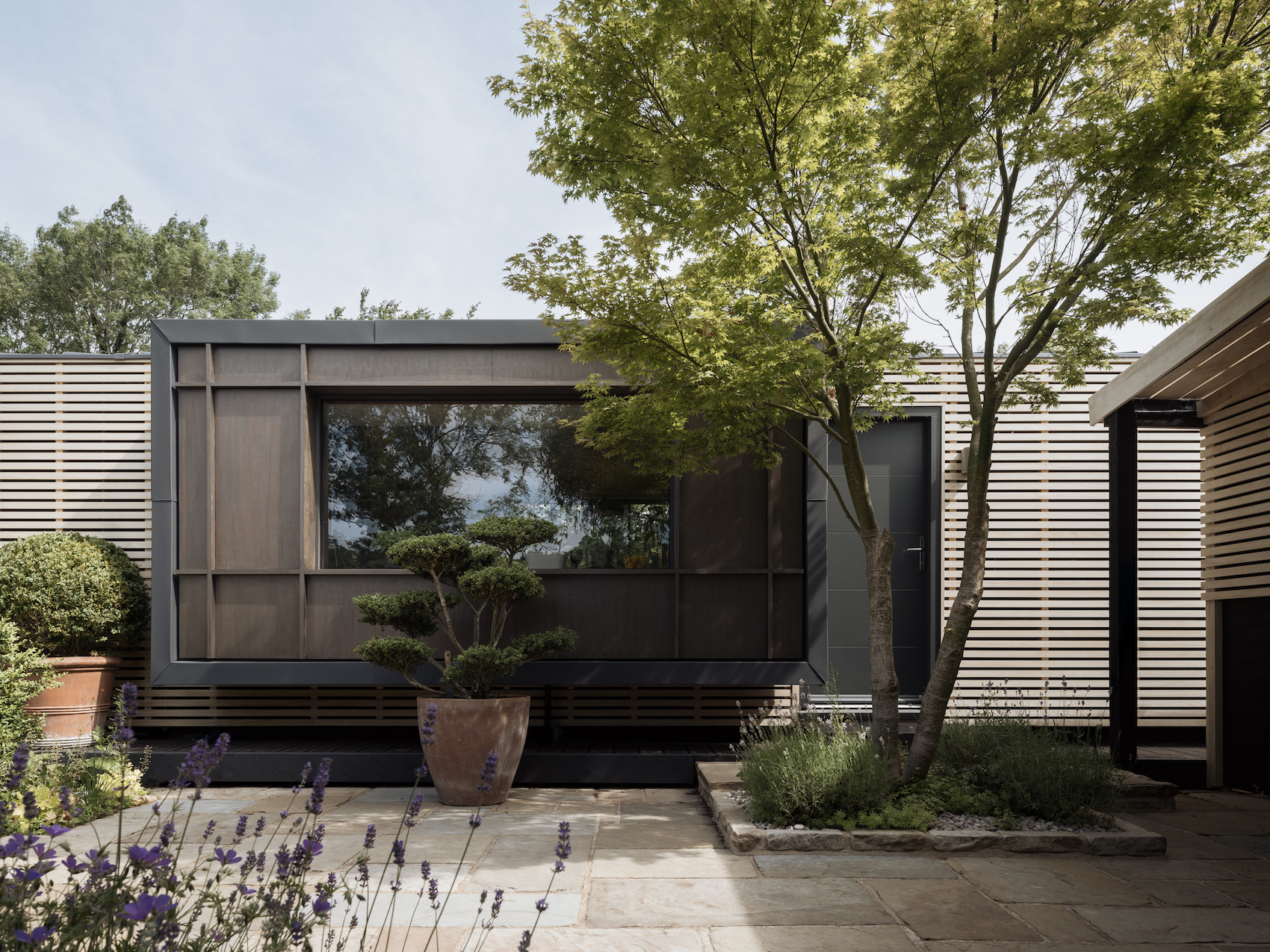
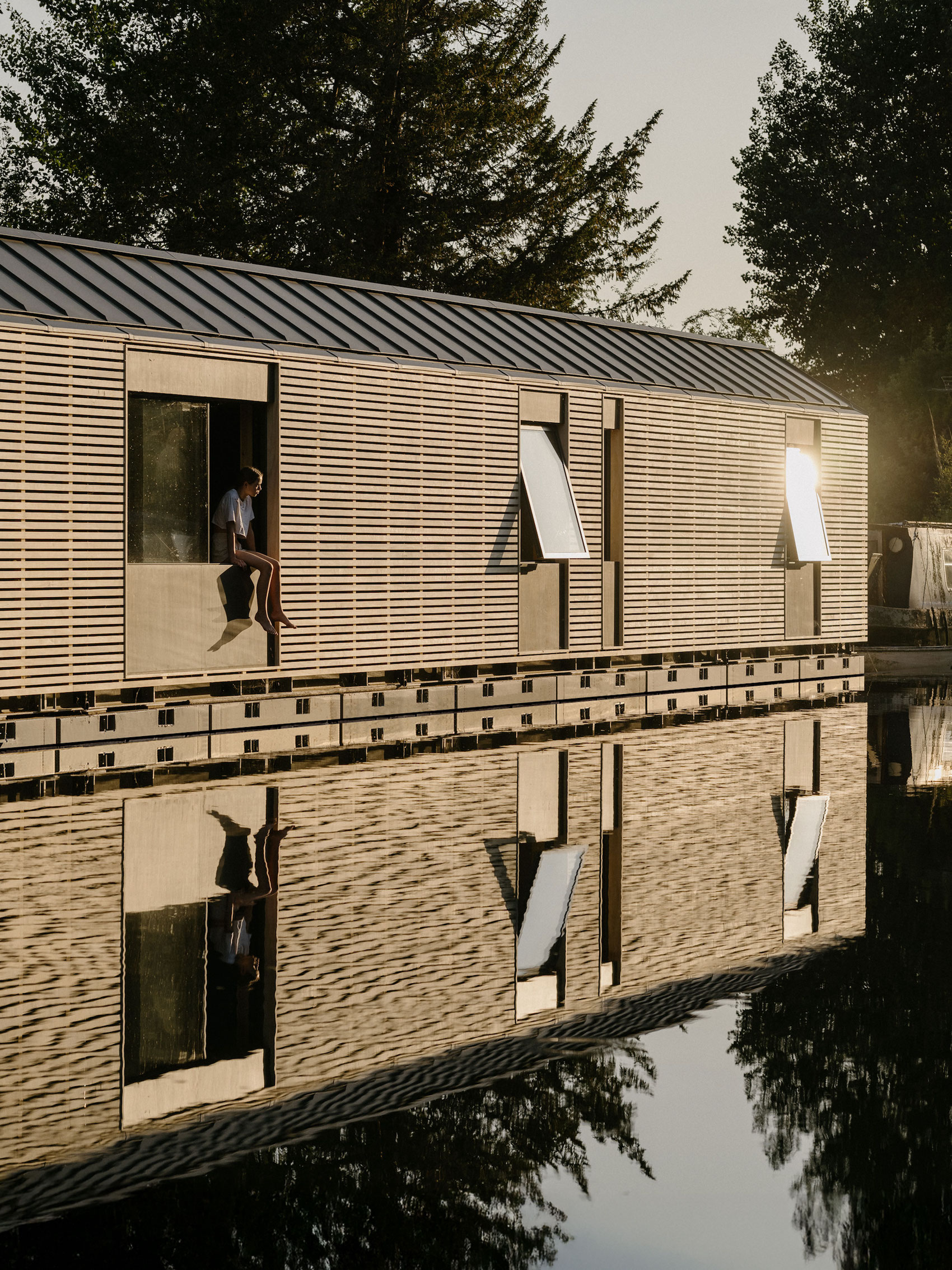
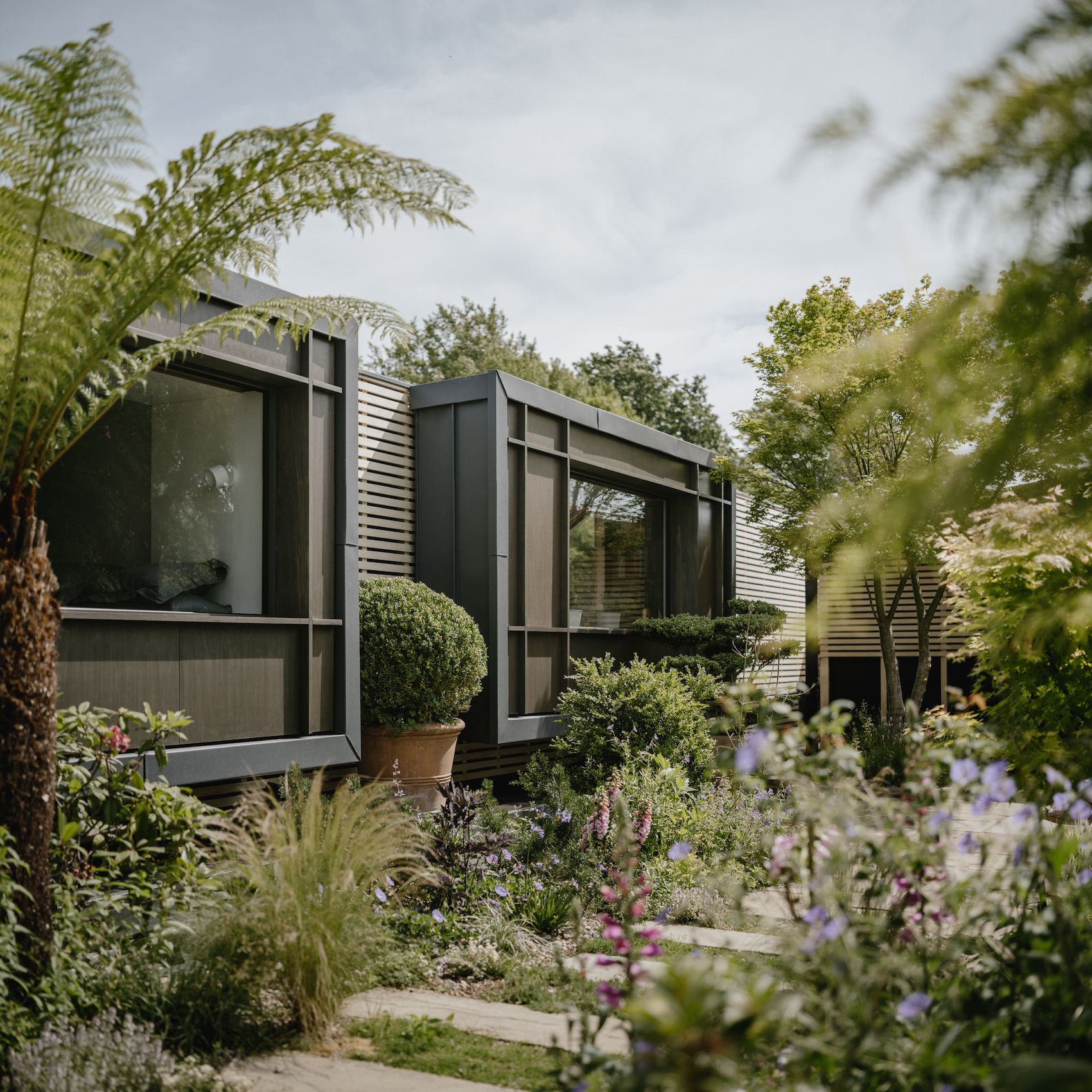
Externally, the house is clad in horizontal Accoya timber slats – chosen for their durability, low maintenance and weathering character. Cantilevered window bays extend beyond the linear plan, adding space for kitchen worktops, sleeping niches, and built-in seating, as well as providing ventilation and solar shading. They also form a distinctive rhythm to the bankside elevation and strengthen the home’s connection to the landscape.
“Our ambition was to create an accessible family home that maximises the limited space available, while making sure that the houseboat touches the surroundings with a sense of lightness – bringing nature, reflectivity and sunlight as close as possible,” commented Rachel Coll, founding director of TiggColl. “It is a home designed for embracing nature, and facilitating modern family life, on the water.”
Credits
Architect
TiggColl
Structural engineer
Engenuiti
Marine engineer
Marmus
Landscape design and installation
Topia Landscapes
Main contractor
Stella Rossa
Additional images