DUA’s reworking of a modest rear extension in Enniskerry transforms an overlooked corner of a period terrace into a richly layered domestic landscape, where architecture, furniture, water and planting combine to reconnect the house with its gardens.
DUA has completed the refurbishment and reconstruction of a rear kitchen and dining extension to a period end-of-terrace house in Enniskerry, County Wicklow. Named Cúl an Tí – Irish for “the back of the house” – the project occupies the footprint of an existing single-storey extension that had reached the end of its life. Rather than pursuing additional floor area, the architects focused on rethinking the relationship between the house and its surrounding landscape, transforming a series of disconnected and underused spaces into a more cohesive domestic environment.
The intervention demonstrates how a relatively modest project can have a significant impact on everyday life. Previously separated from the main living spaces, a neglected side garden has been drawn into the centre of the experience of the home. The kitchen and dining room now extend visually beyond their physical boundaries, establishing a closer relationship with the gardens and creating a greater sense of openness without increasing the building’s footprint.
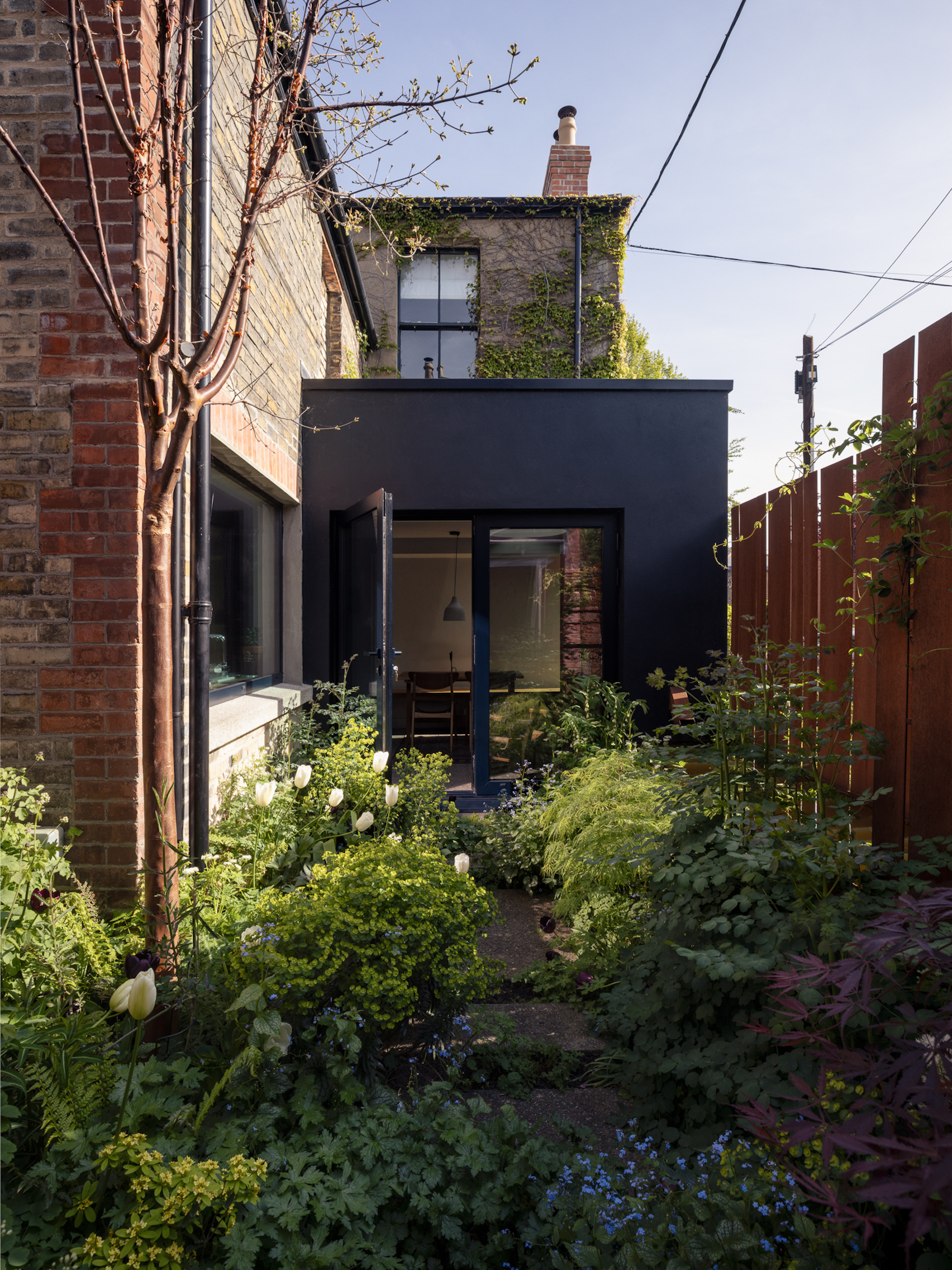
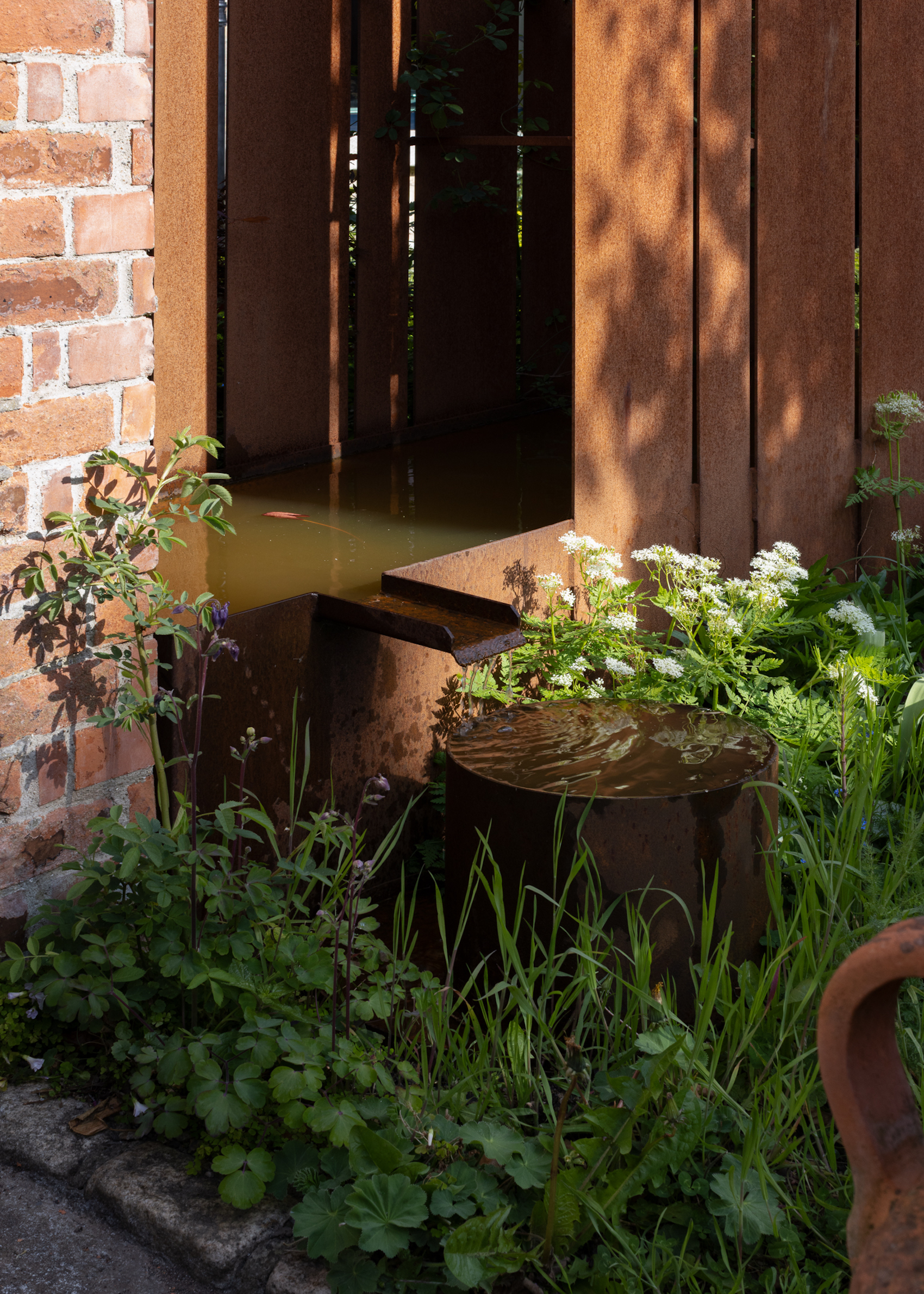
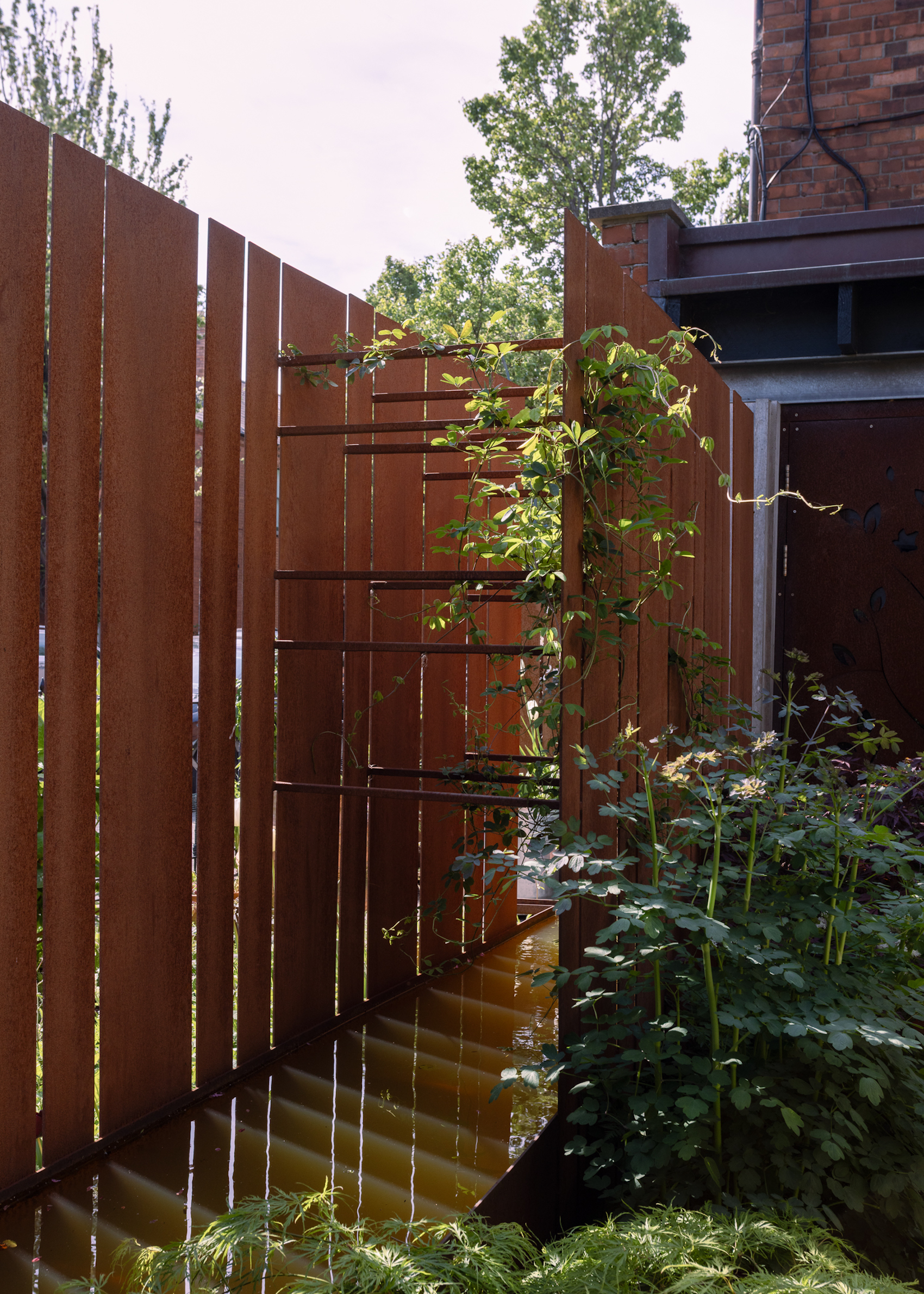
A corten steel screen replaces a conventional boundary wall between the rear and side gardens, acting as a filtering device to mediate views, movement and light across the site. Formed from two offset layers of vertical steel fins, it creates changing perspectives through the landscape while maintaining a degree of privacy. Steel flat bars spanning between the screens provide structural support and create a framework for climbing plants, allowing the architecture to become increasingly entwined with the garden as it matures. Water is used throughout as both a practical and curatorial element. Rainwater collected from the roof is channelled through a custom corten steel spout into a reflecting pond positioned alongside the screen. From here it overflows into an arrangement of interconnected steel vessels before returning to the surrounding landscape. The system creates a visible link between roof, garden and ground, while introducing sound, movement and reflection into the daily life of the house. The pond has also established a new ecological habitat, supporting aquatic planting and attracting wildlife.
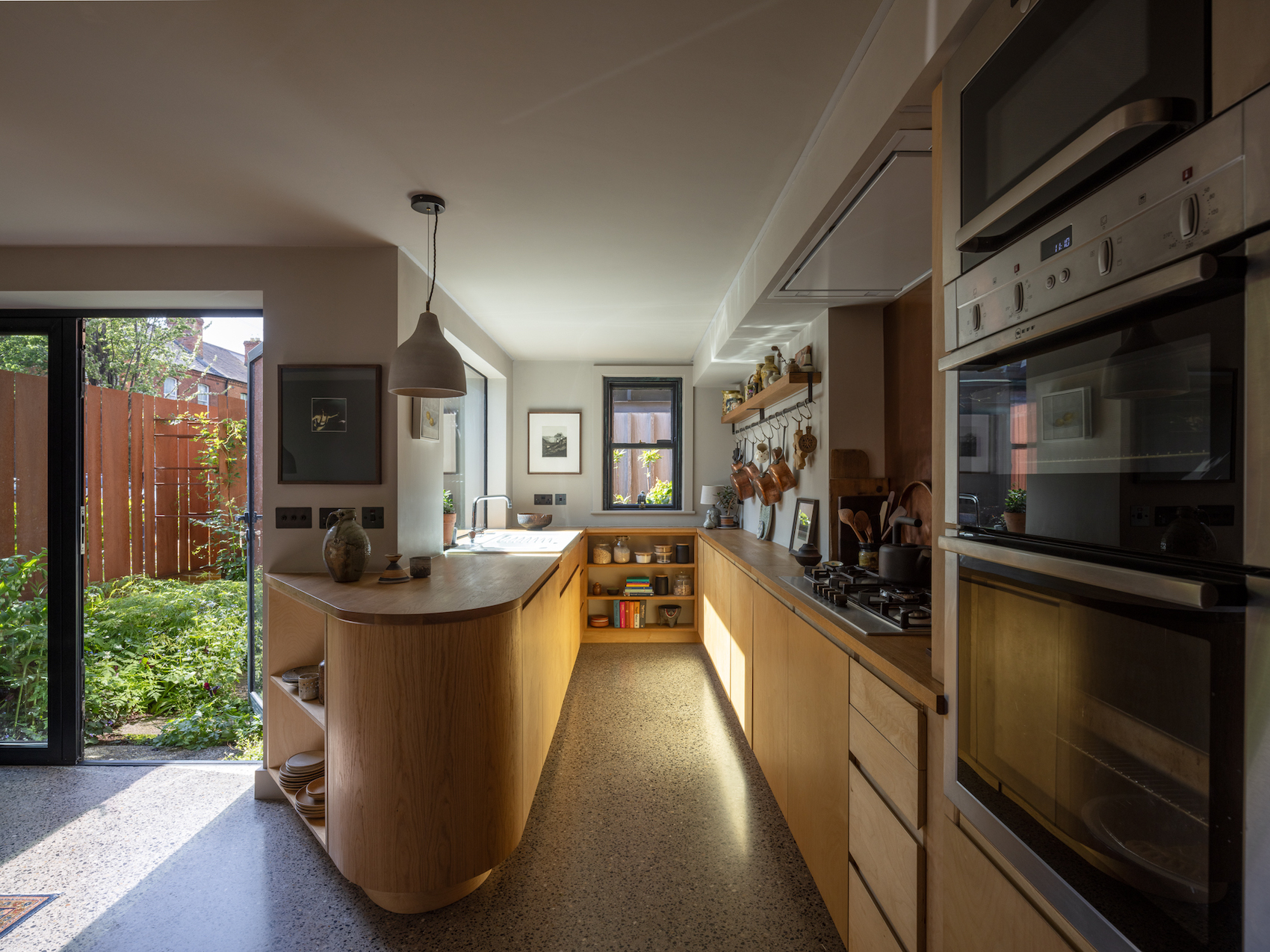
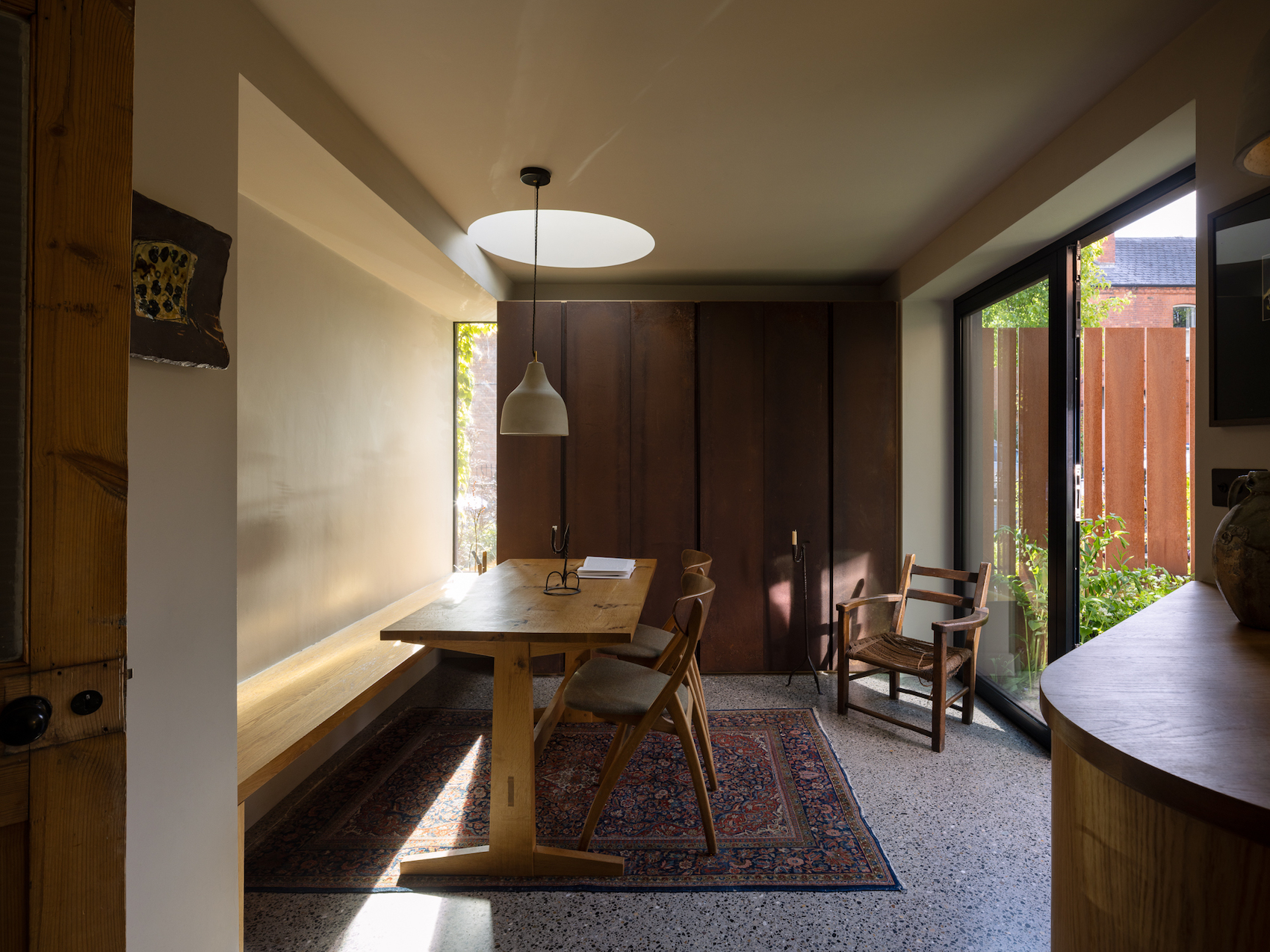
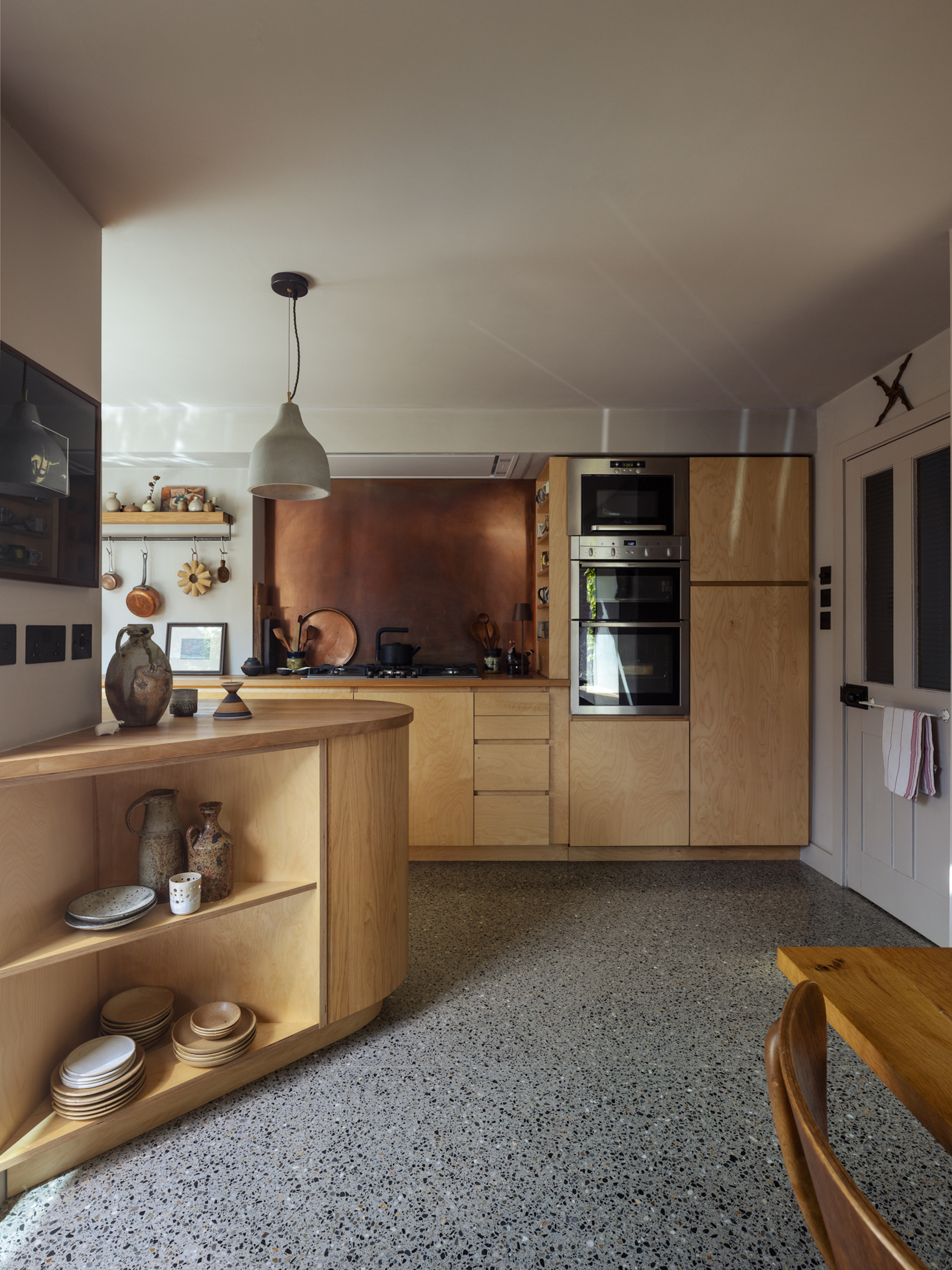
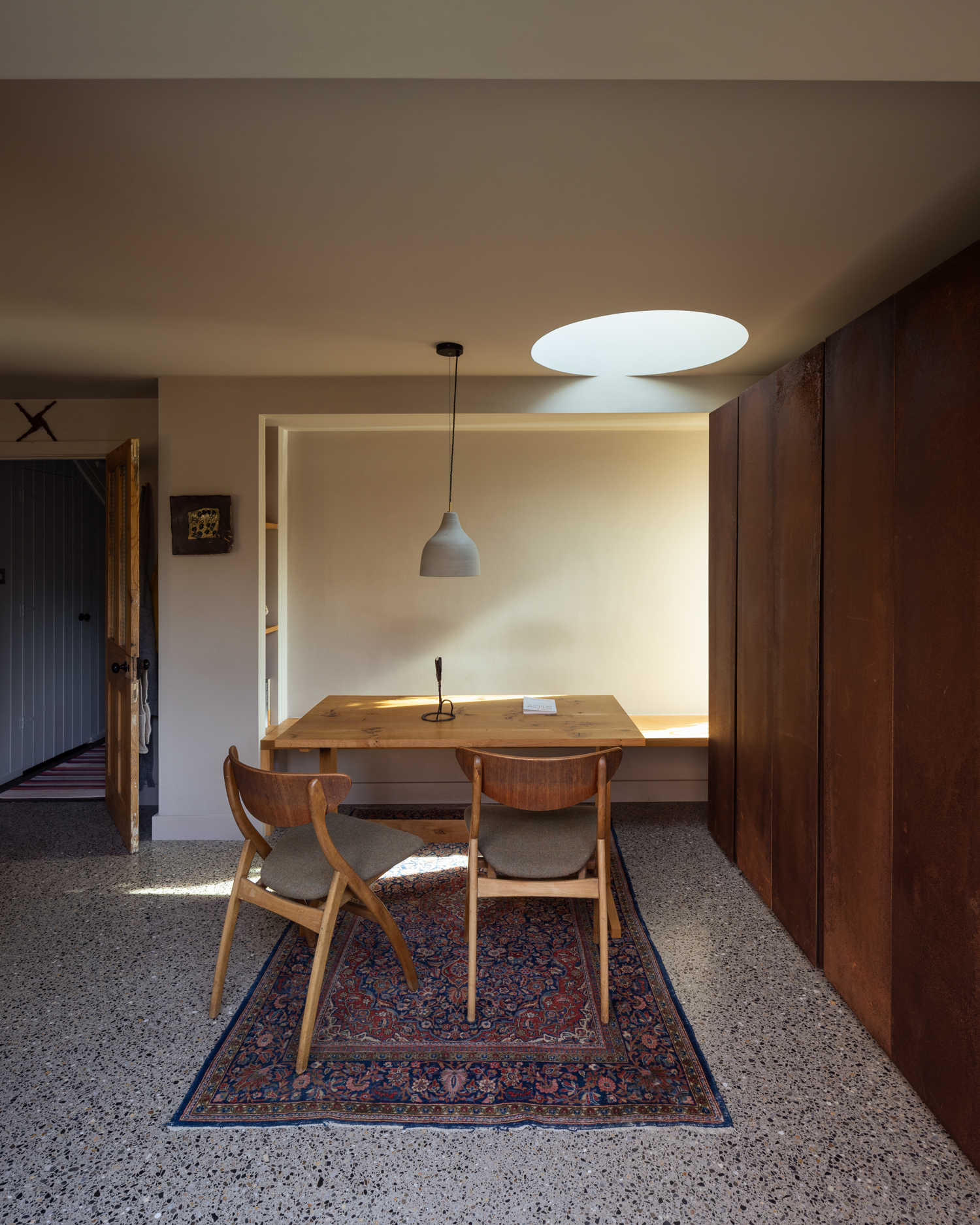
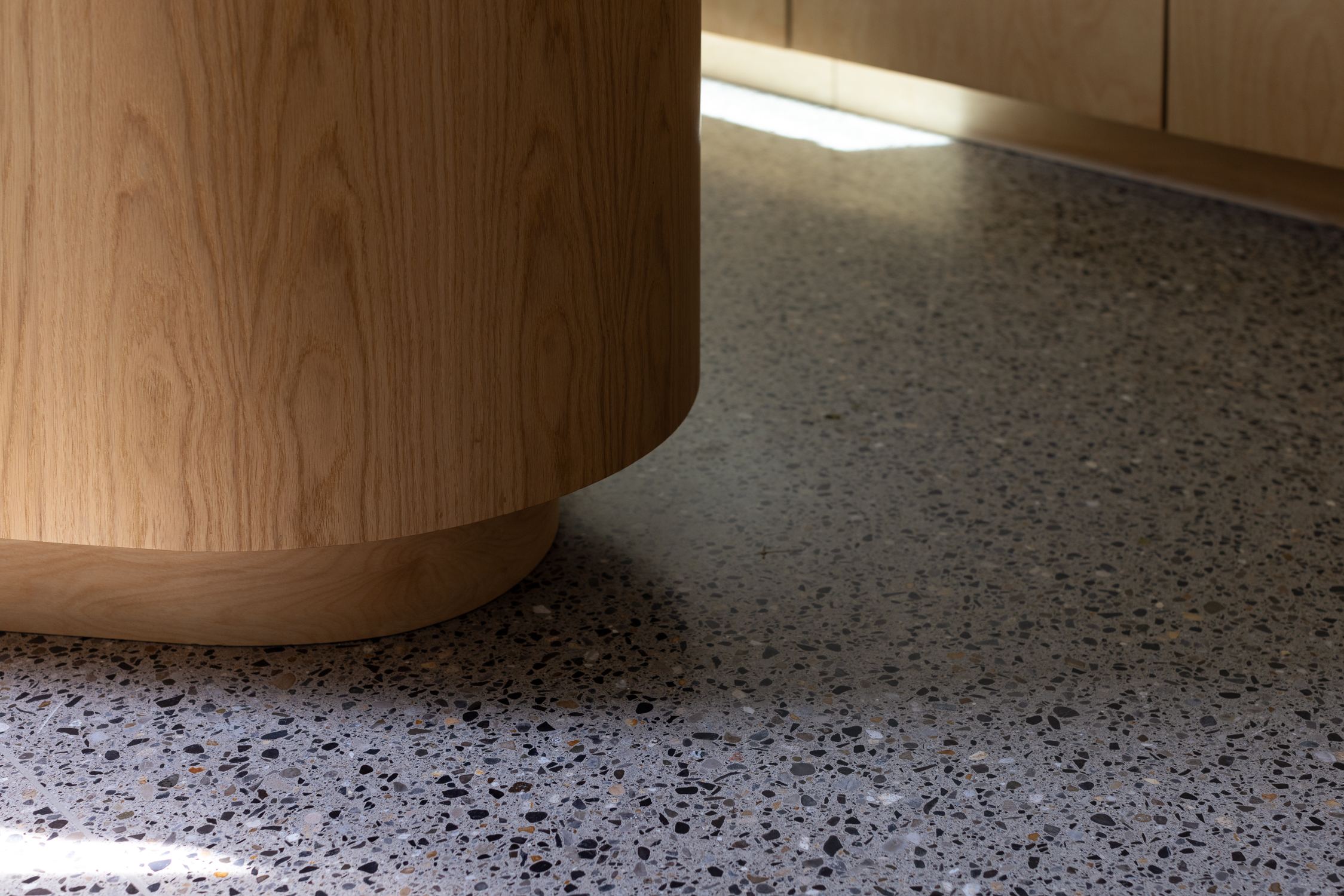
The architects approached the interior as an extension of the landscape beyond. A corten steel storage unit forms one side of the dining space and continues directly from the garden screen outside, blurring the threshold between inside and out. Custom plywood joinery, solid timber worktops and a brass splashback provide warmth and texture, while integrating storage, seating and kitchen functions into a unified composition. The reconfigured kitchen now faces the garden, placing views of water, planting and changing light at the centre of everyday activities.
A carefully positioned vertical window alongside the dining bench frames views through the garden and towards the street beyond. Seated at the table, occupants experience filtered glimpses through the corten fins, reflections across the pond and the movement of planting in the wind. Above, a circular rooflight introduces shifting patterns of daylight and sky into the room. Aligned with the dining table and corten joinery below, it acts as a precise geometric intervention that captures changing sunlight throughout the day and, at certain times of year, moonlight after dark.
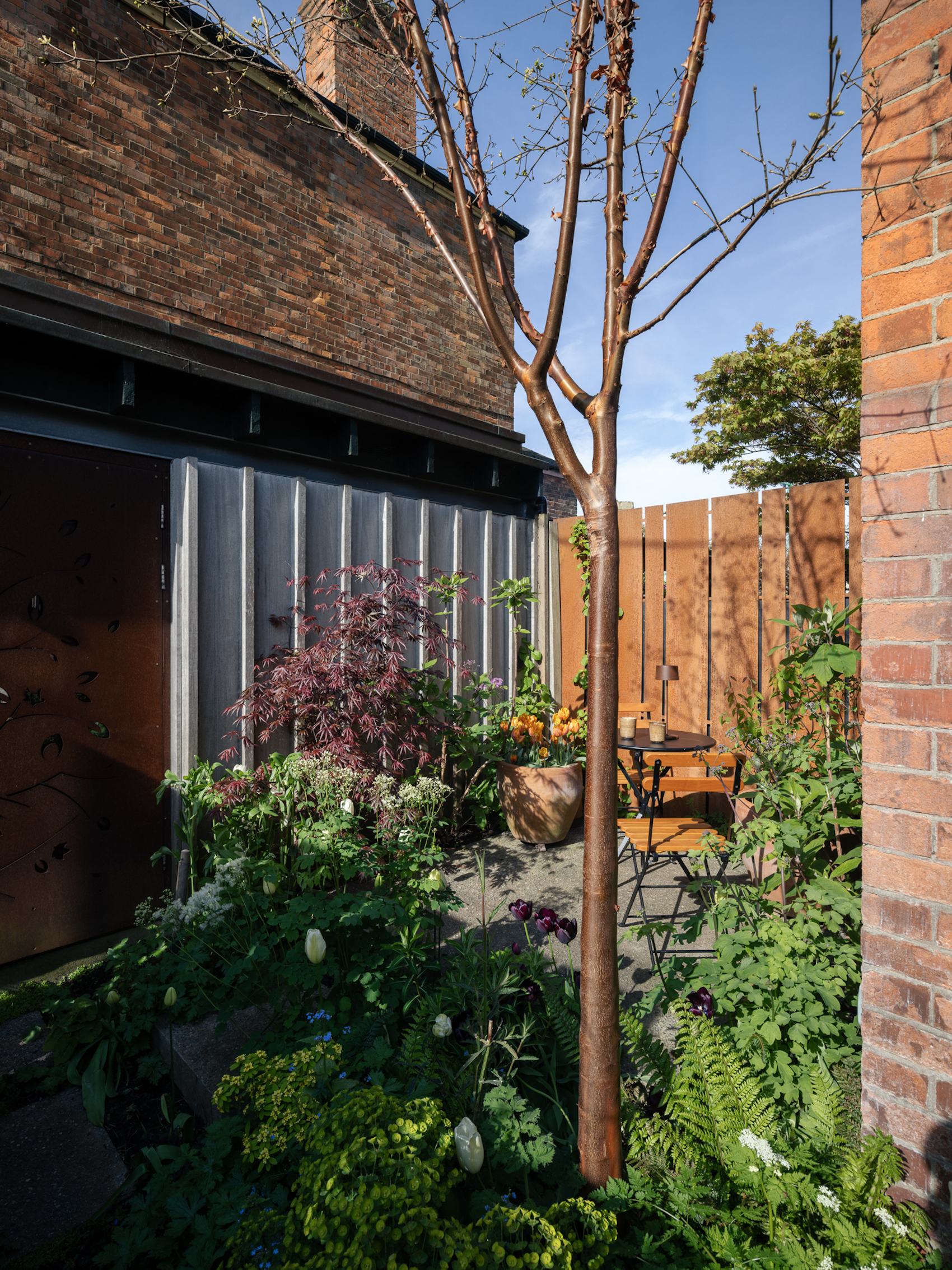
Concealed lighting integrated within the joinery, rooflight and pond extends these effects into the evening. Surfaces, planting and reflections are illuminated without revealing the source of the light itself, reinforcing the project’s emphasis on atmosphere and subtle sensory experience. Through a careful choreography of architecture, furniture, landscape, water and light, Cúl an Tí demonstrates how the experience of a home can be fundamentally transformed without adding a single square metre of floor area. The result is a place that continues to evolve through weather, growth, seasonal change and everyday occupation.
Credits
Client
Private
Architect
DUA
Lead architects
Darragh Breathnach, Joe Keohane
Structural engineer
Robert Barry Consulting Engineers
PSDP
DUA
Windows
Aperature
Lighting
Fibre Led
Fitted furniture
COS Furniture
Steelwork
BA Steel
Polished concrete
Progrind