Louis Weir, Sustainability Manager at IKO, discusses how the company’s environmental strategy, products and manufacturing processes are evolving to support lower-carbon, higher-performance roofing systems.
In association with
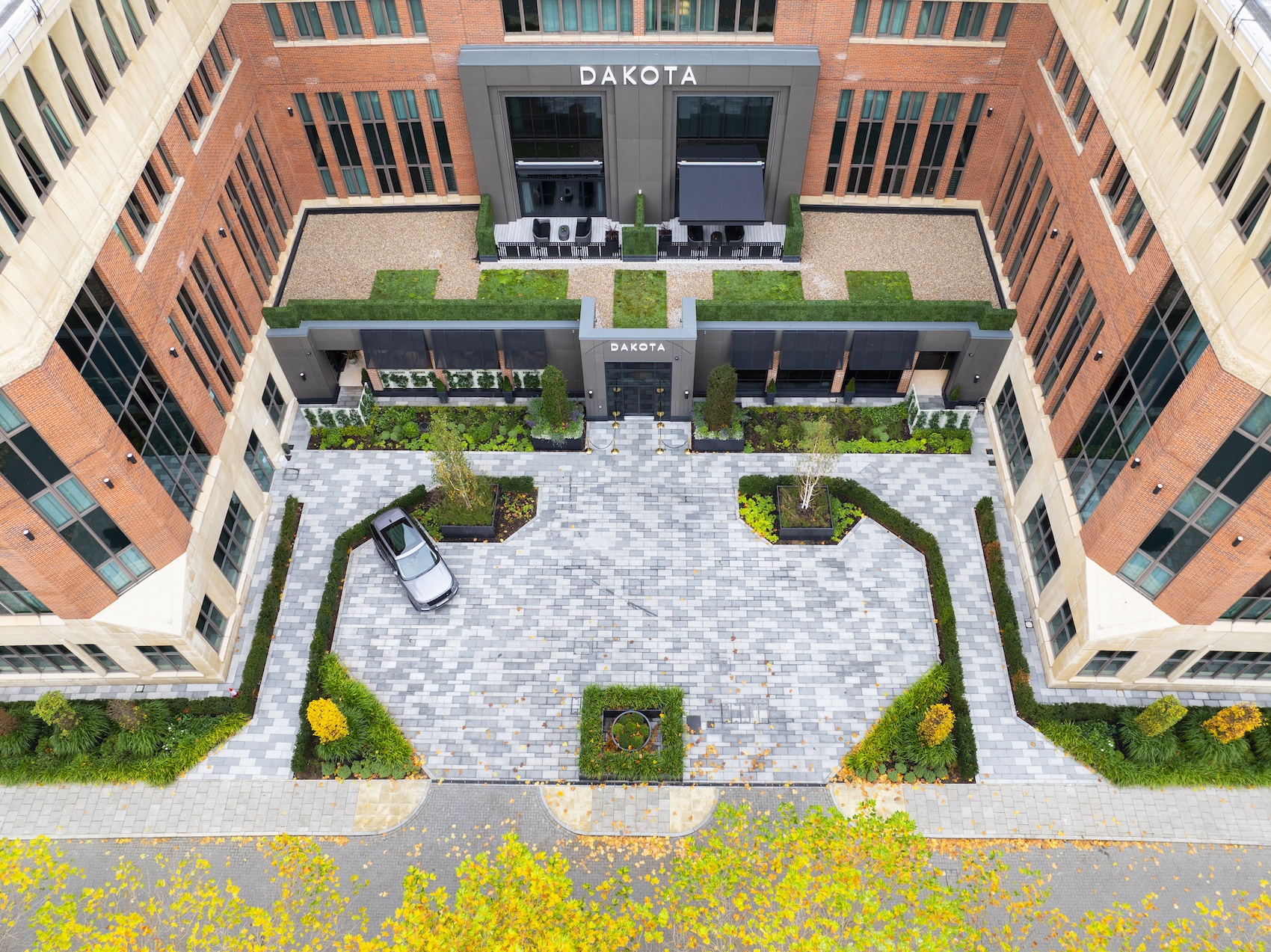
IKO Permatec LI was specified for the Dakota Hotel in Newcastle (photo: Alive Photography).
As sustainability targets tighten across the built environment, architects are under increasing pressure to balance embodied carbon, operational performance and long-term durability within their specifications. For roofing and waterproofing systems, this requires a more detailed understanding of materials, manufacturing processes and whole-life performance than ever before.
IKO has set out its environmental strategy through a combination of product innovation, operational change and alignment with industry frameworks such as PAS 2080. Louis Weir, Sustainability Manager at IKO, in conversation with Architecture Today’s Technical Editor John Ramshaw, explains how these initiatives are shaping the company’s approach and what they mean for architects working to deliver lower-impact buildings.
How is sustainability shaping IKO’s overall business strategy, and what are the key priorities set out in your latest ESG report
Sustainability at IKO is a lens we look through to see what matters most to the business, our industry, and our stakeholders. It helps us define our priorities, understand where we need to act, and how we need evolve. By applying this lens, we identify the topics that are both material to our business performance and expected by our customers, regulators, and wider value chain. This ensures our focus is not driven by trends, but by relevance and impact.
One of IKO’s core values is integrity. In practice, this means being transparent about where we perform well and where we need to improve. Our ESG report is a reflection of that, providing a clear, evidence-based disclosure of the issues that matter most and how we are performing against them.
Our material priorities are:
- Protecting the health, safety and wellbeing of our people, which remains fundamental to how we operate.
- Reducing our carbon impact, both within our own operations and across the products and systems we bring to market.
- Maintaining strong standards of compliance and governance, ensuring we meet regulatory requirements and uphold trust with customers and stakeholders.
- Delivering positive social value, through how we operate as a business and engage with the communities and sectors we support.
How is this strategy translating into measurable outcomes across products, manufacturing and project delivery?
In 2025, installation of our latest innovation: IKO Permatec LI, which uses the unique characteristics of bitumen to preserve bionic material, we stored over 460,000kgs of CO2e on UK roof tops. We’re on track to reduce our annual scope 1 & 2 emissions by more than 20 per cent by the end of 2026. The launch of our carbon reporting systems is enabling WLCA-aligned reporting (RICS v2), so designers can quantify system-level carbon, not just materials.
What does PAS 2080 mean in practice for IKO, and how does it influence the way roofing systems are designed, specified and delivered?
PAS 2080 requires carbon to be treated as a design constraint, not a post-project calculation. It sets the expectation that the supply chain – clients, designers, contractors, and manufacturers– work together early, using consistent data to influence decisions before they are locked in. For IKO, this means supporting projects with clear, comparable carbon data and engaging at the design stage to help balance performance, durability, and embodied carbon.
How can architects engage with PAS 2080 principles when specifying roofing systems on their projects?
A practical starting point is early engagement with manufacturers and suppliers, bringing carbon into the conversation at the same stage as cost and performance. Alongside this is integrating carbon assessments early in design, rather than leaving them to contractor stage. IKO’s carbon reporting approach has been developed to support this. It simplifies the data collection and analysis needed for compliant carbon assessments, enabling specifiers to evaluate roofing systems as a whole, not just individual components.
How do systems such as IKO Permatec LI and Spectraplan contribute to reducing environmental impact, particularly in terms of embodied carbon and lifecycle performance?
IKO Permatec LI sequesters a physical amount of CO2e. It protects a waste product that would otherwise biodegrade and release carbon back into the atmosphere. This development has reduced the upfront carbon by 54 per cent and the biogenic material stays preserved well beyond the building design life.
IKO Spectraplan is a development that combines raw material choices with design optimisation. The white membrane has a solar reflectivity index of +91 per cent, which makes it an Ideal membrane for buildings with a high cooling load. It’s also a membrane that’s PVC free, reducing the embodied carbon by more than 40 per cent.
What role do factors such as durability, maintenance and system longevity play in improving whole-life carbon outcomes?
This is where a lot of assessments go wrong. There’s often too much focus on upfront carbon, without properly considering what happens over the life of the building. Under RICS Whole Life Carbon Assessment v2, durability and replacement cycles are critical. For example, a system that lasts 40-60 years instead of 20-25 years can significantly reduce replacement-related impacts over the building lifecycle.
Maintenance frequency also plays a direct role in overall emissions. So, in practice, a product with slightly higher upfront carbon can deliver a better whole-life outcome if it avoids premature replacement or reduces maintenance. The key point is that durability is often one of the most important levers for reducing whole-life carbon.
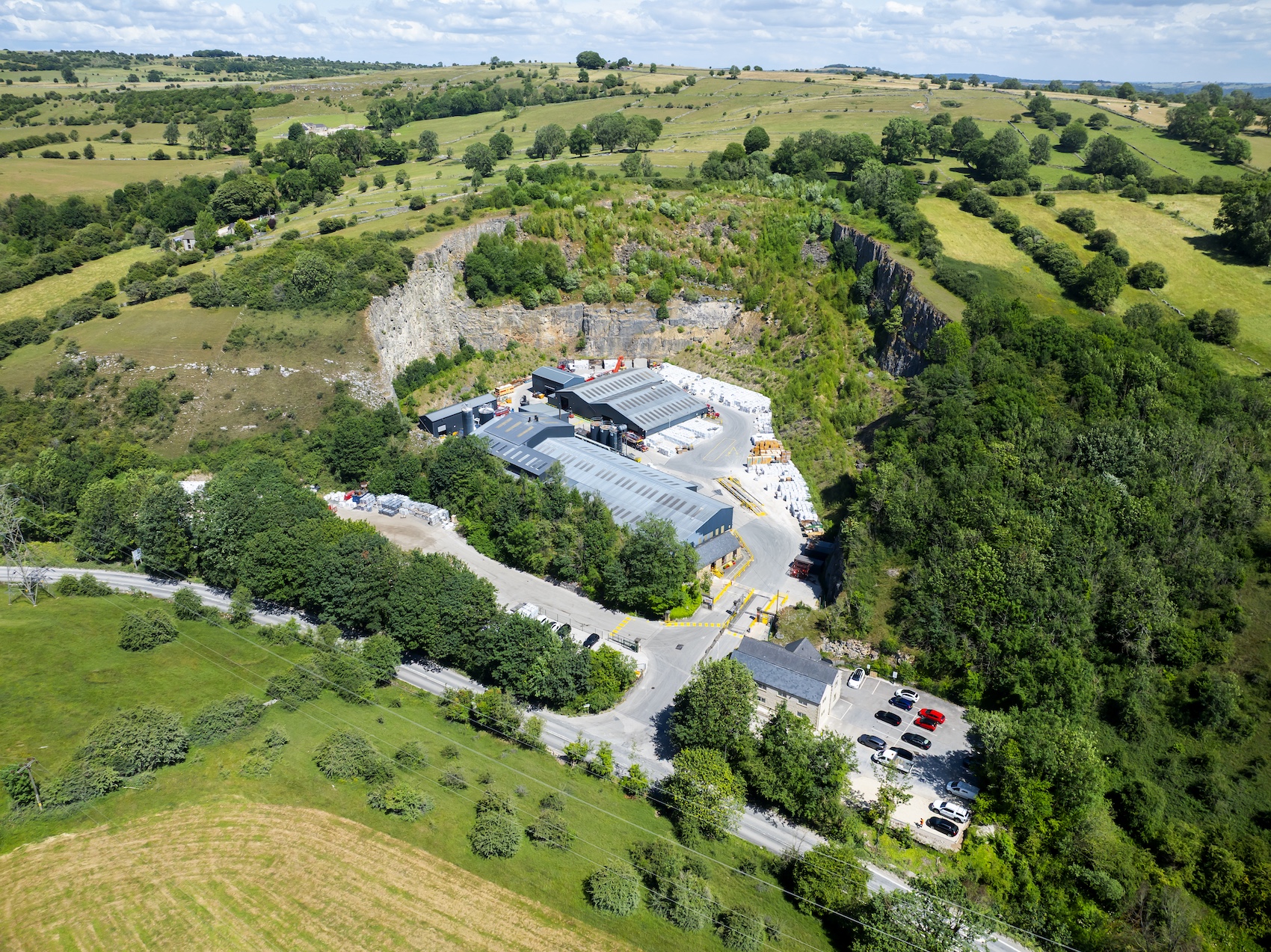
0IKO Grangemill is a specialist manufacturing facility and quarry located in Derbyshire (photo: Alive Photography).
How is IKO supporting architects with the data needed to make informed decisions, such as EPDs, embodied carbon figures and lifecycle assessments?
We focus on providing data that is usable and auditable, which means making sure our Environmental Product Declarations are aligned to EN 15804, providing carbon data at a system level where possible, and being clear on the assumptions behind that data. As mentioned, we’ve developed our own carbon reporting system with the aim of reducing interpretation risk, so architects can make decisions with confidence rather than having to second-guess the data.
How should specifiers interpret and use this data effectively at design stage?
The first thing is to recognise that not all data is directly comparable. A lot of issues come from people taking numbers at face value without checking what sits behind them. Specifiers should start by looking at the declared unit, because if that’s not aligned, the comparison doesn’t mean anything. Then it’s about understanding the system boundaries, whether you’re looking at A1–A3, A1–A5, or whole-life carbon, as that can significantly change the outcome.
It’s also important to interrogate the assumptions, particularly around lifespan, transport, and installation, as these can materially influence the results. If those elements aren’t consistent, you’re not really comparing products, you’re comparing methodologies. At design stage, the role of this data is to guide decisions, not finalise them. It gives a directional view early on, which can then be refined as the design develops, and more project-specific information becomes available.
What steps is IKO taking within its manufacturing and site operations to reduce environmental impact, and how do these changes feed through into product performance?
We have a planned decarbonisation pathway that will be implemented over the next few years, with a clear focus on reducing emissions within our manufacturing processes. This will have a direct impact on A3 carbon, which is a key part of our product footprint. Alongside this and off the back of the success of IKO Permatec LI, we’ve invested in a dedicated R&D facility. The focus there is on developing raw material alternatives, particularly to address A1 emissions, which remain the primary carbon hotspot for our products.
Looking ahead, what are the biggest challenges and opportunities for improving sustainability in roofing and waterproofing over the next few years, and how is IKO responding to them?
There are still some fundamental challenges. Data quality across the supply chain, particularly Scope 3, isn’t where it needs to be, and there’s a lack of consistency in how carbon is calculated between manufacturers. On top of that, commercial pressures can still override carbon-led decisions, especially where the data isn’t clear or trusted.
At the same time, there’s a clear shift happening. Greater standardisation through frameworks like PAS 2080 and RICS Whole Life Carbon Assessment v2 is helping to create a more consistent approach. We’re also seeing better digital tools emerge, which allow carbon to be assessed earlier and more dynamically at design stage, alongside ongoing material innovation. Our focus is on getting the fundamentals right, starting with data credibility, then developing lower carbon product options without compromising performance, and enabling earlier, better-informed decisions at specification stage.
Contact Details
For more information, please call 01257 255771, email, or visit the IKO website.
Click here to download IKO’s 2025 ESG report.