Keppie Design’s new clubhouse for Royal Dornoch Golf Club responds to one of golf’s most historic settings with a building that draws on local materials, landscape and civic tradition to create a contemporary home for the club.
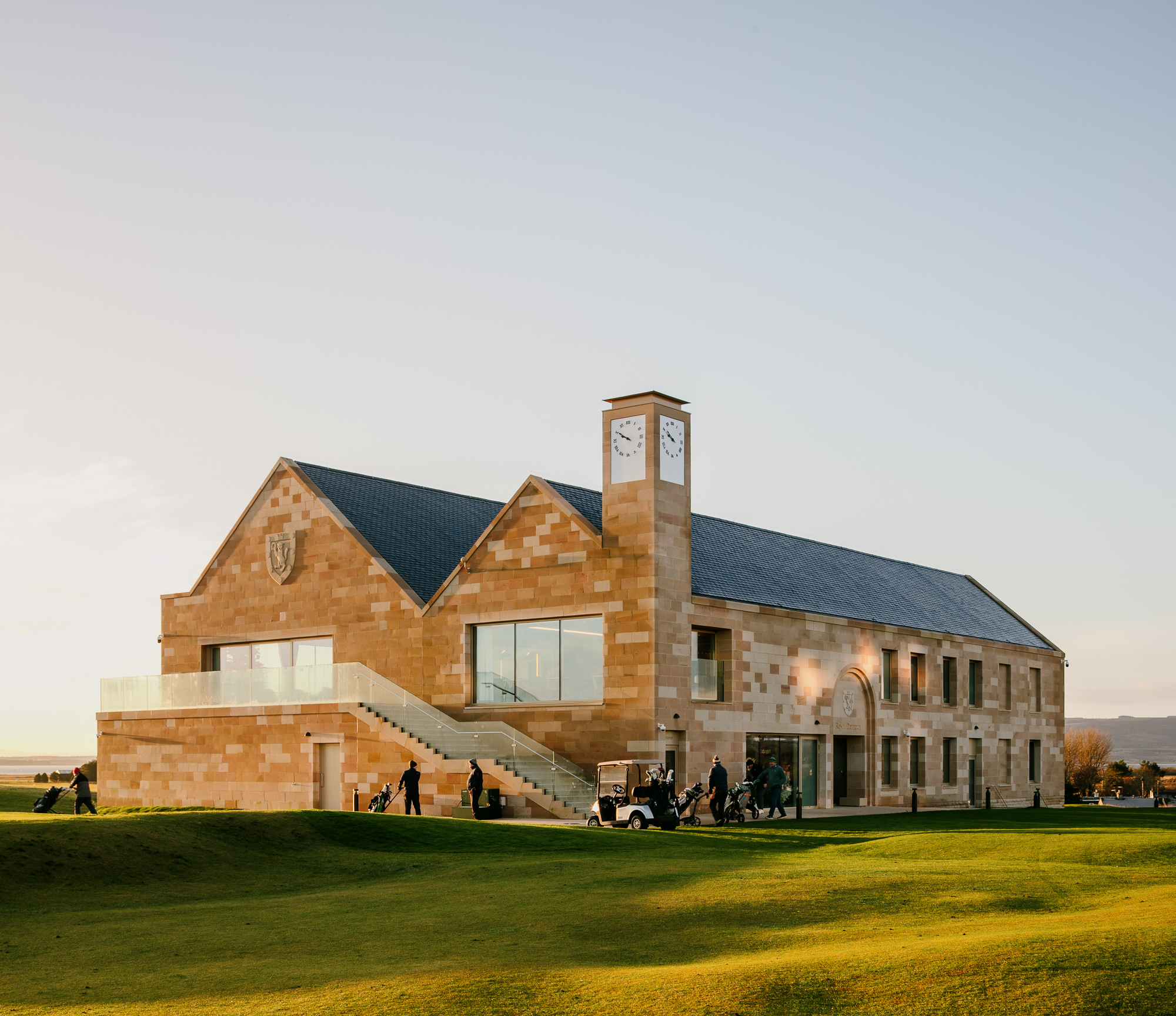
Keppie has completed a new £13.9 million clubhouse at Royal Dornoch Golf Club, a project that marks a significant moment in the evolution of both the club and the town. Positioned within a landscape where golf has been played for over 400 years, the building replaces earlier facilities with a structure designed to reflect the club’s international standing while remaining closely tied to its Highland context.
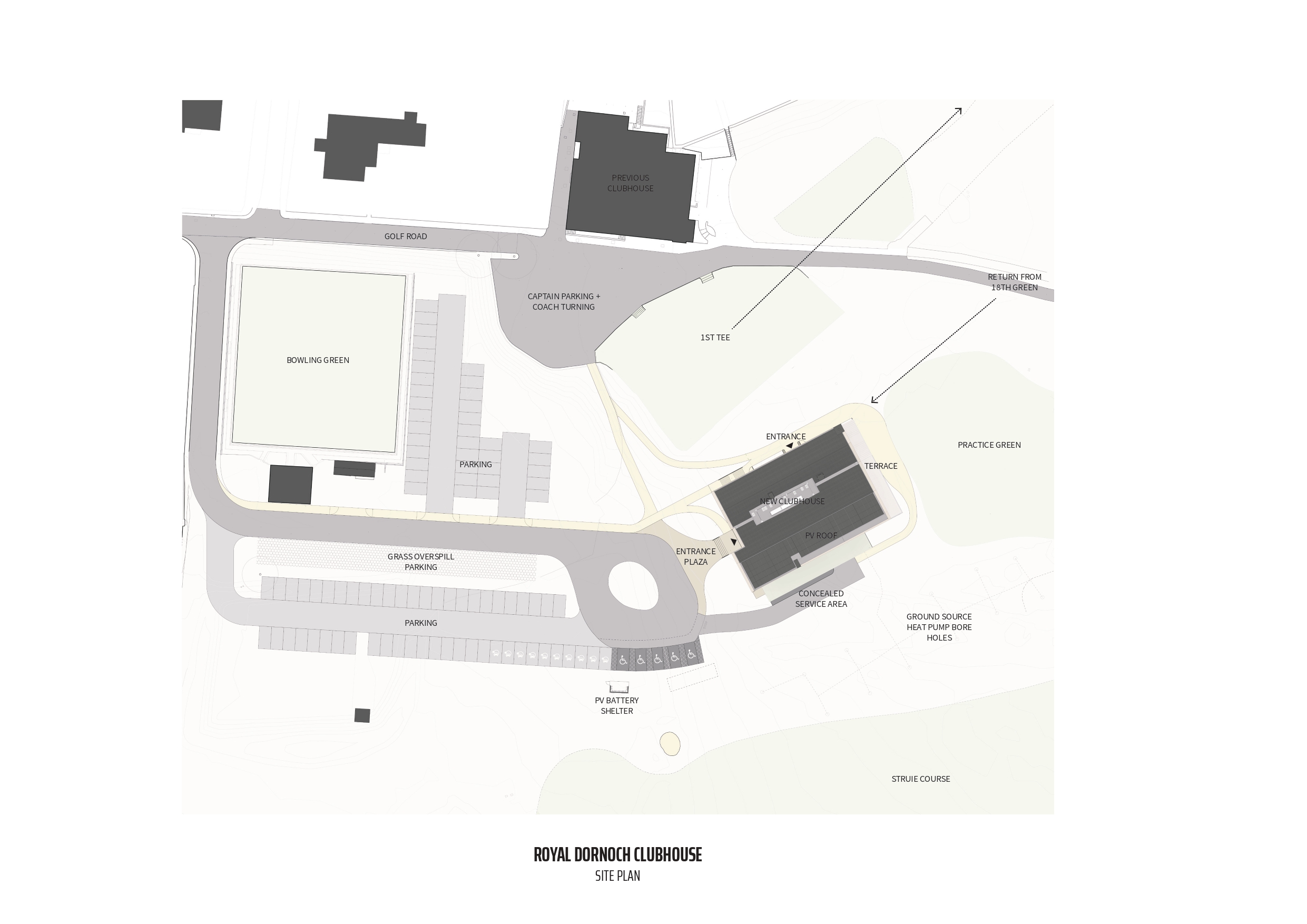
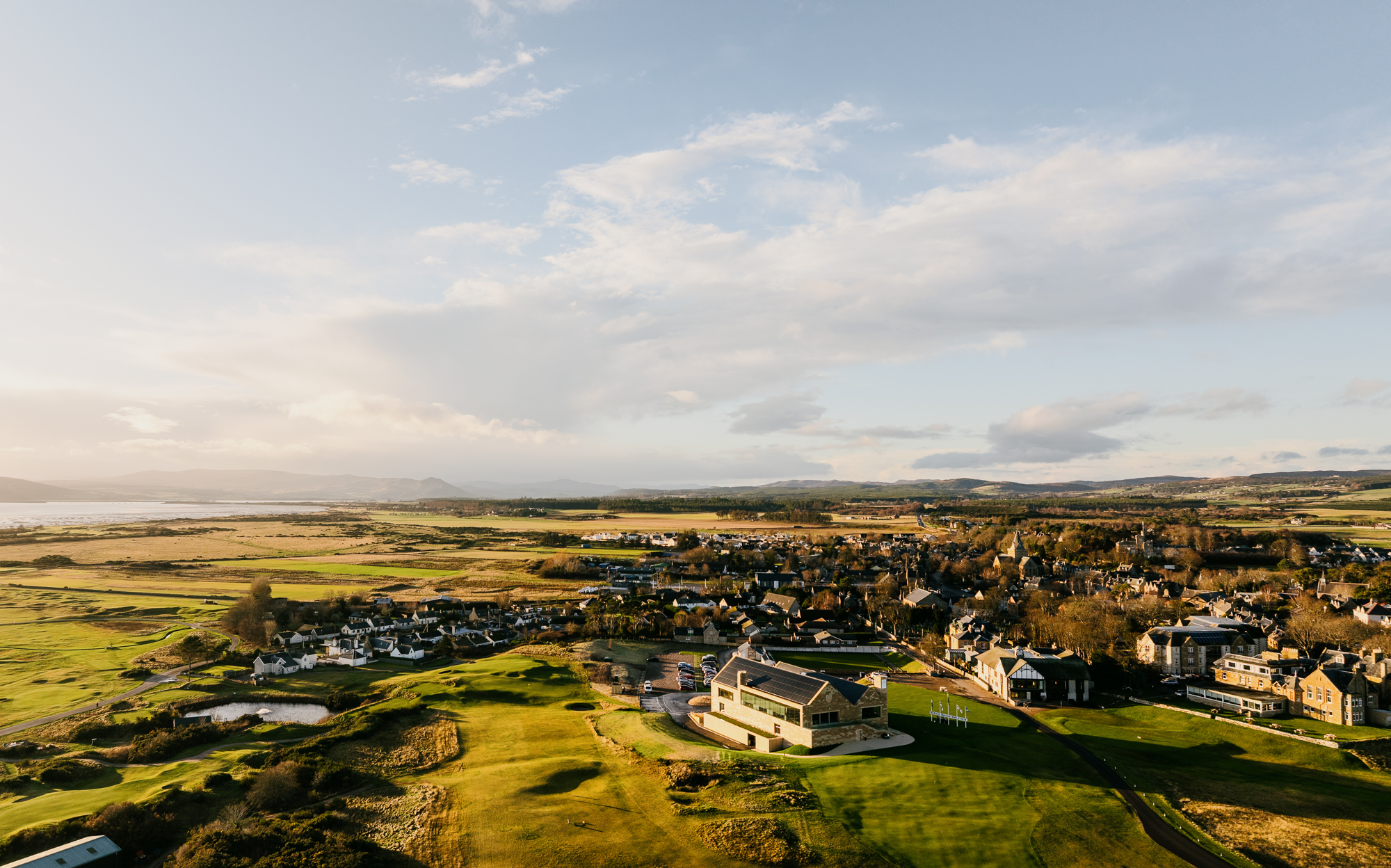
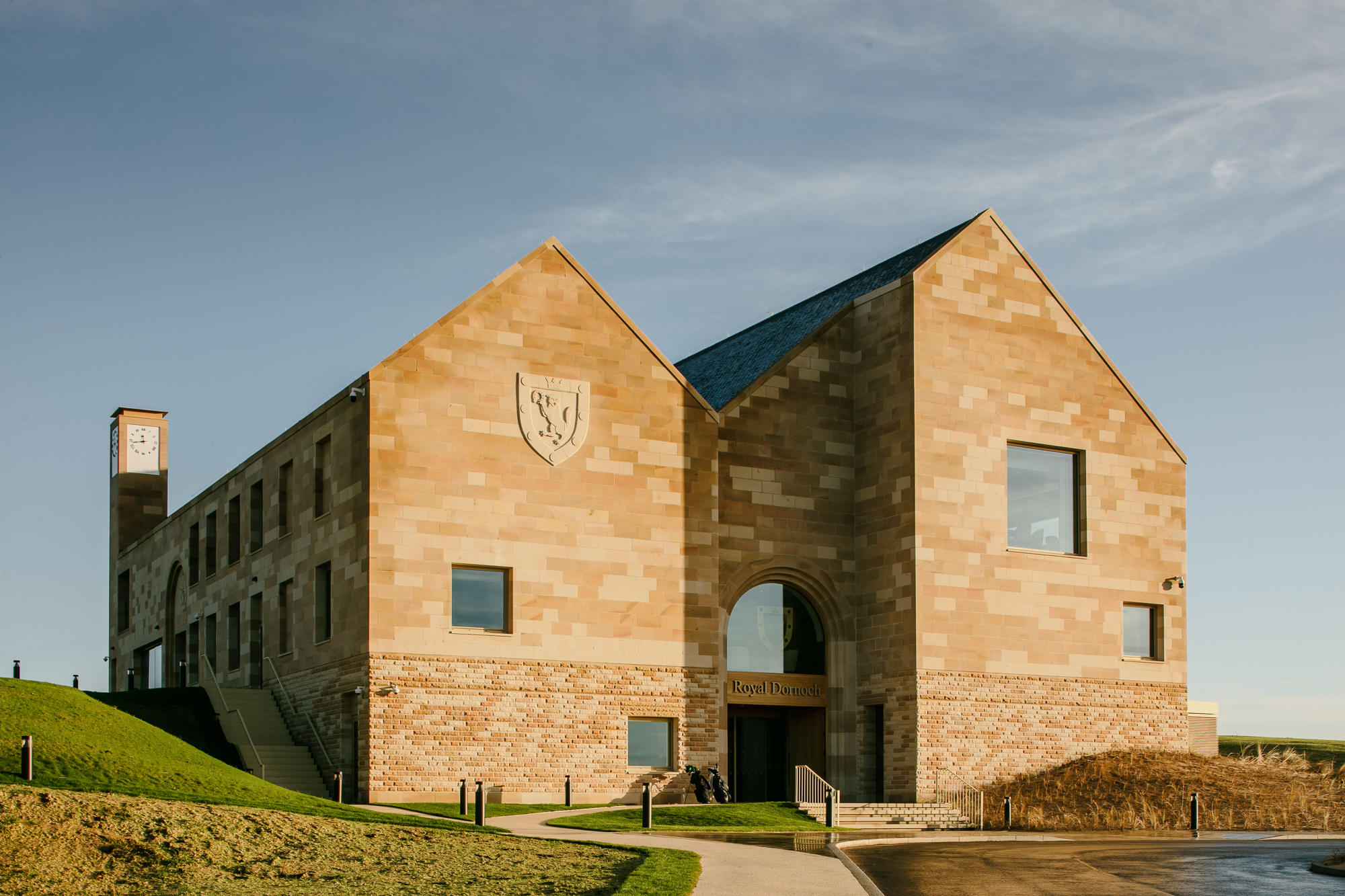
The site is defined by its relationship to the championship course, recently ranked among the best in the world, and by its proximity to the historic fabric of Dornoch itself. Against this backdrop, the architects have conceived a building that is in keeping with the surrounding townscape, using a palette of buff sandstone and slate that echoes the local vernacular. Elements such as deep-set windows and a sequence of stepped entrance arches draw on nearby landmarks, including Dornoch Castle and the town’s cathedral, translating familiar forms into a contemporary architectural language.
A corner clock tower ties the adjoining elevations together, acting both as a visual marker within the wider landscape and as a practical point of orientation for golfers approaching the final hole. From the 18th fairway, the building forms part of a broader panorama that includes the coastline and the town beyond, reinforcing its role as a civic as well as sporting presence.
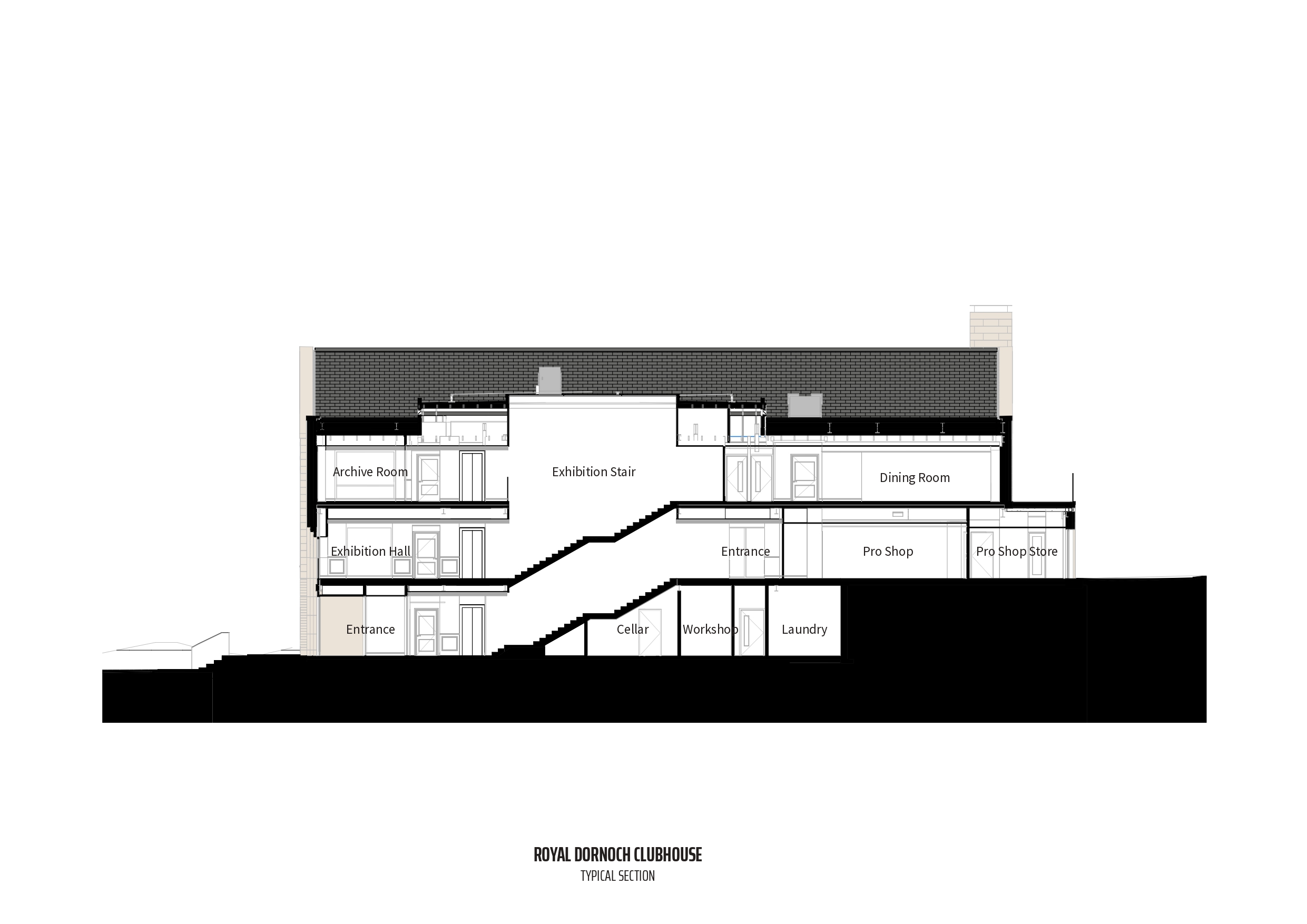
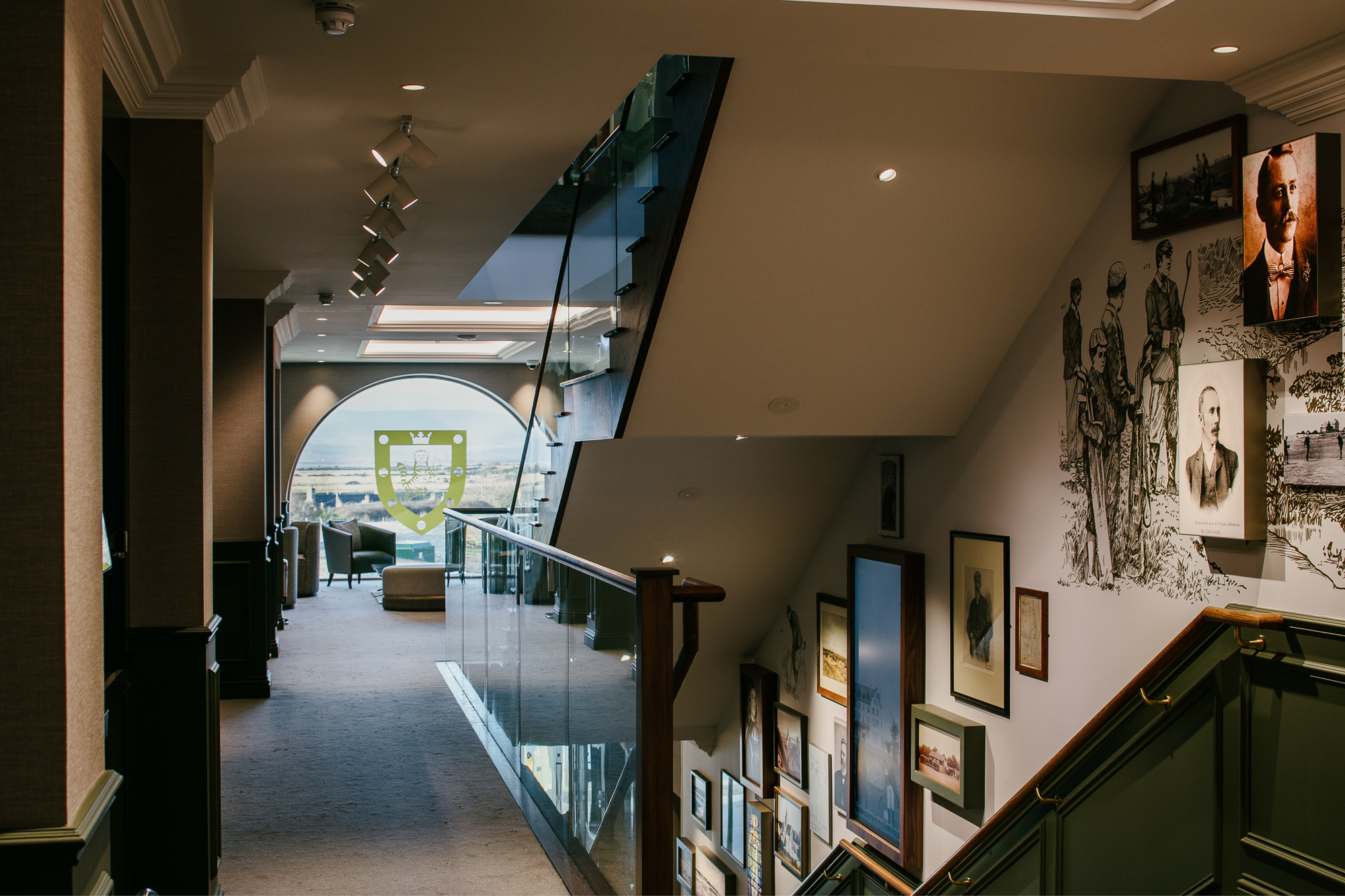
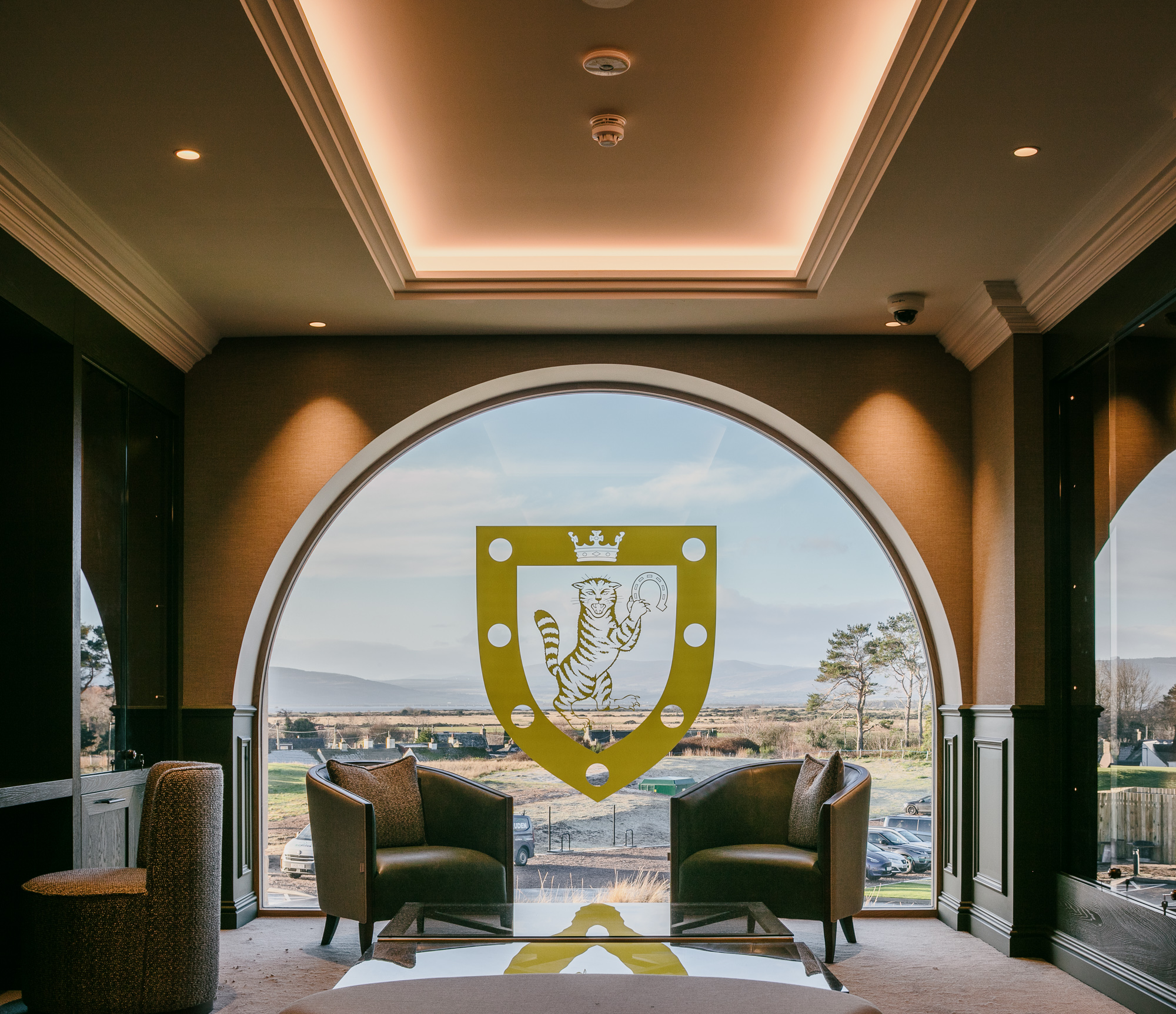
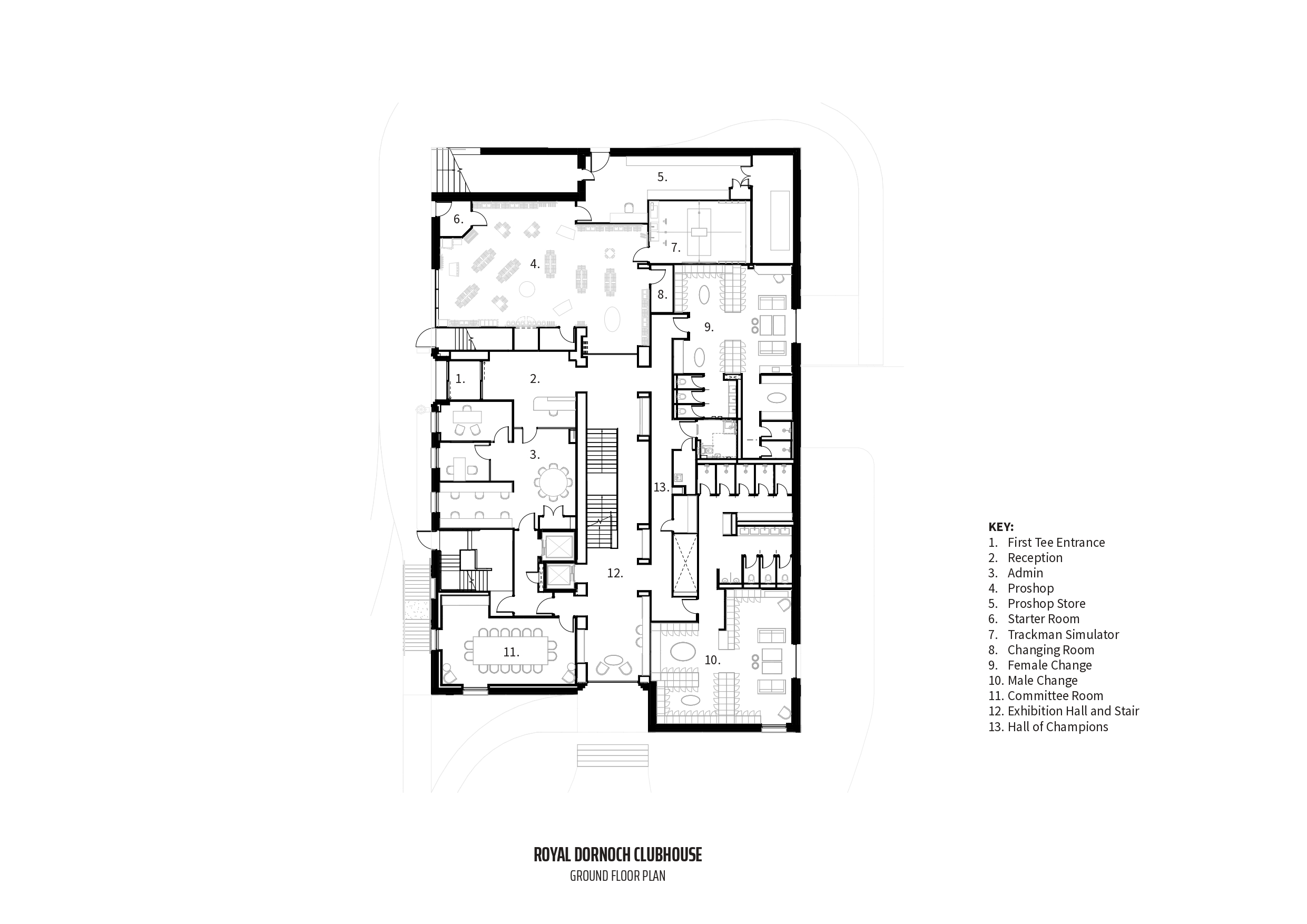
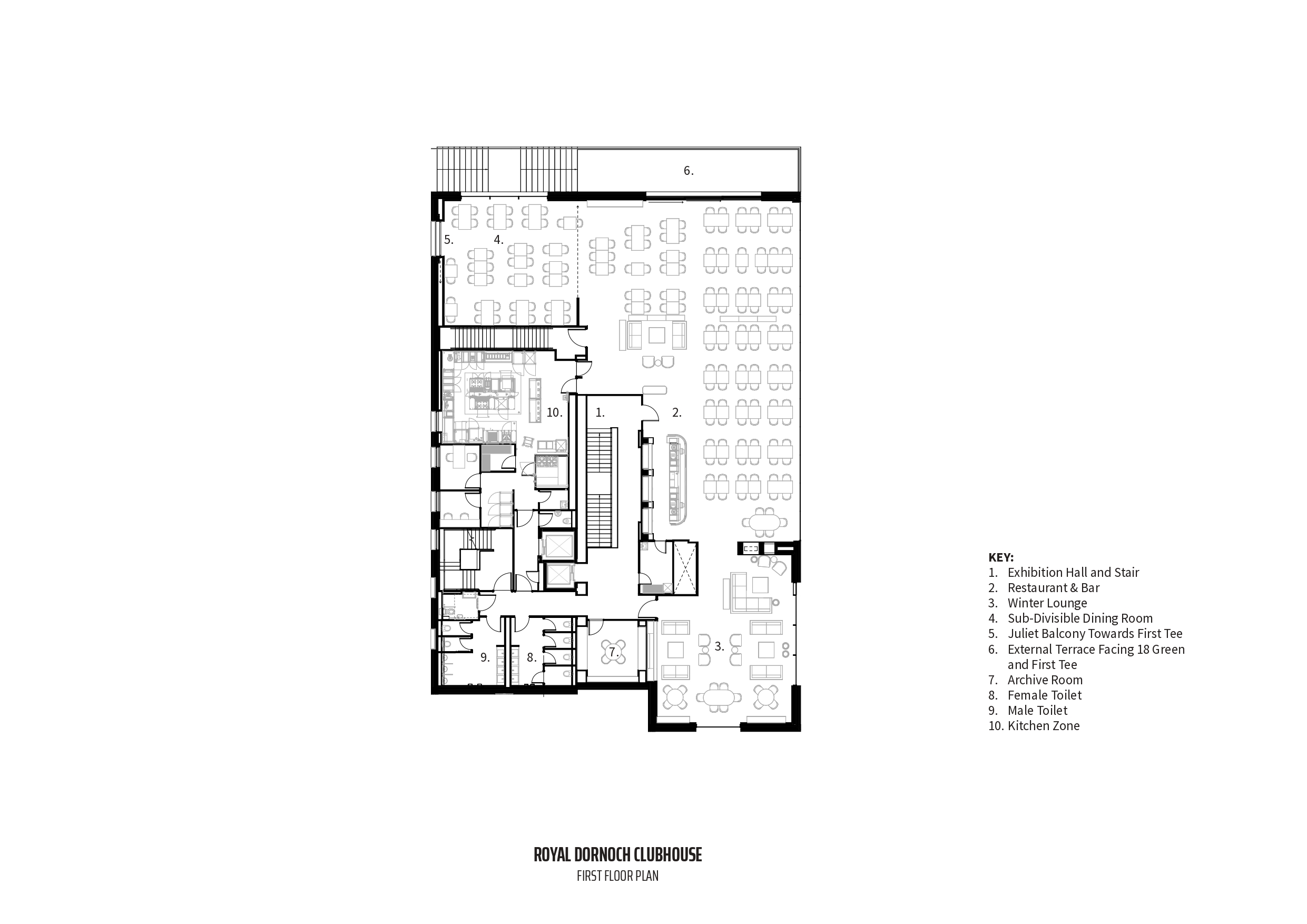
Internally, the clubhouse is organised as a vertical sequence of spaces arranged over three levels. A top-lit exhibition stair forms the centre of the plan, guiding visitors through the building while presenting elements of the club’s history along the way. At ground level, facilities such as the pro shop and changing areas provide a functional base, while the upper floors accommodate more social uses, including restaurant and bar spaces that open out to expansive views across the course and surrounding landscape.
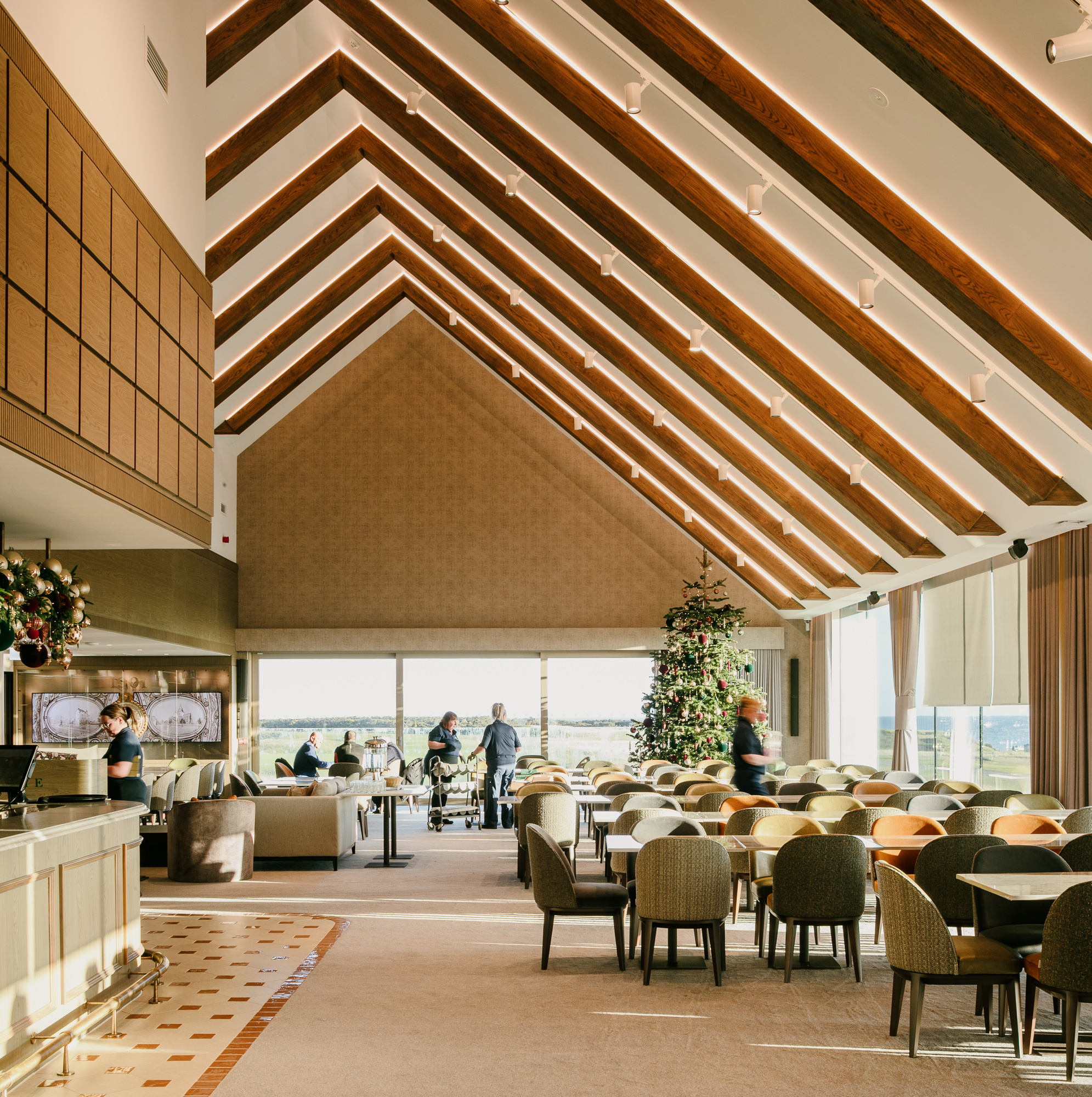
The building is structured around a set of guiding principles that informed both spatial organisation and user experience, including the sequencing of arrival, the choreography of movement through the building, and the careful framing of views. These ideas are expressed in a progression from more enclosed, service-led spaces at lower levels to lighter, more outward-looking rooms above, where glazing is used to connect interior and exterior.
Material selection and environmental strategy are closely aligned with the demands of the exposed Highland setting. The building envelope is highly insulated and airtight, while a south-facing photovoltaic array is integrated into the roof, doubling as its primary covering. This is supported by ground source heat pumps and battery storage, forming a system intended to balance energy performance with long-term resilience.
Construction and detailing have been approached with longevity in mind, reflecting the club’s brief to create a building that will endure for generations. The project also anticipates future international attention, with the club selected to host the Curtis Cup in 2028. In this context, the new clubhouse is positioned not only as an operational facility but as part of the wider identity of Royal Dornoch, supporting its role on the global stage while reinforcing its connection to local heritage.
Credits
Client
Royal Dornoch Golf Club
Architect
Keppie Design
Interior designer
Keppie Design
Engineer
Fairhurst
Clerk of works
Helica
Exhibition designer
Mather & Co
More pictures