Praksis Arkitekter’s transformation of a 30-year-old timber warehouse in Østbirk, Denmark, into a research and development hub for the VELUX Group demonstrates how daylight, material reuse and deep retrofit can deliver a flexible, low-carbon workplace.
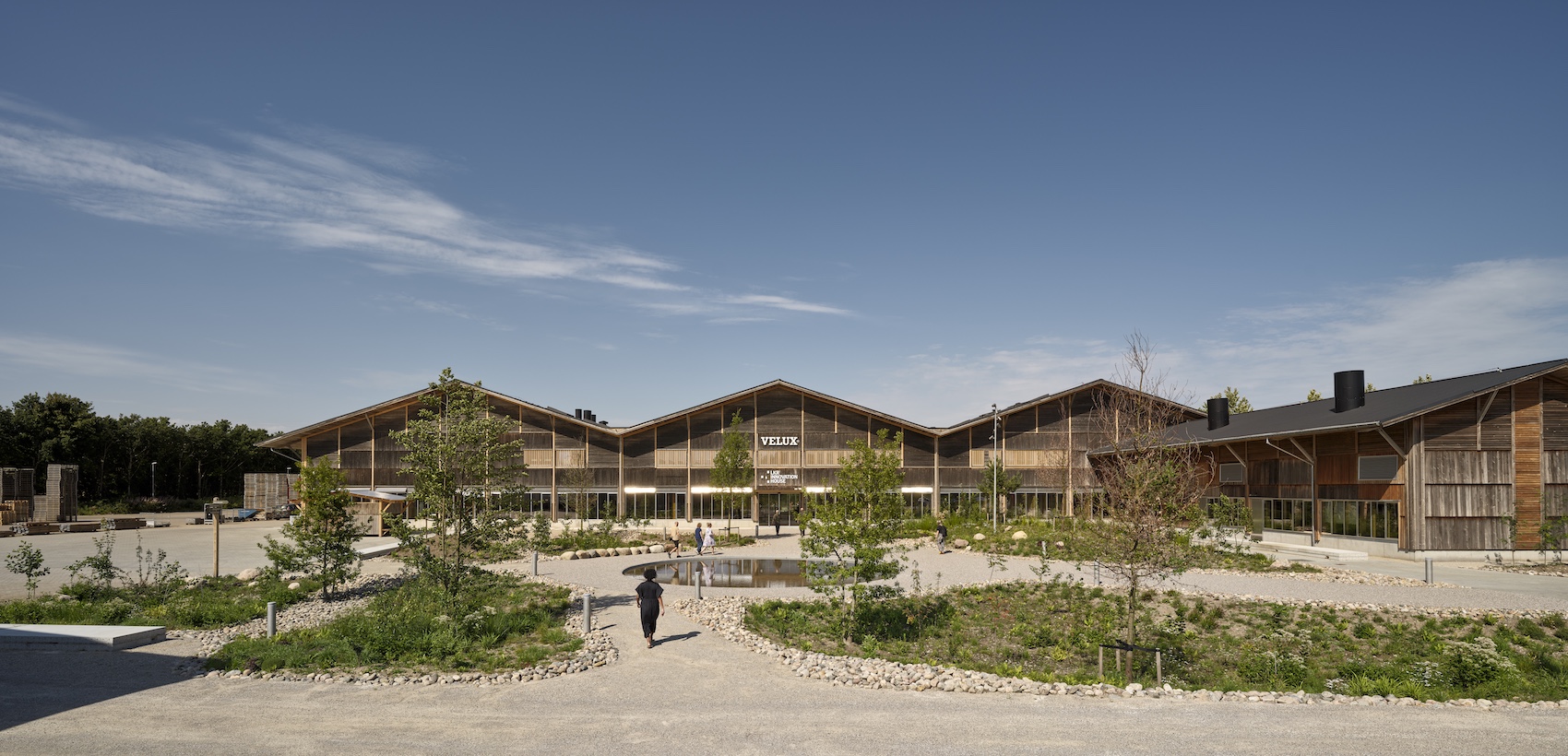
Located in Østbirk, Denmark, the VELUX LKR Innovation House is both a workplace and a prototype. Won in competition by Praksis Arkitekter, the 14,000-square-metre building brings together 500 employees in a single research and development hub, consolidating teams previously dispersed across multiple sites. Reflecting VELUX’s long-standing commitment to sustainability, the project transforms an existing warehouse into a contemporary workplace shaped by daylight, material reuse and environmental performance.
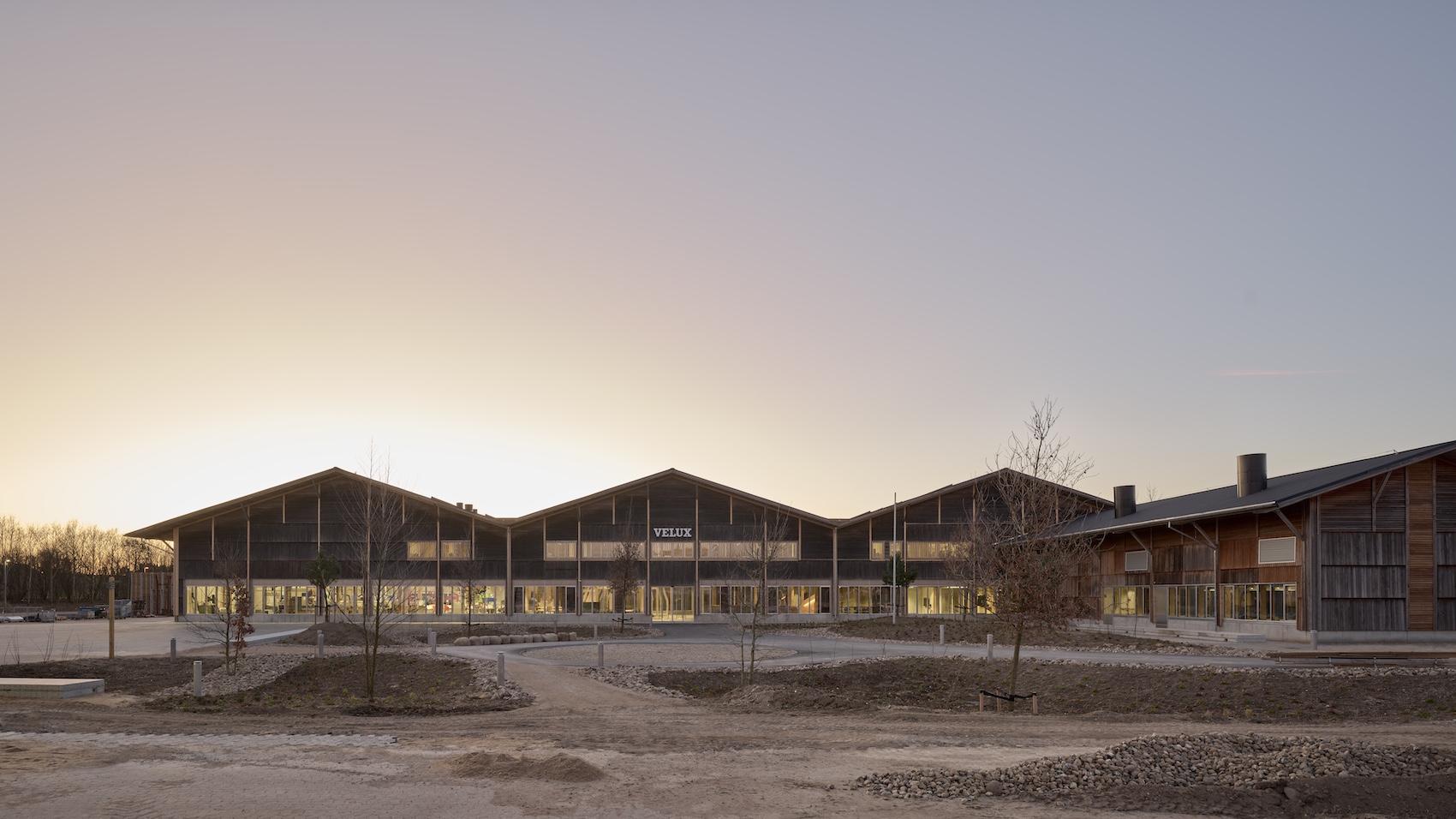
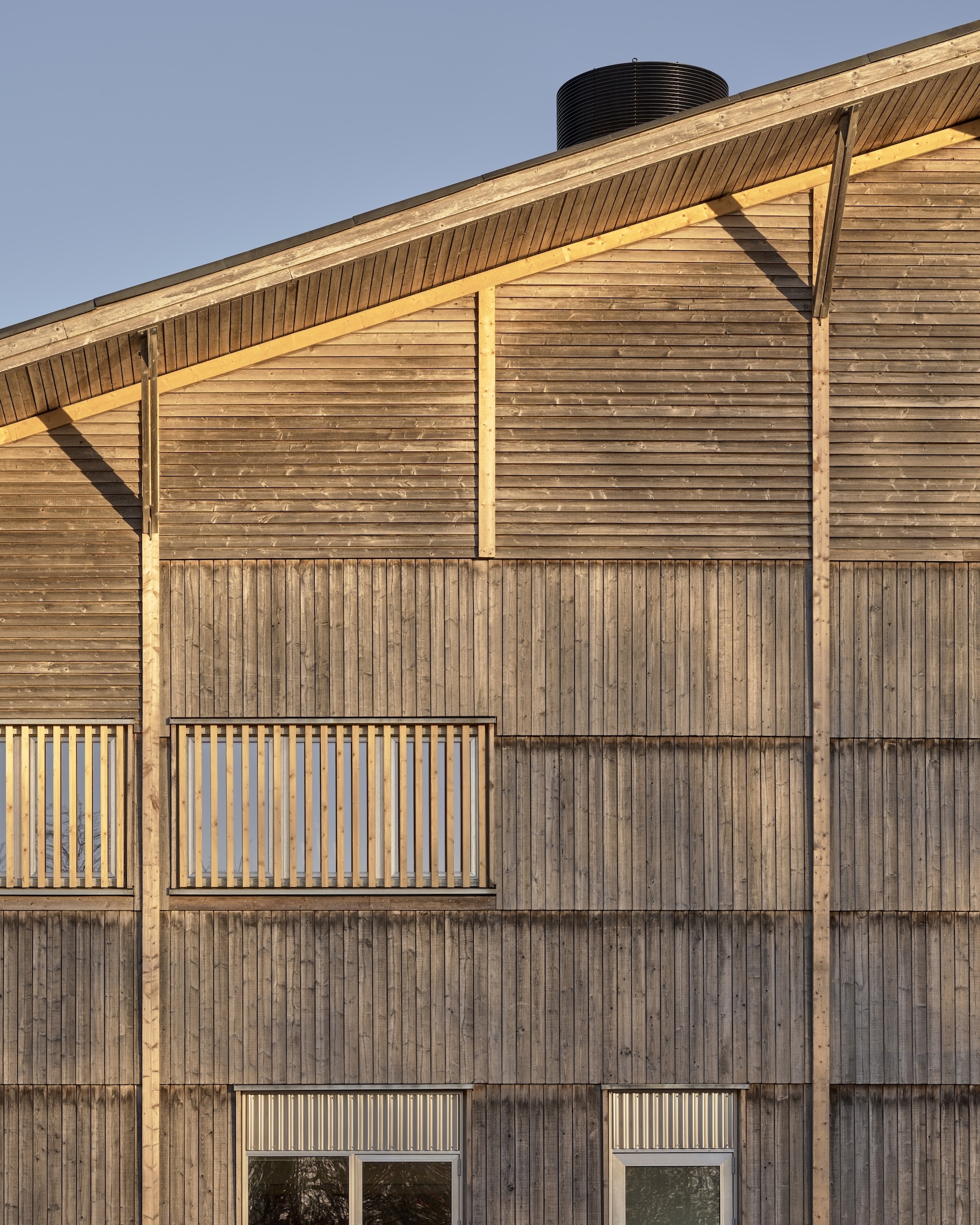
Commissioned by Lars Kann-Rasmussen (son of the company’s founder), the warehouse, was constructed in 1995 and conceived as a test bed for the use of primary untreated timber construction elements. Built almost entirely from wood sourced from Danish and Swedish forests, it explored material behaviour, performance and durability. 30 years on, the experiment had proved successful with the timber structure remaining in good condition and the building itself considered a material and cultural asset for the company. This legacy formed a key component of the brief, as project architect Mette Tony explains: “Our overarching goal was to preserve as much of the building as possible and to carry it forward into the future.”
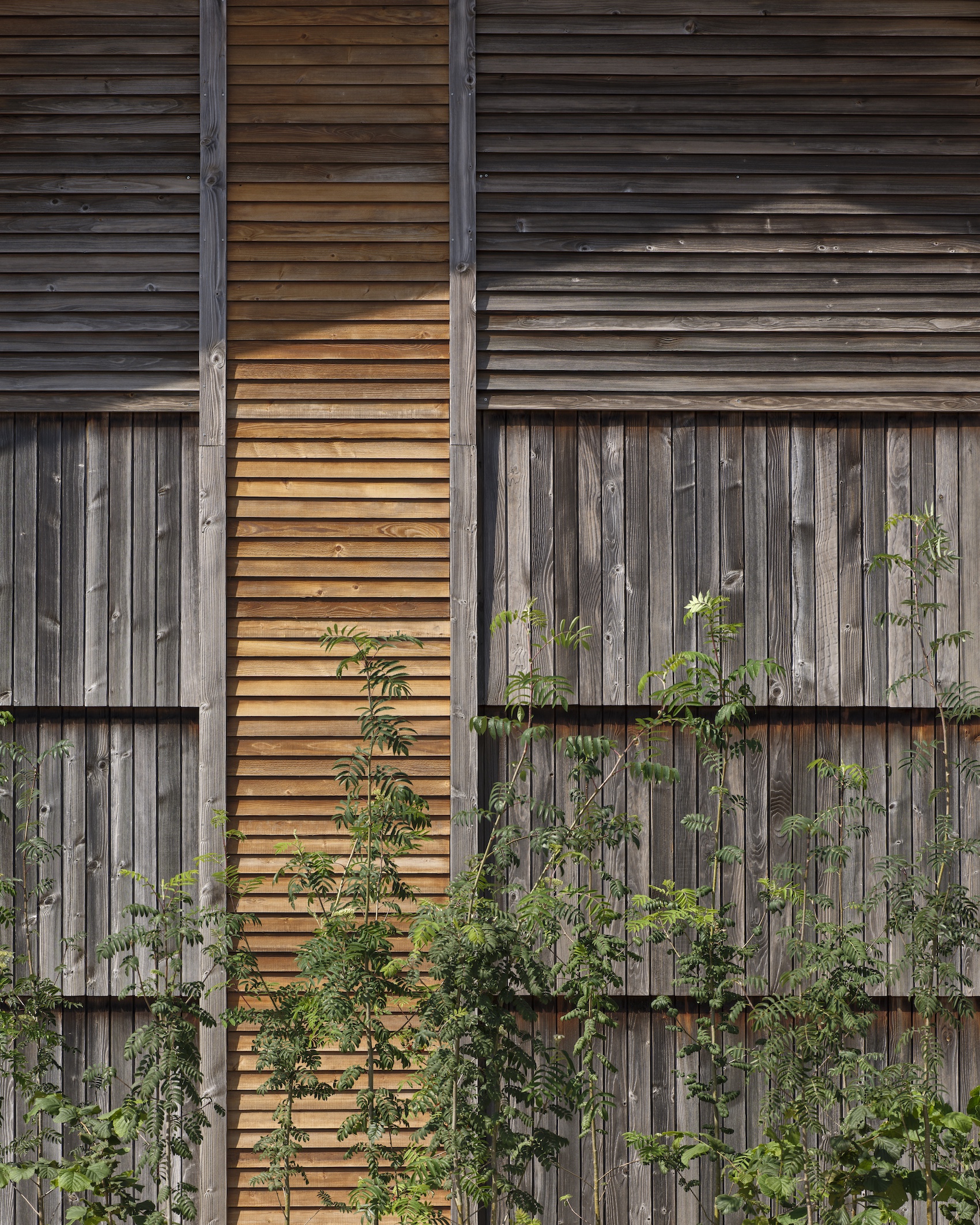
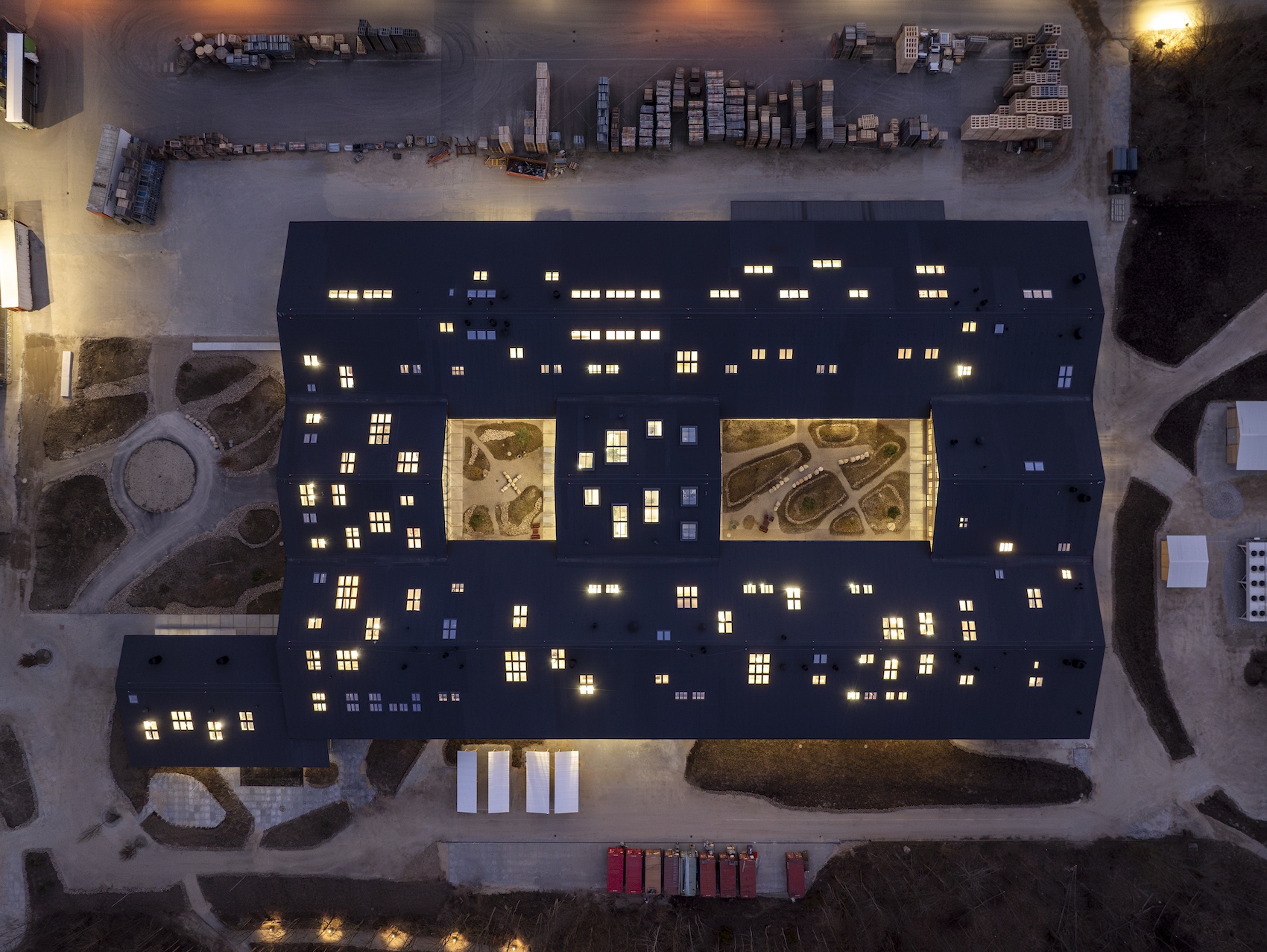
Sited adjacent to a 70,000m² publicly-accessible park known as Nature Østbirk, the warehouse had previously been surrounded by parking and industrial infrastructure. The redesign reverses this condition, pushing cars away and drawing nature closer via perimeter planting and landscaping, as well as a pair of generous courtyard ‘gardens’ sunk into the deep plan. The latter addressed one of the key design challenges: how to get daylight and ventilation into a largely windowless warehouse measuring 120×75 metres. “By cutting into the building and incorporating the two courtyards, we were able to bring nature from the outside in and invite everyone to be surrounded by it under the sky,” says Tony.
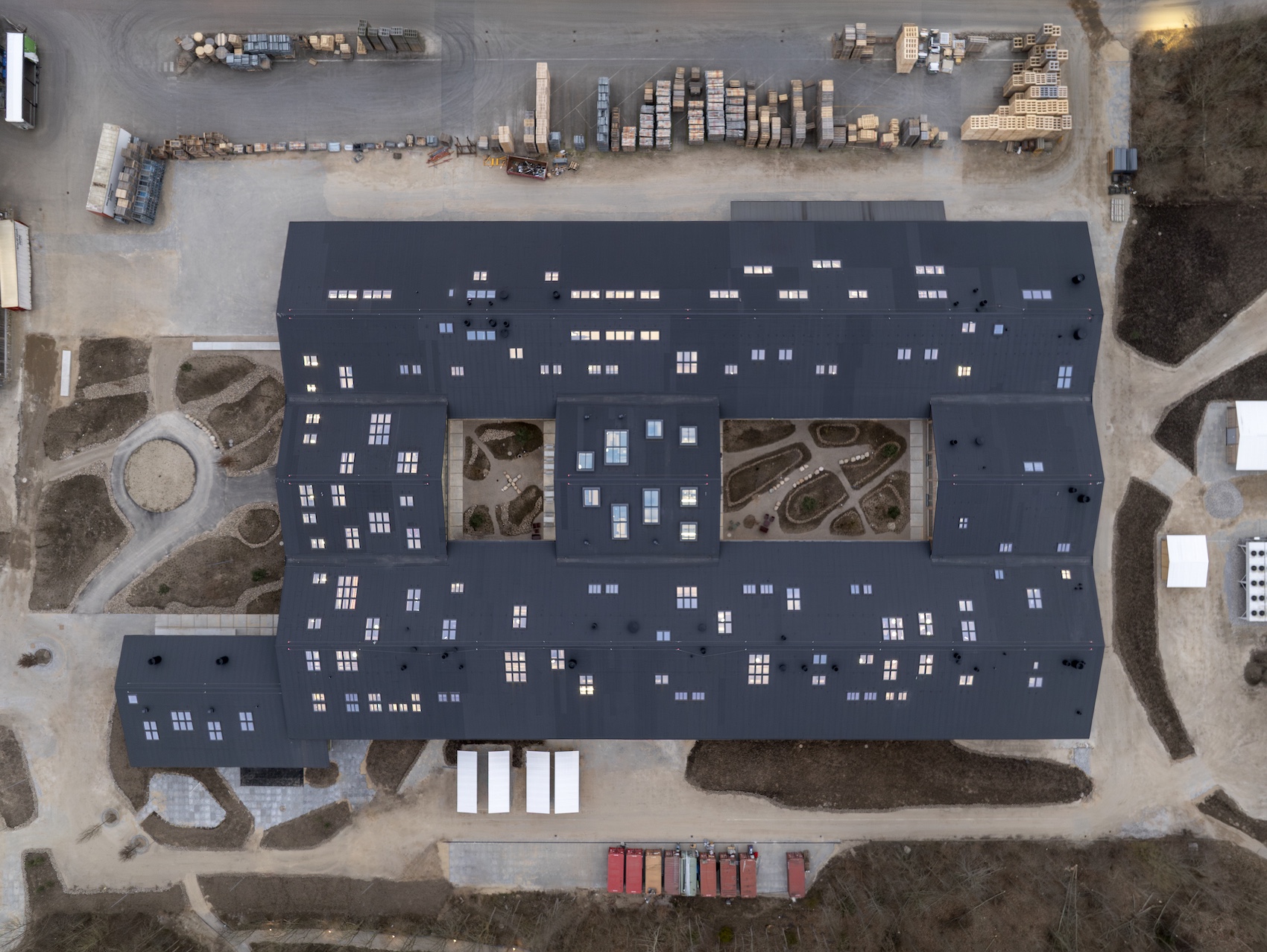
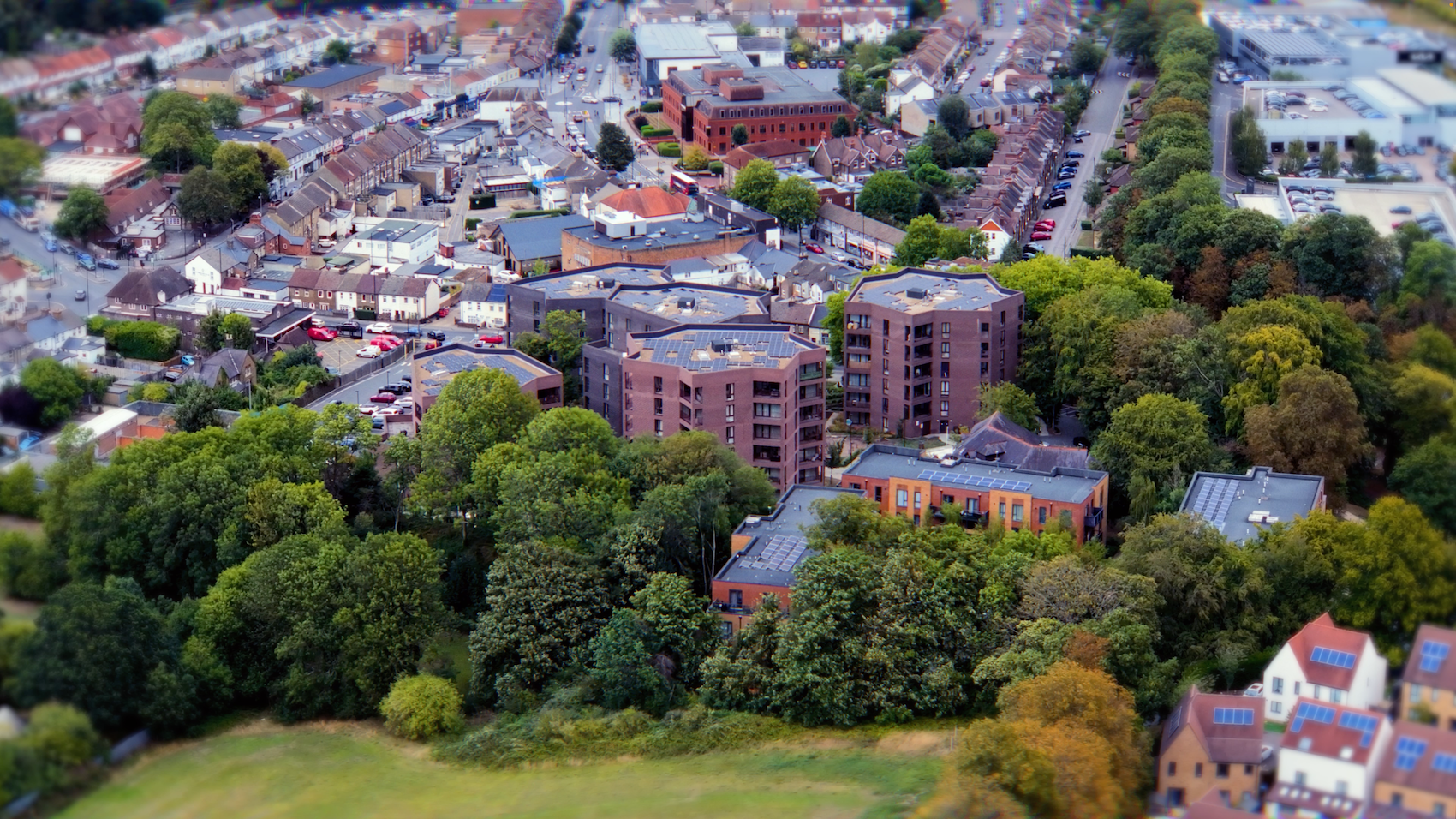
Aerial view showing internal courtyards and roof windows.
The architect’s other key move was create spatial diversity within the large, homogeneous volume, while also retaining and integrating the existing structure. “We are always looking for the coexistence of old and new to bring out the best of both,” comments Tony. This approach is reflected in the decision not to highlight the distinction between retained and new elements. Instead, the design seeks to create a unified architectural language in which interventions are absorbed into the existing fabric.
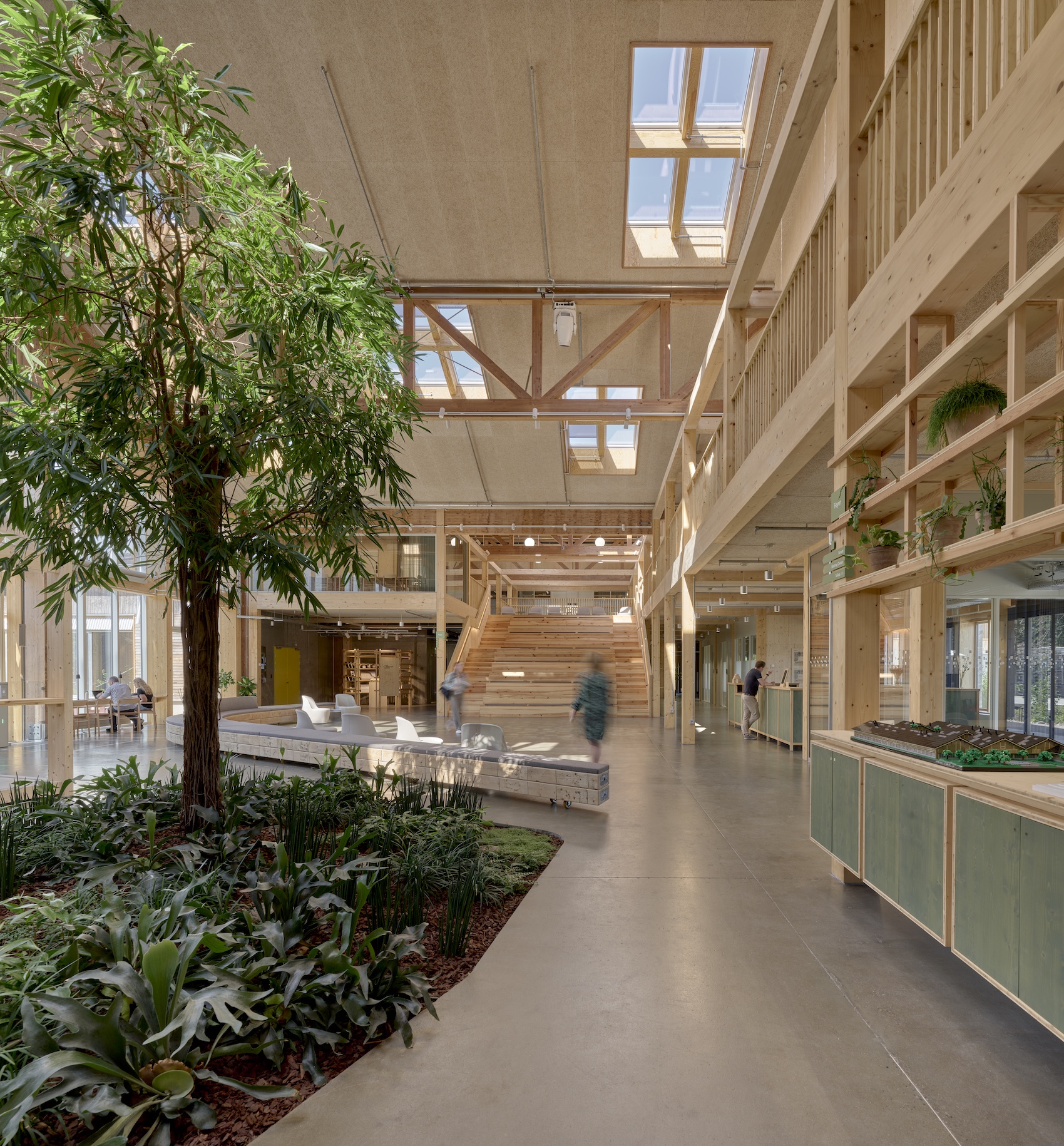
The plan is organised around a sequence of interconnected spaces designed to support both individual and collaborative work, as well as encourage movement, interaction and visual connection across different departments. At the eastern entrance, a double-height foyer acts as the primary point of arrival. This space functions as a reception, exhibition area and informal meeting zone, providing immediate visual connections across the building.
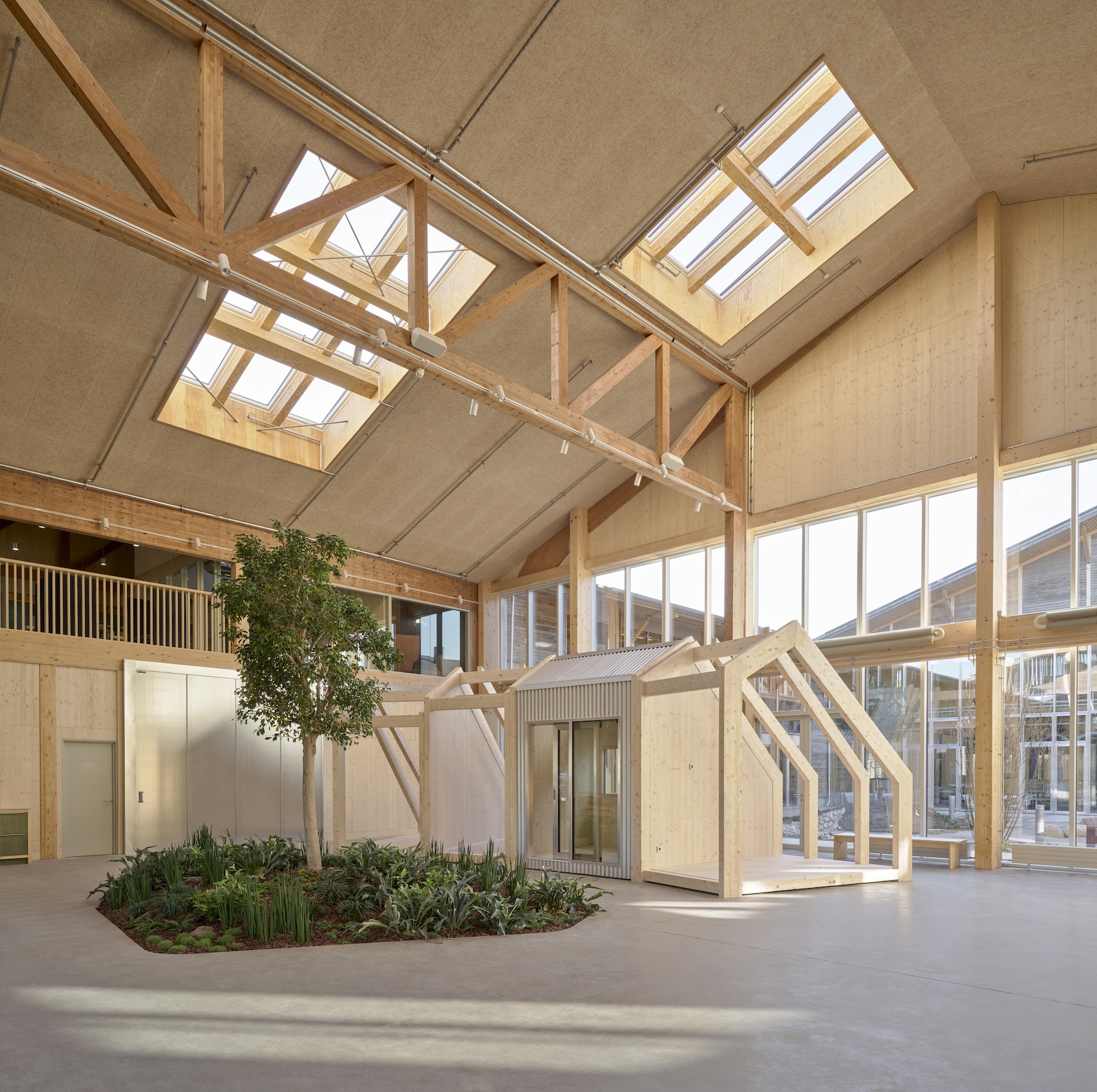
The double-height reception space opens out onto a landscaped courtyard garden.
From here, the layout unfolds into distinct but linked zones: workshops and fabrication areas to the south; office spaces to the north; research facilities in the west; and a central cafeteria acting as the social heart. The organisation is intended to reflect both functional requirements and degrees of accessibility. Public-facing and collaborative spaces are located closer to the entrance, while more confidential research areas are positioned deeper within the plan. This is reinforced through spatial transitions rather than rigid boundaries. Gardens and shared areas mediate between zones, allowing movement and interaction while maintaining necessary levels of privacy.
The office areas are organised into ‘neighbourhoods’, each associated with a particular team or function. Within these, flexible workstations, meeting rooms and informal spaces allow users to choose where and how they work. There are no fixed desks or private offices, including for management. Instead, a shared desk system operates at around 65 per cent occupancy, encouraging mobility and interaction. This flexibility is supported by a variety of spatial types, including open desk areas, small meeting rooms, mini-workshops within office zones, and large workshops and laboratories. The intention is to create opportunities for chance encounters and knowledge exchange. As Tony puts it the building is designed so that “you meet each other and join forces in order to innovate.”
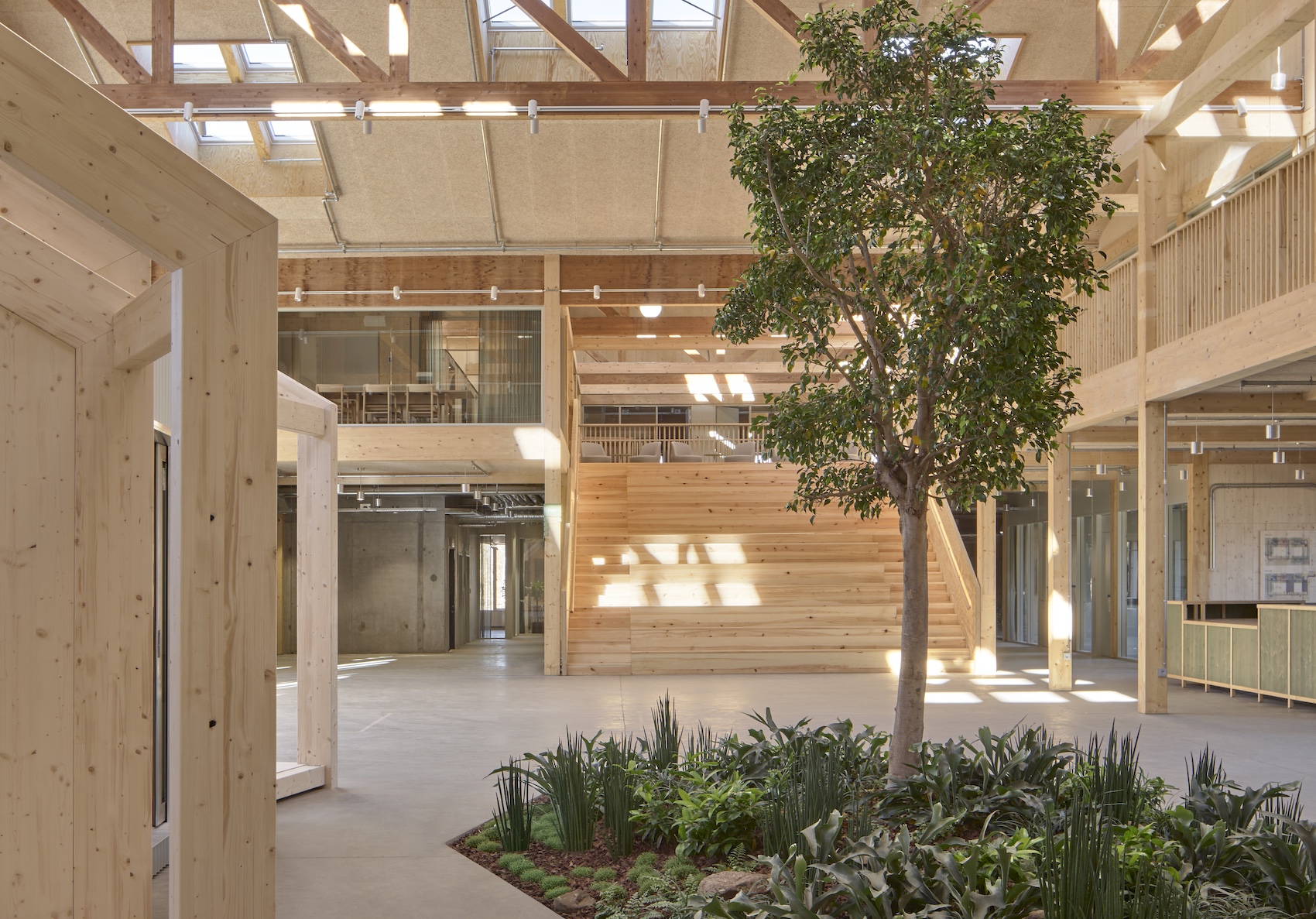
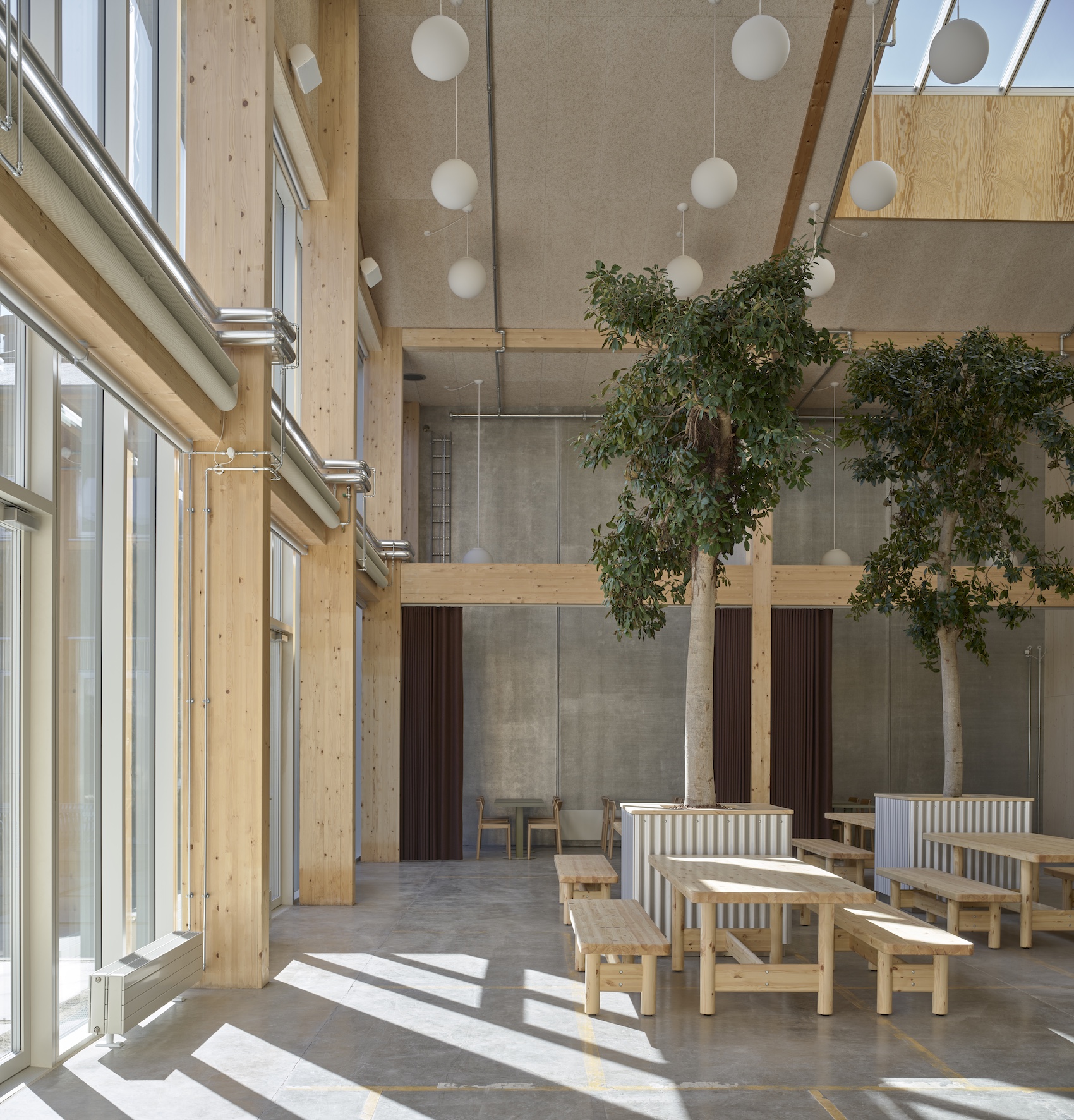
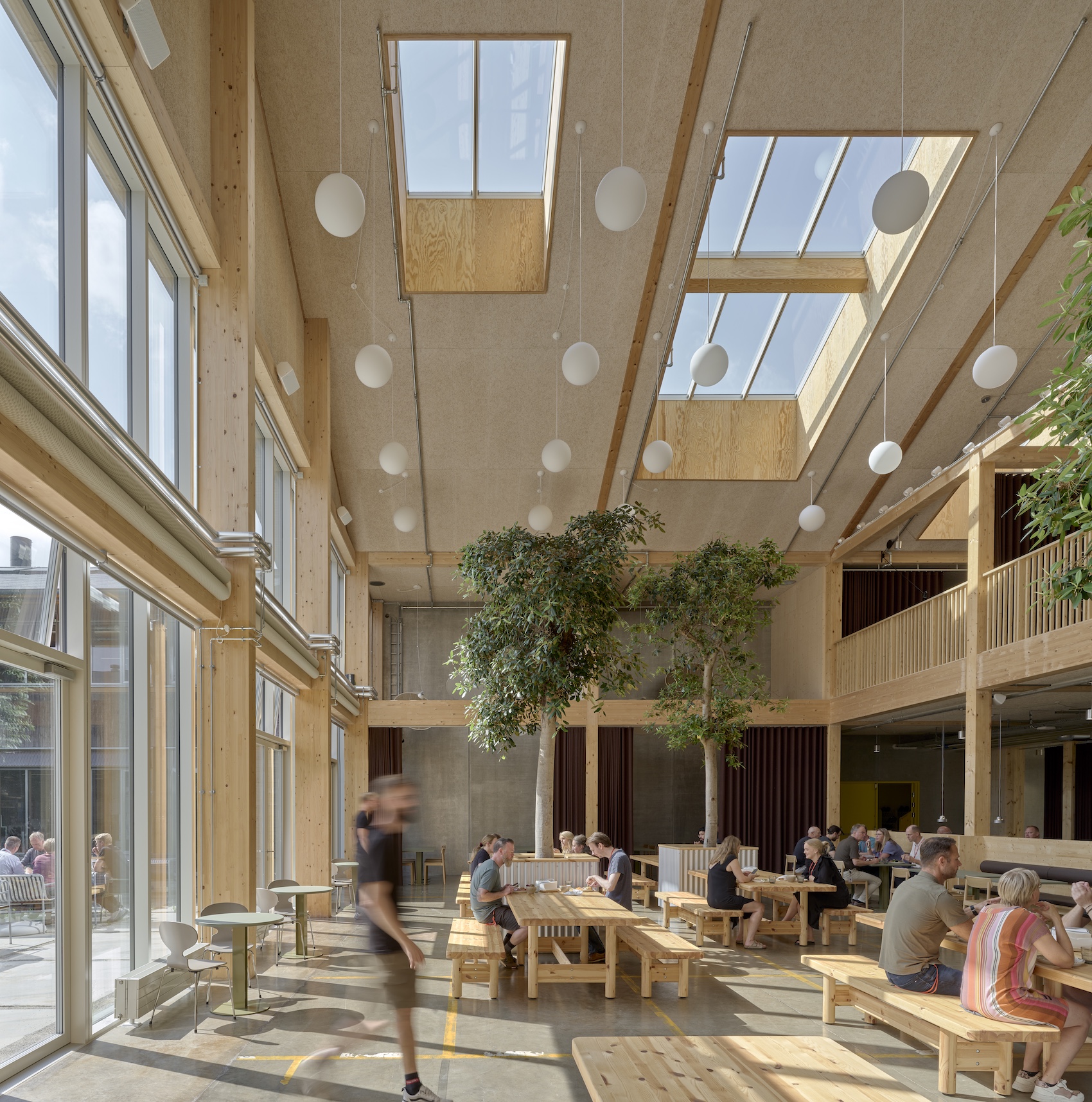
The courtyards play a key role organisational role, with workspaces and shared areas, such as the foyer and cafeteria arranged along new internal facades. While they differ in scale and character, both courtyards contribute to a network of interior landscapes that structure movement and interaction. They also contribute to the building’s environmental strategy by promoting natural ventilation, passive cooling, and of course daylighting. The windows lining the courtyards are protected from solar gain by deep roof overhangs.
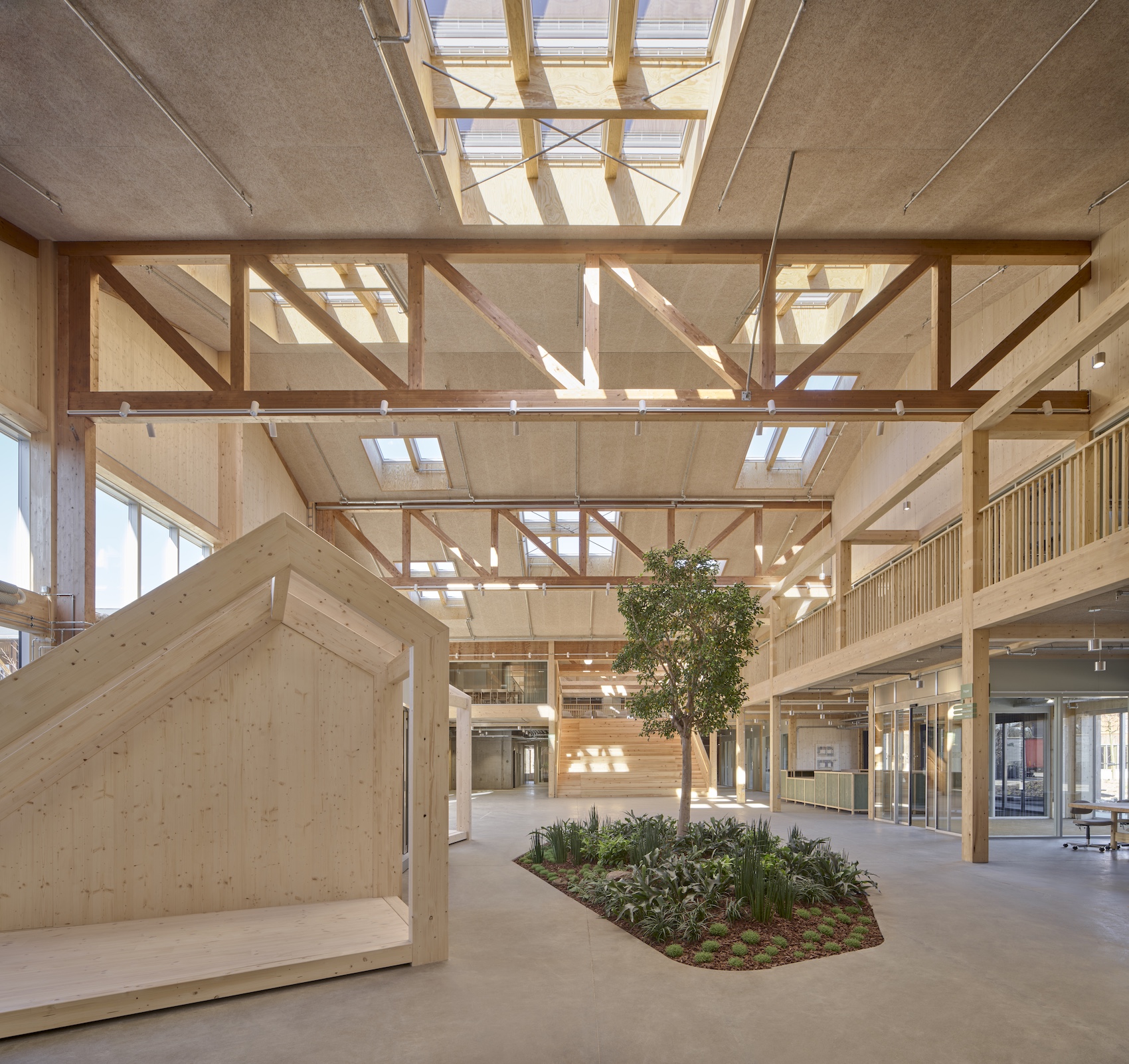
Complementing the courtyards is an extensive rooflight strategy. The substantial fifth elevation is treated as a ‘landscape of VELUX products’, with 387 electrically-operated roof windows and 26 modular skylights ensuring daylight across the full depth of the building. Triple-glazing is used throughout in combination with internal blinds for the skylights. The windows are linked to the buildings automated natural ventilation system, enabling them to respond to changing daily climactic conditions.
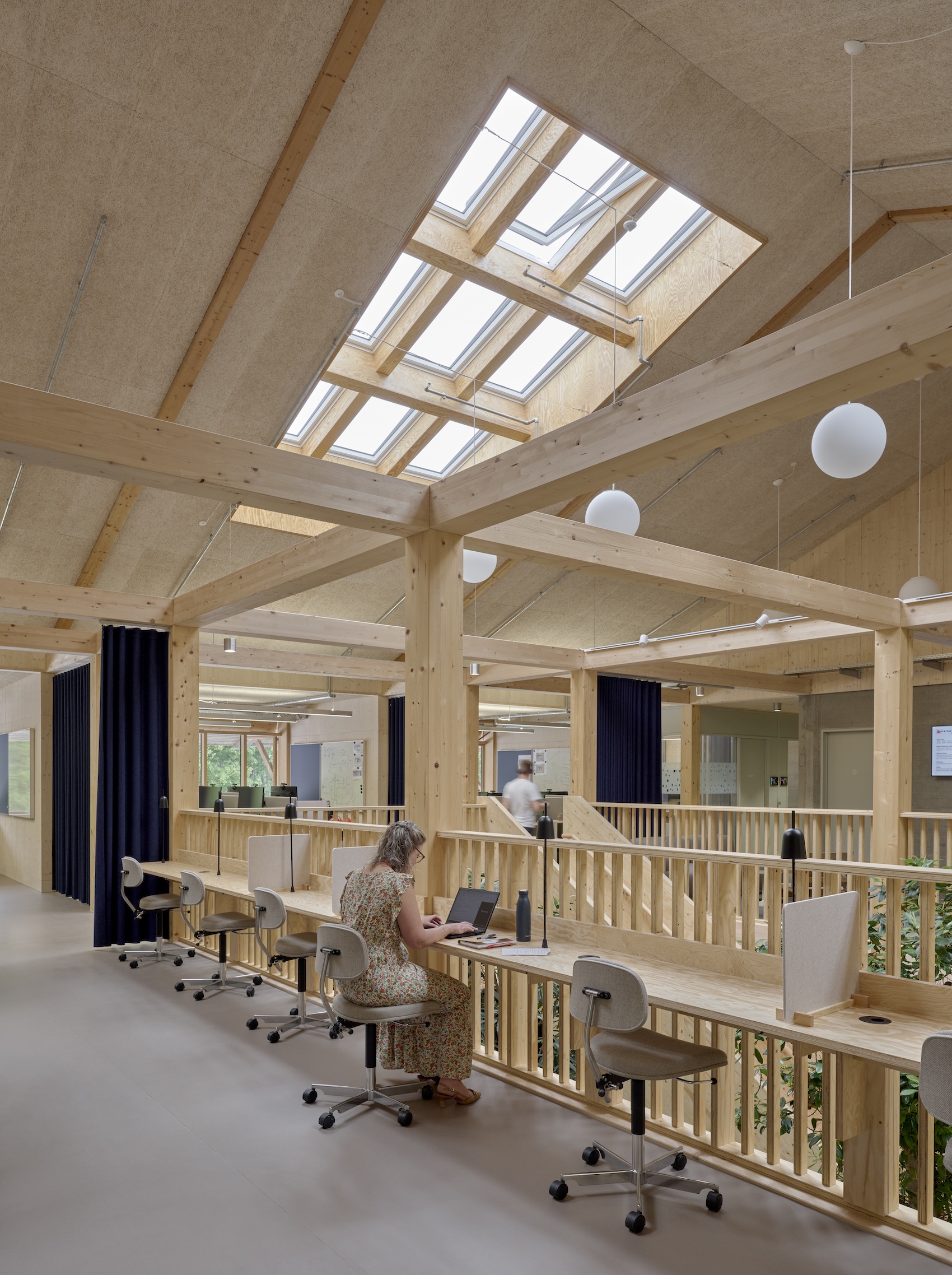
Left: A shared desk system encourages mobility and interaction.
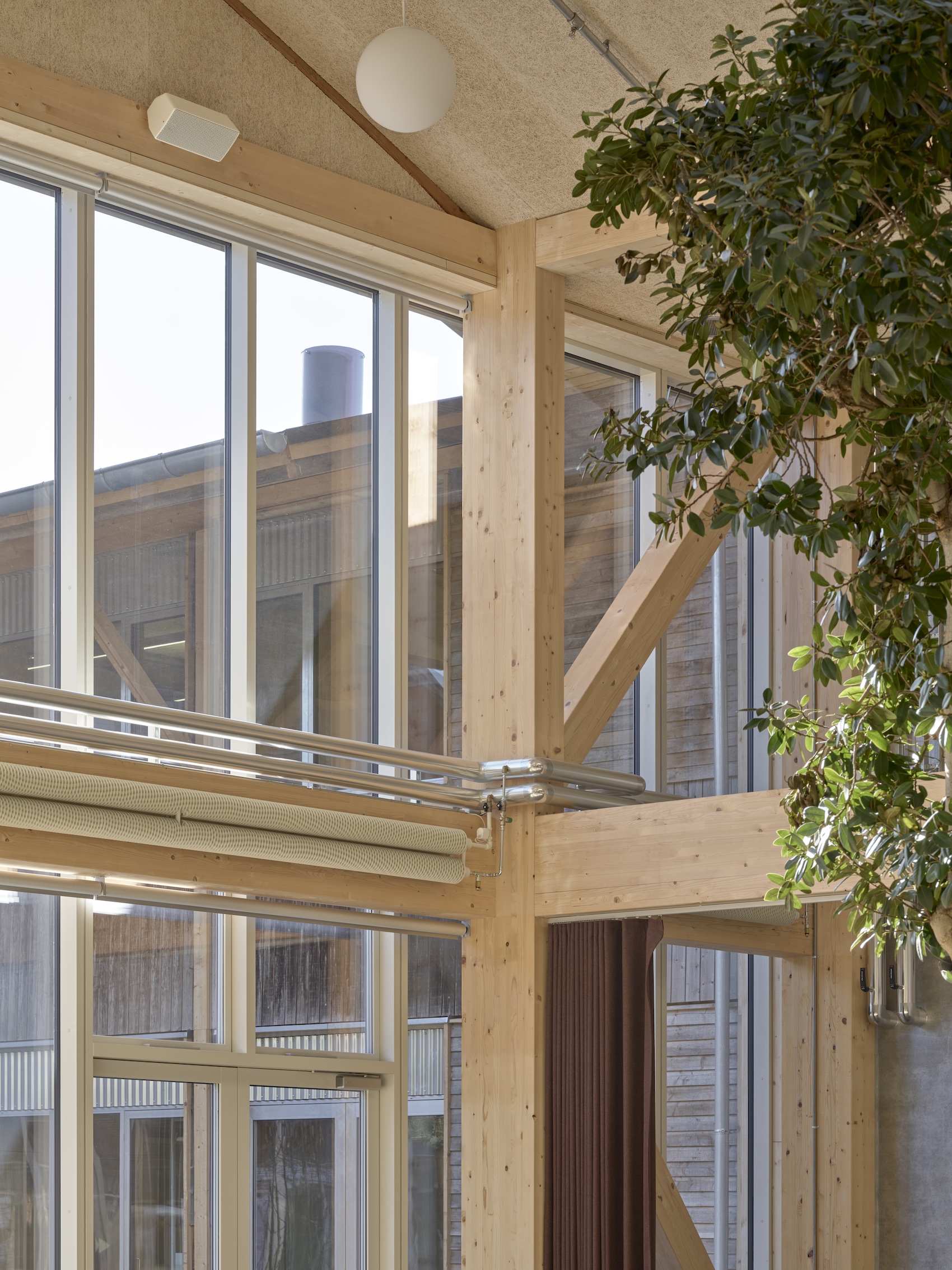
Right: New structural elements are designed to complement the existing timber frame.
One of the project’s most defining features is its reuse of existing construction materials. More than 55 per cent of the materials that would have been required for a new building were saved through retention and repurposing. Key elements that were retained include the primary timber structure, concrete floor slab, roof structure, and internal concrete walls. Where materials were removed, they were reused within the project or elsewhere on site. Timber elements, for example, were repurposed for insulation, façades and furniture, while concrete components were reused as paving and landscaping features.
New structural elements are designed to complement the existing timber frame. Additional loads are carried by new timber structures, ensuring that the original building is not overstressed. The new interventions are conceived as a continuous system rather than discrete additions, and according to Tate, represent “one big wooden structure” integrated throughout the building. This strategy is also designed to support flexibility and long-term adaptability, with spaces able to be reconfigured over time without compromising the overall coherence of the building.
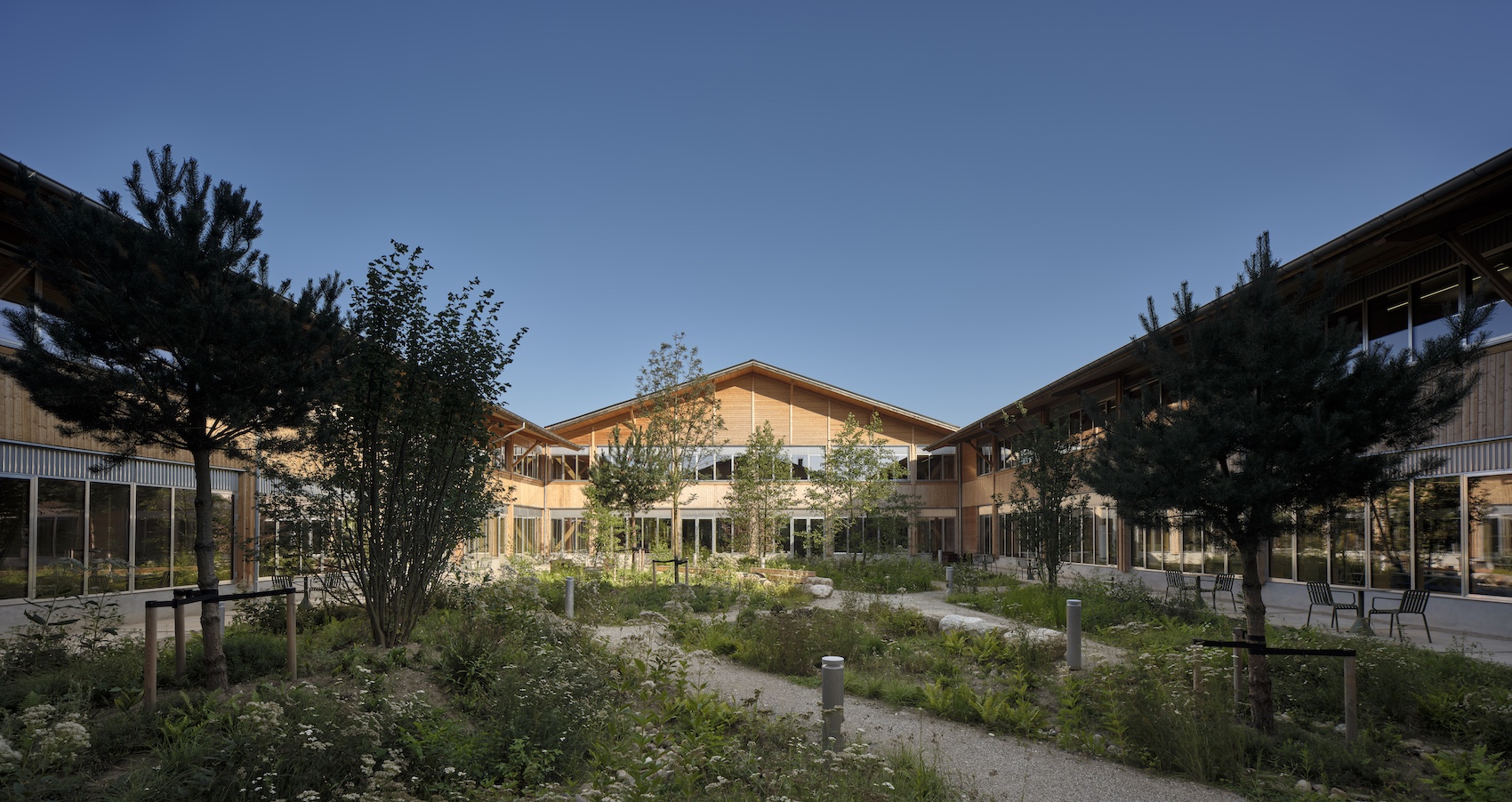
The courtyards play a key role organisational role with workspaces and shared areas, such as the foyer and cafeteria, arranged along new internal facades.
Natural ventilation forms a key component of the environmental strategy, supported by an automated system of opening windows and rooflights. Air enters through façade openings and exits through the roof via stack effect, reducing the need for mechanical cooling. Mechanical systems are used selectively in areas where natural ventilation is insufficient, such as the prototype manufacturing and testing areas.
Thermal comfort is based on an adaptive comfort model, which allows for seasonal variation and user interaction. The building achieves a CO2 footprint of 4.6 kg CO2e/m²/year, significantly below current and proposed Danish regulatory limits. The combination of courtyards and rooflights ensures that all workspaces have access to natural light, reducing the reliance on artificial lighting and supporting occupant wellbeing.
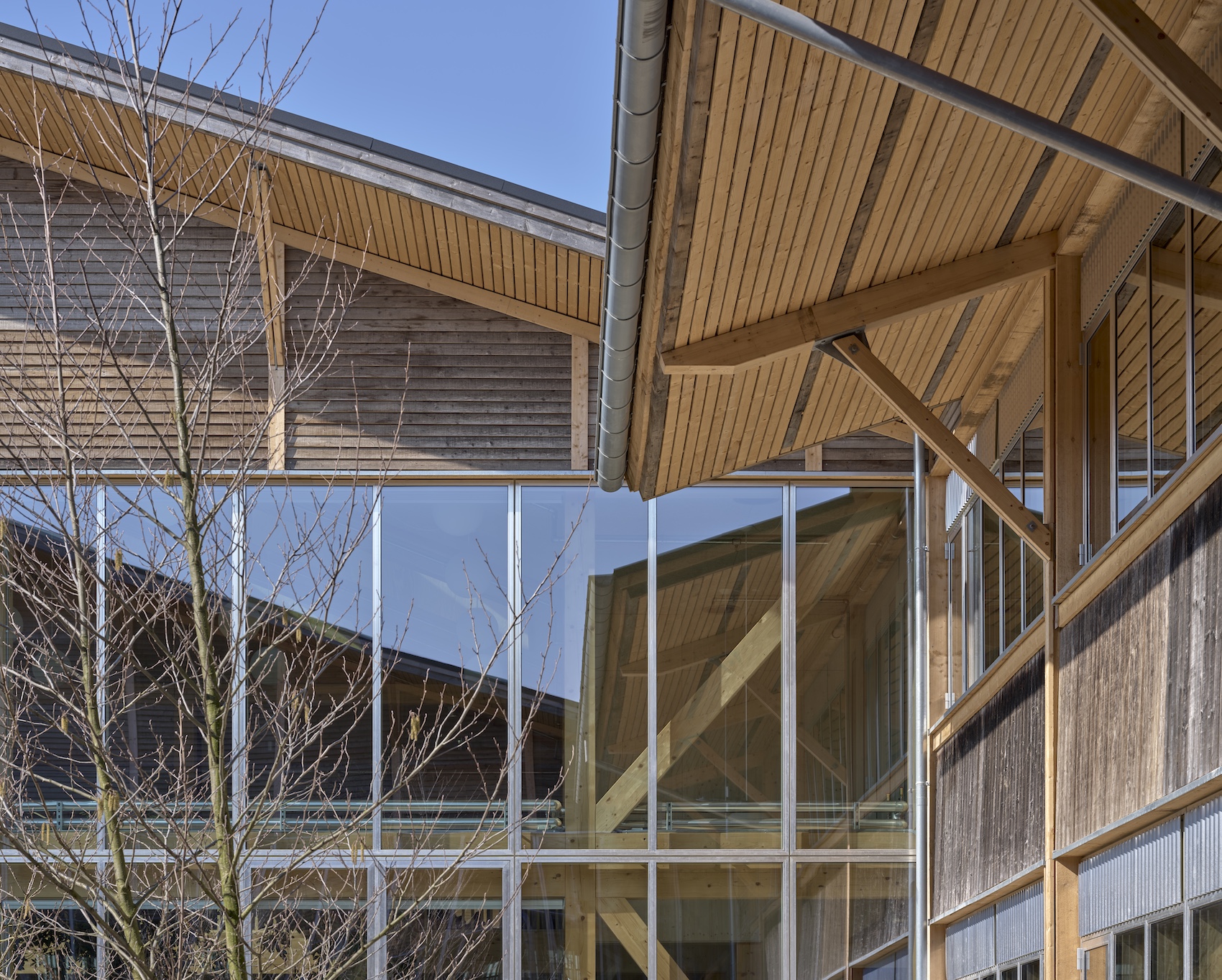
Overhanging eaves limit solar gain on the courtyard facades.
Carefully considered landscape design extends the architectural concept beyond the building envelope. Courtyards are planted with species that reflect the local ecology, while external areas have been reconfigured to prioritise nature over infrastructure. Concrete elements removed during construction are reused as pathways and outdoor features, creating continuity between building and site. The planting is intended to mature over time, and contribute to shading and microclimate regulation, further enhancing environmental performance.
Conceived as a physical manifestation of VELUX’s research and sustainability culture, VELUX LKR Innovation House not only demonstrates the potential of deep retrofit but also highlights the importance of long-term thinking. As Tony wisely notes, “Buildings are part of an ongoing process, and future adaptation is inevitable.”
Credits
Client
VELUX Group
Architect
Praksis Arkitekter
Structural and civil engineer
Søren Jensen
Interior design
Spant Studio, Friis & Moltke, Kasper Mose
Landscape design
DETBLÅ
Main contractor
KG Hansen
Additional images