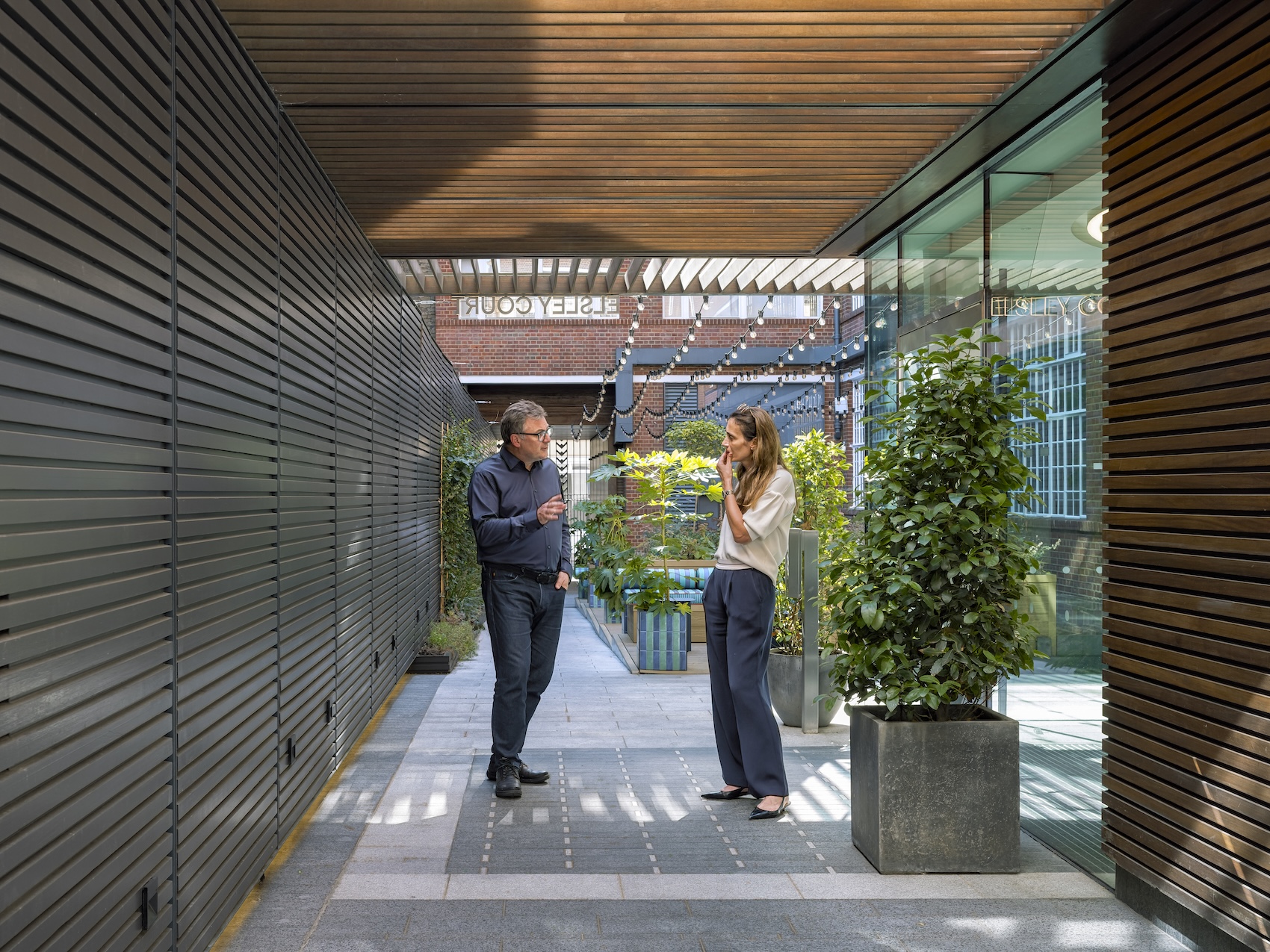
Corinna Dean of ARCA considers how architecture can foster care for human and non-human life, drawing on collaborative projects from floating reed beds on the River Lea to bio-receptive bricks that expose the environmental costs of making.
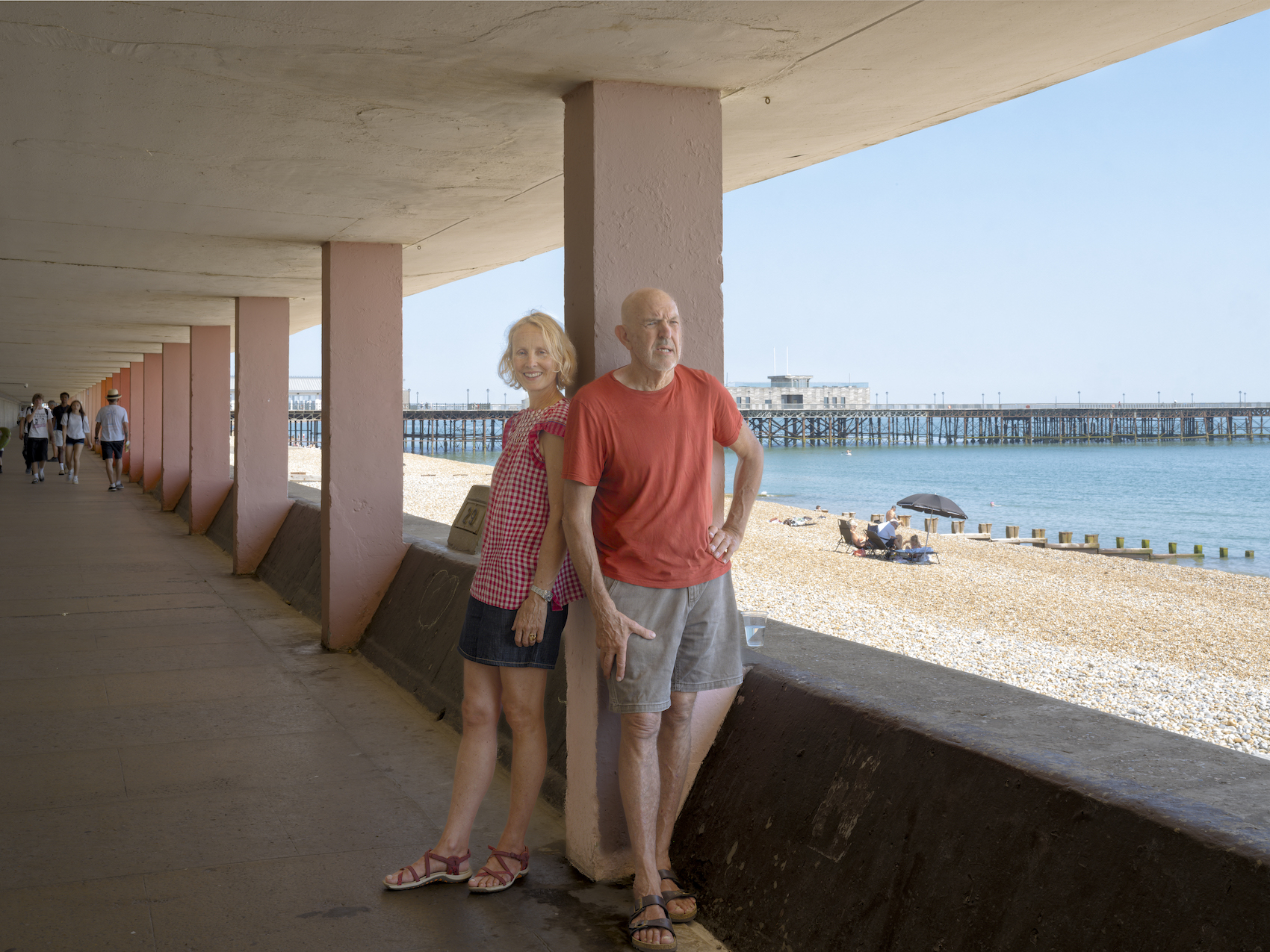
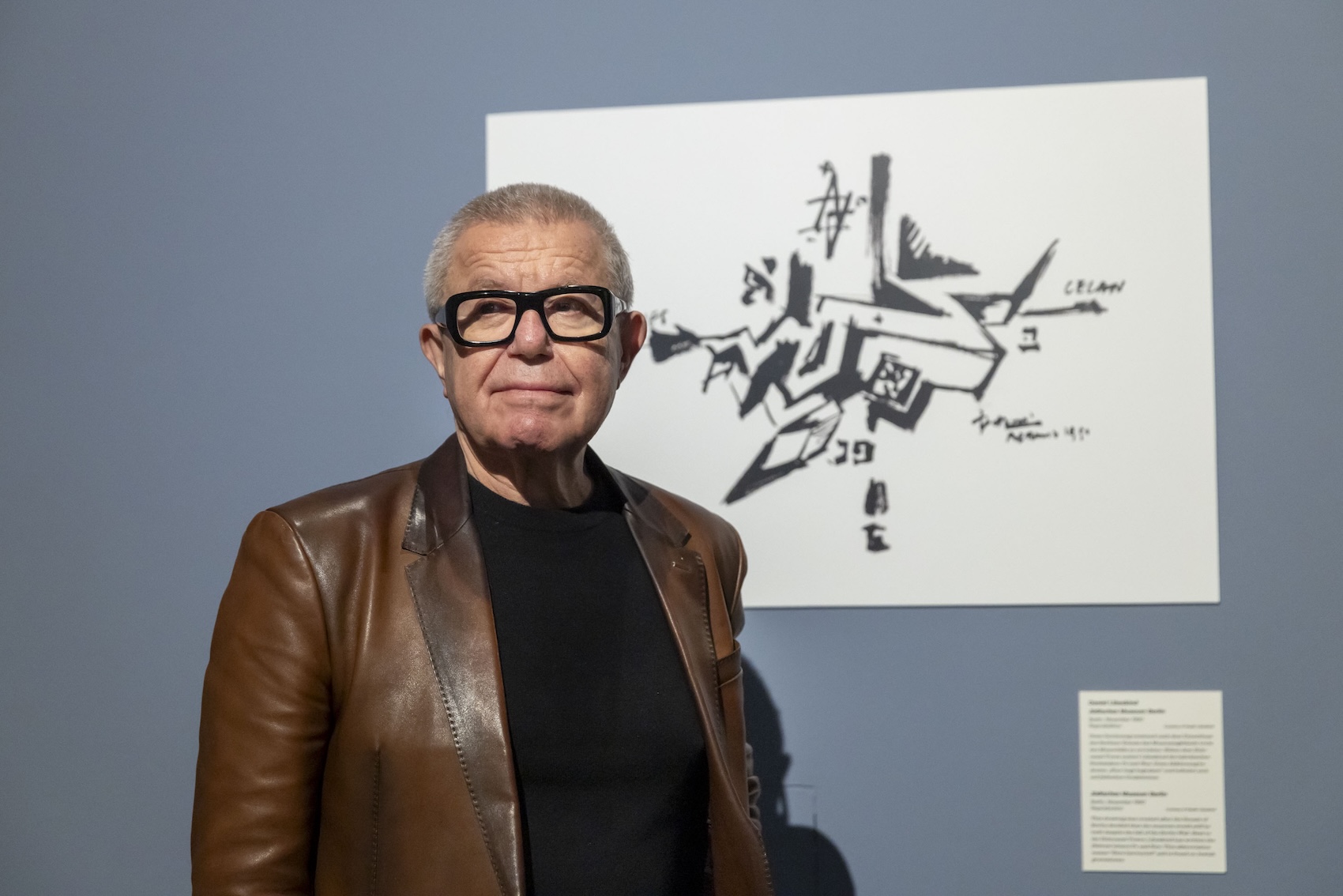
Corinna Dean with her partner Marcus Lee at Bottle Alley, St Leonards-on-Sea, East Sussex.
Make kin, not cities! I was struck by this statement as my practice is closely aligned to processes that foster care, repair and maintenance, or make the conditions for certain processes to begin anew. My work intertwines design, ecological practices, pedagogy and creativity.
I’m interested in the potential for environmental engagement to give agency to the non-human without objectifying nature. This has informed a series of co-production projects, including floating reed bed installations in the River Lea, inter-habitat species homes, and an outdoor classroom constructed at Cody Dock on the River Lea.
Finding collaborators to share knowledge bases is key. I have worked across India with the Manipal Srishti School, and Marvi Mazhar Architects in Karachi, Pakistan, which led to a research project on gender and the environment in the Indus Valley to frame exchanges of knowledge and question the ongoing effects of colonial land practices.
A recent collaboration with Bulmer Brick & Tile, Suffolk, explored the way practice, manufacturing and environmental conditions help to trace the object, from raw to cooked. The project, which focused on bio-receptive bricks, traced the raw material from clay seam digging, to sifting, drying, and firing. This opened uncomfortable realities around energy use against positive intentions, as well as encounters with deep time as the clay is dug from London’s Eocene clay seam.
Corinna Dean
ARCA
London

All photographs in the Reinventing Practice series will be on show at Regenerative Design 2026, a month-long programme of exhibitions and events that takes place at the Building Centre throughout October 2026.