Heidelberg Materials explores how advances in carbon capture technology and lower-carbon concrete are helping architects and specifiers reduce embodied carbon without compromising structural performance.
In association with
As the built environment continues to face growing pressure to decarbonise, the world’s most widely used construction material, concrete, is under the spotlight. Its essential role in resilient, safe, and long-lasting structures means the challenge is not about replacing it, but rethinking how it’s made.
From hard-to-abate to low-carbon
The production of CEM I (Portland cement), a key ingredient in concrete, is responsible for the majority of its CO₂ emissions. Roughly two-thirds of these emissions arise from calcination, the chemical reaction that occurs during clinker production, while the remaining one-third is associated with the energy used in the manufacturing process. While renewable energy can significantly reduce energy-related emissions, it cannot address those generated by calcination. Heidelberg Materials has taken a science-led approach to addressing this challenge, combining material innovation, manufacturing transformation, and circular design.
Scaling carbon capture to cement production
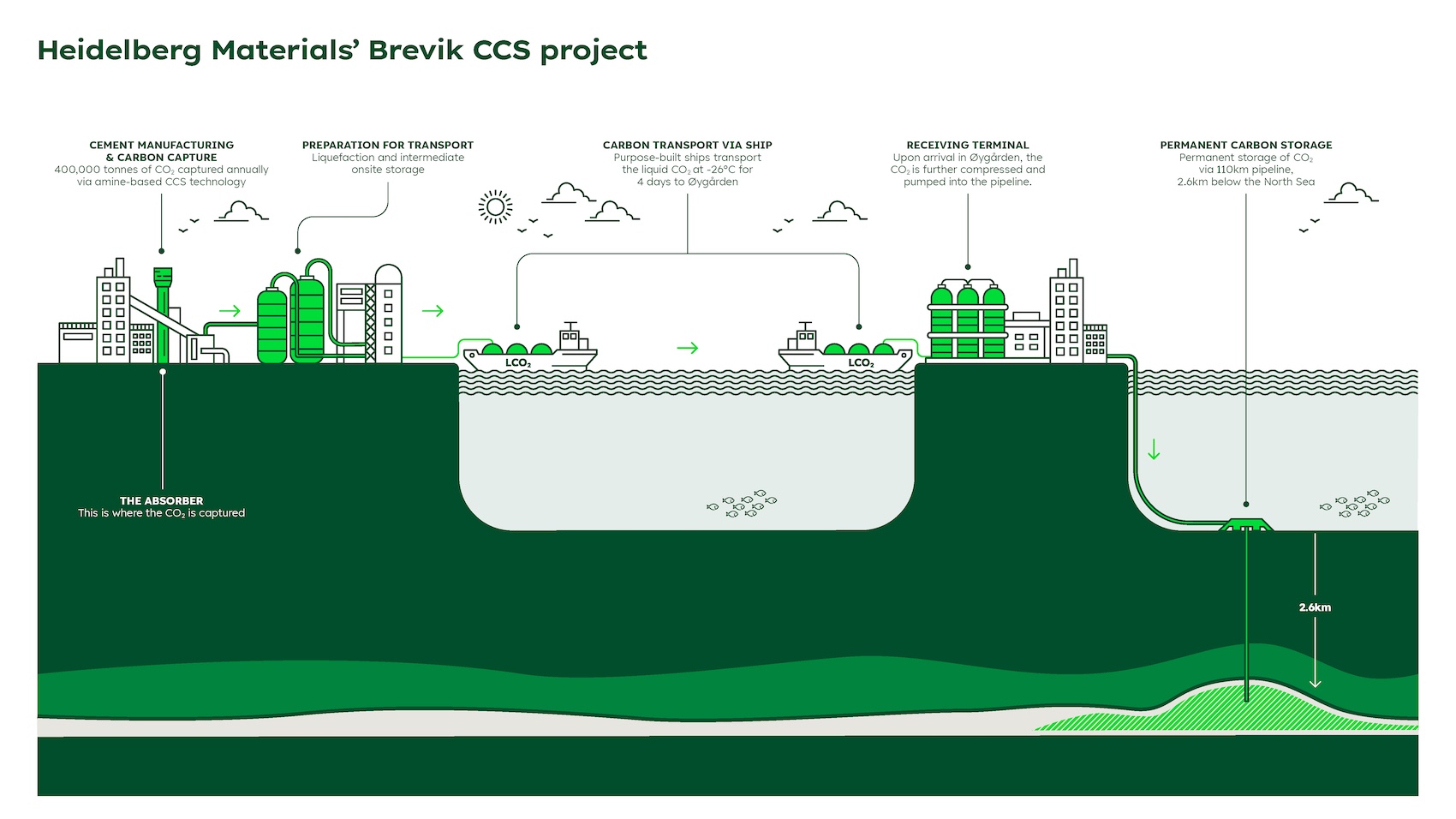
Heidelberg Materials is the first producer in the world to operate a full-scale carbon capture and storage (CCS) facility, located at its Brevik cement plant in Norway. The facility is designed to capture up to 400,000 tonnes of CO₂ per year, around half of the plant’s emissions, marking a major milestone in decarbonising cement manufacturing. The knowledge gained is now being applied globally, including at the company’s Padeswood plant in north Wales, which will become the UK’s first carbon capture enabled cement works when completed in 2029. Once operational, this will reduce emissions by up to 95%, preventing around 800,000 tonnes of CO₂ from entering the atmosphere annually.
This scale of innovation underpins the launch of evoZero®, Heidelberg Materials’ near‑zero carbon captured cement. Produced using CCS, evoZero delivers the same high performance as traditional CEM I while providing traceable and verified carbon savings, setting a new benchmark for sustainable construction material.
Lower carbon concrete in action
CCS is only one part of the decarbonisation journey. Until such technologies become widespread, reducing cement content and increasing the use of supplementary cementitious materials (SCMs) provides the fastest route to carbon reduction.
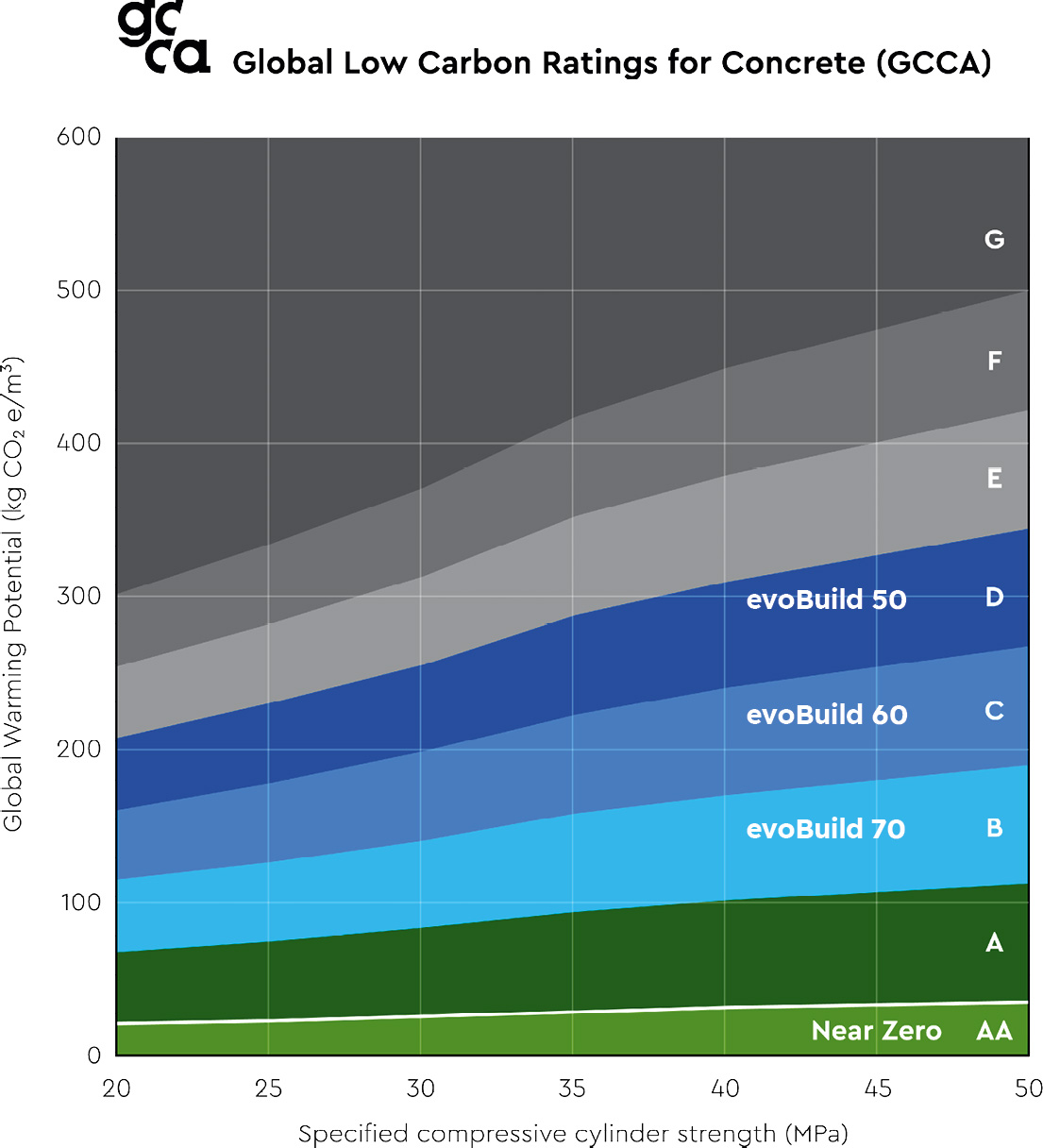
The company’s evoBuild® Low Carbon Concrete range uses SCMs, such as ground granulated blastfurnace slag (GGBS) to replace up to 70% of the cementitious content. The result: a 50-80% reduction in CO₂ emissions compared to conventional CEM I mixes, while achieving full compliance with BS EN 206 and BS 8500.
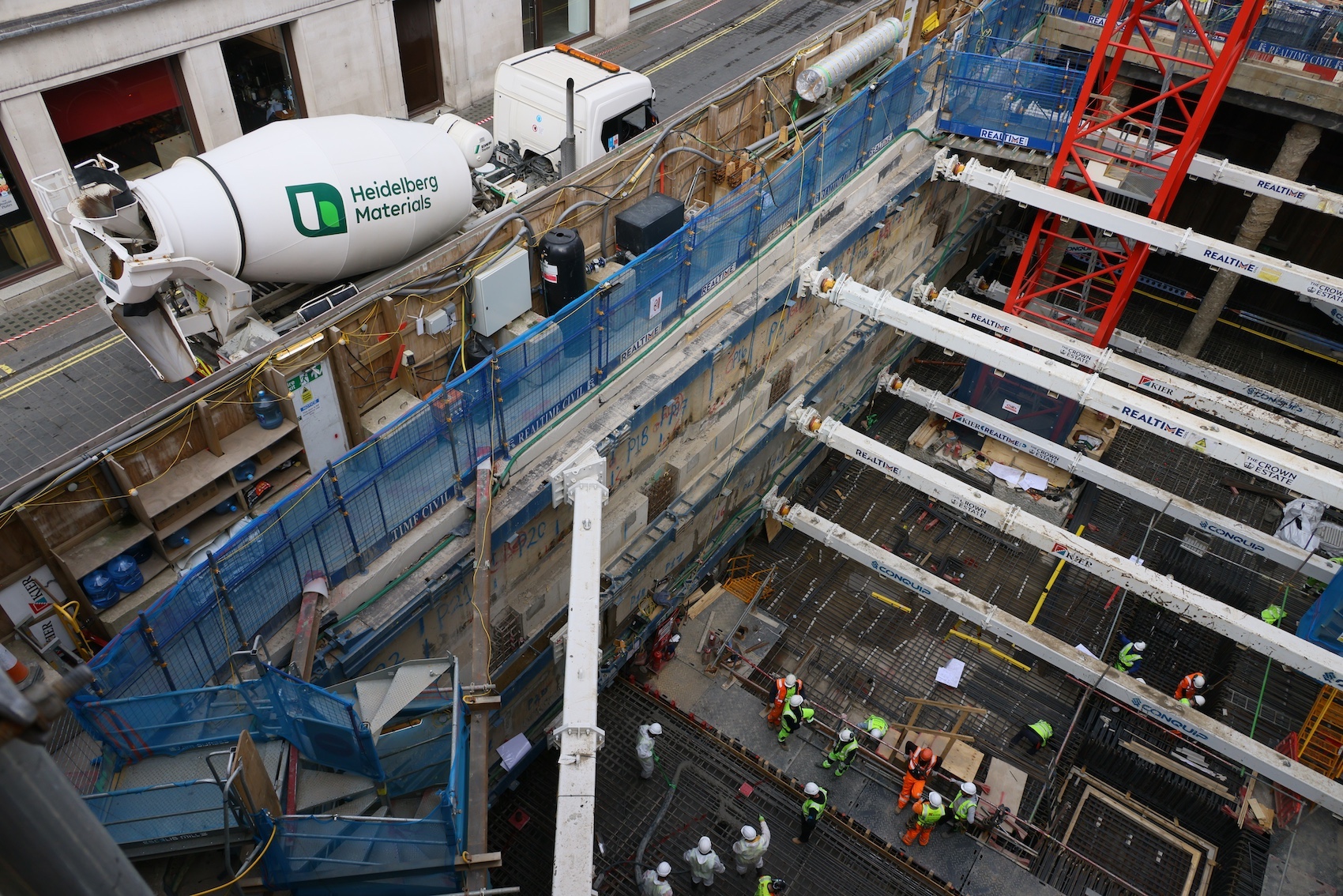
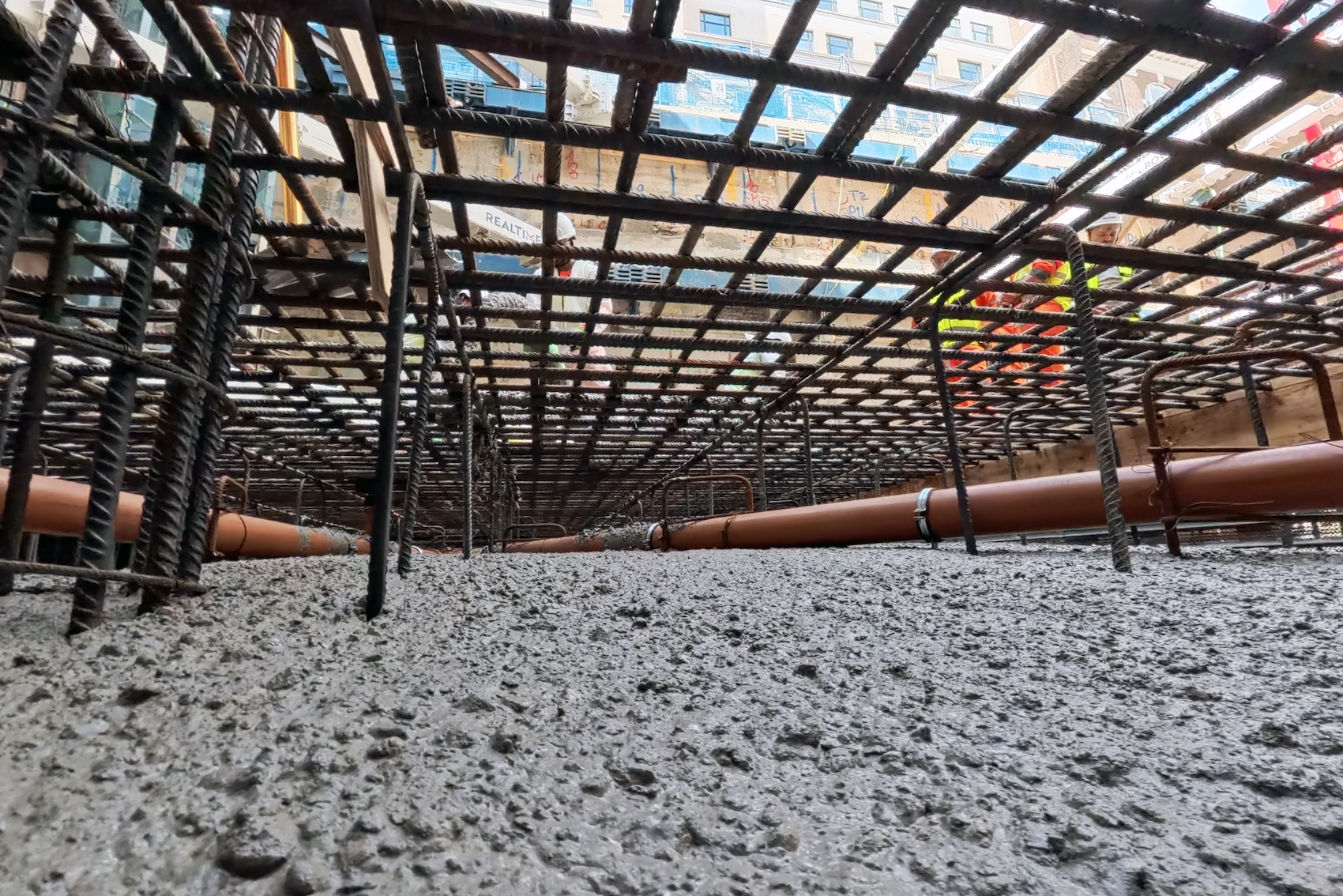
This approach was recently showcased at 33–35 Piccadilly in London’s West End, the UK’s first project to use evoBuild Low Carbon Concrete containing both evoBuild Low Carbon Cement and evoBuild Low Carbon GGBS. The mix achieved an average value of 35% carbon saving compared with the project’s equivalent conventional concrete specification using GGBS. A combination of carbon captured cement and GGBS ensured both carbon reduction and superior durability. The Crown Estate, Kier Construction, and Realtime Civil Engineering ensured the mix design met stringent performance and sustainability targets without affecting construction schedules, an important milestone for large-scale commercial regeneration project.
Meeting sustainability targets with lower carbon concrete
Adopting lower carbon concrete is central to achieving whole-life carbon reduction across the built environment. By using products like Heidelberg Materials’ evoBuild Low Carbon Concrete, design teams can immediately lower embodied carbon within structural elements, the portion that often contributes over half of a building’s total carbon footprint. These reductions help projects align with frameworks such as BREEAM, LETI, and the GCCA Roadmap to net zero, all of which prioritise measurable decreases in both upfront and in-use emissions.
Lower carbon concretes not only reduce CO₂ at the manufacturing stage through reduced clinker content and the use of supplementary cementitious materials, but depending on the formulation, can also support longer service life and durability, factors critical to whole life carbon emissions. When combined with efficient design and responsible sourcing, these materials enable a holistic approach to whole-life carbon management.
Through continuous innovation, including carbon capture, Heidelberg Materials help to provide practical pathways for clients and designers to meet the UK’s net zero 2050 goal and exceed project-specific sustainability benchmarks. Using certified lower carbon concrete solutions today helps ensure that each project contributes tangibly to the transition toward a climate-neutral built environment.
Concrete with a purpose
The evolution of concrete embodies a broader shift in construction: from material consumption to material stewardship. By embedding carbon capture technology, embracing circularity, and maintaining performance integrity, Heidelberg Materials is redefining how concrete can contribute to a sustainable built environment.
For architects, designers, and engineers, specifying low‑carbon materials like evoBuild provides a direct avenue to reduce embodied carbon without altering construction methods. As regenerative design becomes the industry standard, innovation in concrete technology will continue to unlock opportunities that balance beauty, strength, and sustainability within construction.
Contact Details
For more information please email or visit the Heidelberg Materials website.