Julian de Metz and Rebecca Price discuss how the practice’s rigorous, hands-on approach to material exploration drives its work and informs its relationships with manufacturers and suppliers.
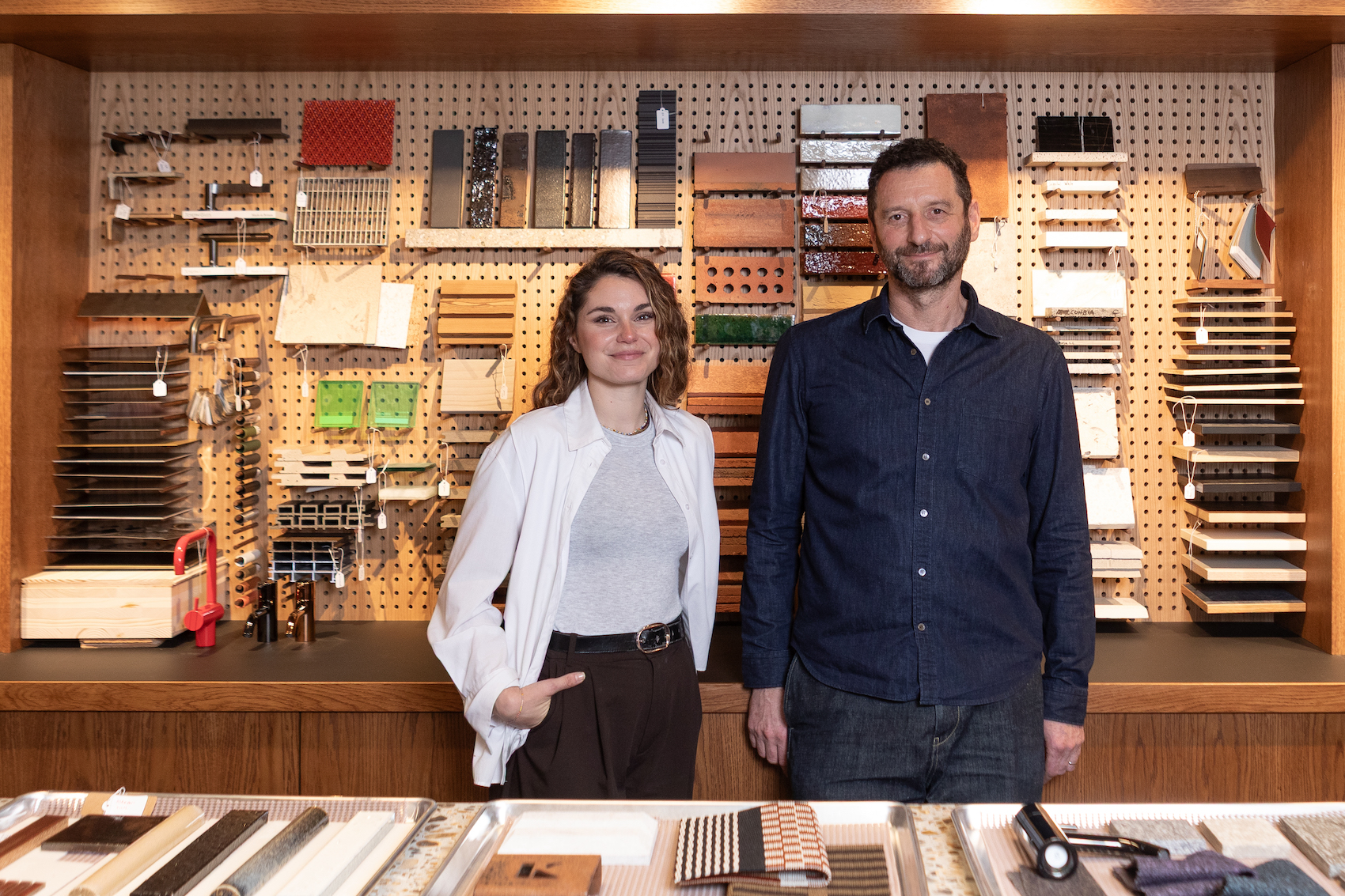
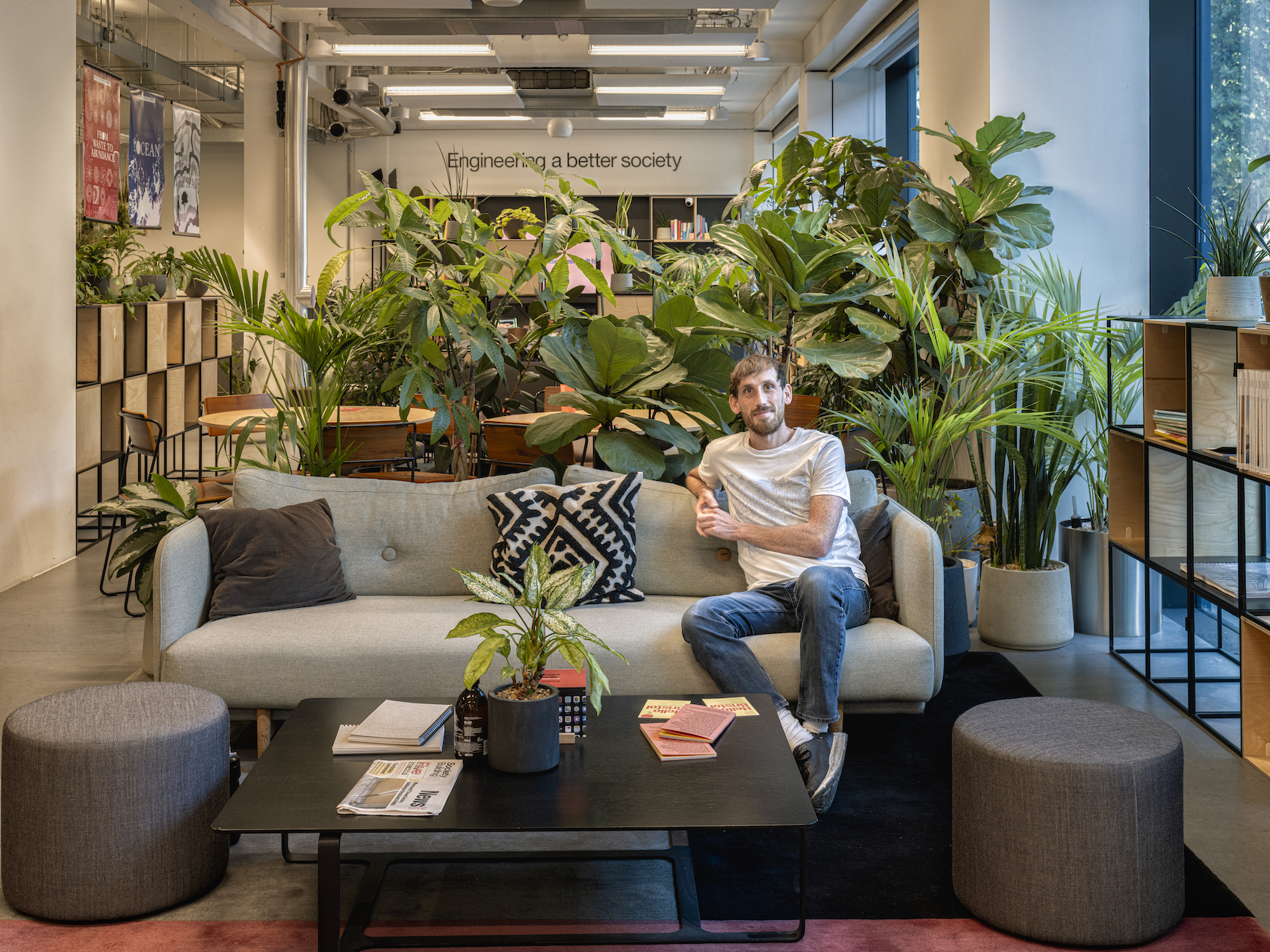
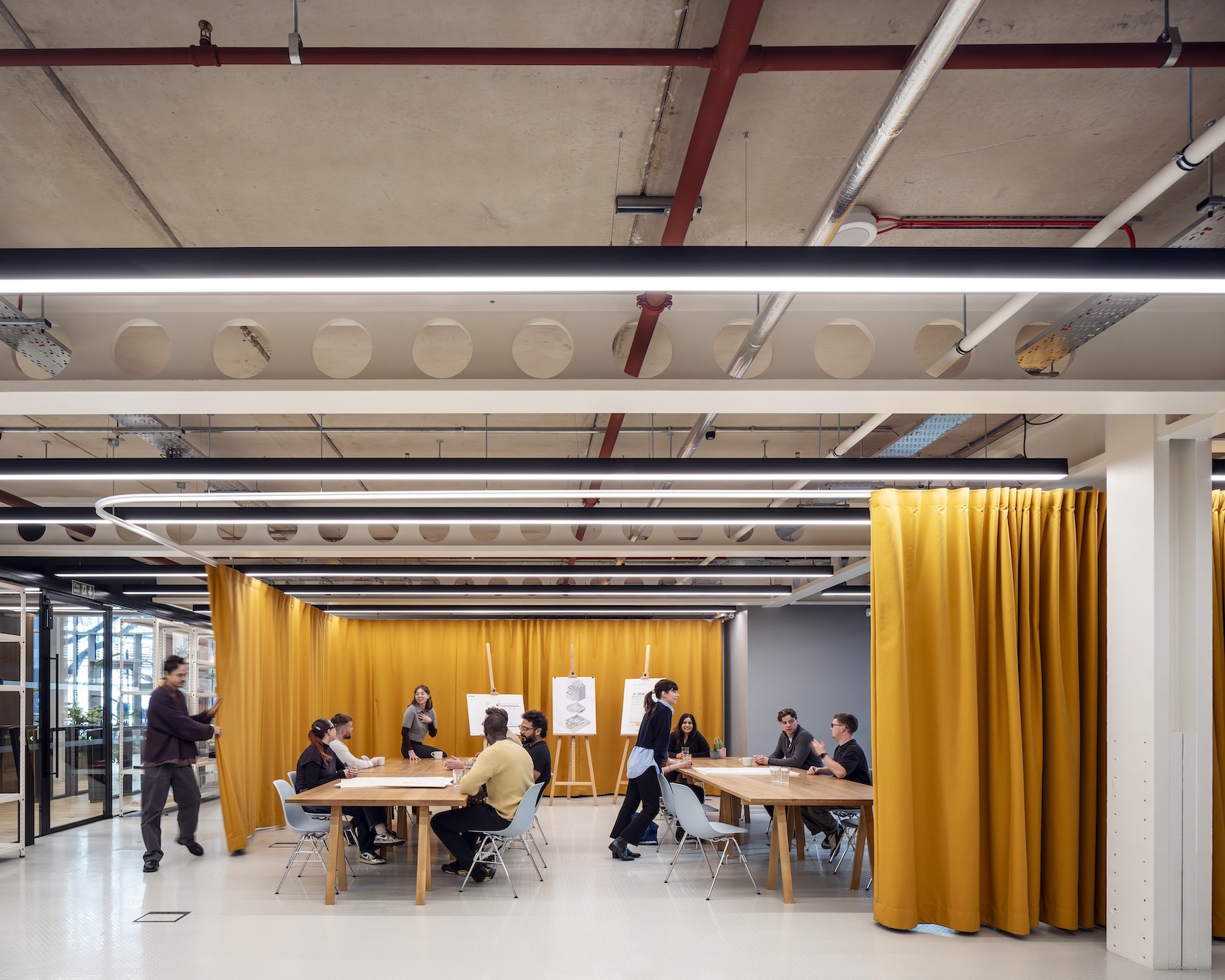
Occupying the former headquarters of Channel 4 in Fitzrovia, London, dMFK’s street-facing studio is intended to showcase the architect’s people-centred approach to both design and day-to-day practice. Its recently completed Downstairs at dMFK takes this ethos a step further, with the office’s basement now transformed into a light-filled, open-plan space that blurs the distinction between studio, product gallery and events venue. Forming a key component of this new addition is a meticulously organised materials library, planned around a striking five-metre long terrazzo bar. But this handsome resource is much more than a product and textiles repository – it forms part of a wider ‘living sample library’ aimed at celebrating material innovation, deepening collaboration, and strengthening key supplier relationships, as Director Julian de Metz and Associate Rebecca Price explain.
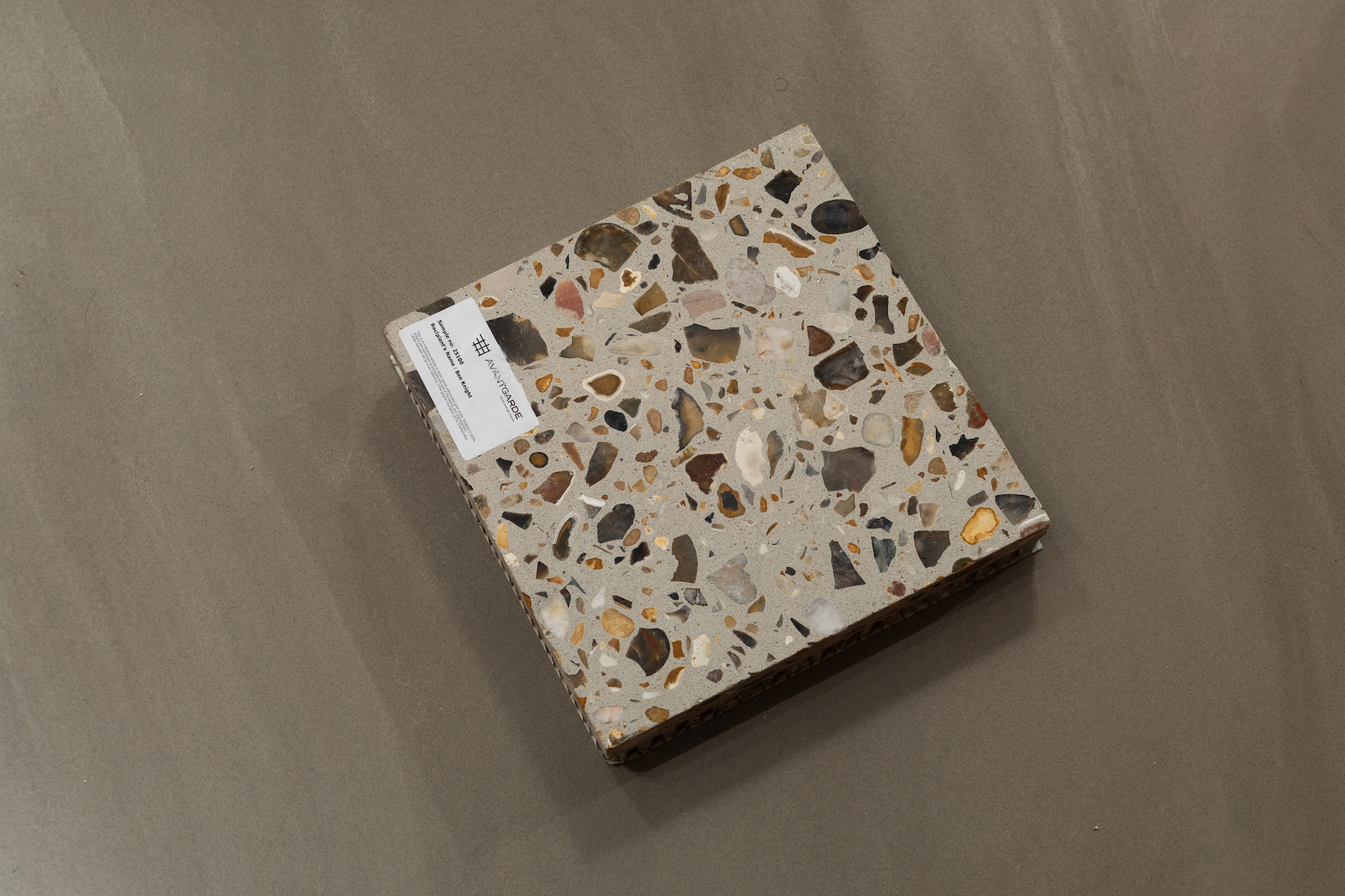
Terrazzo by Avantegarde. “Incorporating pieces of Thames flint, this highly innovative terrazzo looks like concrete. The effect is difficult to achieve (due to the polished un-keyed nature of the flint) so Avantegarde uses recycled aluminium cans to bind the material together.
What was the thinking behind the new materials library?
Rebecca Price During Covid we really struggled not having physical samples around us. Working remotely made it difficult to think through materials or build palettes collectively. When the opportunity came to move into the basement, one of the first things we agreed on was that we wanted a space where materials could sit at the heart of the practice – something people would be drawn to and could gather around.
Previously, we’d kept material samples behind a curtain upstairs. It worked in a practical sense, but also created silos, with people hoarding products for their own projects. The hope was that by designing a central, tactile library we’d encourage teams to work together when thinking about materials, build palettes collectively, and learn from one another. Once we’d decided that, we started to think about how to organise it, what we’d display, what we’d store, and how people would interact with it. We’re still learning, but the library is already changing the way we work.
We’ve also introduced project trays. Every live project has its own tray, so when you’re developing a palette you build it physically in that tray. It stays there, ready to come back to, reference, or adapt as the design evolves. In this way, the samples always have a home, and you can see at a glance which materials are in play for any given project.
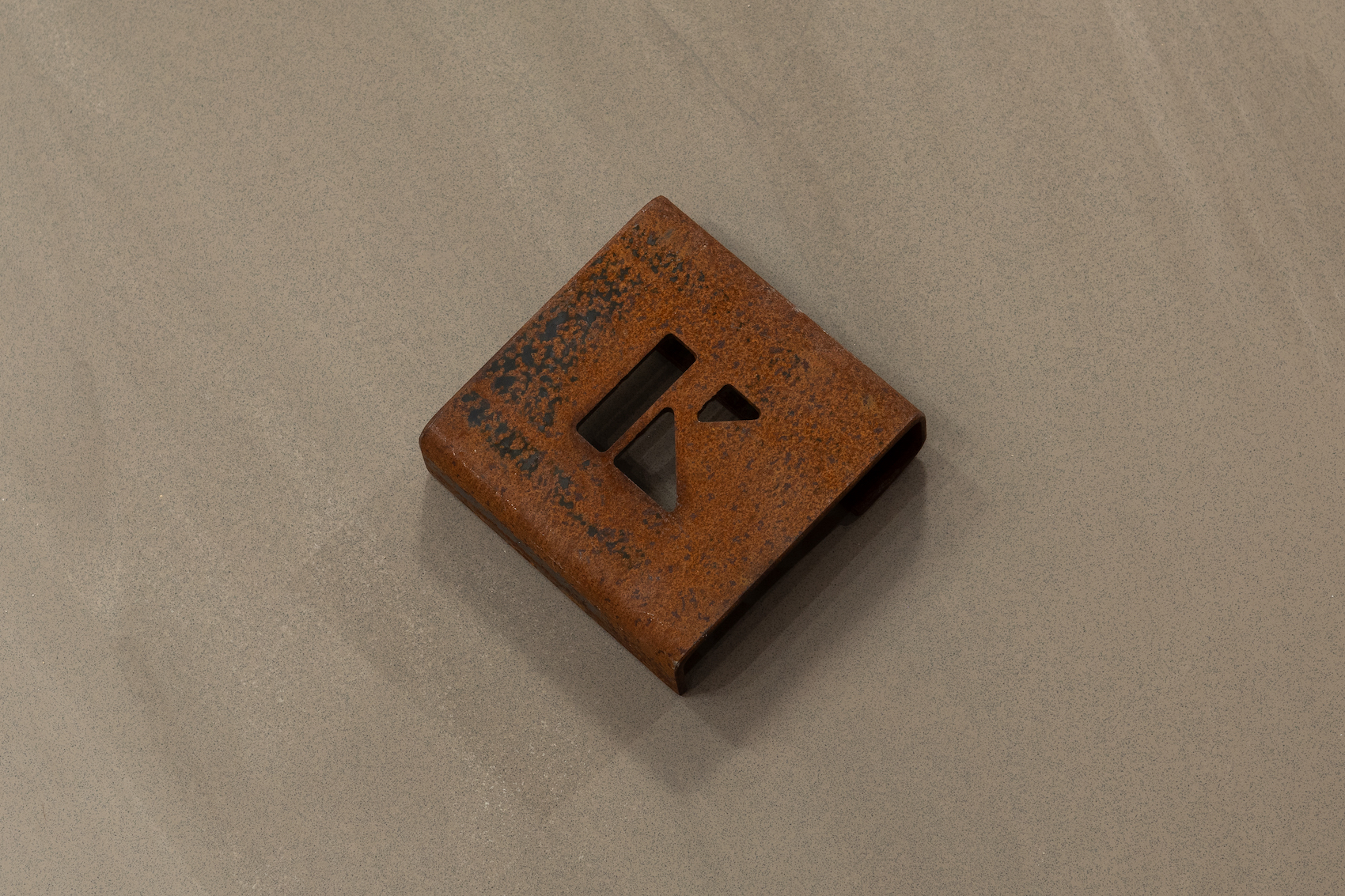
Corten steel by Kinley. “We’ve specified Corten a lot, including in our studio, where it’s been reused from the previous occupier’s fit-out. It’s got patina and visual warmth, and it tells a story.”
How do you stop people taking things away and not bringing them back?
Julian de Metz That’s a good question and a current issue! The trays live here, but teams can take them upstairs for meetings or use them in the client space. We just ask that everything comes back down afterwards. We’re setting up a proper sign-in/out system, because we quickly realised things can disappear. The main rule is: all material discussions happen down here. It keeps the focus in one place.
So the library is intended to be collaborative space: teams come together, clients too?
Julian de Metz Exactly. The idea is that architects and clients can gather around real materials, touch them, and have conversations. We do a lot of interior work, as well as buildings, so the library naturally reflects this. The terrazzo bar, for example, is designed for daytime use – standing discussions, impromptu reviews etc – but it’s also a sample in its own right, made from experimental recycled materials. Underneath are fridges, power, and the sound-system link, so at night it turns into a venue for events, such as supplier evenings, client gatherings, and design talks.
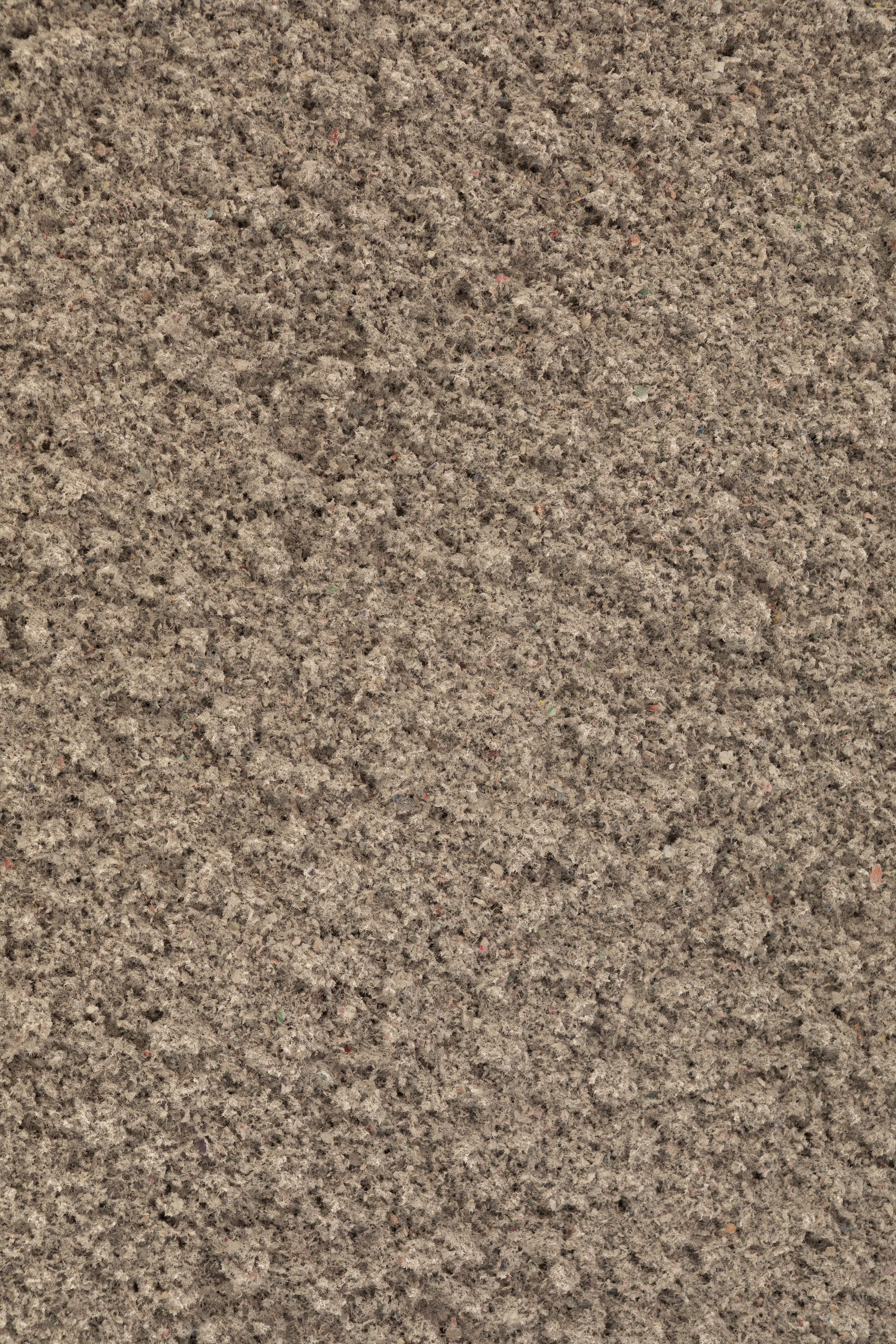
SonaSpray Eco+ by Oscar Acoustics. “Made partly from recycled newspaper, this self-coloured, spray-applied acoustic insulation not only looks great, but is also highly effective in reducing sound reverberation. This makes it ideal for workplaces.”
The pegboard display system behind the bar looks great and super flexible.
Julian de Metz That came from an interesting source. We’d worked with Spiritland, the London audio bar, who had this acoustic pegboard in storage after one of their venues closed down during Covid. We salvaged it, tested it upstairs, and realised it would be a brilliant way to display samples, while also retaining acoustic performance. You can screw bulldog clips into the ends of pegs, hang fabrics, or fix heavier samples; it’s endlessly adaptable. Rebecca’s original layout was a bit more ‘showroom’, but I wanted it to feel more like ‘grandad’s shed’: useful, tactile, changeable. That balance works well.
Rebecca Price We can change the display really easily. If a supplier has a new product they can loan it to us for a few months and we’ll give it a dedicated spot. Right now we’ve got an installation with Vola, and we told the team, “If you’ve got a client meeting, bring them down to see it!” That engagement has been fantastic. The minute we started putting things on the wall, people began interacting with them.
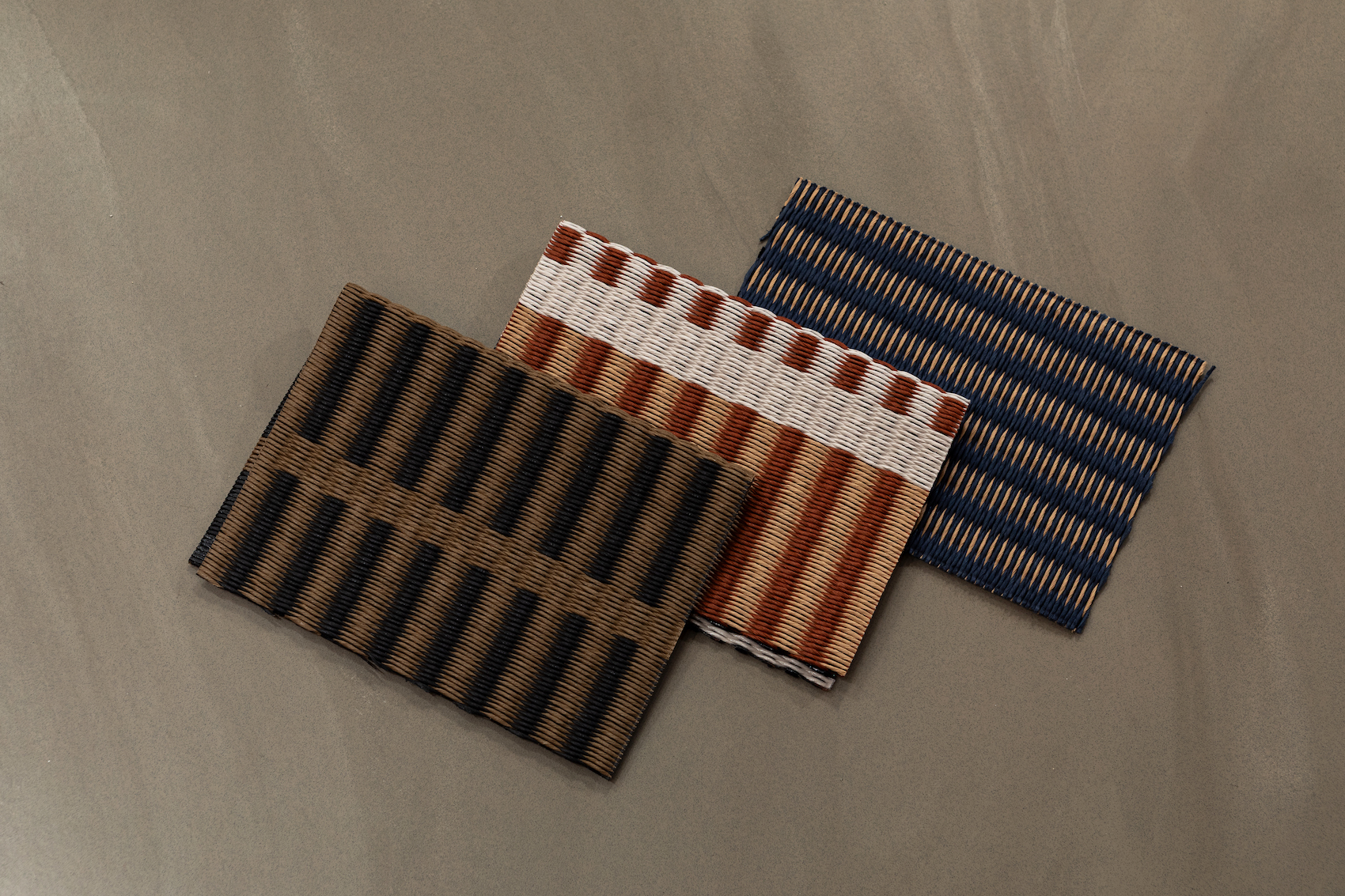
Rugs by Woodnotes. “Manufactured from woven paper yarn and cotton with stripes dyed using willow bark from Finland, these rugs are not only beautiful and sustainable, but should also last for 20-30 years. We like products that are the antithesis of throwaway culture.”
Tell me about the ‘living sample library’ and how does it relate to the wider practice?
Julian de Metz ‘Living’ refers to the fact that everything in here has a narrative and continues to evolve. When we spoke to suppliers, we asked two questions: “Will you stock us with your most interesting, innovative materials?” And, “Would you like to help us build the room itself ?” For the terrazzo bar, Avantgarde Tiling developed a new mix using Thames flint and recycled aluminium cans. The resulting cementitious- resin composite looks like concrete, but is surprisingly hard to get right because flint doesn’t bond easily. They wanted to test it, and we wanted something unique, but couldn’t have afforded to commission it. So we collaborated, it became a prototype and a talking point. That’s what the living library is about.
How did you choose which companies to work with?
Julian de Metz Some are existing relationships, like Oscar Acoustics, who make SonaSpray (a spray-applied, seamless acoustic finish). We’ve used it before, but they wanted to try a new product using recycled paper, so we gave them a platform to experiment. Others came through recommendations, or people we just wanted to get to know better.
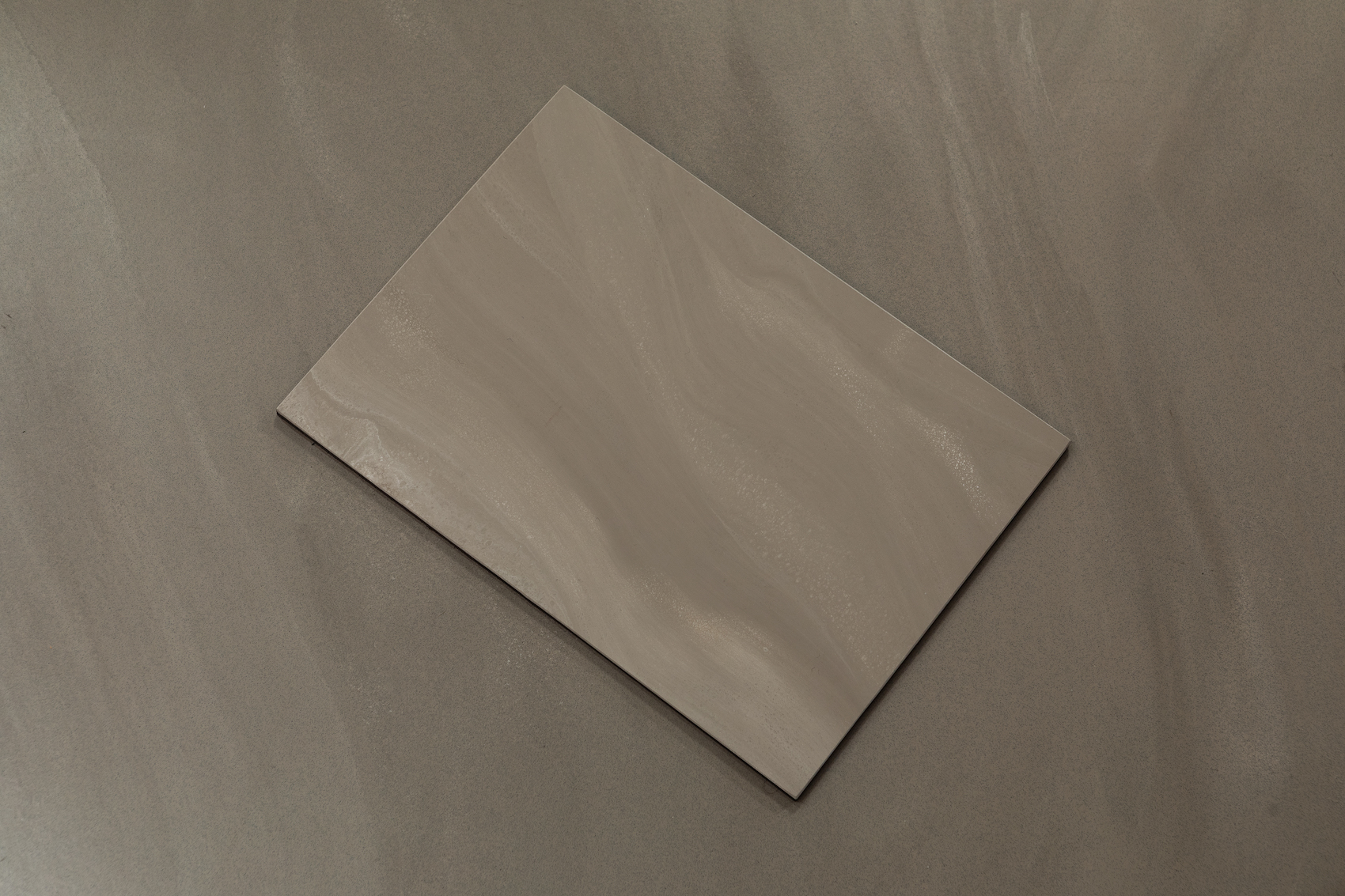
Resin flooring by Sphere8. “We used this plant- oil-based resin flooring in our studio basement for reasons of sustainability, minimal thickness (in order to maximise headroom), and acoustic softness. We also like its durability, visual warmth, and seamless aesthetic.”
How does the space operate day-to-day?
Julian de Metz If a project involves materials, the meeting happens here. It’s now instinctive.
Rebecca Price We also rotate desks every two weeks to encourage collaboration and make sure everyone spends time near the library. People know everything lives here; it might move around, but it stays within the ecosystem. That’s important because it’s where our collective thinking comes together. It’s a physical manifestation of the creative process, rather than something that happens in isolation at our desks.
So it’s about fostering creativity rather than just storing things.
Julian de Metz Absolutely. We ask suppliers to bring us materials with a story; something innovative, sustainable, or simply unusual. We want this to be a place where those conversations happen. At the same time, it had to look good. A big sample library can easily end up looking like a jumble sale, if it’s not properly curated. Added to this, the furniture is designed to be demountable, so we can clear the space in ten minutes for a 100-person event. The Eiermann tables lift off, the cables unplug with just two leads, and everything stacks away neatly. It’s all about flexibility.
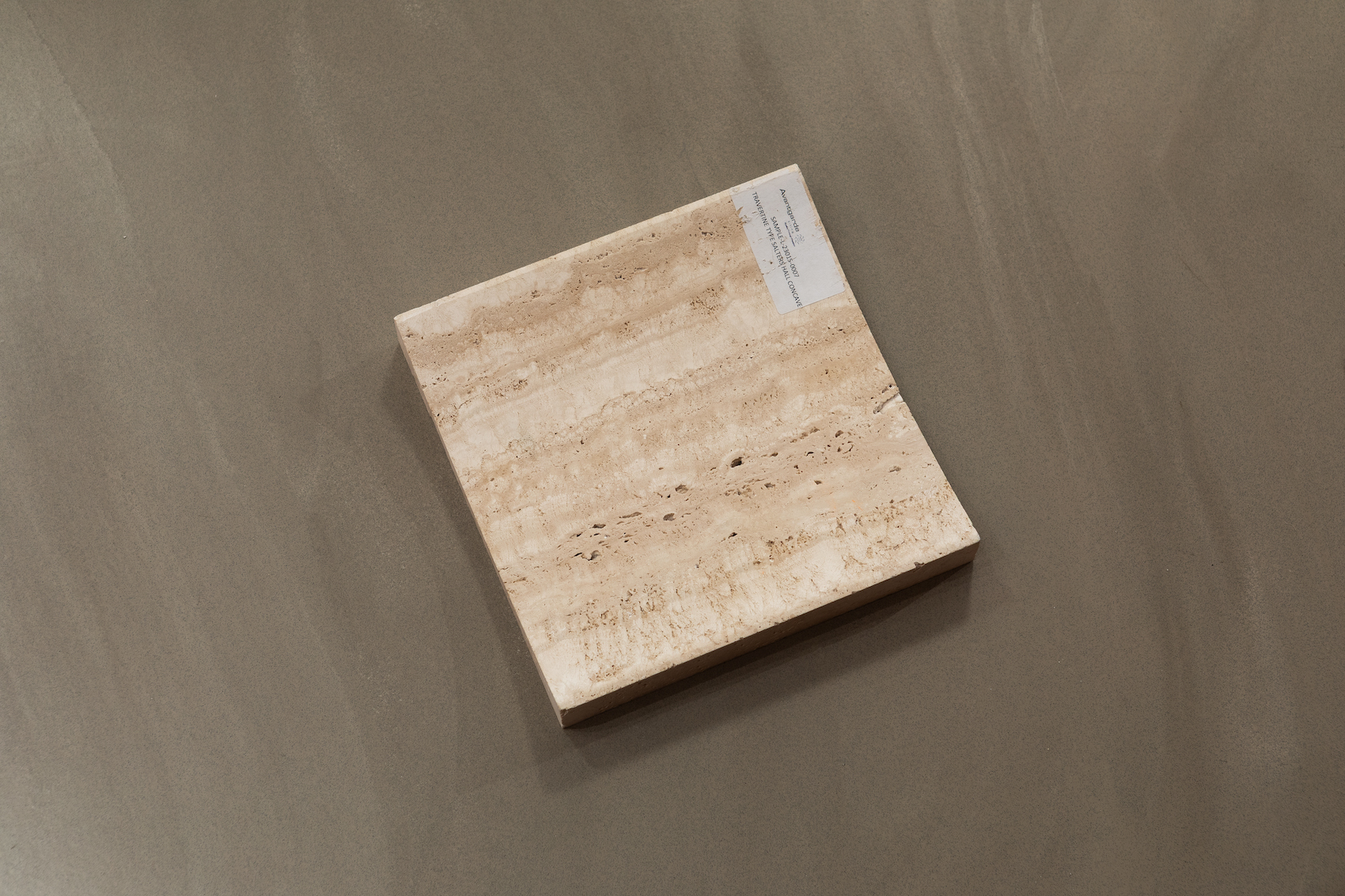
Travertine by Avantegarde. “This is a really good example of a beautifully-worked piece of travertine. We like the solidity and colour-through nature of stone, and are currently looking at ways of using it structurally within our projects.
Are there other elements or installations worth mentioning?
Julian de Metz Definitely. The floor is by Sphere8. It’s a thin, plant-oil-based system with much lower VOCs than traditional resins and a subtle visual movement in the colour. The lighting is by Light Forms, who we’ve worked with on several projects. The system is track-based, so we can slot in different fittings as new samples come in. We also have a Woodnotes rug made from paper yarn with natural willow dyes. And of course there’s the Vitsoe shelving, which just works as it always does!
Rebecca Price The acoustic booths were supplied by The Collective and are made from compressed recycled fibres. The company is brilliant to collaborate with. If you have an idea for printing, patterning or changing the texture, they’ll experiment. That’s why we wanted them here. It’s about engaging people who are willing to do something new rather than repeat the same product.
Julian de Metz The booths also respond to the flatness of digital communication. Teams and Zoom calls are exhausting, partly because they lack sensory depth. Surrounding ourselves with tactile, acoustically-rich materials counters that to some degree.
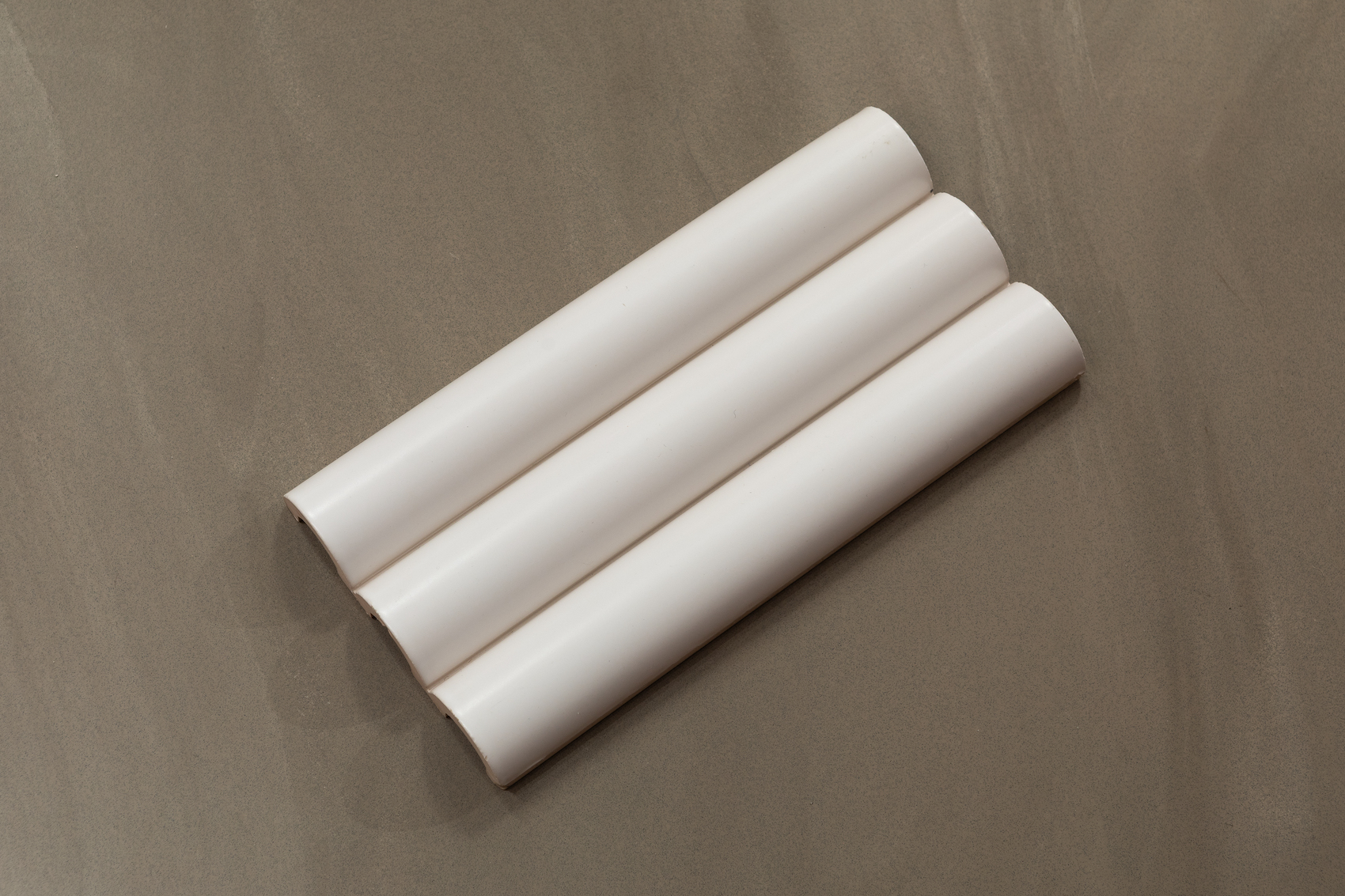
Fluted ceramic tile from Solus. “The practice is really enjoying innovations in ceramic tiling at the moment, and we’re considering using this beautifully sculptural tile on the interior refurbishment of Tower 42 in the City of London.”
Why are building relationships with suppliers so important for the practice?
Rebecca Price Because they’re the experts in their products. We can research endlessly, but they often know what will truly work in a space. If you involve them early on they can guide you to the right technical and creative solution. It’s not just a question of sales; the good ones are genuinely invested.
Julian de Metz The loudest voices in the industry often come from the best marketing teams, not necessarily the best materials. By hosting CPDs here, we can engage directly with the people making the products. You get a faster sample service, better technical advice, and sometimes opportunities to co-develop new iterations. Touching things is also crucial. We’ve become too used to assessing materials on screens that tell you nothing about their warmth, texture or density. You need to feel the difference between warm timber and cold stone. That’s what this space allows.
Rebecca Price It also helps us build continuity. I make a point of contacting suppliers every few weeks to see what’s new, what’s changing. It keeps the conversation alive.
Julian de Metz Before, if a supplier turned up with a sample, it felt like an interruption: “Where do we put this?” Now we say, “please come in.” It changes the relationship, and it means we can have honest conversations: “This doesn’t feel sustainable”, “This isn’t quite right”. It pushes them to bring us their most innovative and responsible products. It’s about reintroducing physical relationships into an increasingly digital, image-based profession.
What’s next for the living sample library?
Rebecca Price Refining how we store and interact with things, as well as learning what works and what doesn’t. You never get it perfect first time. Sometimes the reality looks nothing like the original idea – but often it’s better. We’ll keep iterating as people use it.
How do you research and promote environmentally-responsible materials?
Julian de Metz We invite companies in and ask them to explain how their products are sourced and made. Most of the people we want to work with are already motivated by sustainability. twentytwentyone, for instance, vet all their suppliers for material provenance and employment practices, and they hooked us up with some amazing suppliers like Nikari, Flokk and Michael Anastassiades. Our clients, such as GPE and Derwent, have strict sustainability charters, so that drives our own specification processes.
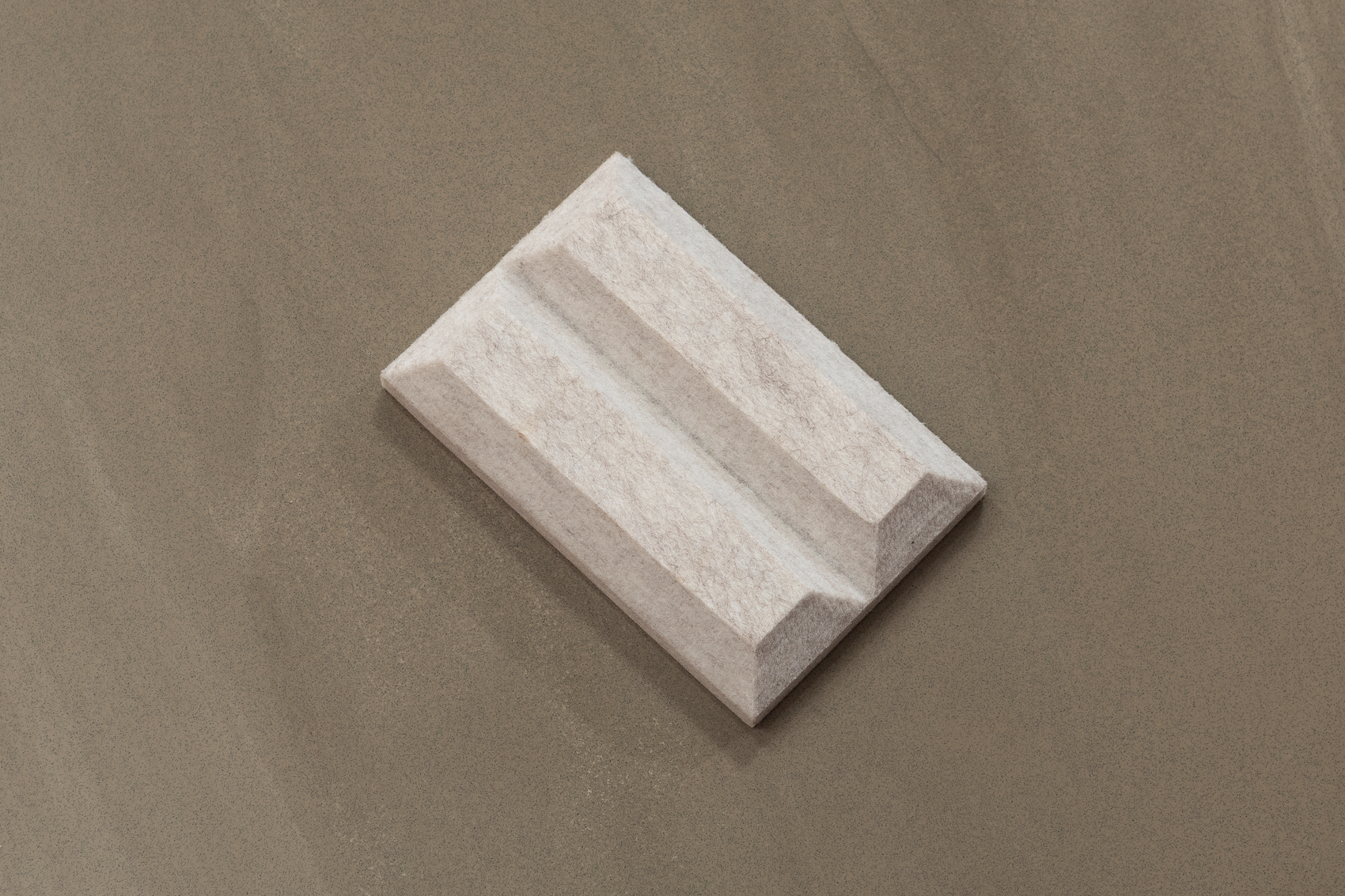
EchoPanel by The Collective. “These attractive and highly tactile acoustic panels are made from 80 per cent recycled plastic bottles. We’ve used them to line the acoustic booths in our studio, where they provide excellent sound absorption.”
And what about reuse and recyclability?
Rebecca Price When we’re looking at materials and products, we ask: will it last? What’s its story? Where is it made? Is it imported, and can we order efficiently to minimise carbon? Issy (Robertson), our sustainability champion, helps interrogate suppliers’ data when things get technical.
Julian de Metz We practise reuse ourselves. The pre-owned stools and sound system came from Spiritland. The HÅG chairs by Flokk are designed for disassembly and made from recycled aluminium. We’re also hosting a talk with a company called Encore by Design, who recycle furniture and carpet tiles. They clean them, lease them out, and then re-lease them after use, so nothing gets thrown away. Reusing something that already exists is the lowest- carbon option there is. Recycling still takes energy; reuse doesn’t.
Craftsmanship forms a key element of your work. How do you collaborate with makers?
Rebecca Price It depends on the project. A lot of our interiors are in Grade II-listed buildings, so we start by looking at the existing craftsmanship, such as cornices, joinery and plasterwork, and then aim to carry that story forward. Finding the right joiner or fabricator is key; someone who can interpret and extend what’s already there. It’s about continuity and care.
Julian de Metz Fostering strong relationships helps enormously. We visited the wood design studio and furniture manufacturer Nikari in Finland, for example. Their factory runs entirely on hydroelectric power from the river beside it, and the wood comes from nearby sustainable forests. The master joiner, Kari, taught us about age-old timber selection techniques, cutting from different parts of the tree, at different angles for different uses. You only learn that by going there.
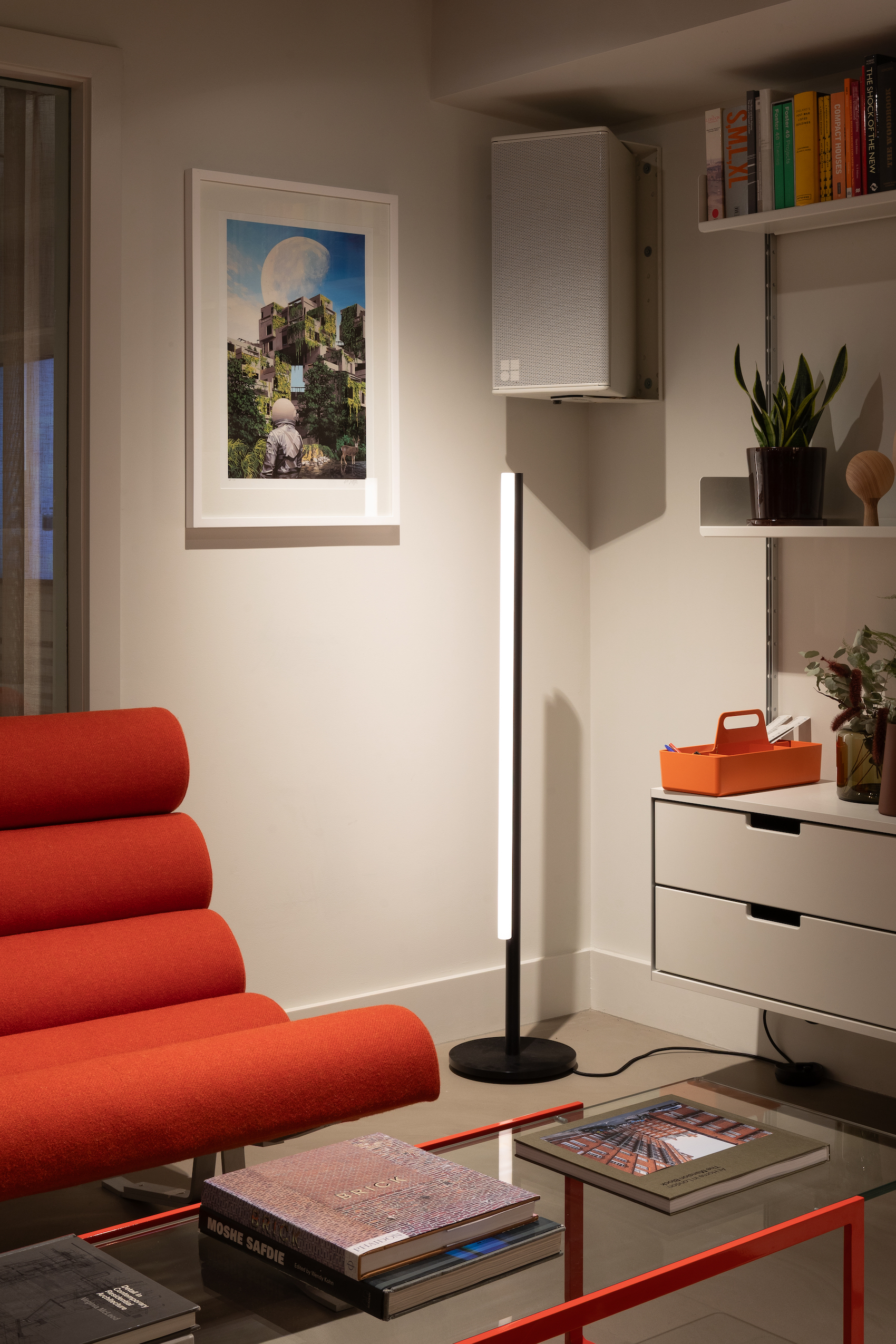
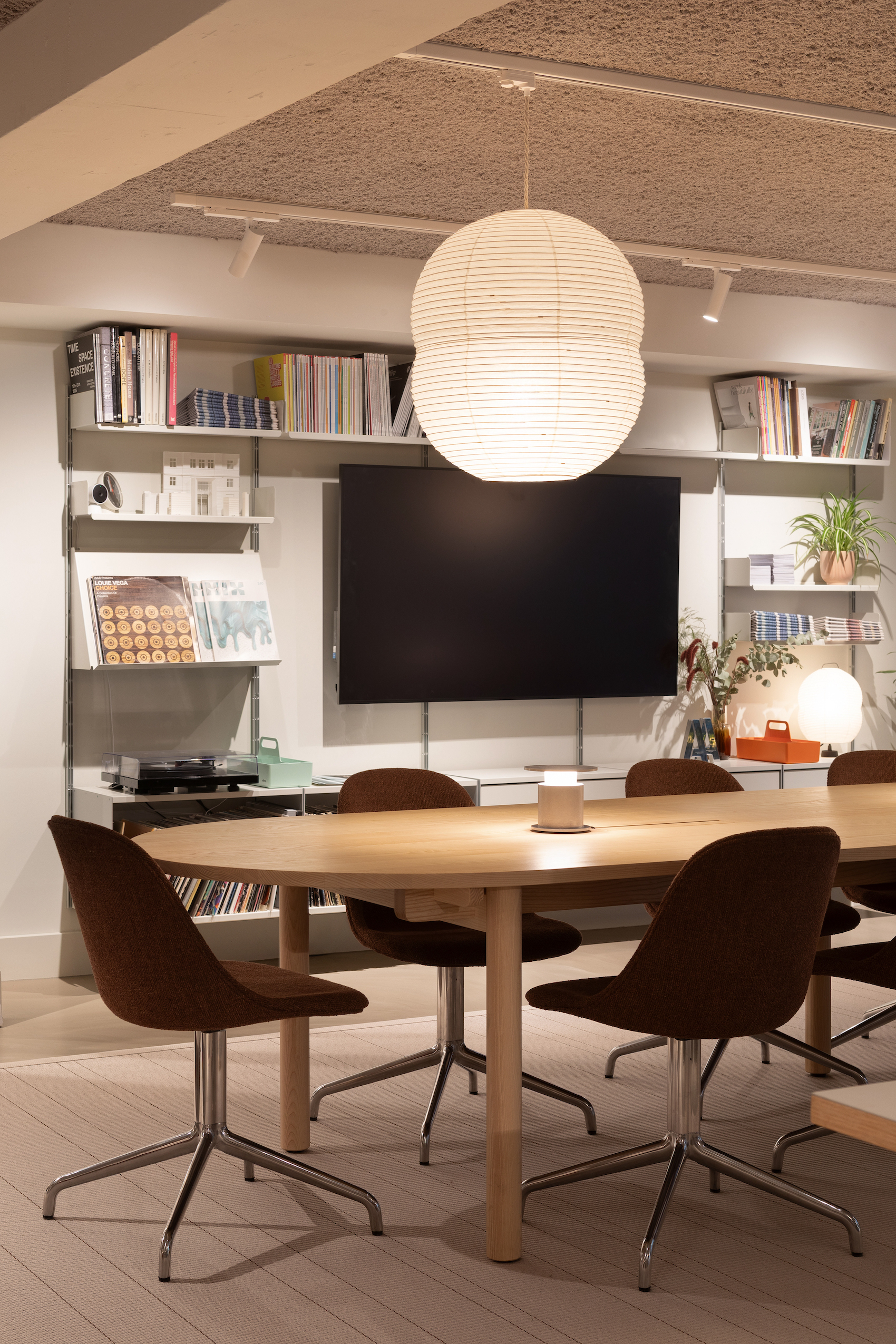
Left: One Well- Known Sequence floor lamp by Michael Anastassiades. “Michael has kindly lent this floor lamp to us, and we are enjoying both its design and gorgeous colour temperature. The light it gives off is incredibly soft and gentle.”
Right: Timber by Nikari. “High-grade timber for Nikari’s furniture, such as ur meeting table, is locally-sourced from Finnish forests. Our close relationship with the company has led us to question where wood comes from, how hard it is, and how long it will last.”
Do you find yourselves returning to certain materials?
Julian de Metz That’s what we’re trying to get away from! [laughs]. We try not to repeat material combinations, but we often return to timber. It has warmth, tactility and a human quality that make it particularly relevant for workplace designs. Some materials just work. The idea behind the library is to create a ‘deck of materials’ that we can shuffle to combine familiar elements in new ways.
Rebecca Price If we reuse a material, it’s because of its quality, not the ease of doing so. The base palette maybe familiar – timber, a fabric we trust, etc – but then we layer in new discoveries.
Do you actively seek out new sustainable materials?
Rebecca Price Definitely. Clients love being able to tell stories about what’s in their buildings. We have a whole section of recycled surfaces, which add another layer to the narrative that extends beyond completion.
Julian de Metz It’s also strategic. In the office market, standardised spaces no longer have mass appeal. The best-performing buildings are those that feel distinctive. Our approach is evolutionary: we continue the story of the existing architecture rather than attempt to overwrite it. When we worked on the refurbishment and extension of Salters’ Hall in London (2016), the planners suggested contrasting the original building with a glass structure. But we argued that the design should be an evolution of the Basil Spence building – continuity, not contrast. Similarly at York House (2019), we took a tired building and asked, “If the original architect were alive today, how would they adapt this?” We’re interested in ‘waking buildings up’, not erasing them.