How do we unlock the economic, social and cultural value locked inside Britain’s historic buildings? A roundtable of experts from architecture, law, engineering, finance and local government gathered to explore this question and debate the definition of value itself.
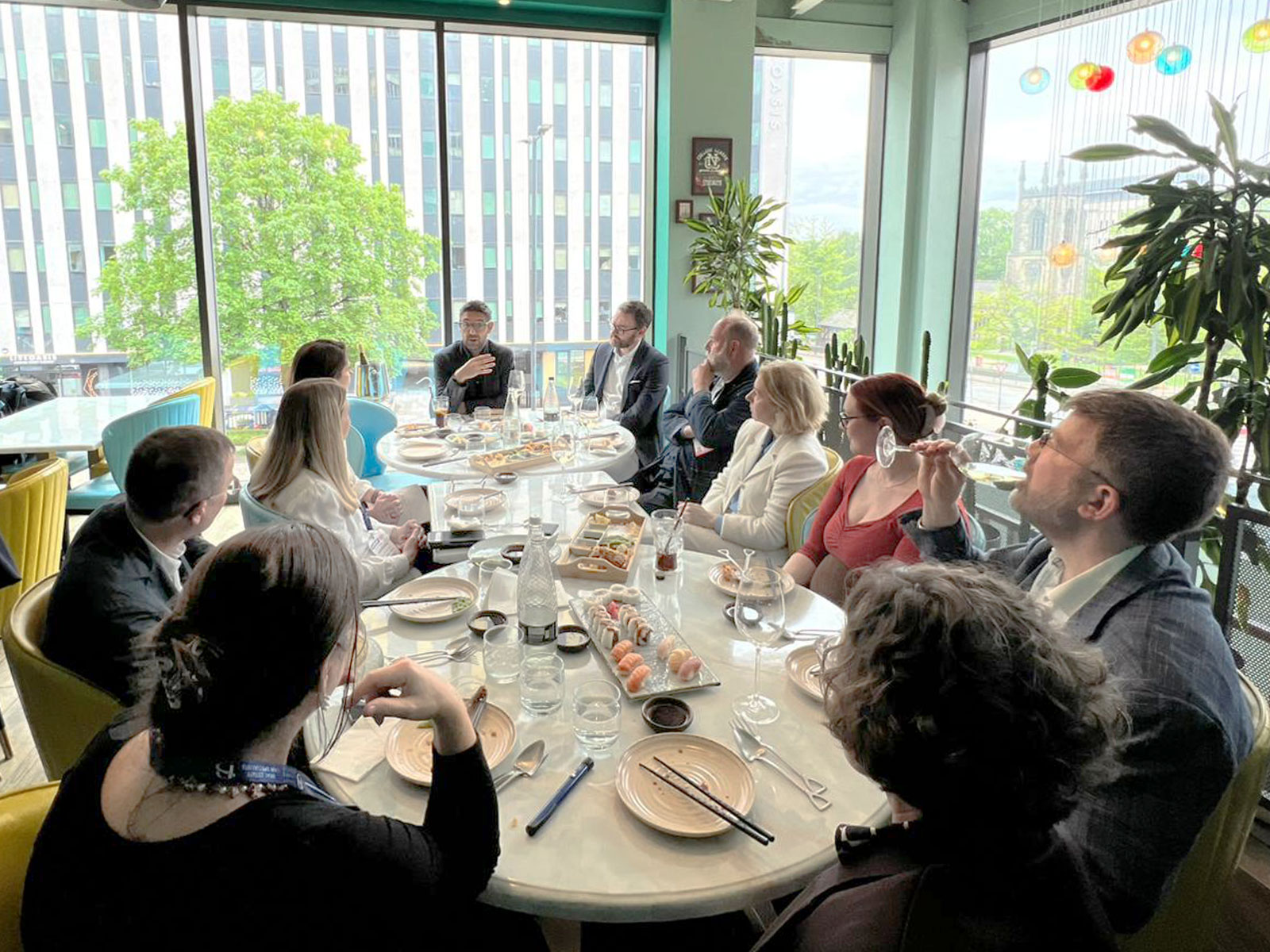
Round table participants
Isabel Allen
Editor, Architecture Today, and round table chair
Jonathan Stock
Publishing Director, Architecture Today
Sarah Aggarwal
Partner, Commercial Real Estate, Farrer & Co
Edward Banyard Smith
Partner, Specialist Construction Lawyer, Farrer & Co
Esther Robinson Wild
Director, Robinson Wild Historic Environment Consultants
Matthew McKeague
Chief Executive, Architectural Heritage Fund
Lydia Rusling
Director of Place & Prosperity, Melton Borough Council
Connie Campbell
Associate (Principal Engineer), Hoare Lea
Philippa Gill
Founder, Karteria
Paul Ruff
Director, RUFF ARCHITECTS
Luke Spence
Partner, Price Myers
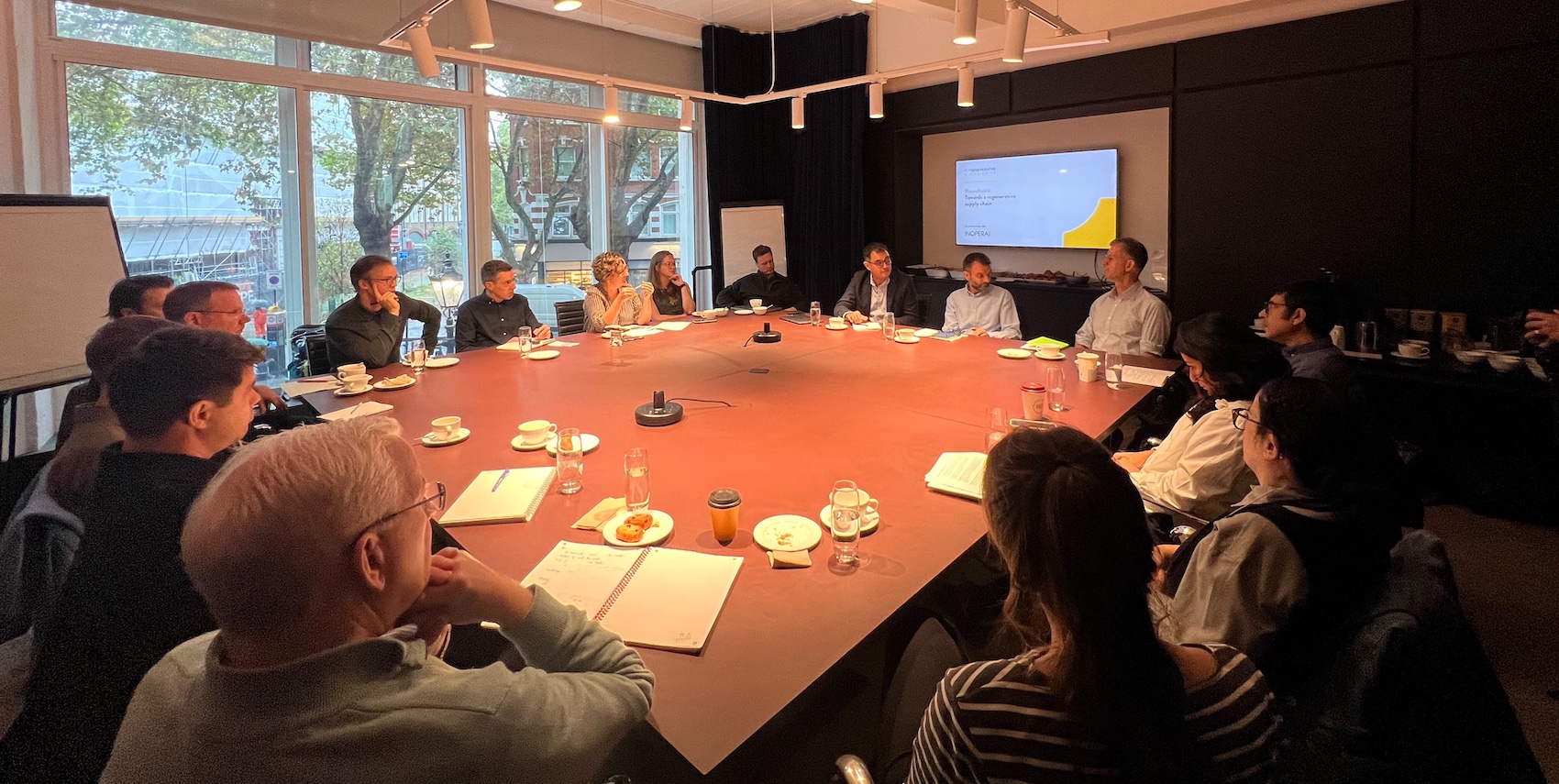
Heritage regeneration sits at a peculiar intersection of passion and pragmatism. Those who work in it tend to do so not merely as a profession but almost as a vocation — drawn by an instinctive conviction that old buildings hold something irreplaceable, and frustrated by the systemic barriers that make bringing them back to life so difficult. It was in that spirit that a group of architects, engineers, lawyers, funders, and local government practitioners gathered at Oba Korean & Japanese Kitchen & Bar in Leeds for a roundtable discussion hosted by solicitors Farrer & Co, organised by heritage expert Esther Robinson Wild and architect Paul Ruff and chaired by Isabel Allen, editor of Architecture Today . A long and candid conversation, they explored what heritage regeneration really means today: how value is defined, how viability is negotiated, and what it would take to align policy, investment, and community ambition into something genuinely transformative.
Should we stop building new buildings?
The conversation opened with a provocation. Jonathan Stock, publishing director of Architecture Today, raised the idea — only half in jest — of whether AT should stop publishing new buildings entirely. AT’s Test of Time Awards, launched four years ago to recognise buildings that have endured and improved with age, had been partly conceived as an investment case for heritage: proof that longevity and quality are not in tension with value. But was there a stronger argument still to be made?
The room did not – and was not expected to – reach consensus, nor was it expected to. Philippa Gill, who recently established Karteria, an consultancy firm working with institutional real estate funds, argued emphatically against a blanket preservation doctrine. Some post-war buildings, she pointed out, are genuinely not worth saving, not because of sentiment, but because they are functionally and environmentally unviable. Matthew McKeague, chief executive of the Architectural Heritage Fund warned of the danger of demolishing things too cheaply, that is, making the decision too quickly, without adequately understanding what is being lost. He expressed particular concern about high-quality industrial buildings in places like Oldham, which risk being replaced with lower-budget replacements simply because the development economics of retention look daunting at first glance. The most interesting architecture, he suggested, is increasingly happening in the adaptive reuse space, not as a compromise, but as a genuinely richer brief.
Paul Ruff, an architect who spoke about his own ambition to invest in and develop heritage properties personally, introduced the idea of a building’s DNA. Every historic structure, he suggested, has inherent qualities, floor-to-ceiling heights, spatial sequences, structural rhythms — that, if properly understood, will indicate what the building most naturally wants to become. Forcing a predetermined use onto a building for the sake of immediate financial return often produces inferior results. Patience, he argued, and a willingness to let the building speak, can yield outcomes of far greater quality and variety. Critically, he noted that beginning a project with the restoration of a historic building, even before wider new development proceeds — can generate community attachment that makes local residents far more receptive to change in the surrounding area. It requires developers to hold their nerve, but the psychological dividend can be substantial.
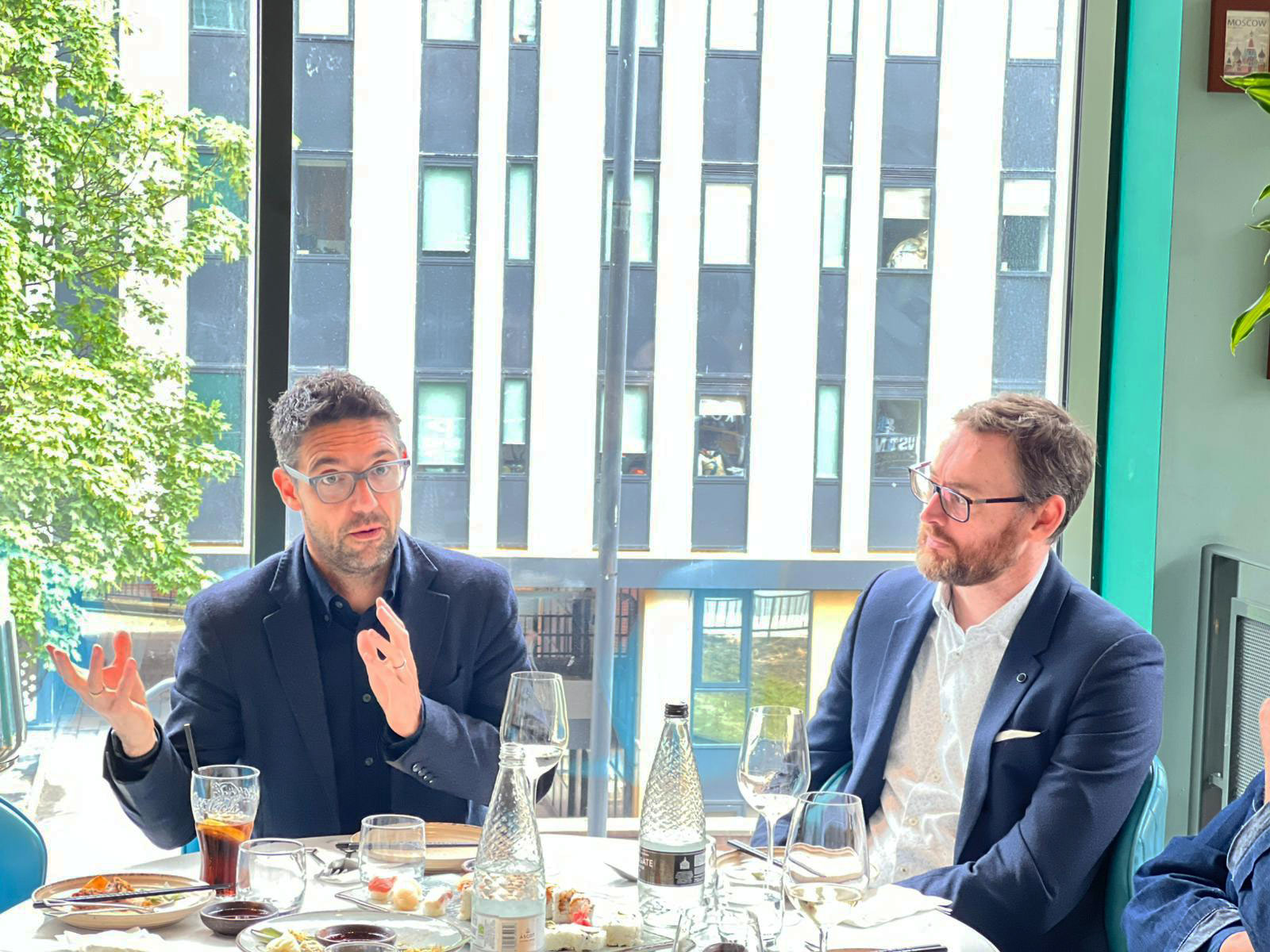
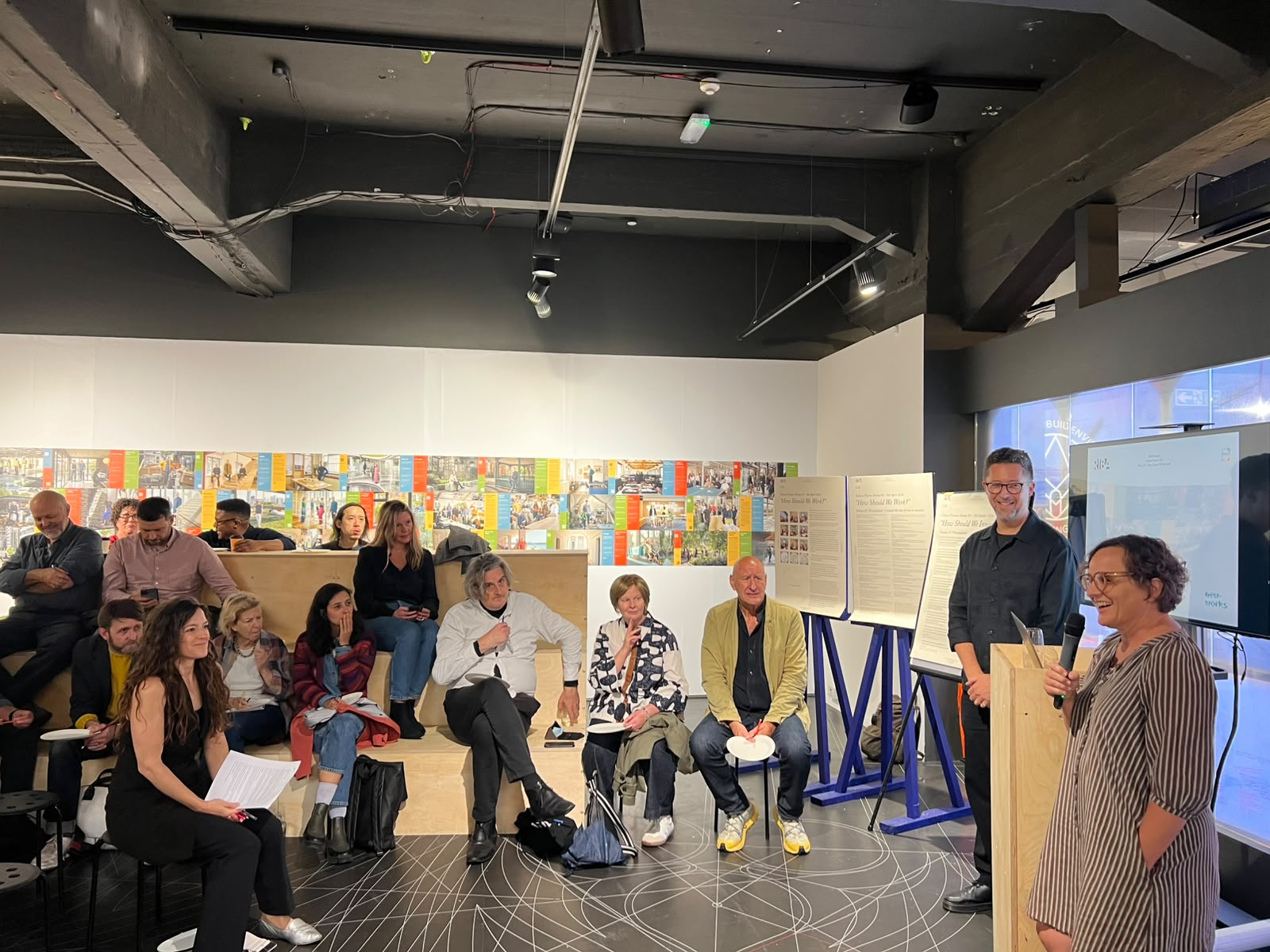
Paul Ruff (left) and Luke Spencer (right).
Defining value
The most animated part of the conversation centred on the question of value, and on how differently it is understood depending on who is being asked. Sarah Aggarwal Partner from lawyers Farrer & Co spoke of how passionate people are about buildings, as well how personal buildings are to people – and in particular heritage buildings. “And everyone has differing views, which makes our job as lawyers a much more diplomatic one,” she said.
Historic environment consultant Esther Robinson Wild, who worked with the Architectural Heritage Fund on setting up the UK’s first social impact fund for historic buildings, identified what she sees as a critical fault line in current planning policy. The official framework is almost entirely focused on aesthetic and architectural-historical criteria. There is, she said, no concept of communal value embedded in planning policy at all. Historic England’s conservation principles do recognise communal value, but these principles rarely translate into the decision-making process at planning authority level, where significance is still largely equated with how a building looks and when it was built.
Gill suggested that understanding the emotional geography of community resistance is not merely a matter of good manners, but a practical tool. Communities often oppose change not because they have thought through the arguments, but because they fear loss, and the language of loss is rarely addressed head-on in conventional consultation processes. Reframing a project in terms of what it provides for the next generation, rather than what it takes from the current one, can shift the conversation significantly. Connie Campbell, an associate MEP engineer at Hoare Lea who noted that her firm employs psychologists precisely because building services design has to begin with human experience, put it plainly: the first questions to ask in any heritage project are not technical ones. They are: what do you picture happening in this space? What do you want it to feel like? Who do you picture being here?
Ruff returned to this theme with a vision of the architect’s role as mediator, someone who must listen simultaneously to the community, the funder, the local authority, and the building itself, and then synthesise those perspectives into something more intelligent than any single stakeholder could produce alone. It is, he admitted, a difficult position to occupy. But it is the position that makes the best heritage work possible.
The planning system: a framework that resists its own principles
If there was a recurring target of frustration throughout the afternoon, it was the planning system. Robinson Wild was candid about her concerns. List entry descriptions, she argued, are often poor guides to genuine significance, too visual, too driven by architectural-historian preferences, and insufficiently attentive to how buildings have been used, adapted, and loved over time. Planning decisions on heritage matters can be arbitrary: the policy framework technically allows for sensitive double glazing in historic buildings, and Historic England’s own technical guidance supports it, yet planning officers on the ground continue to refuse applications on exactly those grounds, apparently unaware of – or unwilling to apply – their own organisation’s published position.
The broader problem, she suggested, is that the system treats all old fabric as equally significant, when plainly it is not. The question should always be: what is the heritage value at stake, and what are the consequences of the change being proposed? A wall that must come down to make a space viable and usable is not automatically a loss. A building that retains its wall but becomes cold, empty, and unused within a decade has not been preserved, it has simply been allowed to decline more slowly.
Edward Banyard Smith, a partner at Farrer & Co, noted a related difficulty from a legal perspective: that even where planning frameworks are broadly supportive, the individual character of decision-making creates unpredictability that makes investors nervous. The investment property world, he observed, still harbours a deep nervousness about extracting value from existing buildings, not always for rational reasons, but because the process feels opaque and the outcome uncertain. Better tools, clearer frameworks, and more consistent decision-making at planning authority level could help materially.
Engineer Luke Spence a partner at Price Myers, noted that fire safety legislation is increasingly forcing difficult choices in heritage projects. New staircase requirements can necessitate significant interventions. But the choice of how to make those interventions, integrating a sympathetic new element, or making a deliberately distinct addition like a glass enclosure, requires a confident consultant who can clearly separate regulatory necessity from aesthetic preference, and lead that conversation with clients and planning officers alike.
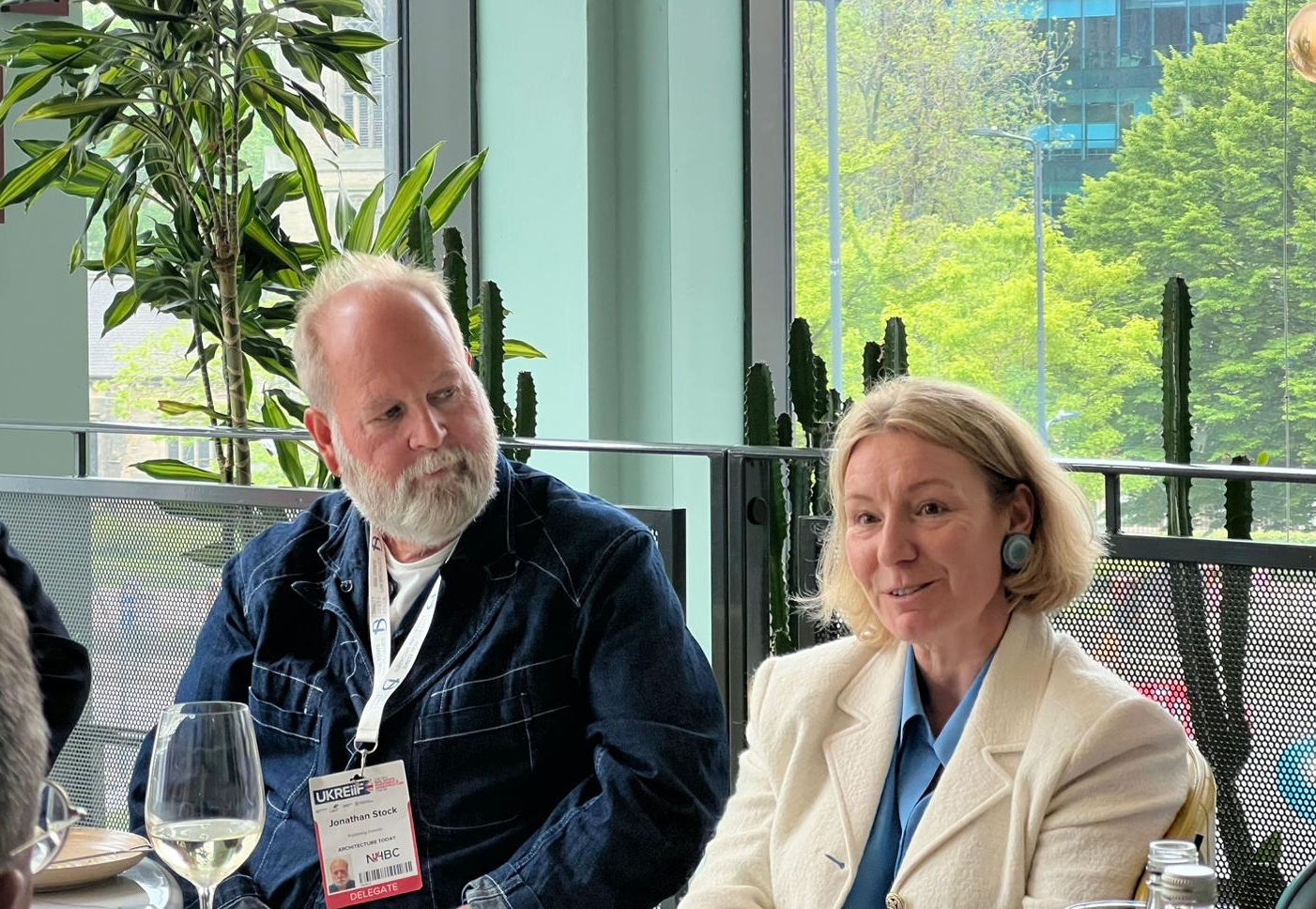
Jonathan Stock (left) and Esther Robinson Wild (right)
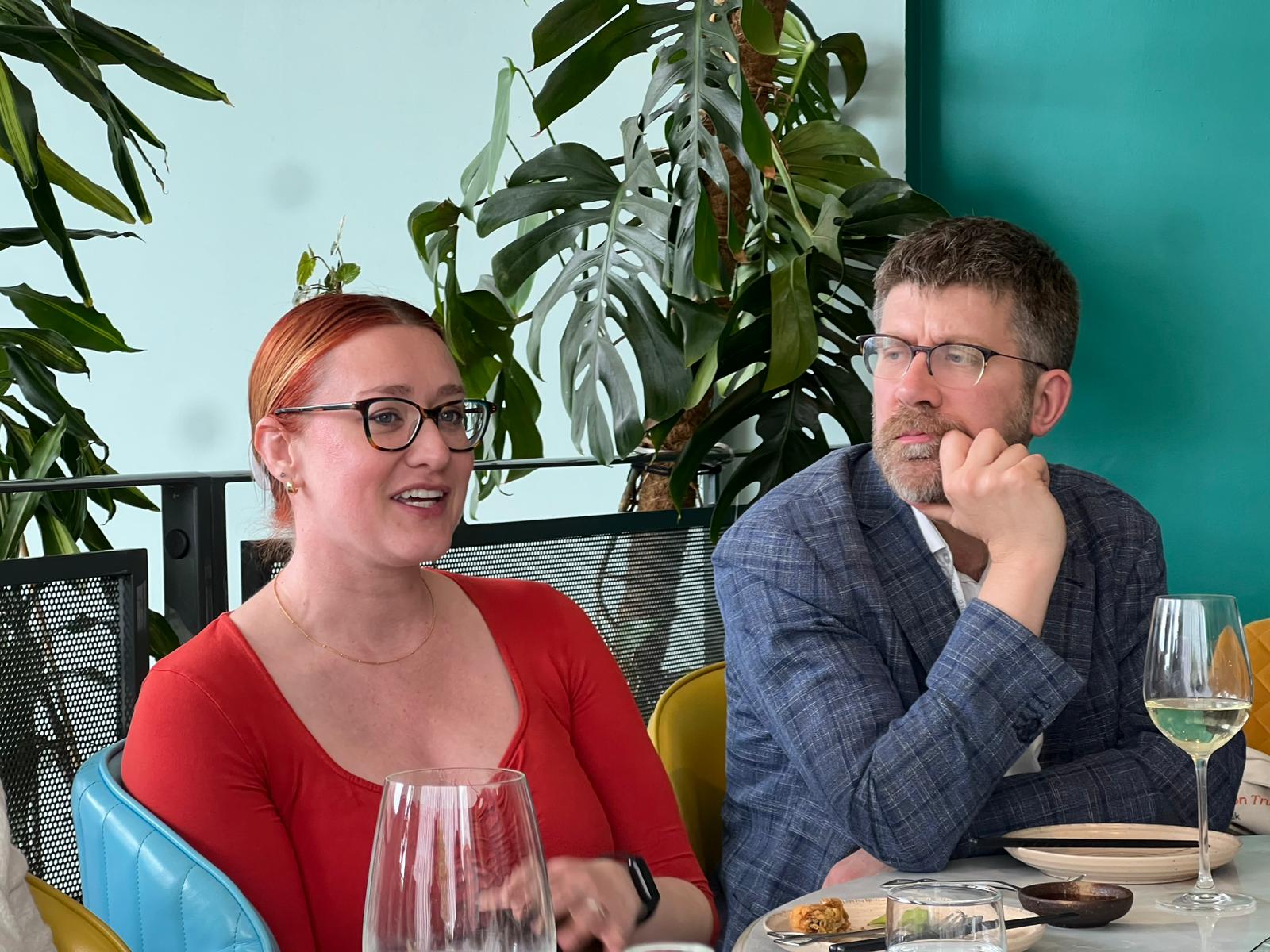
Connie Campbell (left) and Edward Banyard Smith (right)
Institutional siloes and the limits of collaboration
Lydia Rusling, director of place & prosperity at Melton Borough Council, brought a different kind of practical experience to the table. With twenty years in economic development in Lincolnshire, including involvement in the Lincoln Castle Revealed project, a £22 million restoration whose impact on the city’s economy she described as phenomenal, she has seen at first hand how transformative heritage investment can be when it works. She is now working to prevent the sale of a council-owned building in Melton, convinced of its potential as a catalyst for wider town centre regeneration.
But she was equally candid about the systemic barriers. National bodies with overlapping remits — the National Lottery Heritage Fund, Arts Council England, Visit England, DCMS, MHCLG, rarely coordinate in any meaningful way. When levelling-up funding created so-called Place Partnerships, they were one-off arrangements rather than the foundations of a permanent collaborative infrastructure. The machinery that would allow these organisations to work together coherently simply does not exist, and the rare moments when it does happen feel revelatory rather than routine.
She also voiced a concern about local government reorganisation. The shift towards larger, unitary authorities is, she fears, likely to eliminate the deep place-based knowledge and personal passion for local heritage that characterises work at district council level. These qualities — hard to quantify, impossible to procure — are precisely what heritage projects depend upon. In a larger, more remote structure, the people who carry that knowledge are often not valued, and may simply leave.
McKeague added a further structural dimension. The UK, he argued, has not developed good frameworks for understanding trade-offs in heritage decisions. The planning system typically responds to proposed changes, solar panels, new windows, structural modifications, with a binary yes or no, weighted heavily towards no. The benefit side of the equation is rarely modelled with any rigour. He contrasted this with cities like Ghent, where a pragmatic attitude to facade retention is broadly accepted, acknowledging that the interior of a building may need to change substantially as long as the street presence is maintained. That approach has its own problems, Robinson Wild warned that facade-ism, done badly, can produce absurd results, with staircases cutting across windows and floor levels that make no sense, but it at least represents an attempt to negotiate trade-offs rather than simply refuse them.
New tools, new frameworks, and the long game
The discussion did not end without hope. McKeague described a framework currently being developed by DCMS under the heading of Cultural Heritage Capital – an attempt to give quantifiable, Treasury-acceptable values to non-economic criteria such as community attachment, cultural identity, and historical significance. If this framework can be embedded in business cases for heritage projects, it could transform the funding landscape: currently, bids that depend heavily on communal or cultural value struggle to compete with those that can demonstrate hard financial returns, because the appraisal tools simply do not accommodate what heritage actually provides.
Read: The Architectural Heritage Fund relaunches the Heritage Revival Fund at UKREiiF
The conversation also returned, several times, to the importance of patience and sequencing. The best heritage projects do not rush. They begin with a serious effort to understand what a building is, its DNA, its history, the layers of adaptation it already carries, before imposing a vision of what it should become. They listen to communities not as a statutory obligation but as a genuine source of intelligence about value. And they understand that the economic case for heritage is not best made by treating it as a financial instrument, but by recognising that the attachment it generates, the stewardship it inspires, the footfall it creates, the identity it anchors, is itself a form of return, even if Treasury spreadsheets do not yet know how to capture it.
Ruff framed this succinctly in noting that the most successful regeneration he had witnessed was not driven by a masterplan imposed from outside, but by a process of listening so attentive that the proposal changed at every stage of engagement. The outcome was not a compromise but something genuinely more sophisticated than any single stakeholder could have produced. That, the table broadly agreed, is the standard to aim for, and the standard against which current policy, funding, and professional practice still falls significantly short.