Jon McDiarmid and Seb Loyn from YTL Developments talk to Isabel Allen about transforming the 142-hectare former Filton Airfield, just outside Bristol, into the ‘least new’ of the latest batch of New Towns – and identifying the right architect for the job.
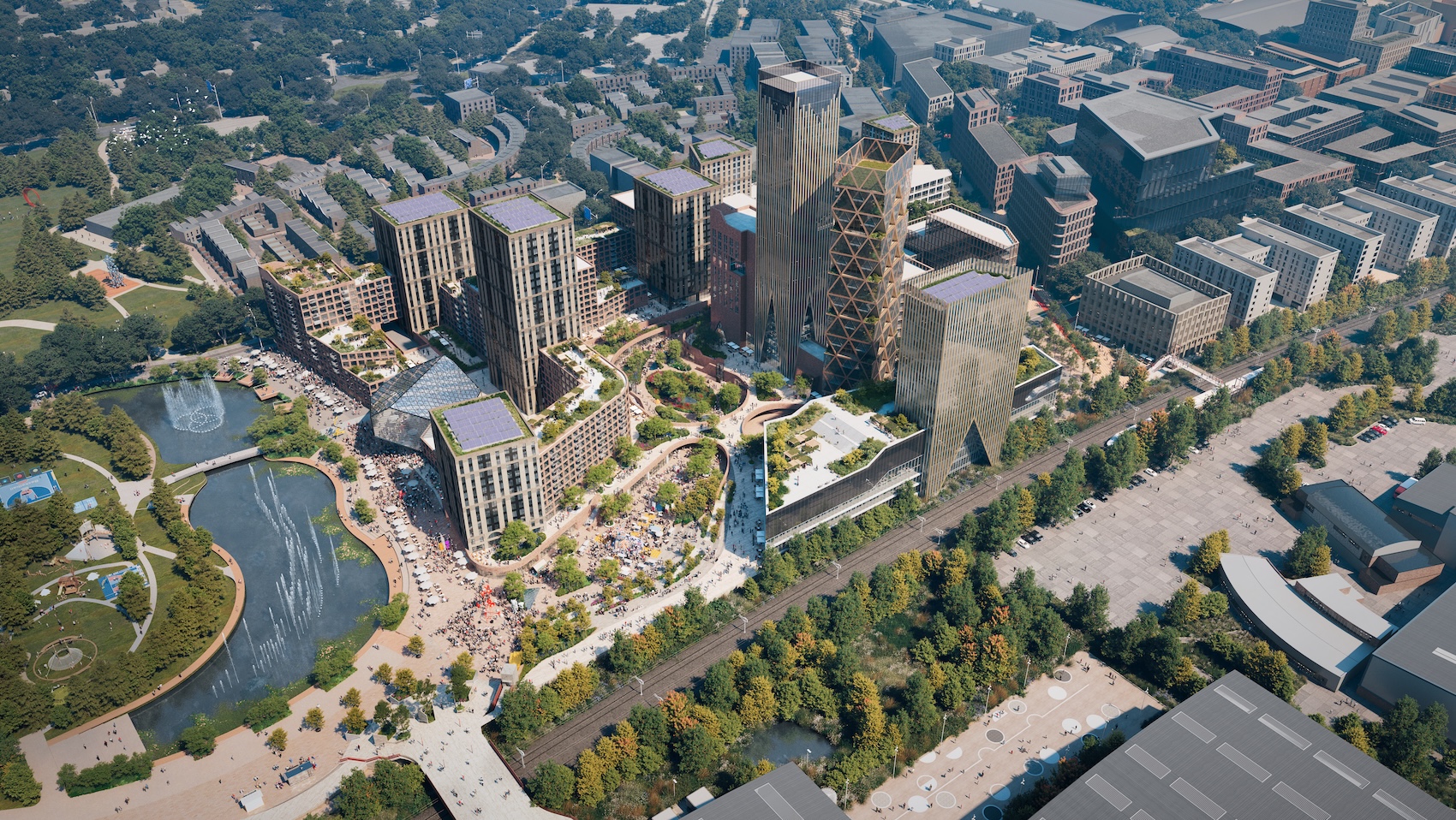
Aerial view of Brabazon’s City Green.
The name Brabazon suggests a cartoon-like utopia where Barbarella gets to hang out with Tarzan. What’s the story?
Jon McDiarmid The Bristol Brabazon was a commercial aircraft that was developed and built at Filton shortly after World War II, and, at the time, was one of the largest aircraft in the world. The airplane itself was named in honour of Lord Brabazon of Tara, who chaired the government committee that developed the specifications for Britain’s post-war commercial airlines. The site has an extraordinary history. We’d be crazy not to celebrate that.
Can Brabazon live up to its name?
Jon McDiarmid We’ve always envisaged Brabazon as exciting and fun: a playground for the next generation of Bristolians. It’s about delivering homes, of course – 6,500 in all. But it’s always been about much more than that. There are schools, community centres, a sports hub and over 3 million sqft of office and innovation space. And there’ll be a huge variety of retail, dining and entertainment venues as well as three new hotels. So it’s very much a destination as well as a place to live. And it’s the only New Town that comes with a 20,000-capacity arena. So there’s always going to be a bit of a buzz about that!
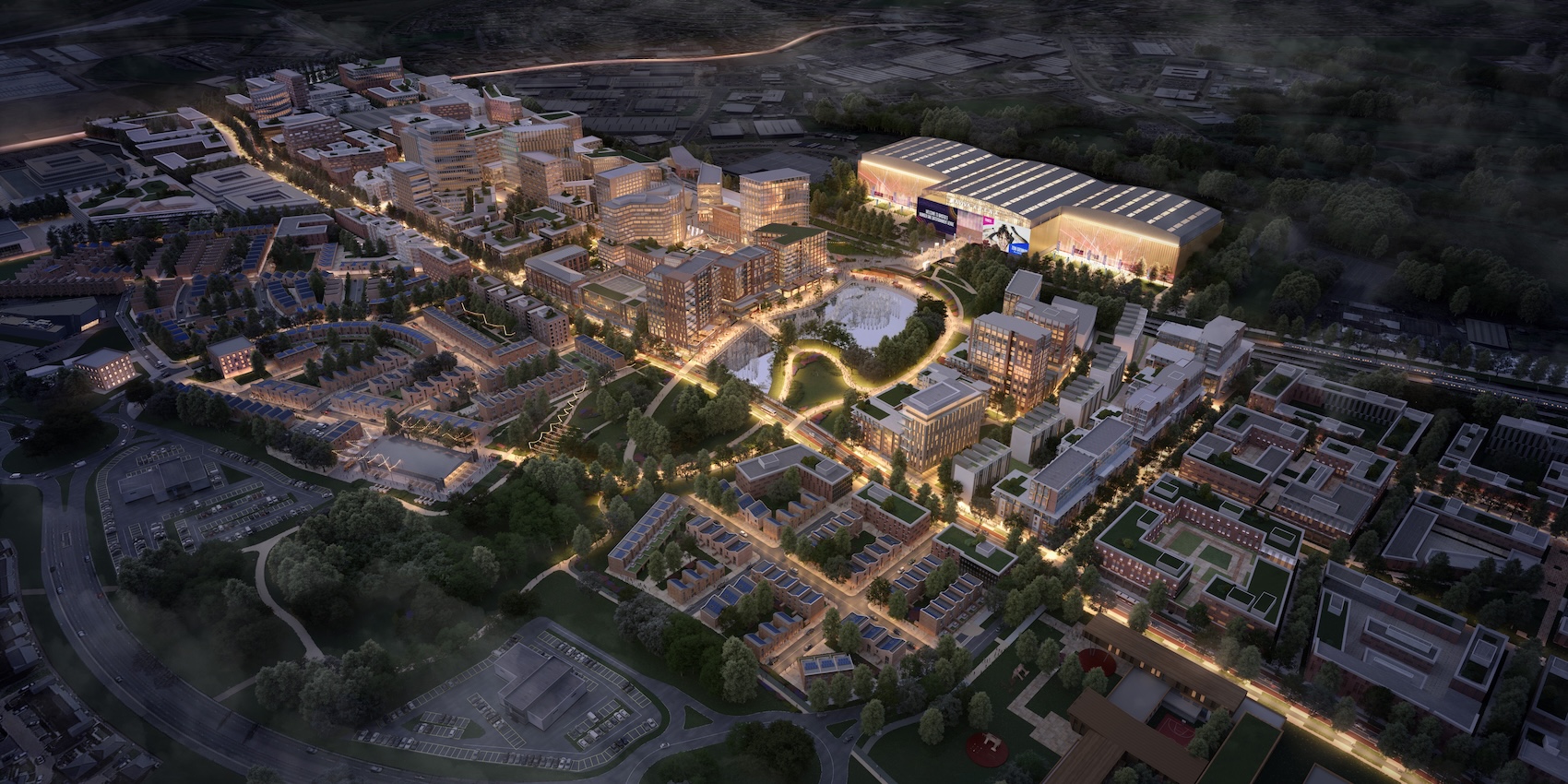
Aerial view of Brabazon and the Aviva Arena.
How do you balance the demands of a residential neighbourhood with the ambition to deliver a cultural and party district for the city as a whole?
Seb Loyn We don’t see them as mutually exclusive. What we definitely don’t want is a schizophrenic development, with all the ‘fun’ stuff at one end, and housing at the other. The masterplan has been carefully designed by FCBStudios as a cluster of 15-minute neighbourhoods, so each new phase of housing is developed alongside additional facilities and transport links. There’s been a lot of thought about how to maximise residents’ enjoyment of their immediate neighbourhood, with a particular emphasis on avoiding car-dominated streets. The whole neighbourhood is connected by a network of pedestrian and cycle routes linking a series of gardens and parks.
To what extent is the site’s history is evident in the development?
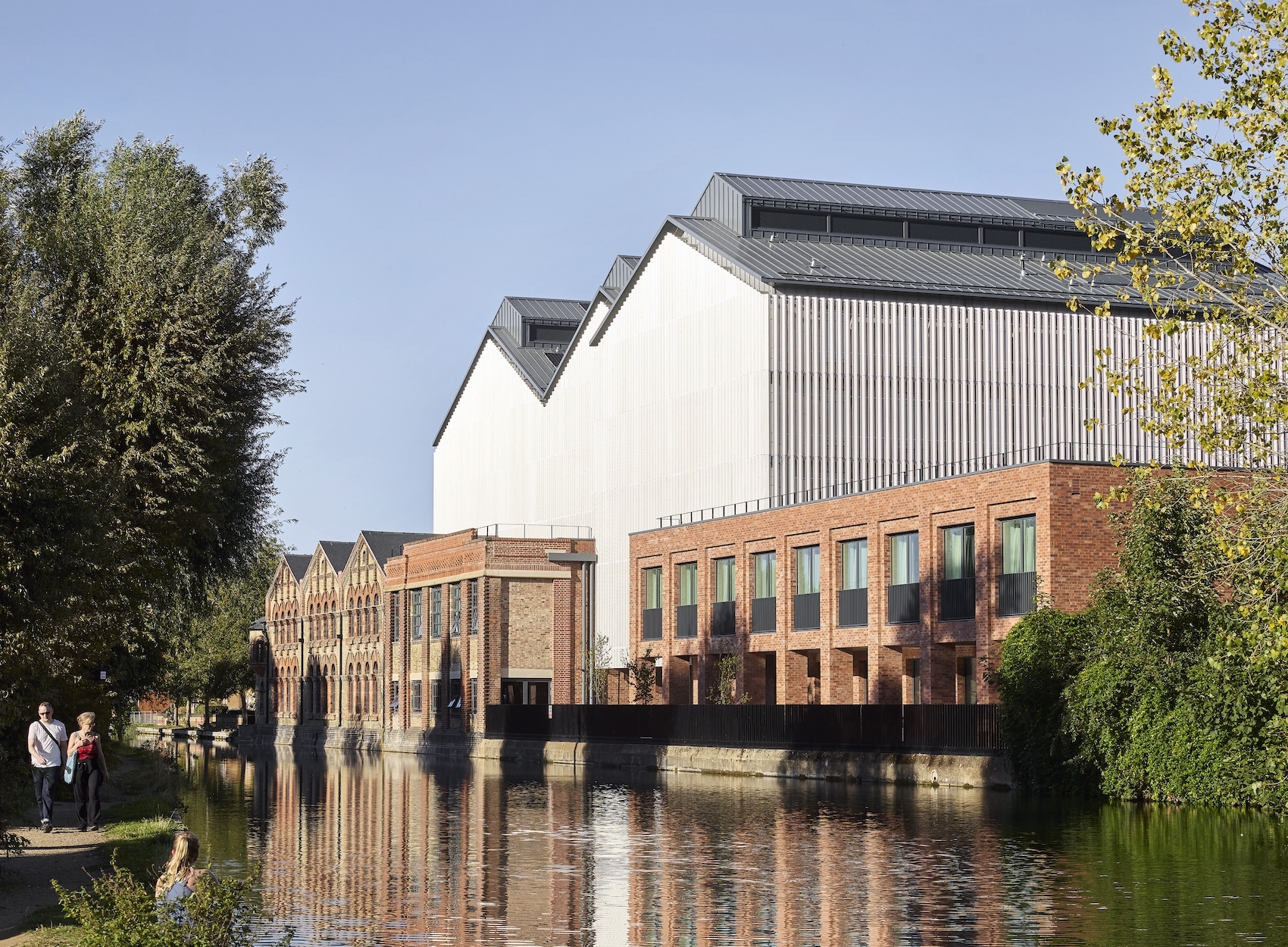
Jon McDiarmid The masterplan was developed in response to the layout of the existing site. Most obviously, the main 15-acre park follows the line of the historic runway. We’ve also incorporated some of the historic structures within the new development. So for example, the first phase of development – the Hangar District, a 303-home neighbourhood designed by FCBStudios, incorporates the Spitfire Hangar, a first world war structure that Ferguson Mann Architects have converted into a community hub. It’s got an EPC rating of A, which we think is pretty good for a listed building. We’ve incorporated a wide range of facilities for the local community – a bakery/cafe, a gym, event spaces, activity rooms – but they’ve been deliberately designed so that you can still read the scale and the heritage of the original architecture, particularly the Belfast trusses, thought to be the earliest example of their kind.
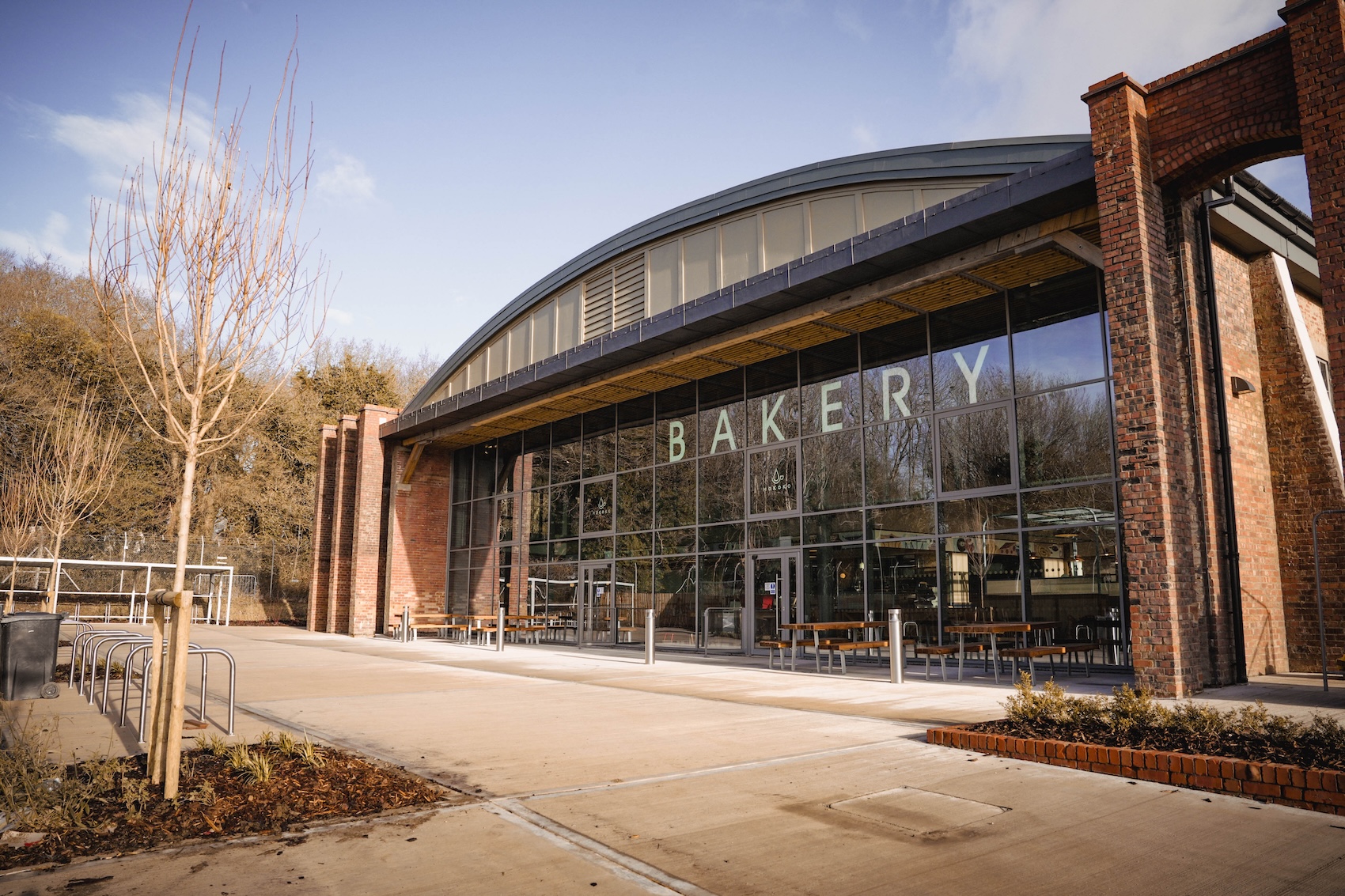
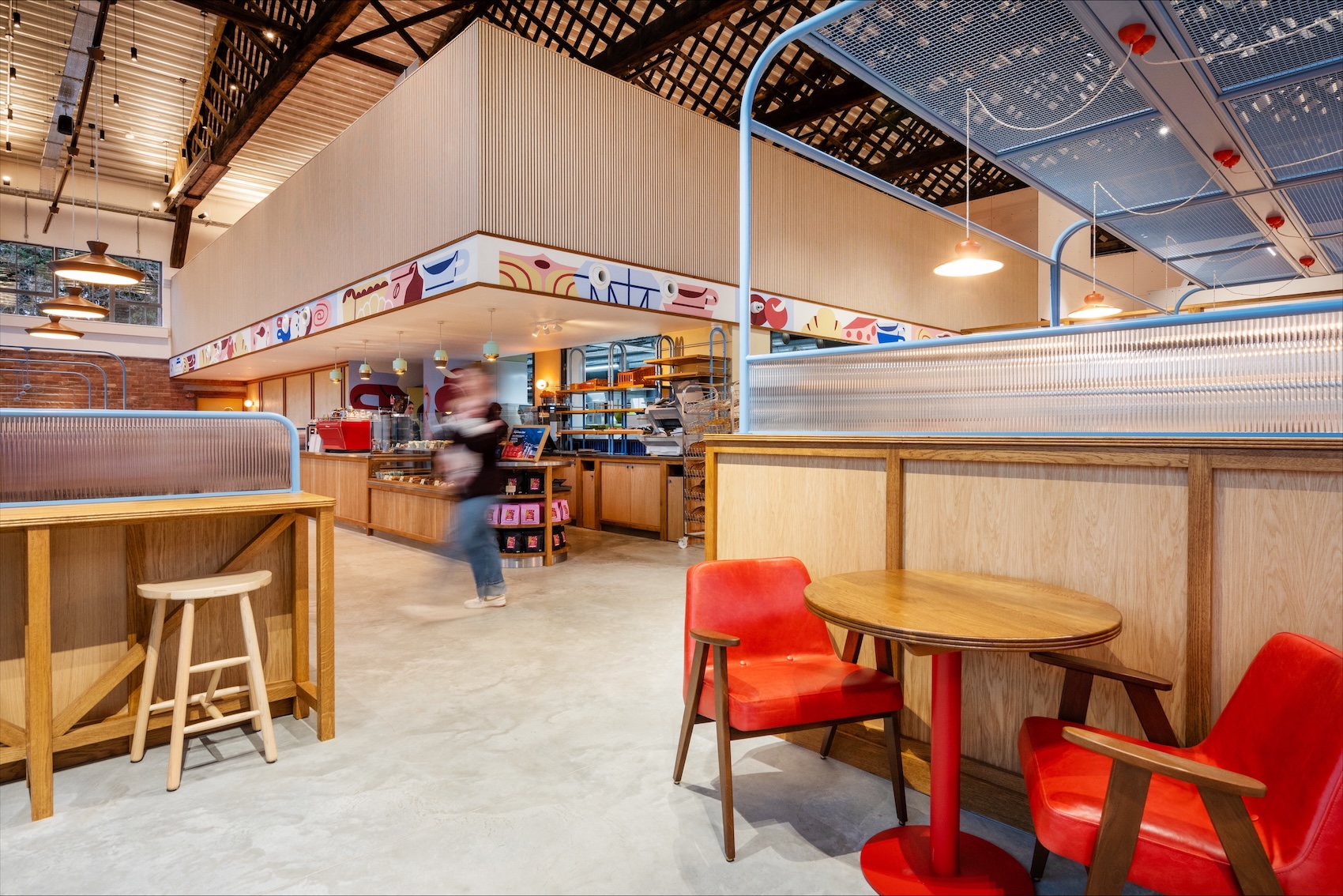
A historic aircraft hangar dating from the first world war has been converted into a new community hub containing a range of facilities including a cafe/bakery.
Given you’ve been working on the project for a decade or so, does an official New Town designation make any difference at all?
Jon McDiarmid We’ve always approached Brabazon as a city district, so in that sense nothing much has changed. But an official New Town status is definitely helpful. It elevates the status of the project at both international and national level. The government is always talking about building new towns in the right place, and you’d be hard pushed to find a site that’s better located, and this gives us a platform to really shout about that. And it unlocks the potential to build new homes. At the moment we’re planning to build 6,500 homes, but the new generation of New Towns are designed to build 10,000 homes plus, so it has the potential to significantly increase the project’s ambition and scale.
Seb Loyn Aside from that, there are three clear practical benefits to having a clear New Town designation: a single door into government; potential funding around transport and increased planning powers. The support with planning isn’t such a bonus for us. We already have a great relationship with South Gloucestershire, who are absolutely fantastic, and, now that we’ve demonstrated our commitment to quality, there is a huge amount of mutual trust and support. But the direct door into government is important. Strategic planning involves so many different push and pull points from within different government departments, so having a single point of contact who knows the right people and is mandated to pull them into the discussion is extremely valuable to us. And the help with transport infrastructure is important. We’d like to see a direct connection to Parkway. We already have a direct link via the Metro bus, which is a 10-minute ride to the station, but replacing that with a 2-minute train ride would make an enormous difference. The dialogue around New Towns tends to focus on the number of houses, but we treat the housing almost as a by-product of the challenge of creating a thriving a daytime and nighttime neighbourhood. It’s the opposite approach to those initiatives that deliver thousands of houses then build a corner shop, but the pushback to government is that ultimately you need to deliver the transport links in order for all these other functions to be a success.
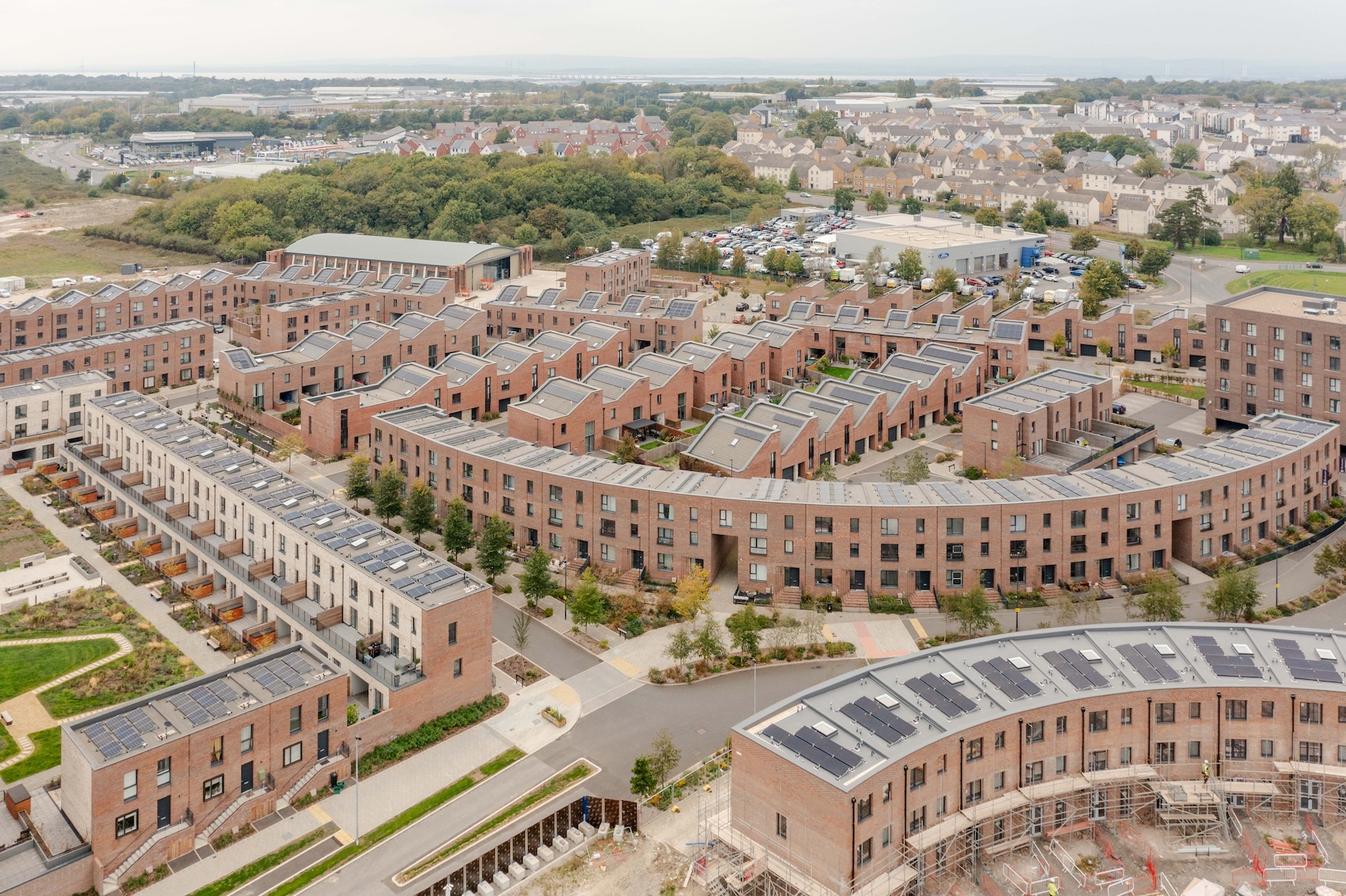
Completed homes at Brabazon.
Do you view all of this as a YTL project? Or does the step change in ambition open the door for other delivery partners?
Jon McDiarmid Brabazon is one of the only sites in the UK of that scale that’s under single ownership. It enables us to take a long-term stewardship approach to delivering somewhere unique. special. But we certainly don’t see Brabazon as a hard red line. What lots of people don’t know is that north Bristol is already a bit of a leisure hub. Bristol Zoo has moved there. So we’ve got the Wild Place, which is now a massive safari park. We’ve got The Wave, which is an inland surf lake. There are golf courses on either side of our development, and an ice rink opened on the border of Brabazon last year. And we’ve got the Aerospace museum, which is on the site itself. All of these are cultural and leisure destinations in their own right. And then we have the arena and conferencing facilities, which will open in 2028, which will make an enormous difference. At the moment you have to go to Newport or London to get facilities at that scale. And then all of that knits together as a daytime and nighttime economy. The investment we are making is completely interconnected with the wider western innovation arc. Any new development faces criticism around the potential divide between the areas of real regeneration and adjacent pockets of deprivation. We’ve done a huge amount of work with local MPs, local authorities and local community groups to make sure that the benefits are felt across the community and it doesn’t ever feel like us and them. When we arrived we were very much the new kids on the block. The Airfield had had this big fence around it for over 100 years. Now the new access ways mean that people can access the site for the first time in living memory.
Seb Loyn People praised the New Towns of old, but the places that had the highest level of success tended to be the places with lots of chimneypots and lots of roundabouts. What we’ve got the ability to do is to get all the ingredients in place – the commercial cluster, the leisure cluster – to make a mixed neighbourhood that’s a place to have a great time as well as a great place to live. YTL’s view is that, in order to make a proper mixed-use town from the start, you need to take a risk. There aren’t many other developers building Grade A office space just now, but if we want to get a daytime economy working we need to get bums on seats. The mid-term outlook for the property industry is pretty gloomy but we’re viewing that as an opportunity. If you’re look at Grade A prime office building in Bristol we’re the only show in town. We are shareholder funded so don’t have to go to a bank, which allows us to take a long-term view. We’re called YTL developments, but a better name would be YTL investment. Every single penny we spend creates the place, creates long term value, and adds to the value of the next building we do. What’s it going to look like in 20 years? What’s it going to feel like? How are we going to keep the public realm and landscape fresh? Every resident contributes towards making it a great place to be.
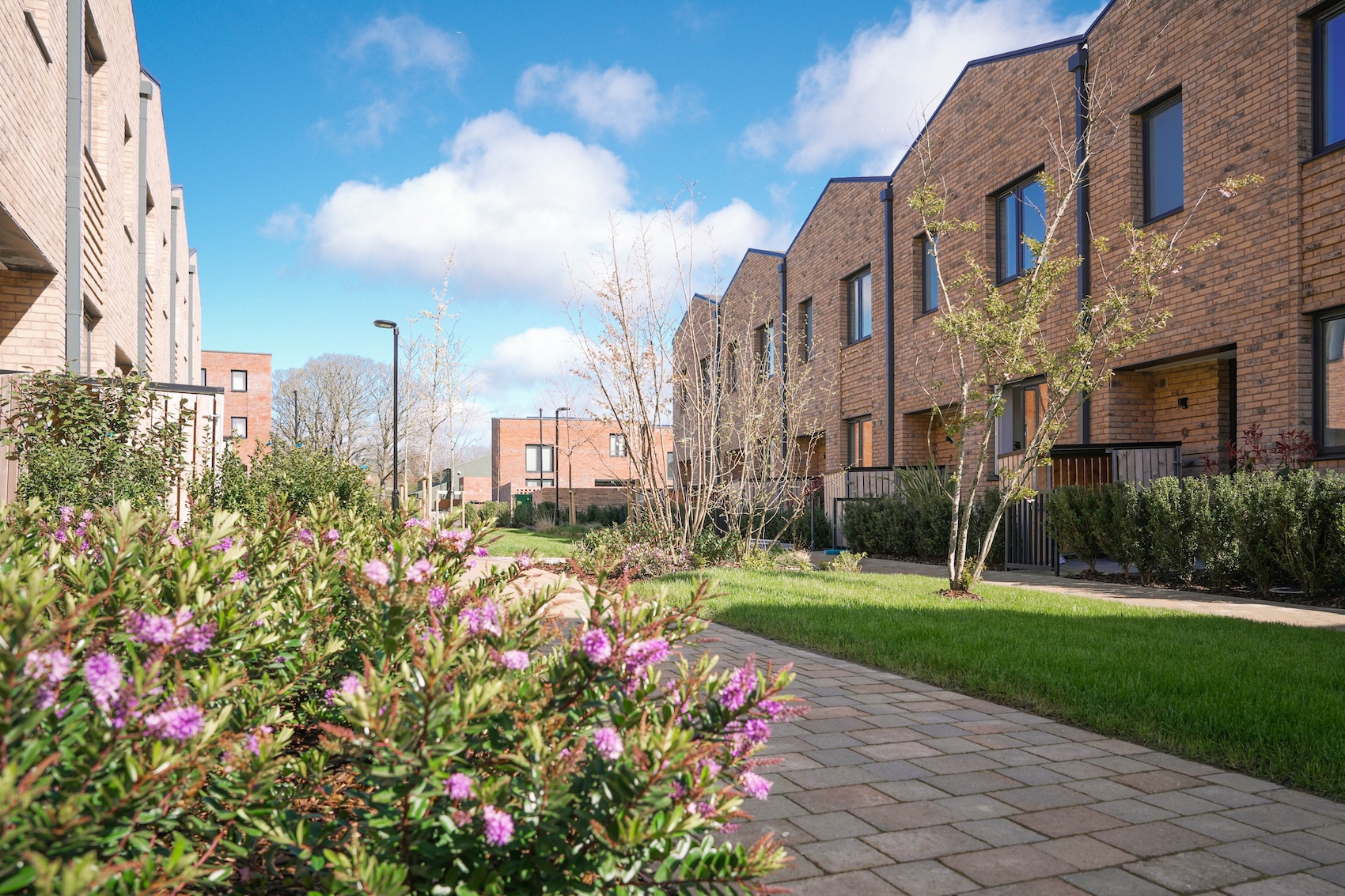
Pedley Gardens in Brabazon’s Heritage District, designed by FCBstudios. The district features 100 two, three and four-bedroom homes set around six garden streets with shaded gardens and landscaped squares. The streets are named after unsung heroines of aviation history – Elizabeth Pedley was an electronics engineer on Concorde.
Are there opportunities for other architectural practices to get involved?
Seb Loyn Absolutely. Any historic neighbourhood gets its charm from the fact that it has grown up organically over time. We want Brabazon to feel quite organic, and to have distinct areas. What we don’t want is orthogonal angles and uniformity. So yes, we’re absolutely looking to work with different architects and different design teams.
How do you select your architects?
Seb Loyn We start a new selection process for each package of work. There’s no framework panel, so each package is essentially a clean slate. I prepare a long list, which will include some practices we’ve worked before, and some we haven’t, and that gets circulated to the various other departments involved for their comments. We’re looking for practices who understand the ambition of what we’re trying to achieve. There is huge complexity in building out real estate at the moment. Viability is an issue that I’m sure will be batted around endlessly throughout UKREiiF, and for good reason. And there are complex challenges in terms of integrating the technical and regulatory aspects into what we’re tyring to achieve. So part of our interview process is being convinced that we’re dealing with people who are not only really good designers, but who know how to specify and how to put buildings together, and who understand the operational side of buildings as well. We’re not wedded to working with big names, but we are committed to working exclusively with local firms or practices who have a significant presence in the south west. All of us are in the office at least five days a week – and sometimes seven days a week. For a site of this scale, you need to be on the ground, and we absolutely expect the architects to be part of that.
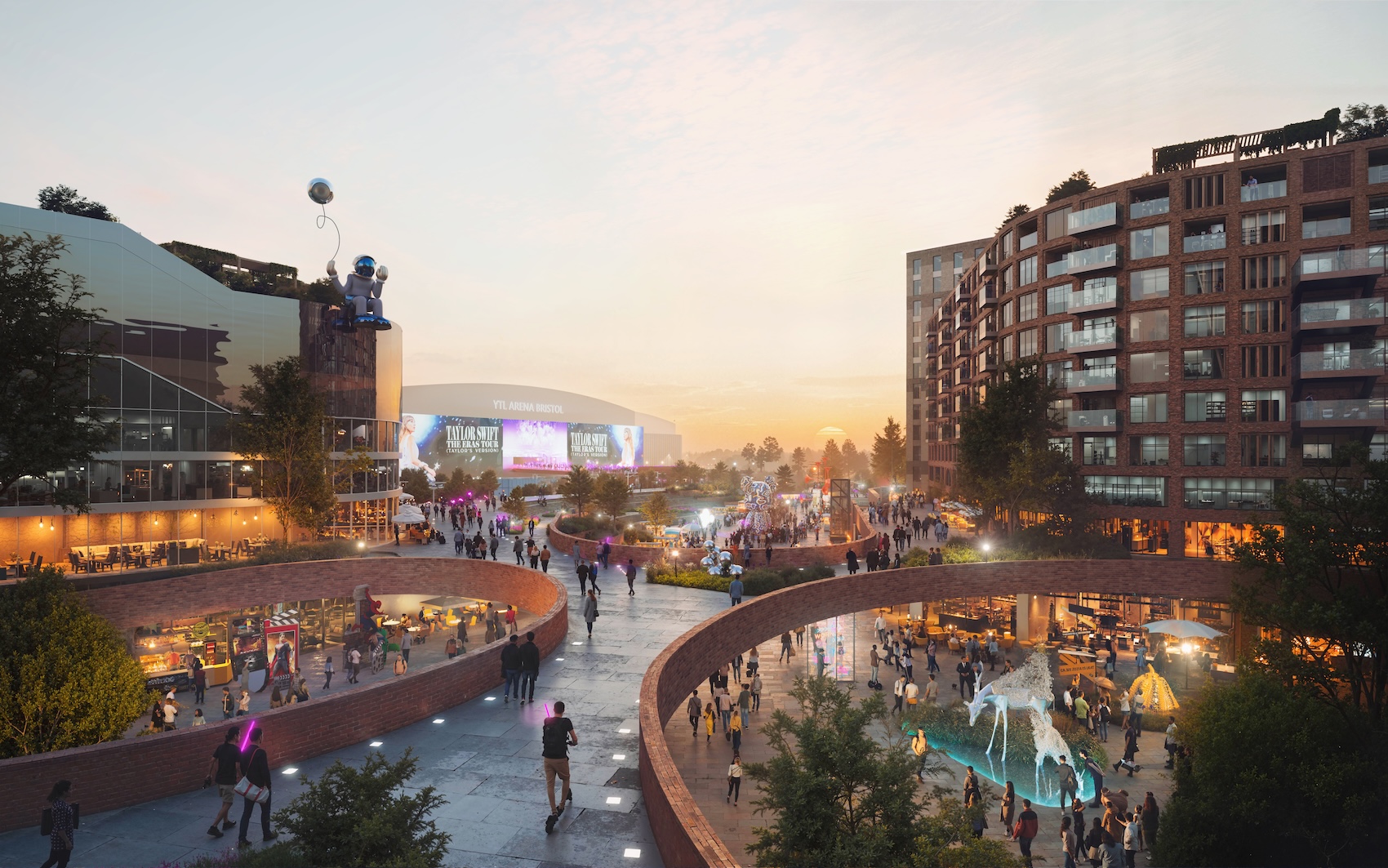
CGI of Upper City Green.
Can you see yourself living at Brabazon?
Seb Loyn I did live there! I lived in one of the properties that backs onto the park for a year-and-a-half with my family to see what it’s like to live there. If you’re building any sor tof long-term neighbourhood it’s absolutely critical that you get to know the residents and understand what it’s like to live there. We held my son’s third birthday at the Spitfire Hangar in Febuary, so we feel very much part of that community. Jon owns a house there, that he’s currently renting out. He bought one of the first properties we built.
Jon McDiarmid I own a house there. I bought one of the very first properties we built, which I’m currently renting out. It was really important in terms of understanding what it’s like to live there, and what we’d actually built. I’m not ashamed to say that there was a lot of learning from the early phases. Other than the standard town house, none of the house types straightforward. The are double, triple-height spaces, and that comes with construction challenges. We had to carry out some repair works, but we like to think we did it properly. We got involved with the customers to identify and fix the issues, and to make sure that learning got fed back into the design process, and I think that process was important in demonstrating that we weren’t just in it for a quick buck and a quick exit. Development doesn’t – or shouldn’t – work like that. You have to accept that not everything is going to be perfect. But you have to be committed to spending time to fix things and to get things right. That process stood us in good stead with the first residents. They’re now the ones that are out there advocating for the scheme.